
REVIEW · WORKSHOPS
Pure Silver Spoon Making Workshop in Kyoto
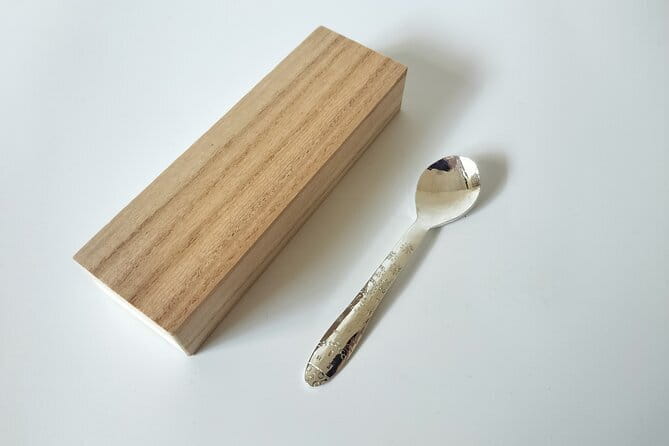
A pure silver spoon is an unusual Kyoto souvenir, and this workshop lets you make one with your own hands. You stamp a pattern into the silver, hammer it into shape, smooth the edges, and finish the surface until it catches the light.
I like the private format, since only your group takes part. I also like the warm, personal touch: the couple who runs the workshop welcomes you with tea and snacks, and English instructions help keep the language gap from getting in the way.
The main drawback is the price, $141.22 per person, for a small teaspoon-sized object and about two and a half hours. You are paying for the pure silver, close instruction, tools, finishing work, and a rare hands-on craft session, not simply for a souvenir.
In This Review
- Key points at a glance
- Why this Kyoto workshop feels different
- A quiet setting near Shugakuin Imperial Villa
- Tea, snacks, and a friendly welcome
- Step one: decorate the prepared silver
- Step two: use the hammer to form the spoon
- Step three: smooth the edges with files and a burnisher
- Step four: machine polishing by the craftsman
- Step five: polish the spoon yourself
- What you receive for the price
- Who will enjoy this activity most
- Practical points to consider before booking
- Is the spoon truly useful after Kyoto?
- Should you book the pure silver spoon workshop?
- FAQ
- Where is the pure silver spoon workshop located?
- How far is the workshop from Shugakuin Imperial Villa?
- How long does the activity last?
- How much does the workshop cost?
- What is included in the price?
- Is transportation included?
- Is this a private activity?
- What size is the finished spoon?
- Do I make the spoon myself?
- Can I cancel for a full refund?
Key points at a glance
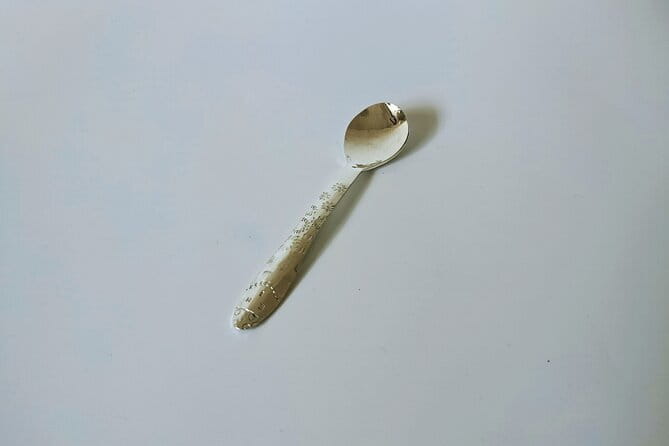
- Make a real pure silver teaspoon: You shape the metal yourself rather than buying a finished trinket.
- Choose your own decoration: Chisels and stamps let you add a personal pattern to the silver.
- Private workshop setting: Only your group participates, which allows for patient help at your own pace.
- Near Shugakuin Imperial Villa: The workshop is an 8-minute walk from this Kyoto sight.
- Finished in a paulownia box: Your spoon comes ready for safekeeping or gift-giving.
- A calm break from busy sightseeing: Tea, snacks, and careful guidance give the session a friendly feel.
Why this Kyoto workshop feels different
Many Kyoto craft activities focus on watching a skilled maker work or decorating a prepared item. Here, you handle the central steps yourself. You begin with a piece of pure silver and gradually turn it into a useful spoon.
That change gives the activity its appeal. The finished spoon is small, but it carries the marks of your decisions: the pattern you select, the way you strike the hammer, and the amount of polishing you do at the end.
Silver also has meaning in Japanese custom. It has long been regarded as a charm against misfortune and evil spirits, and a silver spoon may be given to a baby with wishes for happiness. You do not need to know these traditions to enjoy the workshop, but they give the finished object more weight than an ordinary souvenir.
I especially like that the spoon is intended for use as a teaspoon. It is not just something to place on a shelf. At about 12 centimeters long and 2.7 centimeters wide, it is compact, practical, and easy to pack.
More workshops and classes in Kyoto:
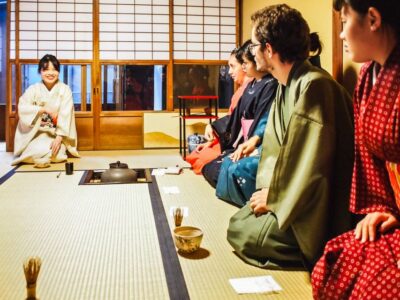
- Kyoto: 45-Minute Tea Ceremony Lesson Experience
★ 4.3 · 2,378 reviews - Kyoto : Chopsticks Making Workshop in Gion with Engraving Option
★ 5.0 · 958 reviews - Kyoto: Samurai Sword Class by Experts in Traditional Arts
★ 4.9 · 657 reviews
A quiet setting near Shugakuin Imperial Villa
The workshop is at 1-15 Shugakuin Yamanohanachō in Sakyo Ward, Kyoto. It is about an 8-minute walk from Shugakuin Imperial Villa, making the area useful if you want to pair the craft session with a less central part of your Kyoto day.
The location is also a helpful break from the busiest sightseeing zones. The experience itself does not include private transportation, so you need to make your own way to the meeting point. The area is near public transportation, but the supplied details do not specify a particular station, route, or fare.
Plan your timing carefully around the workshop. A craft session requires more attention than a quick museum stop, and arriving rushed could take some of the pleasure out of it. Since the activity ends where it begins, you can continue exploring the area afterward or return by public transport.
The meeting point is also the end point, which keeps the arrangement simple. You do not need to find a second address or arrange a pickup after your spoon is complete.
Tea, snacks, and a friendly welcome
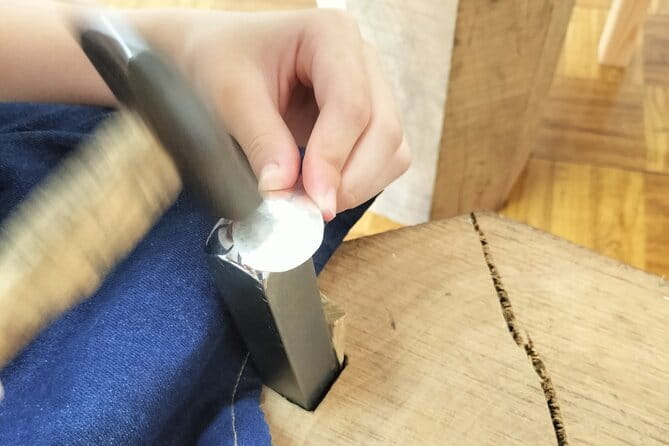
The couple running the workshop welcomes you with tea and snacks. That small gesture matters because it changes the tone from a formal class into a personal visit.
The hosts also provide English instructions. You are working with tools, metal, and a hammer, so clear directions are important. The available information describes the hosts as patient and friendly, with the language difference causing no major problem during the session.
You should still expect a hands-on activity rather than a fully guided demonstration. The craftsmen assist you carefully, but the point is for you to make choices and do the work. If you enjoy learning by trying, this format should suit you well.
The private setup is another plus. Only your group participates, so you are not competing with a large class for attention. That can be especially useful when you are learning how firmly to strike the silver or how much pressure to use with a file and burnisher.
Step one: decorate the prepared silver
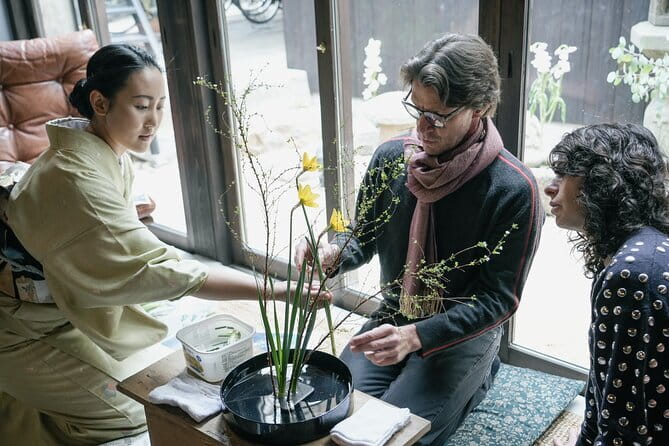
The workshop begins with a prepared piece of pure silver. You choose a chisel or stamp and add your preferred pattern to the metal.
This is the first point where the spoon becomes personal. A stamped design can be simple or more noticeable, depending on the tools you select and how you place them. You are not merely following a fixed decoration chosen by the workshop.
The activity does not specify a set menu of patterns, so you should expect to choose from the available chisels and stamps on site. The staff can guide you through the process, but the final design belongs to you.
Take your time here. The pattern is part of the spoon’s character, and a few deliberate marks will likely mean more to you than a rushed design covering every available space.
A completely different side of Kyoto:
- PERFECT KYOTO 1-Day Bus Tour
★ 5.0 · 13,518 reviews - Kyoto: Fushimi Inari, Kinkakuji, Bamboo Grove 1 Day Bus Tour
★ 4.8 · 4,316 reviews - Kyoto: Tea Ceremony in a Traditional Tea House in Kiyomizu
★ 4.9 · 3,519 reviews - Kyoto Geisha Walking Tour: Gion District & Hidden Gems
★ 4.7 · 3,273 reviews
Step two: use the hammer to form the spoon
Once you have marked the silver, you use a hammer to shape it into a spoon. This is the most physical part of the session and the stage that makes the craft feel real.
You are not starting with a spoon-shaped object that only needs decoration. The hammering helps transform the flat silver into the curved form of cutlery. The staff provide careful assistance so you can work with the material in a controlled way.
The exact pace will depend on how quickly you become comfortable with the tools. Some people enjoy the rhythm of the hammer work, while others may find it requires concentration. The private format gives you room to ask for help rather than guessing.
Because the finished spoon is small, the work is focused rather than physically demanding for a long period. You are shaping a teaspoon, not a large serving utensil.
Step three: smooth the edges with files and a burnisher
After the spoon has taken shape, you smooth its sides with a file and burnisher. This stage is less dramatic than hammering, but it is essential. A spoon needs comfortable edges, and the surface has to move from rough handmade metal toward a finished piece of cutlery.
This is where patience pays off. Filing removes uneven areas, while the burnisher helps refine the metal. You can see the object becoming more finished with each step.
The workshop provides the tools, so you do not need to bring specialist equipment. The process is explained and supervised by the craftsmen, which is helpful if you have never worked with silver before.
I like this part because it shows the difference between making an object and decorating one. Your work affects both the appearance and the feel of the spoon.
Step four: machine polishing by the craftsman
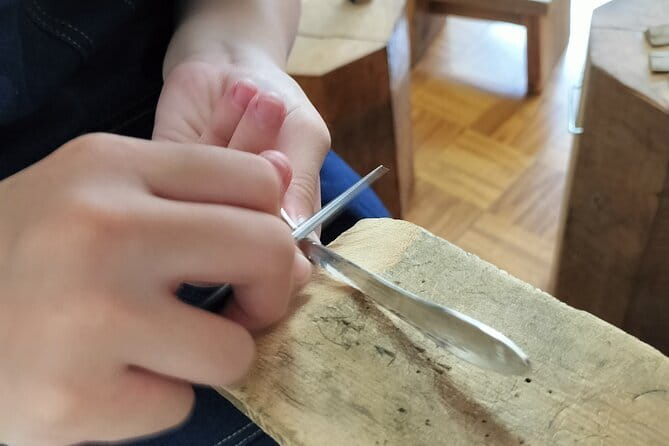
A craftsman polishes the spoon with a machine. This part is handled by the workshop rather than by you, with safety in mind.
That division of labor makes sense. Machine polishing can produce a smoother finish, but it also calls for proper handling and attention. You get to see the finishing process without being asked to operate equipment that may be unsuitable for a beginner.
The craftsman’s polishing gives the spoon its clean final look before you complete the last stage yourself. It also helps bring out the silver surface and tidy the areas that are difficult to finish by hand.
This is one reason the $141.22 cost is not comparable to the price of a simple craft kit. The fee covers material, instruction, equipment, and professional finishing work.
Step five: polish the spoon yourself
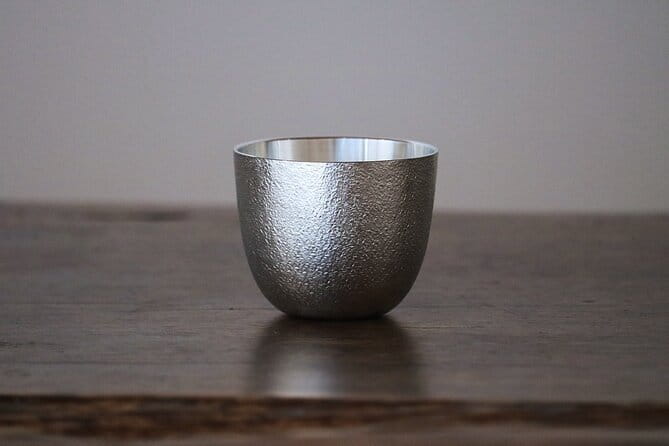
At the end, you polish the spoon by hand with an abrasive. This final task returns the work to you.
The hand polishing is a fitting close to the activity. You have made the marks, shaped the form, smoothed the sides, and watched the craftsman use the machine. Now you take care of the last surface work yourself.
The finish may not look like factory-produced cutlery, and that is part of the point. Small variations show that you made it. At the same time, the workshop’s machine polishing and careful assistance help keep the result presentable and usable.
A metal polishing cloth is included, so you have something to maintain the surface after the class. The spoon is placed in a paulownia box, which gives it a neat presentation and protects it while you carry it home.
What you receive for the price
The $141.22 per person fee includes:
- The pure silver material
- Rental of the tools
- A paulownia box
- A metal polishing cloth
The workshop lasts about 2 hours and 30 minutes. That is a substantial block of time, especially in a Kyoto itinerary filled with temples and gardens.
I would judge the price by the kind of souvenir you want. If your priority is the lowest-cost keepsake, this is expensive for a teaspoon. If you value a private activity, a precious material, personal instruction, and an object you can use for years, the cost becomes easier to justify.
The spoon is also a meaningful gift. Silver has traditional associations with good fortune, and the paulownia box makes the result easier to present to someone else. You could make it for yourself, for a family member, or as a baby gift connected to the custom of giving silver spoons for happiness.
Who will enjoy this activity most
This workshop is a strong choice if you want a break from crowded sightseeing and prefer making something rather than collecting another purchased souvenir. It suits couples, families, friends, and small groups who like activities with a clear finished result.
It is also a good fit for anyone interested in Japanese craft traditions but unsure about committing to a long class. In two and a half hours, you get a complete project from decoration to final polish.
The private format may appeal to first-time craft participants. You do not need prior metalworking experience, and the craftsmen assist you through the process. Most people can participate, according to the activity information.
Service animals are allowed. The activity is near public transportation, though transportation to and from the meeting point is not included.
Children’s age requirements, wheelchair access, and the exact physical demands are not specified. If those details matter for your group, contact the provider before booking rather than relying on guesswork.
Practical points to consider before booking
Book with enough time to fit the workshop into your day. The activity is booked about 30 days in advance on average, so a last-minute place may not be available during a busy Kyoto visit.
The experience uses a mobile ticket, making it easy to keep the booking details on your phone. Confirmation is provided at the time of booking.
Wear something that lets you work comfortably and pay attention to the tools. The supplied information does not list a special dress code, but you will be hammering, filing, and polishing metal, so this is not a sit-back-and-watch activity.
Keep the 12-centimeter length in mind if you are choosing luggage space or thinking about a gift. The spoon is small, but the paulownia box adds some protection for the journey home.
Free cancellation is available if you cancel at least 24 hours before the local start time. A cancellation within 24 hours is not refunded, and changes within that period are not accepted.
Is the spoon truly useful after Kyoto?
The finished spoon is recommended for use as a teaspoon. Its approximate dimensions are 12 centimeters long and 2.7 centimeters wide, so it is intended for small servings rather than cooking or table service.
That practical purpose is one of the strongest reasons to choose this workshop. You can use it with tea, coffee, desserts, or other small portions, and the polishing cloth lets you care for the silver later.
You should treat it as handmade cutlery, not as a perfectly uniform factory item. The decoration and hand-finishing give it a personal quality. For many people, the small irregularities will be a reminder of the afternoon rather than a flaw.
The box also keeps the spoon connected to the making process. Instead of finishing the class with an object that gets tossed into a bag, you leave with a protected keepsake and a cloth for future polishing.
Should you book the pure silver spoon workshop?
I would book this if you want a personal Kyoto souvenir and have room in your budget for a slow, hands-on activity. The private group setting, patient couple, tea and snacks, English instructions, and professional machine polishing make the session feel carefully supported.
I would skip it if you want a quick attraction, a low-cost craft, or a large item that makes a dramatic display. The result is a small teaspoon, and the price is high when judged only by size.
For the right person, the value is in the whole sequence: selecting a pattern, striking the silver, filing the edges, watching the craftsman polish it, and completing the final hand finish. Add the silver’s traditional connection with protection and happiness, and you have a souvenir with both practical use and a personal story.
FAQ
Where is the pure silver spoon workshop located?
The meeting point is 1-15 Shugakuin Yamanohanachō, Sakyo Ward, Kyoto, 606-8025, Japan.
How far is the workshop from Shugakuin Imperial Villa?
The workshop is about an 8-minute walk from Shugakuin Imperial Villa.
How long does the activity last?
The workshop lasts approximately 2 hours and 30 minutes.
How much does the workshop cost?
The listed price is $141.22 per person.
What is included in the price?
The price includes the pure silver material, rental of tools, a paulownia box, and a metal polishing cloth.
Is transportation included?
No. Private transportation is not included. The workshop is near public transportation.
Is this a private activity?
Yes. Only your group participates in the activity.
What size is the finished spoon?
The approximate finished size is 12 centimeters long and 2.7 centimeters wide. It is recommended for use as a teaspoon.
Do I make the spoon myself?
Yes. You add a pattern with a chisel or stamp, hammer the silver into a spoon shape, smooth the sides with a file and burnisher, and complete the final polishing with an abrasive. A craftsman handles machine polishing.
Can I cancel for a full refund?
Yes, if you cancel at least 24 hours before the experience’s local start time. Cancellations made less than 24 hours before the start time are not refunded.
Recently added around Kyoto
- Higashiyama | Kyoto: Sakura Season Private Rickshaw Tour★ 5.0 · 3 reviews
- Kyoto Kimono Rental CHAMATSU|Kimono/Yukata Rental FamilyPlan★ 5.0 · 3 reviews
- Kyoto: Half-Day Private Guided Tour to the Old Town of Gion★ 4.4 · 3 reviews
- Nara Private Customizable Half Day Tour★ 5.0 · 3 reviews
- Kansai Region Hiking Adventure in Nara Kobe Kyoto and More★ 5.0 · 3 reviews
- Full Day Nara Deer, Temple, Shrine, Activities & Tea Ceremony★ 5.0 · 3 reviews
- Nara: Essential Private Tour with Deer Park and Temples★ 5.0 · 3 reviews
- Hiking Tour for Sacred Sites in Kyoto with a Guide★ 5.0 · 3 reviews
Workshops, compared.
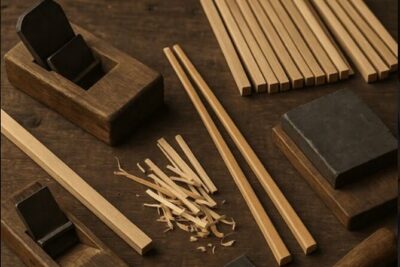
Chopsticks Making Workshop in Gion with Engraving Option
Read our review →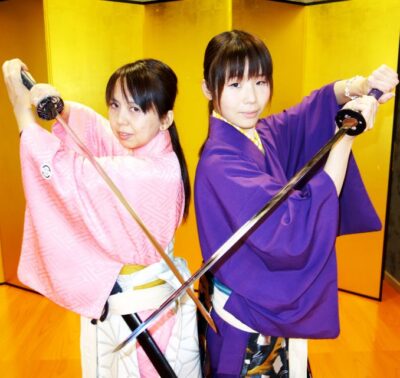
Samurai Sword Class by Experts in Traditional Arts
Read our review →
Ramen Cooking Class at a Ramen Factory with Souvenir
Read our review →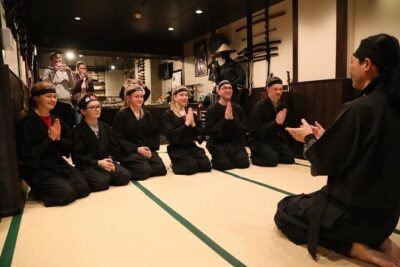
Ninja 1-hour Hands-on Lesson by Japanese master in Kyoto -Entry
Read our review →
The Original Small-Group Sushi Making Class in Kyoto
Read our review →
Japanese Washoku Bento Small Group Cooking Class
Read our review →Browse the lists this tour appears in