
REVIEW · KYOTO CRAFT WORKSHOPS
Original rugs handmade in Kyoto
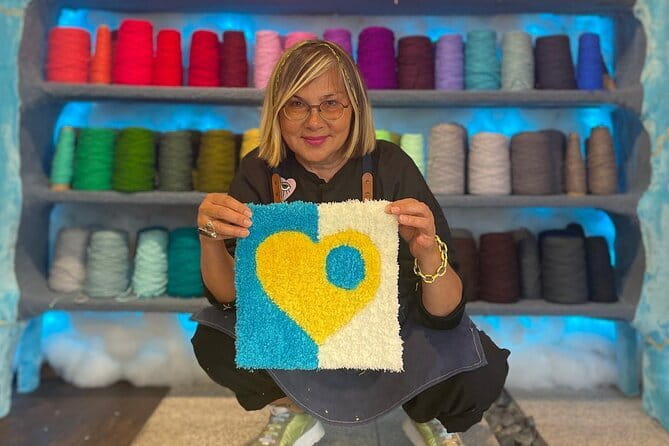
The best part of this Kyoto activity is that you do not simply buy a souvenir, you make one. At tufting studio CREA, you turn your own idea into a small rug, choosing from about 60 thread colors and learning to use a specialized tufting machine with careful help from Hayato and the studio team.
I like the small group size of six and the fact that your rug is ready to take home that same day. The studio sits one minute from Shimogamo Shrine, with restaurants nearby, so it fits neatly into a day around northern Kyoto. The main drawback is size: your finished rug can be no larger than 30 centimeters square or rectangular, and the $84.70 price is high for a small souvenir.
In This Review
- Key points
- Making a Kyoto Souvenir With Your Own Hands
- Choosing From 60 Thread Colors
- Learning the Tufting Machine at CREA
- A Convenient Start Near Shimogamo Shrine
- Shimogamo Shrine Before or After Your Rug
- Ginkakuji Temple and the Kamogawa Delta
- Is $84.70 a Fair Price?
- Who Will Get the Most From This Activity?
- Practical Planning for Your Two Hours
- My Call: Book It for the Making, Not Just the Rug
- FAQ
- Where is tufting studio CREA located?
- How long does the rug-making experience last?
- How large can the rug be?
- How many thread colors can I choose from?
- Can beginners take part?
- Is equipment provided?
- Can I take the finished rug home the same day?
- How many people can join the activity?
Key points
- Make your own Kyoto rug: Create a square or rectangular rug up to 30 cm using your own design.
- Choose from about 60 thread colors: The color selection lets you make something personal rather than taking home a standard souvenir.
- Learn with a specialized machine: Staff explain the equipment carefully, so beginners can take part without prior tufting experience.
- Small class, maximum six people: The limited size allows for direct help and a calmer studio setting.
- Take it home the same day: Your finished rug works as a wall hanging, entryway accent, or small living room decoration.
- Near three useful Kyoto stops: Shimogamo Shrine, Ginkakuji Temple, and the Kamogawa Delta can all fit into the same outing, though transport between them is not included.
Making a Kyoto Souvenir With Your Own Hands
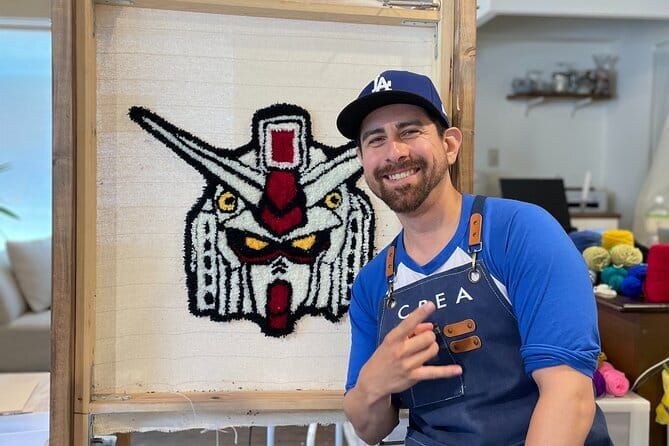
At CREA, you are not watching a craft demonstration from the sidelines. You use the equipment yourself and give shape to a design you have chosen. That makes this a better fit for you if a small object with a personal story matters more than a mass-produced souvenir.
The studio provides the special tufting machine and an apron. Staff explain how to use the machine, and the experience is designed for first-time makers. You still need to pay attention and work with care, but you do not need previous experience with rugs, sewing, or craft machines.
The finished piece is limited to 30 centimeters square or rectangular. That is not large enough to cover a floor or make a major room feature, but it is a useful size for a small wall display, entryway decoration, or accent in a living room.
I see the size as both a limit and a benefit. You will not spend hours trying to complete a large project, and you can carry the finished rug home without wrestling with a bulky package. At the same time, the price makes more sense if you value the making process and the memory attached to the object, not just the amount of material you take home.
More Kyoto craft workshops:
- Authentic knife making experience at a blacksmith in Kyoto
★ 4.8 · 350 reviews - Roketsu dyeing experience: M course Roketsu Dyeing Experience
★ 5.0 · 163 reviews - Kyoto: Replica food making experience
★ 4.8 · 70 reviews
Choosing From 60 Thread Colors
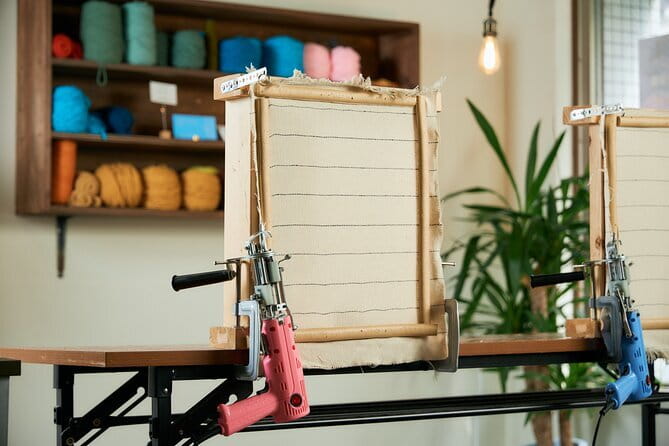
The color choice is where the rug starts to feel like yours. About 60 thread colors are arranged at the studio, giving you room to follow a favorite palette, match your home, or make something tied to your Kyoto visit.
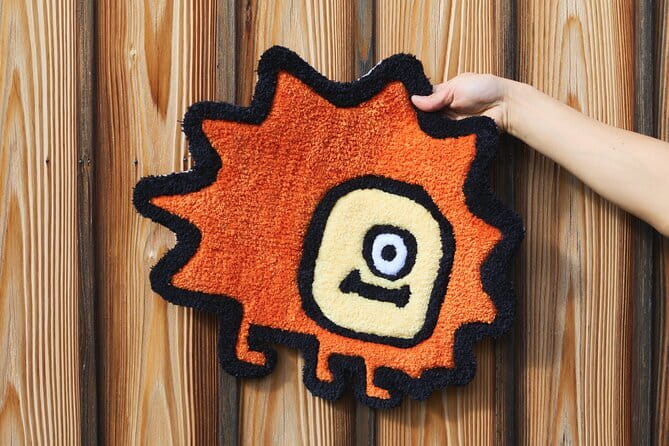
You can begin with a simple idea. A bold shape, a basic pattern, or a small symbol may be easier to manage than a highly detailed image, especially during a two-hour session. The important point is that you are free to shape the design around your own taste rather than selecting from a fixed set of templates.
I like this creative freedom, but you should be realistic about your time. Two hours is enough for a compact rug, instruction, and the work itself, yet it is not an open-ended art session. A design that is too complicated may create pressure. If you already have a rough idea before arriving, you can spend more time making the rug and less time trying to decide what it should be.
The color selection also makes this activity useful for couples or families. Each person can make a different design, or you can work around a shared color plan. The result will not be identical to anyone else’s, which is exactly the point of a handmade souvenir.
Learning the Tufting Machine at CREA
The specialized machine is the unfamiliar part for most first-time participants. That can sound intimidating, but staff give detailed explanations before you begin. Hayato is specifically praised for creating a pleasant first-time experience, and his patient instruction is a useful reason to book this activity if you feel unsure about handling equipment.
You will wear an apron supplied by the studio. That small detail matters because tufting is hands-on work, and you can focus on the design rather than worrying about keeping your clothing spotless.
The studio has a maximum of six participants. This is a practical advantage. You are less likely to feel lost in a large class, and staff have a better chance of helping when you need advice. The small format also suits couples who want to make something together without being part of a crowded workshop.
The experience has earned a perfect 5 rating from six published reviews, with particular praise for Hayato’s instruction, the relaxed atmosphere, friendly staff, and the fact that equipment is provided. That is a small sample, so I would not treat it as proof that every session will be perfect. Still, the repeated focus on careful teaching and a pleasant setting matches the activity’s strongest selling point: beginners can try something new without having to arrive with technical skills.
A Convenient Start Near Shimogamo Shrine
The studio is at CREA, 1F, 7-1 Shimogamo Nishibayashicho, Sakyo Ward, Kyoto, postal code 606-0817. It is about one minute from Shimogamo Shrine, a World Heritage Site, and you can reach the area by bus from Kyoto Station.
That location gives you a sensible way to build a half-day around the activity. You might visit Shimogamo Shrine before your session, make your rug, then stop for food at one of the restaurants around the studio. This is more appealing than traveling across Kyoto only for a two-hour indoor activity.
The meeting point and ending point are the same. The studio activity does not include an air-conditioned vehicle, so do not expect a chauffeured sightseeing tour or transport between the listed Kyoto stops. You are responsible for getting to the studio and for moving around the area afterward.
Public transportation is nearby, which helps, but the supplied details do not provide exact bus numbers, travel times, or a step-by-step route from Kyoto Station. I would check your route before leaving, especially if you have a timed reservation. Mobile ticketing and confirmation at booking make the reservation side simple, but they do not replace basic planning for the bus ride.
A completely different side of Kyoto:
- PERFECT KYOTO 1-Day Bus Tour
★ 5.0 · 13,518 reviews - Kyoto: Fushimi Inari, Kinkakuji, Bamboo Grove 1 Day Bus Tour
★ 4.8 · 4,316 reviews - Kyoto: Tea Ceremony in a Traditional Tea House in Kiyomizu
★ 4.9 · 3,519 reviews - Kyoto Geisha Walking Tour: Gion District & Hidden Gems
★ 4.7 · 3,273 reviews
Shimogamo Shrine Before or After Your Rug
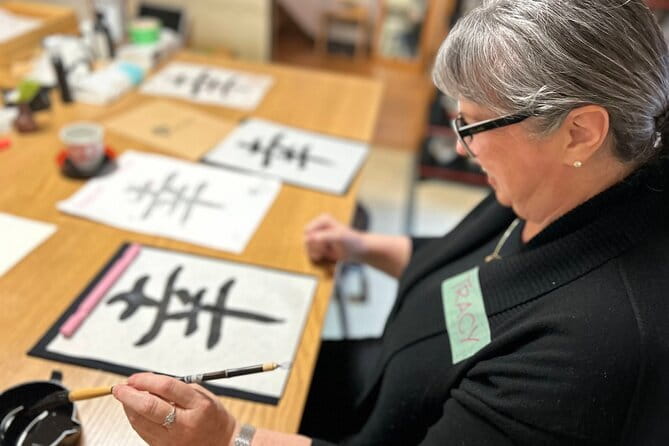
Shimogamo Shrine is the most natural companion stop. It is only one minute from the studio, so you can combine cultural sightseeing with the craft session without wasting much time in transit.
The shrine gives your rug-making experience a stronger sense of place. Instead of treating the workshop as an isolated indoor class, you can connect it with one of Kyoto’s major historic religious sites. If you visit the shrine first, the studio then becomes a hands-on activity in the same neighborhood. If you make the rug first, the shrine offers a quieter change of pace afterward.
Keep your schedule sensible. The rug session lasts about two hours, and you should allow time for transportation, finding the studio, and any shrine visit you want to make. I would not book this at the end of a tightly packed day with a train to catch immediately afterward.
Ginkakuji Temple and the Kamogawa Delta
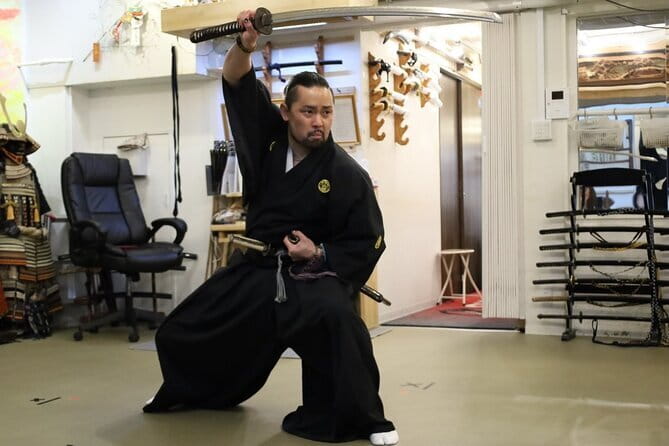
Ginkakuji Temple is also listed as part of the route, but the activity details do not say that admission, guided transport, or a vehicle between the studio and temple is included. Treat it as a nearby Kyoto sight you may add to your day, not as a stop delivered by a sightseeing bus.
Ginkakuji, often called the Silver Pavilion, is a natural choice if you are already exploring northeastern Kyoto. It offers a very different experience from tufting. The studio is creative and practical, while the temple gives you gardens, architecture, and a more traditional setting. Check your own timing and transport before assuming both can fit comfortably around the two-hour session.
The Kamogawa Delta, within Kyoto Prefectural Kamogawa Park, adds another change of mood. It is a good place to pause outdoors after working in the studio, and its position near the Kamogawa River makes it a simple option for a walk or break. Again, the listed activity ends back at the studio, so you should plan this as your own stop before or after the class.
These three locations make the area useful for a full outing, but they should not be confused with included tour transportation. The core product is the rug-making session.
Is $84.70 a Fair Price?

At $84.70 per person, this is not the cheapest way to spend two hours in Kyoto. If you only want a small floor covering, you can likely buy one for less. The value comes from the instruction, machine use, thread choices, apron, and the chance to produce an object tied to your own visit.
I would compare it with other hands-on craft activities, not with ordinary souvenir shopping. You are paying for time in a small studio, access to equipment you probably do not have at home, and help from staff who can guide a beginner through the process.
The same-day pickup improves the value. You do not have to arrange shipping or wait until the end of your trip. You can take the rug back to your accommodation, pack it with your belongings, or carry it home as a compact reminder of Kyoto.
For a family, the cost can add up quickly because the price is per person. Children may enjoy the creative side, and families are specifically welcomed, but you should consider the age and attention span of each child before booking. For a couple, the price may feel more reasonable if you want a shared activity that produces two personal keepsakes.
Who Will Get the Most From This Activity?
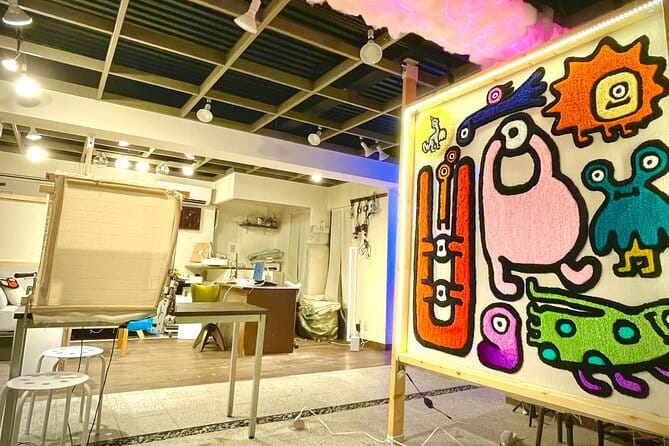
I would recommend CREA to you if you enjoy making things, prefer small-group activities, or want a souvenir with a personal mark. It also suits repeat visitors who have already seen Kyoto’s major sights and want a different kind of afternoon.
Couples can treat it as a joint project, though each person can create an individual rug. Families can use it as a break from temple visits, provided everyone is comfortable following instructions and working carefully with the machine.
This is less suitable if you want a large rug, a fully finished professional artwork, or a fast photo stop. It is also not the right choice if your schedule has no flexibility. The session takes about two hours, and the full outing will take longer once you add bus travel and nearby sights.
The experience may also be less appealing to someone who dislikes making design decisions. You choose your own idea and thread colors, so there is a creative commitment from the start. That freedom is a strength for many people, but it can feel like work if you prefer a ready-made souvenir.
Practical Planning for Your Two Hours
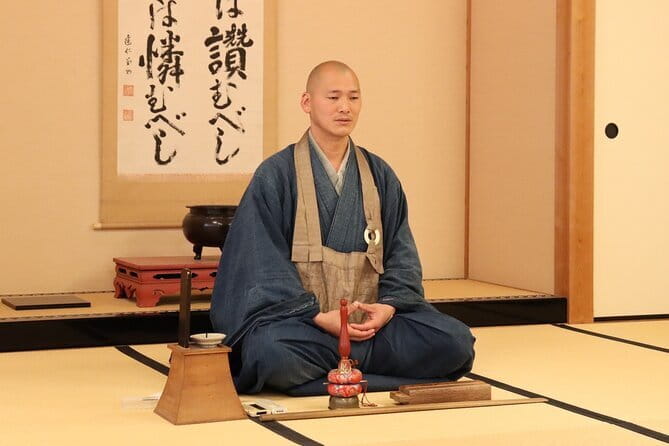
Book ahead if you want a particular day. The experience is booked, on average, 19 days in advance, and the maximum of six participants keeps capacity limited. Confirmation arrives when you book, and the mobile ticket is convenient for getting started.
Give yourself enough time to reach the meeting point. The studio is near public transportation and accessible by bus from Kyoto Station, but exact journey times depend on your starting point and the day’s traffic.
Wear clothing you do not mind working in, even though an apron is provided. The apron helps protect your clothes, but it is still sensible to dress for a hands-on activity rather than a formal dinner.
The free cancellation policy gives you useful flexibility. You can receive a full refund if you cancel at least 24 hours before the start time. Cancellations or changes within 24 hours are not accepted for a refund, and the cut-off uses local Kyoto time.
My Call: Book It for the Making, Not Just the Rug
I would book this experience if you want a small, personal Kyoto souvenir and like the idea of learning a craft with direct help. The strongest reasons are the limited six-person group, the choice of about 60 thread colors, Hayato’s careful instruction, and same-day pickup.
I would skip it if your main goal is bargain shopping, a large rug, or a sightseeing tour with transport between temples. At $84.70, the price asks you to value the creative process as much as the finished object.
For the right person, this is a smart way to spend two hours near Shimogamo Shrine. You leave with something you made yourself, and that usually carries more meaning than another item pulled from a souvenir shelf.
FAQ
Where is tufting studio CREA located?
The studio is at CREA 1F, 7-1 Shimogamo Nishibayashicho, Sakyo Ward, Kyoto, 606-0817, Japan. It is about one minute from Shimogamo Shrine.
How long does the rug-making experience last?
The activity lasts approximately two hours.
How large can the rug be?
You can make a square or rectangular rug up to 30 centimeters in size.
How many thread colors can I choose from?
The studio offers about 60 thread colors.
Can beginners take part?
Yes. Staff provide detailed instruction on using the specialized machine, and the activity is designed so beginners can participate.
Is equipment provided?
Yes. The studio rents the special tufting machine and provides an apron.
Can I take the finished rug home the same day?
Yes. The completed rug can be taken home on the same day.
How many people can join the activity?
The maximum group size is six participants.
Recently added around Kyoto
- Higashiyama | Kyoto: Sakura Season Private Rickshaw Tour★ 5.0 · 3 reviews
- Kyoto Kimono Rental CHAMATSU|Kimono/Yukata Rental FamilyPlan★ 5.0 · 3 reviews
- Nara Private Customizable Half Day Tour★ 5.0 · 3 reviews
- Kyoto: Half-Day Private Guided Tour to the Old Town of Gion★ 4.4 · 3 reviews
- Kansai Region Hiking Adventure in Nara Kobe Kyoto and More★ 5.0 · 3 reviews
- Full Day Nara Deer, Temple, Shrine, Activities & Tea Ceremony★ 5.0 · 3 reviews
- Nara: Essential Private Tour with Deer Park and Temples★ 5.0 · 3 reviews
- Hiking Tour for Sacred Sites in Kyoto with a Guide★ 5.0 · 3 reviews
Kyoto Craft Workshops, compared.
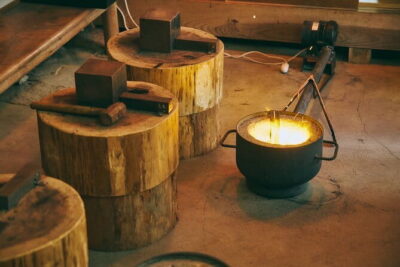
Authentic knife making experience at a blacksmith in Kyoto
Read our review →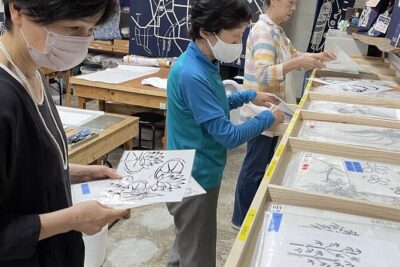
Roketsu dyeing experience: M course Roketsu Dyeing Experience
Read our review →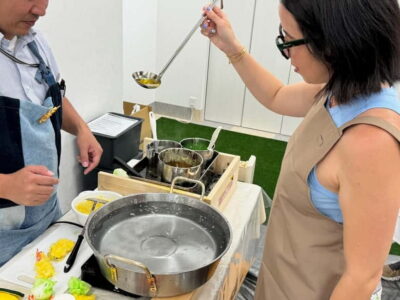
Authentic Knife Making Experience at a Blacksmith in Kyoto
Read our review →
Let’s make only one original onigawara in the world
Read our review →
Bamboo LED Lantern Making Experience in Kyoto Arashiyama
Read our review →Let’s make only one original onigawara in the world!!
Read our review →Browse the lists this tour appears in