
REVIEW · KYOTO CRAFT WORKSHOPS
Let’s make Japanese accessories with Mizuhiki
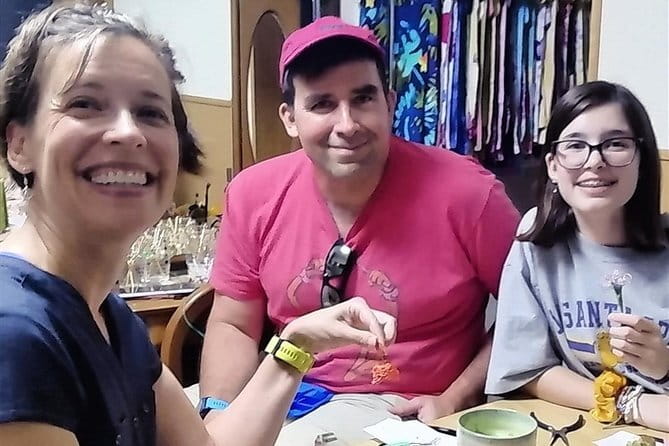
Mizuhiki turns thin, twisted paper cord into surprisingly light but sturdy knots, and this Kyoto workshop lets you turn that old Japanese art into something you can wear or take home. I like the hands-on pace: you practice the basic abalone knot before moving to a finished piece, and I like the calm finish with matcha and sweets. The one-hour session is short, so you will make a small project rather than master the craft.
The class takes place at RakueJapan in a small, authentic-feeling setting near public transportation. Akemi is patient and encouraging, according to the experience details, but the limited time and fixed material package mean you should not expect a long lesson or a full supply kit for making more pieces at home.
In This Review
- Key points to know before booking
- Why Mizuhiki makes a meaningful Kyoto souvenir
- Arriving at RakueJapan in central Kyoto
- The pochi bag gives you an easy first success
- Practice the abalone knot before making an accessory
- Choose a design that fits your time
- Color selection is part of the creative work
- Matcha and sweets slow the pace at the end
- What the private format changes
- The instructor’s patient style matters
- Who will enjoy this Kyoto activity most
- Price, timing, and cancellation details
- Should you book the Mizuhiki workshop?
- FAQ
- Where does the Mizuhiki workshop take place?
- How long is the activity?
- What is the price?
- Is the activity private?
- Who teaches the workshop?
- What do I make during the class?
- Are materials included?
- Are matcha and sweets included?
- Can I cancel for a full refund?
Key points to know before booking
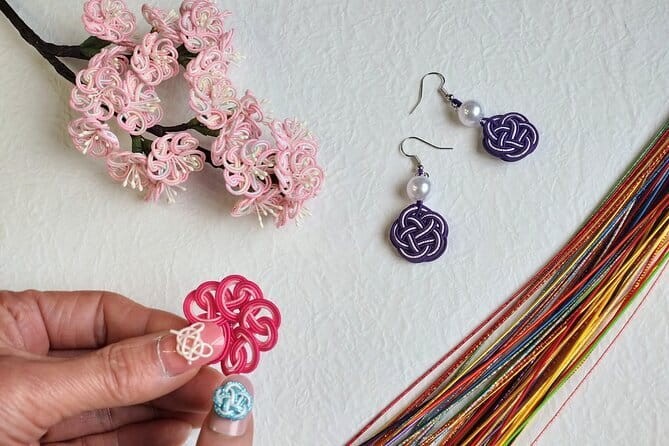
- Make a Kyoto souvenir yourself: Choose Mizuhiki colors and create an accessory or ornament instead of buying a finished item.
- Start with a pochi bag: You first select colored paper for a small gift bag and tie it with an abalone knot.
- Practice before committing: The basic knot is taught with a single cord, giving beginners a chance to learn the hand movements.
- Pick from several designs: Examples include strawberry straps, floral hair ornaments, earrings, keychains, and mini baskets.
- Enjoy a quiet finish: Matcha and sweets are included after the craft work.
- Keep the timing in mind: The private activity lasts about one hour and costs $19.60 per person.
Why Mizuhiki makes a meaningful Kyoto souvenir
Mizuhiki is not simply decorative string. It is made by winding thread around thin, twisted paper, producing a cord that feels delicate but holds its shape well. In Japan, Mizuhiki has long been used for sacred purposes and remains familiar on envelopes containing celebratory money.
That background gives your finished piece a little more meaning than a standard souvenir-shop purchase. You are working with a form that still appears in everyday gift customs, while using it in a modern way for earrings, hair ornaments, straps, or small decorations.
I also like the contrast between the material and the finished result. The cord looks fine and light, yet a careful knot can become a firm flower, leaf, plum, or other shape. You do not need to know Japanese craft techniques in advance. The session is built around learning by doing.
The price is $19.60 per person. For that amount, you receive the materials, personal instruction in a private group setting, the finished craft, and matcha with sweets. That is good value if you want a short cultural activity and a small handmade keepsake.
The value is less clear if your main goal is to bring home a large selection of materials or learn enough to reproduce many designs on your own. Mizuhiki for non-gift projects and metal fittings for home crafting are not included. Think of this as a guided make-and-take class, not a full craft course.
More Kyoto craft workshops:
- Authentic knife making experience at a blacksmith in Kyoto
★ 4.8 · 350 reviews - Roketsu dyeing experience: M course Roketsu Dyeing Experience
★ 5.0 · 163 reviews - Kyoto: Replica food making experience
★ 4.8 · 70 reviews
Arriving at RakueJapan in central Kyoto
The meeting point is RakueJapan, at 255 Nomura Building, 2nd floor, Shijo Horikawacho, Shimogyo Ward, Kyoto 600-8481. The activity begins and ends at the same place, so you do not need to arrange a separate return transfer or find a second location afterward.
The venue is near public transportation, which helps when you are fitting the workshop between sightseeing stops. The address is written in a compact city format, so I would keep the full meeting details available on your phone and allow enough time to find the building and reach the second floor.
The setting is described as small and authentic-feeling. That matters here. Mizuhiki is a fine-motor craft, and a quiet room with close guidance is more useful than a large class where you have to wait for help.
You may also be able to rent a kimono at the shop. The supplied information does not give the rental price, timing, or exact terms, so treat that as an extra possibility rather than part of the workshop itself.
The pochi bag gives you an easy first success
The first step is choosing colored paper for a pochi bag, a small Japanese gift bag. This introduces you to the visual side of Mizuhiki before you tackle the more detailed knotting.
You then tie the basic abalone knot to the bag. Starting with a small paper project is a sensible choice because it lets you see how the cord bends and holds together without asking you to create a complex ornament immediately.
The color choice is part of the fun. Mizuhiki can be surprisingly colorful, and the cords are used as design elements rather than just fasteners. You can begin thinking about how different colors will work together before selecting your main accessory.
The pochi bag also connects the activity to the traditional use of Mizuhiki on gifts. You are not just practicing a random craft sample. You are learning a knot associated with Japanese presentation and celebration.
Practice the abalone knot before making an accessory
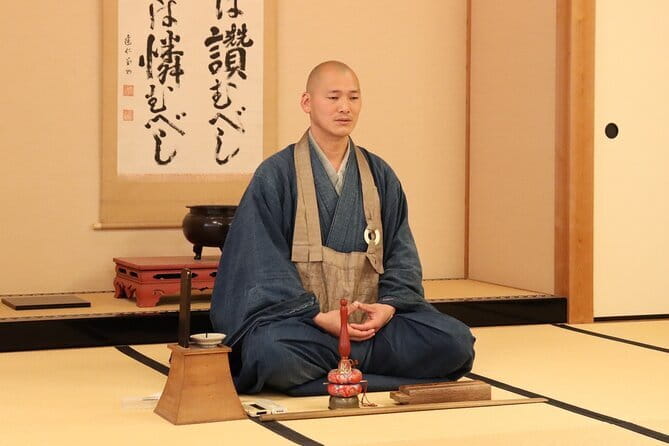
After the bag, you practice the abalone knot using only one Mizuhiki cord. This is the point where the class shifts from choosing materials to learning the basic hand movement.
The knot may look simple when completed, but the cord needs to be guided carefully. A patient instructor makes a real difference here, especially if your fingers are not used to holding several loops in place. Akemi demonstrates the basic knot and provides help as you work through it.
The lesson is designed for beginners. One participant described learning the basic knot and then progressing to leaf and flat plum knots with one, two, and three colors. That gives you a sense of the possible progression, though the exact finished project depends on the sample you choose and the time available.
You should expect guidance rather than a formal lecture. The useful part is having the instructor correct your hand position and show the sequence again when the cord slips. The work becomes easier once you stop trying to force the shape and let the cord follow the knot.
A completely different side of Kyoto:
- PERFECT KYOTO 1-Day Bus Tour
★ 5.0 · 13,518 reviews - Kyoto: Fushimi Inari, Kinkakuji, Bamboo Grove 1 Day Bus Tour
★ 4.8 · 4,316 reviews - Kyoto: Tea Ceremony in a Traditional Tea House in Kiyomizu
★ 4.9 · 3,519 reviews - Kyoto Geisha Walking Tour: Gion District & Hidden Gems
★ 4.7 · 3,273 reviews
Choose a design that fits your time
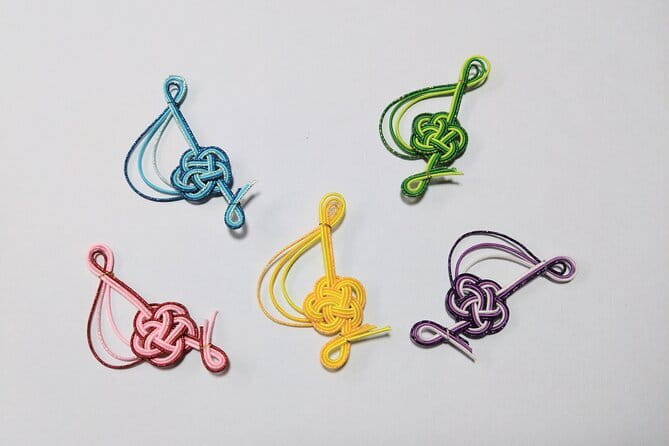
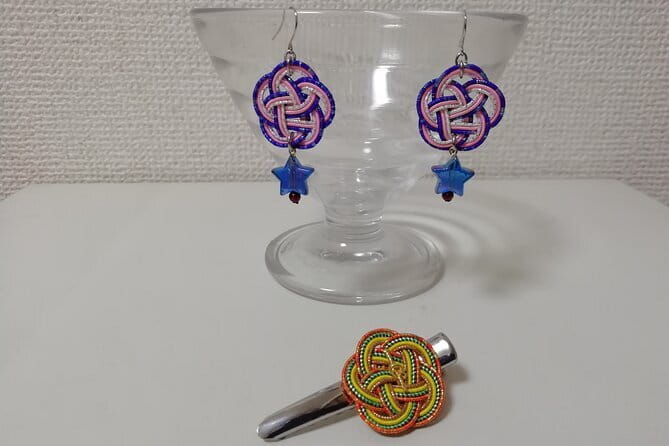
Once you have practiced, you choose an accessory from the available samples. Examples include strawberry straps, floral hair ornaments, cute earrings, keychains, and mini baskets.
This choice is important because one hour passes quickly. A simple strap or keychain may be the sensible pick if you want to finish comfortably. Earrings or a floral design can offer more visual impact, but intricate shapes may require more patient work.
One participant made a set of flower earrings in a one-on-one class. Another completed two types of accessories after quickly learning the knots. These examples show that the class can produce more than one small item, but you should not assume that every design takes the same amount of time.
Ask about the available designs when you arrive if you already have a particular item in mind. The information confirms that samples are provided, but it does not promise every example at every session.
The best approach is to choose something you genuinely like, while staying realistic about your hand skills and the session length. A neat, finished keychain is a better souvenir than an ambitious project left incomplete.
Color selection is part of the creative work
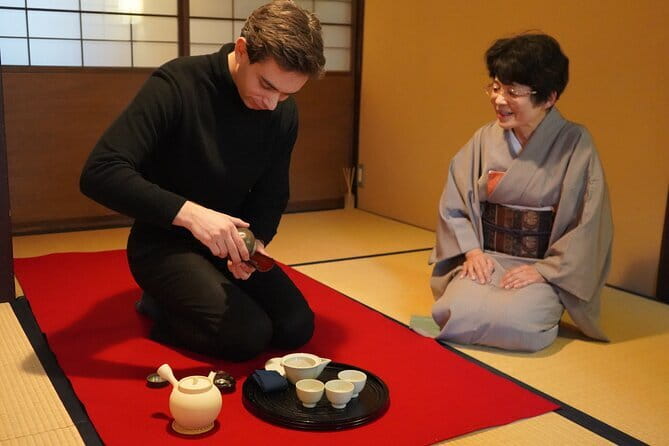
After choosing the design, you select the Mizuhiki cords. This is where the craft becomes personal. You can work with one color or combine several, depending on the accessory and the example you choose.
The instruction includes work with two and three different colors for some knots. Color combinations can change the character of the same form, making a flower look soft, bright, playful, or more restrained.
You are not simply following a pre-made kit. The materials are supplied, but your choices affect the final result. That makes the souvenir more personal and helps explain why this activity can appeal to people who usually skip standard sightseeing workshops.
At the same time, the material selection is not a shopping session. Mizuhiki and metal fittings for making additional non-gift items at home are not included. If you become interested in continuing the craft, you will need to source those separately.
Matcha and sweets slow the pace at the end
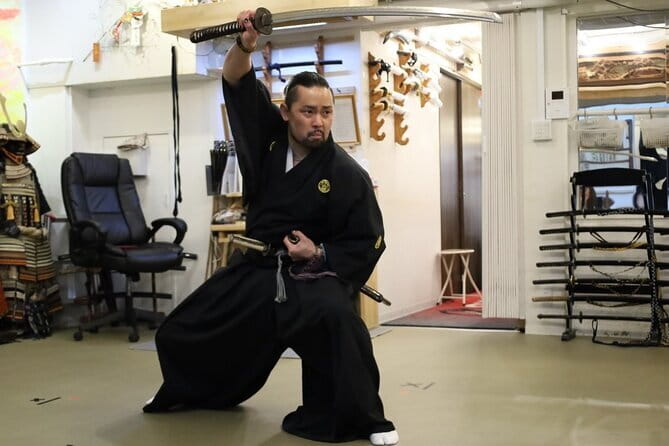
After the concentrated knotting, you take a break with matcha and sweets. This is a small part of the itinerary, but it gives the hour a pleasant rhythm.
Mizuhiki requires attention. You may find yourself staring closely at each loop and repeating a movement until it works. The matcha break gives you a clear stopping point and lets you enjoy what you made before returning to the rest of Kyoto.
One participant specifically appreciated the cup of matcha at the end. I see it as part of the cultural value of the session, not just a snack. The workshop pairs a Japanese craft with a familiar tea ritual without turning either one into a long formal ceremony.
The supplied information does not specify the type of sweets or the amount served. Plan on a modest refreshment rather than a meal.
What the private format changes
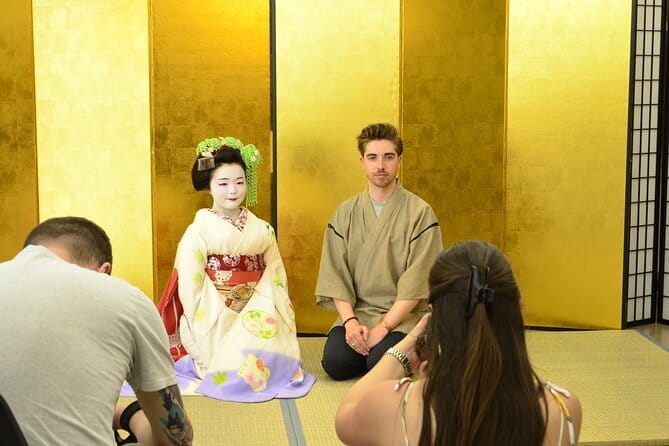
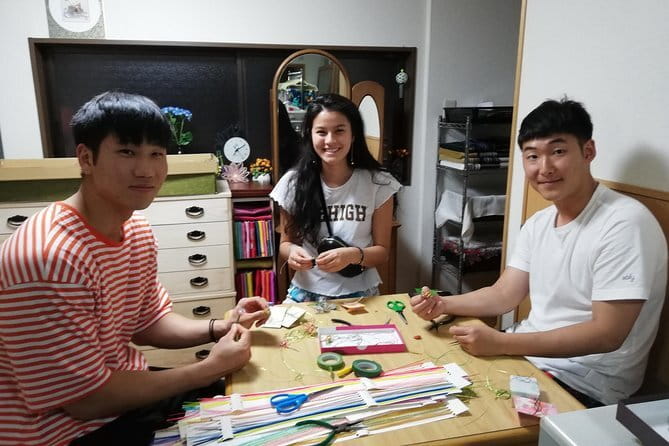
This is a private activity, so only your group participates. That is a strong advantage for a craft that depends on close attention and repeated demonstrations.
You can ask for help without worrying about holding up a large class. If you are right-handed or left-handed, quick correction from the instructor may save time. The private format also suits couples, families, or friends who want to work at their own pace.
The tradeoff is that the class depends on the booking frame and the time you select. Earlier times may sometimes be possible if you contact the provider promptly, but you should not count on a schedule change without confirmation.
The one-hour duration keeps the activity easy to fit into a Kyoto day. It is long enough to learn a knot, complete a small project, and have tea, but short enough that it will not take over your sightseeing plans.
The instructor’s patient style matters
Akemi is identified as the instructor in the experience details, and the teaching style described is gentle, patient, and encouraging. That is exactly what this craft needs.
The knots can look complicated when you first see the finished design. A calm teacher can break the process into smaller movements, demonstrate it again, and help you recover when a loop goes wrong.
You do not need to be naturally crafty. One participant described having unskilled fingers and still learning something. Another completed leaf and flat plum knots with increasing numbers of cords.
That said, your final piece may not look identical to the sample. Handmade work has small variations, particularly in a short beginner class. I would treat those differences as part of the souvenir rather than a flaw.
The instructor may also photograph or publish completed work on Instagram under the account rakue9. If you prefer not to have your work shown, ask about that during the session.
Who will enjoy this Kyoto activity most
I would recommend this workshop to you if you like making things, want a small personal souvenir, or need a quiet break from temples and city streets. It is also a good choice if you want a cultural activity that does not require a full day or advanced skill.
It suits beginners because the process begins with one cord and a basic knot. The private format is useful for anyone who wants direct help, including people who are unsure about their dexterity.
Families and couples may enjoy comparing color choices and finished pieces. The activity can also work well for solo participants, particularly if you appreciate focused instruction and a calm room.
You may want to skip it if you prefer fast sightseeing, dislike detailed handwork, or want to buy a large quantity of craft supplies. The session is about making one or a few small items, not browsing a big craft market.
It is also not the best pick if you need a long tea ceremony, a full kimono experience, or an advanced Mizuhiki course. Kimono rental may be available at the shop, but it is not included in the stated package.
Price, timing, and cancellation details
At $19.60 per person, this is a reasonably priced add-on to a Kyoto itinerary. Materials and matcha with sweets are included, and the private format gives the price more value than a basic drop-in demonstration.
The class lasts about one hour. Because it ends where it starts, you can plan another activity nearby without arranging transport back across the city.
Confirmation is provided when you book. The activity is near public transportation, and most people can participate according to the supplied information.
Free cancellation is available if you cancel at least 24 hours before the local start time. Within 24 hours, the payment is not refunded, and changes made during that period are not accepted.
Should you book the Mizuhiki workshop?
Book it if you want to make a small Kyoto keepsake, learn a traditional knot, and enjoy a gentle hour with tea afterward. The strongest reasons are the private setting, patient instruction from Akemi, colorful material choices, and the chance to wear or use what you create.
Keep your expectations sensible. You will not receive extra Mizuhiki and metal fittings for home projects, and the one-hour schedule limits how complex your finished work can be.
For a modest price, this gives you more than a souvenir purchase. You take home an object connected to Japanese gift customs, along with the memory of making it yourself. If that sounds better than another quick stop in a shop, I would book it.
FAQ
Where does the Mizuhiki workshop take place?
It takes place at RakueJapan, 255 Nomura Building, 2nd floor, Shijo Horikawacho, Shimogyo Ward, Kyoto 600-8481.
How long is the activity?
The workshop lasts approximately one hour.
What is the price?
The price is $19.60 per person.
Is the activity private?
Yes. Only your group participates in the private activity.
Who teaches the workshop?
Akemi is identified as the instructor. The class includes demonstrations and guidance with the knots and accessory making.
What do I make during the class?
You first make a small pochi bag and practice the basic abalone knot. You then choose an accessory or ornament, such as earrings, a keychain, a floral hair ornament, a strawberry strap, or a mini basket, depending on the available samples.
Are materials included?
The materials used during the workshop are included. Mizuhiki for non-gift items and metal fittings for making additional pieces at home are not included.
Are matcha and sweets included?
Yes. Snacks consisting of matcha and sweets are included.
Can I cancel for a full refund?
Yes, if you cancel at least 24 hours before the experience start time. Cancellations within 24 hours are not refunded, and changes during that period are not accepted.
Recently added around Kyoto
- Higashiyama | Kyoto: Sakura Season Private Rickshaw Tour★ 5.0 · 3 reviews
- Kyoto Kimono Rental CHAMATSU|Kimono/Yukata Rental FamilyPlan★ 5.0 · 3 reviews
- Kyoto: Half-Day Private Guided Tour to the Old Town of Gion★ 4.4 · 3 reviews
- Nara Private Customizable Half Day Tour★ 5.0 · 3 reviews
- Kansai Region Hiking Adventure in Nara Kobe Kyoto and More★ 5.0 · 3 reviews
- Full Day Nara Deer, Temple, Shrine, Activities & Tea Ceremony★ 5.0 · 3 reviews
- Nara: Essential Private Tour with Deer Park and Temples★ 5.0 · 3 reviews
- Hiking Tour for Sacred Sites in Kyoto with a Guide★ 5.0 · 3 reviews
Kyoto Craft Workshops, compared.
Authentic knife making experience at a blacksmith in Kyoto
Read our review →
Roketsu dyeing experience: M course Roketsu Dyeing Experience
Read our review →
Authentic Knife Making Experience at a Blacksmith in Kyoto
Read our review →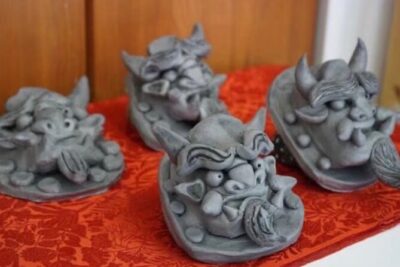
Let’s make only one original onigawara in the world
Read our review →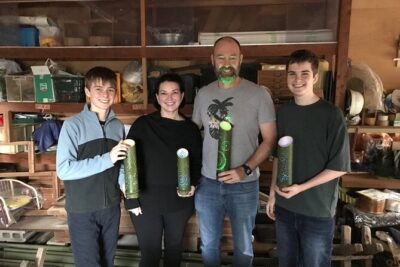
Bamboo LED Lantern Making Experience in Kyoto Arashiyama
Read our review →Let’s make only one original onigawara in the world!!
Read our review →Browse the lists this tour appears in