
REVIEW · KYOTO TEA CEREMONY EXPERIENCES
Kyoto: Wazuma Magic Show & Tea Ceremony
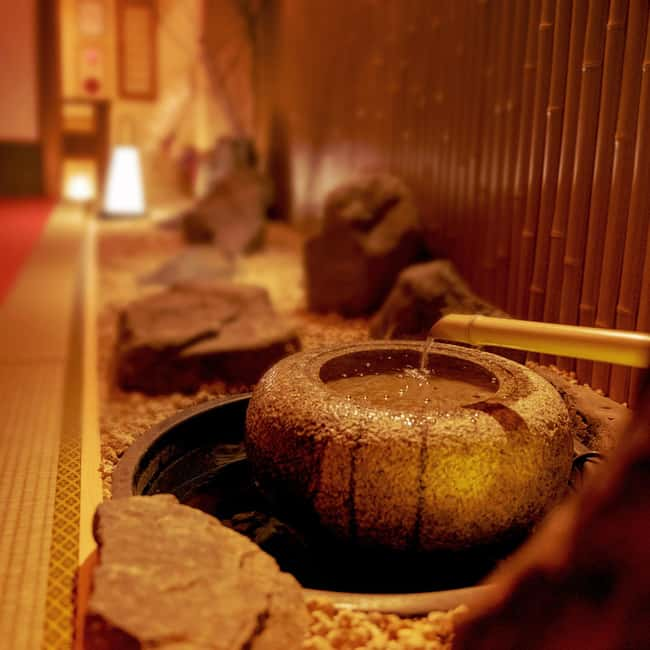
Wazuma is not a standard stage magic show. It is a rare Japanese illusion tradition said to reach back 1,000 years, performed today by fewer than ten masters. In a quiet Gion tea room, Masaya brings the tricks close enough to make you question your own eyes, while the six-seat setting keeps the show personal.
I like two things right away: the private format, which gives your group the whole room, and the calm second half with finely prepared Uji matcha. The main consideration is price: at $77 per person for one hour, this is a special-interest experience rather than a budget activity.
In This Review
- Key points
- Wazuma magic in a six-seat Gion tea room
- Why the private format changes the show
- The 30-minute magic performance
- Uji matcha after the applause
- Gion location and the practical details
- Is $77 a fair price for one hour?
- Who will enjoy this Kyoto experience?
- Booking advice for a smooth visit
- Should you book the Wazuma show and matcha?
- FAQ
- How long does the Kyoto Wazuma experience last?
- How many people can attend?
- Is the show available in English?
- Where does the activity take place?
- Is transportation included?
- Can I take photographs during the performance?
- Is the activity suitable for wheelchair users?
- Can I cancel or pay later?
Key points
- Rare Wazuma tradition: See an old Japanese form of illusion art that is officially recognized as intangible cultural heritage.
- Only six seats: Your private group sits close to the performance, with no large audience between you and the action.
- Masaya and Tamaki: English-speaking hosts guide the show and tea portion, with Masaya receiving special praise for his lively performance.
- Two contrasting halves: A 30-minute magic show leads into 30 minutes of quiet Uji matcha.
- Small souvenir included: A little keepsake gives you something tangible to remember the unusual performance.
- Gion location: You meet a staff member outside the building five minutes before the start, but transportation is not included.
Wazuma magic in a six-seat Gion tea room
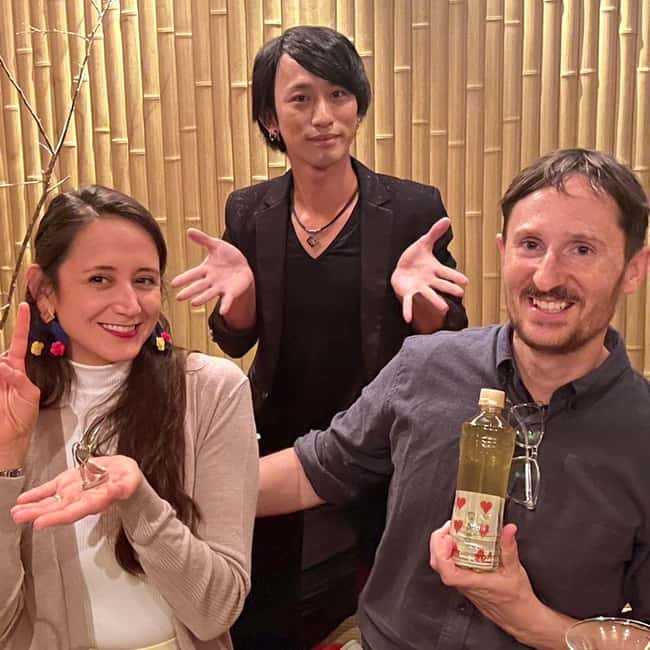
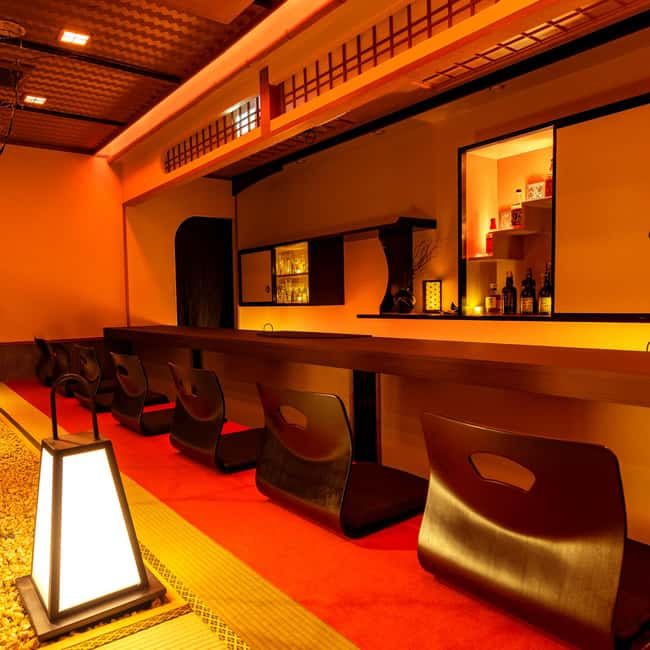
The best reason to book this experience is its scale. You are not sitting in a theater watching a magician work from a distant stage. The room has only six seats, and the show is reserved for one private group.
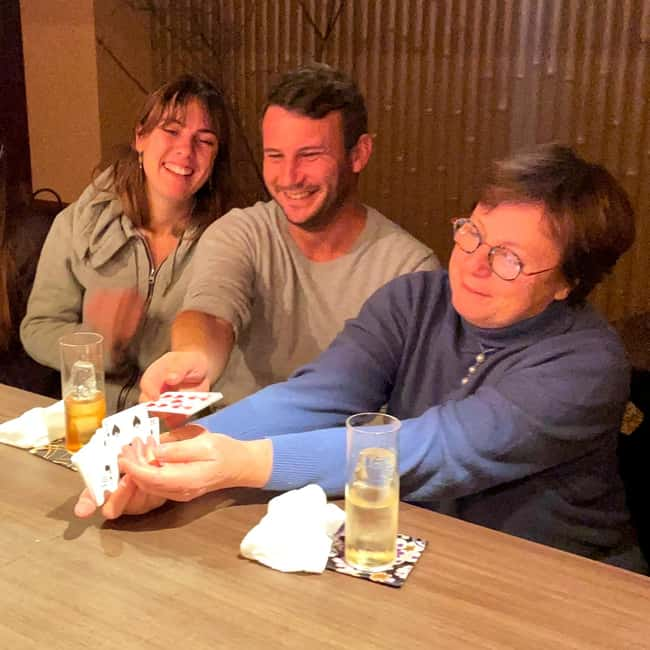
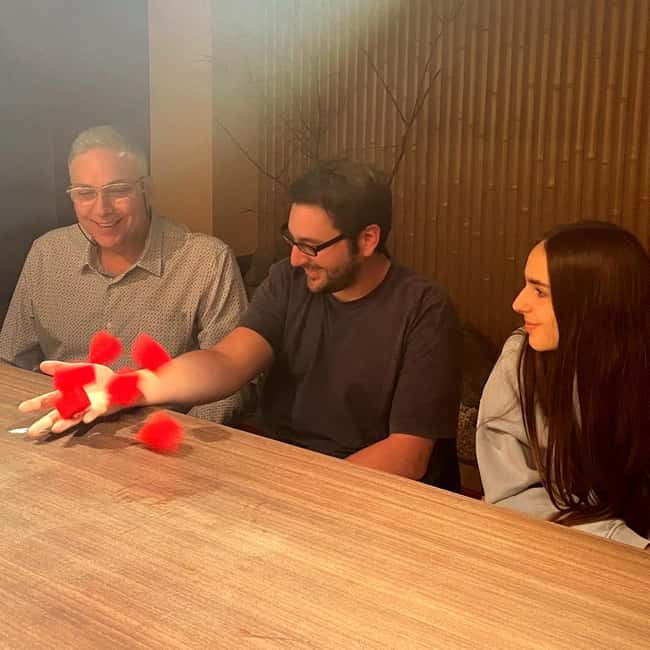
That matters with close-up magic. Small gestures, hand movements, and objects do the work. When the action is only a short distance away, you can watch carefully and still find yourself without an answer. The performance feels less like a polished stage production and more like being allowed into a private salon.
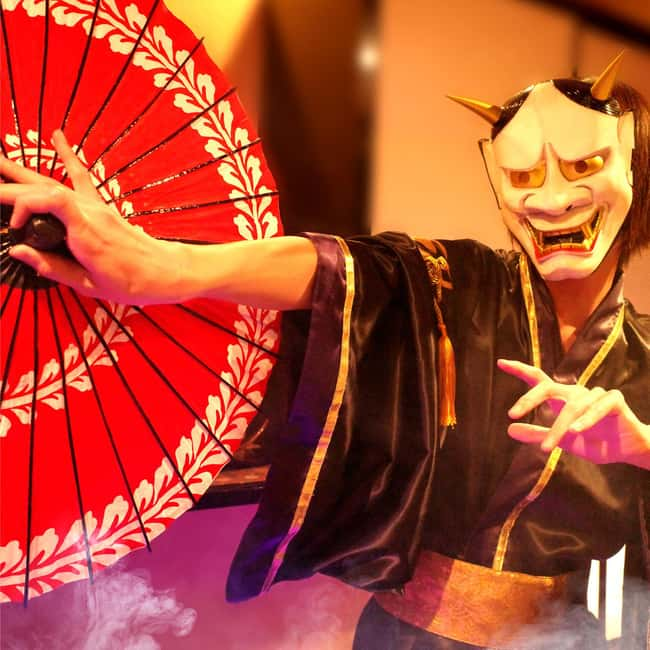
Wazuma is presented as an ancient Japanese illusion art, with roots going back about 1,000 years. Fewer than ten masters are said to perform this tradition today, so the show offers something you are unlikely to encounter during an ordinary Kyoto sightseeing day.
The art is also officially recognized by Japan as intangible cultural heritage. That does not mean you should expect a museum lecture. Instead, the cultural value comes through the form itself: precise motions, formal presentation, and an old style of entertainment that has survived in a very small circle.
Masaya is associated with the magic performance, and the English-speaking team includes Tamaki. The available comments repeatedly single out Masaya’s personality and ability to keep the magic close and lively. You should expect an interactive presentation rather than a silent demonstration, though the exact tricks can change.
More tea ceremonies in Kyoto:
- Kyoto: Tea Ceremony in a Traditional Tea House in Kiyomizu
★ 4.9 · 3,519 reviews - Kyoto: Tea Ceremony Ju-An at Jotokuji Temple
★ 4.9 · 3,207 reviews - Kyoto: 45-Minute Tea Ceremony Lesson Experience
★ 4.3 · 2,378 reviews
Why the private format changes the show
A private group gives this hour a different feel from a public cultural performance. You do not need to compete with a crowd for a clear view, and the performer can address the people in the room directly.
The setting is especially useful for couples, families, or friends who want one shared activity without a large tour group. It also suits visitors who find big performances tiring or impersonal. With only six seats, the room stays quiet and focused.
The close distance comes with a small trade-off. You may feel more involved, but you are also more exposed to the performance. If you dislike being invited to take part in a trick, ask the English-speaking host about the format when you arrive. The available information describes the show as interactive, but it does not promise that every person must participate.
Flash photography is not allowed during the performance. That is sensible for a room built around concentration, and it protects the mood, but you should put your phone away rather than plan on recording the best moments.
The show is by reservation only. This is not a drop-in attraction you can add while walking through Gion. Reserve ahead, save the meeting details, and arrive five minutes before the start as requested.
The 30-minute magic performance
The first half lasts 30 minutes. That is long enough to feel like a complete presentation, but short enough to fit neatly into a busy Kyoto day.
You can expect the performance to focus on Wazuma rather than on a general mix of modern stage tricks. The appeal is the link between the illusions and Japanese tradition. The show is theatrical and entertaining, but it also gives you a look at a form of art that is rarely placed in front of international visitors.
Close-up magic depends on timing and attention. The room’s small size lets you see the action clearly, and the private setting removes much of the background noise found at public shows. People who enjoy trying to spot the method will have plenty to watch, yet the point is not simply to solve each trick.
Several details make this feel like more than a quick novelty. The performance takes place in a traditional tea room, the gestures are presented as part of an old art, and the host provides English support. You get entertainment first, but also a small window into Japanese ideas of restraint, ceremony, and controlled movement.
The mood is not described as solemn. The show has personality, and Masaya is praised for making it fun and engaging. That balance matters. A purely formal demonstration could feel distant, while a loud comedy magic act would miss the character of the setting.
A souvenir is included at the end. It is a modest touch, not a reason by itself to pay for the activity, but it gives the hour a pleasant finish. The exact item is not specified, so do not book expecting a particular gift.
Uji matcha after the applause
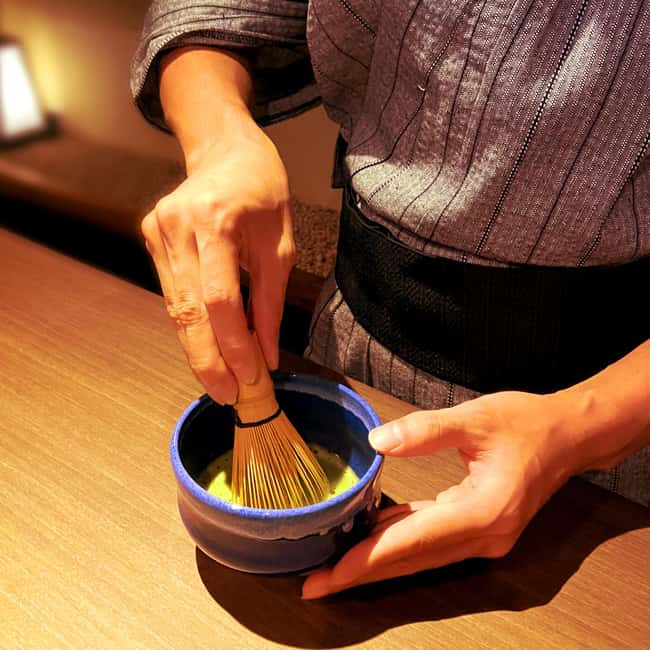
The final 30 minutes shift from surprise to stillness. You receive a hand-whisked bowl of Uji matcha with English guidance, giving the second half a clear cultural purpose rather than treating tea as a quick drink after the show.
Uji, near Kyoto, is closely associated with high-quality Japanese tea. Here, the matcha is described as top quality, and the tea time is designed as a traditional experience in the same refined room.
I like this change of pace. The magic asks you to watch closely and react. The matcha portion gives you time to settle, taste the tea, and learn what is happening. It also prevents the experience from feeling like a 30-minute show followed by an abrupt exit.
You should not confuse this with a long, formal tea ceremony at a temple or tea school. The advertised tea portion lasts 30 minutes and follows a magic performance. It is best understood as a compact introduction with English guidance, not a full morning of tea study.
That makes it a good fit for a first visit to Kyoto. You get a taste of a traditional room, a Japanese tea custom, and an old performance art without giving up half a day. It is also useful for couples or friends who want an indoor activity with a quieter ending.
The tea itself has received warm praise, but matcha remains a particular flavor. It can be grassy, bitter, and intense, especially if you normally drink sweetened tea. The experience is about the preparation and setting as much as the taste, so do not book it only if you are looking for a familiar cup of tea.
A few more Kyoto experiences worth comparing
- Kyoto Gion Cultural Walk & Geisha Show with Dining Options
★ 5.0 · 518 reviews - Kyoto Gion Cultural Walk & Geisha Show with Dining Options
★ 5.0 · 483 reviews - 1 Hour Geisha Show in Kyoto
★ 5.0 · 452 reviews - Kyoto: Samurai Kenbu Traditional Sword Dancing Show
★ 4.5 · 426 reviews
Gion location and the practical details
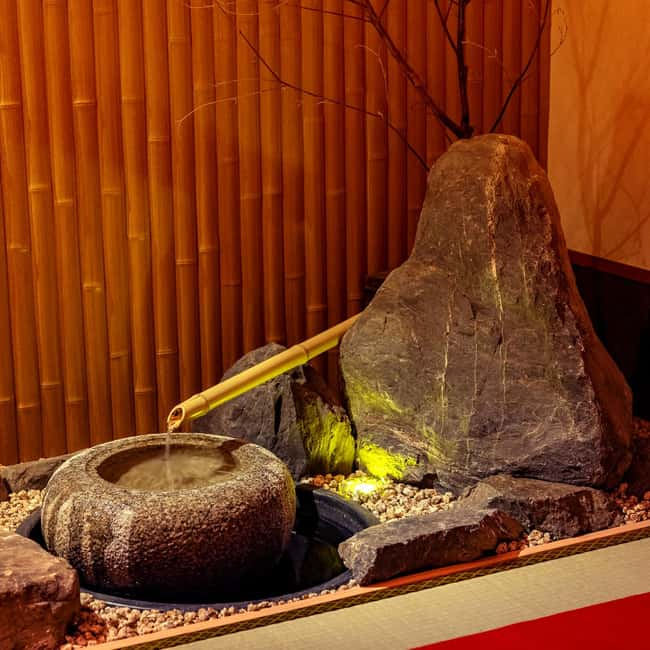
The tea room is in Kyoto’s Gion area, a useful place to combine with other plans in the eastern part of the city. The exact address and starting times depend on the reservation you choose, so check those details carefully before setting out.
A staff member meets you in front of the building five minutes before the scheduled time. Build in enough time to find the entrance. The room is described as discreet and located in a quiet alley, which adds to the private mood but may make it less obvious from the street.
Transportation to and from the activity is not included. You need to arrange your own way to Gion, and the meeting point is outside the building rather than at a major station. Late arrival can cut into a one-hour program. One late party was accommodated, but you should not rely on that courtesy, particularly with a private room and a fixed performance.
The activity is offered in English. That applies to the host or greeter and to the guidance around the matcha. English support is important here because the meaning of the traditions would be harder to grasp if you were only watching silently.
The group type is private, and the room has six seats. If your party is larger than six, confirm the arrangement before booking rather than assuming everyone can attend together.
The activity is not suitable for wheelchair users. The information does not provide further access details, so anyone with mobility concerns should ask the provider before reserving.
Is $77 a fair price for one hour?
At $77 per person, this is expensive compared with a basic sightseeing stop, a casual tea, or a public magic show. You are paying for the private booking, the small room, the English support, the rare art form, the matcha, and the souvenir.
The value is strongest if you want something unusual. Kyoto has many famous temples, shrines, gardens, and food tours. Those are often better choices when you want a longer activity or a lower cost per hour. This show earns its price through intimacy and rarity rather than duration.
A private group also changes the calculation. For two people, the total is substantial, but you are not sharing the room with strangers. For a special evening, a birthday, a honeymoon, or a final Kyoto night, the personal setting may justify the extra cost.
The one-hour length can work in its favor. You can fit it between other plans, and you do not need to spend a whole afternoon on a single indoor activity. It is also a good backup for rain, though the supplied details do not specifically describe it as a weather-dependent option.
I would not choose this for a family seeking a large, high-energy attraction. Children may enjoy the mystery, but the traditional room and quiet tea portion may suit older children and adults better. The available information does not state an age limit, so confirm age arrangements before booking for young children.
Who will enjoy this Kyoto experience?
I would recommend it most strongly to you if you enjoy small cultural performances, traditional arts, and activities that feel different from standard sightseeing.
It is a particularly good match for:
- Couples seeking a private Kyoto activity
- Friends who want a shared surprise rather than a lecture
- First-time visitors looking for a short introduction to matcha
- Repeat visitors who have already seen the major temples
- Magic fans who enjoy close-up work and trying to follow the method
- Visitors comfortable paying more for privacy and a rare art form
You may want to skip it if you prefer outdoor sightseeing, dislike matcha, need wheelchair access, or want a long activity for the price. The show is refined and compact, not a major evening production.
I also would not book it as a substitute for a full tea ceremony if your main goal is to learn every stage of formal tea preparation. The 30-minute tea portion is a graceful ending to the magic show, but the whole event is built around the combination.
Booking advice for a smooth visit
Choose a start time that leaves you a little room before and after. The performance begins at a set time, and arriving early matters in a six-seat private room.
Wear something comfortable enough for sitting in a traditional tea room. The information does not specify floor seating, so you should ask if that matters for your comfort or mobility.
Keep your camera ready for any permitted moments before or after the performance, but do not use flash during the show. The quiet setting is part of the point, and a bright flash would distract from the close-up work.
The activity allows free cancellation up to 24 hours in advance for a full refund. You can also reserve now and pay later, which is useful when you are still arranging a Kyoto schedule. Those options help, but you still need to confirm the exact meeting location and starting time.
Should you book the Wazuma show and matcha?
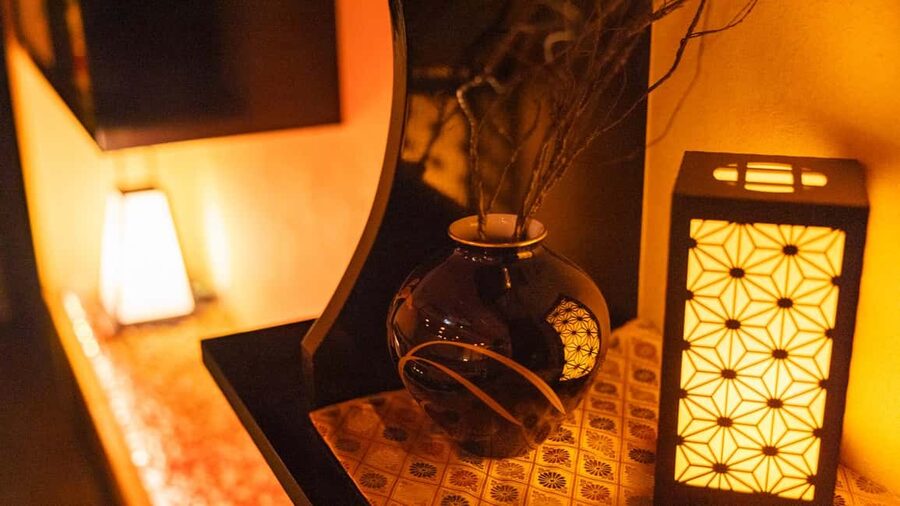
Book it if you want a rare, private Kyoto memory rather than another major sightseeing stop. The strongest parts are the six-seat setting, the close-up Wazuma performance with Masaya, and the quiet Uji matcha session with English guidance.
At $77, the hour is not a bargain. But if the price fits your budget, the experience gives you access to an old Japanese art that few visitors get to see, in a setting designed for just one group. I would place it on the shortlist for couples, culture-minded visitors, and anyone who has already covered Kyoto’s better-known sights.
FAQ
How long does the Kyoto Wazuma experience last?
The full activity lasts one hour. It includes a 30-minute traditional Japanese magic show and a 30-minute Uji matcha tea time.
How many people can attend?
The traditional tea room has only six seats available, and the activity is arranged as a private group experience.
Is the show available in English?
Yes. The host or greeter speaks English, and the Uji matcha portion includes English guidance.
Where does the activity take place?
It takes place in a traditional tea room in Kyoto’s Gion area. A staff member meets you in front of the building five minutes before the scheduled start.
Is transportation included?
No. Transportation to and from the activity location is not included.
Can I take photographs during the performance?
Flash photography is not allowed during the performance.
Is the activity suitable for wheelchair users?
No. The activity is listed as not suitable for wheelchair users.
Can I cancel or pay later?
You can cancel up to 24 hours in advance for a full refund. The activity also offers reserve now and pay later booking.
Recently added around Kyoto
- Higashiyama | Kyoto: Sakura Season Private Rickshaw Tour★ 5.0 · 3 reviews
- Kyoto Kimono Rental CHAMATSU|Kimono/Yukata Rental FamilyPlan★ 5.0 · 3 reviews
- Kyoto: Half-Day Private Guided Tour to the Old Town of Gion★ 4.4 · 3 reviews
- Nara Private Customizable Half Day Tour★ 5.0 · 3 reviews
- Kansai Region Hiking Adventure in Nara Kobe Kyoto and More★ 5.0 · 3 reviews
- Full Day Nara Deer, Temple, Shrine, Activities & Tea Ceremony★ 5.0 · 3 reviews
- Nara: Essential Private Tour with Deer Park and Temples★ 5.0 · 3 reviews
- Hiking Tour for Sacred Sites in Kyoto with a Guide★ 5.0 · 3 reviews
Kyoto Tea Ceremony Experiences, compared.
Tea Ceremony in a Traditional Tea House in Kiyomizu
Read our review →
Tea Ceremony in 100-year-old Kyo-Machiya Townhouse
Read our review →
Browse the lists this tour appears in