

REVIEW · KYOTO CRAFT WORKSHOPS
Kyoto Urushi Lacquer Factory Tour and Chopstick Making Experience
Kyoto’s Tsutsumi Asakichi Urushi factory handles more than 70 percent of Japan’s domestic urushi lacquer, so this is not a staged craft display. You see the working side of a specialist trade, then use lacquer yourself. I like the small group size and the chance to take home chopsticks you finish by hand. I also like that the tour explains the whole chain, from tree sap to artisan material.
The main drawback is the price: $97.55 per person is a lot for 90 minutes, especially if you want a broad introduction to Kyoto crafts. The experience makes more sense for anyone with a real interest in traditional materials, hands-on workshops, or the work behind Japanese lacquerware.
In This Review
- Key points at a glance
- Why this small Kyoto factory matters
- Entering the Und. factory store
- Seeing lacquer refined and colored
- Applying fuki-urushi to your chopsticks
- What the 90-minute schedule feels like
- Why the five-person limit matters
- Is $97.55 a fair price?
- Who should book this experience?
- Practical advice before you go
- Should you book the Tsutsumi Asakichi Urushi tour?
- FAQ
- How long does the Kyoto urushi lacquer experience last?
- What time does the tour begin?
- Where does the experience meet and end?
- Is the tour conducted in English?
- How many people can join the experience?
- Can I bring large luggage?
Key points at a glance
- More than 70 percent of Japan’s domestic urushi: The factory supplies lacquer to craftsmen throughout the country.
- A full process, not just a craft lesson: You learn how sap is collected, refined, and colored before it reaches an artisan.
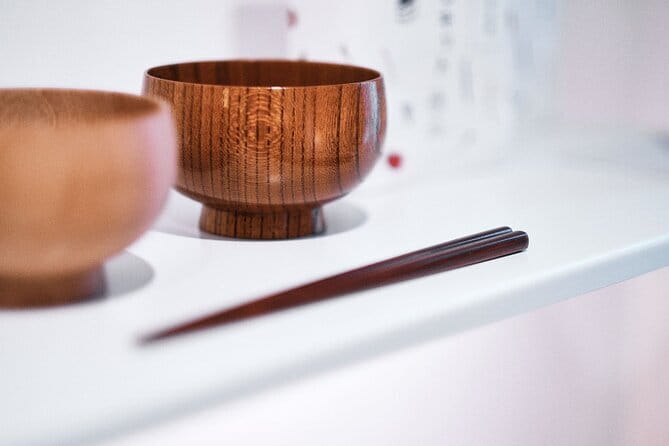
- Fuki-urushi chopstick making: You apply lacquer to a pair of chopsticks using a traditional technique and take them home.
- Very small groups: The activity accepts groups of up to five people, allowing room for questions and individual help.
- Central Kyoto location: The meeting point is near public transportation in Shimogyo Ward.
- English throughout: The tour, factory explanation, and workshop instruction are conducted entirely in English.
Why this small Kyoto factory matters
Urushi is Japanese lacquer made from the sap of the Japanese lacquer tree. It is not simply paint in a small bottle. It is a traditional material that must be collected, refined, colored, and handled with care before a lacquerware artist can use it.
That makes this visit different from a quick brush-painting workshop. You are learning about the material itself, including the work that takes place before an artist decorates a bowl, tray, box, or other object.
Tsutsumi Asakichi Urushi was founded in 1909 and is now run by its fourth generation. The business has lived through a long decline in the production and everyday use of Japanese urushi. Its current direction is to keep the material relevant, including in modern goods rather than limiting it to museum pieces and formal traditional crafts.
I find that context useful. You are not only looking backward at an old Kyoto trade. You are seeing a family business trying to keep a specialized material in regular use.
The factory refines over 70 percent of Japan’s domestic urushi lacquer. That figure gives the visit real weight. You are not looking at a small demonstration designed only for tourists. You are entering a working specialist business that supplies lacquer to artisans around Japan.
More Kyoto craft workshops:
- Authentic knife making experience at a blacksmith in Kyoto
★ 4.8 · 350 reviews - Roketsu dyeing experience: M course Roketsu Dyeing Experience
★ 5.0 · 163 reviews - Kyoto: Replica food making experience
★ 4.8 · 70 reviews
Entering the Und. factory store
The experience begins at the factory store, called Und. The store specializes in items and tools used by lacquerware artists. Even before the guided explanation starts, the setting gives you an idea of how much equipment and material sit behind finished lacquerware.
The store is also the first place where the age of the craft becomes clear. Generations of artisans have preserved the methods, tools, and working knowledge connected with urushi. The setting has an old-fashioned feel, but the purpose is practical: this is a place that supports craftsmen.
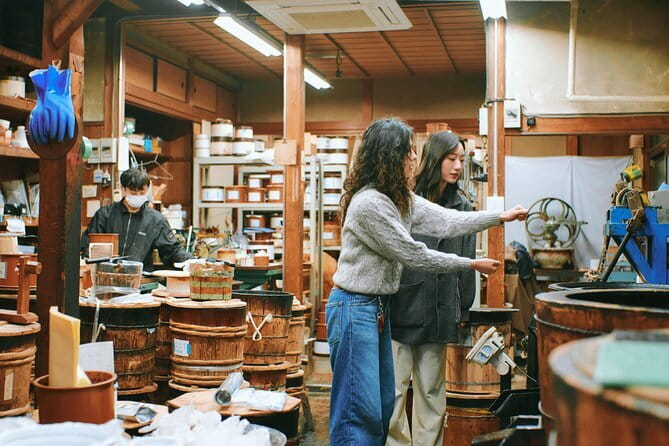
Your guide then explains the process of collecting sap from the Japanese lacquer tree. From there, the conversation moves into refinement, the point at which raw sap becomes usable lacquer.
This part is important because finished lacquerware can make the material seem simple. A glossy surface hides the preparation behind it. The factory tour helps you connect the polished object in a shop window with the plant material and specialist work required to create it.
The tour is conducted entirely in English. That matters here because the subject includes processes and terms that can be difficult to follow through a silent demonstration or a few translated labels. You can ask questions as the guide explains the stages.
Seeing lacquer refined and colored
The factory portion covers the refining of urushi and some of the methods used to adjust its color for local craftsmen. The exact working secrets are carefully protected, so you should not expect every technical detail to be placed on display.
That limitation is part of the appeal. Specialist workshops rarely reveal every trade method, and the tour gives you a look at the process without pretending that an hour and a half can turn you into a lacquer expert.
You will learn about the transition from sap to a material that craftsmen can use. You will also see how color is handled for different artistic needs. This helps explain why Japanese lacquerware comes in more forms than the familiar dark red and black surfaces often seen in souvenir shops.
For me, this is the strongest educational part of the experience. The factory provides a useful bridge between natural material and finished craft. You begin with a tree, follow the material through preparation, and then use it during the workshop.
The visit also puts Kyoto’s craft traditions in a wider setting. Kyoto is famous for finished objects, but the city’s craft economy also depends on people who make tools, prepare materials, and supply specialist goods. This tour focuses on that less visible part of the system.
Applying fuki-urushi to your chopsticks
After the factory visit, you go to the workshop area on the top floor. Here you apply lacquer to a pair of chopsticks using the traditional fuki-urushi technique.
The activity gives you a direct connection to the material you have just seen being prepared. Instead of leaving with only information and photographs, you take home a practical object that carries your own work.
The workshop is not described as a long course in lacquerware construction, so keep your expectations sensible. The main goal is to apply lacquer to the chopsticks, not to complete a complex multi-stage lacquerware project.
Still, the hands-on step adds real value. You have just heard about urushi as a specialist material. Now you must handle it under guidance and pay attention to the finish. That shift from watching to doing makes the factory visit easier to remember.
The fuki-urushi technique is the key detail. You are not simply decorating chopsticks with a generic craft coating. You are using a traditional method connected to Japanese lacquerwork.
Your finished chopsticks become both a gift and a personal reminder of the visit. They are also more useful than many workshop souvenirs. You can take home something linked directly to an everyday object, which fits well with the factory’s aim of bringing urushi into modern life.
Wear clothes suitable for getting dirty. That instruction is worth taking seriously. Lacquer work can be messy, and you should not arrive in clothing that needs special care. Large luggage cannot be stored at the factory, so leave bulky bags elsewhere before you arrive.
A completely different side of Kyoto:
- PERFECT KYOTO 1-Day Bus Tour
★ 5.0 · 13,518 reviews - Kyoto: Fushimi Inari, Kinkakuji, Bamboo Grove 1 Day Bus Tour
★ 4.8 · 4,316 reviews - Kyoto: Tea Ceremony in a Traditional Tea House in Kiyomizu
★ 4.9 · 3,519 reviews - Kyoto Geisha Walking Tour: Gion District & Hidden Gems
★ 4.7 · 3,273 reviews
What the 90-minute schedule feels like
The total experience lasts about one hour and 30 minutes, beginning at 10:00 a.m. The time is long enough for a proper explanation and a hands-on activity, but short enough to fit neatly into a Kyoto sightseeing day.
The schedule follows a clear order:
- You meet at Tsutsumi Asakichi Urushi in Inaricho, in Kyoto’s Shimogyo Ward.
- You enter the Und. factory store and learn about the business and its connection to lacquerware artists.
- You tour the factory and hear how urushi is collected, refined, and colored.
- You move to the top-floor workshop.
- You apply lacquer to a pair of chopsticks using fuki-urushi.
- You finish back at the same meeting point.
The central location helps. You do not need private transportation, and the meeting point is near public transportation. That makes it easier to place the tour between other Kyoto plans.
I would allow extra time to find the address, especially if you are navigating Kyoto for the first time. The official meeting point is Tsutsumi Asakichi Urushi, 540 Inaricho, Shimogyo Ward, Kyoto, postal code 600-8098.
Because the activity begins at 10:00 a.m., it works well as a morning plan. You finish around late morning and can continue with lunch or another central Kyoto sight. The factory itself is the focus, so do not expect the activity to include transportation to temples, markets, or other attractions.
Why the five-person limit matters
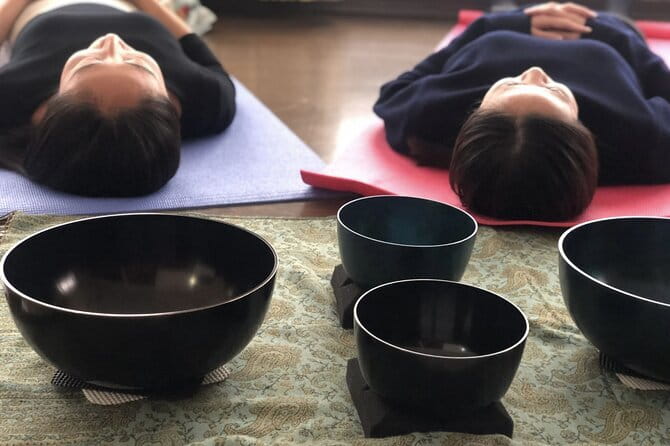
The maximum group size is five people. That is a major advantage for a workshop involving materials, tools, and questions.
A small group makes the factory explanation more personal. You can ask about the stages of lacquer preparation without trying to speak over a large tour group. During the chopstick activity, the guide has a better chance of watching your technique and helping if you are unsure.
The experience is described as a private tour, but bookings can be made for any group size only if the minimum operating requirement is met. At least two participants are needed for the tour to run.
If you are booking alone, this point matters. A reservation can be canceled by the day before if the minimum number is not reached, with a full refund offered in that case. The operator can also cancel because of weather or another unforeseen problem.
That uncertainty is not unique to small workshops, but it is worth considering when building a tight Kyoto schedule. Do not place an important train departure or nonrefundable reservation immediately after this activity.
Is $97.55 a fair price?
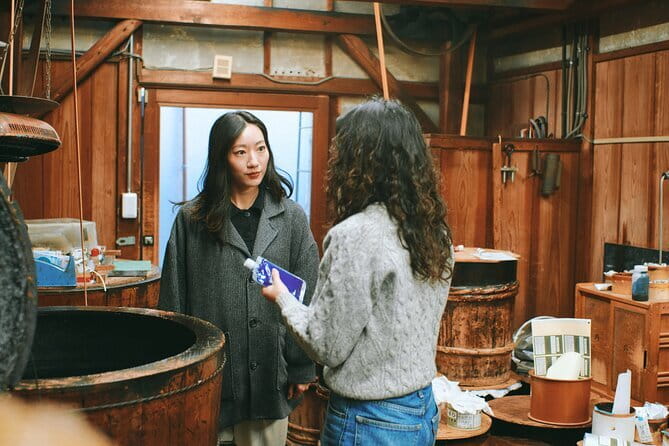
At $97.55 per person, this is not a bargain activity. You are paying roughly $65 per hour, before considering the cost of the guide, factory access, instruction, and materials.
The value comes from the specialist setting. Many Kyoto craft workshops teach you how to decorate an object, but this experience also explains the production of the lacquer itself. You visit a factory that supplies more than 70 percent of Japan’s domestic urushi lacquer, and your small group has access to a business with a long family connection to the trade.
The included pair of chopsticks also helps. They are not a separate souvenir purchase, and you apply the lacquer yourself. That gives the price more substance than a short demonstration with no finished object.
Still, the price will not suit everyone. If you simply want a low-cost activity to fill an hour, you can find cheaper options elsewhere in Kyoto. If you are mainly interested in temples, gardens, or food, the factory may not be your best use of money.
I would consider it good value for a craft-focused day, especially if you care about Japanese materials, family-run production, or objects made for daily use. The limited group size is another reason the price may feel reasonable to someone who dislikes large commercial workshops.
Who should book this experience?
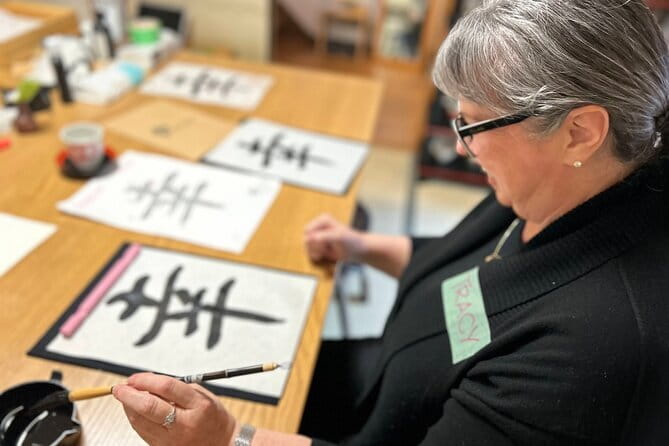
I would recommend the tour to you if you enjoy seeing how things are made. It suits visitors who want more than a finished souvenir and who are curious about the work hidden behind traditional Japanese objects.
It is also a good match for:
- People interested in woodworking, ceramics, textiles, or other traditional crafts
- Families with participants who can follow an English-language explanation
- Visitors who want a short central Kyoto activity
- Anyone looking for a useful handmade souvenir
- Design students, artists, and craft professionals seeking a closer look at urushi
- Repeat Kyoto visitors who have already seen the major temples and want a different side of the city
The activity may be less suitable if you dislike getting your hands dirty or prefer a broad cultural tour with several locations. It also may not satisfy someone looking for a long, detailed technical course in lacquerware. The workshop is brief, and the main practical project is one pair of chopsticks.
Most people can participate, according to the supplied activity information. No special accessibility limitations are stated, but the activity takes place inside a factory and includes moving between the store, factory, and top-floor workshop. If you have specific mobility concerns, confirm details before booking.
Practical advice before you go
Arrive ready for a workshop, not a formal museum visit. Choose clothing that can handle dirt or accidental marks. Avoid bringing large luggage because there is no storage for big bags.
The experience is mobile-ticket friendly, and confirmation is provided when you book. You will meet at the factory rather than being collected from a hotel, and private transportation is not included.
The activity ends where it begins. That is convenient for planning, but you must make your own way to and from the factory. Since the site is near public transportation, it can fit into a day based around central Kyoto.
The tour is in English from start to finish. That makes it a practical choice if you want to understand the explanation rather than simply watch a craft demonstration.
One final booking point deserves attention: this experience is nonrefundable and cannot be changed after purchase. If you cancel or request an amendment, you will not receive your money back. The exception is a cancellation by the operator because the minimum number is not reached, in which case you will be offered another date or experience, or receive a full refund.
Should you book the Tsutsumi Asakichi Urushi tour?
Book it if you want an intimate look at a specialized Kyoto trade and like the idea of making a useful object with your own hands. The combination of factory access, an English-speaking guide, a maximum of five participants, and fuki-urushi chopstick making gives the experience a clear purpose.
Skip it if you are seeking the cheapest Kyoto activity, dislike craft work, or need a fully flexible reservation. The 90-minute duration is short, and the price is high for the time involved.
For the right audience, though, the cost buys something unusual: a look at the material behind Japanese lacquerware, an explanation of how it is prepared for artisans, and a small handmade souvenir that connects the lesson to daily life.
FAQ
How long does the Kyoto urushi lacquer experience last?
The activity takes approximately one hour and 30 minutes.
What time does the tour begin?
The tour starts at 10:00 a.m.
Where does the experience meet and end?
You meet at Tsutsumi Asakichi Urushi, 540 Inaricho, Shimogyo Ward, Kyoto, postal code 600-8098. The activity ends back at the meeting point.
Is the tour conducted in English?
Yes. The entire tour is conducted in English.
How many people can join the experience?
The activity has a maximum of five participants. At least two participants are required for it to operate.
Can I bring large luggage?
No. Large luggage storage is not available, so you should make other arrangements for bulky bags before arriving.
Recently added around Kyoto
- Higashiyama | Kyoto: Sakura Season Private Rickshaw Tour★ 5.0 · 3 reviews
- Kyoto Kimono Rental CHAMATSU|Kimono/Yukata Rental FamilyPlan★ 5.0 · 3 reviews
- Kyoto: Half-Day Private Guided Tour to the Old Town of Gion★ 4.4 · 3 reviews
- Nara Private Customizable Half Day Tour★ 5.0 · 3 reviews
- Nara: Essential Private Tour with Deer Park and Temples★ 5.0 · 3 reviews
- Kansai Region Hiking Adventure in Nara Kobe Kyoto and More★ 5.0 · 3 reviews
- Full Day Nara Deer, Temple, Shrine, Activities & Tea Ceremony★ 5.0 · 3 reviews
- Hiking Tour for Sacred Sites in Kyoto with a Guide★ 5.0 · 3 reviews
Kyoto Craft Workshops, compared.
Authentic knife making experience at a blacksmith in Kyoto
Read our review →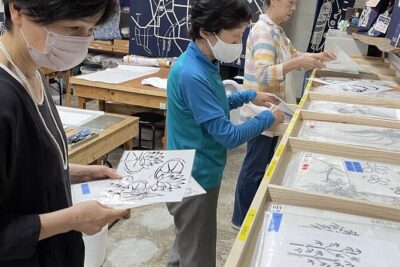
Roketsu dyeing experience: M course Roketsu Dyeing Experience
Read our review →
Authentic Knife Making Experience at a Blacksmith in Kyoto
Read our review →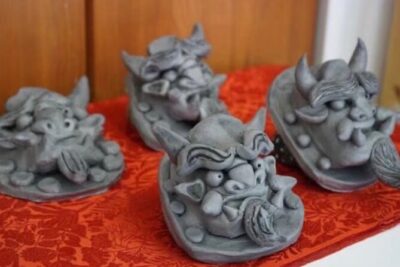
Let’s make only one original onigawara in the world
Read our review →
Bamboo LED Lantern Making Experience in Kyoto Arashiyama
Read our review →Let’s make only one original onigawara in the world!!
Read our review →Browse the lists this tour appears in