
REVIEW · KYOTO TEA CEREMONY EXPERIENCES
Kyoto Tea Ceremony and Samurai Photo Session
Kyoto’s tea culture becomes much more fun when you stop watching and start whisking. In this compact session, you learn the meaning behind the ceremony, prepare your own matcha, taste seasonal wagashi, and finish with a modern matcha latte before posing in samurai armor.
I like the mix of old and new: the tea ceremony takes place in a roughly 100-year-old machiya, while the latte-making gives you something practical to repeat at home. I also like the small-group limit of 10 and Maya’s warm, funny teaching style, which helps first-timers relax. The main consideration is timing: the core tea activity is described as about 50 minutes, while the full experience lasts roughly 1 hour 20 minutes, so this is an introduction rather than a long, formal ceremony.
In This Review
- Key points at a glance
- Inside the 100-year-old Kyoto machiya
- Maya’s introduction to tea ceremony
- Making traditional matcha yourself
- Seasonal wagashi with your tea
- A Kyoto-style matcha latte you can repeat at home
- Samurai armor and the final photo session
- Why the small group matters
- What you get for $71.74
- Who should book this Kyoto activity
- Cancellation and planning notes
- Is the Kyoto tea ceremony and samurai session worth booking?
- FAQ
- Where does the Kyoto tea ceremony and samurai photo session begin?
- Where does the activity end?
- How long does the experience last?
- How many people can join the activity?
- Is the experience suitable for beginners?
- Is the activity available in English?
- What food and drinks are included?
- Can I cancel for a full refund?
Key points at a glance
- Whisk your own matcha: You take part in the preparation instead of simply observing a demonstration.
- Learn from Maya: Her clear English, humor, patience, and historical explanations are repeatedly praised.
- Taste two Japanese treats: The session includes seasonal wagashi and a Kyoto-style matcha latte.
- See a 100-year-old machiya: The townhouse setting adds a traditional feel without requiring a full-day cultural tour.
- Pose in samurai armor: The photo session gives the experience a playful finish and a memorable souvenir.
- Small group, short schedule: With no more than 10 people and a total duration of about 80 minutes, it fits neatly into a Kyoto sightseeing day.
Inside the 100-year-old Kyoto machiya
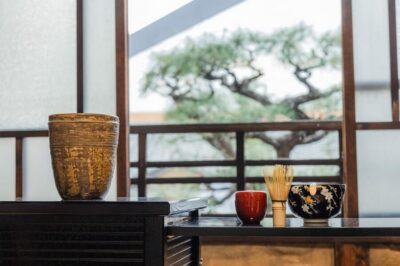
The setting does a lot of the work here. You enter a traditional Kyoto machiya, a narrow wooden townhouse built around a century ago, and spend your tea session in a place with a genuine sense of age and character.
This matters because tea ceremony can feel abstract when presented in a modern classroom or a hotel meeting room. A machiya gives the practice a more fitting backdrop. You are not simply hearing about Japanese customs. You are sitting in an old Kyoto building while learning how a host prepares and serves matcha.
The setting is described as a hidden-away spot, but the meeting point is practical: Samurai Gyoza Factory Kyoto, 230-1 Kamimyokakucho, Nakagyo Ward. It is near public transportation, and the activity begins and ends at the same place. That makes it easier to fit between visits to central Kyoto sights.
The exact seating arrangements and room setup are not specified, so you should not expect a grand temple tea house or a full garden ceremony. Think of this as an intimate cultural workshop in a traditional home-style building. Its strength is access and participation, not scale.
More tea ceremonies in Kyoto:
- Kyoto: Tea Ceremony in a Traditional Tea House in Kiyomizu
★ 4.9 · 3,519 reviews - Kyoto: Tea Ceremony Ju-An at Jotokuji Temple
★ 4.9 · 3,207 reviews - Kyoto: 45-Minute Tea Ceremony Lesson Experience
★ 4.3 · 2,378 reviews
Maya’s introduction to tea ceremony
The session begins with an explanation of tea ceremony, including its history and its connection to mindfulness. Maya is the instructor named in the available feedback, and her approach sounds particularly useful for newcomers. She explains the process in clear English, answers questions patiently, and uses humor to keep the mood relaxed.
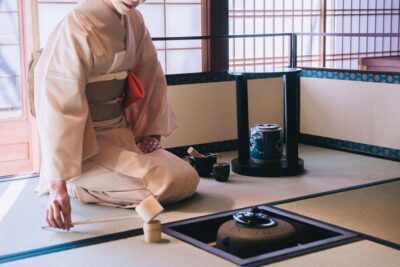
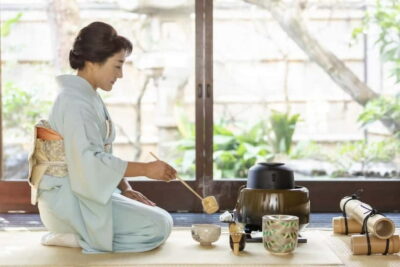
That balance is important. A formal Japanese tea ceremony can involve careful movements and etiquette that feel intimidating if you do not know what is happening. Here, you get the background first, then see Maya perform the ceremony as it is traditionally done. That gives you a frame for the gestures, tools, and calm pace before you try anything yourself.
The mindfulness element is also worth paying attention to. Tea ceremony is not only about producing a cup of green tea. It asks you to slow down, notice the movement, and treat the moment as something worth marking. You do not need prior knowledge of Japanese culture to understand the basic idea.
I would listen closely during this part, even if your main reason for booking is the armor photographs. The historical explanation helps turn a pleasant drink-making class into a short lesson about how Japanese hospitality and attention work.
Making traditional matcha yourself
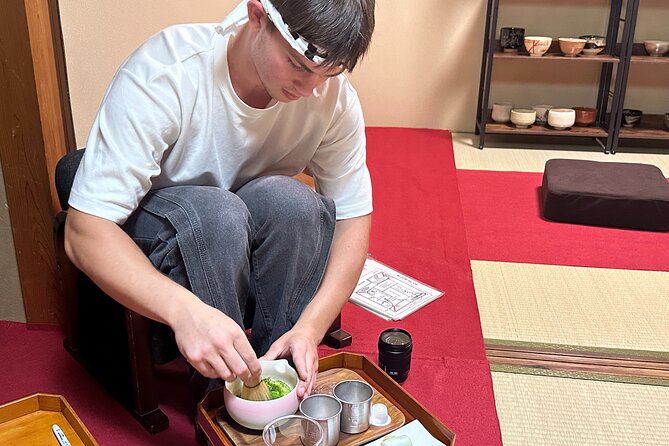
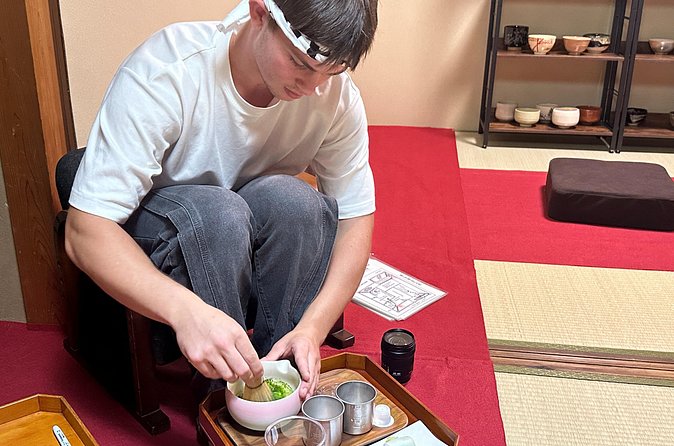
The hands-on portion is the heart of the experience. After watching the demonstration, you make your own matcha using the traditional method. The purpose is not to turn you into a tea master in one sitting. It is to let you feel the rhythm and technique for yourself.
You can expect guidance through the process rather than being left to guess. The teaching is described as easy to understand, and the matcha used is noted for its quality. That combination makes a difference for beginners. Good ingredients give you a fair chance to taste what matcha can be like, while patient instruction helps you avoid worrying about getting every movement perfect.
Matcha has a distinct flavor that can be grassy, bitter, and creamy at the same time. If you usually drink sweetened green tea or coffee, the first taste may surprise you. The wagashi helps balance it, and the instructor’s explanation gives you a better sense of why the tea is served in this way.
This is also a good activity for couples, friends, and families with older children who can follow a short guided lesson. It gives everyone a task, so the session does not depend on one person being interested in history or ceremony. You can learn, make, taste, and take pictures together.
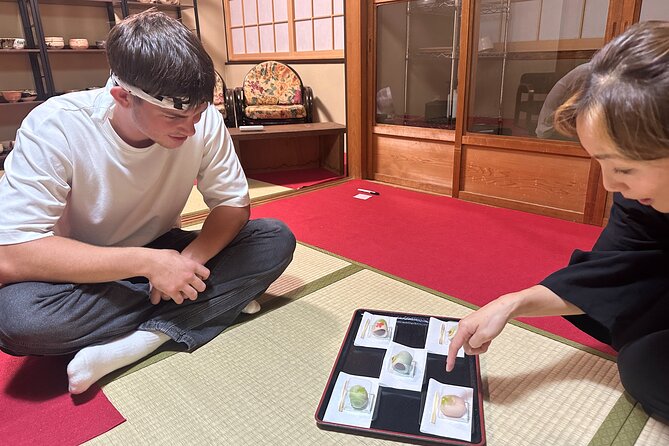
Seasonal wagashi with your tea
Seasonal wagashi, or traditional Japanese sweets, are served with the matcha. These small confections are not just a snack on the side. Their sweetness is meant to work with the tea’s sharper flavor, and their changing seasonal presentation reflects a Japanese habit of noticing the time of year.
The exact wagashi selection is not listed, so you should not book this expecting a particular flavor or design. The important point is that the sweets are seasonal and part of the tea experience rather than an unrelated refreshment.
Several comments specifically praise the taste of both the matcha and the wagashi. If you enjoy Japanese food culture, this pairing may be as interesting as the whisking itself. You get to see how bitterness and sweetness are handled together, and you can ask questions while the lesson is underway.
The serving is also likely to be modest. This is a tea ceremony, not a meal, so have lunch or dinner separately if you arrive hungry. The small portion is part of the format, allowing you to focus on flavor and presentation.
More samurai and sword sessions:
- Kyoto Samurai Experience
★ 5.0 · 1,294 reviews - Kyoto: Kendo and Samurai Experience with Uniform and Gear
★ 4.9 · 815 reviews - Kyoto: Samurai Sword Class by Experts in Traditional Arts
★ 4.9 · 657 reviews - Skip the lines Basic Ticket at SAMURAI NINJA MUSEUM KYOTO
★ 4.5 · 632 reviews
A Kyoto-style matcha latte you can repeat at home
The modern twist comes with the matcha latte. After learning the traditional preparation, you make a creamy latte in the Kyoto style. This change in approach gives the class a useful contrast: first you experience matcha in a ceremonial form, then you see how the same ingredient can be used in a familiar café drink.
I like this part because it extends the value beyond your time in Kyoto. The session includes a recipe so you can practice at home. You may not have every traditional tool in your kitchen, but the recipe gives you a starting point and a way to keep using what you learned.
The latte also suits anyone who finds straight matcha too strong. Milk and sweetness can soften the bitterness, making it an easier drink for first-time tea drinkers. At the same time, you still learn about the ingredient itself rather than ordering a finished café drink and moving on.
Do not confuse this with a professional barista course. The experience is short, and the goal is cultural understanding plus a tasty practical skill. You leave with a better idea of how matcha behaves in both a traditional cup and a modern drink.
Samurai armor and the final photo session
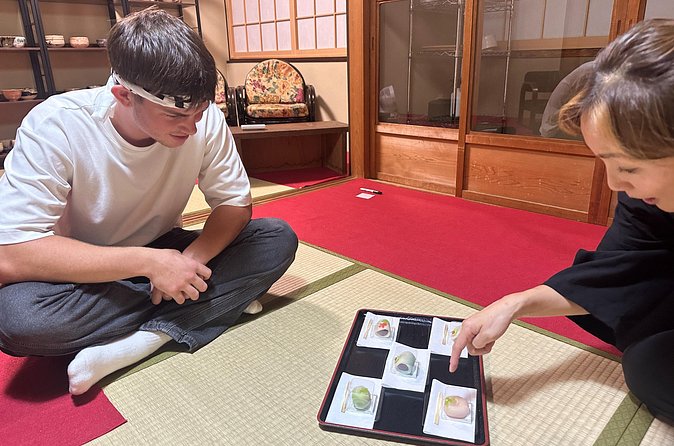
The activity ends with a playful change of mood. You get the chance to put on authentic samurai armor and take photographs. This is the feature that separates the experience from a standard tea workshop.
The armor session gives you a visual souvenir of the day, and it can be especially appealing if you are visiting Kyoto with friends or family. After the quiet concentration of tea preparation, the photos add energy and humor. The experience is not pretending to recreate a full samurai training session. It is a dress-up and photography opportunity tied to Japan’s warrior-era image.
The supplied information does not specify the number of armor sets, costume sizes, photography equipment, or how many individual photographs you receive. Keep those details in mind if professional portraits are important to you. The safe expectation is a chance to pose in armor and take memorable pictures, not a dedicated studio shoot with a guaranteed package of edited images.
There are plenty of photo opportunities throughout the activity, not only at the end. Bring a phone with enough battery and storage, especially if you want pictures of the tea tools, sweets, latte, and armor. The mobile ticket makes arrival simple, but you still need to reach the stated meeting point on time.
Why the small group matters
The maximum group size is 10 people. That is not a private lesson, but it is small enough for a more personal class than a large bus-group demonstration.
You should have a reasonable chance to see the instructor’s movements and take your turn making matcha. A small group also makes it easier to ask questions about tea ceremony, Japanese customs, or the latte recipe. Maya’s friendly style seems well suited to this format, since she encourages people to try different things without making mistakes feel serious.
The tradeoff is that group pace still matters. If you are hoping to spend a long time photographing every detail or practicing repeatedly, the schedule may feel brisk. The full duration is approximately 1 hour 20 minutes, and the core tea activity is described as 50 minutes. That leaves a limited amount of time for each stage.
For most people, that is a benefit. You get a focused cultural activity without giving up half a day of sightseeing. Kyoto rewards a varied schedule, and this can fit between temples, shopping, and meals.
What you get for $71.74
At $71.74 per person, this is not the cheapest way to drink matcha in Kyoto. You could buy a bowl of tea and a sweet for much less. The price is easier to justify when you count the instruction, the traditional setting, the hands-on preparation, the latte, and the samurai photo session together.
I see the value in the combination. A normal café visit gives you the drink, but not the context or the chance to prepare it. A formal tea ceremony may give you more ritual, but not necessarily the modern latte or costume photographs. This experience puts several accessible activities into one short visit.
The value is strongest for first-time visitors who want a cultural activity without committing to a full day. It is also good for people who prefer doing something over looking at another exhibit. You will taste, make, listen, and pose rather than simply sit through a demonstration.
The value is weaker if you already have extensive tea ceremony experience or want a highly formal, traditional presentation. The workshop is designed to be friendly and interactive. That makes it approachable, but it may not satisfy someone seeking a rigorous study of tea schools, utensils, or ceremony rules.
The experience is often booked well ahead, with an average booking lead time of about 72 days. If your dates are fixed, reserve early rather than assuming you can decide at the last minute.
Who should book this Kyoto activity
I would recommend it to:
- First-time matcha drinkers who want a clear introduction.
- Visitors who enjoy hands-on food and drink classes.
- Friends looking for a shared activity with good photo potential.
- Families with children mature enough to take part in a quiet, guided session.
- Anyone curious about Japanese mindfulness and hospitality.
- People with a tight itinerary who want a meaningful activity under two hours.
It may be less suitable for someone seeking a silent, highly formal ceremony with no modern additions. The matcha latte and armor photos make this a cultural workshop with entertainment value, not a strict religious or ceremonial observance.
You should also remember that matcha contains caffeine. The supplied information does not provide allergy, dietary, or ingredient details for the wagashi or latte. If you have food sensitivities, ask the provider before booking.
The meeting point is near public transportation, but no detailed route instructions are supplied. Give yourself enough time to locate Samurai Gyoza Factory Kyoto, especially if you are unfamiliar with Kyoto’s smaller streets. Confirmation arrives when you book, and the mobile ticket is convenient for arrival.
Cancellation and planning notes
Free cancellation is available if you cancel at least 24 hours before the start time. Canceling or changing the booking less than 24 hours before the activity does not qualify for a refund, and the cut-off uses Kyoto local time.
The experience ends back at the meeting point, so you can plan your next stop from the same central area. Since the session is short, it works well before or after another Nakagyo Ward activity, though the exact travel time to your next destination will depend on your route.
I would avoid scheduling it too tightly against a major attraction reservation. The stated duration is approximate, and you will enjoy the class more if you are not watching the clock while whisking tea.
Is the Kyoto tea ceremony and samurai session worth booking?
Book it if you want an easy, friendly introduction to Japanese tea culture with several memorable extras. The 100-year-old machiya, Maya’s clear English instruction, good-quality matcha, seasonal wagashi, homemade latte, and armor photographs give you more than a simple tasting.
Skip it if you want a long, silent, formal ceremony or a detailed study of tea utensils and traditions. For most first-time visitors, though, the mix is smart: traditional enough to teach you something, relaxed enough to enjoy, and short enough to leave room for the rest of Kyoto.
FAQ
Where does the Kyoto tea ceremony and samurai photo session begin?
It begins at Samurai Gyoza Factory Kyoto, located at 230-1 Kamimyokakucho, Nakagyo Ward, Kyoto, 604-0025, Japan.
Where does the activity end?
The activity ends back at the meeting point.
How long does the experience last?
The total duration is approximately 1 hour 20 minutes. The main tea ceremony portion is described as taking about 50 minutes.
How many people can join the activity?
The group has a maximum of 10 participants.
Is the experience suitable for beginners?
Yes. The activity is designed for beginners and curious first-time participants, with instruction on tea ceremony history, preparation, matcha-making, and latte-making.
Is the activity available in English?
Maya is described as speaking very good English and explaining the ceremony clearly in English.
What food and drinks are included?
You make traditional matcha, taste seasonal wagashi, and prepare a Kyoto-style matcha latte.
Can I cancel for a full refund?
Yes, if you cancel at least 24 hours before the scheduled start time. Cancellations or changes made less than 24 hours before the start time are not refunded or accepted.
More Photography Sessions in Kyoto
- Kyoto: Maiko Makeover and Photoshoot Experience
★ 4.7 · 239 reviews - Kyoto: Private Photoshoot Service
★ 5.0 · 158 reviews - Your Private Vacation Photography Session In Kyoto
★ 5.0 · 110 reviews - Kyoto: Tea Ceremony with Kimono and Photoshoot
★ 4.9 · 90 reviews
Recently added around Kyoto
- Higashiyama | Kyoto: Sakura Season Private Rickshaw Tour★ 5.0 · 3 reviews
- Kyoto Kimono Rental CHAMATSU|Kimono/Yukata Rental FamilyPlan★ 5.0 · 3 reviews
- Kyoto: Half-Day Private Guided Tour to the Old Town of Gion★ 4.4 · 3 reviews
- Nara Private Customizable Half Day Tour★ 5.0 · 3 reviews
- Nara: Essential Private Tour with Deer Park and Temples★ 5.0 · 3 reviews
- Kansai Region Hiking Adventure in Nara Kobe Kyoto and More★ 5.0 · 3 reviews
- Full Day Nara Deer, Temple, Shrine, Activities & Tea Ceremony★ 5.0 · 3 reviews
- Hiking Tour for Sacred Sites in Kyoto with a Guide★ 5.0 · 3 reviews
Kyoto Tea Ceremony Experiences, compared.
Tea Ceremony in a Traditional Tea House in Kiyomizu
Read our review →
Tea Ceremony in 100-year-old Kyo-Machiya Townhouse
Read our review →
Browse the lists this tour appears in