
REVIEW · KYOTO CALLIGRAPHY CLASSES
Kyoto: Sumi Ink and Brush Calligraphy Experience
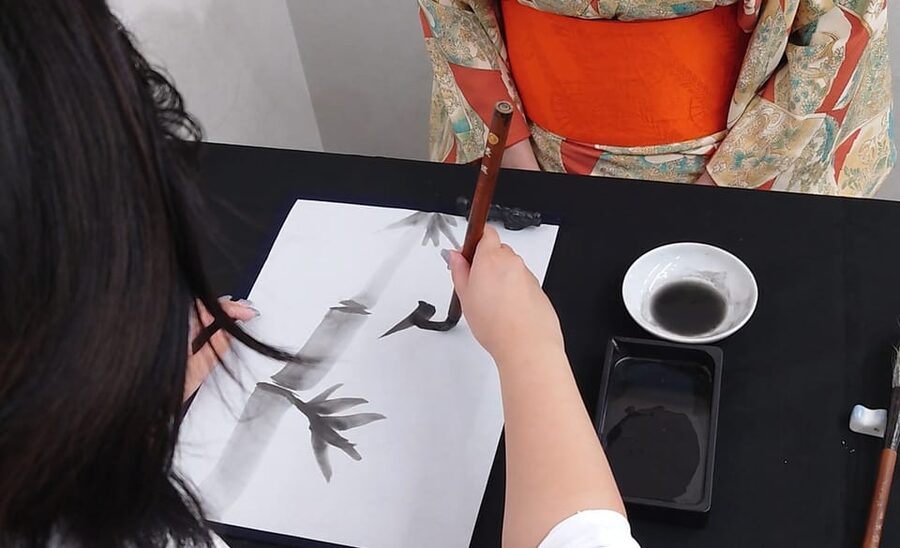
The most memorable part of this sumi ink experience is the slow start: you grind solid ink with water on an inkstone before touching the brush to paper. You notice the ink’s fragrance, texture, and changing shades, then use it to paint bamboo and write Japanese characters on a shikisi board.
I like the hands-on pace and the fact that you make a finished souvenir, not just a practice sheet. I also like the small group limit of six, which gives you room to ask questions while learning side-brush and upright-brush methods. The main consideration is the short 50-minute session. You will get a graceful introduction, not a full course in calligraphy.
In This Review
- Key points to know before booking
- Why the ink-making matters
- From brush drills to bamboo
- Creating your shikisi board
- Adding Japanese characters beside the bamboo
- What the 50-minute format feels like
- A small group with English and Japanese guidance
- Finding the meeting point near Kani Doraku
- Is $49 a fair price?
- Who should book this activity
- Booking details worth knowing
- Should you book the sumi ink and brush class?
- FAQ
- How long does the sumi ink and brush calligraphy experience last?
- How much does the experience cost?
- Do I need previous calligraphy experience?
- What will I make during the class?
- Can I take my artwork home?
- Which Japanese characters can I write?
- What languages are used during the activity?
- Where is the meeting point?
- Can I cancel for a refund?
Key points to know before booking
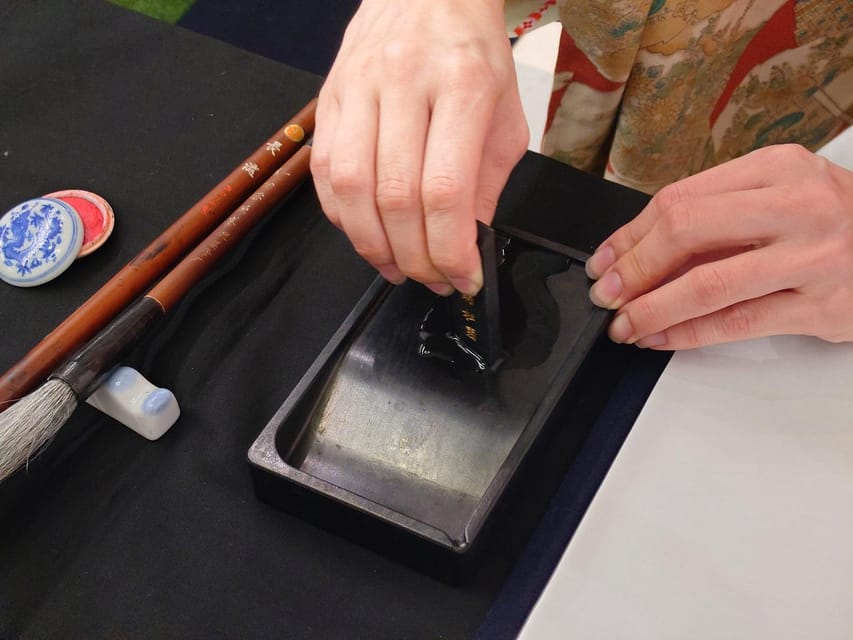
- Grinding the ink is part of the experience: You use an inkstone and water rather than starting with ready-made liquid ink.
- You learn two brush methods: Practice soku-hitsu with the side of the brush, then choku-hitsu with the brush held upright.
- Bamboo is your main subject: You apply the techniques to a shikisi board and create your own composition.
- Your artwork goes home with you: Add characters such as 竹, bamboo, or 和, harmony, beside your painting.
- The class stays small: Up to six participants receive English or Japanese instruction in an indoor setting.
- Allow time to find the meeting point: It is near the giant Kani Doraku crab sculpture, and arriving late could cut into the short lesson.
Why the ink-making matters
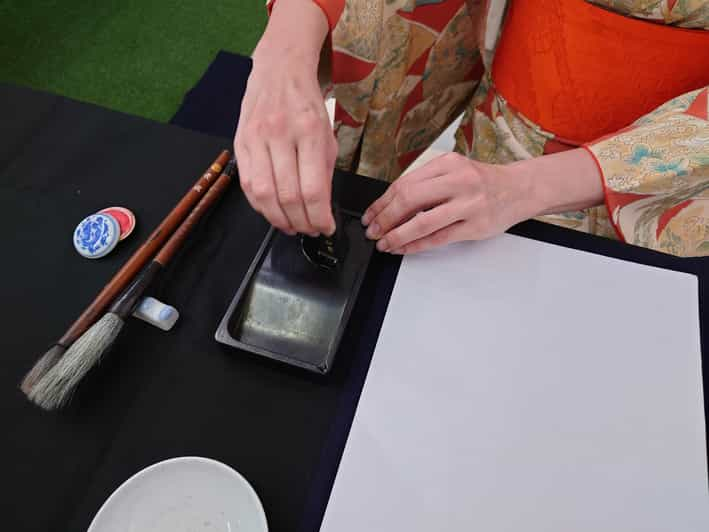
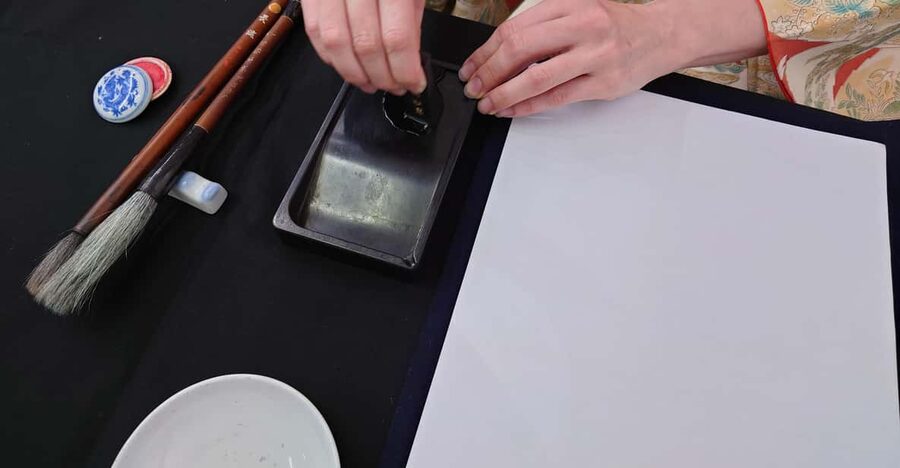
Many craft classes hand you ready-made materials and move straight to the finished project. This one asks you to prepare the ink yourself. That small step changes the mood of the session.
You rub solid sumi ink against a suzuri inkstone with water, building the liquid slowly. The process lets you notice how the ink shifts from a dark, dense tone to softer gray washes. It is not just a technical chore. It gives you a physical sense of the material before you begin painting.
I like this because it slows your hand down. You are less likely to rush into making a perfect picture, and more likely to pay attention to pressure, water, and brush movement. The fragrance of the ink is also part of the appeal, giving the class a sensory quality that a standard brush-and-paper demonstration would miss.
The drawback is time. Grinding ink takes a little patience, and the whole activity lasts only 50 minutes. If you want a long, meditative session, this may feel brief. If you want a compact introduction that includes both preparation and finished art, the timing works well.
More calligraphy classes:
- Kyoto: Calligraphy class at Buddhist temple in city center
★ 5.0 · 167 reviews - Kyoto: Japanese Calligraphy Class
★ 4.8 · 89 reviews - Kyoto: Japanese Calligraphy Workshop
★ 4.7 · 84 reviews
From brush drills to bamboo
The instructor first shows you how to handle the brush. You practice soku-hitsu, using the side of the brush, and choku-hitsu, holding it upright. These two methods produce different marks and help you understand why Japanese brushwork depends on posture, pressure, and angle.
You do not need previous calligraphy experience. The class is designed to take you through the movements step by step, with practice before you work on the final board. That matters because bamboo looks simple until you try to draw it. A few strokes must suggest stalks, joints, and leaves without a lot of correction.
The practice period is the part to take seriously. Do not worry about making each test mark attractive. Use it to find out how much ink your brush holds, how quickly the line fades, and what happens when you press harder or lift the brush sooner.
The bamboo subject is a sensible choice for beginners. It rewards economy rather than detailed realism. You are not expected to fill a scene with many objects. A handful of controlled marks can create a recognizable plant, making the task manageable within the short class.
Creating your shikisi board
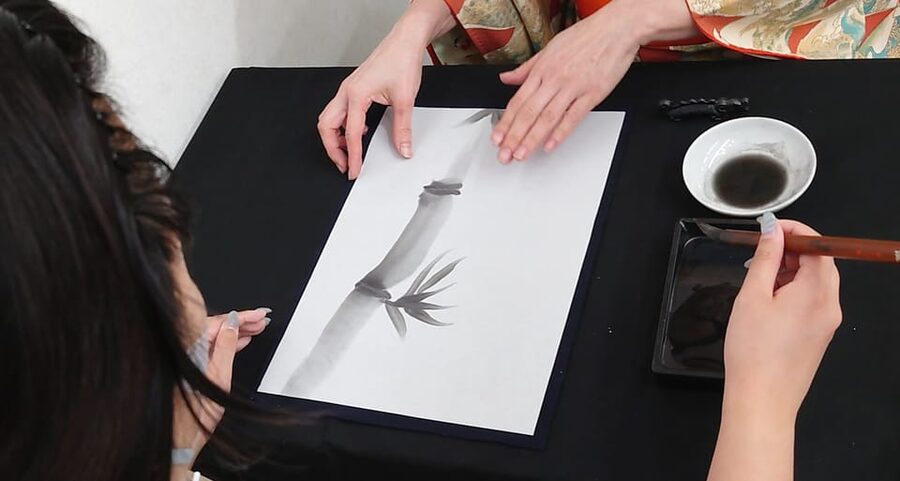
Once you have practiced, you move to the shikisi board. This is the piece you keep, so the lesson shifts from experimenting to making choices. You use the brush methods you have just learned to draw bamboo on the board.
A shikisi is a firm Japanese art board with a formal, display-friendly shape. It is more substantial than a loose practice page, which makes the result feel like a proper memento of your time with the brush.
You should expect variation in the finished work. Sumi ink painting depends on the movement of your hand, and small differences in water and pressure change the final marks. That is part of the point. The board records your own attempt rather than producing an identical souvenir for every participant.
The instructor provides guidance on bamboo and brush technique, but the activity is still your work. I would treat the final board as a personal keepsake rather than a test of artistic ability. A slightly uneven stalk or leaf can remind you of the process better than a machine-perfect result.
Adding Japanese characters beside the bamboo
After the painting, you practice characters and choose what to place beside the bamboo. The standard options include 竹, meaning bamboo, and 和, meaning harmony. If you have another request, you can ask the guide, who can write it for you.
This final step gives the board a more finished look. The characters are not an unrelated add-on. They connect the subject, the writing tradition, and the meaning you want the souvenir to carry.
If you are unsure which character to choose, 竹 is the straightforward option because it matches the painting. 和 offers a broader idea and may suit someone who wants the board to suggest peace or harmony. You can also ask for another character if you have a specific request, though the supplied details do not promise every possible phrase or design.
Take care with placement. The instructor will guide you, but your bamboo and characters need to share the board comfortably. Since you practice before writing on the finished piece, you have a chance to get used to the brush and ink first.
A completely different side of Kyoto:
- PERFECT KYOTO 1-Day Bus Tour
★ 5.0 · 13,518 reviews - Kyoto: Fushimi Inari, Kinkakuji, Bamboo Grove 1 Day Bus Tour
★ 4.8 · 4,316 reviews - Kyoto: Tea Ceremony in a Traditional Tea House in Kiyomizu
★ 4.9 · 3,519 reviews - Kyoto Geisha Walking Tour: Gion District & Hidden Gems
★ 4.7 · 3,273 reviews
What the 50-minute format feels like
Fifty minutes is long enough for a clear sequence:
- Prepare the sumi ink with water and an inkstone.
- Practice side-brush and upright-brush techniques.
- Work on bamboo.
- Write or select characters.
- Complete the shikisi board and take it home.
That sequence is efficient, but it leaves little room for wandering off script. You will not have hours to repaint the board, study several subjects, or receive an advanced lesson in kanji composition.
I see the short format as a good fit for a busy sightseeing day. You can add a calm creative break without giving up half a day. It also works for someone trying calligraphy for the first time and wanting to see if the art suits them.
The strongest praise in the available feedback points to the teaching style. One participant described the teacher as patient and a good communicator. Another appreciated the step-by-step instruction and the amount of practice. Those details match the structure of the class: you are not simply handed a brush and told to copy a sample.
One participant from Iceland said the session left them ready to continue practicing independently. That is a useful sign for anyone who wants more than a one-off souvenir. The class gives you basic brush methods that you can use again, even if your first bamboo board is modest.
A small group with English and Japanese guidance
The group is limited to six people. That is a useful size for an activity involving ink, water, brushes, and close instruction. You can see demonstrations more easily than in a large workshop, and you have a better chance to ask for help with your grip or brush angle.
Instruction is offered in English and Japanese. The available feedback also describes the teacher as skillful, kind, fun to spend time with, and easy to understand. No instructor name is supplied, so you should not expect to choose a particular teacher when booking.
The tone appears friendly and practical rather than formal or intimidating. That suits beginners. Calligraphy can look ceremonial from a distance, but this class lets you make mistakes, repeat the strokes, and learn by doing.
You receive an apron, so you do not need to dress as if a spot of ink would ruin the day. Comfortable clothing is still sensible. The activity takes place indoors, and the listed items to bring include comfortable shoes, a hat, sunscreen, and water. The outdoor items may simply be useful for getting to the meeting point and continuing your day afterward.
Finding the meeting point near Kani Doraku
The meeting point is near the giant crab sculpture of Kani Doraku. Use that landmark as your first reference point, but check your booking details carefully for the exact meeting instructions and starting time.
This matters because a 50-minute class has no spare time for a long search. Arrive early enough to locate the meeting area, especially if you are unfamiliar with the surrounding streets. The activity instructions specifically ask you to arrive on time.
Transportation to the venue is not included. You make your own way there, so build that transfer into your day rather than treating the meeting point as part of the class.
The supplied information identifies the activity with Kyoto and Honshu, while the meeting landmark is the Kani Doraku crab sculpture. Because that landmark is a well-known city reference, I would confirm the exact venue and city details before setting out. Do not rely on the broad destination label alone.
Is $49 a fair price?
At $49 per person, the value rests on three things: personal instruction, materials, and the finished shikisi board. You are not paying only for a short demonstration. The price includes the calligraphy tools, the suzuri inkstone, guidance on brush techniques and bamboo, and the board you take home.
The ink itself is prepared by you rather than supplied as a ready-made product. That adds time and meaning to the session, though it also means some of your 50 minutes goes into preparation.
For a first visit to Japanese calligraphy, I think the price is reasonable if you value a small-group lesson and a displayable keepsake. It is less appealing if your main aim is a long workshop with extensive individual correction. The class gives you a taste of the craft and a finished object, not professional-level training.
The four available ratings average 4.7 out of 5. The strongest themes are patient instruction, clear communication, enjoyable teaching, and plenty of practice. One French participant called the activity interesting and playful. Those comments suggest the experience works best when you approach it as a relaxed introduction rather than a serious examination of technique.
Who should book this activity
I would recommend it to you if you want a quiet cultural activity with a clear result. It suits solo visitors, couples, and small groups who like making something by hand instead of collecting another shop-bought souvenir.
It is also a good option for first-timers. No previous calligraphy experience is required, and the instruction begins with basic brush methods. The small group size should make the class less daunting than a large public workshop.
Families and mixed-ability groups should read the physical requirements carefully. The information says the activity is wheelchair accessible, but it also says it is not suitable for wheelchair users or people with mobility impairments. That is a direct conflict. If access is important for you, contact the provider before booking and confirm the actual room setup and participation conditions.
You should also skip it if you dislike slow, careful handwork. Grinding ink, practicing strokes, and repeating characters require patience. This is not a fast photo stop.
Booking details worth knowing
You can cancel up to 24 hours before the activity for a full refund. A reserve-now, pay-later option is also available, which helps if your sightseeing plans are still shifting.
The class is indoors and lasts 50 minutes. English and Japanese instruction is offered, and all calligraphy tools are supplied. Transportation is not included, so you must reach the meeting point yourself.
You receive an apron, but comfortable clothes remain a good idea. Bring water, and wear comfortable shoes. The finished artwork can be taken home, so protect it from rain or crushing it under other purchases during the rest of your day.
Should you book the sumi ink and brush class?
Book it if you want a short, well-organized introduction to Japanese ink work and like the idea of taking home something you made yourself. The inkstone preparation, two brush methods, bamboo painting, and character writing give the session more substance than a simple copy-and-go activity.
Think twice if you want advanced instruction, a long lesson, or a fully flexible arrival time. The class moves quickly, and the meeting point needs care because the session is short.
For most first-time participants, the best reason to book is the combination of calm practice and a personal shikisi board. You leave with more than a souvenir. You also leave knowing how brush angle, pressure, water, and patience shape a sumi ink line.
FAQ
How long does the sumi ink and brush calligraphy experience last?
The activity lasts 50 minutes.
How much does the experience cost?
The listed price is $49 per person.
Do I need previous calligraphy experience?
No. The activity is suitable for beginners, and no prior calligraphy experience is required.
What will I make during the class?
You will grind sumi ink, practice brush techniques, draw bamboo on a shikisi board, and add Japanese characters beside the painting.
Can I take my artwork home?
Yes. You can take the finished shikisi board home and display it as a souvenir.
Which Japanese characters can I write?
The available choices include 竹, meaning bamboo, and 和, meaning harmony. You may also ask the guide about other requests.
What languages are used during the activity?
Guidance is available in English and Japanese.
Where is the meeting point?
The meeting point is near the giant Kani Doraku crab sculpture. Transportation to the venue is not included.
Can I cancel for a refund?
You can cancel up to 24 hours in advance for a full refund. A reserve-now, pay-later option is also available.
Recently added around Kyoto
- Higashiyama | Kyoto: Sakura Season Private Rickshaw Tour★ 5.0 · 3 reviews
- Kyoto Kimono Rental CHAMATSU|Kimono/Yukata Rental FamilyPlan★ 5.0 · 3 reviews
- Kyoto: Half-Day Private Guided Tour to the Old Town of Gion★ 4.4 · 3 reviews
- Nara Private Customizable Half Day Tour★ 5.0 · 3 reviews
- Kansai Region Hiking Adventure in Nara Kobe Kyoto and More★ 5.0 · 3 reviews
- Full Day Nara Deer, Temple, Shrine, Activities & Tea Ceremony★ 5.0 · 3 reviews
- Nara: Essential Private Tour with Deer Park and Temples★ 5.0 · 3 reviews
- Hiking Tour for Sacred Sites in Kyoto with a Guide★ 5.0 · 3 reviews
Kyoto Calligraphy Classes, compared.
Calligraphy class at Buddhist temple in city center
Read our review →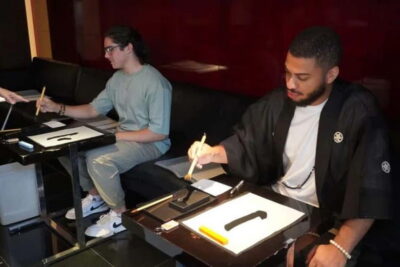
Kyoto Ninenzaka : Japanese Calligraphy Class in Townhouse
Read our review →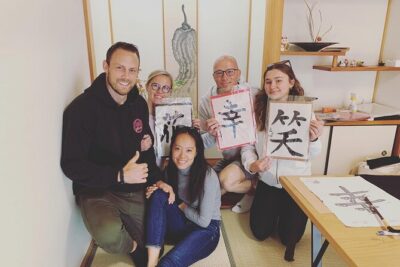
Private Japanese Calligraphy in Kyoto – Learn Shodō with a Master
Read our review →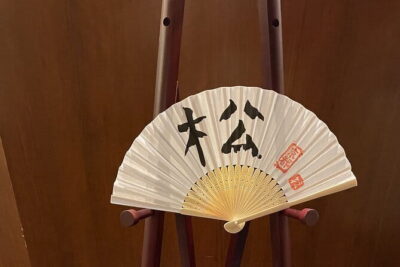
Japanese Calligraphy – Shodo – Lesson (near Kyoto Station)
Read our review →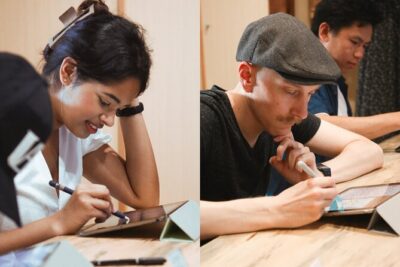
Browse the lists this tour appears in