
REVIEW · KYOTO MATCHA EXPERIENCES
Kyoto: Shakyo & Matcha in Historic Temple Garden
At Sennyu-ji, the main event is not a quick look at a temple hall. You sit quietly with brush, paper, and ink, copying Buddhist sutras while incense hangs in the air and birds provide the soundtrack. It is a rare chance to slow your Kyoto schedule down and take part in a living tradition.
I like the 60 to 90 minutes of shakyo, which gives the activity real substance, and I like the calm finish with fresh matcha and seasonal wagashi facing a carefully designed garden. The main drawback is practical: sitting quietly for that long may not suit young children, anyone with mobility limits, or people who prefer a fast-moving sightseeing tour.
In This Review
- Key points to know before booking
- Why this Kyoto activity feels different
- Meeting at Tofukuji Station
- Entering Sennyu-ji and settling into the temple
- Shakyo: a slow practice with a clear purpose
- Matcha and wagashi in the garden
- What the guide adds
- Is $35 a fair price?
- Who should book this experience
- Timing, cancellation, and planning tips
- What the four five-star ratings suggest
- Should you book Sennyu-ji shakyo and matcha?
- FAQ
- Where does the experience begin?
- How long does the activity last?
- How long is the walk to Sennyu-ji?
- What is shakyo?
- Are shakyo materials provided?
- How long does the sutra-copying session take?
- Is matcha included?
- Is a Japanese sweet included?
- What language is the tour conducted in?
- Is the activity suitable for wheelchair users?
- Can children join?
- Can I cancel the booking?
- Do I need to pay when I reserve?
- Can I bring luggage or a stroller?
Key points to know before booking
- Copy Buddhist sutras by hand: Brushes, paper, and ink are supplied, and your writing speed sets the pace.
- Walk from Tofukuji Station: Allow about 15 minutes each way between the station and Sennyu-ji.
- Enjoy matcha in a temple setting: The tea comes with seasonal wagashi, with the exact sweets varying through the year.
- Small English-speaking group: The group is limited to 10 people, allowing a quieter setting for questions and guidance.
- Plan for stillness: Comfortable clothing matters because the shakyo session involves sitting quietly for an extended period.
- A good break from a packed itinerary: The experience combines cultural explanation, meditation-like concentration, and garden views in 150 minutes.
Why this Kyoto activity feels different
Many Kyoto temple visits ask you to look, walk, and move on. This one asks you to stay put. The change is important. By copying a Buddhist text one character at a time, you pay attention to your hand, your breathing, and the page in front of you instead of rushing toward the next photo.
You do not need prior calligraphy experience. The materials are provided, and the session is designed around the act of copying rather than producing a perfect work of art. Your writing speed determines how long it takes, usually between one hour and an hour and a half.
The setting also shapes the experience. Sennyu-ji is a historic temple designated as an Important Cultural Property. Inside, the gentle scent of incense and natural sounds help create a quiet mood. Photography may be restricted in some areas, so you should treat the visit as time for attention rather than a chance to document every corner.
This is especially useful if your Kyoto plan already includes busy streets, crowded sightseeing spots, and long train rides. The activity gives you a measured pause without asking you to spend a full day away from the city.
More matcha tastings and workshops:
- World Heritage Kyoto & Nara Uji Authentic Matcha Experience
★ 5.0 · 1,573 reviews - Kyoto: Arashiyama Bamboo Forest, Monkeys, Matcha & Temple Tour
★ 5.0 · 759 reviews - Kyoto: Tea Museum Tickets and Matcha Grinding Experience
★ 4.9 · 739 reviews
Meeting at Tofukuji Station
Your meeting point is the East Gate of Keihan Tofukuji Station. Look for the guide with a yellow fluorescent band on the bag. That detail is simple but useful, especially at a station where you may be arriving amid regular morning or afternoon movement.
From the station, you walk for about 15 minutes to Sennyu-ji. The walk is part of the timing, so allow for it when planning anything before or after the activity. You will also walk about 15 minutes back to Tofukuji Station at the end.
The route is not presented as a separate sightseeing stop, but it gives the experience a gradual change of pace. You leave the station behind and head toward a historic temple setting. Wear shoes and clothing that feel comfortable for walking and sitting.
This is a small-group activity, limited to 10 participants, with a live guide speaking English. A group of that size is helpful here. Shakyo works best when the room stays quiet, and a smaller group makes it easier to hear cultural explanations without turning the visit into a lecture hall.
Entering Sennyu-ji and settling into the temple
The main visit at Sennyu-ji lasts about two hours. It includes admission, a guided introduction to the temple, time for sightseeing and scenic views, the shakyo class, and the tea service.
The temple’s importance is not treated as background decoration. Your guide explains its place in Kyoto’s Buddhist culture and Japan’s heritage, helping you understand why the setting matters before you begin copying. That context makes the activity more meaningful than simply sitting down with a brush.
You should expect a respectful atmosphere. Sennyu-ji is a working historic religious site, not a modern workshop built only for visitors. Keep your voice low, follow the guide’s instructions, and accept that some areas may have limits on photography.
A separate entrance is available for the activity, which can make arrival more direct. The supplied details describe this as a skip-the-line arrangement, though the exact flow can depend on temple conditions and the day’s schedule.
Shakyo: a slow practice with a clear purpose
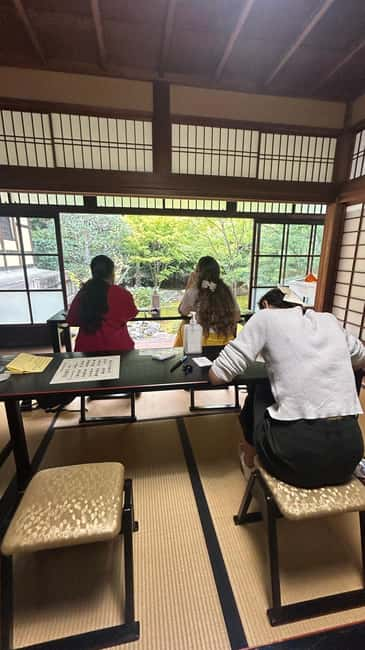
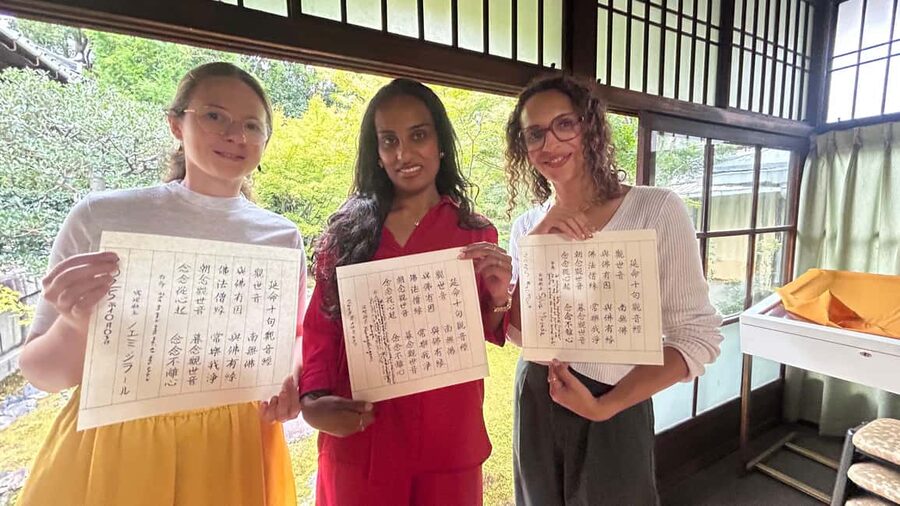
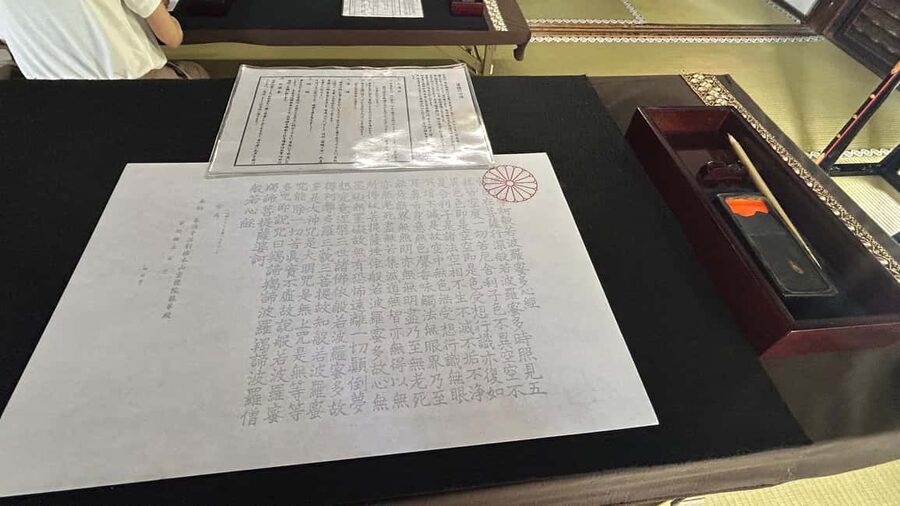
Shakyo means copying Buddhist sutras. The practice has been used for centuries as a form of concentration, reflection, and religious devotion. In this session, you receive the needed brushes, paper, and ink, so you do not have to bring special equipment.
The key is patience. You copy the text carefully, one section at a time, rather than racing to finish. The usual session lasts 60 to 90 minutes, but your own writing speed affects the timing. That range is worth noting because the activity is not a short demonstration followed by free time.
I would wear loose, comfortable clothing suitable for sitting quietly. The information for this activity does not specify a particular sitting arrangement, so you should simply be prepared for a sustained period of stillness and concentration.
You may find the practice soothing, but it is not passive entertainment. If you become restless after 15 minutes, this could feel long. If you enjoy calligraphy, meditation, quiet cultural activities, or hands-on traditions, the length is one of the best reasons to book it.
The presence of incense and outdoor sounds adds to the mood without requiring elaborate staging. Birds and other natural sounds may filter into the space, giving the session a connection to the temple grounds. That quiet is part of what makes this experience more memorable than a standard guided walk.
More Kyoto temples worth a morning:
- Kyoto: Tea Ceremony Ju-An at Jotokuji Temple
★ 4.9 · 3,207 reviews - Arashiyama Bamboo, Temple, Monkeys, or Secret Sake Brewery
★ 4.8 · 886 reviews - Kyoto: Ninnaji Temple Entry Ticket
★ 4.2 · 650 reviews - Kyoto Zen Meditation & Garden Tour at a Zen Temple with Lunch
★ 5.0 · 441 reviews
Matcha and wagashi in the garden
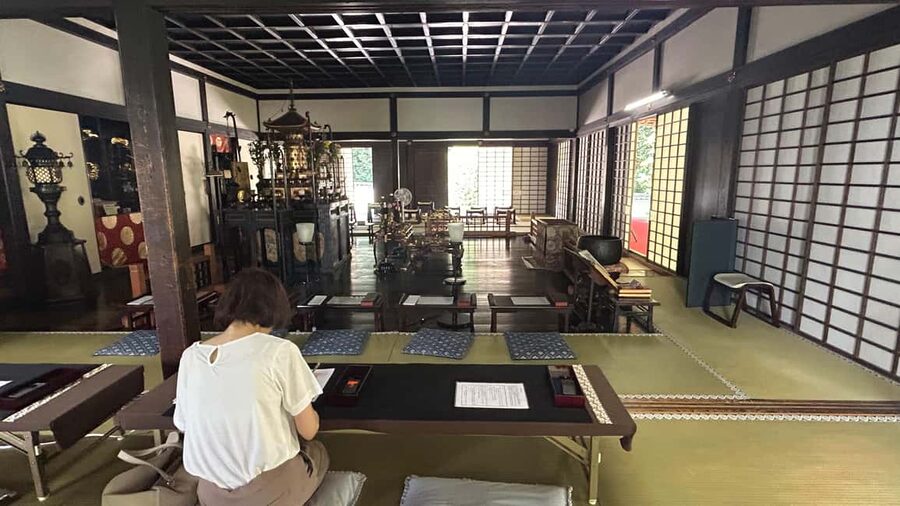
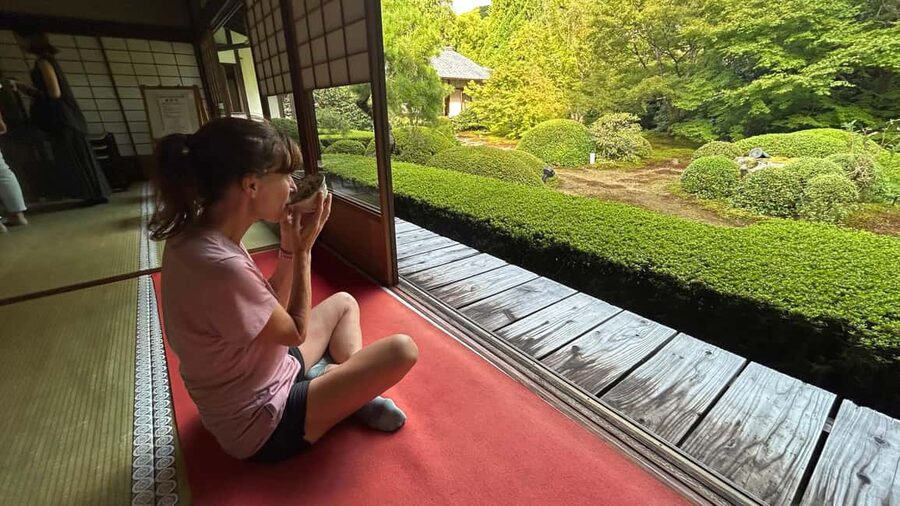
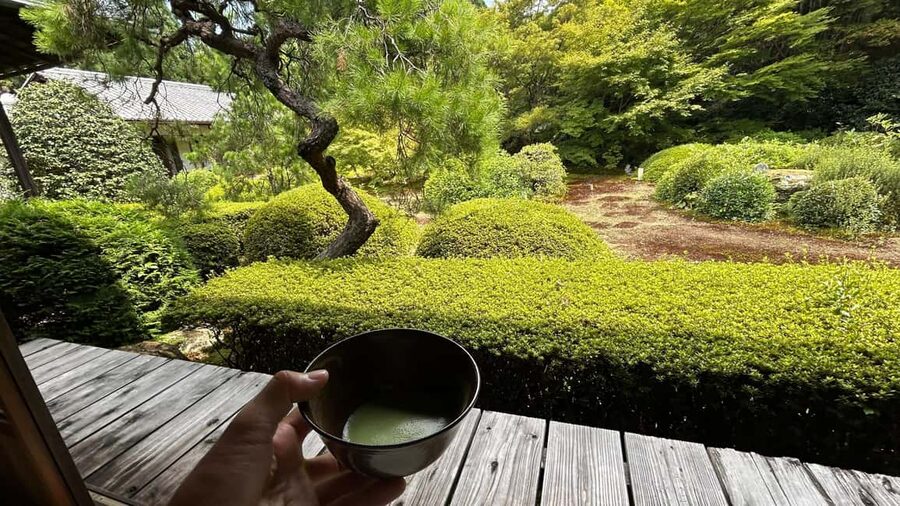
After shakyo, you sit down with freshly prepared matcha and a seasonal wagashi sweet. The tea service gives the experience a gentle second act. Your attention shifts from the page to the bowl, the garden, and the flavors in front of you.
Matcha has a distinct taste that can be grassy, bitter, and full-bodied. The wagashi provides a sweet balance. Since the sweets change with the season, the exact shape, color, and flavor are not fixed. That variation is part of the appeal, though you should not book expecting one specific confection.
The garden view is another strong point. Rather than rushing through the temple after the copying session, you have time to look outward and appreciate the garden’s careful design. The setting is meant to suggest harmony and calm, which fits the mood of the activity.
This is not described as a full meal. If you are hungry, plan food separately before or after the experience. Matcha and wagashi are a cultural refreshment and a thoughtful finish, not a substitute for lunch or dinner.
What the guide adds
The English-speaking guide does more than direct you from the station to the temple. The experience includes explanations of Kyoto’s long cultural story, Buddhist traditions, and the significance of Sennyu-ji within Japan’s heritage.
That background matters because shakyo can otherwise seem mysterious. You learn why copying the sutras calls for care and attention, and you gain a clearer sense of how the temple setting connects to the practice.
The guide can also help you understand what to do during the session, which is useful if you have never handled a Japanese brush in this context. One particularly practical touch noted in the feedback is help with planning the rest of the day after the activity. That can be valuable if you are fitting Sennyu-ji between other Kyoto stops.
No guide name is supplied for this experience, so you should not book it expecting a particular named host. The advertised language is English, and the group format is limited to 10 people.
Is $35 a fair price?
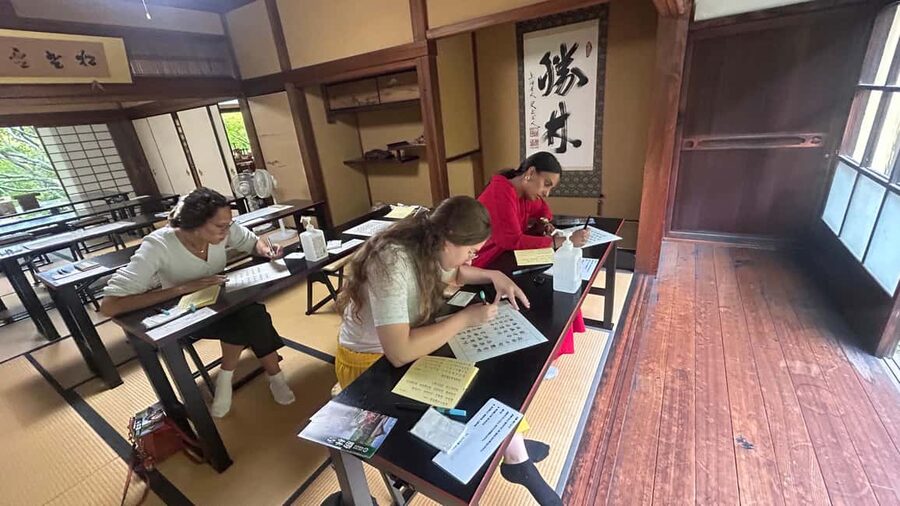
At $35 per person, the price is reasonable for a 150-minute cultural activity in Kyoto. Admission, the guided temple visit, all shakyo materials, matcha, and seasonal wagashi are included.
The value depends on what you want from a temple visit. If you only want exterior photographs and a quick look around, you can find less expensive ways to see Kyoto’s religious sites. Here, you are paying for time, instruction, a small group, and access to a structured practice that would be difficult to arrange on your own.
The session also uses much of your afternoon or morning. That is a benefit if you want a focused cultural experience, but it is a cost in time if your priority is covering many sights. The 15-minute walk each way adds another 30 minutes around the main visit, bringing the full outing to about two and a half hours from station to station.
I consider the inclusion of materials especially useful. You do not need to buy a brush, paper, or ink, and you do not have to work out the temple arrangements yourself. The tea and sweet make the price feel more complete, while the limited group size helps protect the quiet atmosphere.
Who should book this experience
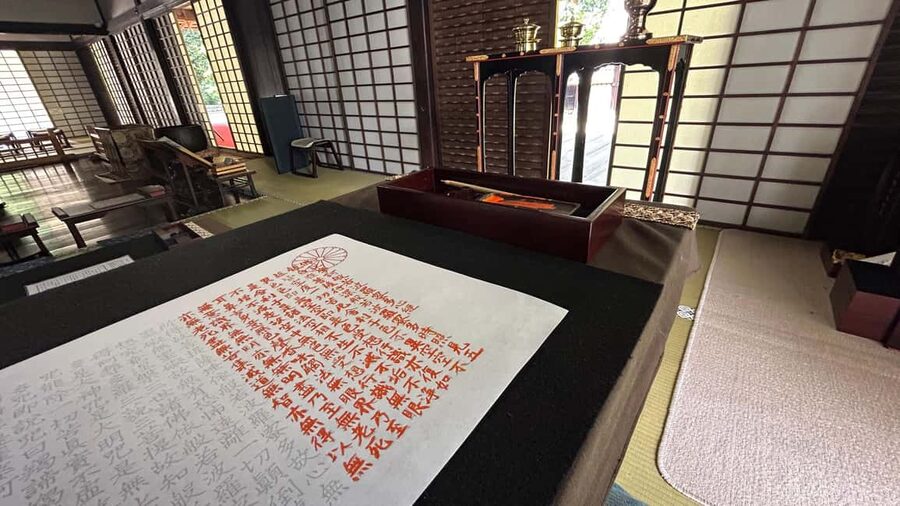
This is a good match for adults and older children who enjoy calm, hands-on cultural activities. The minimum age is 10, and the quiet format suits anyone interested in Buddhist practice, Japanese arts, gardens, or a slower side of Kyoto.
It is also a smart choice for you if your itinerary is packed. A period of focused writing can reset your attention after busy sightseeing. The activity does not demand prior knowledge, and the guide supplies the cultural setting you need.
You may want to skip it if you dislike sitting still, have difficulty remaining in one position for 60 to 90 minutes, or want a tour filled with movement and photo stops. The experience is not suitable for people with mobility impairments, wheelchair users, or anyone bringing a stroller, baby carriage, pet, luggage, or large bag. Electric wheelchairs are also not permitted.
Because the temple is a sacred place, you should be ready to follow its rules. Photography may be limited in certain indoor areas, and respectful behavior is essential.
Timing, cancellation, and planning tips
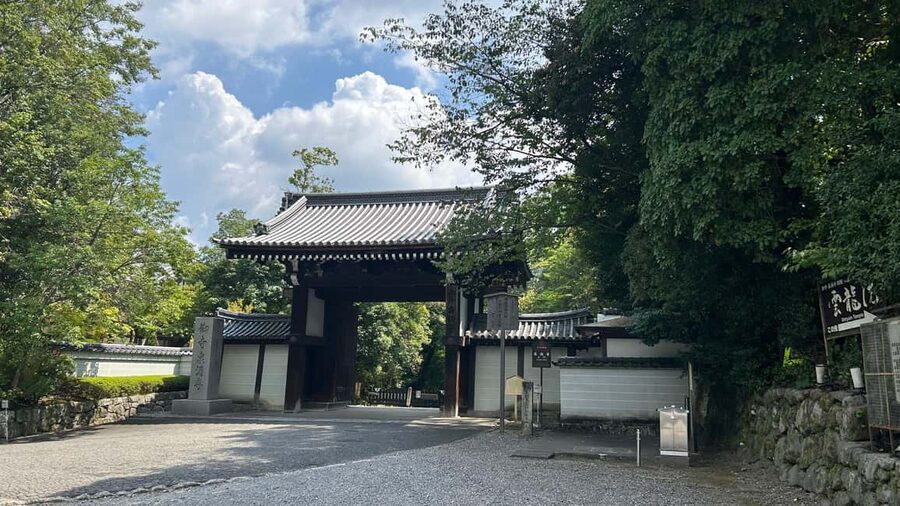
The advertised duration is 150 minutes, with starting times available according to the date you choose. Check the schedule before building the rest of your day around it.
You can cancel up to 24 hours in advance for a full refund. The reserve-now, pay-later option also helps if your Kyoto plans are still shifting. These policies are useful, but you should still leave enough time for the walk to and from Tofukuji Station.
Bring only what you need. Large bags, luggage, strollers, and baby carriages are not allowed, so arrange storage before meeting the guide if necessary. Comfortable clothing is the most important clothing tip because the shakyo session is long and quiet.
I would place this activity on a day when you can protect the time around it. Hurrying away from the tea service to catch another booking would undercut the very quality that makes the experience worthwhile.
What the four five-star ratings suggest
The feedback consistently points to the same strengths: calm pacing, a pleasant guide, cultural explanation, traditional garden views, and the chance to enjoy matcha with a sweet.
One person described the experience as relaxing. Another praised it as a way to slow down and rest during a demanding itinerary. The comments also point to the guide’s historical and cultural explanations, plus useful help with planning the rest of the day.
That pattern is helpful because it confirms what this activity is designed to do. It is not primarily a landmark checklist. Its appeal lies in quiet concentration, an authentic temple setting, and a small amount of guided cultural learning.
The rating comes from only four reviews, so I would keep expectations sensible. The praise is strongest for the peaceful mood and the guide’s support, not for a large number of attractions or a dramatic performance.
Should you book Sennyu-ji shakyo and matcha?
Book it if you want a thoughtful, low-key Kyoto experience that lets you participate rather than simply observe. The combination of sutra copying, temple history, garden views, matcha, and wagashi offers good value at $35, especially with materials and admission included.
Skip it if your ideal Kyoto day means constant walking, rapid sightseeing, or flexible movement. The 60 to 90 minutes of shakyo requires patience, and the historic setting comes with rules about photography and respectful conduct.
For adults, older children, couples, and solo visitors looking for a quiet cultural pause, this is one of the more distinctive ways to spend two and a half hours near Tofukuji Station. Come with comfortable clothes, a light bag, and enough time to let the silence do its work.
FAQ
Where does the experience begin?
Meet at the East Gate of Keihan Tofukuji Station. Look for the guide with a yellow fluorescent band on their bag.
How long does the activity last?
The advertised duration is 150 minutes. This includes the walks to and from Sennyu-ji and about two hours at the temple.
How long is the walk to Sennyu-ji?
The walk from Tofukuji Station to Sennyu-ji takes about 15 minutes. The return walk also takes about 15 minutes.
What is shakyo?
Shakyo is the practice of copying Buddhist sutras by hand. The session is intended to encourage calmness, reflection, and concentration.
Are shakyo materials provided?
Yes. Brushes, paper, and ink are provided for the session.
How long does the sutra-copying session take?
The session usually takes about 60 to 90 minutes, depending on your writing speed.
Is matcha included?
Yes. Freshly prepared matcha green tea is included.
Is a Japanese sweet included?
Yes. The matcha is served with seasonal wagashi. The specific sweet may vary by season.
What language is the tour conducted in?
The live tour guide speaks English.
Is the activity suitable for wheelchair users?
No. The experience is not suitable for wheelchair users or people with mobility impairments. Electric wheelchairs are also not permitted.
Can children join?
Children under 10 years old cannot join this experience.
Can I cancel the booking?
Yes. You can cancel up to 24 hours in advance for a full refund.
Do I need to pay when I reserve?
The reserve-now, pay-later option allows you to book without paying immediately.
Can I bring luggage or a stroller?
No. Luggage, large bags, baby strollers, and baby carriages are not allowed. Pets are also not permitted.
More History Walks in Kyoto
- Kyoto Gion: 2-Hour Geisha Culture & History Walking Tour
★ 5.0 · 1,186 reviews - Kyoto Gion Historical Walking Tour
★ 5.0 · 188 reviews - Historical Kyoto E-Bike Tour
★ 5.0 · 181 reviews - Kyoto: Nijo Castle World Heritage Guided Tour with Admission
★ 5.0 · 128 reviews
More Gardens in Kyoto
- Kyoto Arashiyama Walking Tour: Bamboo, Monkeys, Gardens & Secrets
★ 5.0 · 1,216 reviews - Kyoto Arashiyama Bamboo forest & Garden Half-Day Walking Tour
★ 5.0 · 413 reviews - Kyoto: Zen Garden, Zen Mind (Private)
★ 5.0 · 126 reviews - Kyoto Kiyomizu Tea Ceremony with Scenic Garden Views
★ 5.0 · 101 reviews
Recently added around Kyoto
- Higashiyama | Kyoto: Sakura Season Private Rickshaw Tour★ 5.0 · 3 reviews
- Kyoto Kimono Rental CHAMATSU|Kimono/Yukata Rental FamilyPlan★ 5.0 · 3 reviews
- Nara Private Customizable Half Day Tour★ 5.0 · 3 reviews
- Kyoto: Half-Day Private Guided Tour to the Old Town of Gion★ 4.4 · 3 reviews
- Kansai Region Hiking Adventure in Nara Kobe Kyoto and More★ 5.0 · 3 reviews
- Full Day Nara Deer, Temple, Shrine, Activities & Tea Ceremony★ 5.0 · 3 reviews
- Nara: Essential Private Tour with Deer Park and Temples★ 5.0 · 3 reviews
- Hiking Tour for Sacred Sites in Kyoto with a Guide★ 5.0 · 3 reviews
Kyoto Matcha Experiences, compared.
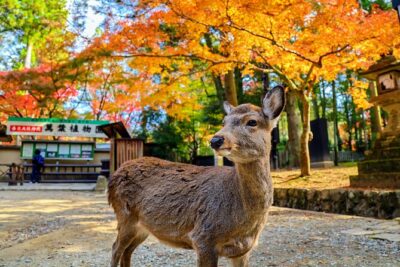
World Heritage Kyoto & Nara Uji Authentic Matcha Experience
Read our review →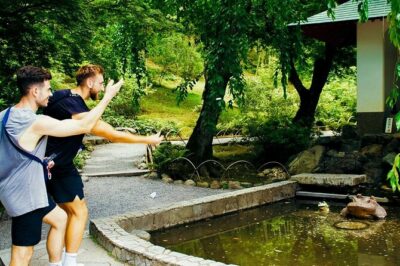
Arashiyama Bamboo Forest, Monkeys, Matcha & Temple Tour
Read our review →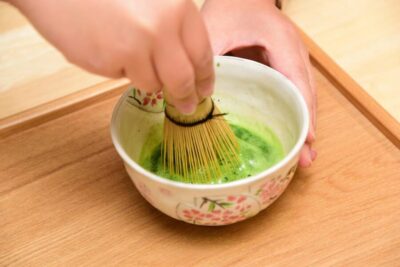
Tea Museum Tickets and Matcha Grinding Experience
Read our review →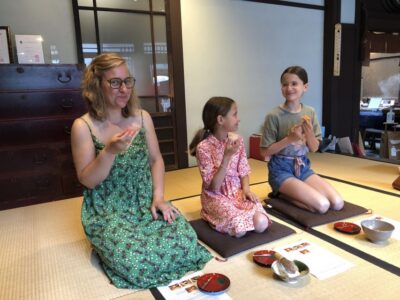
Tea Ceremony Meditation – Make Matcha with Tea Master
Read our review →Arashiyama Bamboo, Matcha, Monkeys & Temple Tour
Read our review →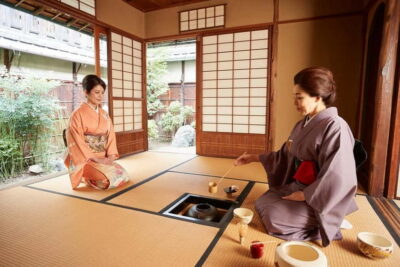
Arashiyama Bamboo, Temple, Matcha, Monkeys & secret spots
Read our review →
Browse the lists this tour appears in