
REVIEW · KYOTO TEA CEREMONY EXPERIENCES
Kyoto: Kimono Tea Ceremony with Matcha and Sweet
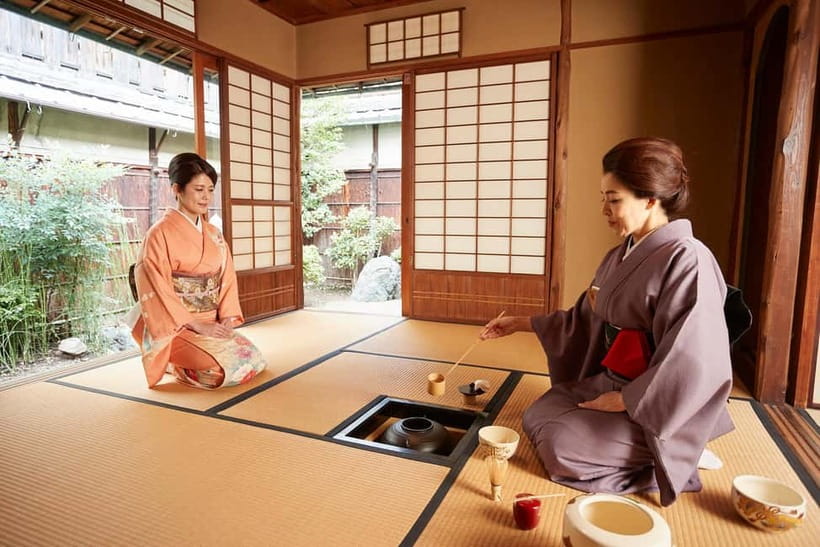
The most memorable part of this Kyoto experience is not simply drinking matcha. It is being dressed in a kimono first, then entering the tea room already prepared to pay attention to small details: the bowl, the whisk, the sweets, and the quiet movements of the tea master. The kimono turns a short cultural activity into a full occasion, with time for photographs before and after the ceremony.
I like the clear English guidance and the chance to make your own bowl of matcha rather than just watch. I also like the seasonal wagashi, since the sweet changes in flavor, color, and design. The main consideration is that this is a cultural workshop as well as a formal tea ceremony. If you expect the tea master to prepare every bowl for you, the hands-on format may feel less traditional.
In This Review
- Key points to know before booking
- Choosing a kimono before the tea begins
- Entering the tea room on tatami
- Learning the tools, etiquette, and Zen ideas
- Preparing your own bowl of premium matcha
- Seasonal wagashi with the matcha
- The photo value of the kimono
- How the timing works in real life
- What makes the $66 price worthwhile
- Who should book this Kyoto tea ceremony
- Booking details that matter
- Should you book it?
- FAQ
- How long does the Kyoto kimono tea ceremony last?
- What happens first?
- Is matcha preparation hands-on?
- Are Japanese sweets included?
- Is the experience conducted in English?
- Is hair styling included?
- Do I have to sit on a tatami mat?
- Can children attend?
- How many people are usually in the group?
- Is transportation included?
Key points to know before booking
- Kimono comes first: Staff help you choose and put on a kimono before the tea ceremony begins.
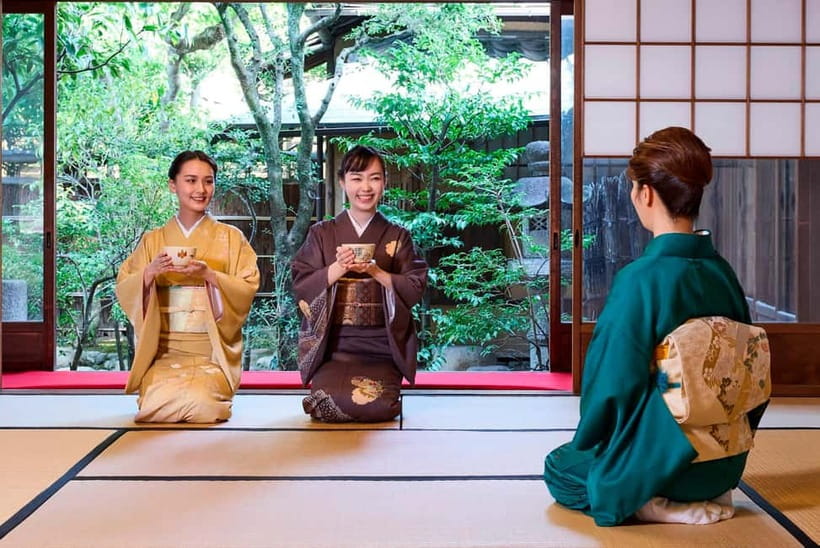
- You make your own matcha: The tea master demonstrates the process, then guides you through preparing a bowl with premium matcha.
- Seasonal wagashi are included: The Japanese sweets change through the year, giving each session a slightly different touch.
- English instruction is provided: Bilingual staff explain the tools, customs, history, and movements at a comfortable pace.
- Plan on 90 to 120 minutes: The advertised duration is 90 minutes, though the full activity can run longer.
- Tatami seating is part of the setting: Bamboo chairs are available if requested in advance, and children under seven cannot attend.
Choosing a kimono before the tea begins
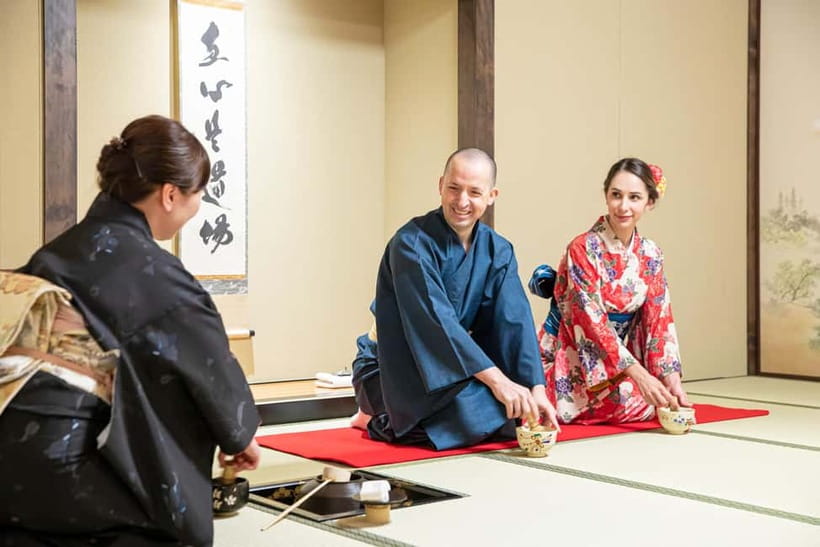
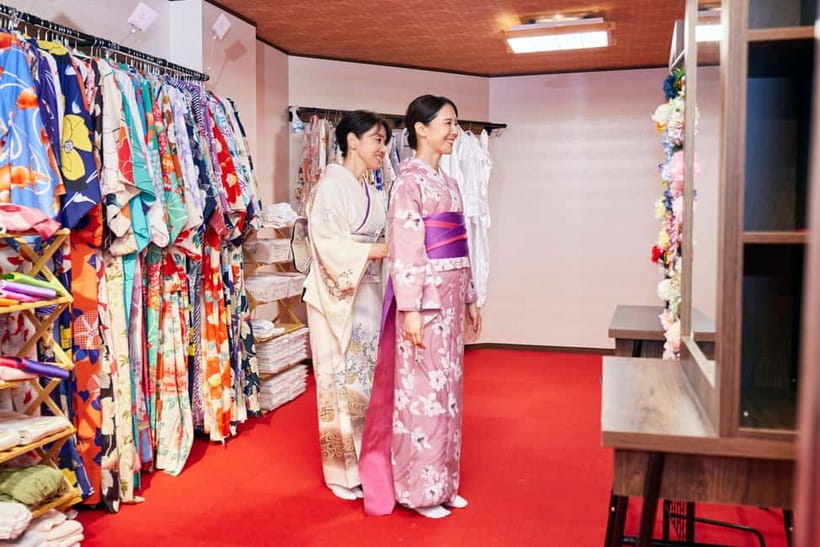
The activity starts with dressing, not tea. You choose from a range of kimono styles, sizes, and obi belts, then staff help you put everything on properly. This is more useful than simply hiring a costume for a photograph, because the clothing becomes part of the ceremony itself.
Women with long hair can also receive hair styling. The choice of flowers for the hair is one small personal touch mentioned by several people who enjoyed the dressing stage. You receive kimono socks as part of the process, and staff take care with the final appearance.
The fitting is meant to be efficient, so do not count on a long salon appointment. One person found the dressing process a little too quick and wished there had been more time for makeup beforehand. My practical advice is to arrive ready for photographs, with your hair and makeup mostly finished.
The available clothing is one of the strongest parts of the experience. You are not handed a single standard outfit. You get some choice, and that choice helps you feel connected to what you are wearing. If you are booking as a couple, family, or group of friends, the dressing stage also creates an easy, lighthearted start.
Some sessions allow you to keep the kimono on for up to two hours, giving you time for photographs before or after the ceremony. The exact use of the outfit should be confirmed when booking, but you should plan to take advantage of the photo time. Several people found good picture opportunities near the venue, and one suggested a professional selfie studio down the road.
More tea ceremonies in Kyoto:
- Kyoto: Tea Ceremony in a Traditional Tea House in Kiyomizu
★ 4.9 · 3,519 reviews - Kyoto: Tea Ceremony Ju-An at Jotokuji Temple
★ 4.9 · 3,207 reviews - Kyoto: 45-Minute Tea Ceremony Lesson Experience
★ 4.3 · 2,378 reviews
Entering the tea room on tatami
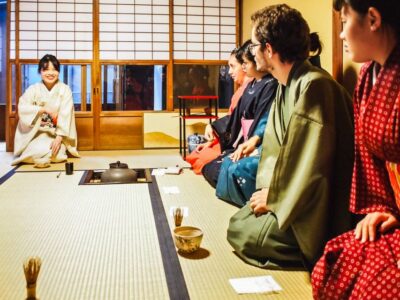
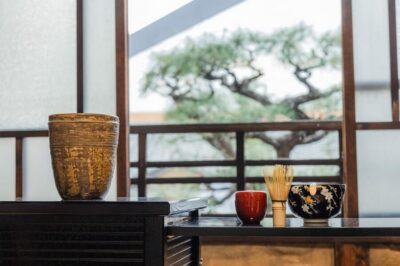
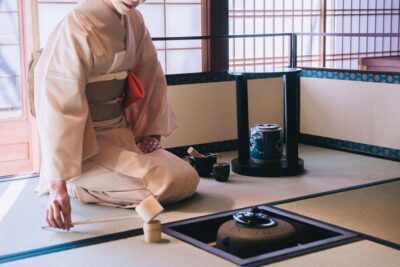
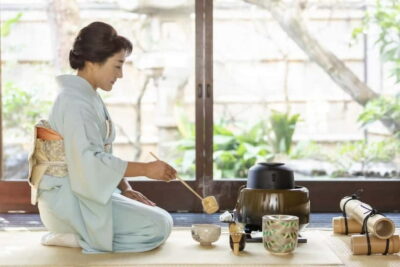
Once dressed, you move into a traditional tea room where the utensils are arranged for the ritual. The setting gives the activity its sense of order. The bowl, whisk, scoop, and other tools are not just equipment. Their placement and handling are part of the lesson.
Tatami seating is customary, but you do not have to force yourself into a painful position. Bamboo chairs are available by advance request, which is important for anyone who has difficulty sitting on the floor. You can also sit in the way that feels comfortable, though asking for a chair ahead of time is the safer plan.
The session usually has about 12 to 14 participants because people from different booking channels may be placed together. That is not a private ceremony, but the group is still small enough for guided participation. A few sessions have been much smaller, with only four people, though you should treat that as a pleasant possibility rather than a guarantee.
The tea room is designed for attention rather than spectacle. You will not be rushing from one sight to another. The value comes from watching a precise process and understanding why each movement matters.
Learning the tools, etiquette, and Zen ideas
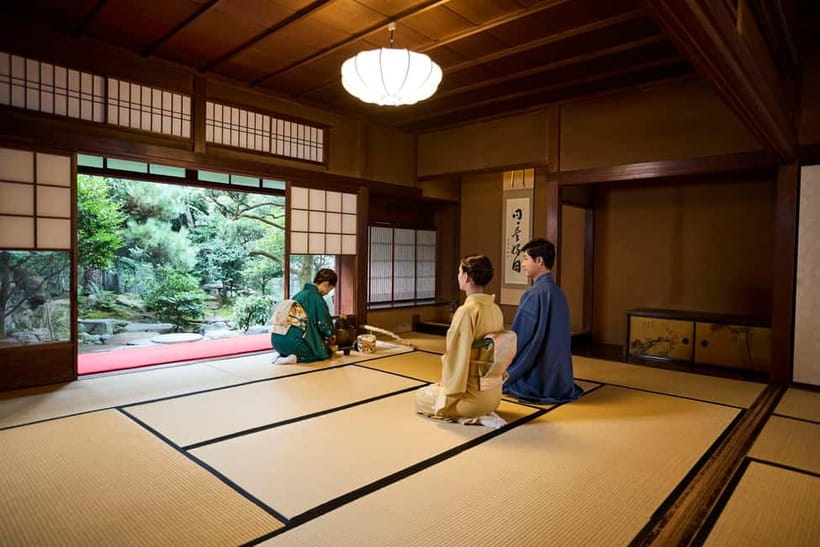
The tea master explains the background of the ceremony in English, including the tools, movements, and basic etiquette. The pace matters here. Several people particularly appreciated guides who spoke slowly and invited everyone to take part.
The activity also introduces four ideas connected with the tea ceremony:
- Wa: harmony
- Kei: respect
- Sei: purity
- Jaku: tranquility
These are not presented as abstract slogans. They help explain why the ceremony feels so deliberate. Harmony shapes the relationship between host, visitor, room, and season. Respect appears in the way the tools are handled and how the tea is received. Purity relates to preparing the space and mind, while tranquility is the calm that comes from giving full attention to one simple act.
You also receive cultural and historical context. The explanation is broad rather than an advanced study of tea schools, so this suits a first introduction better than someone already trained in chanoyu. I would still expect to leave with a better sense of why the ceremony has so many formal steps.
Guides named in individual sessions include Maki and Megumi. The most useful quality to look for is not a particular guide, since staffing can change, but the patient, clear instruction that makes the ceremony accessible to people unfamiliar with Japanese customs.
Preparing your own bowl of premium matcha
The hands-on portion follows the demonstration. You prepare your own bowl of matcha using high-quality matcha powder, with the tea master showing you how to create the desired texture and foam.
This is a fun change from simply sitting back while someone else performs the ritual. You get a direct feel for how much movement and care go into a seemingly simple bowl of tea. One person described learning to make an especially creamy, frothy matcha, which captures the appeal of this part of the session.
Do not expect to become a tea master in one lesson. The point is not technical mastery. It is learning through your hands, then drinking something you prepared yourself. The activity gives you enough instruction to take part without making the process feel like an exam.
There is also a useful contrast between the formal ceremony and the practical workshop. You first observe the tea master, then repeat selected steps yourself. That makes the tradition easier to remember, but it also explains why one person felt the format was closer to a tea-making workshop than a ceremony where the master serves the tea throughout.
If you want a completely passive, highly formal presentation, this may not match your ideal. If you want to understand the process by doing it, the arrangement offers better value.
More matcha tastings and workshops:
- World Heritage Kyoto & Nara Uji Authentic Matcha Experience
★ 5.0 · 1,573 reviews - Kyoto: Arashiyama Bamboo Forest, Monkeys, Matcha & Temple Tour
★ 5.0 · 759 reviews - Kyoto: Tea Museum Tickets and Matcha Grinding Experience
★ 4.9 · 739 reviews - Kyoto: Tea Ceremony Meditation – Make Matcha with Tea Master
★ 4.8 · 406 reviews
Seasonal wagashi with the matcha
The matcha is served with wagashi, traditional Japanese sweets. Their flavor, color, and design change with the seasons, so the sweet is not a fixed part of the menu.
That seasonal detail matters. Japanese tea culture often links food and presentation to the time of year, and the wagashi gives you a small, edible example of that idea. The sweet balances the bitterness of matcha and makes the tasting easier for people who are new to powdered green tea.
The sweets are also part of the visual experience. With a kimono, tatami room, carefully arranged utensils, and seasonal wagashi, the setting gives you plenty to notice without requiring a long lecture.
This is not a dessert-making class. You taste the sweet, but there is no included lesson on preparing wagashi. If you are hoping to learn Japanese confectionery, you would need a different activity. For a 90-minute cultural session, however, the sweet adds a thoughtful seasonal element rather than feeling like an afterthought.
The photo value of the kimono
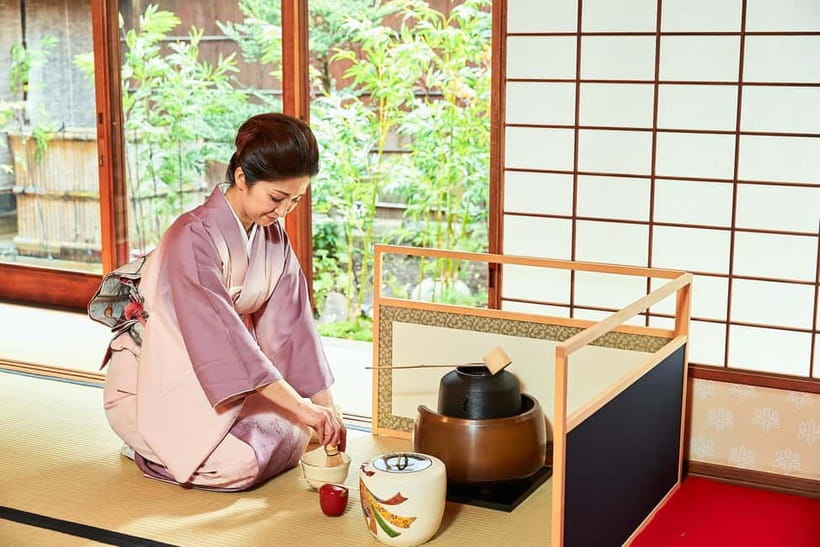
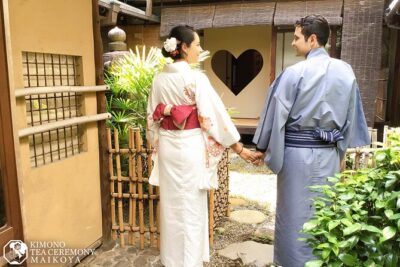
The kimono is not limited to the few minutes when you sit in the tea room. Depending on the session arrangements, you may have time to take photographs before and after the ceremony, and some people keep the outfit for up to two hours.
This makes the $66 price easier to assess. You are paying for dressing assistance, the tea master’s instruction, matcha, wagashi, and hair styling for women with long hair. You are also getting the visual experience of wearing a complete traditional outfit, rather than paying separately for a basic tea tasting and a separate costume rental.
The photo benefit is real, but it should not be the only reason you book. If all you want is a kimono shoot, a dedicated rental studio may give you more time and more locations. Here, the clothing has a purpose beyond appearance. You wear it while learning the etiquette and taking part in the tea preparation.
The fitting also works well for a surprise gift. One couple booked it as a fun activity, with one person surprising the other with the kimono, and both ended up changing into Japanese clothing. It is a good choice for couples and families who want an activity that produces both memories and photographs.
How the timing works in real life
The stated duration is 90 minutes, but the full experience can take approximately 90 to 120 minutes. Dressing begins the visit, followed by the tea room, explanation, matcha preparation, and sweets.
I would not place this between two tightly timed appointments. Allow extra room after the advertised end, especially if you want photographs in the kimono. The activity does not include transport to or from the venue, so you also need to build in your own travel time.
Because the experience starts with dressing, arriving prepared saves time. Wear whatever makes it easy for staff to dress you without a long delay, and take care of makeup before you arrive if photographs matter to you.
Children under seven are not allowed. Older children can enjoy the clothing and hands-on tea preparation, but the quiet, formal portion may suit children who can listen and follow instructions. The group format means this is not a private family lesson.
What makes the $66 price worthwhile
At $66 per person, this sits above the price of a simple matcha drink but below the cost of combining several separate cultural activities. The value depends on how much you want from the kimono portion.
For someone interested in Japanese clothing, the price covers more than a brief try-on. Staff dress you, help with the obi, provide hair styling for eligible women, and give you time for photographs. You then enter a formal setting and learn how the tea ceremony works.
For someone interested mainly in tea, the value is also solid because you receive a guided explanation, watch a tea master, prepare premium matcha, and taste seasonal wagashi. The only caveat is the format. You make the tea yourself, so it is not a pure demonstration by a master.
The activity is especially good value for a first visit to Kyoto because it combines several cultural ideas in one manageable session. You do not need prior knowledge, Japanese language skills, or special equipment. English-speaking staff explain the process and help you take part.
Who should book this Kyoto tea ceremony
I would choose this for:
- First-time visitors who want a clear introduction to tea ceremony customs
- Couples looking for a shared cultural activity and photographs
- Families with children aged seven and older
- Visitors who want to wear a kimono without arranging a separate rental
- Anyone curious about matcha and willing to prepare a bowl
- People who value explanation and participation more than a silent formal performance
I would think twice if you dislike sitting on tatami, though a bamboo chair can be requested ahead of time. I would also look elsewhere if your main goal is an extended kimono walk around Kyoto or a specialist tea-school lesson.
The bilingual staff are a major practical advantage. You can ask questions, follow the instructions, and understand the meaning behind the gestures rather than simply copy movements. Sessions led by Maki or Megumi have been singled out for warm, patient teaching, but the guide for your time slot may differ.
Booking details that matter
The activity costs $66 per person and includes kimono dressing, the tea ceremony, hands-on matcha preparation, wagashi, and bilingual staff assistance. Hair styling is included for women with long hair.
You can cancel up to 24 hours before the activity for a full refund, and a reserve-now, pay-later option is available. Starting times vary, so check availability for your date before arranging the rest of your Kyoto schedule.
Request a bamboo chair in advance if tatami seating may be uncomfortable. Also remember that transport is not included. With a typical group of around 12 to 14 people, the experience is shared rather than private, although a smaller group may occur in some time slots.
Should you book it?
Book this experience if you want more than a cup of matcha. The kimono fitting, seasonal wagashi, English explanation, and chance to prepare your own tea create a well-rounded introduction to an important Japanese tradition.
The one honest limitation is the balance between ceremony and workshop. You will observe formal tea-making, but you will also take part in making your own matcha. For most first-time visitors, that makes the activity more engaging. For someone seeking a strictly traditional performance with the tea master serving every bowl, it may feel less formal than expected.
At $66, I think it is a sensible Kyoto splurge for couples, families with older children, and culture-minded visitors. Request your chair early, arrive ready for photographs, and leave enough time after the 90-minute booking for the experience to run closer to two hours.
FAQ
How long does the Kyoto kimono tea ceremony last?
The advertised duration is 90 minutes, but the full experience can last approximately 90 to 120 minutes.
What happens first?
The experience begins with choosing and putting on a kimono. Staff assist with dressing before you enter the tea room.
Is matcha preparation hands-on?
Yes. After the tea master explains the process, you prepare your own bowl of matcha using premium matcha powder.
Are Japanese sweets included?
Yes. Traditional wagashi are included, and the flavor, color, and design change with the seasons.
Is the experience conducted in English?
Yes. English instruction and bilingual staff assistance are provided.
Is hair styling included?
Hair styling is included for women with long hair.
Do I have to sit on a tatami mat?
Tatami seating is customary, but bamboo chairs are available by advance request. You can also sit in the way that feels most comfortable.
Can children attend?
Children under seven are not allowed to join this activity.
How many people are usually in the group?
The session generally includes about 12 to 14 participants because bookings from different sites may be combined. Some sessions may be smaller.
Is transportation included?
No. You must arrange your own transportation to and from the venue.
More Kimono Rentals in Kyoto
- Kimono Tea Ceremony at Kyoto Maikoya, NISHIKI
★ 5.0 · 911 reviews - Kyoto: Kimono Rental with Hairstyling and Accessories
★ 4.8 · 653 reviews - Kyoto: Kimono Tea Ceremony at Orizuruya Gion
★ 4.9 · 618 reviews - KYOTO Tea Ceremony with kimono near by Imamiya Jinjya Shrine
★ 5.0 · 343 reviews
Recently added around Kyoto
- Higashiyama | Kyoto: Sakura Season Private Rickshaw Tour★ 5.0 · 3 reviews
- Kyoto Kimono Rental CHAMATSU|Kimono/Yukata Rental FamilyPlan★ 5.0 · 3 reviews
- Kyoto: Half-Day Private Guided Tour to the Old Town of Gion★ 4.4 · 3 reviews
- Nara Private Customizable Half Day Tour★ 5.0 · 3 reviews
- Kansai Region Hiking Adventure in Nara Kobe Kyoto and More★ 5.0 · 3 reviews
- Full Day Nara Deer, Temple, Shrine, Activities & Tea Ceremony★ 5.0 · 3 reviews
- Nara: Essential Private Tour with Deer Park and Temples★ 5.0 · 3 reviews
- Hiking Tour for Sacred Sites in Kyoto with a Guide★ 5.0 · 3 reviews
Kyoto Tea Ceremony Experiences, compared.
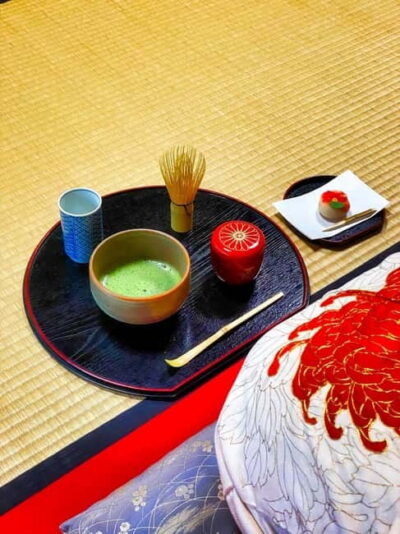
Tea Ceremony in a Traditional Tea House in Kiyomizu
Read our review →
Tea Ceremony in 100-year-old Kyo-Machiya Townhouse
Read our review →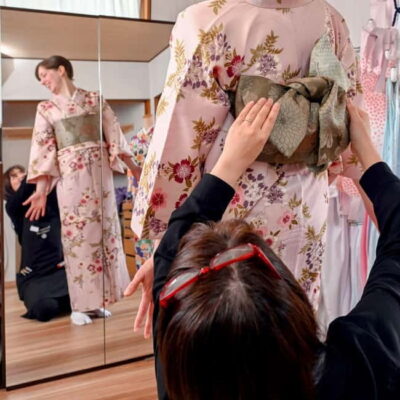
Browse the lists this tour appears in