
REVIEW · WORKSHOPS
Kyoto: Japanese Hair Accessories & Brooch Workshop
Kyoto has plenty of temples to admire, but this workshop lets you take part in a small piece of Japanese craft. You’ll make a two-way accessory that works as either a hair ornament or brooch, choosing washi paper, mizuhiki cords, origami, and artificial flowers to suit your taste. I especially like the freedom to pick your own colors and the relaxed guidance from instructors such as Mikiko-san and Ayumi-san.
The free haori rental adds a playful photo moment, while tea, sweets, a certificate, and an extra handmade gift give the $80 price some weight. The main consideration is time: 90 minutes is enough for one finished piece, but not a long craft lesson, so anyone wanting a detailed traditional technique class may find the format fairly compact.
In This Review
- Key Points to Know
- Making a Kyoto Souvenir You Can Actually Use
- Choosing Washi, Mizuhiki, Origami, and Flowers
- A Calm 90-Minute Workshop Near Nijo Castle
- Wearing a Haori Adds More Than a Photo Prop
- Tea, Sweets, and the Extra Keepsakes
- What the Finished Accessory Means for Your Trip
- Who Will Get the Most From This Activity
- Planning the Workshop Around Your Kyoto Day
- A Balanced Look at the $80 Price
- Should You Book This Kyoto Craft Workshop?
- FAQ
- How long does the Japanese accessory workshop last?
- How much does the activity cost?
- What will I make during the workshop?
- What materials can I use?
- Is a haori jacket included?
- Are tea and souvenirs included?
- Is the workshop suitable for children?
Key Points to Know
- One accessory, two ways to wear it: Finish a piece that can serve as a hair ornament or brooch.
- Traditional materials with creative freedom: Choose among washi, mizuhiki, origami, and artificial Japanese flowers.
- Haori included: Put on a traditional jacket at no extra cost and take photos with your finished work.
- English and Japanese instruction: Instructors provide patient guidance, including support from Mikiko-san and Ayumi-san.
- Extra keepsakes included: You receive a certificate and handmade Japanese gift in addition to your own craft.
- Easy central Kyoto location: The workshop is a short walk from Nijo Castle, with access to Gion, Arashiyama, Kawaramachi, and Karasuma.
Making a Kyoto Souvenir You Can Actually Use
The best part of this activity is that you do not simply buy a souvenir. You make one. Your finished accessory carries your own choices, from the color of the washi to the arrangement of cords and flowers.
That personal touch matters in Kyoto, where shops are full of beautiful crafts but many small objects begin to look alike after a few days of sightseeing. Here, you leave with something linked to a particular afternoon, a particular color choice, and the simple satisfaction of having made it yourself.
The finished item is designed to work in two forms. You can wear it in your hair or use it as a brooch, which makes it more practical than a decorative object that stays in a suitcase. It should suit both modern clothes and traditional Japanese styles, so you do not need to be wearing a kimono to use it.
The workshop is suitable for solo visitors, couples, friends, and families. You can work quietly on your own design, or treat the session as a shared activity. Children are welcome, with a kid-friendly version available.
More workshops and classes in Kyoto:
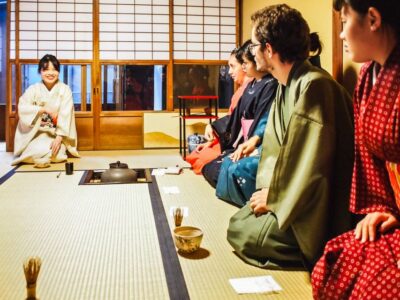
- Kyoto: 45-Minute Tea Ceremony Lesson Experience
★ 4.3 · 2,378 reviews - Kyoto : Chopsticks Making Workshop in Gion with Engraving Option
★ 5.0 · 958 reviews - Kyoto: Samurai Sword Class by Experts in Traditional Arts
★ 4.9 · 657 reviews
Choosing Washi, Mizuhiki, Origami, and Flowers
The material selection gives the workshop its Japanese character. Washi is traditional Japanese paper, valued for its texture and careful craftsmanship. In this activity, it becomes part of a small wearable object rather than something you only see behind glass.
Mizuhiki cords add another distinctly Japanese element. These decorative cords are often used in formal wrapping and celebratory designs. Here, you can use their color and shape to add structure and detail to your accessory.
Origami brings a lighter, more playful note. Artificial Japanese flowers add color and a floral finish without the fragility of fresh petals. Since you can select from different colors and materials, your piece does not have to follow one fixed pattern.
That choice is important. A workshop can feel disappointing when everyone produces the same object from the same limited set of parts. This one is built around personal expression. Daniel, who attended in November 2025, found the freedom of the craft especially enjoyable and left interested in making more accessories at home.
You should still keep your expectations in check. A 90-minute session cannot teach every detail of Japanese paper craft, cord work, or floral design. Think of it as a guided introduction with a finished keepsake, not a full professional training course.
A Calm 90-Minute Workshop Near Nijo Castle
The activity lasts 90 minutes, making it easy to fit around a day of sightseeing. The location near Nijo Castle is particularly useful. You can visit the castle before or after the workshop rather than crossing Kyoto for a separate cultural activity.
The central setting also gives you access to several well-known parts of the city, including Gion, Arashiyama, Kawaramachi, and Karasuma. The exact travel time between these areas is not provided, so check your route before booking a start time. Still, the location makes the class a practical addition to a day based around central Kyoto.
At the start, you choose your materials and receive instruction from a kimono-clad teacher. The English and Japanese language options make the activity accessible to international visitors, and the teaching style is meant to be supportive rather than rushed.
Mikiko-san is noted for being kind and patient, while Ayumi-san provided gentle help during a mother-and-daughter session. Those details matter because small craft projects can become frustrating if the instructor only demonstrates once and leaves you to figure out the rest.
The workshop is described as relaxing, and that seems to be one of its strongest qualities. You are not racing from one sight to another or trying to decode a long lecture. You have a short stretch of time to sit, choose, assemble, and enjoy the process.
Wearing a Haori Adds More Than a Photo Prop
A haori is a traditional Japanese jacket worn over a kimono. You can borrow one for the workshop at no additional cost, giving the activity a more distinctly Japanese setting and making the final photographs more memorable.
The haori is also a useful way to connect your accessory to traditional dress. A brooch or hair ornament can look very different against a jacket than it does with everyday clothing. Even if you plan to wear your creation with modern clothes later, the photo session gives you a clear record of its Japanese style.
Bring a camera if you want to keep those images. The activity includes a photo session with your finished accessory and outfit, but the supplied information does not specify how many photos are taken or whether professional photographs are provided. I would bring your own phone or camera rather than count on a separate photography package.
Comfortable clothes are recommended. You do not need to arrive in traditional dress, since the haori rental is part of the experience. Comfortable clothing also makes sense for a seated craft session and keeps the focus on the project instead of your outfit.
A completely different side of Kyoto:
- PERFECT KYOTO 1-Day Bus Tour
★ 5.0 · 13,518 reviews - Kyoto: Fushimi Inari, Kinkakuji, Bamboo Grove 1 Day Bus Tour
★ 4.8 · 4,316 reviews - Kyoto: Tea Ceremony in a Traditional Tea House in Kiyomizu
★ 4.9 · 3,519 reviews - Kyoto Geisha Walking Tour: Gion District & Hidden Gems
★ 4.7 · 3,273 reviews
Tea, Sweets, and the Extra Keepsakes
Japanese tea and sweets are included, adding a small pause during or after the craft. This is not presented as a formal tea ceremony, so you should book it for the craft rather than expecting a separate lesson in tea etiquette.
The refreshments help the 90-minute session feel like a cultural outing instead of a simple make-and-take class. They also give you a chance to slow down and enjoy the atmosphere after concentrating on your design.
Your own accessory is not the only thing you take home. The package includes a certificate of completion and an additional handmade Japanese gift. The certificate may appeal to children, while the extra gift adds value for adults who want more than one small memento.
The value here comes from the complete package. At $80 per person, this is not the cheapest way to spend 90 minutes in Kyoto. You are paying for the materials, instruction, haori rental, refreshments, certificate, extra gift, and a finished object that you design yourself.
For someone who only wants a low-cost souvenir, the price may feel high. For someone comparing it with other hands-on cultural activities, the included items make the cost easier to understand. You do not need to buy the materials separately, and you get an activity plus several keepsakes.
What the Finished Accessory Means for Your Trip
A good Kyoto souvenir should be easy to carry, connected to the place, and useful after you return home. This accessory meets all three goals better than many large decorative items.
It is small enough to pack without fuss. Its Japanese materials link it to the setting. Its two-way design gives you a reason to wear it instead of storing it away.
You also have a story to tell when someone asks about it. You can explain that you chose the colors and materials near Nijo Castle, worked with a Japanese instructor, wore a haori, and finished the piece during your Kyoto visit.
The workshop also gives you a starting point for craft at home. Daniel specifically enjoyed learning enough to want to make more accessories and share the skill with friends and family. That does not mean you will leave with a complete craft kit or a detailed manual, since neither is included in the provided information. It does mean the activity can offer more than a single afternoon project.
Who Will Get the Most From This Activity
I would recommend this workshop to families looking for a calmer Kyoto activity. Children can take part in a version suited to them, and the certificate gives younger participants a clear finish line. Parents should still stay involved, since the session includes materials and creative assembly rather than a passive demonstration.
Couples may like the shared design process and the photo opportunity. You can make matching pieces, choose colors that reflect your individual tastes, or simply work side by side while enjoying tea and sweets.
Solo visitors are also well served. The instructor guidance gives you a social point of contact without requiring you to join a large sightseeing group. You can concentrate on your own design and leave with a useful souvenir.
This is a good choice for anyone who prefers making over collecting. It is less suited to visitors who want a long, technical lesson or a major historical presentation. The cultural value is found in the materials, clothing, teacher, and act of creating, not in a long talk about Kyoto’s past.
Planning the Workshop Around Your Kyoto Day
The class lasts 90 minutes, so it can fit neatly into a half-day plan. Pairing it with Nijo Castle is the simplest option because the workshop is a short walk away. You can see the castle, take a break for crafting, and continue into central Kyoto afterward.
You can also use it as a quieter change of pace between major sightseeing areas. Kyoto days often involve a lot of walking, crowds, and visual stimulation. Sitting down to make a small object gives you a different kind of cultural experience.
Check the available starting times before you commit to other reservations. The activity does not include hotel transfer, and transportation to the workshop is your responsibility. Additional expenses outside the package are also not included.
Booking is flexible in two useful ways. You can reserve now and pay later, and cancellation is free up to 24 hours in advance for a full refund. Those terms help if your Kyoto plans are still shifting, though you should confirm the exact booking conditions at the time you reserve.
A Balanced Look at the $80 Price
At $80 per person, the workshop sits in the special-activity part of a Kyoto budget rather than the casual afternoon category. The price makes the most sense if you value instruction and personal choice.
You are not paying only for glue, paper, and decorations. The package includes a 90-minute guided session, high-quality craft materials, a haori rental, tea and sweets, a certificate, a handmade gift, and your own finished accessory.
The main question is how much you value the experience itself. If you want the lowest possible cost, buying a ready-made hair ornament may be cheaper. If you want a personal memory, a photo in traditional clothing, and a souvenir you created yourself, the package offers a stronger return.
The small number of available ratings should also encourage sensible expectations. The current score is 5 out of 5 from three ratings, with praise focused on the calm setting, patient instruction, clear explanations, and family enjoyment. That is encouraging, but it is not enough information to judge every possible group size, pacing style, or material choice.
Should You Book This Kyoto Craft Workshop?
Book it if you want a hands-on cultural break near Nijo Castle and like the idea of wearing your souvenir after the trip. The best reasons are the two-way design, the broad material choices, the patient English and Japanese instruction, and the extra keepsakes included in the price.
I would especially choose it for a family, a couple, or a solo visitor who wants something quieter than another temple visit. The kid-friendly format and haori photo session give it appeal beyond the craft itself.
Skip it if you want a long technical course, a formal tea ceremony, or the cheapest possible souvenir. For most other visitors, the $80 cost is reasonable when you count the materials, guidance, outfit rental, refreshments, certificate, handmade gift, and finished accessory.
FAQ
How long does the Japanese accessory workshop last?
The workshop lasts 90 minutes.
How much does the activity cost?
The listed price is $80 per person.
What will I make during the workshop?
You will make a two-way accessory that can be worn as a hair ornament or used as a brooch.
What materials can I use?
Materials include washi paper, mizuhiki cords, origami, and artificial Japanese flowers. You can choose colors and materials for a personalized design.
Is a haori jacket included?
Yes. A traditional haori jacket is available as a free rental during the workshop.
Are tea and souvenirs included?
Yes. The package includes Japanese tea and sweets, a certificate of completion, a handmade Japanese gift, and the accessory you create.
Is the workshop suitable for children?
Yes. Children are welcome, and a kid-friendly version of the workshop is available.
Recently added around Kyoto
- Higashiyama | Kyoto: Sakura Season Private Rickshaw Tour★ 5.0 · 3 reviews
- Kyoto Kimono Rental CHAMATSU|Kimono/Yukata Rental FamilyPlan★ 5.0 · 3 reviews
- Kyoto: Half-Day Private Guided Tour to the Old Town of Gion★ 4.4 · 3 reviews
- Nara Private Customizable Half Day Tour★ 5.0 · 3 reviews
- Full Day Nara Deer, Temple, Shrine, Activities & Tea Ceremony★ 5.0 · 3 reviews
- Nara: Essential Private Tour with Deer Park and Temples★ 5.0 · 3 reviews
- Kansai Region Hiking Adventure in Nara Kobe Kyoto and More★ 5.0 · 3 reviews
- Hiking Tour for Sacred Sites in Kyoto with a Guide★ 5.0 · 3 reviews
Workshops, compared.
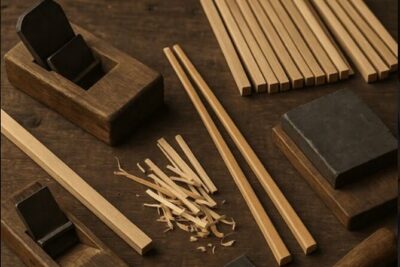
Chopsticks Making Workshop in Gion with Engraving Option
Read our review →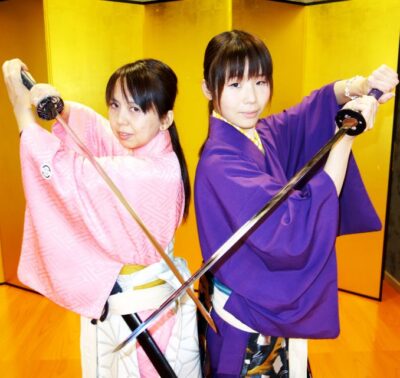
Samurai Sword Class by Experts in Traditional Arts
Read our review →
Ramen Cooking Class at a Ramen Factory with Souvenir
Read our review →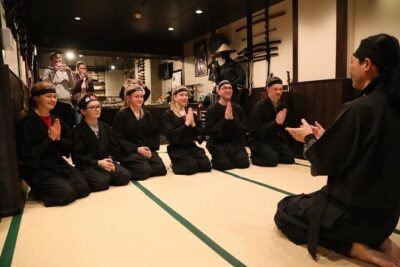
Ninja 1-hour Hands-on Lesson by Japanese master in Kyoto -Entry
Read our review →
The Original Small-Group Sushi Making Class in Kyoto
Read our review →
Japanese Washoku Bento Small Group Cooking Class
Read our review →Browse the lists this tour appears in