
REVIEW · GION GEISHA DISTRICT TOURS
Kyoto: Half-Day Private Tour Gion Geisha District & Kiyomizu
Gion’s wooden lanes, Yasaka Shrine, and Kiyomizu-dera make a fine introduction to Kyoto, especially if you want the old city explained rather than simply photographed. This four-hour walk brings together geisha culture, shrine customs, craft shops, a famous pagoda, and one of Kyoto’s best views.
I like the compact route, which links several major sights without wasting half the afternoon on transport. I also like the personal guide format. Guides such as Teppei and Julien have been warm, engaging, and willing to adjust the route around crowded streets.
The main caution is that a private or small-group booking may not always mean a shared group. One booking became a solo tour, while the guest had expected company. Also, the history may be lighter than some museum-minded visitors want.
In This Review
- Key points at a glance
- Why this four-hour Kyoto route works
- Meeting near Pontocho Street
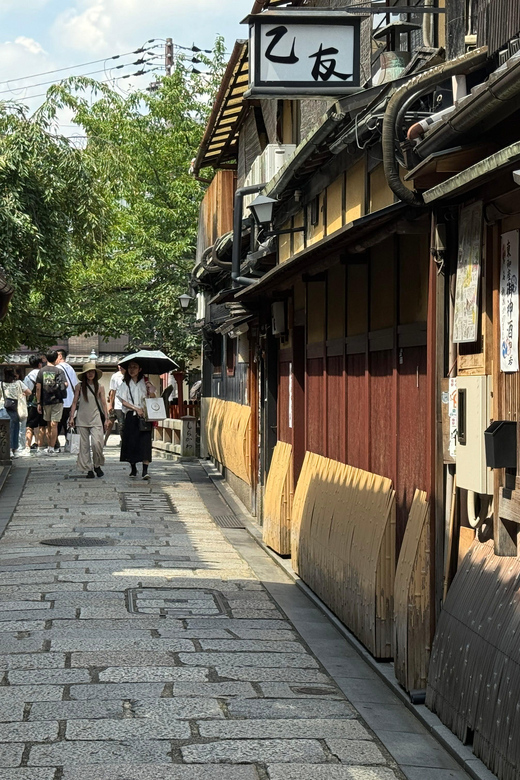
- Gion, where wooden houses still shape the streets
- Yasaka Shrine and 1,400 years of Shinto tradition
- Ninenzaka and Sannenzaka, Kyoto’s old shopping lanes
- Yasaka Pagoda, the classic Higashiyama view
- Kiyomizu-dera and its wooden stage
- The guide makes or breaks the experience
- Timing, pace, and practical value
- Who should book this Kyoto tour?
- Should you book it?
- FAQ
- How long does the tour last?
- Where do I meet the guide?
- What languages are available?
- Is the tour private or shared?
- Is Kiyomizu-dera admission included?
- Is entry to Zuigudo Hall included?
- How long is the guided visit in Gion?
- Can I cancel for a full refund?
Key points at a glance
- Gion in 45 minutes: Walk Hanamikoji and Shirakawa, with a chance to see traditional machiya houses and learn about geisha and maiko culture.
- Yasaka Shrine’s 1,400 years: See one of Kyoto’s major Shinto sites and hear about its ceremonies and festivals.
- Ninenzaka and Sannenzaka: Browse old-style lanes lined with tea houses, craft shops, and good views toward Yasaka Pagoda.
- Kiyomizu-dera entry included: Spend about an hour at Kyoto’s famous temple and its great wooden stage.
- A guide-led walking route: English and Japanese tours are available, with private or small-group options.
- Flexible booking: You can cancel up to 24 hours ahead for a full refund and reserve without paying immediately.
Why this four-hour Kyoto route works
Kyoto can feel scattered. One temple sits uphill, one shrine lies beside a shopping lane, and a famous view may be hidden behind a turn you would never think to take. This tour solves part of that problem by joining Gion, Yasaka Shrine, Ninenzaka, Sannenzaka, Yasaka Pagoda, and Kiyomizu-dera into one walking experience.
You begin in central Kyoto, near Pontocho Street, then work east toward the Higashiyama district. The route has a clear story: first the old entertainment quarter, then a major shrine, then the traditional lanes that lead uphill to Kiyomizu-dera.
At $77 per person, the price is reasonable if you value a guide and want Kiyomizu-dera admission handled for you. It is less compelling if you only want to stroll the streets on your own. Gion, Ninenzaka, and the outside areas around Yasaka Shrine are easy to explore independently, so the real value comes from explanations, local context, and help moving through a popular area without losing your way.
The four-hour length is also useful. You get enough time to see the main sights without giving up a full day. The tradeoff is limited depth. You will get an introduction to several important places, not a slow architectural study of each one.
More evenings in Gion:
- Kyoto Geisha Walking Tour: Gion District & Hidden Gems
★ 4.7 · 3,273 reviews - Kyoto: Gion Magical Night Walking Tour with Geisha Trivia
★ 4.9 · 2,393 reviews - Kyoto: Gion Geisha District Walking Tour – Stories of Geisha
★ 4.7 · 2,187 reviews
Meeting near Pontocho Street
The meeting point is in front of the police box next to Pontocho Street, identified as the Nakagyo Police Station Shijo Police Box. Look for a guide holding a yellow sign with the DeepExperience logo.
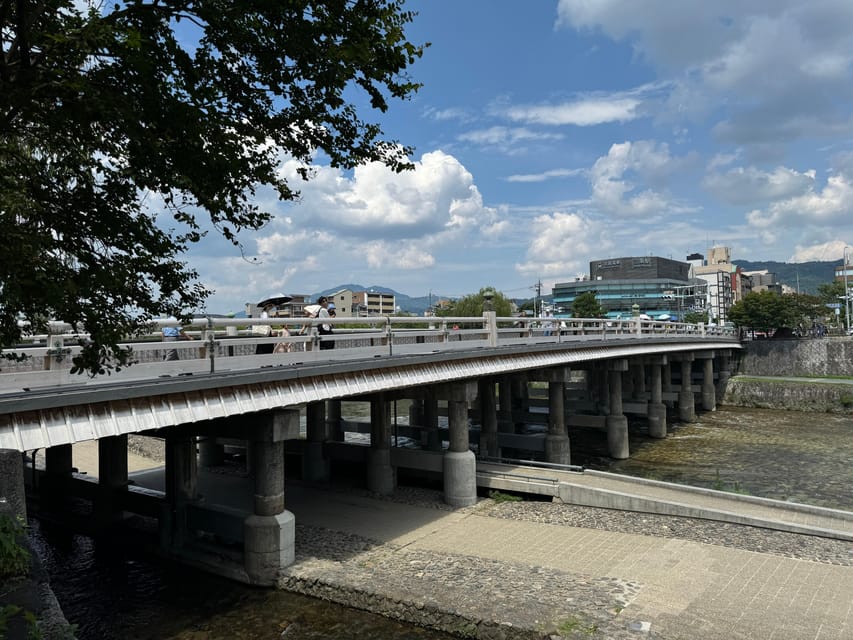
This location places you near one of Kyoto’s best-known evening dining areas and close to the Kamo River. It is a practical starting point for Gion, though you should allow time to find the police box in the busy central area.
Because the tour is on foot, comfortable shoes matter. The route includes traditional lanes, temple approaches, and an uphill walk toward Kiyomizu-dera. The tour information does not give a precise distance, so expect several hours of standing and walking rather than a gentle sit-down sightseeing trip.
The guide may lead a private booking or a small group. That distinction matters. A guest on one booking found the guide alone rather than part of a small group, while others appreciated the personal attention. If you specifically want company, confirm the group arrangement before booking.
Gion, where wooden houses still shape the streets
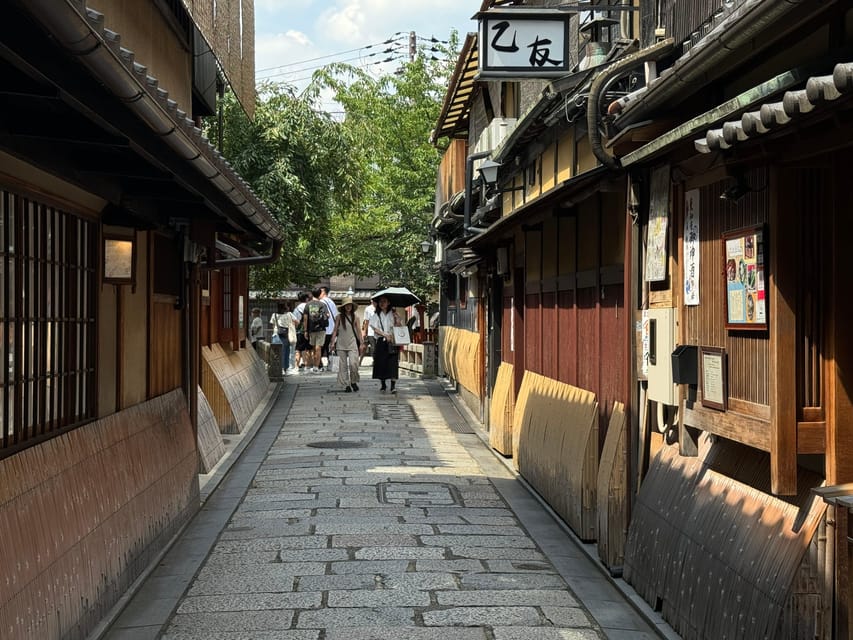
Gion is the most atmospheric part of the tour. Its traditional machiya houses are narrow wooden buildings that once served as both shops and homes. Along streets such as Hanamikoji and Shirakawa, the old facades give the district a distinct Kyoto look.
Your guide can explain how Gion developed around tea houses and performance traditions. The area is associated with geisha and maiko, the traditionally trained entertainers who work in Kyoto’s formal dining culture. You might glimpse one moving between appointments, but the tour should not be treated as a guaranteed geisha sighting.
That is an important distinction. Gion is not a stage set created for tourists. It is a working district with residents, businesses, and private establishments. A good guide helps you appreciate the customs without turning people into photo subjects.
The planned guided visit here lasts about 45 minutes. That is enough time to walk through key streets and pause for photographs, but not enough for a detailed account of every tea house or neighborhood tradition. One guest felt the cultural explanations could have gone further, so visitors who want a scholarly treatment should keep expectations in check.
I like this first stop because it gives the rest of the tour a social context. You are not just looking at old buildings. You are seeing the setting for Kyoto’s formal hospitality traditions and learning why these lanes remain important.
Yasaka Shrine and 1,400 years of Shinto tradition
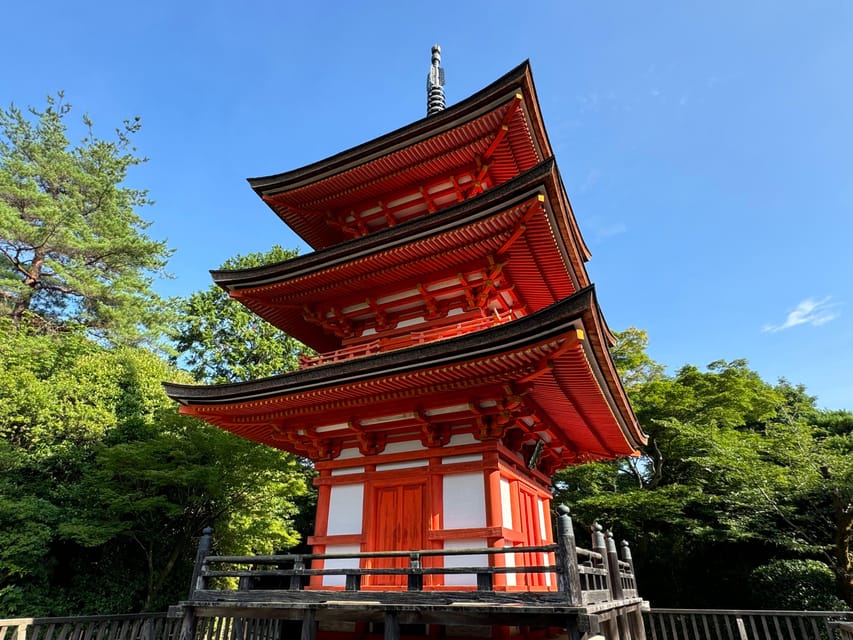
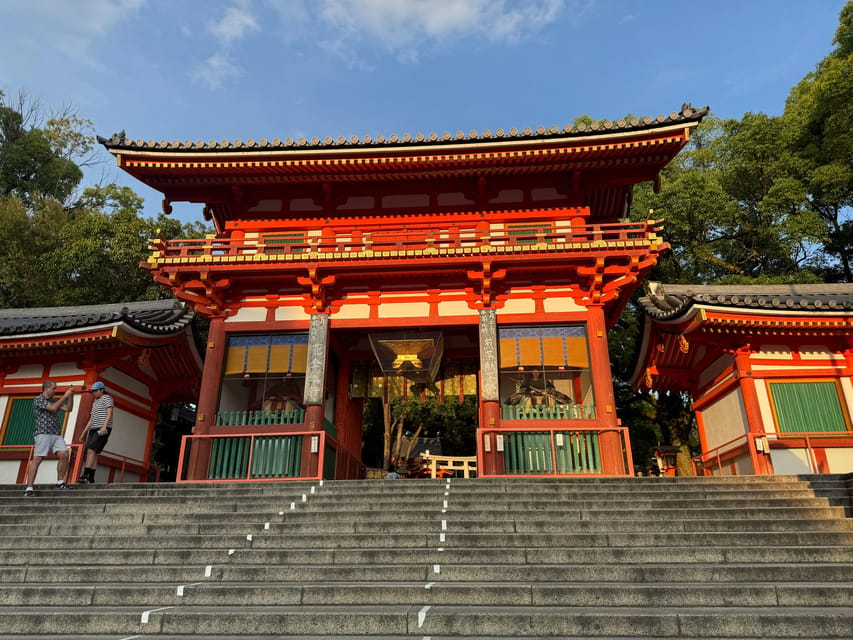
From Gion, the route continues to Yasaka Shrine. The shrine has a history of about 1,400 years and is closely tied to Kyoto’s religious life, public celebrations, and festivals.
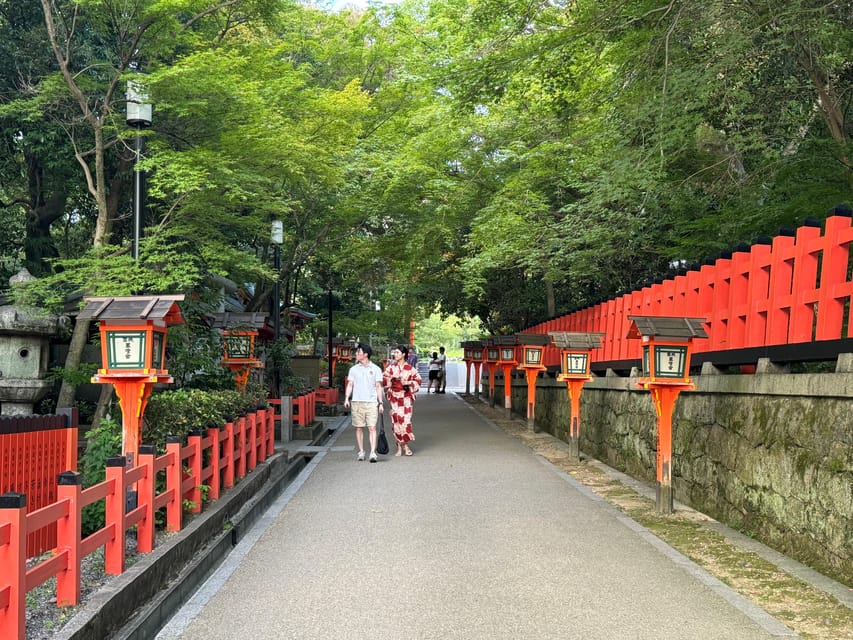
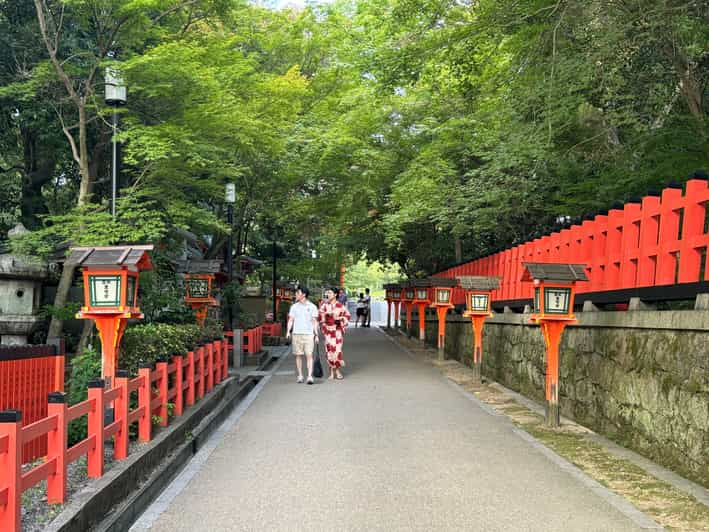
The shrine is known for its bright vermilion structures and open grounds, though the main benefit of visiting with a guide is not simply the color or architecture. Your guide can point out the role of the shrine, explain basic Shinto customs, and help you understand how visitors approach a sacred site.
The scheduled visit lasts about 20 minutes. That is a quick stop, but it fits the half-day design. You can see the key areas, take photographs, and receive a short explanation before continuing uphill.
This is one place where the quality of the guide makes a real difference. A rushed explanation can make a shrine feel like another photo stop. A thoughtful one can show you how ritual, festivals, and everyday worship fit into Kyoto life.
The route description connects Yasaka Shrine with lively festivals and ceremonies. You should not expect a festival performance during an ordinary tour, since no event is promised. Instead, the guide provides the setting and background that make the shrine more meaningful when you return on your own.
More visits to Kiyomizu-dera:
- Kyoto: Tea Ceremony in a Traditional Tea House in Kiyomizu
★ 4.9 · 3,519 reviews - Kyoto: Nijo Castle, Kiyomizu & Fushimi Inari Guided Tour
★ 4.7 · 700 reviews - Kyoto: Nijo, Kinkaku-ji, Arashiyama, Kiyomizu & Fushimi Inari
★ 5.0 · 699 reviews - Kyoto Tea Ceremony & Kiyomizu-dera Temple Walking Tour
★ 5.0 · 115 reviews
Ninenzaka and Sannenzaka, Kyoto’s old shopping lanes
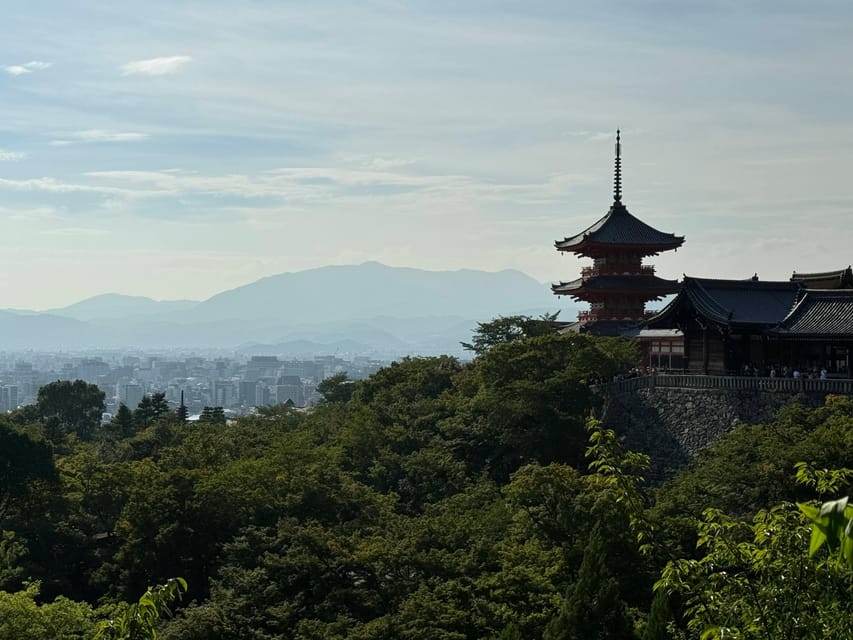
The tour then reaches Ninenzaka and Sannenzaka, two sloping lanes in the Higashiyama area. These streets are lined with traditional-style buildings, tea houses, and shops selling local crafts and food items.
The planned guided portion at Ninenzaka is about 10 minutes, so this part is more of a transition and orientation stop than a full shopping visit. You will have time to see the street character, take photographs, and learn how the lanes connect to Kiyomizu-dera.
The short stop has one clear advantage: it keeps the group moving toward the temple. The drawback is that you may not have much time to browse. If you see a craft shop you like, you may need to return later, since the tour continues on a schedule.
These lanes can also feel crowded, particularly at popular times. One guide received praise for finding quieter ways through the area and making movement easier. That kind of practical judgment is useful here. A guide cannot remove the crowds, but can help you avoid standing in the middle of a narrow street while everyone else tries to pass.
Yasaka Pagoda, the classic Higashiyama view
The five-story Yasaka Pagoda is one of the most recognizable sights along the route. Its dark wooden form rises above the traditional streets, creating the classic Kyoto scene seen from Ninenzaka and Sannenzaka.
The pagoda is mainly a visual highlight on this tour. The information provided does not include entry, so you should expect to admire it from nearby streets rather than climb inside. That is still worthwhile. The view works because the old buildings, sloping lane, and tall pagoda line up in a compact scene.
Your guide can help you find a good angle and explain the pagoda’s place in the district. Keep your camera ready, but remember that the lanes are public streets rather than a private viewing platform. You may need patience to get a clear photograph.
This stop also shows why a walking tour can be more useful than a bus tour in Kyoto. The pagoda is best understood at street level, where it rises between shops and houses. A vehicle can take you near it, but cannot give you the same close view of the surrounding lanes.
Kiyomizu-dera and its wooden stage
The final major stop is Kiyomizu-dera, with about one hour set aside for a guided visit. Temple admission is included, which adds real value to the $77 price.
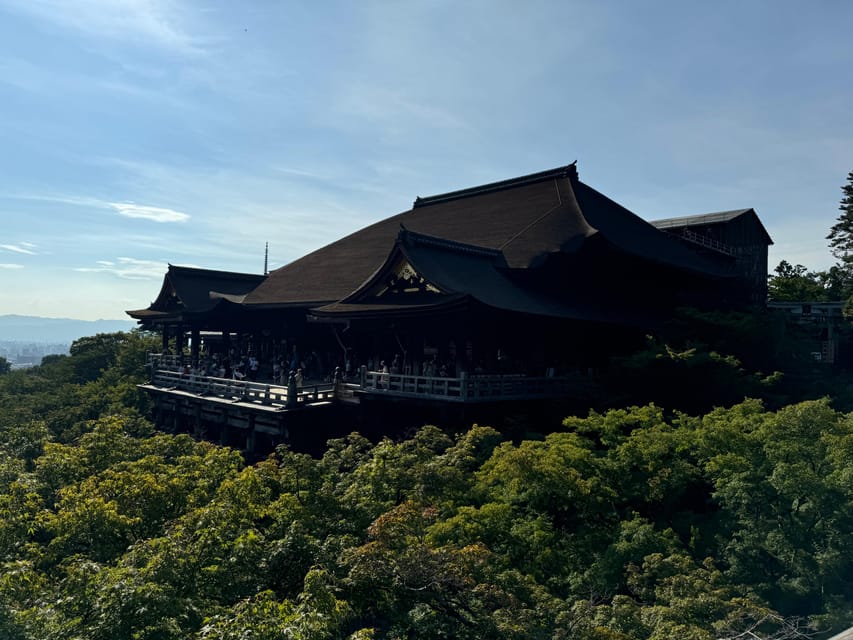
Kiyomizu-dera is famous for its large wooden stage projecting from the hillside. From the temple grounds, you get broad views across Kyoto, making this one of the strongest scenic moments of the tour. The approach is also part of the experience, since the route reaches the temple through the old Higashiyama streets.
The wooden stage is the headline feature, but do not rush past the rest of the temple grounds. Your guide can help you understand how the buildings and worship areas fit together and can point out details you might otherwise pass without noticing.
The one-hour visit is a useful amount of time for a first look. It gives you room for photographs and a guided explanation, but it is not an exhaustive temple tour. Visitors who want every hall, sub-temple, and religious detail may want to return independently.
Entry to Zuigudo Hall is not included. This is a small but important cost detail. If that hall is a priority, ask about the extra admission before you go rather than assuming the main temple ticket covers everything.
Kiyomizu-dera is also the point where the tour’s walking demands become most noticeable. The approach and temple grounds involve slopes and steps. The tour information does not specify accessibility arrangements, so anyone with mobility concerns should ask the provider for current details before booking.
The guide makes or breaks the experience
The strongest feedback centers on the guides rather than on the route itself. Teppei was described as charming and welcoming, though one guest wanted more detailed explanations of history, rituals, and culture. Julien was praised for sharing facts about Kyoto along with personal stories from his time in Japan.
That gives you a fair picture of the guiding style. You can expect a friendly human companion, but the depth may vary by guide. Some guides may focus on conversation and practical help, while others may give more formal historical detail.
English and Japanese are available. The tour is offered privately or in small groups, which can make it easier to ask questions and set a comfortable pace. At the same time, the group format should be checked carefully if you have a strong preference. A private booking may mean you are walking alone with the guide, rather than joining several other people.
The best use of the guide is to ask direct questions. Ask about geisha etiquette, shrine customs, the purpose of the wooden stage, or the history of the old streets. You will get more from the tour if you treat it as a conversation rather than waiting for a nonstop lecture.
Timing, pace, and practical value
The tour lasts four hours, with the listed guided stops adding up to about two hours and 15 minutes. The remaining time allows for walking between districts, photographs, pauses, and transitions.
That pacing sounds sensible. One particularly positive account described the pace as perfect, and that matches the route. You cover a lot, but the tour is not designed as a race from one entrance gate to another.
Still, this is a walking tour through some of Kyoto’s most popular streets. Crowds, photographs, and uphill sections can affect the pace. Wear shoes you can walk in comfortably and keep your belongings manageable.
The $77 cost includes the guide and Kiyomizu-dera entry. It does not include Zuigudo Hall admission, food, drinks, or shopping. You are paying mainly for interpretation and route management, with the temple ticket included as a useful extra.
For a first afternoon in Kyoto, I think the price works well. You see the main sights of southern Gion and Higashiyama in one organized sweep. For a repeat visit, the value depends more on the guide. If you already know the district and only want photographs, an independent walk will cost less.
The booking terms are traveler-friendly. You can cancel up to 24 hours before the tour for a full refund, and you can reserve now while paying later. Starting times vary, so check availability for your preferred date.
Who should book this Kyoto tour?
I would recommend this tour to first-time Kyoto visitors who want a clear introduction to Gion and Kiyomizu-dera. It is also a good fit if you have only half a day, prefer a guide to explain customs, or would rather not work out the walking route yourself.
It suits visitors who enjoy a personal pace and do not mind that the guide’s historical depth may vary. The private or small-group structure is helpful if you want to ask questions or move around the crowded lanes with less fuss.
I would be more cautious if you want a long, academic discussion of Kyoto’s religious history. The tour covers many places in four hours, so each stop receives a focused introduction rather than a full lecture.
Should you book it?
Book this tour if you want Gion’s wooden streets, Yasaka Shrine, Ninenzaka, Yasaka Pagoda, and Kiyomizu-dera connected into one well-paced afternoon. The included temple entry and guide make $77 a fair price, particularly for a first visit.
Before paying, confirm whether your booking will be private or shared and ask how much historical detail the guide usually provides. If you want a warm guide, useful local stories, and a practical route through Kyoto’s most photogenic old quarter, this is a strong choice. If you prefer to browse slowly or study every temple detail, use the tour as an introduction and return to the area on your own.
FAQ
How long does the tour last?
The tour lasts four hours.
Where do I meet the guide?
Meet in front of the police box next to Pontocho Street, at the Nakagyo Police Station Shijo Police Box. The guide will hold a yellow sign with the DeepExperience logo.
What languages are available?
The tour is available with a live guide in English or Japanese.
Is the tour private or shared?
Private and small-group options are available. The exact format can vary, so confirm the arrangement when booking.
Is Kiyomizu-dera admission included?
Yes. Entry to Kiyomizu-dera is included.
Is entry to Zuigudo Hall included?
No. Entry to Zuigudo Hall is not included.
How long is the guided visit in Gion?
The planned guided visit in Gion lasts about 45 minutes.
Can I cancel for a full refund?
Yes. You can cancel up to 24 hours in advance for a full refund.
More Half-Day in Kyoto
- Kyoto Arashiyama Bamboo forest & Garden Half-Day Walking Tour
★ 5.0 · 413 reviews - Half-Day Private Walking Tour in Kyoto
★ 5.0 · 57 reviews - Kyoto top must-see Golden pavilion and Bamboo forest half-day Private tour
★ 5.0 · 52 reviews - Perfect Nara Park Half-Day Bus Tour with English Speaking Guide
★ 5.0 · 49 reviews
Recently added around Kyoto
- Higashiyama | Kyoto: Sakura Season Private Rickshaw Tour★ 5.0 · 3 reviews
- Kyoto Kimono Rental CHAMATSU|Kimono/Yukata Rental FamilyPlan★ 5.0 · 3 reviews
- Kyoto: Half-Day Private Guided Tour to the Old Town of Gion★ 4.4 · 3 reviews
- Nara Private Customizable Half Day Tour★ 5.0 · 3 reviews
- Kansai Region Hiking Adventure in Nara Kobe Kyoto and More★ 5.0 · 3 reviews
- Full Day Nara Deer, Temple, Shrine, Activities & Tea Ceremony★ 5.0 · 3 reviews
- Nara: Essential Private Tour with Deer Park and Temples★ 5.0 · 3 reviews
- Hiking Tour for Sacred Sites in Kyoto with a Guide★ 5.0 · 3 reviews
Gion Geisha District Tours, compared.

Kyoto Geisha Walking Tour: Gion District & Hidden Gems
Read our review →
Gion Magical Night Walking Tour with Geisha Trivia
Read our review →
Gion Geisha District Walking Tour – Stories of Geisha
Read our review →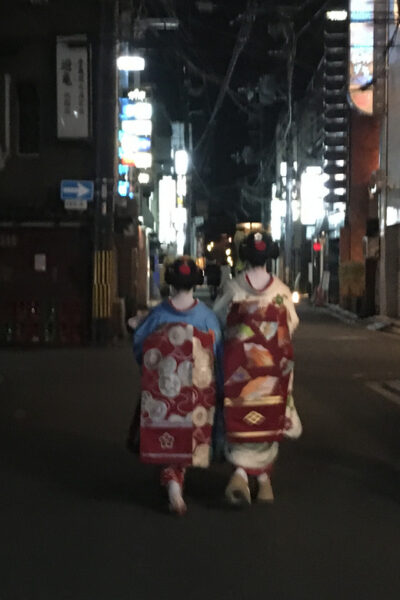
Best of Kyoto: Gion, Geisha, Pagodas & Cobblestones
Read our review →

Kyoto Night Foodie Tour in Gion (9+ dishes + 6 Sake tastings)
Read our review →
Kyoto Gion Geisha District Walking Tour – The Stories of Geisha
Read our review →
Kyoto Gion: 2-Hour Geisha Culture & History Walking Tour
Read our review →Browse the lists this tour appears in