
REVIEW · ARASHIYAMA BAMBOO GROVE TOURS
Kyoto top must-see Golden pavilion and Bamboo forest half-day Private tour
Kyoto’s most famous sights are spread across the city, and this private half-day tour makes a smart first pass at them. You’ll see the Golden Pavilion, quiet Jojakkoji Temple, Tenryuji’s pond garden, and Arashiyama’s bamboo grove without having to build a complicated route yourself.
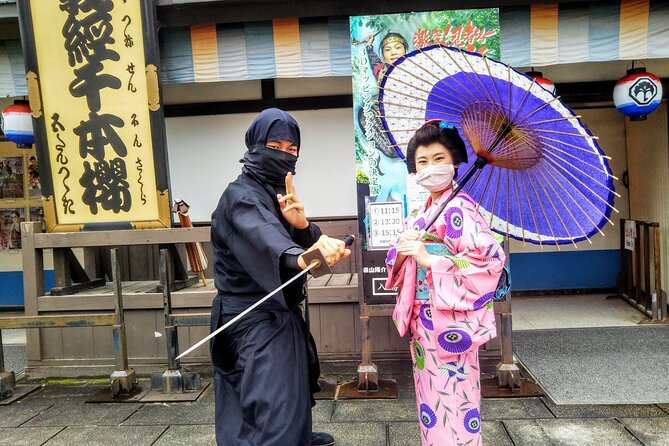
I like the private format and the local guides, including Chihiro, Fuji, Yumi, Mutsumi, and Yoko. The guides are praised for clear English, strong cultural knowledge, patience with children, help with photos, and practical advice for the rest of your Kyoto stay. I also like that the tour ends in Arashiyama, where you can continue exploring rather than backtracking.
The main catch is cost clarity. The listed price of $122.20 per person does not include taxi fares or temple admissions, and the tour does not include a return transfer. A four-hour schedule also means each stop is brief, so this is an outline of Kyoto, not a slow study of every temple.
In This Review
- Key points at a glance
- Why this four-hour route works for a first look at Kyoto
- Kinkakuji: Kyoto’s bright opening scene
- Jojakkoji gives the schedule some breathing room
- Tenryuji connects temple design with Arashiyama
- Togetsu Bridge is the Arashiyama photo stop
- The Kimono Forest adds color beside the station
- The bamboo grove is beautiful, brief, and rarely empty
- A private guide changes the feel of the day
- What the $122.20 price really buys you
- Timing, walking, and what to bring
- Who should book this Kyoto half-day tour?
- Should you book it?
- FAQ
- How long does the tour last?
- Is this a private tour?
- Is hotel pickup available?
- Does the price include taxi fares?
- How many people can ride in one taxi?
- Are temple admission fees included?
- Where does the tour finish?
- Which attractions are visited?
- Can I cancel for a full refund?
Key points at a glance
- Golden Pavilion in a tightly planned morning or afternoon: Spend about 50 minutes at Kinkakuji, Kyoto’s famous gold-covered temple.
- A quieter temple between major sights: Jojakkoji offers a calmer stop than the headline attractions.
- Private guiding by taxi and on foot: Your guide can adjust the pace and explain customs, history, and daily Japanese life.
- Arashiyama’s classic sequence: See Tenryuji, Togetsu Bridge, the Kimono Forest, and the bamboo grove in one district.
- A useful finish for first-time visitors: The guide gives directions for places such as Fushimi Inari, Kiyomizu Temple, Gion, Nijo Castle, and movie studios.
- Extra costs require planning: Budget about 6,000 yen per taxi and roughly 1,500 yen per person for temple admissions.
Why this four-hour route works for a first look at Kyoto
Kyoto can feel scattered at first. Kinkakuji is in the northwest, while Arashiyama lies farther west, and public transport can take time when you are trying to connect several famous sights. This tour uses a taxi for the main movement, then switches to walking within temple and sightseeing areas.
That saves you from studying several train and bus connections before you have a feel for the city. It also gives you a guide who can explain what you are seeing instead of leaving you to decode each place from a sign.
The route focuses on famous images, but it is not only a photo stop. At Kinkakuji, you get a brief look at the building’s role in samurai-era Kyoto. At Tenryuji, you see a garden designed around water, rocks, and borrowed scenery. In Arashiyama, the bamboo grove and Togetsu Bridge give you the classic visual introduction to the district.
The tour has earned a 98 percent recommendation rate and a five-star rating based on 52 reviews. The most consistent praise goes to the guides’ warmth, English, flexibility, and ability to add everyday cultural context. Chihiro, in particular, is described as energetic and attentive with children, while Fuji has helped families with lunch suggestions, return directions, photographs, and small touches such as origami birds.
More of Arashiyama and the bamboo grove:
- Kyoto: Fushimi Inari, Kinkakuji, Bamboo Grove 1 Day Bus Tour
★ 4.8 · 4,316 reviews - Kyoto/Osaka: Nara, Fushimi Inari Taisha, Arashiyama Bus Tour
★ 4.7 · 1,275 reviews - Kyoto Arashiyama Walking Tour: Bamboo, Monkeys, Gardens & Secrets
★ 5.0 · 1,216 reviews
Kinkakuji: Kyoto’s bright opening scene
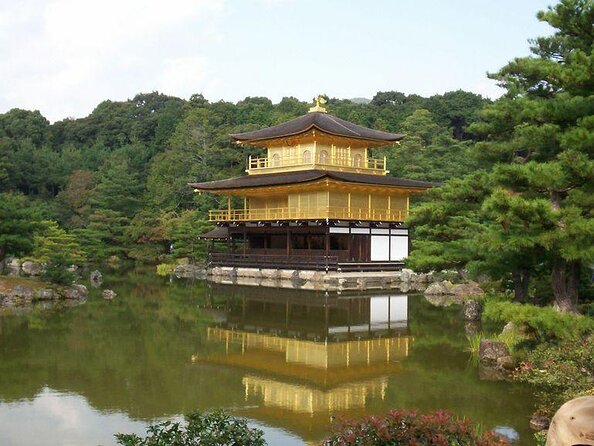
The first stop is Kinkakuji, usually called the Golden Pavilion. You have about 50 minutes here, and admission is not included.
The pavilion was once connected with the political world of the shogun, the military ruler of Japan. Today, its gold exterior reflected in the pond makes it one of Kyoto’s most recognizable sights and a UNESCO World Heritage site. The route through the grounds gives you several angles on the building, though the pavilion itself is the clear star.
Fifty minutes is enough for the standard visit, a few photographs, and an explanation from your guide. It is not enough for a leisurely wander through every corner. That is a fair trade on a first-day tour, especially if you want to fit Arashiyama into the same outing.
Expect this to be one of the busier parts of the route. One guide can help you move through the grounds in a sensible order and point out details you might otherwise miss. Still, the tour cannot make Kinkakuji feel private. Come for the striking view, not solitude.
Jojakkoji gives the schedule some breathing room
Jojakkoji Temple is a useful contrast to Kinkakuji. You spend about 30 minutes here, and admission is extra.
The temple’s name is associated with an atmosphere like heaven, which fits the quieter mood described for this stop. It is presented as a less crowded temple, giving you a chance to slow down before the route reaches Arashiyama’s better-known sights.
I like this choice. A tour made only of headline attractions can feel like a race between photographs. Jojakkoji adds a more peaceful pause and lets your guide discuss temple customs and local culture at a gentler pace.
The short visit still limits what you can see. If you want a deep look at the temple grounds, architecture, or religious details, you will need to return on your own. Here, the value is the change of pace and the sense that Kyoto is more than its famous postcard views.
Tenryuji connects temple design with Arashiyama
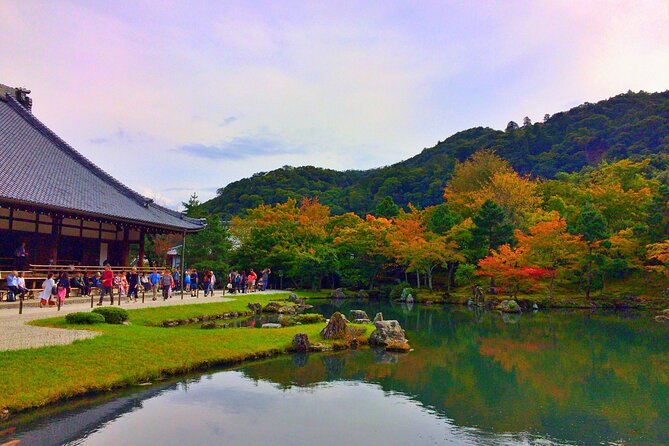
Tenryuji is the next major temple, with about 20 minutes allotted and admission not included. Its pond garden is the reason to visit. The garden was created by one of Japan’s great garden designers and is part of the UNESCO World Heritage listing.
Twenty minutes is a quick visit for a garden of this importance. You can see the main composition, hear the guide’s explanation, and understand why the pond, rocks, trees, and surrounding hills work together. You will not have much time to sit quietly or explore every path.
This stop is especially valuable if you are new to Japanese gardens. The guide can help you look at the garden as a designed scene rather than a random collection of plants and stones. That extra context turns a pretty view into a more meaningful one.
Tenryuji also places you in the heart of Arashiyama. From here, the remaining stops are close enough to connect by foot, which helps the tour feel more relaxed after the taxi sections.
More trips to the Golden Pavilion:
- Kyoto: Nijo, Kinkaku-ji, Arashiyama, Kiyomizu & Fushimi Inari
★ 5.0 · 699 reviews - Kyoto: Kinkakuji, Golden Pavilion Guided Tour
★ 4.7 · 71 reviews - Kyoto Bamboo Forest & Golden Pavilion E-Bike Tour
★ 5.0 · 50 reviews - Golden Pavilion, Nijo Castle, & Nishiki Market Half day tour
★ 5.0 · 29 reviews
Togetsu Bridge is the Arashiyama photo stop
Togetsu Bridge is not listed with a fixed time, but the plan includes a chance to photograph it. The bridge is one of the defining scenes of Arashiyama.
Your guide can point out the best general setting and help keep the route moving. This is a quick stop, not a guided architectural visit. The appeal is the view across the river and toward the surrounding hills.
The bridge can be busy, and the experience depends on the day’s crowds and traffic. Still, it is worth including because it helps you understand Arashiyama as a district rather than treating the bamboo grove as an isolated attraction.
If your guide knows the area well, this is also a natural point to ask about lunch or what to do after the tour. Fuji, for example, has given practical lunch and return-trip suggestions to families at the end of their visit.
The Kimono Forest adds color beside the station
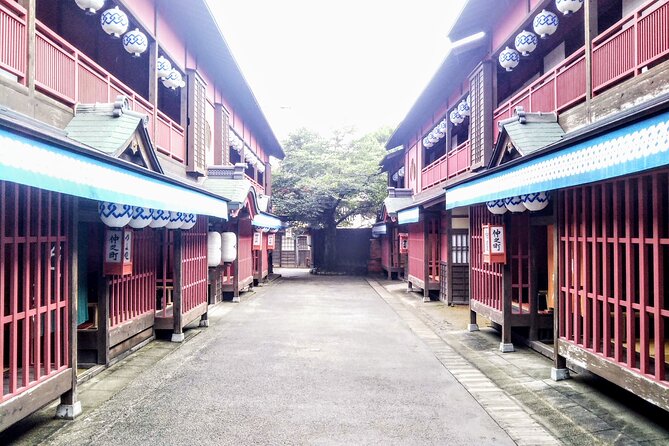
The Arashiyama Kimono Forest takes about 10 minutes and is free. It consists of roughly 600 poles displaying 36 Japanese kimono designs.
This is a modern, decorative stop rather than a traditional temple visit. The patterned cylinders make a quick photo opportunity, and the colors provide a welcome change after the subdued tones of the gardens and bamboo.
Ten minutes is the right amount of time for most people. You can walk through, take pictures, and continue without letting this stop take over the day. If you prefer old buildings and formal gardens, it may be the least important part of the route. If you enjoy visual details and social media photographs, it will likely be a pleasant extra.
Because the tour ends in Arashiyama, you can return to the Kimono Forest later if you want more time. The route does not force you to leave the district immediately after the last stop.
The bamboo grove is beautiful, brief, and rarely empty
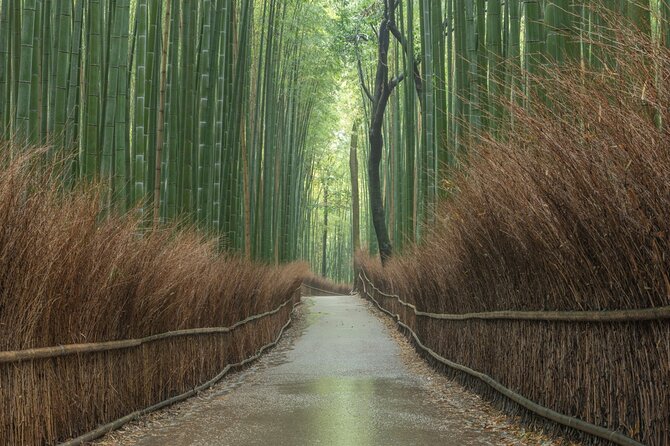
The final stop is Arashiyama’s Bamboo Forest Street, with about 20 minutes set aside and no admission charge.
Tall bamboo lines the walking path, creating one of Kyoto’s most familiar scenes. The grove has appeared often in Kyoto advertising, and it is easy to understand why. The vertical stalks frame the path and give the area a strong sense of place.
Keep your expectations realistic. This is a famous public route, not a private woodland walk. You might find other people there, particularly at busy times. Twenty minutes lets you pass through and take photographs, but it does not offer much time for a slow, quiet walk.
The guide’s value here is less about navigation and more about timing, context, and pace. Chihiro has been praised for adjusting the walk to the group and answering many questions about Japanese culture. That personal exchange can make a short bamboo visit feel more useful than simply arriving, taking a picture, and leaving.
A private guide changes the feel of the day
This is a private activity, so only your group participates. That matters most when your interests or walking speed do not match a large tour group.
The guides have different personalities, but the strongest pattern is friendly, personal instruction. Tammy has explained both Kyoto’s past and how her family lives today. Yumi has been praised for history and culture. Kaori has added useful detail at Kinkakuji and the bamboo forest. Mutsumi has helped with photographs, while Fuji has been attentive to children and practical needs.
The guide can also give you a wider picture of Kyoto. At the end, you receive directions and suggestions for places such as Fushimi Inari Shrine, Kiyomizu Temple, Gion, Nijo Castle, and movie studios. That is important because this tour covers only one slice of the city.
The experience is not a fully private vehicle tour. You pay taxi fares separately, and a taxi carries one guide plus up to three guests. If your group has four people, you need two taxis. The stated taxi cost is about 6,000 yen per taxi, depending on hotel location and traffic.
What the $122.20 price really buys you
At $122.20 per person, the tour is not a low-cost sightseeing option once you add transportation and admissions. Temple tickets total about 1,500 yen per person, and taxi charges add around 6,000 yen per taxi. These are important numbers to check before booking.
The value comes from time and simplicity. You are paying for a selected local guide, pickup, route planning, private attention, and the ability to connect two major Kyoto zones in about four hours. For a first visit, that can be worthwhile, especially if you have limited time or do not want to manage city transport.
The value is better for a small group of two or three people sharing one taxi. A group of four faces the extra taxi because the guide must ride with the guests, so the per-person calculation changes.
The tour ends in Arashiyama, and the return transfer is not included. I see that as both a limitation and an advantage. It is a drawback if you expected to be taken back to your hotel. It is useful if you want to stay in Arashiyama for lunch or continue exploring independently.
One past booking led to extra transport costs when a guide escorted the group beyond the official endpoint. The practical lesson is simple: confirm exactly what is included, especially if you hope for help returning to your hotel. The published terms identify taxi fares, admissions, and return travel as separate from the tour price.
Timing, walking, and what to bring
The activity lasts about four hours. It includes taxi travel, temple visits, short walking sections, photographs, and movement through the bamboo grove. Most people can participate, but you should be ready to walk between sights and stand during visits.
Pickup is offered, and confirmation is sent within 48 hours, subject to availability. The tour is near public transportation, which is useful once you continue on your own after Arashiyama.
Wear comfortable shoes. The schedule is not punishing, but the temples and Arashiyama stops are best enjoyed when you are not thinking about sore feet. Keep some yen available for admissions and taxi costs.
If you have children, the private setup is a real help. A guide can adjust the pace and add small diversions. The reports of Chihiro’s care with children and Fuji’s origami birds suggest that the human side of this tour can matter as much as the sightseeing.
Who should book this Kyoto half-day tour?
I would choose this tour if you are visiting Kyoto for the first time, have only part of a day, and want to see several major sights without planning the route yourself. It is also a good fit for couples, families, and small groups who value direct access to a guide.
It suits you if you want explanations of history and culture rather than a simple driver service. The guides are often praised for strong English and for answering questions about both traditional customs and present-day life in Japan.
I would hesitate if you want long temple visits, a quiet bamboo forest, or a lower total cost. You should also think twice if returning to your hotel with the group is essential. This is a fast introduction, and the Arashiyama endpoint is part of the plan.
Cancellation is free up to 24 hours before the start time for a full refund. Changes or cancellations made less than 24 hours in advance are not accepted for a refund.
Should you book it?
Book this tour if you want a well-organized first outline of western Kyoto, especially with a guide such as Chihiro, Fuji, Yumi, Mutsumi, or Yoko who can add personal insight and practical help. The mix of Kinkakuji, a quieter temple, Tenryuji, Togetsu Bridge, the Kimono Forest, and bamboo gives you a strong introduction in four hours.
Before paying, add the taxi and temple charges to the advertised price. If that total fits your budget and you are comfortable ending in Arashiyama, the private format offers useful value. If you prefer a slower, cheaper day, visit fewer sights independently and give each one more time.
FAQ
How long does the tour last?
The tour lasts approximately four hours.
Is this a private tour?
Yes. Only your group participates in the activity.
Is hotel pickup available?
Yes. Pickup service is included, and the tour information states that pickup is offered.
Does the price include taxi fares?
No. Taxi fares are separate and cost about 6,000 yen per taxi, depending on the hotel location and traffic.
How many people can ride in one taxi?
One taxi can carry the guide and up to three guests. A group of four guests needs two taxis.
Are temple admission fees included?
No. Admission costs are separate and total around 1,500 yen per person for all temples.
Where does the tour finish?
The tour ends in the Arashiyama area. Return transfer to your hotel is not included.
Which attractions are visited?
The route includes Kinkakuji Temple, Jojakkoji Temple, Tenryuji Temple, Togetsu Bridge, Arashiyama Kimono Forest, and the Bamboo Forest Street.
Can I cancel for a full refund?
Yes, if you cancel at least 24 hours before the experience start time. Cancellations or changes made less than 24 hours before the start time are not accepted for a refund.
More Half-Day in Kyoto
- Kyoto Arashiyama Bamboo forest & Garden Half-Day Walking Tour
★ 5.0 · 413 reviews - Half-Day Private Walking Tour in Kyoto
★ 5.0 · 57 reviews - Perfect Nara Park Half-Day Bus Tour with English Speaking Guide
★ 5.0 · 49 reviews - Kyoto Private & Personalized Half-Day Walking Tour with a Local
★ 4.5 · 27 reviews
Recently added around Kyoto
- Higashiyama | Kyoto: Sakura Season Private Rickshaw Tour★ 5.0 · 3 reviews
- Kyoto Kimono Rental CHAMATSU|Kimono/Yukata Rental FamilyPlan★ 5.0 · 3 reviews
- Kyoto: Half-Day Private Guided Tour to the Old Town of Gion★ 4.4 · 3 reviews
- Nara Private Customizable Half Day Tour★ 5.0 · 3 reviews
- Kansai Region Hiking Adventure in Nara Kobe Kyoto and More★ 5.0 · 3 reviews
- Full Day Nara Deer, Temple, Shrine, Activities & Tea Ceremony★ 5.0 · 3 reviews
- Nara: Essential Private Tour with Deer Park and Temples★ 5.0 · 3 reviews
- Hiking Tour for Sacred Sites in Kyoto with a Guide★ 5.0 · 3 reviews
Arashiyama Bamboo Grove Tours, compared.
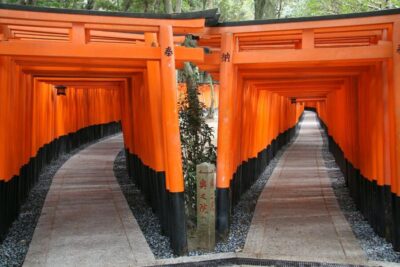
Fushimi Inari, Kinkakuji, Bamboo Grove 1 Day Bus Tour
Read our review →
Kyoto/Osaka: Nara, Fushimi Inari Taisha, Arashiyama Bus Tour
Read our review →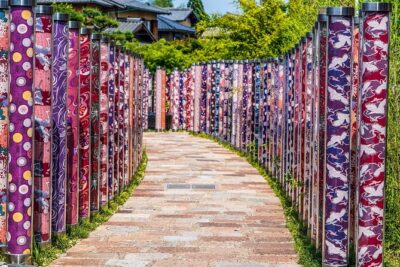
Kyoto Arashiyama Walking Tour: Bamboo, Monkeys, Gardens & Secrets
Read our review →
Arashiyama Bamboo, Temple, Monkeys, or Secret Sake Brewery
Read our review →
Arashiyama Bamboo Forest, Monkeys, Matcha & Temple Tour
Read our review →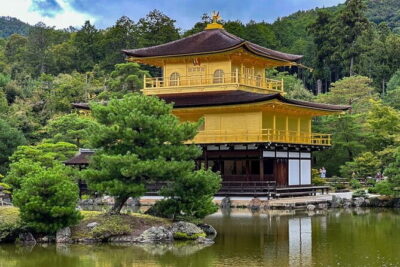
Nijo, Kinkaku-ji, Arashiyama, Kiyomizu & Fushimi Inari
Read our review →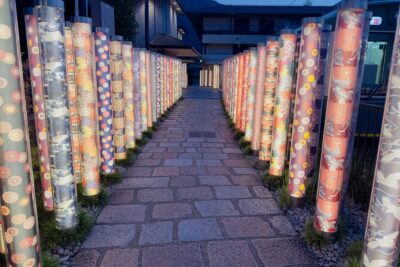
Kyoto Ghost Tour: Dark Tales, Urban Legends, Bamboo Forest Night
Read our review →
Arashiyama Bamboo Forest & Hidden Gems Bike Tour (Early Bird)
Read our review →Browse the lists this tour appears in