
REVIEW · GION GEISHA DISTRICT TOURS
Kyoto Early Bird English Tour: Gion & Higashiyama(Private opt)
Kyoto feels most inviting before the day’s crowds reach Gion. This three-hour morning walk takes you from the old teahouse streets to Kiyomizu-dera, with guide Ikki Kataoka explaining what you are seeing and taking professional photos as you go. You get Kyoto’s famous sights, but also smaller stops such as Yasui-Konpiragu and Yasaka Koshin-Do.
I like the early start, which helps you see Hanamikoji Street and the temple lanes at a calmer pace. I also like the choice between a private outing and a small-group format, although you should check the exact option selected at booking because the activity details also describe the tour as private. The main drawback is physical: this is a walking tour with uphill sections, stone lanes, and plenty of time on your feet.
In This Review
- Key Points
- Starting Near Gion’s Traditional Streets
- Hanamikoji Street Before the Crowds
- Yasui-Konpiragu and the Meaning of Cutting Ties
- Yasaka Pagoda and Kyoto’s Old Vertical Landmark
- Sannenzaka and Ninenzaka, Kyoto’s Sloping Shopping Lanes
- One Hour at Kiyomizu-dera Temple
- Yasaka Koshin-Do’s Colorful Prayer Balls
- Finishing at Yasaka Shrine
- What the $64.01 Price Includes
- Who Will Get the Most From This Walk
- Should You Book the Gion and Higashiyama Morning Tour?
- FAQ
- How long does the Kyoto Gion and Higashiyama tour last?
- Where does the tour begin?
- Where does the tour end?
- Is Kiyomizu-dera admission included?
- Is this a private tour or a group tour?
- What happens if I arrive late?
Key Points
- Early morning timing: The 7 a.m. start is designed to get you through Gion before the main crowds arrive.
- Ikki Kataoka as guide and photographer: He explains local landmarks in English and takes professional photos during the walk.
- Eight contrasting stops: You see geisha-district streets, shrines, a pagoda, traditional shopping lanes, and Kiyomizu-dera.
- Kiyomizu-dera admission costs extra: Allow ¥500 per person for entry to the temple.
- Private or small-group choice: The format can suit couples, families, and travelers who prefer more personal attention.
- Moderate fitness required: Expect a real walking experience, including slopes and uneven stone paving.
Starting Near Gion’s Traditional Streets
The tour begins at the Statue of Izumo-no-Okuni in Kawabatacho, in Kyoto’s Higashiyama Ward. This is a useful starting point for an outing focused on Gion because you move into the district quickly rather than spending the first part of the tour on a long transfer.
Gion is Kyoto’s best-known geisha district. Its appeal is not one single monument. It comes from the preserved wooden machiya houses, narrow streets, teahouses, and the sense that this part of town still follows an older pattern of life.
Your guide helps you read those details instead of simply walking past them. That matters in Gion, where a plain wooden facade may be part of a traditional teahouse, a private home, or a business with rules about photography and entry. An English-speaking guide gives you context without requiring you to stop and study a map at every corner.
The first stop is brief, about 10 minutes, so think of it as an introduction rather than a long lecture. You will want comfortable shoes from the start. Even before reaching Kiyomizu-dera, the route includes historic lanes and a steady amount of walking.
More evenings in Gion:
- Kyoto Geisha Walking Tour: Gion District & Hidden Gems
★ 4.7 · 3,273 reviews - Kyoto: Gion Magical Night Walking Tour with Geisha Trivia
★ 4.9 · 2,393 reviews - Kyoto: Gion Geisha District Walking Tour – Stories of Geisha
★ 4.7 · 2,187 reviews
Hanamikoji Street Before the Crowds
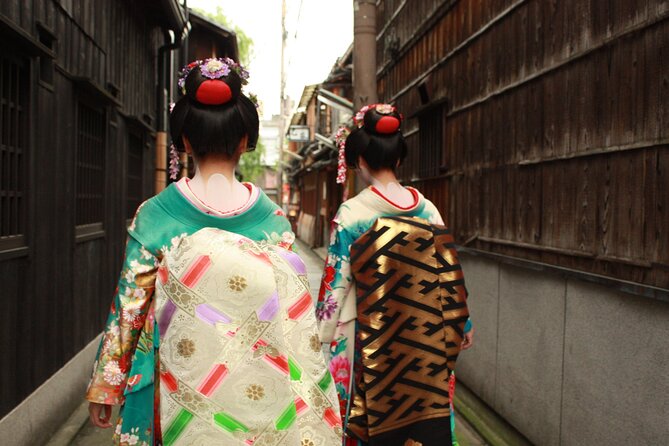
Hanamikoji Street receives about 15 minutes on the route. It is one of Gion’s most recognizable streets, lined with traditional wooden buildings and old teahouses. It is also one of the places where you may have a chance to see a geisha or maiko.
That possibility should be treated as a bonus, not the main purpose of the visit. The street is worth seeing even if no performers pass by. Its traditional buildings and carefully preserved feel show why Gion is such a popular part of Kyoto.
An early start is especially useful here. The tour’s 7 a.m. option is meant to put you on Hanamikoji before the heavy sightseeing traffic builds. You get more room to look at the architecture and take photographs, and your guide can explain local customs without trying to compete with a noisy street.
Please use good manners around people working in Gion. Keep a respectful distance, follow your guide’s instructions, and avoid treating a person as a photo prop. The tour gives you a chance to understand the district, not a guarantee of a geisha sighting.
Yasui-Konpiragu and the Meaning of Cutting Ties
Yasui-Konpiragu is a smaller shrine with a very different purpose from the grander sites later in the walk. It is known for prayers to end harmful relationships and break negative ties, while also helping people form better connections.
This stop gives the tour a more personal side. Kyoto’s religious sites are not only about architecture or famous views. People come to them with very specific hopes, and Yasui-Konpiragu makes that clear.
You have about 15 minutes here. That is enough to hear the basic story and look around, but not enough for a long private ritual or extended exploration. I see this as one of the route’s more useful choices because it keeps the morning from becoming a parade of major monuments. You get a glimpse of a local religious practice with a direct, easy-to-understand meaning.
Yasaka Pagoda and Kyoto’s Old Vertical Landmark
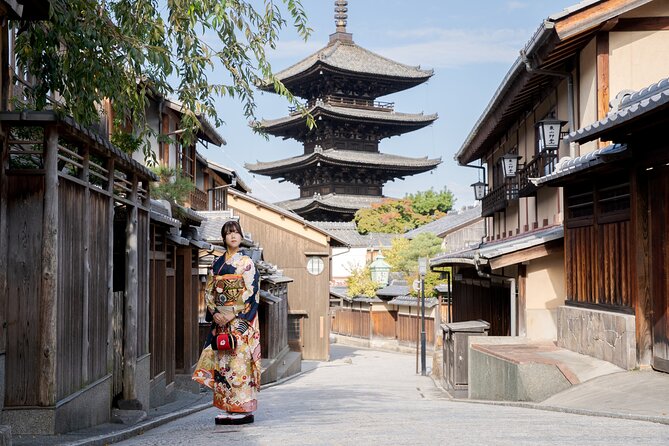
The next stop is Yasakanoto, better known as Yasaka Pagoda at Hokanji Temple. You spend about 15 minutes taking in one of the most recognizable structures in this part of Kyoto.
The pagoda’s height and wooden construction make it a strong visual marker among the low traditional buildings. The supplied tour information describes it as one of Japan’s oldest wooden structures and notes that its scale is striking. You can appreciate it from the surrounding streets, which are also part of the appeal.
Do not expect a long temple visit here. The stop is focused on the pagoda and its setting. That is a sensible use of time on a three-hour tour, especially since Kiyomizu-dera receives a full hour later. Your guide can help you understand why this single tower matters to Kyoto’s identity and point out good places for photographs.
The streets around Yasaka Pagoda can feel tight, and the paving is not always smooth. Wear shoes with firm soles. If you have trouble with hills or uneven surfaces, this is one of several places where the route may feel demanding.
More walks through Higashiyama:
- Kyoto: Private Rickshaw Tour of Gion and Higashiyama Area
★ 5.0 · 144 reviews - Kyoto: Historic Higashiyama Walking Tour
★ 5.0 · 31 reviews - Kyoto: Kiyomizudera, Higashiyama and Yasaka Discovery Tour
★ 4.8 · 17 reviews - Private Walking Tour in Gion and Higashiyama
★ 5.0 · 15 reviews
Sannenzaka and Ninenzaka, Kyoto’s Sloping Shopping Lanes
Sannenzaka and Ninenzaka are two of the most atmospheric parts of the walk. These stone-paved lanes run through an area of historic wooden buildings, souvenir shops, and restaurants. You get about 15 minutes here, enough to see the character of the streets and understand how they connect the older districts with Kiyomizu-dera.
These lanes are attractive, but they are not quiet museum pieces. Shops and restaurants make them lively, and the slopes and paving require attention. You may want to return later if you see something worth buying, since the short tour stop is not designed for extended shopping.
I like this portion because it connects the major religious sites with everyday Kyoto. You are not only being taken from one temple gate to another. You are walking through streets where food, crafts, souvenirs, and old buildings share the same setting.
The route also gives you useful orientation. After a guided walk, you will know where the lanes lead and which parts deserve a slower return visit. That is a practical benefit of taking this tour near the start of a Kyoto stay.
One Hour at Kiyomizu-dera Temple
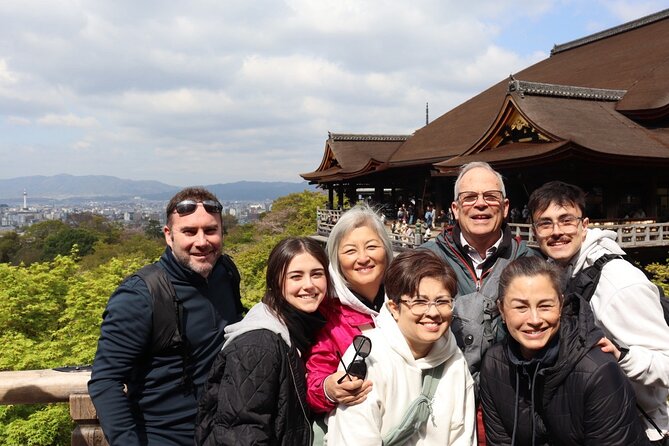
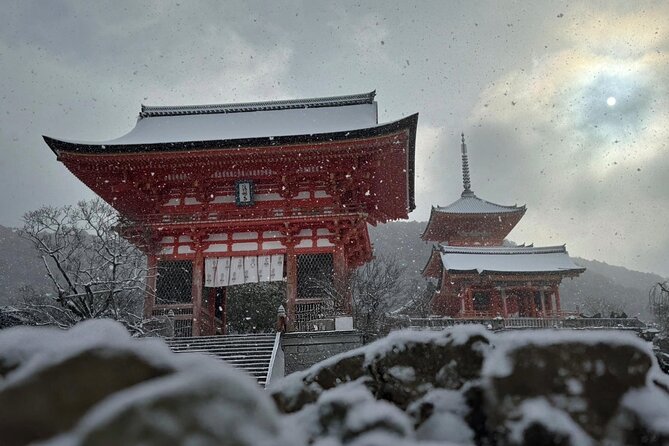
Kiyomizu-dera is the central stop, with about one hour set aside for the temple. Admission is not included, so you pay ¥500 per person separately. Factor that cost into the tour price, especially if you are booking for a family or larger private group.
The temple sits high above Kyoto and is known for its broad views over the city. Its position is one reason the visit feels different from the earlier street stops. You move from enclosed lanes and wooden facades to a major temple complex with room to look outward.
The tour information identifies Kiyomizu-dera as a UNESCO World Heritage Site and one of Kyoto’s essential sights. That reputation is deserved, but the site can also be busy. The early morning timing helps, though you should not assume the temple will be empty.
One hour is a useful middle ground. You have time to see the main areas and listen to your guide, but the schedule does not pretend you can explore every corner of a large temple complex. If you are especially interested in Buddhist architecture or want long periods for independent photography, you may prefer to return on your own later.
The temple is also where the walking requirement becomes most important. The route reaches an elevated area, and the approach includes sloping streets and stone surfaces. You do not need athletic ability, but you should be comfortable walking for several hours with only brief pauses.
Yasaka Koshin-Do’s Colorful Prayer Balls
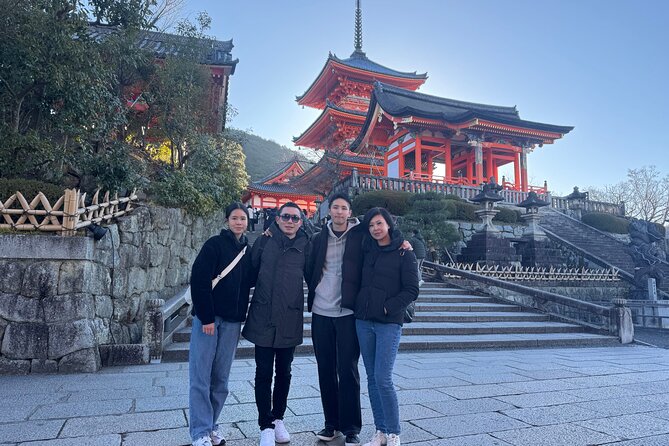
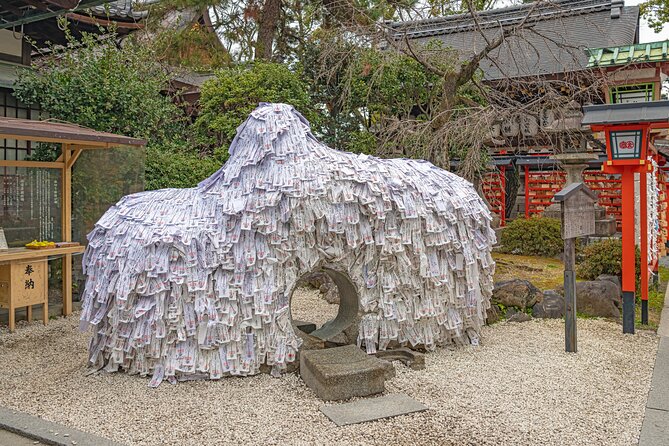
Yasaka Koshin-Do receives another 15-minute stop. This small temple is described as having an uncertain construction date and unusually colorful decorations. That makes it a welcome change from Kyoto sites where restrained wood and muted tones dominate.
The bright decorations are the reason many people remember this stop. Your guide can explain what makes the site different and give you a short look at a place that might be easy to miss without local direction.
Because the visit is brief, treat it as a focused pause rather than a full temple tour. You will see the colors, learn the basic story, and continue toward the final shrine. This is another example of the route mixing famous Kyoto sights with smaller places that add variety.
Finishing at Yasaka Shrine
The tour ends with about 30 minutes at Yasaka Shrine. This is a fitting finish because the shrine is closely tied to Gion and serves as the headquarters for roughly 2,300 related shrines across Japan.
Yasaka Shrine is dedicated to gods associated with prosperity and protection. Its size and importance give the final stop more weight than a quick photo stop. You have time to look at the shrine grounds, hear about its role, and connect what you have seen back to the streets of Gion.
Ending here also gives you a useful location for the rest of your day. The activity returns to the original meeting point, so you will not be dropped at a different part of Kyoto. From there, you can continue exploring on your own, although the supplied information does not specify additional transport arrangements.
What the $64.01 Price Includes
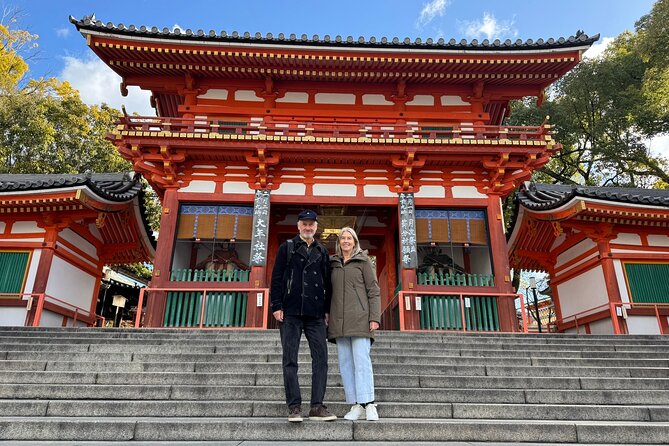
At $64.01 per person, this is not simply a walk through streets you could find with a map. The price pays for an English-speaking local guide, route planning, explanations at eight stops, and professional photos taken during the experience.
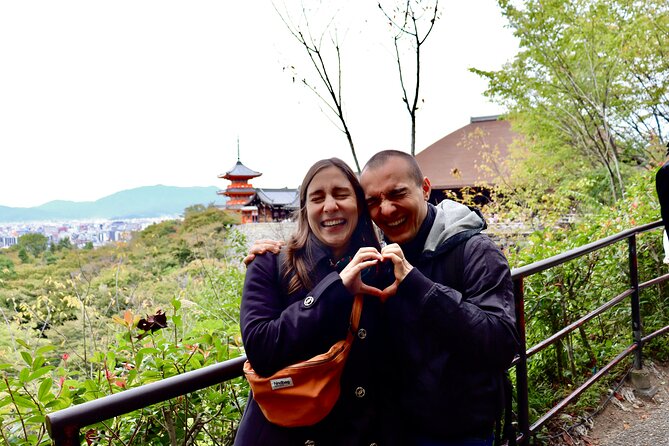
That last feature may matter more than it first appears. When you are traveling with a partner or family, one person often ends up missing from every picture. Having the guide take photographs gives you a better chance of leaving with images of the group in Gion and Higashiyama, rather than only pictures of buildings.
The value is strongest if you want help with local meaning and navigation. Gion and Higashiyama are easy to wander through, but it is harder to know which streets, shrines, and small temples deserve your time. A guide also helps you make sense of customs and religious sites without reading a long guidebook while walking.
The value is weaker if you want a low-cost, independent stroll or plan to spend most of your time shopping. Food and drinks are not included, and Kiyomizu-dera charges an additional ¥500 admission fee. The tour covers sights rather than meals or extended free time.
Group discounts are available, which may improve the cost for a larger party. If you prefer complete control over the pace, choose the private option where available. If you are comfortable sharing the walk, a small group may offer a lower per-person cost while keeping the guide’s explanations.
Who Will Get the Most From This Walk
I would recommend this tour to first-time Kyoto visitors who want a clear introduction to Gion and Higashiyama without spending their first morning working out a route. It also suits couples and families who want useful photographs and a guide who can keep the walk moving.
The experience may be particularly comfortable for older visitors if the guide is Ikki Kataoka. His English, patience, and detailed explanations were praised in the supplied feedback, and that matters when the route includes slopes and a full hour at Kiyomizu-dera.
You should think twice if you dislike early starts, have trouble walking on hills, or want long, unstructured time at every site. The schedule gives you a good overview, but several stops last only 15 minutes.
Arrive early. The policy is strict about lateness: if you miss the meeting time, you cannot join the tour or receive a refund. You receive confirmation when booking, the meeting point is near public transportation, and the experience ends back where it starts.
Free cancellation is available up to 24 hours before the start time. Inside that window, the payment is not refunded and changes are not accepted.
Should You Book the Gion and Higashiyama Morning Tour?
Book it if you want a well-planned introduction to Kyoto’s most famous old districts, especially if early morning photography, English explanations, and a personal guide appeal to you. The mix of Gion, Hanamikoji Street, small shrines, Yasaka Pagoda, Kiyomizu-dera, and Yasaka Shrine gives you more range than a simple temple visit.
The strongest reasons to choose it are the quiet morning timing, Ikki Kataoka’s patient guiding style, and the professional photos. The main tradeoffs are the extra temple admission, limited time at smaller stops, and the physical effort required.
For a first Kyoto morning, I think the $64.01 price is reasonable if you will use the guide’s local knowledge and photographs. If you already know Gion well or prefer to wander at your own pace, save the money and explore independently. For most visitors seeking a focused, personal start to Kyoto, this is a practical choice.
FAQ
How long does the Kyoto Gion and Higashiyama tour last?
The tour lasts approximately three hours.
Where does the tour begin?
It begins at the Statue of Izumo-no-Okuni in Kawabatacho, Higashiyama Ward, Kyoto.
Where does the tour end?
The activity ends back at the original meeting point.
Is Kiyomizu-dera admission included?
No. Admission costs ¥500 per person and is paid separately.
Is this a private tour or a group tour?
The experience offers private and small-group options. The additional activity information describes it as private, with only your group participating, so check the option selected when booking.
What happens if I arrive late?
If you are late for the meeting time, you cannot join the tour and will not receive a refund.
More Kyoto Early Morning Tours in Kyoto
- Kyoto Early Morning Tour with English-Speaking Guide
★ 5.0 · 1,427 reviews - Kyoto: Early Morning Tour with English-Speaking Guide
★ 4.9 · 1,128 reviews - Nara Early Morning Tour (Kyoto or Osaka Departure Available)
★ 5.0 · 676 reviews - Arashiyama Bamboo Forest & Hidden Gems Bike Tour (Early Bird)
★ 5.0 · 613 reviews
Recently added around Kyoto
- Higashiyama | Kyoto: Sakura Season Private Rickshaw Tour★ 5.0 · 3 reviews
- Kyoto Kimono Rental CHAMATSU|Kimono/Yukata Rental FamilyPlan★ 5.0 · 3 reviews
- Kyoto: Half-Day Private Guided Tour to the Old Town of Gion★ 4.4 · 3 reviews
- Nara Private Customizable Half Day Tour★ 5.0 · 3 reviews
- Kansai Region Hiking Adventure in Nara Kobe Kyoto and More★ 5.0 · 3 reviews
- Full Day Nara Deer, Temple, Shrine, Activities & Tea Ceremony★ 5.0 · 3 reviews
- Nara: Essential Private Tour with Deer Park and Temples★ 5.0 · 3 reviews
- Hiking Tour for Sacred Sites in Kyoto with a Guide★ 5.0 · 3 reviews
Gion Geisha District Tours, compared.

Kyoto Geisha Walking Tour: Gion District & Hidden Gems
Read our review →
Gion Magical Night Walking Tour with Geisha Trivia
Read our review →
Gion Geisha District Walking Tour – Stories of Geisha
Read our review →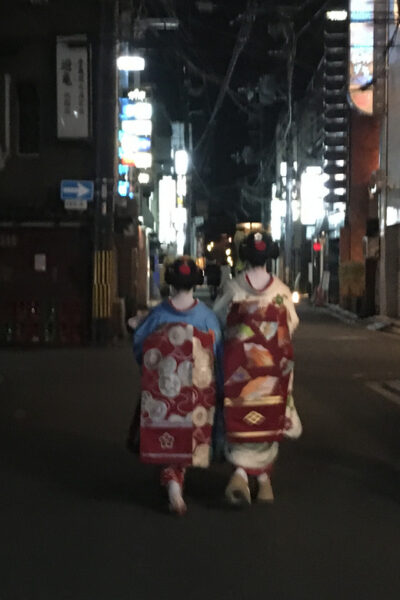
Best of Kyoto: Gion, Geisha, Pagodas & Cobblestones
Read our review →

Kyoto Night Foodie Tour in Gion (9+ dishes + 6 Sake tastings)
Read our review →
Kyoto Gion Geisha District Walking Tour – The Stories of Geisha
Read our review →
Kyoto Gion: 2-Hour Geisha Culture & History Walking Tour
Read our review →Browse the lists this tour appears in