
REVIEW · GION GEISHA DISTRICT TOURS
Private Walking Tour in Gion and Higashiyama
Kyoto’s old eastern quarters make the most sense on foot, and this tour links Gion’s geisha traditions with Higashiyama’s temples, pagoda views, and old shopping lanes. I like that a private guide handles the route while you focus on the details, and the tour gives you a useful first look at several major sights in only three hours.
I also like the personal format. You can ask questions as they come up rather than wait for a group to catch up. Dominic, one guide connected with the experience, is praised for being friendly, clear, and willing to add local insight. The main drawback is time: three hours moves quickly, and the tour passes through several places rather than giving each one a long visit.
In This Review
- Key points at a glance
- Why Gion and Higashiyama work so well together
- Starting near the Izumo-no-Okuni statue
- Gion and the world of geisha culture
- Kennin-ji Temple and Kyoto’s Zen tradition
- Hokan-ji and the Yasaka Pagoda view
- Walking Ninenzaka through traditional Higashiyama
- Maruyama Park and the seasonal side of Kyoto
- Yasaka Shrine and the final seven minutes
- What a private guide changes
- Is $144.88 per person good value?
- Practical details before you book
- Who should book this Kyoto walk?
- Should you book it?
- FAQ
- How long is the Private Walking Tour in Gion and Higashiyama?
- Is this a private activity?
- Where does the tour start?
- Where does the tour end?
- Which places are included on the route?
- Can I cancel for a full refund?
Key points at a glance
- Gion begins the story: Learn about Kyoto’s geisha culture and traditional entertainment district while walking through one of the city’s best-known quarters.
- Kennin-ji adds a Zen focus: The route includes one of Kyoto’s oldest Zen temples and an introduction to Buddhism’s role in Japanese culture.
- Ninenzaka is a walking highlight: The old path links shops, cafés, and teahouses through Higashiyama.
- The tour is private: Only your own group participates, so the guide can adjust explanations and answer questions directly.
- The route ends at Yasaka Shrine: You finish near the shrine’s south gate, about a seven-minute walk from the starting area.
- The price rewards attention: At $144.88 per person, this makes the most sense for a small group that values a private guide and efficient sightseeing.
Why Gion and Higashiyama work so well together
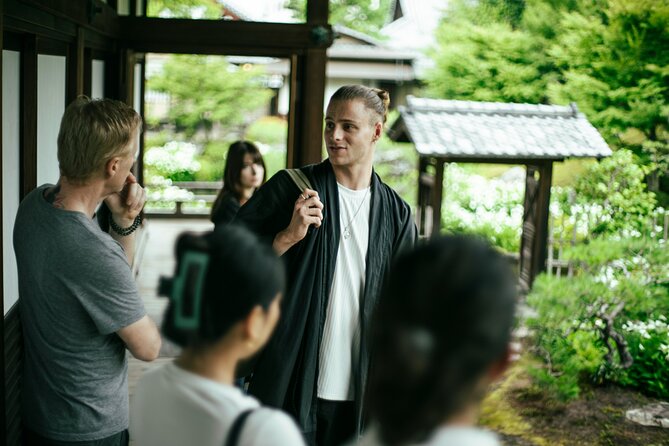
Gion and Higashiyama are close enough to connect in one walk, but they offer different sides of Kyoto. Gion is tied to geisha culture, teahouses, and the city’s long tradition of formal arts. Higashiyama brings temples, shrine grounds, old lanes, and the familiar wooden streets shown in many Kyoto photographs.
I like this pairing because it avoids a common first-visit problem: seeing famous sites without understanding how they fit together. A guide can explain why a quiet-looking teahouse matters, how geisha culture differs from popular ideas about it, and how Buddhist temples and Shinto shrines occupy different roles.
The route is also practical if you have limited time. You are not spending part of the day researching which lane leads to which temple. The guide navigates between the stops, leaving you free to look up at tiled roofs, notice shop signs, and ask questions.
This is a walking experience, not a sightseeing bus tour with quick photo stops. The streets are the main setting. You should be ready to walk for about three hours, with stops that range from roughly 10 to 60 minutes.
More evenings in Gion:
- Kyoto Geisha Walking Tour: Gion District & Hidden Gems
★ 4.7 · 3,273 reviews - Kyoto: Gion Magical Night Walking Tour with Geisha Trivia
★ 4.9 · 2,393 reviews - Kyoto: Gion Geisha District Walking Tour – Stories of Geisha
★ 4.7 · 2,187 reviews
Starting near the Izumo-no-Okuni statue
The meeting point is the Statue of Izumo-no-Okuni in Kawabatacho, in Kyoto’s Higashiyama Ward. This gives you a clear landmark near the Gion area and puts you close to the first part of the walk.
The statue honors Izumo-no-Okuni, a performer associated with the early development of kabuki. Even before the formal tour begins, the location hints at the connection between Kyoto’s streets, performance traditions, and entertainment culture.
Your guide then leads you into Gion. Since the tour is private, you should have a better chance to settle into the pace that suits your group. A couple traveling together can ask more questions. A family can keep the walk moving. A small group with strong interest in religion or traditional arts can spend more time on those subjects.
The exact pace matters here. The tour’s listed stops add up to about two and a half hours, leaving the rest of the three-hour estimate for walking and transitions. That is enough for a useful introduction, but not enough for a slow visit at every site.
Gion and the world of geisha culture
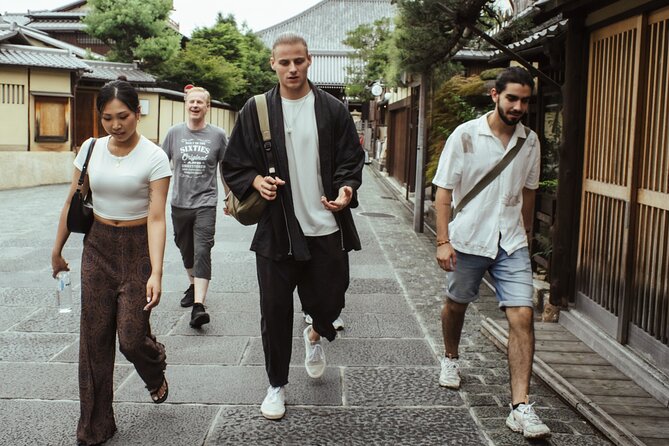
The first major section gives you about an hour in Gion. That is the longest single stop, and it makes sense. Gion is not simply a pretty old district. Its meaning comes from the people, customs, and working traditions connected with the area.
The guide explains geisha culture and Japanese traditions as you walk. This is one of the strongest reasons to book a private tour rather than rely only on a map. Without context, you may see traditional buildings and assume they are museums or ordinary shops. With explanation, the streets become part of a living cultural district.
You should also approach Gion with respect. It is a real neighborhood and a working entertainment area, not a stage set. A guide can help you understand appropriate behavior around teahouses and avoid treating geisha culture as a photo hunt.
I would give this part your full attention. Notice the contrast between the polished fronts of traditional establishments and the modern city around them. Listen for the explanation of how Kyoto’s formal arts developed and how the district functions today.
The tour description promises local details you might miss while walking alone. That does not mean secret access or guaranteed meetings with geisha. It means the guide supplies meaning that architecture alone cannot provide. Keep expectations realistic, and Gion becomes much more rewarding.
Kennin-ji Temple and Kyoto’s Zen tradition
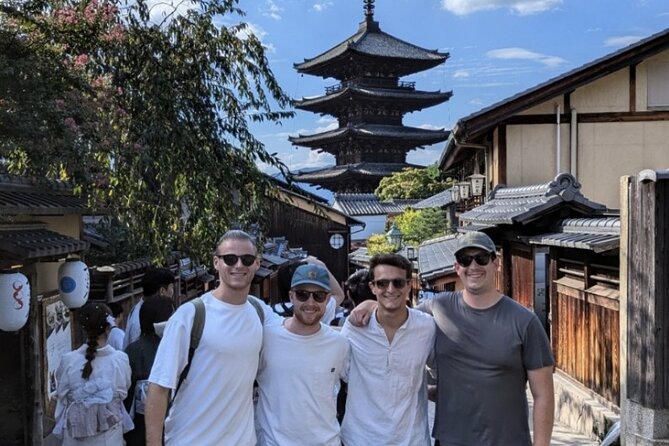
From Gion, the route continues to Kennin-ji Temple, one of Kyoto’s oldest Zen temples. The planned visit lasts about 30 minutes, with admission listed as free for this experience.
Thirty minutes is enough for an introduction to the temple and its place in Japanese Buddhism. It is not a full study visit. If you already know Kennin-ji well or want time for quiet contemplation, you may wish to return on your own later.
The guide’s focus here is the origin of Buddhism and its influence on Japanese culture. That subject gives useful structure to the rest of the day. Kyoto’s religious sites can blur together when you see several in one morning. Learning the basic distinction between Buddhist temples and Shinto shrines helps you read what you are seeing.
At Kennin-ji, pay attention to the difference between a temple as a place of worship and a temple as an architectural or artistic attraction. The explanation should help you understand why Zen became so important in Japanese culture, rather than reducing the visit to a few old buildings.
This stop also gives the tour a calmer change of pace after Gion. The first section centers on social tradition and performance culture. Kennin-ji shifts toward religious practice, philosophy, and the way Buddhism shaped Japanese life.
More walks through Higashiyama:
- Kyoto: Private Rickshaw Tour of Gion and Higashiyama Area
★ 5.0 · 144 reviews - Kyoto: Historic Higashiyama Walking Tour
★ 5.0 · 31 reviews - Kyoto: Kiyomizudera, Higashiyama and Yasaka Discovery Tour
★ 4.8 · 17 reviews - Kyoto Early Bird English Tour: Gion & Higashiyama(Private opt)
★ 5.0 · 13 reviews
Hokan-ji and the Yasaka Pagoda view
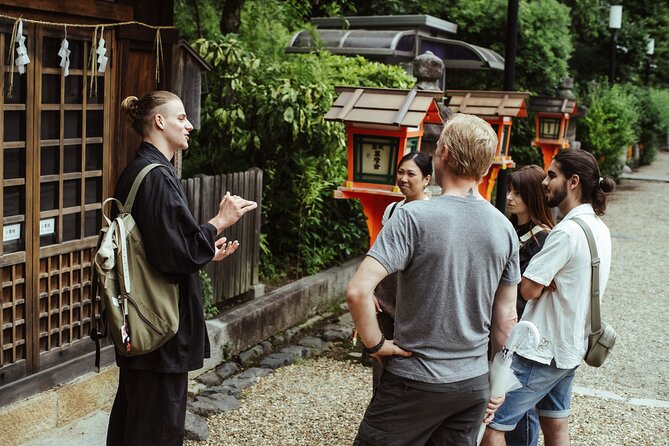
The next stop is Hokan-ji Temple, better known for the five-story Yasaka Pagoda. The visit lasts about 20 minutes. The pagoda is one of Higashiyama’s most recognizable landmarks, and the surrounding streets are as important as the temple itself.
This is a good place to slow down for photographs, but remember that the tour schedule is tight. Twenty minutes gives you time to see the setting and hear the explanation, not to explore every corner at length.
The old town around Hokan-ji includes narrow streets, traditional shops, cafés, and teahouses. This is the Kyoto many people picture before arriving, with timber-fronted buildings and a pedestrian pace. It can also be one of the more crowded parts of the route, so your guide’s navigation is useful.
I like that the tour does not treat the pagoda as an isolated monument. The surrounding lanes show how historic buildings, small businesses, and tourism share the same space. You get a better sense of Higashiyama as a district rather than a checklist of landmarks.
If you want extensive shopping time, this stop will not provide it. Treat it as an orientation walk. You can note the shops that interest you and return after the tour, when you are no longer watching the clock.
Walking Ninenzaka through traditional Higashiyama
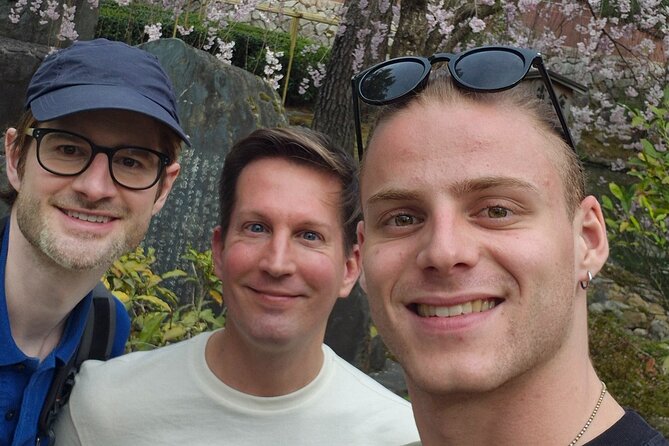
Ninenzaka Path is one of the most appealing stretches of the experience. The lane runs through the traditional Higashiyama district, with old shops, cafés, and teahouses along the way.
There is no separate duration listed for this section, which is useful to remember. It is part of the walking connection between the main stops, not a long, formal attraction visit. The guide can explain what you are passing, but your time for browsing will depend on the group’s pace.
This is where private touring can make a real difference. You can ask what a particular shop sells, pause briefly for a photo, or keep moving if the street is crowded. A fixed group tour may have less room for those small choices.
Ninenzaka is also a place where expectations need managing. Its traditional appearance is appealing, but it is a popular shopping street. You will see commercial activity alongside the historic atmosphere. That mix is part of present-day Kyoto, and it is more honest than pretending the area is untouched.
Wear comfortable shoes and keep your hands free if possible. The route includes several historic streets, and you will enjoy it more if you can look around rather than manage bulky luggage or shopping bags.
Maruyama Park and the seasonal side of Kyoto
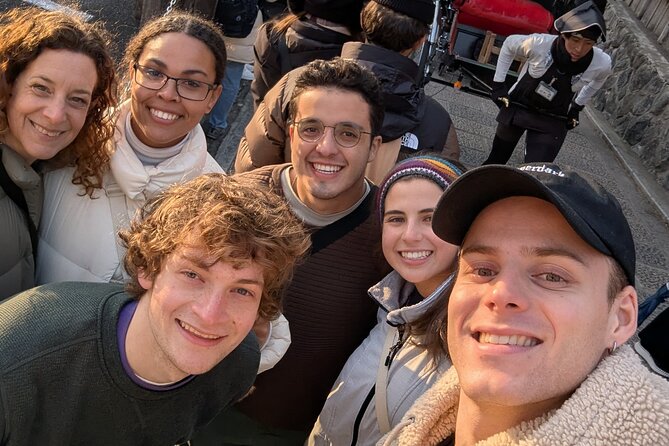
Maruyama Park receives about 10 minutes, making it the shortest listed stop. The park is especially known for cherry blossoms in spring and colorful autumn leaves in fall. It is surrounded by temples and offers a welcome open space after the narrow lanes of Higashiyama.
Ten minutes is a brief pause, so do not expect a long park walk. The guide can point out the park’s seasonal appeal and connect it with the nearby religious sites. If you are visiting during blossom or autumn-leaf season, this stop may feel especially worthwhile, though the experience does not promise peak conditions on a particular date.
I appreciate the change in scenery. Kyoto’s old quarters can feel dense, with buildings close to the road and constant visual detail. Maruyama Park gives you room to breathe and a chance to reset before Yasaka Shrine.
The short visit also shows the tradeoff built into this tour. You get a broad sweep of eastern Kyoto, but the schedule favors coverage over lingering. If your ideal day includes sitting under a tree, taking long photographs, or wandering without a plan, you may want extra time in the park after the guided walk.
Yasaka Shrine and the final seven minutes
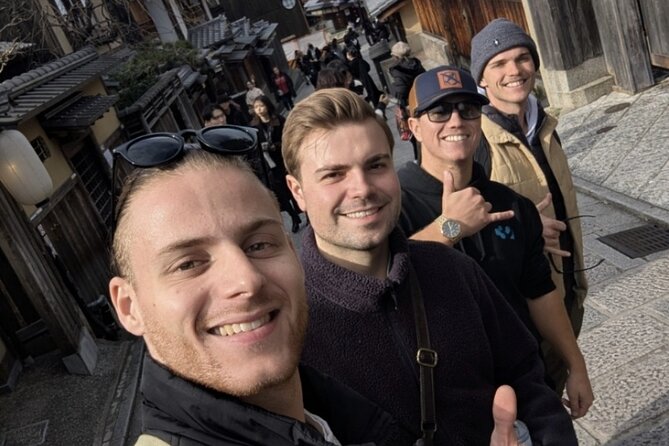
The tour finishes at Yasaka Shrine, with about 30 minutes planned there. The shrine is a major religious and cultural site, known for its architecture and traditional practices.
One detail worth watching for is omikuji, the Japanese fortune-telling practice in which you draw a written fortune. The guide can explain how this custom fits into a shrine visit and what you are seeing as you move through the grounds.
Yasaka Shrine also makes a sensible ending point. You finish at the main gate on the south side, about a seven-minute walk from where the tour began. That short distance makes it easier to orient yourself after the tour and continue exploring Gion or return toward the starting area.
The 30-minute stop should give you time for an explanation and a look around, but it is not designed as a full shrine study. If you want to examine every building or spend time with shrine rituals, plan to come back after the tour.
Ending here also ties together the day’s main subjects. Gion represents traditional entertainment culture. Kennin-ji represents Zen Buddhism. Hokan-ji and Ninenzaka show Higashiyama’s old streets. Yasaka Shrine brings you to Shinto practice and one of the district’s major landmarks.
What a private guide changes
The most praised feature of this experience is the guide’s personal attention. Dominic is described as friendly, clear, and willing to answer questions throughout the walk. That matters more here than it would on a simple sightseeing route because the tour covers culture, religion, customs, and neighborhood etiquette.
A private guide can adjust the explanation to your interests. You might ask for more detail about geisha culture, Buddhism, shrine customs, or the buildings along Ninenzaka. You can also ask for clarification at the moment, rather than trying to remember a question until the end.
The guide also handles navigation. Gion and Higashiyama are easy to enter but less easy to understand quickly. Small lanes, temple grounds, shrine entrances, and connecting streets can make an independent route less efficient.
The private format does not guarantee a completely flexible itinerary. The advertised stops and approximate timing still shape the walk. But it gives your group more control over pace and questions than a larger shared tour.
The experience has a five-out-of-five rating from 15 reviews, with 100 percent recommending it. That is a small review sample, so I would not treat it as proof that every guide or every departure will feel identical. Still, the consistent praise for friendly, informative service supports the tour’s main selling point: direct attention from the guide.
Is $144.88 per person good value?
At $144.88 per person, this is not a budget walking tour. The value depends heavily on group size and how much you want personal guidance.
For one person, the price is difficult to justify if you are comfortable researching Kyoto, navigating on foot, and reading about the sights independently. You can visit the public areas on your own, and the experience does not include a long list of paid admissions.
For a couple or small private group, the calculation is better. You are paying for about three hours of a guide’s time, route planning, cultural explanation, and the ability to ask questions freely. Group discounts are available, which may improve the per-person value for a larger private party.
The free admission listed for the stops should also be understood correctly. It means no separate admission ticket is included or required for the listed visits at the time of the experience. It does not turn the tour into an all-inclusive package with meals, transport, or shopping included.
I see the price as reasonable for people who value efficiency and context, especially on a first Kyoto visit. It is less attractive for repeat visitors who already understand Gion and Higashiyama or prefer to wander at their own speed.
Practical details before you book
The tour lasts approximately three hours and uses a mobile ticket. Confirmation is normally received at booking, though a booking made within four hours of departure is confirmed as soon as possible and depends on availability.
The activity is private, so only your group takes part. Most people can participate, and service animals are allowed. The meeting point is near public transportation, but the provided details do not specify a particular station or transit route, so check the exact map point before setting out.
Build in a little extra time to find the Statue of Izumo-no-Okuni. The end point is Yasaka Shrine’s south-side main gate, not the exact starting location, though the two are only about seven minutes apart on foot.
Free cancellation is available until 24 hours before the start time for a full refund. Inside that 24-hour window, cancellations and changes are not accepted for a refund. Since the tour is usually booked well ahead, often about 59 days in advance, decide your date carefully before the final day.
Who should book this Kyoto walk?
I would recommend this experience to a first-time visitor who wants a clear introduction to Kyoto’s eastern districts without spending hours planning a route. It suits couples, families, and small groups who like to ask questions and keep the day focused.
It is also a good fit if geisha culture, Buddhist temples, and Japanese customs interest you but you do not want a lecture in a room. The information arrives as you move through the places it describes.
I would hesitate if your priority is long temple visits, extensive shopping, or a slow photographic walk. The schedule covers a lot of ground, and Maruyama Park and Hokan-ji receive short stops. You may need to return to your favorite places afterward.
Should you book it?
Book this private Gion and Higashiyama walk if you want personal guidance and efficient coverage of Kyoto’s most atmospheric eastern streets. Dominic’s praised style, the private format, and the mix of geisha culture, Zen Buddhism, Shinto customs, and old-town lanes give the experience real substance.
Skip it if you mainly want free time or a low-cost introduction. At $144.88 per person, the tour earns its price through attention and explanation, not admission tickets. For a small group that wants to understand what it is seeing, that can be a fair trade.
FAQ
How long is the Private Walking Tour in Gion and Higashiyama?
The tour lasts approximately three hours.
Is this a private activity?
Yes. Only your group participates in the tour.
Where does the tour start?
The meeting point is at the Statue of Izumo-no-Okuni in Kawabatacho, Higashiyama Ward, Kyoto.
Where does the tour end?
The tour ends at the main gate on the south side of Yasaka Shrine. This is about a seven-minute walk from the starting area.
Which places are included on the route?
The route includes Gion, Kennin-ji Temple, Hokan-ji Temple and the Yasaka Pagoda area, Ninenzaka Path, Maruyama Park, and Yasaka Shrine.
Can I cancel for a full refund?
You can cancel at least 24 hours before the experience start time for a full refund. Cancellations or changes made within 24 hours are not refunded or accepted.
More Walking Tours in Kyoto
- Night Walk in Gion: Kyoto’s Geisha District
★ 4.5 · 2,003 reviews - Kyoto Gion Geisha District Walking Tour – The Stories of Geisha
★ 5.0 · 1,441 reviews - Nishiki Market Brunch Walking Tour (7 Tastings + Brunch)
★ 5.0 · 1,355 reviews - Kyoto Arashiyama Walking Tour: Bamboo, Monkeys, Gardens & Secrets
★ 5.0 · 1,216 reviews
Recently added around Kyoto
- Higashiyama | Kyoto: Sakura Season Private Rickshaw Tour★ 5.0 · 3 reviews
- Kyoto Kimono Rental CHAMATSU|Kimono/Yukata Rental FamilyPlan★ 5.0 · 3 reviews
- Kyoto: Half-Day Private Guided Tour to the Old Town of Gion★ 4.4 · 3 reviews
- Nara Private Customizable Half Day Tour★ 5.0 · 3 reviews
- Kansai Region Hiking Adventure in Nara Kobe Kyoto and More★ 5.0 · 3 reviews
- Full Day Nara Deer, Temple, Shrine, Activities & Tea Ceremony★ 5.0 · 3 reviews
- Nara: Essential Private Tour with Deer Park and Temples★ 5.0 · 3 reviews
- Hiking Tour for Sacred Sites in Kyoto with a Guide★ 5.0 · 3 reviews
Gion Geisha District Tours, compared.

Kyoto Geisha Walking Tour: Gion District & Hidden Gems
Read our review →
Gion Magical Night Walking Tour with Geisha Trivia
Read our review →
Gion Geisha District Walking Tour – Stories of Geisha
Read our review →
Best of Kyoto: Gion, Geisha, Pagodas & Cobblestones
Read our review →

Kyoto Night Foodie Tour in Gion (9+ dishes + 6 Sake tastings)
Read our review →
Kyoto Gion Geisha District Walking Tour – The Stories of Geisha
Read our review →
Kyoto Gion: 2-Hour Geisha Culture & History Walking Tour
Read our review →Browse the lists this tour appears in