
REVIEW · WORKSHOPS
Kyoto: Beginner Knife Sharpening & Handle Fitting Workshop
The best part of this Kyoto workshop is that you do not simply buy a Japanese knife. You sharpen the blade yourself, fit its handle with help from the shop’s makers, and leave with a useful keepsake tied to something you learned. I especially like the patient, hands-on teaching and the small group size, limited to three people.
I also like that the standard price includes the knife, magnolia handle, uniform, apron, and engraving fee. That makes the $161 cost easier to justify than a short demonstration with nothing to take home. The main consideration is that this is practical work, not a casual photo stop. You need concentration, fire is used during handle fitting, and the activity is not suitable for children under 15, wheelchair users, or people over 80.
In This Review
- Key points to know before booking
- What happens during the two-hour Kyoto workshop
- Choosing between Santoku, Deba, and Yanagi
- Learning wetstone sharpening without guessing
- Fitting the magnolia handle over an open flame
- Engraving and taking your knife home
- Is $161 a fair price?
- Why the three-person group matters
- Who will enjoy this most
- Practical tips for a smooth visit
- Cancellation, language, and booking details
- Should you book the HIRAI knife workshop?
- FAQ
- How long does the Kyoto knife workshop last?
- What knives can I choose?
- Can I take the knife home?
- Is the handle included?
- Is engraving available?
- Is the workshop available in English?
- Is the workshop suitable for children?
Key points to know before booking
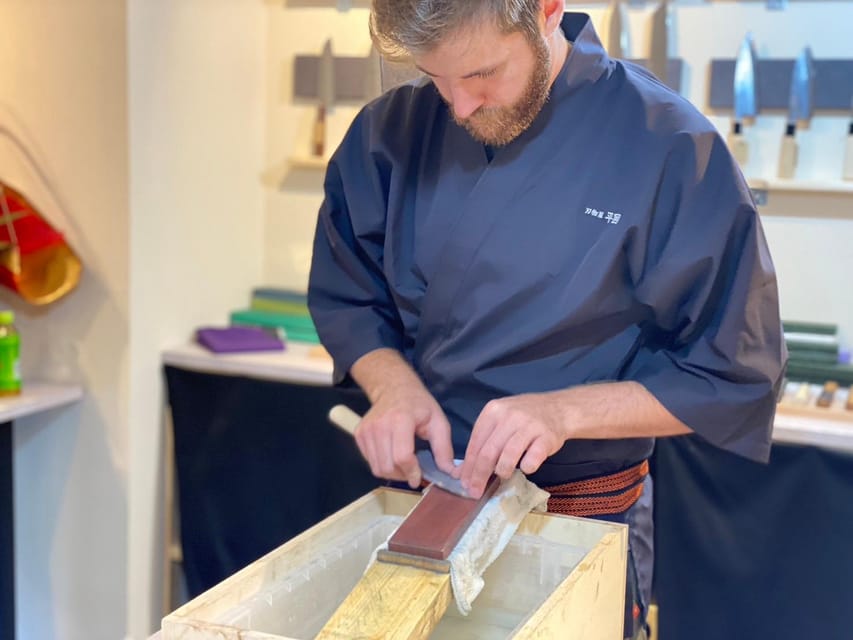
- Sharpen your own Japanese knife: You work with shop-provided whetstones and receive corrections as you practice.
- Choose your blade: Select one knife from Santoku, Deba, or Yanagi styles.
- Fit a magnolia handle: The handle is included, with other handle types available for an extra charge.
- Small, personal instruction: The group has no more than three participants, with English and Japanese support.
- Take home a useful souvenir: Your knife is packaged at the end, ready to bring home.
- Request engraving early: Up to four letters can be engraved, but you need to give the shop the characters in advance.
What happens during the two-hour Kyoto workshop
This is a compact workshop with two connected skills: sharpening and handle fitting. You begin at Japanese knife shop HIRAI, where you should arrive at least five minutes early so the session can start on time.
The shop is in the Nishiki Market area, which can be hard to spot in the busy shopping streets. Look for the white storefront curtain at the building. You come directly to the shop rather than meeting a guide elsewhere, so allow a little extra time to find the entrance.
The session also includes an explanation of Japanese knife history. This opening gives useful context without turning the class into a long lecture. You learn why Japanese kitchen knives have such a strong reputation, what they are used for, and how care affects their performance.
English instruction is available, along with Japanese. Julio has led sessions praised for clear explanations and patient corrections, while other staff members assist with the knife and handle work. The exact instructor may vary, but the format is designed for beginners rather than professional cooks.
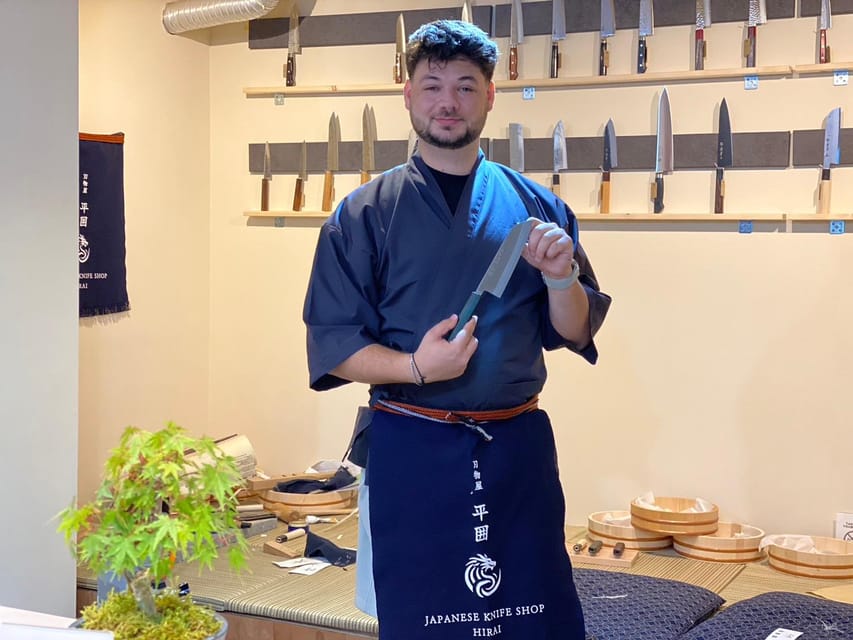
You wear a Japanese working uniform and apron during the activity. That adds a sense of occasion, but it also serves a practical purpose. Sharpening and handle fitting are hands-on jobs, and the uniform helps mark the workshop as a working lesson rather than a shop demonstration.
More workshops and classes in Kyoto:
- Kyoto: 45-Minute Tea Ceremony Lesson Experience
★ 4.3 · 2,378 reviews - Kyoto : Chopsticks Making Workshop in Gion with Engraving Option
★ 5.0 · 958 reviews - Kyoto: Samurai Sword Class by Experts in Traditional Arts
★ 4.9 · 657 reviews
Choosing between Santoku, Deba, and Yanagi
Before sharpening begins, you choose one knife. Your options are Santoku, Deba, and Yanagi, each associated with a different kitchen task.
A Santoku is the most familiar all-purpose choice for many home cooks. If you want one knife for regular kitchen use, this is likely the easiest option to live with. It is also the style several participants chose during the workshop.
A Deba is associated with heavier food preparation, especially fish. A Yanagi is a long, narrow knife traditionally linked with slicing fish. The workshop lets you select according to your interests instead of handing everyone the same souvenir.
You do not need advanced knife knowledge to choose. The instructors can explain the differences, and the class is meant to help beginners feel comfortable with Japanese blades. If you are unsure, think first about how you plan to use the knife at home rather than choosing only by appearance.
The standard knife options are already considered good quality by the people who took the class. You can also buy additional knives in the shop, but extra purchases are not part of the $161 fee. The lack of pressure to upgrade is important here. You can finish with the included knife and still receive the complete lesson.
Learning wetstone sharpening without guessing
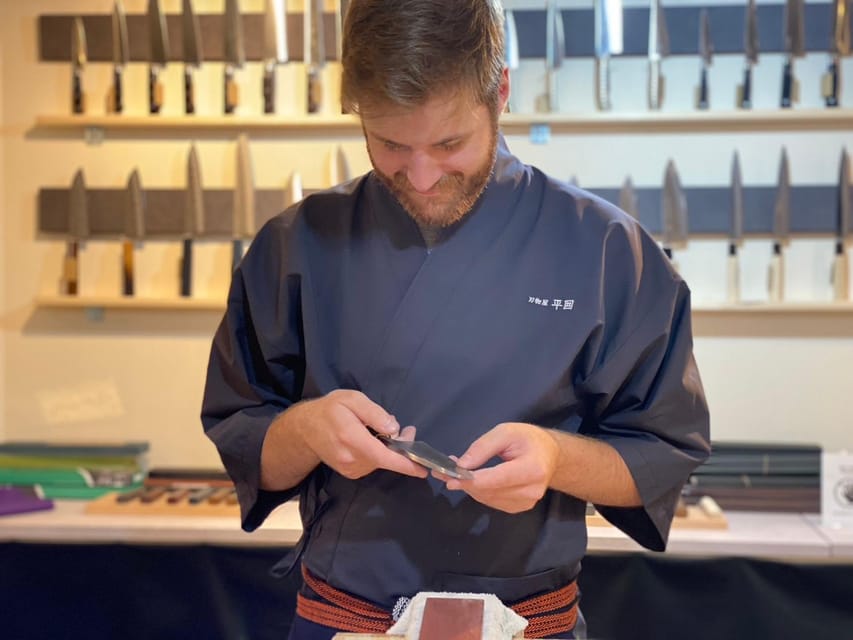
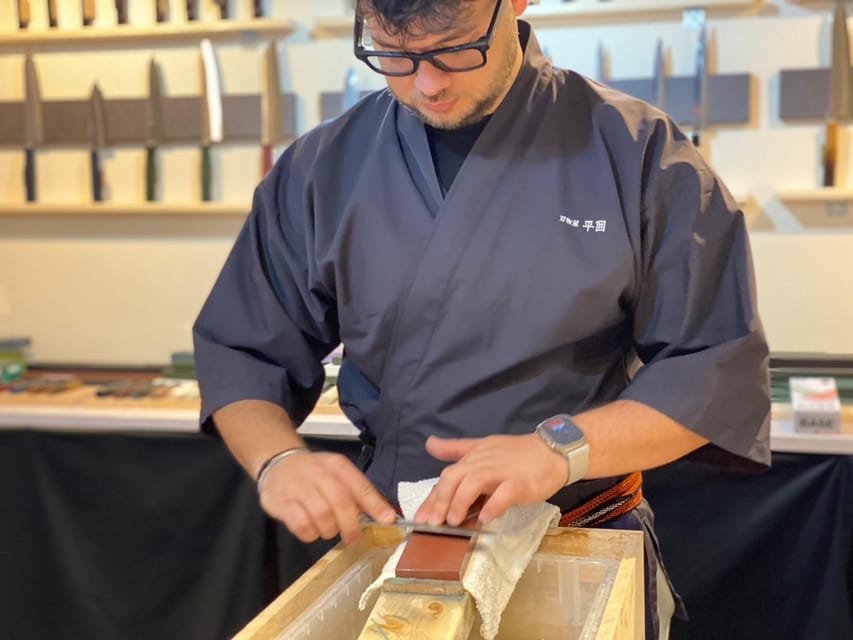
For many people, the sharpening lesson is the most useful part. Using a whetstone can feel intimidating, especially if your only instruction has come from short online videos. The workshop replaces guesswork with a demonstration, practice on a demonstration knife, and direct work on your own blade.
The instructor shows the basic method and explains the steps in simple terms. You then try the technique yourself while receiving corrections. That immediate feedback matters because the angle, pressure, and movement can be difficult to judge when you are working alone.
You should expect to concentrate. This is not a quick pass over a machine sharpener. The point is to learn a method you can repeat at home with your own knives.
The provided whetstones are included for use during the session, but the whetstone itself is not included in what you take home. You can purchase one separately if you want to continue practicing. The workshop therefore gives you the skill first, while leaving the decision about buying equipment to you.
A useful benefit is the confidence that comes from having an instructor check your progress. You do not just finish with a sharper knife and hope you did it correctly. You receive practical guidance that can help you repeat the process later.
One limitation is that the workshop does not appear to include a printed technique sheet. If you rely on written reminders, take careful mental notes during the demonstration or ask questions before you leave.
Fitting the magnolia handle over an open flame
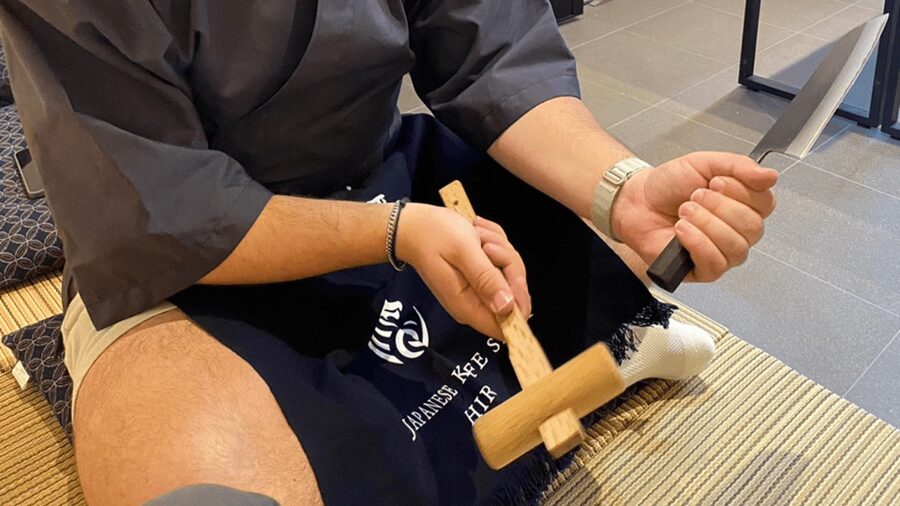
After sharpening, you move to the handle-fitting section. The included handle is made from magnolia wood, a traditional-looking choice that keeps the basic package good value.
This part gives you a closer look at how a knife becomes a finished tool. You choose the handle and work with the shop’s makers to fit it to the blade. The process is more active than simply selecting a handle from a display and having staff attach it later.
Fire is used during handle fitting, so smoke may sometimes appear. Your clothing can pick up a smoky smell. Wear something you do not mind smelling like smoke afterward, especially if you have dinner plans or another formal activity soon after.
You can choose a handle other than magnolia, but that costs extra. The added fee depends on the type of handle you select, so ask about the price before deciding. The standard magnolia handle is enough for a complete workshop, and upgrading is optional.
This is also where the knife becomes more personal. You have already worked on the blade, and now you are choosing the part you will hold every time you cook. The result is not a generic Kyoto souvenir. It is a tool with a story attached to it.
A completely different side of Kyoto:
- PERFECT KYOTO 1-Day Bus Tour
★ 5.0 · 13,518 reviews - Kyoto: Fushimi Inari, Kinkakuji, Bamboo Grove 1 Day Bus Tour
★ 4.8 · 4,316 reviews - Kyoto: Tea Ceremony in a Traditional Tea House in Kiyomizu
★ 4.9 · 3,519 reviews - Kyoto Geisha Walking Tour: Gion District & Hidden Gems
★ 4.7 · 3,273 reviews
Engraving and taking your knife home
Engraving is available, and the fee is included. You can request up to four letters or characters, but you must tell the shop in advance what you want engraved.
This is a small detail with a large practical effect. If you are booking for a couple, family member, or cooking friend, decide on the characters before the workshop. Do not assume you can make the request on the spot.
At the end, the shop packages the completed knife so you can take it home. The knife you sharpen and the handle you fit are included in the experience price. Additional knives from the shop are not included, and any extra handle type costs more.
You should still check your airline and destination rules before packing a knife. The workshop information confirms that the knife is packaged for you, but it does not specify airline or customs procedures. Keep the packaging and ask your carrier if you are unsure about checked luggage requirements.
Is $161 a fair price?
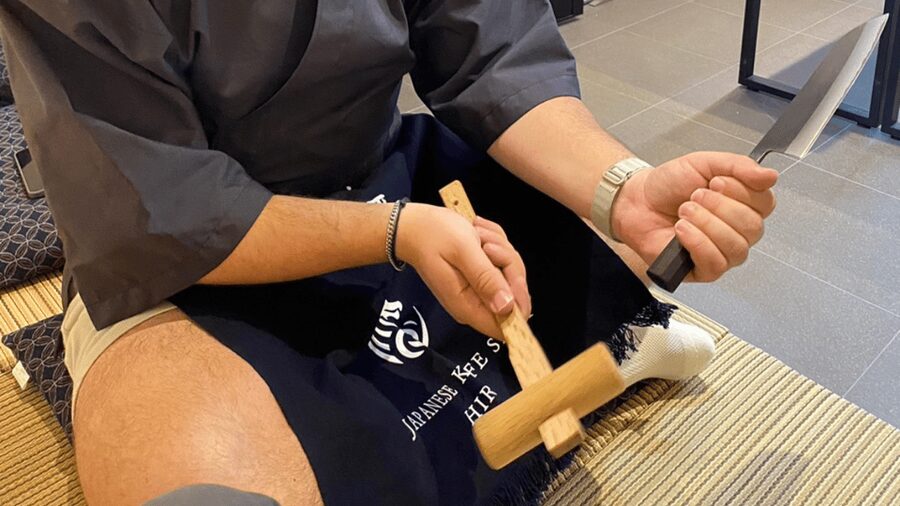
The price is $161 per person, and the session lasts two hours. At first glance, that may seem high for a short class. The calculation changes once you consider what is included: a Japanese knife, a magnolia handle, sharpening instruction, handle fitting, the working uniform and apron, the activity fee, and engraving.
You are paying for both a product and a skill. Buying a knife alone might cost less, but it would not teach you how to sharpen it or show you how the handle is fitted. Several participants found the combination of instruction and knife to be strong value, particularly because the standard knife choices are already useful.
The price works best for someone who genuinely wants to use a Japanese knife. If you only want a decorative souvenir, the class may feel like too much time and money. If you cook at home and have been meaning to learn proper sharpening, the lesson adds lasting value.
Upgrades can change the final cost. A different blade, an additional knife, or a non-magnolia handle will require extra payment. I would book the standard package first, then decide in the shop only if you clearly understand the added price.
Why the three-person group matters
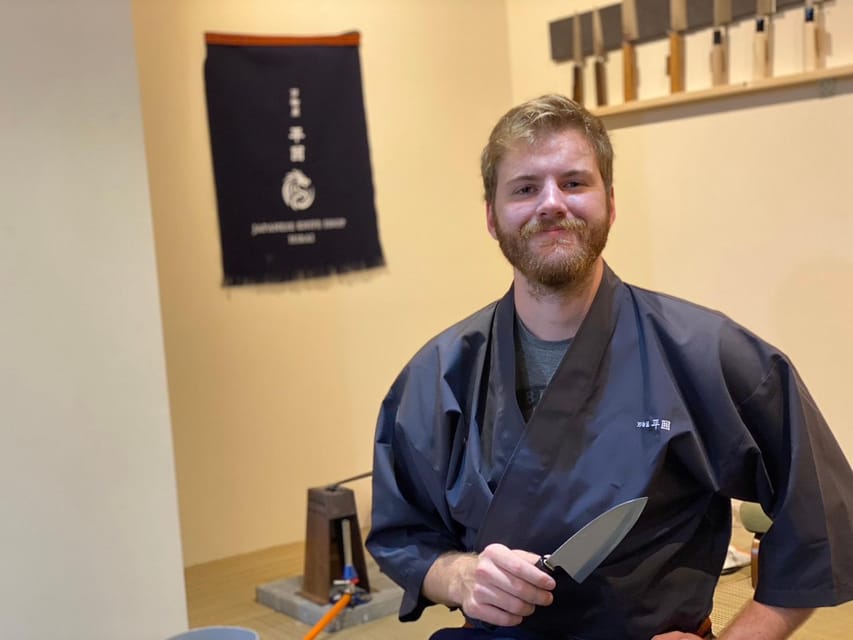
The group is limited to three participants. That is a major advantage for a technical class, since sharpening requires watching each person’s hand position and correcting small errors.
You are not left to copy a demonstration from across a crowded room. The instructor can watch your technique, answer questions, and confirm when you are making progress. Beginners in particular benefit from this close attention.
The small size also makes the handle-fitting stage more manageable. You can ask about the different blade styles, handle options, and care without waiting through a large group’s questions.
There is one trade-off: a three-person workshop has limited availability, so starting times may not match your schedule. Check the available times before building your Kyoto day around it.
Who will enjoy this most
I would recommend this for home cooks, food lovers, knife collectors, and anyone who likes useful souvenirs. You do not need previous sharpening experience. In fact, the lesson is best suited to people who are curious but have felt unsure about using a whetstone.
It also works well for a parent and older teenager, a couple, or two friends who want a shared activity. The minimum age is 15, and each person needs to be able to work at the station and follow safety instructions.
Professional chefs may find the beginner level basic, but the chance to work with Japanese knife styles and shop staff can still be worthwhile. The class is not designed as advanced bladesmith training, so experienced sharpeners should book it for the hands-on craft and finished knife rather than expecting a professional certification.
You should skip it if you dislike close manual work, cannot comfortably stand or work at the shop’s stations, or do not want smoke near your clothing. Pets, baby strollers, smoking, alcohol, drugs, and noisy behavior are not allowed.
Practical tips for a smooth visit
Arrive five minutes early. The shop can be difficult to locate around Nishiki Market, and being early gives you time to find the white curtain without rushing into a two-hour lesson.
Wear clothes you can expose to smoke. Fire is used while fitting the handle, and the smoke may leave an odor.
Choose your knife before the workshop if possible. Think about your cooking habits: Santoku for broad home use, Deba for heavier fish preparation, or Yanagi for long, precise slices.
Send engraving details in advance. The limit is four letters or characters, and the engraving fee is included.
Do not bring a pet or baby stroller. The activity is not suitable for children under 15, wheelchair users, or people over 80.
Plan your day around the full two hours, not just the sharpening portion. The history, demonstration, practice, blade work, handle fitting, engraving arrangements, and packaging all form part of the visit.
Cancellation, language, and booking details
You can cancel up to 24 hours before the activity for a full refund. A reserve-now, pay-later option is also available, which helps if your Kyoto plans are still changing.
Instruction is offered in English and Japanese. English-speaking participants have worked with instructors and translators who explained the process clearly, but the exact staff member may vary.
The shop is the meeting point, and you should go there directly. Check availability for the starting time that fits your schedule, especially if you are planning around Nishiki Market or other central Kyoto sights.
Should you book the HIRAI knife workshop?
Book it if you want a useful Kyoto souvenir with a skill attached. The strongest reasons are the patient beginner instruction, the tiny group, the choice of knife, and the fact that you take home the blade you sharpen and the handle you fit.
The $161 price is reasonable when you value both parts of the package. It is less compelling if you only want to purchase a knife or if you have no interest in maintaining one at home.
I would choose the standard Santoku and magnolia handle unless you already know you want a Deba, Yanagi, or upgraded handle. Request engraving before arrival, wear smoke-friendly clothes, and allow time to find the white curtain near Nishiki Market. For a hands-on Kyoto activity that remains useful long after your holiday, this is a strong choice.
FAQ
How long does the Kyoto knife workshop last?
The workshop lasts two hours.
What knives can I choose?
You can choose one knife from three styles: Santoku, Deba, or Yanagi.
Can I take the knife home?
Yes. The knife you sharpen and the handle you attach are packaged after the workshop so you can take them home.
Is the handle included?
Yes. The included handle is made from magnolia wood. Other handle types are available for an additional fee, which varies by handle.
Is engraving available?
Yes. Engraving is included, but you must tell the shop in advance. You can request up to four letters or characters.
Is the workshop available in English?
Yes. Instruction is available in English and Japanese.
Is the workshop suitable for children?
No. The activity is not suitable for children under 15. It is also not suitable for wheelchair users or people over 80.
Recently added around Kyoto
- Higashiyama | Kyoto: Sakura Season Private Rickshaw Tour★ 5.0 · 3 reviews
- Kyoto Kimono Rental CHAMATSU|Kimono/Yukata Rental FamilyPlan★ 5.0 · 3 reviews
- Kyoto: Half-Day Private Guided Tour to the Old Town of Gion★ 4.4 · 3 reviews
- Nara Private Customizable Half Day Tour★ 5.0 · 3 reviews
- Kansai Region Hiking Adventure in Nara Kobe Kyoto and More★ 5.0 · 3 reviews
- Full Day Nara Deer, Temple, Shrine, Activities & Tea Ceremony★ 5.0 · 3 reviews
- Nara: Essential Private Tour with Deer Park and Temples★ 5.0 · 3 reviews
- Hiking Tour for Sacred Sites in Kyoto with a Guide★ 5.0 · 3 reviews
Workshops, compared.
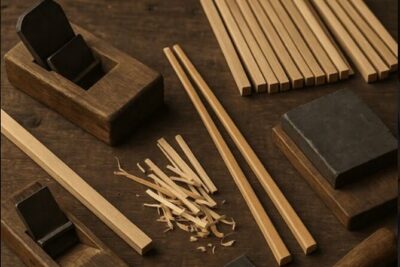
Chopsticks Making Workshop in Gion with Engraving Option
Read our review →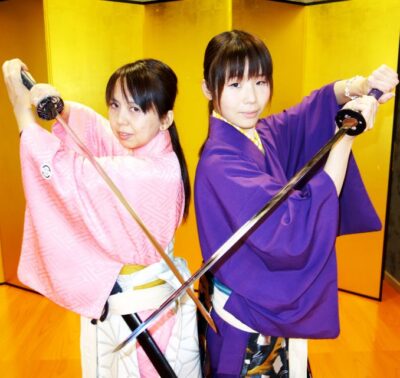
Samurai Sword Class by Experts in Traditional Arts
Read our review →
Ramen Cooking Class at a Ramen Factory with Souvenir
Read our review →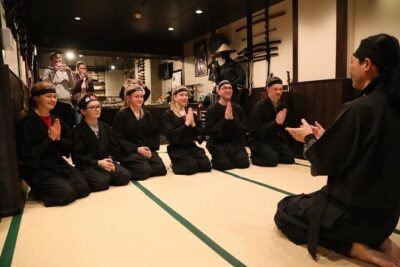
Ninja 1-hour Hands-on Lesson by Japanese master in Kyoto -Entry
Read our review →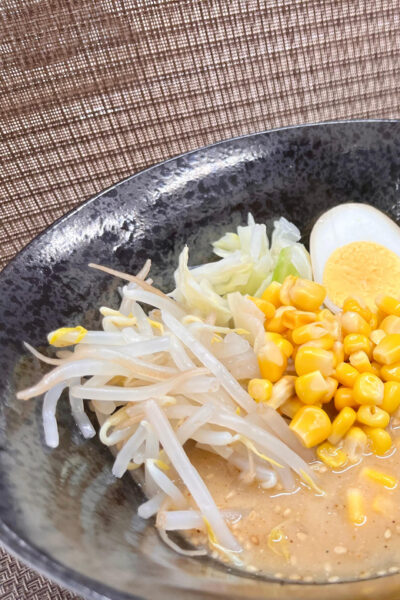
The Original Small-Group Sushi Making Class in Kyoto
Read our review →
Japanese Washoku Bento Small Group Cooking Class
Read our review →Browse the lists this tour appears in