

REVIEW · WORKSHOPS
Kyo-arashi Shibori Scarf Class
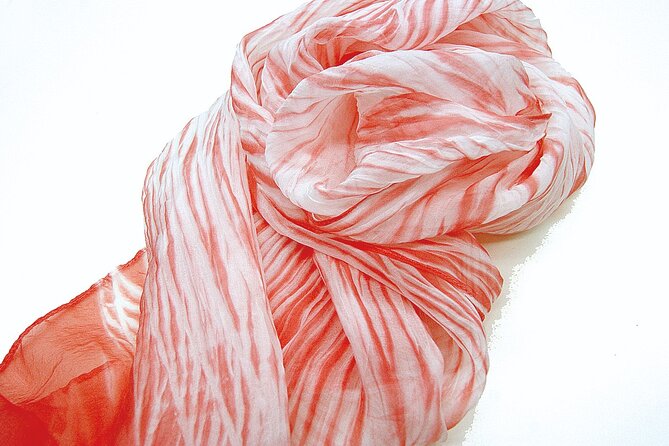
The best part of this Kyoto experience is that you do not just watch a craft demonstration. You fold, wrap, bind, dye, press, and finally open a silk scarf to reveal a pattern you helped create. The kyo-arashi shibori method turns a short class into a small lesson in Japanese textile art.
I like two things right away: you leave with a useful, personal souvenir rather than a factory-made trinket, and the class includes time in the Kyoto Shibori Museum, plus a chance to try on a kimono. The main consideration is timing. The class may last only 30 minutes, but the scarf needs to dry, so you should allow extra time if you want to browse the museum at an unhurried pace.
In This Review
- Key points to know before booking
- Making a silk scarf instead of buying one
- The kyo-arashi method, step by step
- What the Kyoto Shibori Museum adds
- Friendly instruction and English support
- A good choice for families with older children
- How much time to allow in your Kyoto schedule
- Is the $50.30 price fair?
- What could disappoint you
- Who should book the scarf class
- FAQ
- Where does the Kyo-arashi Shibori Scarf Class take place?
- How long does the activity last?
- What will I make?
- Can I choose the scarf color?
- Is the museum included?
- Can I try on a kimono?
- What is the minimum age?
- Is the class private?
- Is the museum near public transportation?
- Can I cancel for a refund?
Key points to know before booking

- You make a full-size silk scarf: The finished piece measures about 70 by 17 inches, or 180 by 44 centimeters.
- The pattern is created by hand: You fold the fabric, wrap it around a pipe, bind it with string, and then dye it.
- Color choice is part of the fun: You can select a color based on your own taste.
- The museum is part of the visit: While the scarf dries, you can see shibori displays and try on a shibori kimono.
- The class is private: Only your group participates, and classes are usually individual.
- It suits older children and adults: The minimum age is 12, but the hands-on format has also worked well for families.
Making a silk scarf instead of buying one

Kyoto has no shortage of souvenirs, but many are easy to forget once you get home. This class gives you something with a story attached to it. You can point to the scarf and explain how you folded the fabric, tightened the string, chose the color, and opened the cloth to see the final pattern.
The scarf itself is a generous size. At 180 by 44 centimeters, it is not a tiny sample or a simple swatch. You get a wearable piece of silk that can serve as a scarf, a gift, or a reminder of your time in Kyoto.
I also like that the process leaves room for surprise. You make some choices, but the tied fabric hides parts of the silk from the dye. The result is not fully visible until the string comes off and the cloth is unfolded. That final reveal gives the class its payoff.
You should not expect to master every part of shibori in one short visit. This is a guided introduction, not a full textile apprenticeship. Still, the method is clear enough for a first attempt, and the instructor stays close to the process.
More workshops and classes in Kyoto:
- Kyoto: 45-Minute Tea Ceremony Lesson Experience
★ 4.3 · 2,378 reviews - Kyoto : Chopsticks Making Workshop in Gion with Engraving Option
★ 5.0 · 958 reviews - Kyoto: Samurai Sword Class by Experts in Traditional Arts
★ 4.9 · 657 reviews
The kyo-arashi method, step by step
Your session begins with a 70-inch silk scarf and an explanation of how to fold it. The folding matters because it determines how the dye reaches the cloth. Small changes in the arrangement can affect the final pattern.
Next, you wrap the folded fabric around a pipe. String is wound around the pipe and the fabric is pushed down toward the bottom. This compresses sections of the silk and creates areas that resist the dye.
The next stage is the color bath. You choose your preferred color, then dye the prepared fabric. The activity does not limit you to observing the instructor, so you get a real hand in the work. That is important for children and first-time crafters, who often learn faster by handling the material than by watching from the side.
After dyeing, the string is removed. The scarf is rolled with a towel and pressed, then opened so you can see the design. The fabric needs time to dry, which creates a natural pause in the class.
The method is simple enough to follow, but the outcome is not completely predictable. That is part of the charm, though anyone seeking an exact, preselected pattern should keep expectations realistic.
What the Kyoto Shibori Museum adds
The museum helps place your craft session in a wider setting. While your scarf dries, you can browse displays connected with shibori, a Japanese resist-dyeing tradition in which parts of the fabric are protected from color through folding, binding, or other treatments.
The museum visit is not just filler while you wait. It gives you a chance to see more finished textile work after handling one small part of the process yourself. The contrast is useful: your scarf shows what a beginner can make with guidance, while the displays help you appreciate the control and care behind more elaborate pieces.
You also have the opportunity to try on a shibori kimono. This makes the visit more interactive than a standard museum stop. It connects the fabric technique to clothing and gives you a visual sense of how patterned textiles work when worn rather than hung on a wall.
The museum and class are both compact, so this is a good addition to a day built around central Kyoto sights. It will not fill an entire afternoon unless you take your time with the displays and gift shop. Think of it as a focused craft stop that fits neatly between other plans.
Friendly instruction and English support
The class is supervised by a professional instructor, and an English-speaking instructor is available. Nina is named as one instructor associated with the experience. The teaching style is attentive and practical, with the staff helping participants through each stage rather than leaving them to guess what comes next.
That personal help matters because the trickiest part is not the dye itself. It is folding the fabric correctly, wrapping it around the pipe, and tightening the string so the folds stay compressed. A small mistake at this point could change the pattern or make the later steps awkward.
The class is usually individual, and the activity is private for your group. That gives you a more direct experience than a large workshop where you might wait for an instructor to reach your table. It also makes the class easier to enjoy as a family or with a companion.
The published feedback is especially strong on the staff. People repeatedly praise the friendly, accommodating approach and clear English. One family was allowed to begin early, which suggests some flexibility, though you should not count on early access unless the museum agrees.
A completely different side of Kyoto:
- PERFECT KYOTO 1-Day Bus Tour
★ 5.0 · 13,518 reviews - Kyoto: Fushimi Inari, Kinkakuji, Bamboo Grove 1 Day Bus Tour
★ 4.8 · 4,316 reviews - Kyoto: Tea Ceremony in a Traditional Tea House in Kiyomizu
★ 4.9 · 3,519 reviews - Kyoto Geisha Walking Tour: Gion District & Hidden Gems
★ 4.7 · 3,273 reviews
A good choice for families with older children
The minimum age is 12, and the format can work well for teenagers who like making things with their hands. The process has enough stages to keep a young participant involved: folding, wrapping, tying, coloring, pressing, and opening.
Some family groups have included young children and had a good time, but the stated minimum age is 12. That rule should guide your booking decision. If you are traveling with children younger than 12, do not assume they can join the scarf class.
For a mixed-age family, the museum displays and kimono opportunity may help keep interest going while the fabric dries. The activity also avoids the pressure of a long formal lesson. You get a finished object within a short session, which is useful when children have limited patience.
Adults who do not think of themselves as artistic should not worry too much. You are given a particular method to follow, and the instructor guides you through the tricky parts. You make choices, but you do not need to design a complicated pattern from scratch.
How much time to allow in your Kyoto schedule

The class itself takes about 30 to 60 minutes. That range likely reflects the pace of each group and the amount of help needed. Add time for the museum displays, kimono try-on, and gift shop if those matter to you.
Because the experience ends at the same meeting point, it is easy to place in a sightseeing day. You can visit the museum, complete the scarf, and continue with your plans without arranging a second pickup point.
Multiple start times are available, which helps you fit the class around meals, temple visits, or other reservations. I would still avoid placing it immediately before a fixed appointment. Hands-on activities can run at different speeds, and the drying stage may encourage you to stay longer.
The museum is near public transportation. Two car parking spaces and bicycle parking are available, but the limited car parking means you should not plan on arriving by car without checking the situation first.
Is the $50.30 price fair?

At $50.30 per person, this is not the cheapest craft activity in Kyoto. The price makes more sense when you count what is included: professional instruction, a full-size silk scarf, museum admission, and the chance to try on a kimono.
The souvenir is the key value. You are not paying only for entry to a museum or for a short demonstration. You are paying for materials and guidance, then taking home a piece you customized through the dyeing process.
I would consider it good value if you want an activity with a clear result. If you are mainly looking for the lowest-cost way to see shibori, the price may feel high for a session that can finish in half an hour. If you care about making something personal and usable, the calculation is better.
Adult pricing applies to all ages, so there is no separate child discount listed. Keep that in mind when planning a family booking.
What could disappoint you
The class is short. If you want a long workshop with several dyeing rounds or a detailed history lesson, this will feel limited. The experience focuses on one scarf and one method.
The finished pattern also has an element of chance. Your color choice is yours, but the folds and binding shape the result. That is central to shibori, yet it means the scarf may not look exactly as you pictured.
You may also find the museum portion brief if you are hoping for a large museum visit. The available information describes displays, a kimono experience, and a gift shop, but it does not present this as a full-day cultural program.
Finally, the activity requires some scheduling care. You can cancel for a full refund up to 24 hours before the start time, but changes or cancellations inside that window are not accepted. The cut-off uses Kyoto local time.
Who should book the scarf class
I would recommend this for you if you want a hands-on Kyoto activity, prefer a personal souvenir to a standard purchase, or enjoy traditional crafts but have no previous experience. It is also a sensible choice for couples, small private groups, and families with participants aged 12 or older.
It fits well into a busy itinerary because the class is short and ends where it begins. The multiple start times make it easier to build around other plans, while the museum gives you something to do as the scarf dries.
You may want to skip it if you dislike craft activities, need a guaranteed pattern, or want a long and highly detailed museum visit. The experience is focused and practical rather than expansive.
FAQ
Where does the Kyo-arashi Shibori Scarf Class take place?
The class takes place at the Kyoto Shibori Museum, at 135-5 Shikiamicho, Nakagyo Ward, Kyoto, 604-8261, Japan.
How long does the activity last?
The class takes approximately 30 minutes to one hour. You can also spend additional time browsing the museum while your scarf dries.
What will I make?
You will dye a silk scarf measuring about 180 by 44 centimeters, or 70 by 17 inches, using the kyo-arashi shibori method.
Can I choose the scarf color?
Yes. You can select a color based on your own preference before dyeing the scarf.
Is the museum included?
Yes. Admission to the Kyoto Shibori Museum is included in the experience.
Can I try on a kimono?
Yes. The activity includes an opportunity to try on a shibori kimono.
What is the minimum age?
The minimum age is 12. Adult pricing applies to all ages.
Is the class private?
Yes. This is a private activity, so only your group participates. Classes are usually individual.
Is the museum near public transportation?
Yes. The museum is located near public transportation. Two car parking spaces and bicycle parking spaces are also available.
Can I cancel for a refund?
You can cancel up to 24 hours before the experience start time for a full refund. Cancellations or changes made less than 24 hours before the start time are not accepted for a refund.
Recently added around Kyoto
- Higashiyama | Kyoto: Sakura Season Private Rickshaw Tour★ 5.0 · 3 reviews
- Kyoto Kimono Rental CHAMATSU|Kimono/Yukata Rental FamilyPlan★ 5.0 · 3 reviews
- Kyoto: Half-Day Private Guided Tour to the Old Town of Gion★ 4.4 · 3 reviews
- Nara Private Customizable Half Day Tour★ 5.0 · 3 reviews
- Kansai Region Hiking Adventure in Nara Kobe Kyoto and More★ 5.0 · 3 reviews
- Full Day Nara Deer, Temple, Shrine, Activities & Tea Ceremony★ 5.0 · 3 reviews
- Nara: Essential Private Tour with Deer Park and Temples★ 5.0 · 3 reviews
- Hiking Tour for Sacred Sites in Kyoto with a Guide★ 5.0 · 3 reviews
Workshops, compared.

Chopsticks Making Workshop in Gion with Engraving Option
Read our review →
Samurai Sword Class by Experts in Traditional Arts
Read our review →
Ramen Cooking Class at a Ramen Factory with Souvenir
Read our review →
Ninja 1-hour Hands-on Lesson by Japanese master in Kyoto -Entry
Read our review →
The Original Small-Group Sushi Making Class in Kyoto
Read our review →
Japanese Washoku Bento Small Group Cooking Class
Read our review →Browse the lists this tour appears in