

REVIEW · WORKSHOPS
Itajime Shibori Scarf Class
Itajime shibori turns a simple scarf into a small piece of Japanese textile art. At the Kyoto Shibori Museum, you choose fabric and colors, follow careful instructions, then reveal the pattern after dyeing. The surprise comes at the end, when the folded or prepared cloth opens into a design you could not fully predict.
I like the hands-on format and the chance to take home something you made yourself. I also like the museum connection: while your scarf dries, you can see finished shibori works and learn how much time and skill go into kimono fabrics and other textiles.
The main consideration is the short, variable schedule. The activity may take 30 minutes to an hour, and the class takes place upstairs, where the entrance may not be obvious from the street. Look for the Kyoto Shibori Museum rather than expecting a large storefront.
In This Review
- Key points to know before booking
- What itajime shibori means in practical terms
- Inside the 30 to 60-minute scarf class
- The second-floor museum adds real value
- Why the staff matter so much
- A good Kyoto activity for families and non-artists
- Price and what you get for $43.60
- Finding the museum and planning the visit
- What you take home
- Who should book this experience?
- Should you book the Kyoto Shibori Museum class?
- FAQ
- How long does the Itajime Shibori Scarf Class last?
- Where does the class take place?
- What is included in the experience?
- What is the minimum age?
- How many people can join the class?
- Is the museum near public transportation?
- Can I cancel for a full refund?
- Is a mobile ticket available?
Key points to know before booking
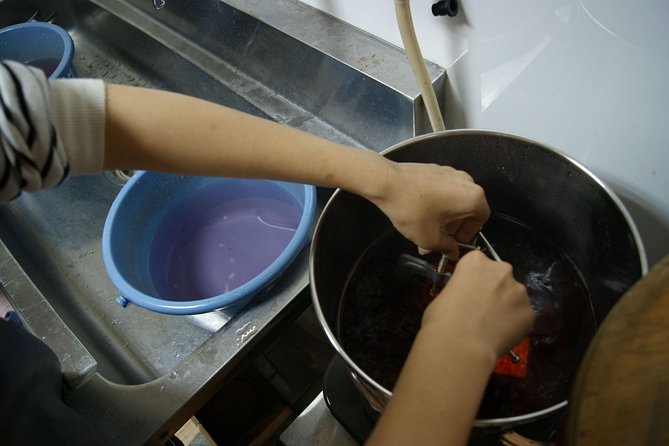
- Make your own Japanese scarf: Choose from Japanese fabrics and use traditional dyeing tools with step-by-step help.
- See the museum while your scarf dries: The second-floor display includes shibori works and a film about the craft.
- A small class with personal attention: The group limit is 10 people, and several sessions include close help from staff such as June.
- Good for families: The minimum age is 6, and adult pricing applies to all ages.
- A calm cultural break: The class lasts about 30 to 60 minutes and offers a quiet change from Kyoto’s major sights.
- Convenient Kyoto pairing: The museum is near public transportation and about a two-minute walk from Nijo Castle, according to the activity information.
What itajime shibori means in practical terms
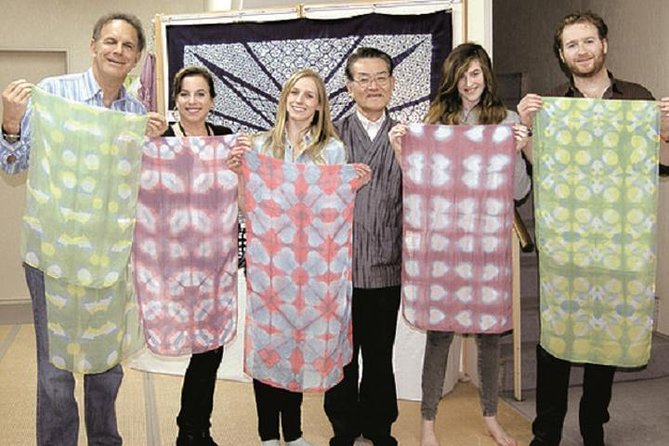
Shibori is one of Japan’s oldest dyeing methods. Instead of simply painting color onto cloth, the maker prepares the fabric so that dye reaches some areas and avoids others. The result is a pattern shaped by folding, pressing, binding, or other forms of resistance.
This class focuses on itajime shibori. The name refers to a traditional method using shaped surfaces and pressure to control the dye. You do not need to arrive with artistic training. The instructor shows you what to do, and the process is broken into manageable steps.
That makes this a good activity for people who like crafts but do not usually think of themselves as creative. The result is meant to be personal rather than perfect. Small variations are part of the charm.
You work with Japanese fabric and select colors before the dyeing begins. The exact choices available can vary, but the important point is that you have a hand in the design rather than receiving a pre-made item. The finished scarf is both a souvenir and a physical reminder of the process.
More workshops and classes in Kyoto:
- Kyoto: 45-Minute Tea Ceremony Lesson Experience
★ 4.3 · 2,378 reviews - Kyoto : Chopsticks Making Workshop in Gion with Engraving Option
★ 5.0 · 958 reviews - Kyoto: Samurai Sword Class by Experts in Traditional Arts
★ 4.9 · 657 reviews
Inside the 30 to 60-minute scarf class
The class begins with an explanation of the technique and the materials. Staff guide you through preparing the scarf, choosing colors, and applying the method used to create the pattern. Clear instruction matters here because the final design depends on what happens before the fabric reaches the dye.
The activity is short enough to fit into a busy Kyoto day, but it is not just a quick demonstration. You are expected to take part. That practical element gives the class more weight than a standard museum visit, especially if you want an activity that connects you with Japanese craft rather than only showing you finished objects.
Several details make the class feel personal. Staff take time to answer questions, and the small maximum of 10 people helps keep the instruction manageable. Solo participants may receive especially close attention, while families and couples can work side by side.
The grand reveal comes when the prepared scarf is opened and the design becomes visible. That moment is a real part of the fun. You know the colors you selected, but the final arrangement still has an element of surprise.
The scarf may need time to dry. This is not wasted time, since it gives you a natural reason to visit the museum collection upstairs. When the fabric is ready, staff finish and package it for you to take home. One family also received a certificate for a child, a thoughtful touch that may appeal to parents.
The second-floor museum adds real value
The museum is more than a waiting room. Its exhibition shows the skill behind shibori, including detailed textile works and examples connected with kimono fabric making. A film explains the process and gives useful background before or after your class.
This context changes how you see your own scarf. A simple patterned cloth can look attractive on its own, but the museum helps you understand the patience and control required for more elaborate work. You see the difference between a short introductory project and the work of an experienced textile artist.
The second floor is also a useful place to slow down. Kyoto can fill a day with temples, gardens, markets, and crowded streets. This small museum offers a quieter pause, and the class gives you something to focus on with your hands.
The collection includes intricate masterpieces. You might not have enough time for a long museum visit if your class is at the shorter end of the schedule, but the display is worth seeing even if you mainly came to make a scarf.
The museum also helps explain why shibori is not simply ordinary tie-dye. The techniques used in Japanese textiles can create highly controlled patterns and complex surfaces. The class gives you a small, accessible version of that larger tradition.
Why the staff matter so much

A craft class depends heavily on the people teaching it. Here, the staff are described as patient, kind, and eager to explain both the practical steps and the background of the craft.
June is specifically praised for patient, gentle instruction. Kenji and the museum team are also singled out for their care and personal approach. The supplied information connects the museum with a family tradition in shibori, including a grandfather who was a master and a father who started the museum.
That family connection gives the experience a human scale. You are not simply following instructions from a generic workshop leader. The staff want you to understand why the work matters, how fabric is made for kimono, and how the technique has developed.
You should still keep expectations realistic. This is an introductory class, not an apprenticeship. In 30 to 60 minutes, you will learn the basic process and make a scarf, not master the full range of shibori methods. The value comes from access, explanation, and participation.
The staff’s attention is especially useful for children and teenagers. The minimum age is 6, and adult pricing applies to every age group. A young participant may need help with some steps, but the activity is practical enough to hold the attention of older children and teenagers too.
A completely different side of Kyoto:
- PERFECT KYOTO 1-Day Bus Tour
★ 5.0 · 13,518 reviews - Kyoto: Fushimi Inari, Kinkakuji, Bamboo Grove 1 Day Bus Tour
★ 4.8 · 4,316 reviews - Kyoto: Tea Ceremony in a Traditional Tea House in Kiyomizu
★ 4.9 · 3,519 reviews - Kyoto Geisha Walking Tour: Gion District & Hidden Gems
★ 4.7 · 3,273 reviews
A good Kyoto activity for families and non-artists

This class suits a wide mix of people. Families can make scarves together, couples can compare patterns, and solo visitors can enjoy a quiet creative hour. You do not have to be skilled with crafts to take part.
The activity also works well for teenagers who might not be excited by another formal museum. They get to use materials, make decisions, and leave with something tangible. The finished scarf gives the experience a clear reward without turning the class into a rushed souvenir stop.
For older children, the short length helps. A full-day craft workshop can be too much during a busy holiday, but this one can fit between sightseeing stops. Since the museum is near public transportation and close to Nijo Castle, you can combine it with nearby sightseeing.
The activity may also suit someone who has already seen many of Kyoto’s major temples. It offers a different way to learn about Japanese culture through fabric, tools, color, and handwork. You are not merely looking at an old object behind glass. You are trying a small part of the process yourself.
The only family caution is pricing. Children do not receive a reduced rate according to the supplied information, so calculate the full cost for each participant before booking.
Price and what you get for $43.60
At $43.60 per person, this is not the cheapest souvenir activity in Kyoto. It is reasonably priced for a small-group craft class that includes materials, instruction, museum admission, and a finished handmade scarf.
The value depends on what you want from your day. If you only want a low-cost object to take home, a shop will offer cheaper options. If you want to understand how the object is made and create one yourself, the price is easier to justify.
You are paying for several parts at once:
- A guided introduction to an old Japanese dyeing craft
- Japanese fabric and the materials used in the activity
- Personal help from museum staff
- Admission to the shibori exhibition
- A completed scarf to take home
- A cultural experience that fits into roughly one hour
The museum visit strengthens the value. Without it, the class would be a short make-and-take activity. With it, you gain a better sense of the skill behind the craft and can compare your beginner’s piece with more advanced works.
The price also makes sense for a special occasion. Some families use the class as a memorable shared activity, and a handmade scarf can feel more meaningful than a standard Kyoto souvenir. If you are buying for several family members, though, the total can rise quickly because everyone pays the adult rate.
Finding the museum and planning the visit
The museum is near public transportation, and mobile tickets make it easy to keep your booking available on your phone. Two car parking spaces and bicycle parking spaces are available, but those spaces are limited. Public transportation is the safer plan unless you already know you can use one of the parking spots.
The classroom is on the second floor. The street entrance may not be clearly marked, so allow a few extra minutes to locate it. Look for the museum name and check the building carefully rather than assuming the class will be visible from outside.
The activity information gives a duration of 30 to 60 minutes, while the museum stop is listed as about an hour. In practice, plan around an hour so you can complete the class, allow drying time, and see the exhibition without rushing. Your exact timing may depend on the group and on how long the scarf takes to finish.
The museum is described as about two minutes from Nijo Castle. That makes a combination visit practical. You could see the castle first, then use the scarf class as a quieter follow-up, or schedule the class before sightseeing if you prefer to begin the day with something relaxed.
Since the class is limited to 10 people, booking ahead is sensible during busy periods. The activity had more than 10 bookings in the previous month, which suggests steady demand without implying a large operation.
Free cancellation is available if you cancel at least 24 hours before the local start time. Cancellations or changes inside that 24-hour window are not refunded or accepted, so check your Kyoto schedule before confirming.
What you take home

The scarf is the most obvious souvenir, but it is not the only thing you carry away. You also leave with a better understanding of why Japanese textile work can require such careful preparation.
The finished design will reflect your color choices and the way the fabric was prepared. Do not expect every scarf to look identical. That difference is part of making it yourself, and it gives each piece a story.
Staff dry and package the scarves after the activity. That is useful if you have more sightseeing planned afterward. You are not left carrying a wet or unfinished piece through Kyoto.
The scarf is also practical. It is lighter and easier to pack than many traditional craft purchases, and it has a clear connection to the place where it was made. If you prefer souvenirs with a personal story, this is a stronger choice than a mass-produced item.
The experience can also lead to a better shopping decision. The museum may have shibori-related goods, including items such as leather and shibori bags. After seeing the amount of work involved, you can judge those pieces with a more informed eye.
Who should book this experience?
I would put this class high on the list for:
- Families with children age 6 and older
- Couples seeking a shared activity
- Solo visitors who enjoy calm, creative experiences
- Anyone interested in Japanese textiles or kimono
- People who want a handmade Kyoto souvenir
- Visitors looking for an activity near Nijo Castle
It is less suitable if you want a long, advanced workshop or a broad tour of Kyoto. The class gives you a compact introduction, not a full day of technical training. It also may disappoint someone who prefers a purely sightseeing-based itinerary with no hands-on work.
You should also consider how much you value personal attention. The small class size and patient staff are important strengths. If the class fills its 10-person limit, the experience may feel less private than a one-on-one session, but the format is still designed for guided participation.
Should you book the Kyoto Shibori Museum class?
Book it if you want a short, personal cultural activity that leaves you with something useful. The strongest reasons are the hands-on scarf making, the small museum exhibition, the patient instruction, and the chance to connect a simple craft project with the larger tradition of Japanese textile work.
At $43.60, it offers fair value for the class, materials, museum access, and finished scarf. The best plan is to pair it with Nijo Castle or another nearby stop, arrive with a little time to find the upstairs entrance, and allow about an hour rather than trying to squeeze it into a narrow gap.
Skip it only if your schedule is packed or you are looking for an advanced craft course. For families, solo visitors, and anyone who wants a quieter Kyoto memory than another crowded attraction, this is an easy activity to recommend.
FAQ
How long does the Itajime Shibori Scarf Class last?
The activity lasts approximately 30 minutes to 1 hour. The museum stop is listed as about 1 hour, so allowing an hour for the full visit is sensible.
Where does the class take place?
The class takes place at the Kyoto Shibori Museum in Kyoto, Japan. The classroom is on the second floor.
What is included in the experience?
The experience includes instruction, Japanese fabrics, traditional tools, the scarf-making activity, museum admission, and the finished scarf to take home.
What is the minimum age?
The minimum age is 6 years old. Adult pricing applies to all ages.
How many people can join the class?
The activity has a maximum of 10 participants.
Is the museum near public transportation?
Yes. The museum is near public transportation. Two car parking spaces and bicycle parking spaces are also available.
Can I cancel for a full refund?
Yes, if you cancel at least 24 hours before the experience start time. Cancellations made less than 24 hours before the start time are not refunded.
Is a mobile ticket available?
Yes. The experience includes a mobile ticket.
Recently added around Kyoto
- Higashiyama | Kyoto: Sakura Season Private Rickshaw Tour★ 5.0 · 3 reviews
- Kyoto Kimono Rental CHAMATSU|Kimono/Yukata Rental FamilyPlan★ 5.0 · 3 reviews
- Kyoto: Half-Day Private Guided Tour to the Old Town of Gion★ 4.4 · 3 reviews
- Nara Private Customizable Half Day Tour★ 5.0 · 3 reviews
- Kansai Region Hiking Adventure in Nara Kobe Kyoto and More★ 5.0 · 3 reviews
- Full Day Nara Deer, Temple, Shrine, Activities & Tea Ceremony★ 5.0 · 3 reviews
- Nara: Essential Private Tour with Deer Park and Temples★ 5.0 · 3 reviews
- Hiking Tour for Sacred Sites in Kyoto with a Guide★ 5.0 · 3 reviews
Workshops, compared.

Chopsticks Making Workshop in Gion with Engraving Option
Read our review →
Samurai Sword Class by Experts in Traditional Arts
Read our review →
Ramen Cooking Class at a Ramen Factory with Souvenir
Read our review →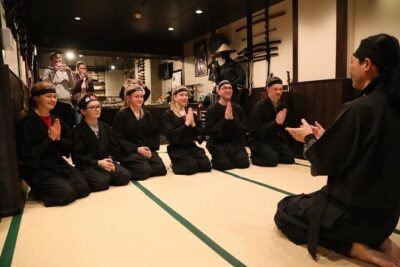
Ninja 1-hour Hands-on Lesson by Japanese master in Kyoto -Entry
Read our review →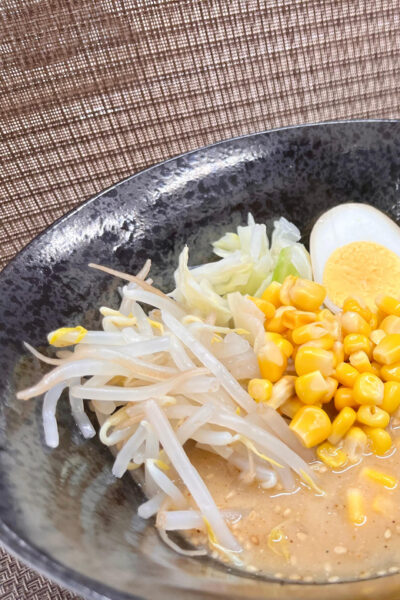
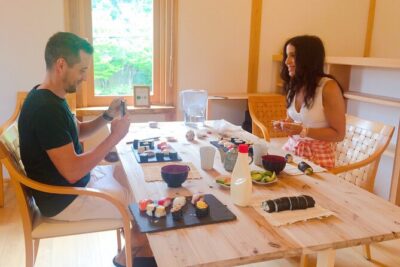
The Original Small-Group Sushi Making Class in Kyoto
Read our review →
Japanese Washoku Bento Small Group Cooking Class
Read our review →Browse the lists this tour appears in