
REVIEW · WORKSHOPS
Hanakoushi cotton Scarf Class
The best part of this Kyoto class is watching a plain length of fabric turn into a patterned scarf through a few careful folds and a bath of dye. You work at the Kyoto Shibori Museum, then leave with a useful souvenir rather than another mass-produced trinket.
I like the private format, which keeps instructions clear and lets you work at your own pace. I also like the museum time while your scarf dries, since you can see the intricate work behind this old Japanese textile art. The main consideration is that the hands-on portion is simple and quite short, so serious craft enthusiasts may want a longer workshop.
In This Review
- Key points to know before booking
- Folding a Kyoto scarf at the Shibori Museum
- What you actually make in 30 minutes
- Why the private format helps
- The museum visit while your fabric dries
- The reveal is the payoff
- The shop adds another reason to linger
- Is $43.35 a fair price?
- Who should book this class?
- Timing, meeting point, and cancellation
- My practical verdict
- FAQ
- Where does the Hanakoushi cotton Scarf Class take place?
- How long does the class take?
- What kind of scarf will I make?
- Is the class private?
- What technique will I learn?
- Can I cancel for a full refund?
Key points to know before booking

- A private class for your party: You receive direct help instead of trying to follow a large demonstration.
- A traditional folding and dyeing method: You use hanakoushi, also described as sekka shibori, to create the pattern.
- A large take-home scarf: The stated size is about 70 by 17 inches, or 175 by 50 centimeters.
- Museum time is part of the experience: Watch, browse tools and textile pieces, and learn more while the fabric dries.
- A short Kyoto activity: The class itself takes about 30 minutes, though the full visit can run longer.
- A practical price point: At $43.35 per person, the fee covers instruction, materials, the scarf, and museum access.
Folding a Kyoto scarf at the Shibori Museum
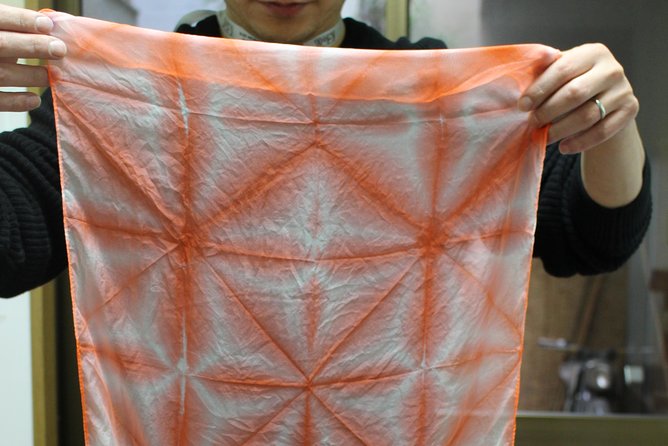
Shibori is a family of Japanese resist-dyeing techniques. Instead of painting a design onto cloth, you fold, bind, stitch, or compress sections so the dye cannot reach them in the same way. When the fabric opens, the protected areas form the pattern.
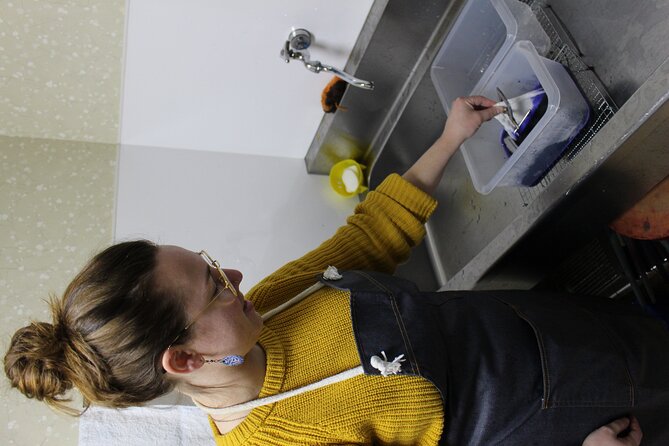
This class uses hanakoushi shibori, also called sekka shibori in the activity description. You begin by choosing a color. Then an instructor shows you how to fold the scarf into the required shape before placing it in the dye.
That sequence matters. The final pattern is not simply printed onto the fabric, and you do not draw each flower or geometric mark by hand. Your choices are mainly the color and the way the cloth is folded. The result has a pleasant element of surprise when the scarf is opened.
The process has been simplified for a short visitor workshop. That is good news if you want a hands-on introduction without spending hours tying tiny sections of fabric. It also means you should not expect to learn every form of shibori or produce a museum-grade textile in one sitting.
More workshops and classes in Kyoto:
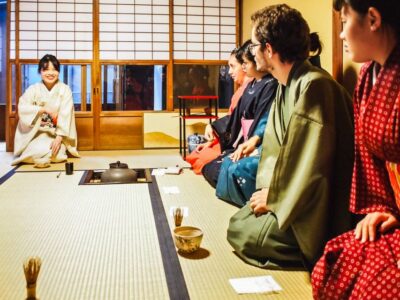
- Kyoto: 45-Minute Tea Ceremony Lesson Experience
★ 4.3 · 2,378 reviews - Kyoto : Chopsticks Making Workshop in Gion with Engraving Option
★ 5.0 · 958 reviews - Kyoto: Samurai Sword Class by Experts in Traditional Arts
★ 4.9 · 657 reviews
What you actually make in 30 minutes
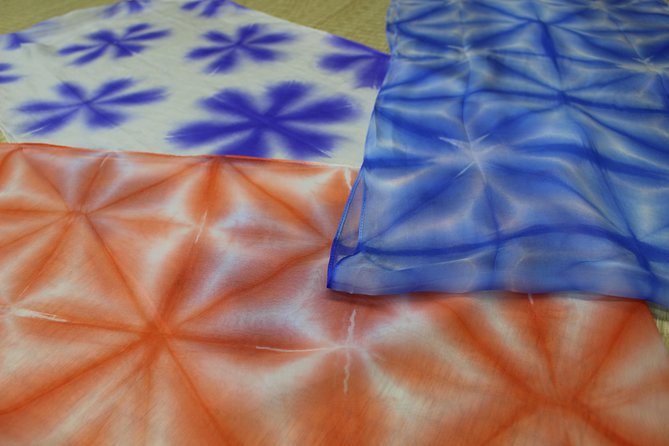
The scarf is described as cotton and measures about 175 by 50 centimeters. Elsewhere, the material is described as silk, and several class descriptions also refer to silk scarves. Since that is a meaningful difference in texture and care, I would confirm the fabric with the museum when booking or on arrival.
The class is usually individual, or limited to your own private party. That makes the folding stage easier to follow. If your group includes children or first-time crafters, the instructor can show the steps directly rather than leaving you to copy a demonstration from across a room.
The activity is listed at about 30 minutes, while the full class range is sometimes described as 30 to 60 minutes. Plan extra time for the drying period and museum visit. Your dyed scarf needs about 30 minutes to dry, so the total stop may be closer to an hour or more depending on how long you spend looking around.
The craft itself is accessible. You choose a favorite color, fold the cloth, dye it, and then wait for the pattern to appear. The simplicity is part of the appeal, but it is also the chief limitation. If you want a long, technical textile lesson, this will feel more like a compact introduction.
Why the private format helps
A private activity is especially useful here because folding fabric correctly is the one step that shapes the finished pattern. You can ask the instructor to repeat a fold, check your fabric, or explain why a particular section is being protected from the dye.
The class is suitable for most people, according to the activity details. It is near public transportation, and the meeting point is the Kyoto Shibori Museum at 135-5 Shikiamicho, Nakagyo Ward, Kyoto, postal code 604-8261.
The staff are described as welcoming, patient, and able to explain the process in English. Nina guided one participant through a solo session, while Yokahama-san helped another family understand not just the scarf project but the care and time behind more elaborate shibori work.
Those individual names matter because they give you a sense of the teaching style. The class is not presented as a self-service craft table. You receive help from staff who can connect the small project to the larger art form.
The museum visit while your fabric dries
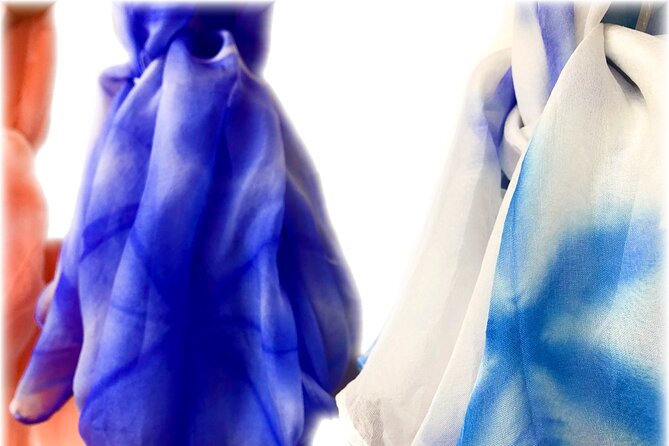
The museum is small, but it gives the class much-needed context. You can browse shibori artworks, tools, samples, and fabrics while your scarf dries. A historical video and show-and-tell materials are also part of the visit.
This is where the experience becomes more than a quick dye project. A simple scarf can make shibori look easy. The displays help you see the careful folding, tying, and dye control used in more detailed pieces.
You might find large and small textile examples, along with tools that show how much handwork goes into the finished designs. The museum does not appear to require a full afternoon. Think of it as a focused stop that gives meaning to the activity without overwhelming you with too much information.
One caution: the museum is tiny. If you expect a large gallery with room after room of textiles, you may finish quickly. I would treat the museum as an important companion to the class, not as the sole reason to plan a long visit.
A completely different side of Kyoto:
- PERFECT KYOTO 1-Day Bus Tour
★ 5.0 · 13,518 reviews - Kyoto: Fushimi Inari, Kinkakuji, Bamboo Grove 1 Day Bus Tour
★ 4.8 · 4,316 reviews - Kyoto: Tea Ceremony in a Traditional Tea House in Kiyomizu
★ 4.9 · 3,519 reviews - Kyoto Geisha Walking Tour: Gion District & Hidden Gems
★ 4.7 · 3,273 reviews
The reveal is the payoff
The most satisfying moment comes when the folded scarf is opened. The protected areas create the pattern, and the finished cloth often looks more polished than a first-time maker expects.
That reveal gives the class its value. You are not buying a scarf and being told it is handmade. You have taken part in a simplified version of the process and can remember how the folds became the design.
The scarf is also a practical keepsake. At roughly 70 inches long, it is large enough to use as an accessory or gift, rather than a tiny craft item that gets packed away. The activity information calls it a cotton scarf, although the silk wording should be checked before you rely on a particular feel or washing method.
For families, couples, and friends, making one scarf each can turn the class into a shared comparison. Each person chooses a color and ends up with a different result, even though the basic instructions are the same.
The shop adds another reason to linger
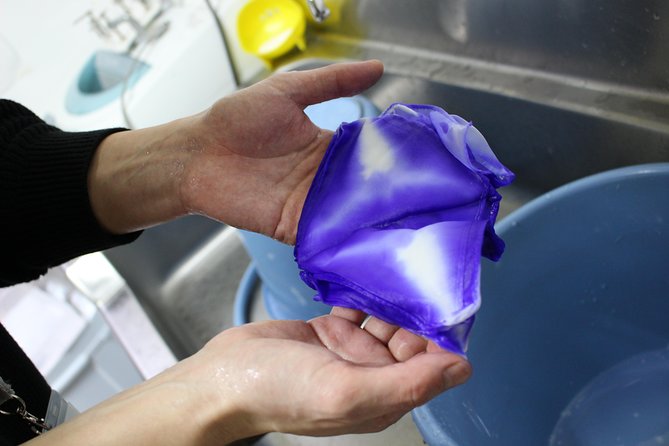
The museum shop sells shibori items, fabrics, souvenirs, and finished accessories. You might find purses, samue clothing, and other textile goods alongside the project materials.
This is useful if one scarf is not enough for your gift list. It also lets you compare your beginner work with finished pieces made by experienced hands. The difference can help you appreciate why complex shibori textiles cost more than ordinary printed fabric.
Shopping is optional, and I would keep that in mind when judging the $43.35 price. The class fee is not just for a quick activity. It includes the fabric project, instruction, museum access, and the chance to browse the shop. Still, you should not book it expecting the shopping portion to be included in the price.
Is $43.35 a fair price?
At $43.35 per person, this is a reasonable choice if you want a private Kyoto activity and a substantial souvenir. The scarf itself gives the experience lasting value, while the museum and instruction provide context that you would not get from simply buying a finished textile.
The price is less attractive if you only want to try a complex craft technique. The class has been adapted for visitors, and the active work is brief. You are paying for a polished, approachable introduction rather than an advanced studio course.
I would also factor in the time. The listed duration is about 30 minutes, but drying takes about another 30 minutes. Add time to watch the video, inspect the displays, and browse the shop. It is a good fit between larger Kyoto plans because it does not consume half a day.
The private setup improves the value for couples and small groups. You do not have to share the lesson with a large crowd, and each person gets a scarf. For a solo participant, the value depends more on your interest in Japanese textile arts and the museum itself.
Who should book this class?
I would recommend it to you if you want:
- A short, hands-on cultural activity in Kyoto
- A souvenir you made yourself
- A private class with direct instruction
- An introduction to Japanese textile dyeing
- A family activity that works for different skill levels
- A museum stop combined with a simple craft lesson
It is also a good choice when you have already seen temples and gardens and want something more tactile. Folding and dyeing cloth gives you a different way to connect with Kyoto.
I would hesitate if you want a long workshop with many independent design choices. The instructor guides the process, and the method has been made quick and manageable. One critical assessment found that the participant felt there was not enough to do, though even that assessment found the museum interesting.
That difference comes down to expectations. If you see the class as an easy way to make a beautiful keepsake, it should fit well. If you see it as serious technical training, the short format may disappoint.
Timing, meeting point, and cancellation
You meet and finish at the Kyoto Shibori Museum, so there is no complicated transfer between stops. The museum is near public transportation, and a mobile ticket is accepted. Confirmation is provided when you book.
The activity is often reserved about 23 days ahead. That does not guarantee you must book that early, but it is a useful planning signal if your Kyoto dates are fixed or you need a private time slot.
Free cancellation is available up to 24 hours before the scheduled start time for a full refund. Changes or cancellations made inside that 24-hour window are not accepted and are not refunded. The cut-off follows local Kyoto time.
My practical verdict
This is a friendly, compact way to make a Kyoto souvenir with real connection to Japanese craft. I like that the scarf is large and useful, that the class is private, and that the museum explains why the folding and dyeing process matters.
The short lesson is both its strength and its weakness. You can fit it into a busy sightseeing day, but you will not become a shibori expert in half an hour. Book it for the combination of simple making, museum context, and a finished scarf you can use or give away.
At $43.35, I think it is a solid pick for couples, families, solo visitors, and anyone who prefers doing something over simply looking at another display. Confirm whether your class uses cotton or silk, allow time for drying, and plan to browse the museum before collecting your finished piece.
FAQ
Where does the Hanakoushi cotton Scarf Class take place?
The class takes place at the Kyoto Shibori Museum, located at 135-5 Shikiamicho, Nakagyo Ward, Kyoto, 604-8261, Japan. The activity ends back at the same meeting point.
How long does the class take?
The class is listed as approximately 30 minutes, though individual classes may take 30 to 60 minutes. Your scarf also needs about 30 minutes to dry, and you can use that time to visit the museum.
What kind of scarf will I make?
The stated scarf size is about 70 by 17 inches, or 175 by 50 centimeters. The activity information describes it as cotton in one place and silk in another, so confirm the exact fabric with the museum.
Is the class private?
Yes. Only your own party participates in the private activity, giving you direct instruction from the staff.
What technique will I learn?
You will learn to fold and dye fabric using the hanakoushi shibori method, also called sekka shibori in the activity details.
Can I cancel for a full refund?
Yes. You can cancel at least 24 hours before the scheduled start time for a full refund. Cancellations or changes made less than 24 hours before the start time are not refunded or accepted.
Recently added around Kyoto
- Higashiyama | Kyoto: Sakura Season Private Rickshaw Tour★ 5.0 · 3 reviews
- Kyoto Kimono Rental CHAMATSU|Kimono/Yukata Rental FamilyPlan★ 5.0 · 3 reviews
- Kyoto: Half-Day Private Guided Tour to the Old Town of Gion★ 4.4 · 3 reviews
- Nara Private Customizable Half Day Tour★ 5.0 · 3 reviews
- Kansai Region Hiking Adventure in Nara Kobe Kyoto and More★ 5.0 · 3 reviews
- Full Day Nara Deer, Temple, Shrine, Activities & Tea Ceremony★ 5.0 · 3 reviews
- Nara: Essential Private Tour with Deer Park and Temples★ 5.0 · 3 reviews
- Hiking Tour for Sacred Sites in Kyoto with a Guide★ 5.0 · 3 reviews
Workshops, compared.
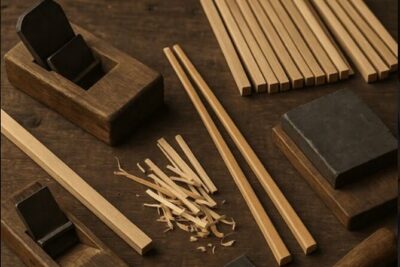
Chopsticks Making Workshop in Gion with Engraving Option
Read our review →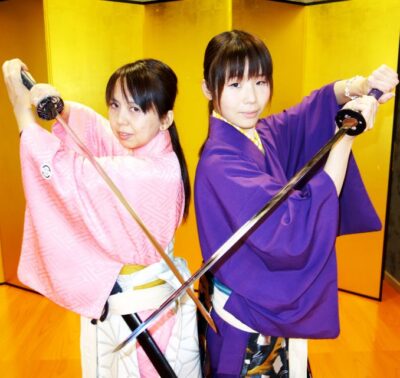
Samurai Sword Class by Experts in Traditional Arts
Read our review →
Ramen Cooking Class at a Ramen Factory with Souvenir
Read our review →
Ninja 1-hour Hands-on Lesson by Japanese master in Kyoto -Entry
Read our review →
The Original Small-Group Sushi Making Class in Kyoto
Read our review →
Japanese Washoku Bento Small Group Cooking Class
Read our review →Browse the lists this tour appears in