
REVIEW · WORKSHOPS
Fish cutting class
The remarkable part of this Kyoto food class is that you do not begin with a neat block of fish or a tray of prepared sushi. You start with the whole fish, learn how to handle it, and turn it into lunch inside Kimura, a fish shop said to have operated for 400 years. That gives the lesson a practical link to Japanese food culture that a standard sushi-making class often misses.
I like the small group, capped at eight, and the calm, careful instruction from Masashi. I also like that the meal is not an afterthought: you eat the sashimi and carpaccio you prepared, with rice, soy sauce, and sauce provided. The main consideration is that this is hands-on knife work with raw fish, so you should bring clothes that can get dirty and expect to concentrate for much of the 150 minutes.
In This Review
- Key points at a glance
- Why this fish class feels different from sushi making
- Meeting Masashi at Kimura in Nishiki Market
- Watching the fish being filleted
- Your turn at the cutting board
- Turning the fillet into sashimi and carpaccio
- Eating what you prepared
- What the $77 price buys you
- Who should book this experience
- My verdict on this Kyoto fish-cutting class
- FAQ
- Where does the fish-cutting class take place?
- How long does the activity last?
- Is the class taught in English?
- How many people are in each group?
- What food is included?
- Are dietary sauce options available?
- What should I bring, and who cannot join?
Key points at a glance
- Whole-fish preparation: You learn to process the fish from the beginning, not simply arrange ingredients on a plate.
- A 400-year-old fish shop: The class takes place at Kimura in Nishiki Market, adding a strong sense of place.
- Masashi’s patient teaching: The English-speaking instructor demonstrates each stage and corrects technique as you work.
- Lunch made by your own hands: Your sashimi and carpaccio are served with rice, soy sauce, and carpaccio sauce.
- Small, beginner-friendly class: The group is limited to eight, though children under 10 cannot take part.
- Dietary options: Gluten-free and halal soy sauce are available if requested.
Why this fish class feels different from sushi making
Many Japanese food workshops focus on assembly. You may shape rice, place toppings, and make something that looks like sushi. This class takes a step earlier in the process. You handle the raw fish, learn how to fillet it, and then prepare it for serving.
That difference matters. Fish cutting is one of the basic skills behind sashimi and sushi, yet it is easy to miss when a chef has already done the difficult work. Here, you get a clearer idea of how much care goes into a clean cut, how the fish changes as it is prepared, and why knife control matters.
I find the meal more satisfying for that reason. You are not simply eating something supplied by the class. You are eating the result of your own work, including the mistakes and corrections along the way. The fish may taste better partly because it is fresh, but also because you had a hand in preparing it.
This is not a theatrical demonstration where you watch a chef work for most of the session. The instructor shows you the technique first, then gives you time to try it. If you want a food activity with a real skill to take home, this is a stronger choice than a class that only teaches presentation.
More workshops and classes in Kyoto:
- Kyoto: 45-Minute Tea Ceremony Lesson Experience
★ 4.3 · 2,378 reviews - Kyoto : Chopsticks Making Workshop in Gion with Engraving Option
★ 5.0 · 958 reviews - Kyoto: Samurai Sword Class by Experts in Traditional Arts
★ 4.9 · 657 reviews
Meeting Masashi at Kimura in Nishiki Market
The meeting point is Kimura fish shop in Nishiki Market. Look for the blue and orange aprons used by the class. The setting is important: you are learning inside a working fish shop rather than in a generic cooking studio.
Nishiki Market is one of Kyoto’s best-known food streets, so this class fits neatly into a day spent exploring local ingredients. The shop’s 400-year history also gives the lesson some weight. You can think of it as a working connection to the trade behind Japanese seafood, not just a convenient room rented for a cooking activity.
Masashi introduces himself at the start and explains how the class will proceed. His teaching style, based on the supplied experiences, is patient and precise. That is useful for beginners, since filleting can feel awkward at first. You do not need to arrive with professional knife skills.
The group limit of eight is a practical advantage. A larger group would make individual correction harder, especially during the first attempts with the knife. With fewer participants, you have a better chance to see the demonstration clearly and receive help when your cut goes off course.
The class is taught in English. Still, fish preparation is a visual skill, so much of the lesson is shown directly at the cutting board. You should be ready to watch closely, then repeat the movement yourself.
Watching the fish being filleted
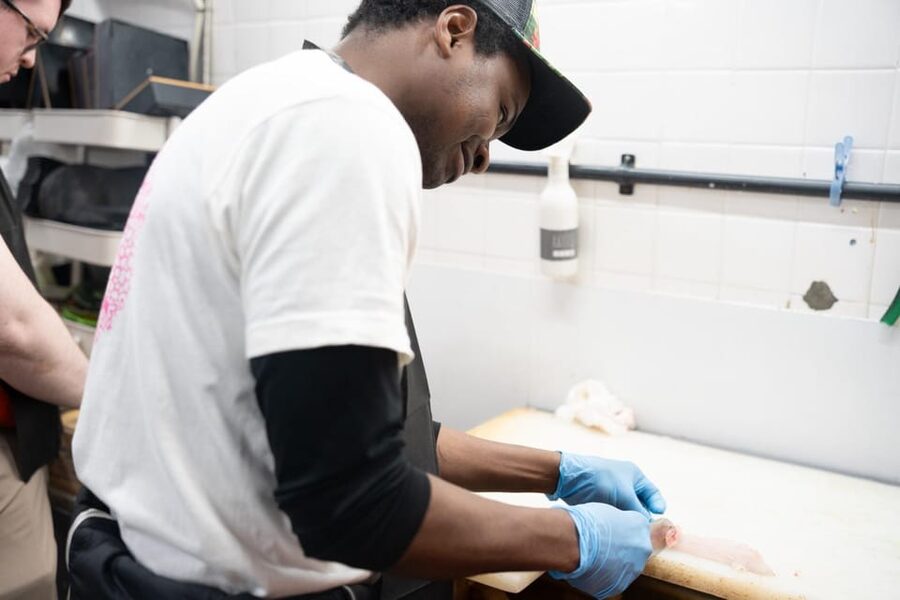
The first technical stage begins with a demonstration. The instructor fillets a fish while you watch, explaining the basic cuts and showing how to handle the knife.
This is the moment to pay attention to hand position, pressure, and the order of the cuts. A beginner may be tempted to rush or force the blade through the fish. The class is designed to slow that process down and show you how careful handling produces a cleaner result.
You use the provided knife, apron, and rubber gloves. The gloves offer some reassurance, but they do not turn the task into a risk-free activity. You are still working with a sharp knife and raw food, so follow instructions rather than trying to copy the movement at speed.
The demonstration also helps you understand what you will later eat. Sashimi is often served in clean, attractive slices, but those slices begin with a whole fish and a series of exact cuts. Seeing the process makes the final plate easier to appreciate.
A commemorative photo with the fish is also part of the appeal. It is a small detail, but it gives you a record of the unusual starting point of the meal. Most food photos show the finished dish. Here, you can remember the fish before it became lunch.
Your turn at the cutting board
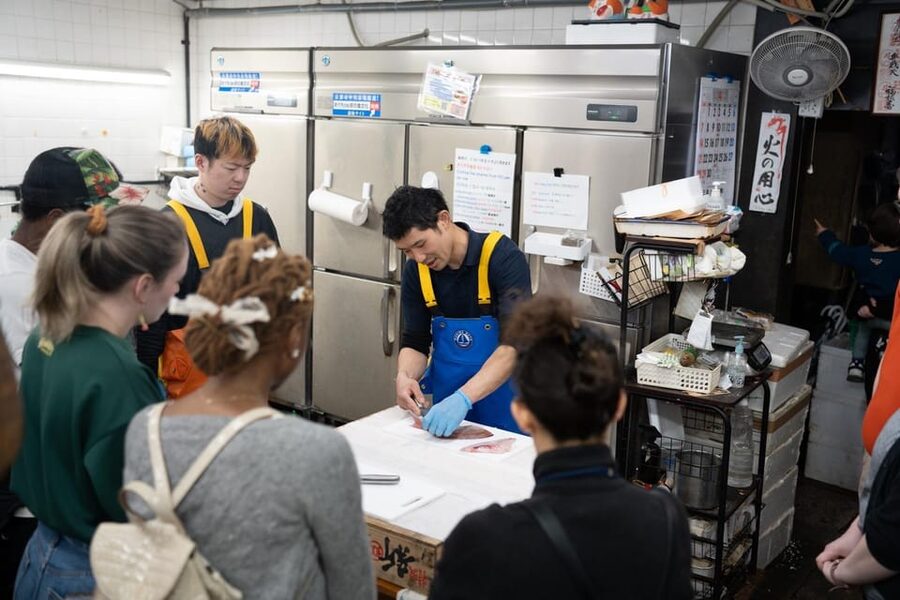
After watching, you fillet the fish yourself. Masashi guides you through the process and corrects problems as they appear.
This is where the class earns its keep. Watching a professional is useful, but it does not reveal what the knife feels like in your own hand. You learn how much control is needed and how easy it is to leave too much meat behind or make an uneven cut.
Do not measure success by whether your first attempt looks like a chef’s work. The value is in learning the basic method and gaining confidence. One of the clearest benefits of a small class is that your errors can be addressed on the spot rather than left unexplained.
The supplied experiences describe the instruction as detailed, friendly, and relaxed. That combination suits this type of lesson. You need enough correction to learn the technique, but not so much pressure that you stop enjoying the activity.
The class also teaches basic knife handling, not only fish preparation. That makes it useful beyond this one meal. You may not leave ready to work in a sushi restaurant, but you can leave with a better sense of how raw fish is prepared at home.
A completely different side of Kyoto:
- PERFECT KYOTO 1-Day Bus Tour
★ 5.0 · 13,518 reviews - Kyoto: Fushimi Inari, Kinkakuji, Bamboo Grove 1 Day Bus Tour
★ 4.8 · 4,316 reviews - Kyoto: Tea Ceremony in a Traditional Tea House in Kiyomizu
★ 4.9 · 3,519 reviews - Kyoto Geisha Walking Tour: Gion District & Hidden Gems
★ 4.7 · 3,273 reviews
Turning the fillet into sashimi and carpaccio
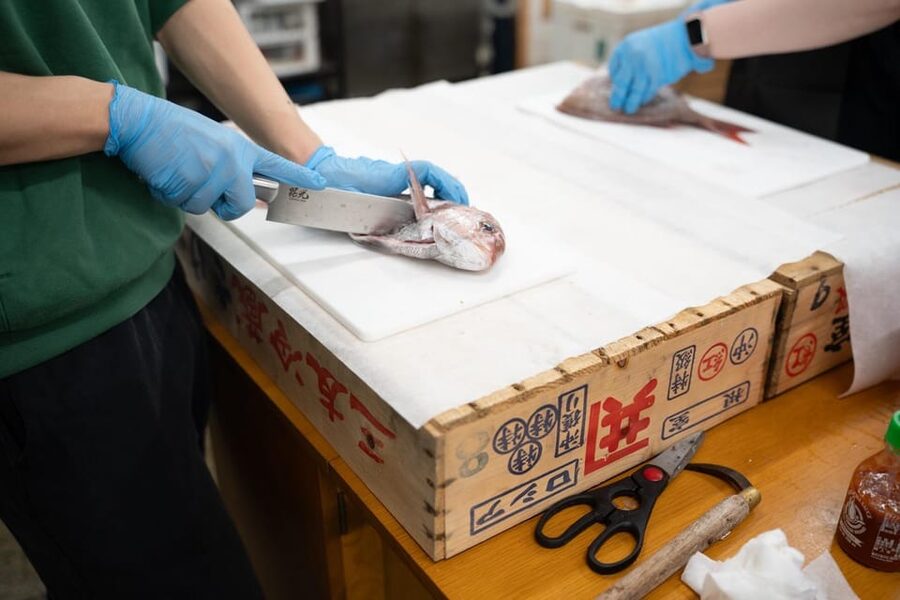
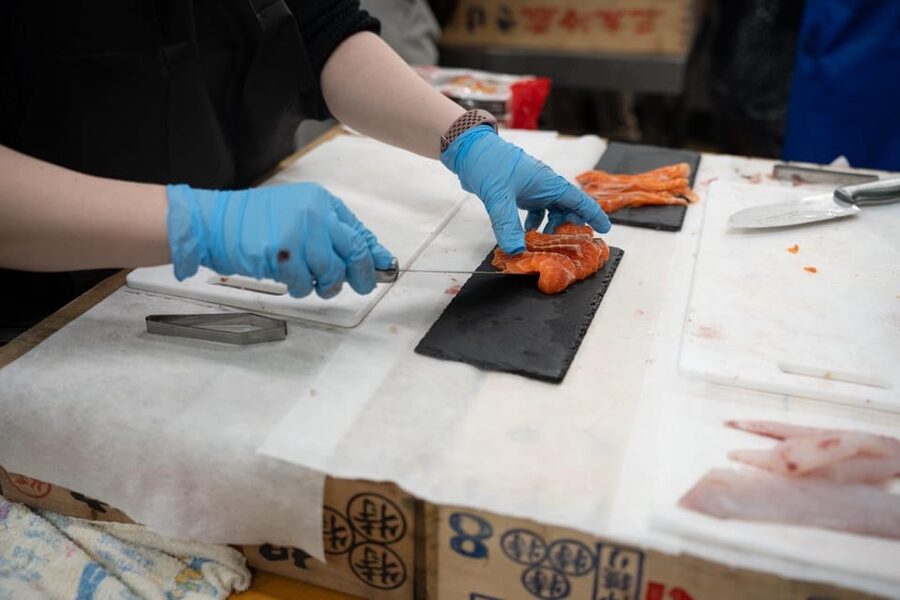
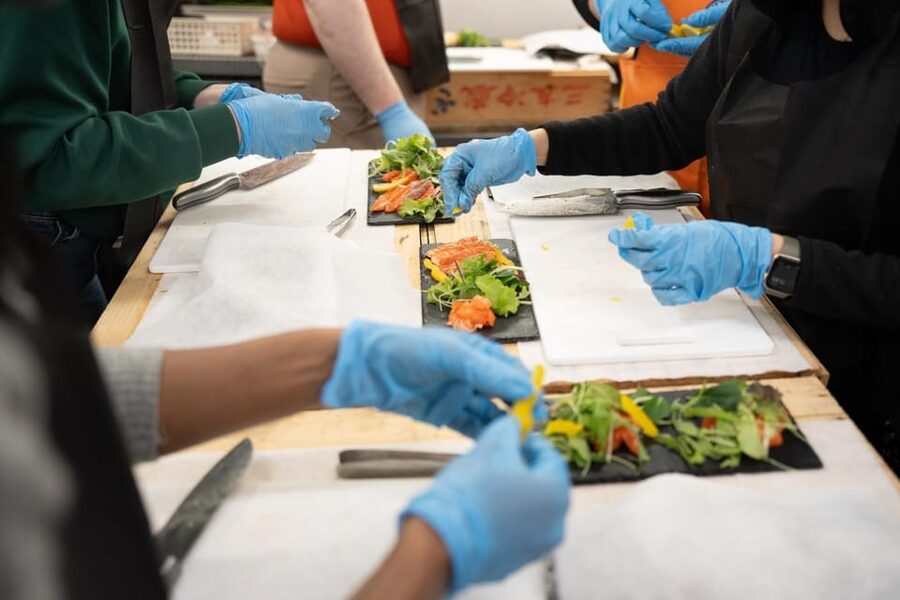
Once the fish has been filleted, you use it to make sashimi. This is the natural payoff of the cutting lesson. The final slices show whether your preparation was careful, while also giving you a chance to work on presentation.
You also prepare carpaccio from the fish. That adds a different style of serving and keeps the meal from being a single-note sashimi tasting. The class description specifically includes carpaccio sauce, along with soy sauce for the sashimi.
Rice is provided, so the meal has a simple Japanese lunch setting rather than being only a small sample. The fish is the focus, but the rice helps make the food feel complete.
The sauces are useful for visitors with dietary needs. Gluten-free soy sauce and halal soy sauce are available, though you should inquire in advance rather than assume every sauce is suitable. Beer and alcohol are not included, so anyone hoping for a drink with lunch will need to make separate plans.
One experience also included miso soup and tempura as part of a broader menu. Since the stated class plan centers on sashimi, carpaccio, and rice, you should treat those extra dishes as possible additions rather than a guaranteed part of every session.
Eating what you prepared
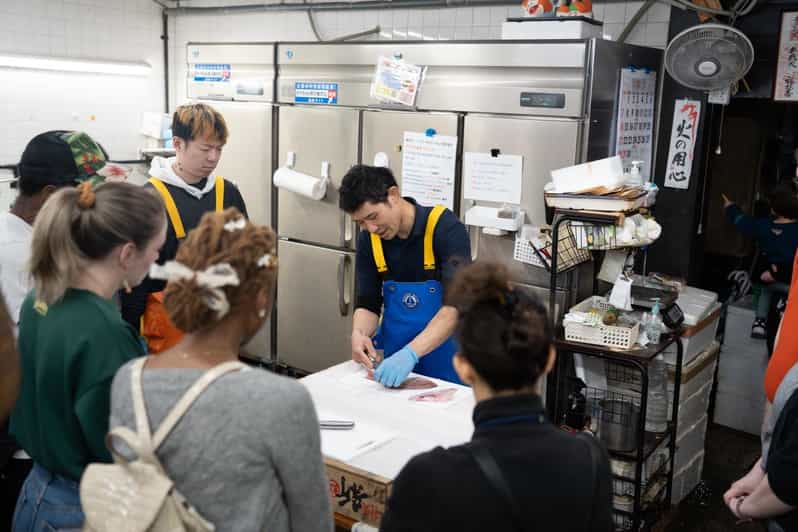
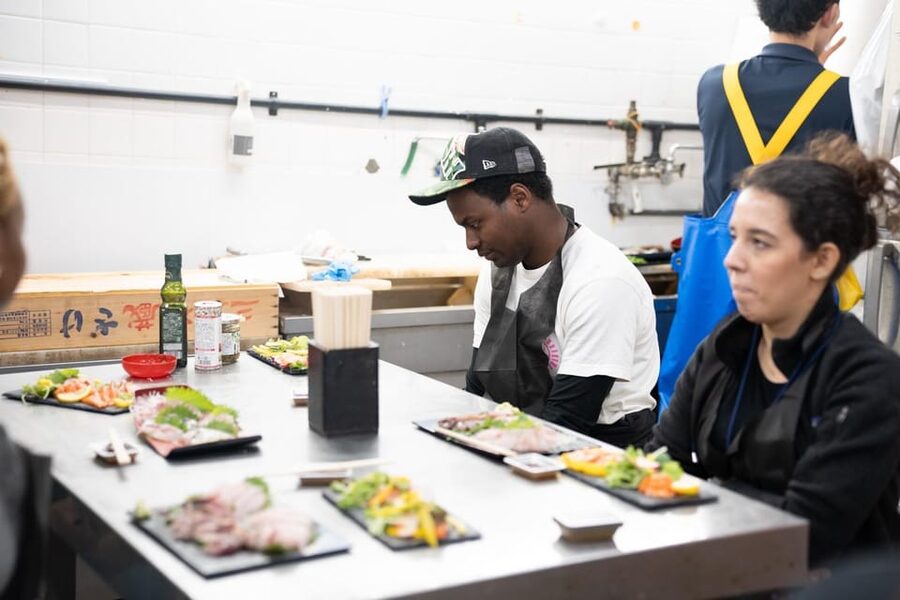
Lunch is the final stage, and it is more than a reward after the work. It gives you a direct way to notice the difference between food you have only ordered and food you have helped produce.
The sashimi is likely to feel especially personal. You watched the fish being cut, handled the knife yourself, and made the serving plate. That sequence changes how you look at the texture and freshness of the fish.
The class also gives you a new respect for sushi chefs. Their work can look simple from the dining table, but the lesson makes clear that clean preparation takes control and practice. Even a basic fish-cutting session can show why skilled sushi preparation is considered a craft.
Portions may be generous. One participant found there was so much sashimi that it was difficult to finish it all. If you are a light eater, pace yourself and remember that the meal follows a physically active lesson at the cutting board.
The atmosphere remains informal. You eat the fish you prepared with the other people in the small group, which gives the end of the session a shared, social feel without turning the class into a large food tour.
What the $77 price buys you
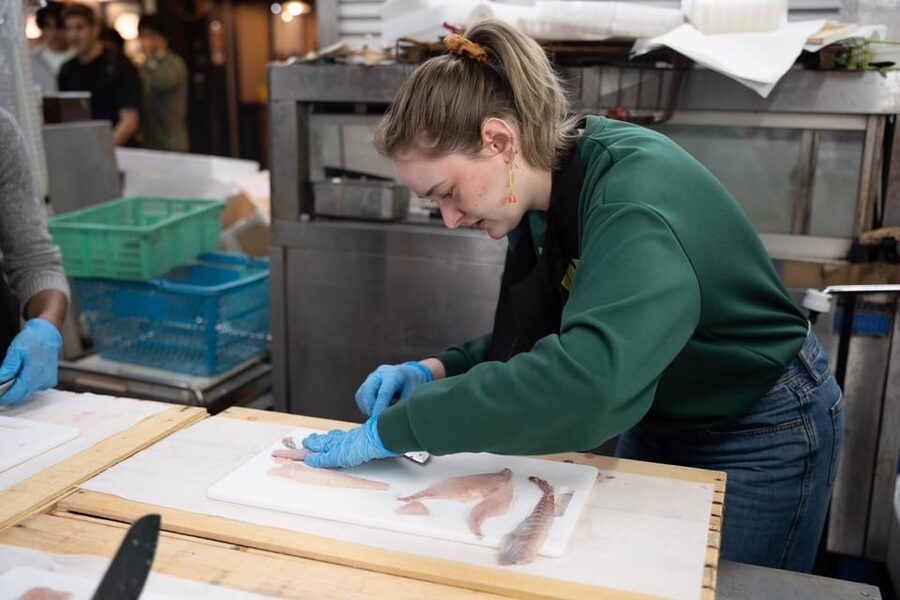
At $77 per person, this is not the cheapest way to eat sashimi in Kyoto. You can find a prepared seafood lunch for far less. The fair question is what you are paying for beyond the food.
The fee includes the fish, rice, knife, apron, rubber gloves, soy sauce, and carpaccio sauce. It also covers the instruction and the use of the fish shop setting. Most importantly, you are paying for access to a practical skill that is not usually included in a restaurant meal.
I consider the price reasonable for someone who values participation. The food itself would not justify the full cost on its own, but the combination of a 150-minute lesson, a meal, personal guidance, and a historic shop makes the experience easier to defend.
The value is strongest if you are curious about Japanese food preparation or want to learn a technique you can repeat at home. It is weaker if you mainly want to eat good seafood with no kitchen work. In that case, a seafood restaurant will be simpler and less expensive.
A five-star score from nine verified bookings suggests strong satisfaction so far, but the number of ratings is still small. I would treat that as encouraging rather than absolute proof that every participant will have the same experience. Your enjoyment will depend heavily on how much you like hands-on food preparation.
Who should book this experience
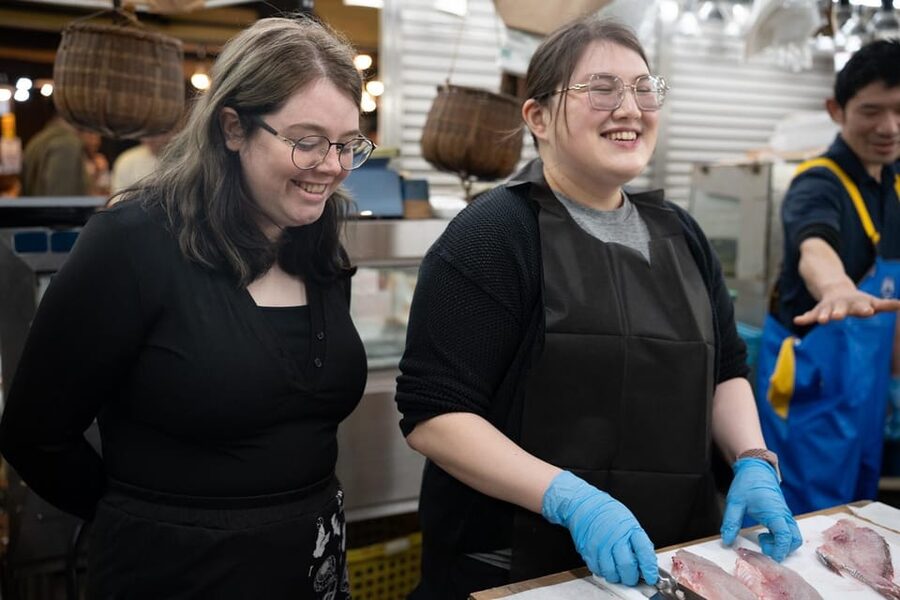
I would recommend the class to sashimi fans, food-focused visitors, and anyone who prefers making something to merely watching it. It is also a good fit if you have already done a sushi-rolling class and want to learn the less familiar preparation that comes first.
Beginners are welcome. You do not need prior fish-cutting experience, and the teaching is structured around demonstration followed by practice.
The class is not suitable for children under 10. Older children may enjoy the unusual subject, but the knife work and raw fish mean that an adult should decide if it fits their interests and comfort level.
You should also consider how you feel about handling a whole fish. The class is designed around that experience, so it is not a good choice if you want to avoid raw seafood, cutting, or getting your hands dirty.
Wear clothes that can get dirty. An apron and rubber gloves are provided, but you should not arrive in an outfit that needs special protection. The class lasts 150 minutes, so allow enough time to work carefully and eat without rushing.
Cancellation is free up to 24 hours before the activity for a full refund. You can also reserve now and pay later, which helps if your Kyoto schedule is still changing.
My verdict on this Kyoto fish-cutting class
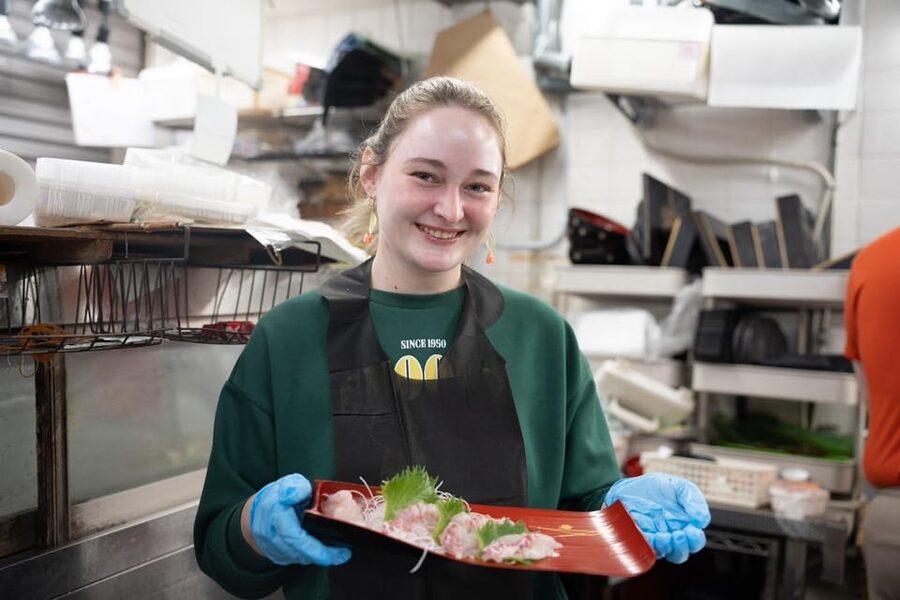
Book it if you want to understand what comes before the sashimi reaches your plate. The 400-year-old Kimura shop, small group, English instruction, and meal made from your own fish create a focused experience with real substance.
I especially like the fact that the class teaches preparation rather than only assembly. Masashi’s patient corrections should help first-timers, while the sashimi and carpaccio give you an immediate reason to care about the technique.
Skip it if you dislike handling raw fish, want a passive food tasting, or are searching for the lowest-cost lunch in Nishiki Market. For everyone else, this is a memorable way to connect a Kyoto meal with the work behind it. The best sashimi here is not necessarily the prettiest slice. It is the one you learned to make yourself.
FAQ
Where does the fish-cutting class take place?
The class takes place at Kimura fish shop in Nishiki Market in Kyoto, on Honshu. The class staff wear blue and orange aprons.
How long does the activity last?
The class lasts 150 minutes. Starting times vary, so you need to check availability for the date you want.
Is the class taught in English?
Yes. English instruction is provided.
How many people are in each group?
The class is limited to eight participants, making it a small-group experience.
What food is included?
The fish you handle, rice, soy sauce, carpaccio sauce, and the sashimi and carpaccio you prepare are included. Beer and other alcohol are not included.
Are dietary sauce options available?
Gluten-free soy sauce and halal soy sauce are available. You should inquire about your needs before attending.
What should I bring, and who cannot join?
Wear clothes that can get dirty. Beginners are welcome, but children under 10 are not permitted to take the class.
Recently added around Kyoto
- Higashiyama | Kyoto: Sakura Season Private Rickshaw Tour★ 5.0 · 3 reviews
- Kyoto Kimono Rental CHAMATSU|Kimono/Yukata Rental FamilyPlan★ 5.0 · 3 reviews
- Kyoto: Half-Day Private Guided Tour to the Old Town of Gion★ 4.4 · 3 reviews
- Nara Private Customizable Half Day Tour★ 5.0 · 3 reviews
- Nara: Essential Private Tour with Deer Park and Temples★ 5.0 · 3 reviews
- Kansai Region Hiking Adventure in Nara Kobe Kyoto and More★ 5.0 · 3 reviews
- Full Day Nara Deer, Temple, Shrine, Activities & Tea Ceremony★ 5.0 · 3 reviews
- Hiking Tour for Sacred Sites in Kyoto with a Guide★ 5.0 · 3 reviews
Workshops, compared.
Chopsticks Making Workshop in Gion with Engraving Option
Read our review →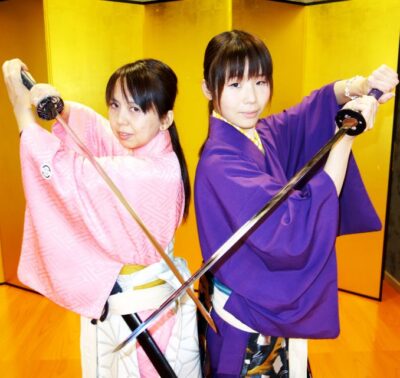
Samurai Sword Class by Experts in Traditional Arts
Read our review →
Ramen Cooking Class at a Ramen Factory with Souvenir
Read our review →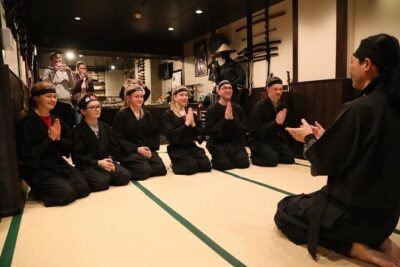
Ninja 1-hour Hands-on Lesson by Japanese master in Kyoto -Entry
Read our review →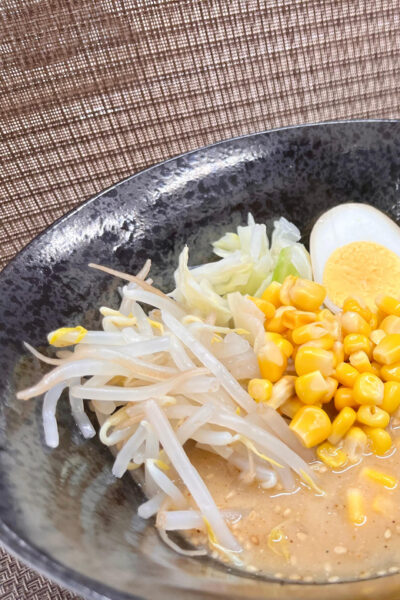
The Original Small-Group Sushi Making Class in Kyoto
Read our review →
Japanese Washoku Bento Small Group Cooking Class
Read our review →Browse the lists this tour appears in