
REVIEW · KYOTO SAMURAI EXPERIENCES
Ancient Katana Training in Kyoto with Local Students
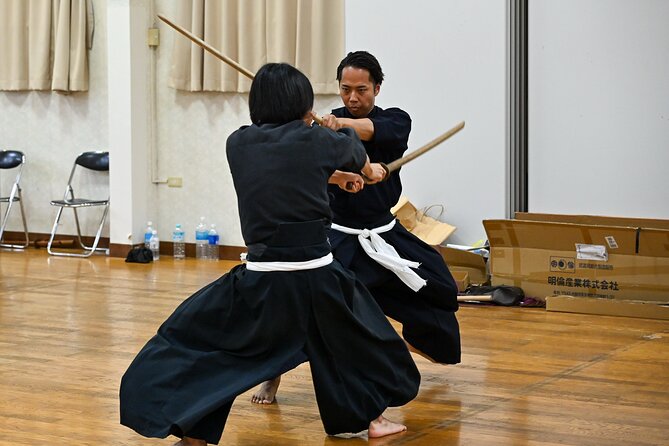
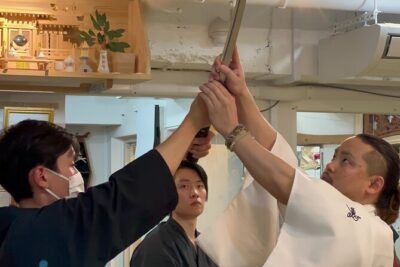
Kyoto’s most unusual sword experience is not a staged samurai show. You join a real evening dojo practice with the Kyoto Branch of Asayama Ichiden Ryu Hyōhō, a classical martial tradition with more than 400 years of history. Shogo leads the session in English and Japanese, alongside regular students.
I like two things right away: you learn with bokutō, or wooden katana, rather than waving a prop for a photo, and the small group size makes it possible to receive personal help. The main consideration is clear: this is genuine training, not a casual tourist activity, and prior budo experience is generally expected.
In This Review
- Key points to know before you book
- A real Kyoto dojo at 6:30 in the evening
- Why Asayama Ichiden Ryu is different
- Reihō: learning how to behave in the dojo
- Iaijutsu and the discipline of the quick draw
- Kenjutsu beside regular students
- Shogo’s role and the English-language advantage
- Who should book this experience?
- Is $45.61 a fair price?
- Practical details for a smoother evening
- Should you book this Kyoto katana class?
- FAQ
- Where does the katana training take place?
- What time does the activity start?
- How long does the training last?
- Where does the activity finish?
- Do I need prior martial arts experience?
- What will I practice?
- Do I need to bring a sword?
- How many people can join?
- Can I cancel for a full refund?
Key points to know before you book
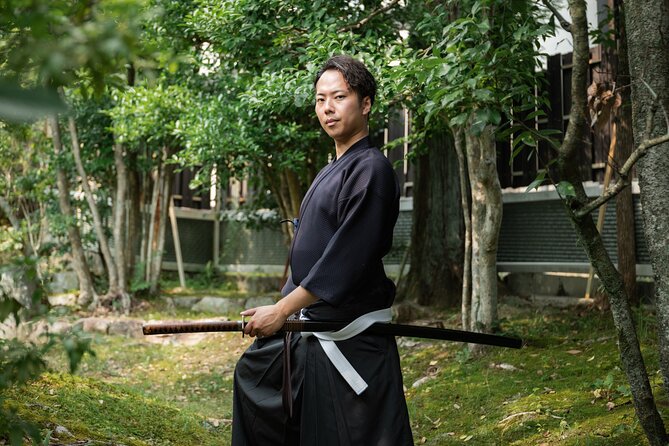
- A working dojo, not a samurai performance: You train beside regular students during their normal practice.
- Three traditional elements: The session covers reihō etiquette, iaijutsu quick-draw methods, and kenjutsu swordsmanship.
- Shogo teaches in English and Japanese: That makes the formal instruction easier to follow for international participants.
- Bokutō are used for practice: You do not need to bring your own sword, and one can be provided.
- Small maximum group: The activity accepts up to four participants, which suits people who want direct instruction.
- Prior martial arts experience matters: Beginners are not normally accepted, though eager newcomers can contact the provider for advice.
A real Kyoto dojo at 6:30 in the evening
The session begins at 7-chōme-27-1 Honmachi, Higashiyama Ward, at 6:30 pm. It ends back at the same meeting point. The location is near public transportation, but you should still allow time to find the entrance and arrive ready for a formal class.
That evening schedule is useful if you want to spend the day visiting temples, gardens, or markets. It also gives the experience a different feel from Kyoto’s daytime cultural activities. You are not rushing through a short demonstration between sightseeing stops. You are setting aside about three hours for focused practice.
The group limit is four people. That is a major practical advantage here. Sword instruction involves posture, footwork, hand position, and timing, so a crowded class would weaken the experience. With only a few outside participants, Shogo can adjust the session to each person’s level, while the regular students provide the setting for authentic practice.
I would not treat the meeting time as a suggestion. A dojo class runs on discipline and courtesy, and arriving late could be awkward. Your confirmation is sent at booking, and the activity uses a mobile ticket, so keep the booking details easy to access on your phone.
More samurai and sword sessions:
- Kyoto Samurai Experience
★ 5.0 · 1,294 reviews - Kyoto: Kendo and Samurai Experience with Uniform and Gear
★ 4.9 · 815 reviews - Kyoto: Samurai Sword Class by Experts in Traditional Arts
★ 4.9 · 657 reviews
Why Asayama Ichiden Ryu is different
Asayama Ichiden Ryu Hyōhō is a koryū, or old martial tradition, with roots reaching back more than four centuries. Its techniques come from a period when warriors trained and fought while wearing armor. That background helps explain why this is not simply modern sport fencing or a theatrical sword routine.
The school focuses on sword arts, especially kenjutsu and iaijutsu, but its larger system includes several other weapons and methods. These include kama-jutsu with a sickle, bōjutsu with a staff, jōjutsu with a short staff, tanbōjutsu with a short stick, kusarifundōjutsu with a chain and weight, and shurikenjutsu using throwing darts.
You will not necessarily practice all of those arts in this three-hour session. The stated focus is reihō, iaijutsu, and kenjutsu. Still, knowing that the sword work belongs to a broader martial system gives the class more meaning. You are learning one part of a complete tradition, not sampling a made-for-tourists routine.
The word hyōhō is often linked with martial strategy and method. Here, the emphasis is not on looking dramatic. It is on disciplined movement, correct form, and learning how the body and weapon work together. That may feel slower and more exacting than you expect, which is part of the point.
Reihō: learning how to behave in the dojo
The class includes reihō, the etiquette and formal conduct of the dojo. This may involve how you enter the training space, how you handle the wooden sword, and how you show respect to the instructor and other students. Exact details are not provided, so you should expect an introduction to proper conduct rather than assume a fixed ceremony.
For a first-time visitor with little exposure to Japanese martial arts, this is valuable. Etiquette is not decoration added before the real lesson. It sets the tone for safe and respectful training. You learn that a sword, even a wooden one, is treated as a training weapon rather than a toy.
This is also where the class may feel least like sightseeing. You are expected to watch, listen, and follow the group’s rhythm. If you prefer fast entertainment and constant explanation, the formal opening could feel stiff. If you want to understand how a traditional dojo functions, it gives you an important starting point.
Shogo’s ability to communicate in both English and Japanese is especially helpful here. Formal instruction can be hard to follow when you are also trying to read the room. His bilingual communication helps bridge that gap, while the regular students show you how the class operates.
Iaijutsu and the discipline of the quick draw
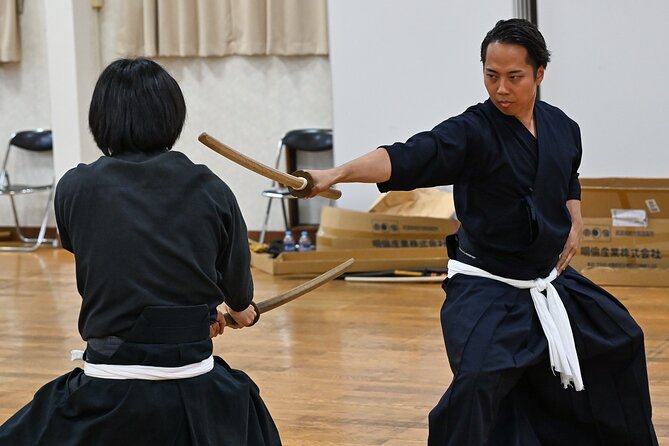
Iaijutsu is the art of drawing the katana quickly and responding from a ready position. In this class, you practice with a bokutō, a wooden katana. That makes the training safer and more practical for a structured lesson, though it does not make the movements casual.
The quick draw is often the part people imagine when they hear the word samurai. In practice, it is less about flashy speed than precise control. Your hands, stance, draw, and re-sheathing need to work together. Small mistakes become obvious, which is why personal correction matters.
You should expect the activity to be physically active without being described as extreme. The operator asks participants to have a moderate level of physical fitness. You will be standing and repeating movements for a sustained period, so comfortable clothing and the ability to remain attentive are sensible choices.
The provided wooden sword is useful if you are visiting Kyoto without martial arts equipment. You do not need to pack a katana in your luggage. The important thing is not the appearance of the weapon, but learning how to hold and move with it correctly.
Do not expect to master iaijutsu in one evening. A three-hour introduction can give you a feel for the discipline and basic mechanics, but traditional sword arts take regular practice. The real value is the chance to see how training begins and to decide if you want to continue studying.
A completely different side of Kyoto:
- PERFECT KYOTO 1-Day Bus Tour
★ 5.0 · 13,518 reviews - Kyoto: Fushimi Inari, Kinkakuji, Bamboo Grove 1 Day Bus Tour
★ 4.8 · 4,316 reviews - Kyoto: Tea Ceremony in a Traditional Tea House in Kiyomizu
★ 4.9 · 3,519 reviews - Kyoto Geisha Walking Tour: Gion District & Hidden Gems
★ 4.7 · 3,273 reviews
Kenjutsu beside regular students
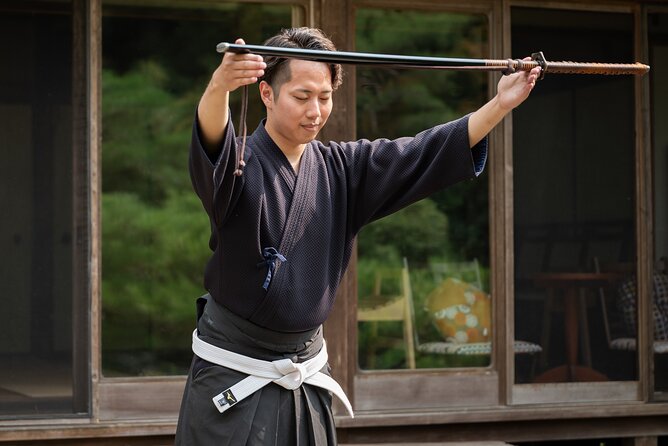
The class also covers kenjutsu, the broader practice of Japanese swordsmanship. While iaijutsu centers on drawing the sword, kenjutsu concerns sword techniques and movement in a wider sense. The activity presents both as part of the regular training of the Kyoto branch.
This is the part that most clearly separates the session from a photo opportunity. You train alongside actual students, rather than watching performers play samurai for an audience. Their presence gives you a working example of how people study the art over time.
That setting can be inspiring, but it can also be intimidating. You may feel slower or less polished than the regular members. That is normal, and the small group format helps. Shogo is described as personalizing instruction to a participant’s level, so you should not assume you need to perform at the same standard as someone already committed to the dojo.
The experience has also been described as welcoming to an international woman who found traditional Japanese training daunting at first. That is a useful sign for anyone worried about language, gender expectations, or cultural formality. Still, the class remains a serious training session. A welcoming atmosphere does not mean the standards disappear.
Shogo’s role and the English-language advantage
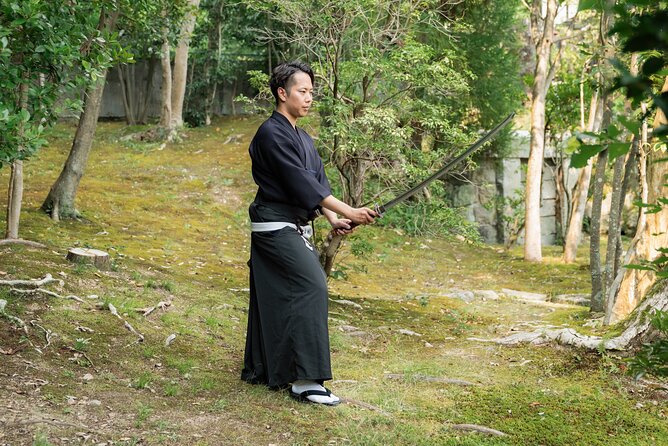
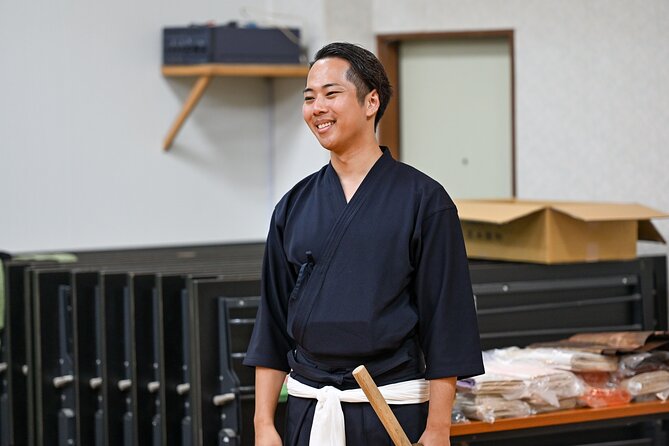
Shogo is the key bridge between the dojo and international participants. He teaches in English and Japanese, explains the movements, and helps make the class easier to follow. That matters because sword instruction depends on details that are easy to miss when translation is rushed.
His wider interest in Japanese martial arts also helps frame the session. He has sought instruction from different teachers and styles across Kyoto and Japan, so the experience is connected to a broader study of budo rather than a single tourist script.
You should still listen carefully and watch closely. Bilingual instruction does not remove the need to learn through repetition. Martial arts are physical skills, and words alone cannot replace seeing the movement and trying it yourself.
The class has received strong praise for its pacing and direction. That is especially important for a demanding subject. A session that moves too quickly would leave a newcomer lost, while one that is too basic might frustrate someone with prior experience. The small maximum group gives Shogo room to find a workable middle ground.
Who should book this experience?
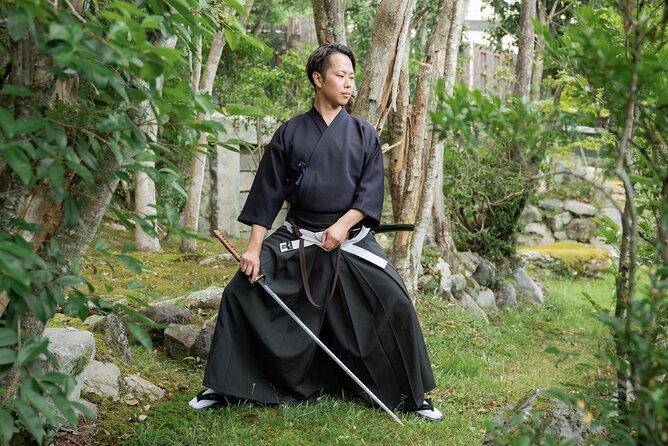
This activity is best for someone who already practices budo or another martial art, or who has a serious interest in traditional Japanese swordsmanship. The stated rule is that participants with no prior budo experience are generally not accepted.
That does not mean a complete beginner has no chance. If you are very eager to join, you can contact the provider for a consultation. Do this before assuming your booking is suitable. The goal is to match the right people with a serious class, not to turn away curious visitors without discussion.
The activity suits you if you want:
- A real dojo setting instead of a performance
- Instruction in English and Japanese
- Practice with a wooden katana
- Exposure to both iaijutsu and kenjutsu
- A small group with a maximum of four participants
- A closer look at an old Japanese martial tradition
It is a poor fit if you mainly want a quick costume photo, a relaxed one-hour activity, or a simple introduction requiring no physical preparation. The word training should be taken seriously here.
Is $45.61 a fair price?
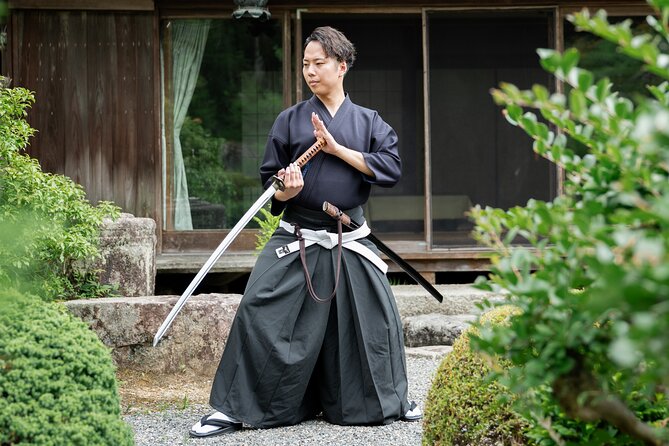
At $45.61 per person, the value depends on what you want from a Kyoto activity. For a standard tourist demonstration, that price might seem high if you only want to hold a sword for a few minutes. Here, you are paying for about three hours in a real class, bilingual instruction, a small group, and access to a tradition that is not presented as a stage show.
The price is more appealing if you already practice martial arts. You are not just buying entertainment. You are getting a chance to train in Japan, meet regular students in their normal setting, and receive guidance from Shogo.
For a complete beginner, the value is less certain because admission is not automatic. Contact the provider first if you have no budo background. Paying for an experience that does not fit the class expectations would be a needless problem.
The group limit strengthens the value. A maximum of four participants means your fee is not supporting a large crowd moving through a standard demonstration. It helps pay for focused attention, which is exactly what traditional sword practice requires.
Practical details for a smoother evening
The activity lasts approximately three hours and starts at 6:30 pm. It returns to the original meeting point, so you can plan dinner afterward without arranging a second pickup location.
A moderate level of fitness is recommended. The information does not specify clothing requirements, equipment beyond the wooden katana, or changing facilities, so contact the provider if those details affect your plans. You can also ask about your experience level before booking.
The mobile ticket is convenient, but a dojo class rewards preparation. Check the address, save the confirmation, and arrive with enough time to find 7-chōme-27-1 Honmachi. Public transportation is nearby, but the experience is not described as including transportation.
Free cancellation is available if you cancel at least 24 hours before the 6:30 pm start time. Changes or cancellations made inside that window are not accepted for a refund. The cut-off follows local Kyoto time, so keep that in mind if you are booking from another time zone.
Should you book this Kyoto katana class?
Book it if you want authentic training rather than samurai theater, especially if you already have budo experience. The combination of a 400-year-old tradition, a real student dojo, bilingual guidance from Shogo, and a maximum of four participants makes this a serious and unusual Kyoto experience.
Ask first if you are new to martial arts. The provider may consider an especially motivated beginner, but the class is not built as a general tourist lesson. If you want a light, easy activity, choose something else. If you are ready to listen, practice, and accept correction, this is one of the better ways to meet Japanese swordsmanship on its own terms.
FAQ
Where does the katana training take place?
The meeting point is 7-chōme-27-1 Honmachi, Higashiyama Ward, Kyoto, 605-0981, Japan.
What time does the activity start?
The session starts at 6:30 pm local time.
How long does the training last?
The activity lasts approximately three hours.
Where does the activity finish?
It finishes back at the meeting point.
Do I need prior martial arts experience?
Prior budo experience is generally required. If you are very eager to join without previous experience, you can contact the provider for a consultation.
What will I practice?
The session includes reihō etiquette, iaijutsu katana drawing, and kenjutsu Japanese swordsmanship.
Do I need to bring a sword?
No. Training uses bokutō, or wooden katana, and a sword can be provided if you do not bring one.
How many people can join?
The activity has a maximum of four participants.
Can I cancel for a full refund?
Yes, if you cancel at least 24 hours before the experience start time. Cancellations or changes made less than 24 hours before the start are not accepted for a refund.
Recently added around Kyoto
- Higashiyama | Kyoto: Sakura Season Private Rickshaw Tour★ 5.0 · 3 reviews
- Kyoto Kimono Rental CHAMATSU|Kimono/Yukata Rental FamilyPlan★ 5.0 · 3 reviews
- Kyoto: Half-Day Private Guided Tour to the Old Town of Gion★ 4.4 · 3 reviews
- Nara Private Customizable Half Day Tour★ 5.0 · 3 reviews
- Kansai Region Hiking Adventure in Nara Kobe Kyoto and More★ 5.0 · 3 reviews
- Full Day Nara Deer, Temple, Shrine, Activities & Tea Ceremony★ 5.0 · 3 reviews
- Nara: Essential Private Tour with Deer Park and Temples★ 5.0 · 3 reviews
- Hiking Tour for Sacred Sites in Kyoto with a Guide★ 5.0 · 3 reviews
Kyoto Samurai Experiences, compared.
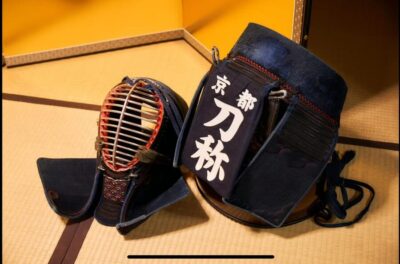
Kendo and Samurai Experience with Uniform and Gear
Read our review →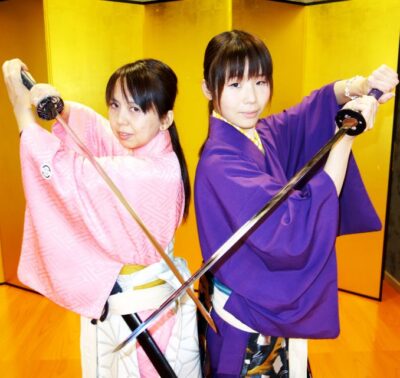
Samurai Sword Class by Experts in Traditional Arts
Read our review →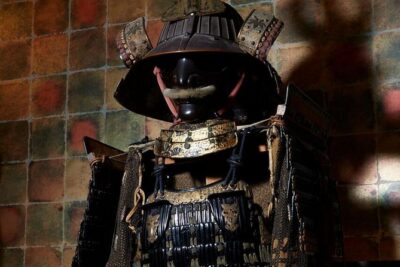
Skip the lines Basic Ticket at SAMURAI NINJA MUSEUM KYOTO
Read our review →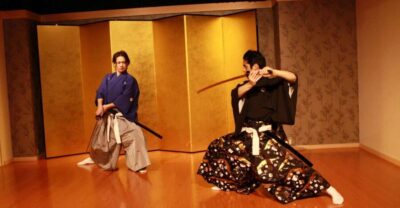
Samurai Training with Modern day Musashi in Kyoto
Read our review →
Private Tea Ceremony and Sake Tasting in Kyoto Samurai House
Read our review →Browse the lists this tour appears in