
REVIEW · KYOTO SAMURAI EXPERIENCES
160 Years Authentic Seated Archery Experience in Kyoto
The most unusual part of this Kyoto experience is the setting: you practice seated Japanese archery inside a dojo that has preserved its tradition for more than 160 years. This is not a quick photo stop with a costume bow. You receive instruction, handle real equipment, and work toward a clear goal: hitting the target three times out of 16 arrows.
I like the tiny group size, capped at four people, and the patient format for first-timers. I also like the cultural reward, your name written in traditional Japanese calligraphy and displayed in the dojo. The main consideration is the price, $96.70 for about one hour, plus your own transportation to Gion.
In This Review
- Key points to know before booking
- A 160-year-old dojo in Kyoto’s Gion district
- The 10-minute video lesson sets the tone
- Hands-on practice with real bows and arrows
- Sixteen arrows and one clear target
- Why the instruction matters more than the score
- Is $96.70 a fair price?
- Who will get the most from this class?
- Booking, timing, and cancellation details
- My advice on fitting it into your Kyoto day
- Should you book the seated Kyudo experience?
- FAQ
- How long does the seated archery experience last?
- Where does the experience start?
- Where does the activity finish?
- Is transportation included?
- What does the price include?
- How many people can join the class?
- Do I need previous archery experience?
- What happens if I cancel?
Key points to know before booking
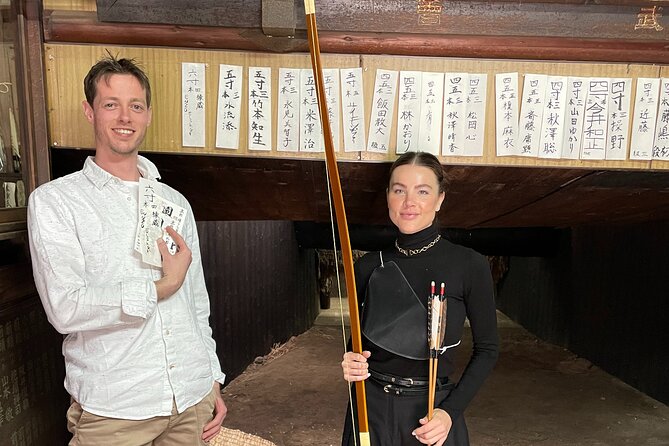
- Shoot 16 arrows: You get a specific challenge rather than a vague introduction to archery.
- Aim for three hits: Reach the target three times and you earn a traditional calligraphy honor.
- Practice in a 160-year-old dojo: The setting gives the lesson a strong connection to Kyoto’s past.
- Small groups help: A maximum of four people allows for more direct guidance.
- English support is included: An English-speaking translator works alongside an in-person Japanese guide.
- Budget for transport: The class fee covers Kyudo equipment and instruction, but not the trip to the meeting point.
A 160-year-old dojo in Kyoto’s Gion district
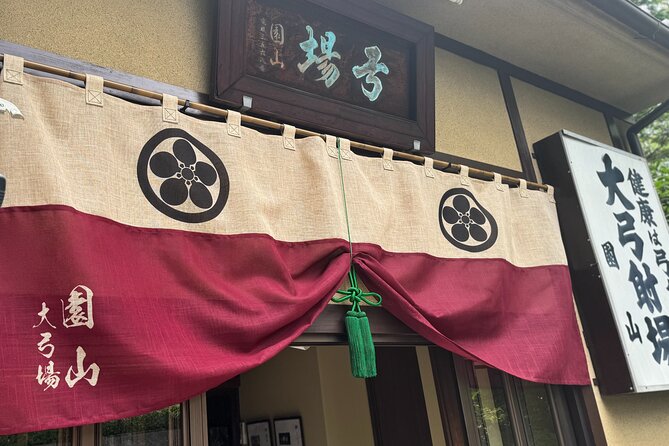
You meet at 園山大弓場, written as Enzan Daikyujyo, in the northern part of Maruyama Park at Gionmachi Kitagawa, Higashiyama Ward. The location is near public transportation, but transportation costs are not included, so plan that part separately.
The setting matters here. Kyudo is not simply about pointing a bow at a target and letting an arrow fly. The activity presents Japanese longbow archery as a practice built around focus, discipline, and harmony. You are entering a working cultural setting with more than 160 years of tradition behind it, dating back to the late Edo period.
That does not mean you need prior knowledge. The lesson is designed for beginners, and the instructors guide you through the basic technique. You do not need to arrive knowing Japanese terms or the formal sequence of Kyudo. English translation is included, with an English-speaking translator and an in-person Japanese guide available during the activity.
The meeting point is also the end point. That keeps the experience tidy and easy to fit into a day in eastern Kyoto. You will not be taken to several separate sites, so the value comes from the instruction and the dojo itself, not from sightseeing between stops.
More samurai and sword sessions:
- Kyoto Samurai Experience
★ 5.0 · 1,294 reviews - Kyoto: Kendo and Samurai Experience with Uniform and Gear
★ 4.9 · 815 reviews - Kyoto: Samurai Sword Class by Experts in Traditional Arts
★ 4.9 · 657 reviews
The 10-minute video lesson sets the tone
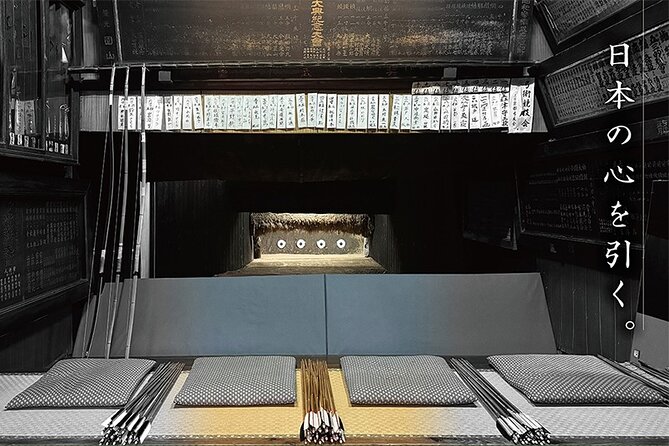
The experience includes a 10-minute video tutorial before the hands-on work. This is a useful first step because it lets you see the basic movements before you are asked to perform them with a bow in your hands.
You should expect the lesson to focus on the method and form of Kyudo rather than speed. The supplied information describes the practice as seated archery, so do not approach it like a casual outdoor shooting game. The point is careful movement, attention, and control.
I like this format for people who want cultural context as well as an activity. The video gives you an initial frame of reference, while the instructors can then help you connect what you saw with the actual equipment and technique.
The class includes all Kyudo items, the class fee, and the instruction itself. You do not need to arrange a bow or arrows separately. That is helpful in Kyoto, where carrying or sourcing specialist equipment would be impractical for a short visit.
Hands-on practice with real bows and arrows
After the introduction, you move into practical training with real bows and arrows. The instructors guide you through the technique, which makes this more useful than an attraction built around simply posing with archery gear.
The small group limit is important here. With no more than four participants, the instructor can watch your form and offer corrections without the class feeling like a large demonstration. If you are nervous about trying an unfamiliar physical activity, this format should feel more manageable than a crowded session.
You should still arrive ready to concentrate. The experience asks for a moderate level of physical fitness, and archery requires controlled movement rather than passive sightseeing. The listing does not give a detailed accessibility description, so anyone with mobility, strength, or health concerns should contact the provider before booking.
The word seated is central to the experience. It gives this class a different character from standard standing archery and may appeal to you if you want to learn a less familiar form of Japanese bow work. At the same time, the seated position may not suit every body, so consider your own comfort before paying.
Sixteen arrows and one clear target
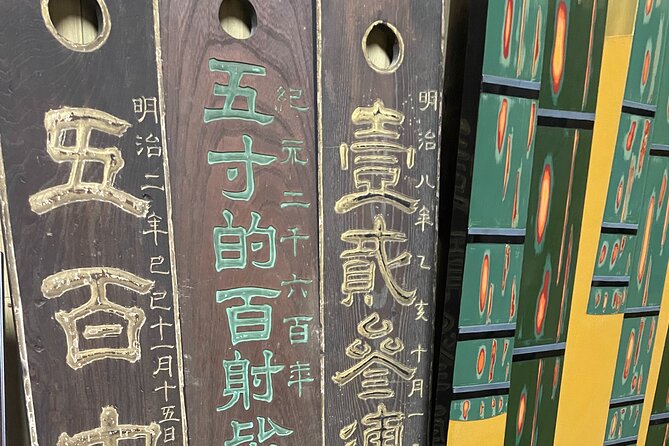
The main challenge is straightforward: you shoot 16 arrows, and hitting the target three times earns you the honor of having your name written in traditional Japanese calligraphy. That goal gives the hour a pleasant sense of purpose.
You are not expected to become an expert in one session. The target challenge is best viewed as a simple measure of progress, not a test of your worth or athletic ability. The instructors provide beginner-friendly guidance, so the value lies in learning how the technique works and seeing how much control you can gain during the class.
Sixteen arrows also gives you enough attempts to adjust. After an early shot, you can pay attention to the instructor’s advice and try again. The activity description says you will shoot loads of arrows, but the formal goal is 16, so you should treat that number as the reliable planning detail.
The calligraphy reward adds a personal touch. Your name being displayed in the 160-year-old dojo connects your short visit with the place itself. It is more meaningful than receiving a generic souvenir because it marks your achievement within the dojo’s own tradition.
There is no promise that everyone will reach three hits. That is part of the appeal, but it also means you should not book this only for the certificate-like result. Book it for the lesson, the setting, and the chance to try a demanding art under guidance.
A completely different side of Kyoto:
- PERFECT KYOTO 1-Day Bus Tour
★ 5.0 · 13,518 reviews - Kyoto: Fushimi Inari, Kinkakuji, Bamboo Grove 1 Day Bus Tour
★ 4.8 · 4,316 reviews - Kyoto: Tea Ceremony in a Traditional Tea House in Kiyomizu
★ 4.9 · 3,519 reviews - Kyoto Geisha Walking Tour: Gion District & Hidden Gems
★ 4.7 · 3,273 reviews
Why the instruction matters more than the score
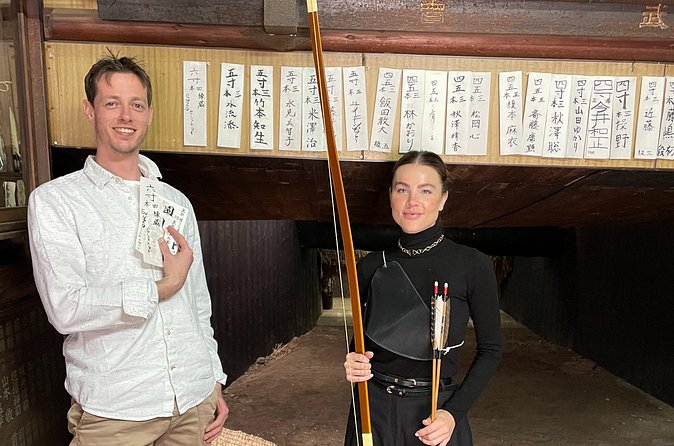
Kyudo places emphasis on focus, discipline, and harmony. Those ideas give the activity a quieter pace than many Kyoto entertainment options. You will spend the hour paying attention to posture, timing, and the relationship between your movement and the arrow.
The cultural explanation is a major part of the value. The instructors explain the history and technique, and the English-speaking translator helps make the lesson accessible to people who do not speak Japanese. This allows you to understand why the activity is performed in a particular way rather than copying motions without context.
The available feedback points to friendly, helpful instruction and clear explanations of both history and technique. For you, that means the atmosphere should be supportive rather than intimidating, especially if this is your first encounter with Kyudo.
Still, the class is only about an hour. You will receive an introduction and practice, not a full course in Japanese archery. If you want detailed study of Kyudo’s formal schools, equipment, or long-term training methods, this short activity will be only a first taste.
Is $96.70 a fair price?
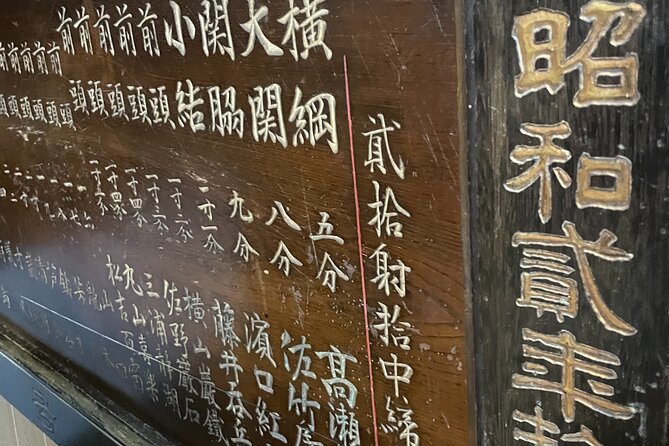
At $96.70 per person, this is not the cheapest activity in Kyoto. The price makes more sense if you place value on the small group, the historic dojo, the English translation, the video tutorial, and the use of real Kyudo equipment.
You are also paying for a specialized activity that would be difficult to arrange independently during a short holiday. The class fee covers the equipment and instruction, so the main extra cost is getting yourself to the dojo.
For a family or small group, the experience can work well because the maximum group size is four and group discounts are available. The activity has been a holiday highlight for at least one family booking, with the combination of cultural learning and repeated shooting making it more than a passive museum visit.
The calculation is less favorable if you are mainly seeking a long activity or a broad tour of Kyoto. One hour passes quickly, and the tour does not include transport or other sightseeing. I would pair it with time in Gion or Maruyama Park rather than expecting it to fill half a day.
Who will get the most from this class?
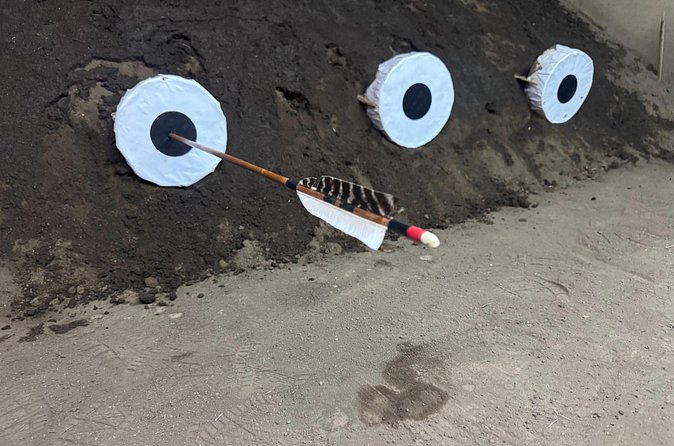
I would recommend it to you if you want a hands-on cultural activity with a clear local connection. It suits first-time visitors who are curious about Japanese traditions but do not want a lecture-only experience.
It also works for families, couples, and small groups of friends. The instructors are described as kind and helpful, and the modest group size makes it easier for different skill levels to take part together.
You may especially enjoy it if you like activities that reward patience. The target is there, but the real lesson is learning to settle your attention and repeat a movement carefully.
I would think twice if you dislike structured instruction, have difficulty with the physical demands of seated archery, or want a flexible drop-in activity. The experience has a scheduled start, a set lesson, and a cancellation deadline. It is not a casual stop you can add at the last minute without confirmation.
Booking, timing, and cancellation details
The activity lasts approximately one hour and ends back at the meeting point. Confirmation is sent within 48 hours of booking, subject to availability. If your preferred time does not appear, you are asked to contact the provider directly.
Free cancellation is available up to 24 hours before the local start time for a full refund. Cancellations or changes made less than 24 hours before the start are not accepted for a refund.
A minimum number of participants is required. If the provider cancels because that minimum is not reached, you will be offered another date or experience, or receive a full refund. The provider may also need to cancel or reschedule because of unexpected circumstances such as staff sickness or health issues, with a full refund offered.
My advice on fitting it into your Kyoto day
Because the dojo is in Gion near Maruyama Park, give yourself enough time to find the exact meeting point. The address includes Japanese characters, so keeping the name 園山大弓場, or Enzan Daikyujyo, available on your phone may help when checking directions.
Do not schedule this as a rushed connection between major attractions. Arrive ready to listen, and wear something that allows you to move comfortably. The provided information does not specify a dress code, so I would simply avoid clothing that restricts your posture or movement.
You can place the activity before or after other eastern Kyoto stops, but keep the archery appointment fixed in your plan. Since the experience is short, it pairs neatly with a visit around Gion, though those additional visits are not included.
Should you book the seated Kyudo experience?
Book this if you want a focused, personal introduction to Japanese archery in a genuine 160-year-old dojo. The small group, English support, real equipment, and calligraphy honor give the hour more substance than a standard tourist activity.
I would not choose it for a low-cost attraction or a full-day cultural tour. At $96.70, the price requires you to care about the setting and instruction. For the right person, especially a family or small group interested in Japanese tradition, the chance to shoot 16 arrows and work toward three target hits makes this a memorable Kyoto addition.
FAQ
How long does the seated archery experience last?
The activity lasts approximately one hour.
Where does the experience start?
It starts at 園山大弓場, Enzan Daikyujyo, in Maruyama Park North Forest at Gionmachi Kitagawa, Higashiyama Ward, Kyoto, postal code 605-0073.
Where does the activity finish?
The experience ends back at the meeting point.
Is transportation included?
No. Transportation fees are not included. The dojo is near public transportation.
What does the price include?
The price includes all Kyudo equipment, the class fee, an English-speaking translator, a 10-minute video tutorial, and an in-person guide in English and Japanese.
How many people can join the class?
The activity has a maximum of four participants.
Do I need previous archery experience?
The class is designed for beginners and includes expert instruction, so previous archery experience is not stated as a requirement.
What happens if I cancel?
You can cancel at least 24 hours before the local start time for a full refund. Cancellations or changes made less than 24 hours before the start are not accepted for a refund.
Recently added around Kyoto
- Higashiyama | Kyoto: Sakura Season Private Rickshaw Tour★ 5.0 · 3 reviews
- Kyoto Kimono Rental CHAMATSU|Kimono/Yukata Rental FamilyPlan★ 5.0 · 3 reviews
- Kyoto: Half-Day Private Guided Tour to the Old Town of Gion★ 4.4 · 3 reviews
- Nara Private Customizable Half Day Tour★ 5.0 · 3 reviews
- Kansai Region Hiking Adventure in Nara Kobe Kyoto and More★ 5.0 · 3 reviews
- Full Day Nara Deer, Temple, Shrine, Activities & Tea Ceremony★ 5.0 · 3 reviews
- Nara: Essential Private Tour with Deer Park and Temples★ 5.0 · 3 reviews
- Hiking Tour for Sacred Sites in Kyoto with a Guide★ 5.0 · 3 reviews
Kyoto Samurai Experiences, compared.
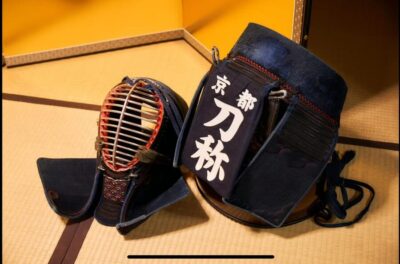
Kendo and Samurai Experience with Uniform and Gear
Read our review →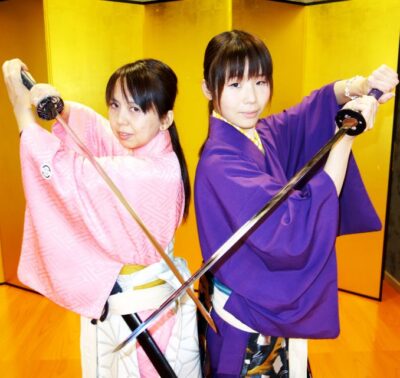
Samurai Sword Class by Experts in Traditional Arts
Read our review →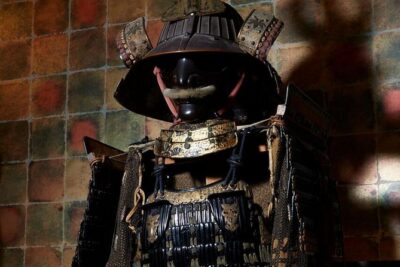
Skip the lines Basic Ticket at SAMURAI NINJA MUSEUM KYOTO
Read our review →
Samurai Training with Modern day Musashi in Kyoto
Read our review →
Private Tea Ceremony and Sake Tasting in Kyoto Samurai House
Read our review →Browse the lists this tour appears in