
REVIEW · WALKING TOURS
Village to village walk: Japan’s oldest road, Yamanobe ancient trail (Private)
Japan’s oldest road is not a grand highway or a famous city street. It is the Yamanobe ancient trail, a mostly gentle route linking rural villages, shrines, fields, and everyday country life. You begin in Nara’s old merchant district, then leave the city behind for a slower, more personal day.
I like the private format, which lets you stop for photographs, questions, and local conversations without holding up a group. I also like the chance to meet village residents through your guide, with translation that turns a passing hello into a real exchange. The main drawback is the long eight-hour day and the extra train cost, with lunch and temple admission also left to you.
- A four-hour walk on Japan’s oldest road: The Yamanobe-no-michi offers a long rural stroll rather than a hard hike.
- Naramachi adds a strong cultural start: See old shops connected with mochi, tea, sweets, linen, knives, and traditional medicine.
- A private guide changes the pace: You can stop when a view, shop, or conversation catches your eye.
- Omiwa Shrine brings food and faith together: Miwa somen is the local lunch choice.
- Local encounters are part of the day: Your English-speaking guide helps you speak with residents and taste farm products.
- Plan for a full day outdoors: Trains, lunch, and temple entrance fees are not included, and good weather is required.
In This Review
- From Naramachi shops to the Yamanobe road
- Omiwa Shrine and a bowl of Miwa somen
- Four hours along Japan’s oldest walking path
- Meeting local residents with a translator
- Why the private format matters
- A guide who shapes the day
- Who will enjoy the Yamanobe trail
- Practical planning for an eight-hour day
- Should you book this Nara walking tour?
- FAQ
- Where does the tour start?
- Where does the activity end?
- How long does the experience last?
- Is this a private tour?
- Is an English-speaking guide included?
- Is transportation included?
- Is lunch included?
- Are temple entrance fees included?
- What happens if the weather is poor?
From Naramachi shops to the Yamanobe road
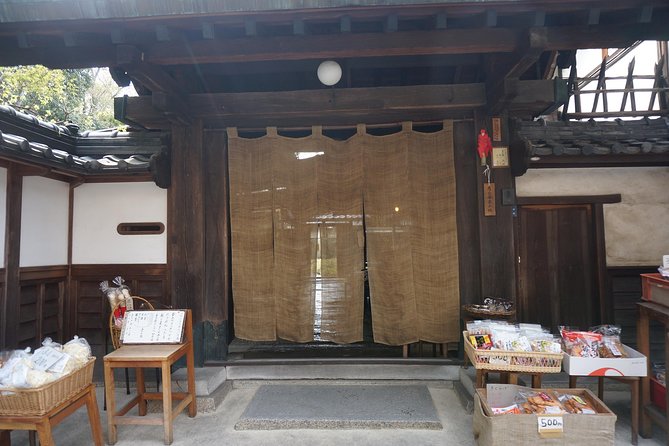
The day starts at 9:00 am at Kintetsu-Nara Station. That is a useful meeting point, since it is easy to find and puts you near Naramachi, the old commercial quarter of Nara.
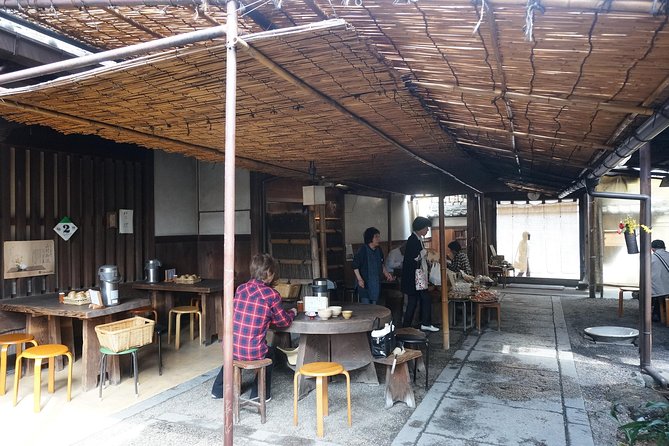
Your first two hours are spent in Naramachi. This is not just a quick walk past pretty wooden buildings. The area is known for traditional shops, and your guide can explain the work and customs behind them. You might encounter stores connected with mochi pounding, green tea, sweets, linen cloth, knives, and traditional medicine.
The value here is the context. A shop selling a familiar Japanese product can seem like a brief photo stop if you are alone. With a guide, it becomes a chance to understand how older trades fit into daily life. The exact stops can vary, so think of this part as an introduction to Nara’s living traditions rather than a fixed museum tour.
The private setup helps in a place like Naramachi. You can ask why a particular craft matters, stop for a closer look, or spend more time in a shop that interests you. A large group would need to keep moving.
Omiwa Shrine and a bowl of Miwa somen
From Nara, you take a train toward Sakurai. The train fare is not included, so keep money or a payment card ready for the journey there and the return trip.
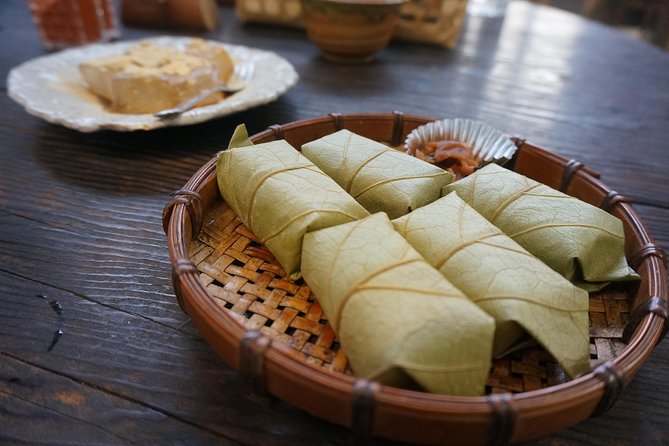
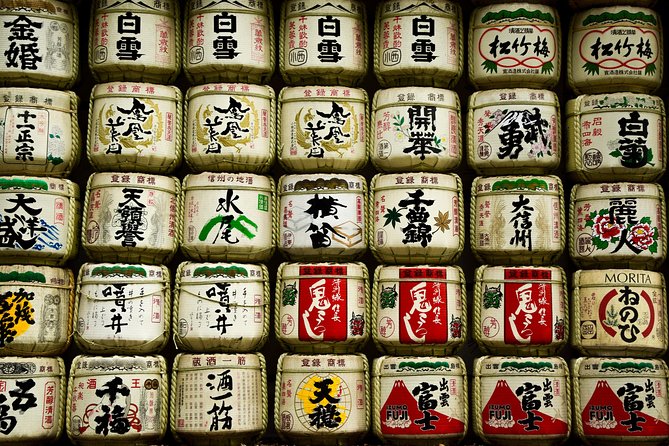
The next stop is Omiwa Shrine, where you have about an hour and a chance to eat lunch. Miwa somen noodles are the recommended local dish. Lunch is also not included, so you can choose and pay for your own meal. A picnic may be possible, since guide Michiko has helped guests pick up food for later on the trail, but you should confirm this with the provider before relying on it.
Omiwa Shrine gives the day a different tone from Naramachi. The first stop is about old urban trades. Here, the setting connects food, local identity, and shrine traditions. You are not being rushed through a long list of sights, but you should also remember that one hour is a short visit. The shrine stop is a pause and a starting point for the countryside walk, not a full shrine tour.
If you want a substantial meal, plan ahead. The walking portion lasts about four hours, and a bowl of noodles or a packed lunch may be more practical than trying to find food later. Since lunch is at your expense, the final cost will be higher than the tour price alone.
More walking tours in Nara:
- Nara Half Day Trip Walking Tour (Private Option Available)
★ 5.0 · 937 reviews - Nara Highlight Walking Tour with Furoshiki Experience with Lunch
★ 5.0 · 73 reviews - Nara: Private Walking Tour with a Local
★ 4.3 · 36 reviews
Four hours along Japan’s oldest walking path
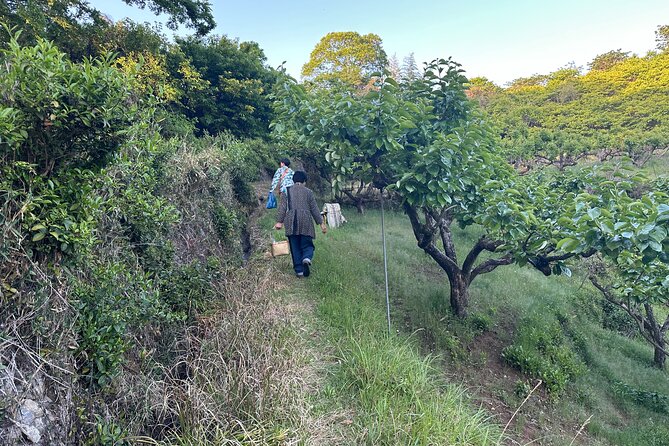
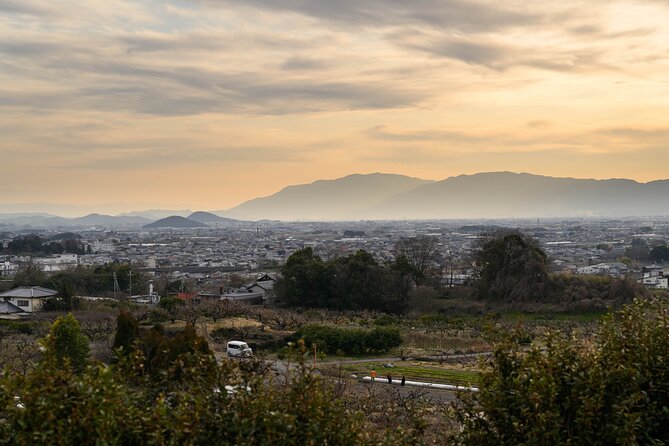
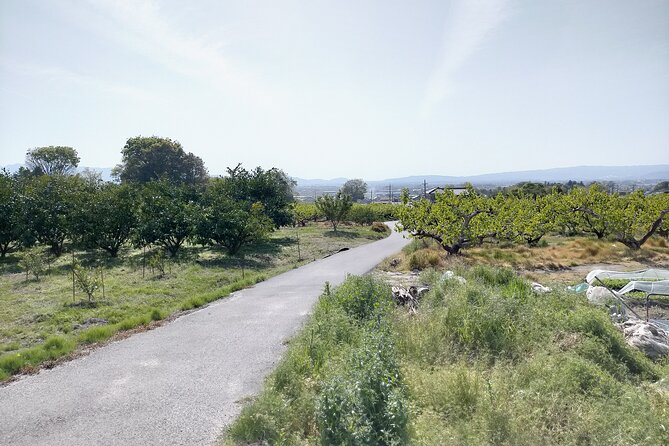
The central part of the experience is the four-hour walk on Yamanobe-no-michi. It is described as Japan’s oldest road, but do not picture a paved city route with signs and crowds. This is a rural walking path through satoyama villages and the countryside around Nara.
Satoyama refers to the lived-in countryside where villages, farmland, woodland, and small local industries meet. The appeal is not one blockbuster sight. You are watching ordinary scenes unfold: village roads, fields, homes, and the rhythm of places that have not been arranged for sightseeing.
The pace is meant to be relaxed. One detailed account describes the walk as mostly flat and not tiring, with an easy rhythm. That makes this a good match for anyone who enjoys distance walking but does not want a steep mountain route. Still, four hours on your feet is a serious commitment. Good walking shoes, water, sun protection, and sensible clothing are worthwhile.
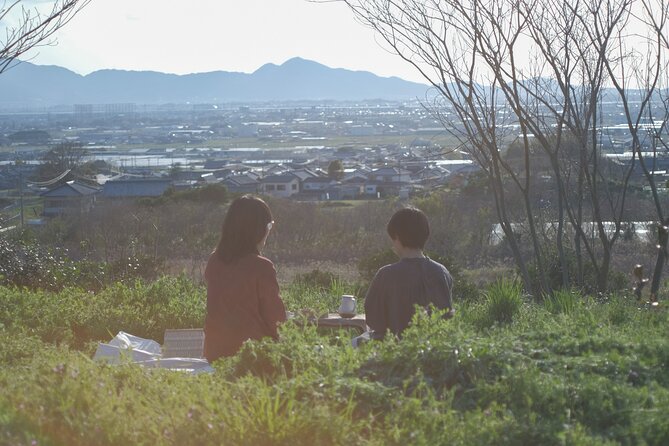
The trail gives you room to notice small things. You can pause for photographs without worrying about a group waiting ahead. You can ask about a farming method or village custom while it is right in front of you. You can also slow down if the day’s main pleasure is simply walking through rural Japan.
Do not expect a tightly scripted procession from one attraction to the next. The charm is the space between formal sights. If you prefer a packed schedule of famous temples, this may feel too quiet. If you want to see how people live outside Japan’s major city centers, the quiet is the point.
Meeting local residents with a translator
The most unusual part of the walk is the chance to speak with local people. Your guide has connections in the villages and can help create introductions that would be difficult to arrange on your own.
Language matters here. A friendly nod or a short greeting can be pleasant, but translation allows a fuller exchange. You may learn about local food, farming, village life, or the place itself. The exact conversations depend on who is available and what happens that day, so treat them as personal encounters rather than guaranteed performances.
This is also where the private tour earns its keep. You are not sharing the guide’s attention with strangers. If your group takes an interest in a farmer, shopkeeper, or local product, you can stay with the conversation. The guide can also adjust explanations to your interests. A family interested in Japanese history, for example, may get a different conversation from a group focused on food.
A local farm product tasting is included. That small detail fits the tour well. You are not just looking at rural life from a path. You get a chance to taste something connected with the area.
The experience does not promise a formal farm visit, cooking lesson, or large meal. Keep your expectations at the level of samples and informal contact. That is less polished than a staged cultural activity, but it can feel more genuine.
Why the private format matters
The listed price is $98.10 per person. For an eight-hour private day with an English-speaking guide, that can be fair value, especially for couples, families, or small groups who want personal attention.
The price becomes more attractive when several people share the private guide service, though group discounts may be available and should be checked before booking. You are paying for access and flexibility as much as for transport or admission. Local train fares, lunch, and temple entrances are extra, so compare the total day’s cost rather than looking only at the headline price.
I like the private arrangement for three reasons:
- You can take photographs when you want.
- You can ask questions without worrying about a group schedule.
- You can spend more time with people or places that interest you.
It is less useful for a solo visitor who wants a cheap, quick introduction to Nara. The train costs and full-day commitment add up. A private guide also gives you the most value when you actively take part, ask questions, and enjoy conversation.
The tour is mobile-ticket friendly, and confirmation is sent within 48 hours, subject to availability. It is near public transportation, but the transport plan still needs attention. You start at Kintetsu-Nara Station, travel to the Sakurai area, and return toward the meeting point after the activity. Since the train fare is not covered, ask for the exact train instructions before the morning of the tour.
A few more Nara experiences worth comparing
- Nara 6hr Private Tour with Government-Licensed Guide
★ 5.0 · 219 reviews - Nara: Private Tour with Private Guide
★ 4.8 · 66 reviews - Private Nara Tour and Sake Tasting (Departing from Kyoto/Nara)
★ 5.0 · 40 reviews - Nara: City Highlights Shared Group or Private Bike Tour
★ 4.9 · 34 reviews
A guide who shapes the day
The guide is central to this experience. The service includes a private English-speaking guide, and a guide named Michiko has led this route. She has met guests at their hotel, shown them Naramachi, helped them buy a picnic lunch, and adjusted the day after hearing about a child’s interest in Japanese history.
That example tells you something useful about the style of guiding to expect. This is not simply a person reciting dates while you follow. The guide can connect the route with your interests and help with practical details such as lunch. You should still confirm the meeting arrangement, since the official start point is Kintetsu-Nara Station at 9:00 am.
A good guide also makes the village contacts possible. Without Japanese language support and local connections, you might walk through the same villages without speaking to anyone. Here, the guide’s role is part interpreter, part cultural bridge, and part walking companion.
The experience has earned a perfect five-star score from five published ratings, with praise focused on the relaxed pace, the guide’s easy company, the countryside walk, and the helpful local people encountered along the way. That is a small sample, so I would treat it as encouraging rather than conclusive. The comments do, however, match the tour’s stated purpose closely.
Who will enjoy the Yamanobe trail
I would recommend this day to you if you like:
- Long walks at a gentle pace
- Rural scenery more than major attractions
- Local food and small tastings
- Conversations with residents
- History explained through places and daily life
- Private guiding rather than a fixed group schedule
Families may enjoy the flexibility, especially if children have a strong interest in history or food. The walk is mostly flat, but the four-hour duration still requires moderate physical fitness. The tour is not presented as suitable for people who need a short, fully seated activity.
This also suits repeat visitors to Japan who have already seen Nara’s famous temples and want a different side of the region. Naramachi gives you a familiar cultural anchor, while the Yamanobe trail takes you away from the usual city route.
You may want to skip it if you dislike walking for several hours, need guaranteed indoor activities, or want every cost included. It is also a poor choice for a day when the weather forecast looks uncertain. The experience requires good weather and may be canceled if conditions are poor.
Practical planning for an eight-hour day
Wear comfortable shoes with reliable grip. The route is mostly flat, but a long rural walk can still leave your feet tired. Bring water and dress for the forecast, since the experience is built around time outdoors.
Allow extra money for the train from Nara to Sakurai and for the return journey. Lunch is separate, and temple entrance fees are not covered. If Miwa somen appeals to you, make it part of your food budget rather than assuming it is included.
Ask about the exact return arrangement. The activity ends back at the meeting point, but the train is separate from the tour price. The provider can also clarify whether a picnic stop is planned for your date.
The cancellation rule is strict: the booking is non-refundable and cannot be changed for any reason. The exception is poor weather. If the provider cancels for weather, you are offered another date or a full refund. Check the forecast before booking, especially if your Nara schedule is tight.
Should you book this Nara walking tour?
Book it if you want Nara beyond the headline temples. The best reasons are the four-hour walk, the private pace, the chance to speak with local residents, and the guide’s ability to connect village life with your interests.
The $98.10 price is most sensible for a small group that values personal attention. Add train fares, lunch, and any temple admission before deciding. You also need the stamina for a full day and the patience to appreciate ordinary rural scenes.
Skip it if you want a short sightseeing loop, a fully inclusive price, or guaranteed activities regardless of weather. For the right visitor, though, this is a thoughtful way to trade crowded routes for Nara’s old road, working villages, and a slower view of Japan.
FAQ
Where does the tour start?
The tour starts at 9:00 am at Kintetsu-Nara Station in Nara, Japan.
Where does the activity end?
The activity ends back at the meeting point.
How long does the experience last?
The experience lasts approximately eight hours.
Is this a private tour?
Yes. Only your group participates in the private activity.
Is an English-speaking guide included?
Yes. Private guiding service with an English-speaking guide is included.
Is transportation included?
No. Train transportation from Nara to Sakurai and the return journey are not included.
Is lunch included?
No. Lunch is not included. Miwa somen noodles at Omiwa Shrine are recommended.
Are temple entrance fees included?
No. Entrance fees for temples are not included.
What happens if the weather is poor?
The experience requires good weather. If it is canceled because of poor weather, you are offered a different date or a full refund.
Recently added around Nara
- Nara Private Customizable Half Day Tour★ 5.0 · 3 reviews
- Full Day Nara Deer, Temple, Shrine, Activities & Tea Ceremony★ 5.0 · 3 reviews
- Nara: Essential Private Tour with Deer Park and Temples★ 5.0 · 3 reviews
- Discover the Essence of Nara Ink Through Your Senses★ 5.0 · 3 reviews
- Private Journey in Nara’s Historical Wonder★ 5.0 · 3 reviews
- Nara:Private Tea Ceremony(Max 5 ppl) -Master Matcha Making-★ 5.0 · 3 reviews
- Nara Takayama Tea Whisk Craft and Tea Culture Experience★ 5.0 · 3 reviews
- Nara: Half-Day Private Tour of 4 Must-See Spots & Deer Park★ 5.0 · 3 reviews
Walking Tours, compared.

Kyoto Geisha Walking Tour: Gion District & Hidden Gems
Read our review →
Gion Magical Night Walking Tour with Geisha Trivia
Read our review →
Gion Geisha District Walking Tour – Stories of Geisha
Read our review →

Kyoto Gion Geisha District Walking Tour – The Stories of Geisha
Read our review →
Kyoto Arashiyama Walking Tour: Bamboo, Monkeys, Gardens & Secrets
Read our review →
Kyoto Gion: 2-Hour Geisha Culture & History Walking Tour
Read our review →
Nara Half Day Trip Walking Tour (Private Option Available)
Read our review →Browse the lists this tour appears in