
REVIEW · KYOTO SAMURAI EXPERIENCES
Train Katana with Real Dojo Students in Kyoto
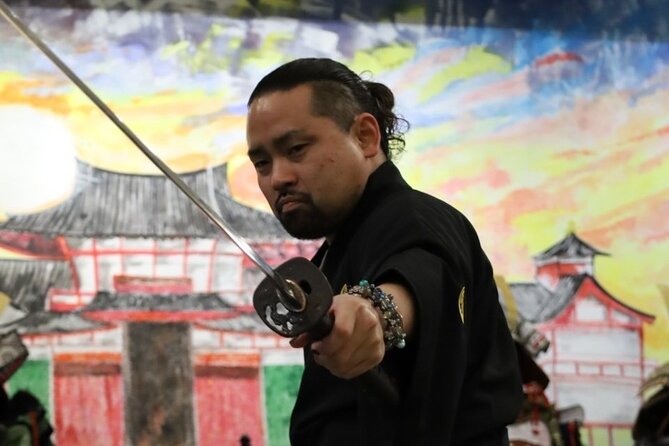
The most unusual part of this Kyoto activity is that you train inside a working dojo alongside local students, rather than taking part in a staged samurai show. You put on dōgi, obi, and hakama, learn the basics of drawing and handling a katana, then watch the master and students cut rolled tatami mats.
I like the very small group, with a maximum of three participants, and I like that the session is led by a headmaster with more than 20 years of experience. The two-katana performance is another rare touch. The main drawback is that this is not a casual photo activity: you need moderate physical fitness, must be at least 12, and video recording is not allowed.
In This Review
- Key points to know before booking
- Why this Kyoto dojo session feels different
- Getting dressed in dōgi, obi, and hakama
- Learning iai, the art of drawing the katana
- Practicing kenjutsu with a small group
- Watching rolled tatami mats meet a real katana
- The headmaster’s two-katana performance
- What the $195.09 price buys you
- Meeting point and three-hour timing
- Who should book this experience
- Practical rules and cancellation advice
- Should you book the Yushinkan Kyoto session?
- FAQ
- Where does the katana training take place?
- How long does the activity last?
- Where does the activity finish?
- What clothing will participants wear?
- What techniques will I learn?
- Can I cut rolled tatami mats with a real katana?
- Is video recording allowed?
- What is the minimum age?
- Can someone attend just to observe?
Key points to know before booking
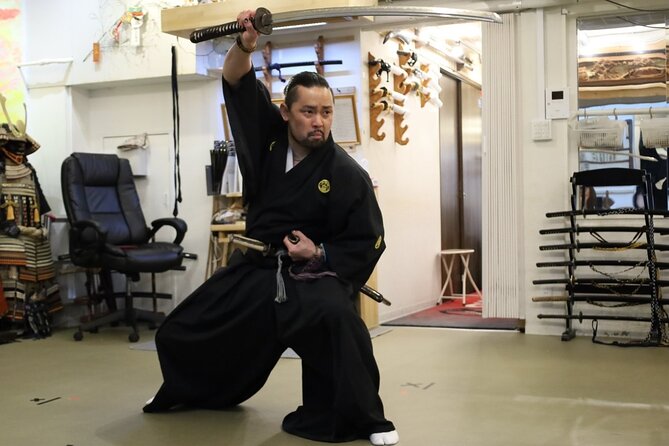
- Train beside real dojo students: This is regular katana practice in a Kyoto dojo, not a show built only for visitors.
- Wear traditional training clothing: You will change into dōgi, obi, and hakama before practice.
- Learn two sword traditions: The session covers iai, or katana drawing, and kenjutsu, or sword-fighting techniques.
- Watch live cutting and a rare two-katana display: The master performs with a katana, and rolled tatami cutting is part of the demonstration.
- Expect a private-feeling group: No more than three participants can join, but unpaid observation is not allowed.
- Plan around firm rules: The minimum age is 12, filming is prohibited, and real-katana test cutting is not offered to participants.
Why this Kyoto dojo session feels different
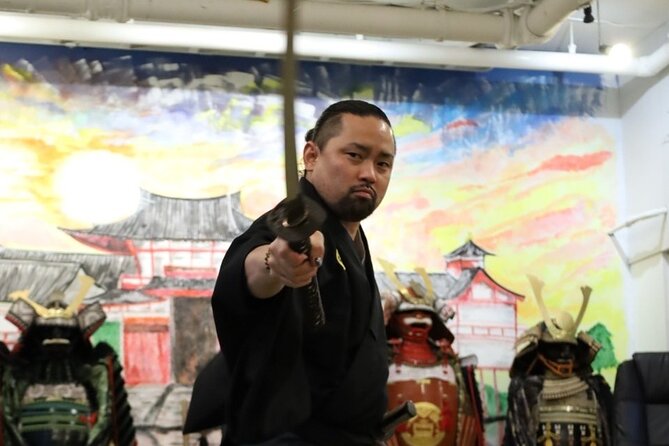
Many samurai-themed activities are built around costumes, photographs, and a short demonstration. This one takes a more serious route. You enter Yushinkan Kyoto while local students are training, and your time is shaped around the habits of a working katana dojo.
That difference matters. You are not simply handed a sword and asked to copy a pose. You watch how students train, listen to instruction, and practice techniques that belong to established Japanese sword arts. The setting gives you a better sense of discipline and repetition, even during a three-hour visit.
The headmaster has more than 20 years of experience. His role is important because katana work depends on small details: how you stand, how you draw, how you control movement, and how you return the sword. The supplied details do not give his name, so do not expect a named guide profile when you book. The provider’s response is signed by John from Yushinkan International, Kyoto, which may be useful if you need to identify the local contact.
The group limit of three is a real advantage. You should have more room to follow instructions and ask for clarification than you would in a large class. It also means the booking is priced as a specialist activity rather than a mass-market attraction.
More samurai and sword sessions:
- Kyoto Samurai Experience
★ 5.0 · 1,294 reviews - Kyoto: Kendo and Samurai Experience with Uniform and Gear
★ 4.9 · 815 reviews - Kyoto: Samurai Sword Class by Experts in Traditional Arts
★ 4.9 · 657 reviews
Getting dressed in dōgi, obi, and hakama
The session begins with traditional training clothes. You wear a dōgi, obi, and hakama, the combination associated with formal Japanese martial arts practice.
This is more than a costume change. The clothing sets the tone and helps you approach the session as training rather than entertainment. The hakama also changes how you move. You need to pay attention to your stance and footwork, which makes basic techniques feel more deliberate from the start.
You should arrive ready for an active session. The experience calls for moderate physical fitness, and you will spend part of the time standing, moving, and practicing controlled sword motions. The available information does not specify changing-room arrangements, shoe rules, or what to wear underneath, so keep your clothing practical and comfortable.
Do not treat the clothing as permission to turn the session into a photo shoot. Video recording is not allowed, and the rules point toward concentration rather than constant filming. Still photographs are not specifically addressed in the supplied details, so ask the dojo before taking any pictures.
Learning iai, the art of drawing the katana
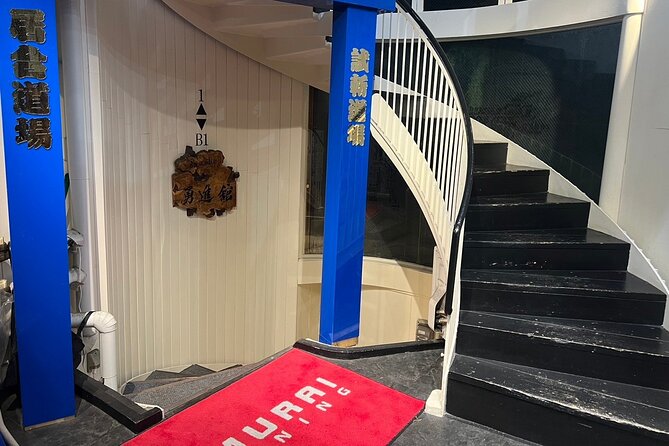
The first technical part focuses on iai, or katana drawing. The basic idea sounds simple, but drawing a sword involves timing, posture, hand placement, and control. You will be introduced to techniques rather than given a blunt tourist prop for a quick demonstration.
Iai is valuable for beginners because it teaches you to respect the sequence of movement. The sword does not simply come out of the scabbard in one fast gesture. Your body position, grip, and awareness all matter. Even a short lesson can show why traditional sword arts require patience.
Expect the instructor to guide you through movements step by step. The supplied information does not list the exact number of techniques or the language used in instruction, so you should not assume you will complete a formal grade or leave with a certificate. This is a training visit, not a qualification course.
If you have previous martial arts experience, you may find the structure easier to follow. One participant with experience in several martial arts styles, but limited katana practice, described the session as professionally arranged and especially suitable for someone with that background. That is useful advice. You do not need to be an expert, but a basic comfort with physical instruction will help.
Practicing kenjutsu with a small group
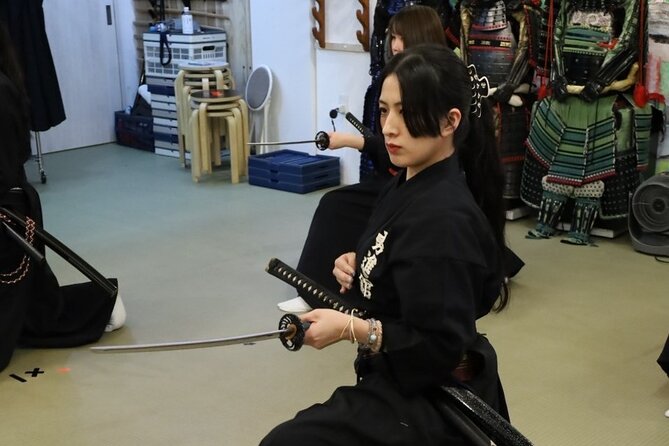
The next part introduces kenjutsu, the practice of sword-fighting techniques. This does not mean you take part in a free-for-all sword battle. The activity is controlled instruction inside a dojo, with attention on form and safe movement.
For you, the value lies in seeing how sword techniques are organized. Iai centers on drawing and handling the blade, while kenjutsu adds fighting methods. Together, they offer a wider look at Japanese swordsmanship than a single demonstration would.
The three-person maximum helps here. Sword movements need personal space, and a crowded class would make it harder to see what your hands and feet are doing. A small group also lets you watch the local students closely. Their practice gives you a useful comparison, since you can see the level of repetition and focus expected in the dojo.
The activity does not promise that you will perform advanced techniques. That is a good thing. A responsible introduction should leave room for careful instruction instead of rushing you toward flashy moves. You should follow the master’s directions closely and treat the practice weapon and dojo space with respect.
A few more Kyoto experiences worth comparing
- Full Day Hiroshima and Miyajima Tour by Bullet Train from Kyoto
★ 4.5 · 120 reviews - Kyoto: Arashiyama Day Tour with Train, Boat, and Onsen
★ 4.9 · 48 reviews - Kyoto Railway Museum Admission Ticket
★ 4.3 · 23 reviews - Kyoto Bus Tour: Sagano Railway & Hozugawa River Boat Ride
★ 4.0 · 21 reviews
Watching rolled tatami mats meet a real katana
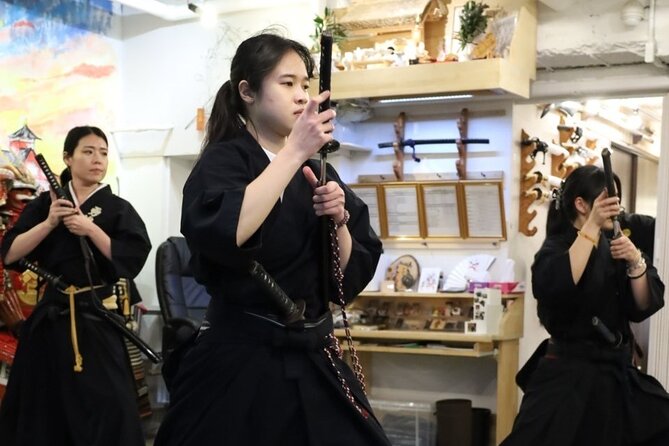
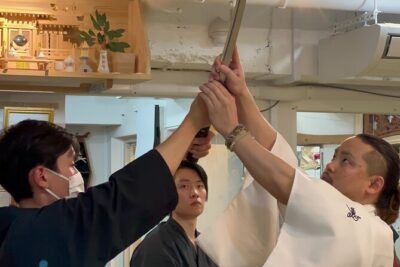
One of the most striking parts of the visit is watching students and the master cut rolled tatami mats with a real katana. The cutting demonstration shows the practical side of the art, where alignment, control, and precision matter.
This is also where the activity draws a firm line. Participants are not offered real-katana test cutting. You can watch the cutting, but you will not be handed a live blade and invited to try it yourself.
That restriction may disappoint anyone hoping for an action-heavy samurai challenge. I see it as a sensible limit. Cutting with a real katana requires a high level of control, and the session keeps the focus on learning rather than spectacle. You get to see the result of serious training without being pushed into a risky task for the sake of a memorable photograph.
The tatami cutting is likely to be one of the best moments for understanding why technique matters. A sword does not cut well simply because it is sharp. The motion, angle, and follow-through all have to work together. You will see that principle demonstrated by people who train regularly.
The headmaster’s two-katana performance
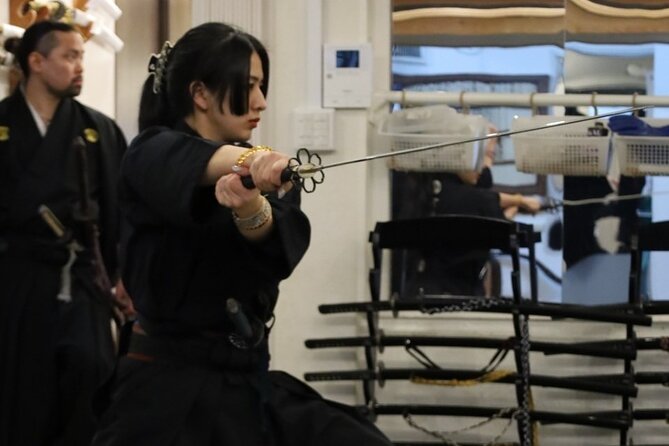
The master’s performance with two katana gives the visit its most unusual visual moment. The available details do not provide a formal name for the style or explain the full sequence, so you should view it as a special demonstration rather than a lesson you will copy.
Two-sword work requires coordination and makes a clear contrast with the slower instructional practice earlier in the session. After working through basic drawing and fighting methods, you can better appreciate the control needed for a more advanced display.
This performance is a strong reason to choose this activity over a standard costume session. You are not only learning a few movements. You are also seeing the level that dedicated dojo practice can reach.
At the same time, keep your expectations sensible. The master’s performance is part of the session, but the experience is not advertised as a theatrical show with a long scripted program. The appeal is the chance to observe a real practitioner in the place where training takes place.
What the $195.09 price buys you
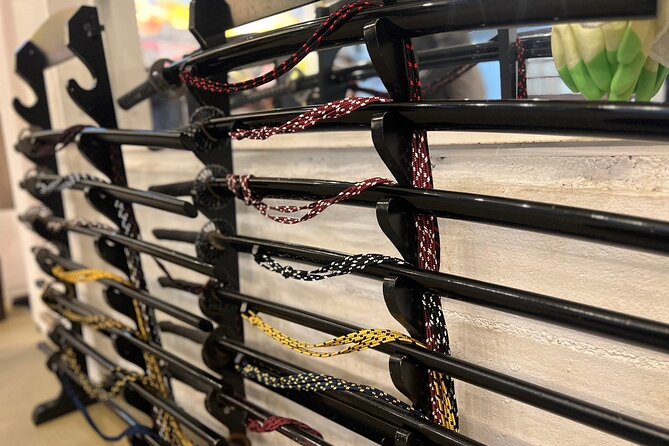
At $195.09 per person, this is expensive compared with a basic cultural demonstration. The price makes more sense if you value a small group, direct instruction, traditional clothing, and access to a working dojo.
You are paying for roughly three hours, not a quick photo stop. The group limit of three is especially important. A private-feeling lesson with individual attention can justify a higher price for someone who wants to understand the mechanics of katana practice rather than simply pose with one.
The value is weaker if your main goal is a souvenir photograph or a quick taste of samurai culture. You may find a cheaper activity that offers costumes and a short performance. This session asks you to commit more time, follow dojo rules, and take the training seriously.
I would consider the price reasonable for a martial arts enthusiast, a repeat visitor to Kyoto, or someone who prefers specialist cultural activities. It is less convincing for a family looking for light entertainment, especially since children must be at least 12 and the activity requires moderate fitness.
The activity is usually booked about 29 days ahead. That pattern suggests you should not leave it until the final days of a Kyoto stay if the date matters to you. Confirmation arrives within 48 hours of booking, subject to availability.
Meeting point and three-hour timing
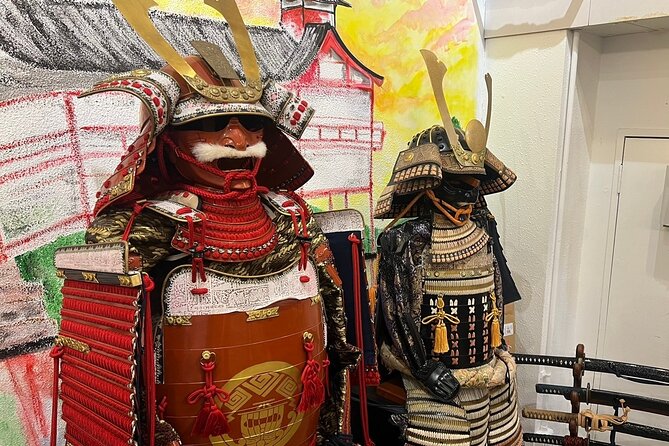
The experience begins and ends at 452-4 Matsugaechō, Nakagyo Ward, Kyoto, 604-8034, Japan. It is near public transportation, which makes it easier to fit into a day in central Kyoto, though the supplied details do not name the closest station or provide a walking time.
Plan your day around a fixed three-hour block. The session includes changing, instruction, observation, and demonstrations, so arriving late could mean missing the opening guidance or clothing change. Give yourself extra time to reach the address and locate the entrance.
The return to the same meeting point is convenient. You do not need to arrange a second pickup location or work out where the activity finishes. A mobile ticket is provided, so keep the booking available on your phone.
The maximum group size is three participants. That is small enough to make the schedule feel focused, but it also means availability may be limited. Confirmation is not instant in every case, so watch for the booking response before building a tight itinerary around it.
Who should book this experience
I would point this session toward adults and teenagers aged 12 or older who have a genuine interest in Japanese martial arts. You do not need extensive katana experience, but you should be comfortable listening closely, practicing controlled movements, and standing for part of the session.
It is also a good fit if you have trained in another martial art. Previous experience may help you understand stance, discipline, and repeated practice. The strongest available participant feedback came from someone with experience in several martial arts styles and limited katana training, who found the arrangement professional and enjoyable.
You may want to skip it if you want a loud, theatrical samurai show, unrestricted photography, or the chance to cut tatami yourself. The no-video rule will matter to anyone who records every activity, and the ban on participant test cutting removes one of the common fantasies attached to sword experiences.
Unpaid observation is not allowed. Everyone who attends must book a place, including someone who only wants to watch. That rule keeps the session focused and avoids turning the dojo into a viewing area for nonparticipants.
Practical rules and cancellation advice
The experience offers free cancellation up to 24 hours before the start time. To receive a full refund, you must cancel at least 24 hours in advance according to Kyoto local time.
Cancellations made within 24 hours are not refunded, and changes inside that period are not accepted. I would avoid booking this on a day when your schedule depends on uncertain transport or a long list of other timed activities.
The minimum age is 12. Moderate physical fitness is required, though the supplied information does not define a specific fitness test or medical restriction. If you have concerns about standing or movement, ask the provider before booking.
Should you book the Yushinkan Kyoto session?
Book it if you want a serious, small-scale introduction to katana training and value access to a real dojo over a polished tourist performance. The local students, experienced headmaster, iai and kenjutsu practice, tatami cutting, and two-katana display give the three hours a clear purpose.
Skip it if you mainly want photographs, a relaxed costume activity, or hands-on cutting with a live sword. At $195.09, the price calls for real interest, not casual curiosity.
For the right participant, this is a rare chance to watch disciplined sword practice at close range and take part in a carefully controlled introduction. Bring patience, respect the no-video rule, and book early enough to handle the availability check.
FAQ
Where does the katana training take place?
The activity takes place at Yushinkan Kyoto, located at 452-4 Matsugaechō, Nakagyo Ward, Kyoto, 604-8034, Japan.
How long does the activity last?
The session lasts approximately three hours.
Where does the activity finish?
It ends back at the same meeting point where it begins.
What clothing will participants wear?
You will get dressed in dōgi, obi, and hakama, which are traditional martial arts training clothes.
What techniques will I learn?
The session includes iai, or katana drawing techniques, and kenjutsu, or katana fighting techniques.
Can I cut rolled tatami mats with a real katana?
No. Participants can watch the master and students cut rolled tatami mats, but test cutting with a real katana is not offered.
Is video recording allowed?
No. Video recording is not allowed during the activity.
What is the minimum age?
Participants must be at least 12 years old.
Can someone attend just to observe?
No. Observing without paying is not allowed.
Recently added around Kyoto
- Higashiyama | Kyoto: Sakura Season Private Rickshaw Tour★ 5.0 · 3 reviews
- Kyoto Kimono Rental CHAMATSU|Kimono/Yukata Rental FamilyPlan★ 5.0 · 3 reviews
- Kyoto: Half-Day Private Guided Tour to the Old Town of Gion★ 4.4 · 3 reviews
- Nara Private Customizable Half Day Tour★ 5.0 · 3 reviews
- Kansai Region Hiking Adventure in Nara Kobe Kyoto and More★ 5.0 · 3 reviews
- Full Day Nara Deer, Temple, Shrine, Activities & Tea Ceremony★ 5.0 · 3 reviews
- Nara: Essential Private Tour with Deer Park and Temples★ 5.0 · 3 reviews
- Hiking Tour for Sacred Sites in Kyoto with a Guide★ 5.0 · 3 reviews
Kyoto Samurai Experiences, compared.
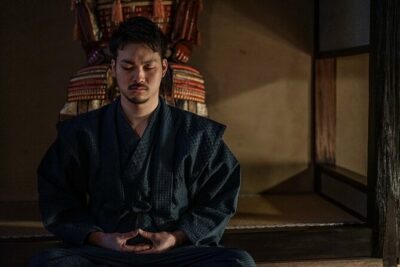
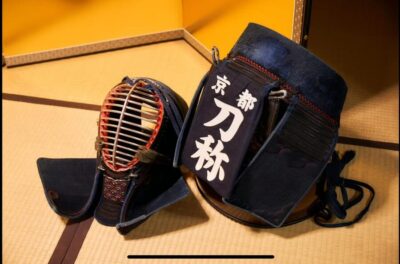
Kendo and Samurai Experience with Uniform and Gear
Read our review →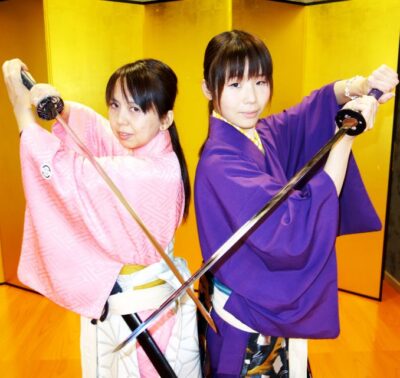
Samurai Sword Class by Experts in Traditional Arts
Read our review →
Skip the lines Basic Ticket at SAMURAI NINJA MUSEUM KYOTO
Read our review →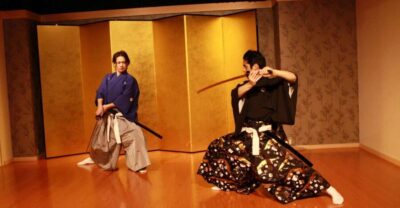
Samurai Training with Modern day Musashi in Kyoto
Read our review →
Private Tea Ceremony and Sake Tasting in Kyoto Samurai House
Read our review →Browse the lists this tour appears in