
REVIEW · KYOTO SHRINE TOURS
Sacred Peak and Scenic View Hieizan Enryaku ji and Hiyoshi Shrine
Mount Hiei gives you a different side of Kyoto: cedar forests, Lake Biwa views, quiet shrine grounds, and the powerful Buddhist center of Enryakuji. The Sakamoto Cable Car is a star of the day, carrying you up the mountain on Japan’s longest cable car ride.
I like the thoughtful pairing of Hiyoshi Taisha and Enryakuji, since you see how Shinto and Buddhist traditions have shaped the same mountain. I also like the small group size, capped at 12, and the chance to spend time with a guide such as Justin, whose clear, personable style has been singled out in feedback.
The main drawback is the price, $182.74 per person, especially since lunch is extra. You should also be comfortable with walking and a full 7.5-hour schedule, though the included transport and admissions make the day easier to manage.
In This Review
- Key points to know before you book
- Why Mount Hiei makes a fine change from central Kyoto
- Starting at Kyoto Station and heading toward Hiyoshi Taisha
- Hiyoshi Taisha and the sacred rock called Kogane no Oiwa
- Riding the Sakamoto Cable Car above Lake Biwa
- Enryakuji, the home of Tendai Buddhism
- What the $182.74 price really covers
- Who will enjoy this mountain day most
- Practical details that shape the day
- Should you book Sacred Peak and Scenic View?
- FAQ
- How long does the tour last?
- What time does the tour begin?
- Where does the tour meet?
- Where does the tour end?
- Is lunch included?
- Is transportation included?
- How large is the group?
Key points to know before you book
- Japan’s longest cable car ride: The Sakamoto Cable Car climbs Mount Hiei with views toward Lake Biwa.
- Two faith traditions in one day: Hiyoshi Taisha introduces Shinto and Buddhist connections before Enryakuji brings you into the world of Tendai Buddhism.
- A quieter Kyoto outing: This is a mountain day away from the city’s busiest temple lanes and crowded central sights.
- Small-group guiding: The group is limited to 12 people, with an English-speaking guide leading the day.
- Admissions and transport included: Your train, cable car, other tour transport, and entry fees are covered.
- Plan for lunch: Food is not included, so you need to budget for it during the day.
Why Mount Hiei makes a fine change from central Kyoto
Kyoto is famous for its temples and shrines, but many first-time visitors spend most of their time moving between well-known sites in the city center. This trip takes you into the mountains east of Kyoto, where the mood changes quickly. Cedar trees replace shopfronts, the air feels quieter, and the views open toward Lake Biwa.
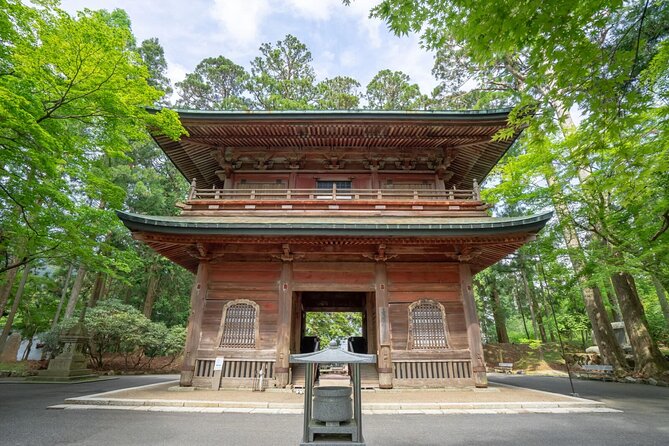
The day is built around two connected places. Hiyoshi Taisha is an important Shinto shrine with close ties to Buddhist traditions. Enryakuji, higher on Mount Hiei, is the head temple of Tendai Buddhism and one of Japan’s major religious centers.
That pairing gives the excursion more substance than a simple scenic ride. You are not only looking at mountain views. You are seeing how sacred places, religious practice, and protection of Kyoto became linked over many centuries.
The tour lasts about 7 hours and 30 minutes, beginning at 9:00 a.m. and ending back at the meeting point in Kyoto. That makes it a substantial day, but not an exhausting multi-day outing. The pace should suit you if you prefer one well-organized excursion instead of arranging several train rides, admissions, and mountain connections yourself.
More Kyoto shrines:
- KYOTO Tea Ceremony with kimono near by Imamiya Jinjya Shrine
★ 5.0 · 343 reviews - Kyoto: 3-Hour Fushimi Inari Shrine Hidden Hiking Tour
★ 4.9 · 270 reviews - E-Bike Nara Highlights – Todaiji, Knives, Deer, Shrine
★ 4.8 · 186 reviews
Starting at Kyoto Station and heading toward Hiyoshi Taisha
The meeting point is Starbucks Coffee in Kyoto Tower Sando, at Kyoto Tower near Kyoto Station. This is a practical place to begin because the area is easy to reach by public transport and well known to anyone staying near the station.
From there, the group takes a scenic train ride toward the base of Mount Hiei. The train journey is part of the experience rather than dead time. As the city falls away, you begin to see wooded slopes and distant peaks, giving you a gradual transition from urban Kyoto to the mountain.
An English-speaking guide travels with you and provides context along the way. That matters here because the religious sites are not always easy to understand from buildings alone. Without some explanation, Hiyoshi Taisha could appear to be simply another peaceful shrine, and Enryakuji could become a long list of halls and names.
The small-group limit of 12 is useful on a day like this. You can stay close to the guide during walks and hear explanations without the feel of a large coach group. The tour has received especially warm praise for Justin’s personable approach, so if he is leading your departure, expect plenty of explanation about local customs and Japanese culture.
Hiyoshi Taisha and the sacred rock called Kogane no Oiwa
Hiyoshi Taisha is the first major stop, with about four hours allocated to the shrine and the surrounding part of the route. That is a generous amount of time, and it signals that this is not a quick photo stop.
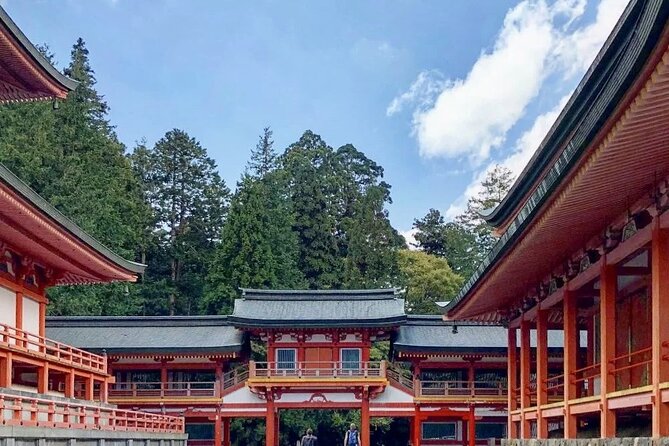
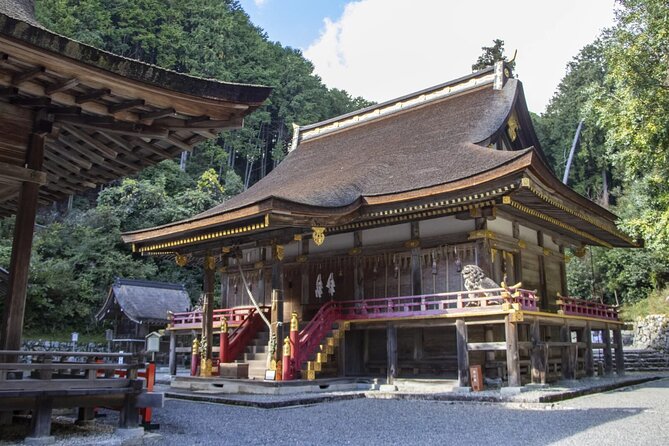
The shrine sits among tall cedar trees, which create much of its appeal. The setting is calm and shaded, with the forest helping you understand why mountains and groves have long carried spiritual importance in Japan.
Your guide introduces the shrine’s buildings and explains its ties to both Shinto and Buddhist traditions. Hiyoshi Taisha also has a role in protecting Kyoto, an idea that gives the site a wider meaning than its architecture alone. You are looking at a place connected to the welfare of the old capital.
One unusual feature is Kogane no Oiwa, a sacred rock formation. Details such as this are exactly where a guide adds value. A rock can be easy to overlook if you do not know why it matters, but with the right context it becomes part of the shrine’s spiritual story.
The stop may also include a more demanding walk for people who want a challenge. The available information does not give the exact distance or difficulty, so you should ask the guide at the start of the day if you have concerns about the walking level. Most people can participate, but this is not a sit-down sightseeing tour.
I like that Hiyoshi Taisha comes first. It gives you time to settle into the mountain setting before reaching the larger temple complex. The shrine feels personal and rooted in nature, while Enryakuji later brings a broader religious and historical frame.
Riding the Sakamoto Cable Car above Lake Biwa
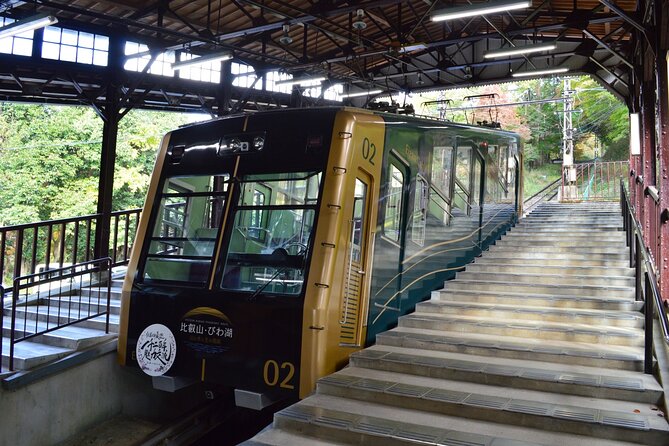
After Hiyoshi Taisha, you take a short walk to the Sakamoto Cable Car. The ride is one of the clearest highlights of the trip. It is described as Japan’s longest cable car ride, and it carries you up the mountainside toward Mount Hiei.
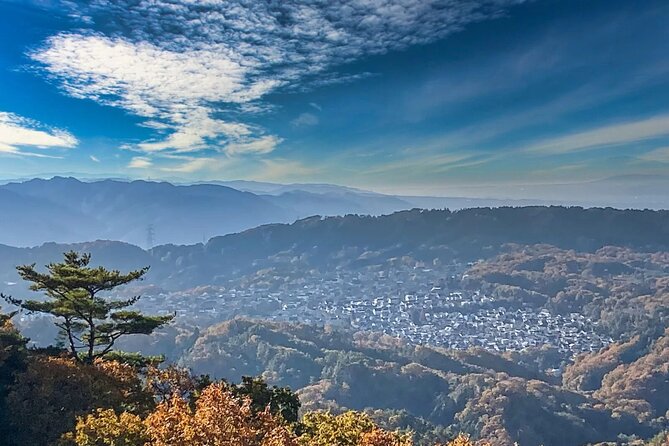
As the car climbs, the view opens below you. Lake Biwa, Japan’s largest lake, stretches across the distance, with the surrounding countryside and mountain slopes adding layers to the scene. This is a very different view from the tiled roofs and narrow streets of central Kyoto.
The cable car also makes the mountain accessible without turning the whole day into a hard climb. You still walk around the shrine and temple areas, but the ascent itself is handled by the railway. For many people, this is the ideal mix: some fresh-air walking, a memorable ride, and less physical strain than hiking all the way up.
Weather will affect the views. The tour promises scenic mountain and lake outlooks, but clear conditions are never guaranteed. Even on a hazier day, the cable car remains a distinctive part of the outing, but you should not judge the experience only by the visibility from the top.
A completely different side of Kyoto:
- PERFECT KYOTO 1-Day Bus Tour
★ 5.0 · 13,518 reviews - Kyoto: Fushimi Inari, Kinkakuji, Bamboo Grove 1 Day Bus Tour
★ 4.8 · 4,316 reviews - Kyoto: Tea Ceremony in a Traditional Tea House in Kiyomizu
★ 4.9 · 3,519 reviews - Kyoto Geisha Walking Tour: Gion District & Hidden Gems
★ 4.7 · 3,273 reviews
Enryakuji, the home of Tendai Buddhism
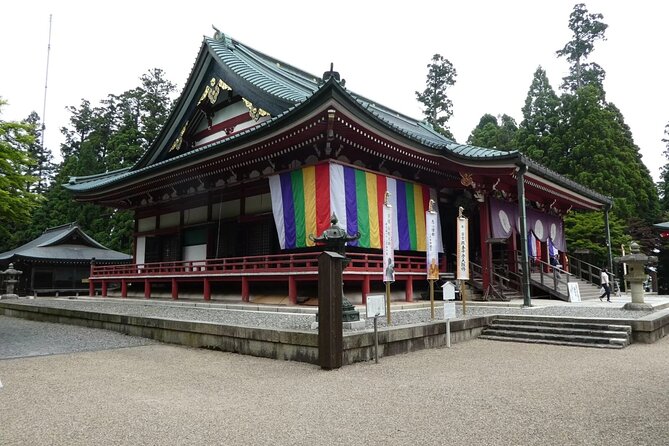
The upper part of the day is devoted to Enryakuji Temple, with about three hours set aside for Mount Hiei. Enryakuji is a UNESCO World Heritage Site and the honzan, or head temple, of Tendai Buddhism.
The temple was founded by the monk Saichō in the eighth century and played a major role in shaping Japanese religious traditions. That background gives the visit real weight. You are not simply visiting an old temple in a scenic location. You are entering a place tied to the development of one of Japan’s major Buddhist schools.
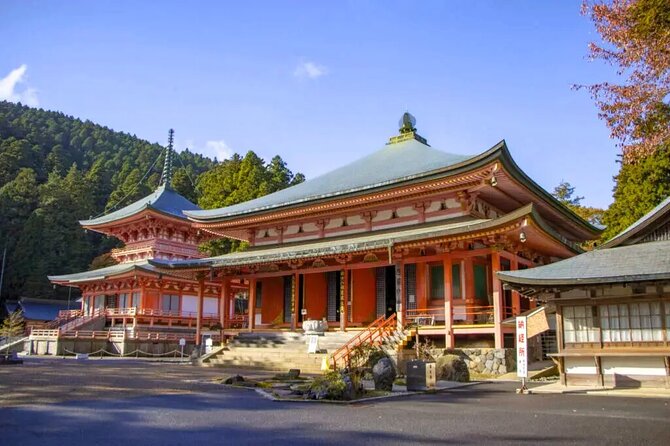
The Konpon Chudo is one of the key buildings on the visit. It is the temple’s grand hall and an important focal point for understanding Enryakuji. You are also scheduled to see Shaka-do, another significant hall within the complex.
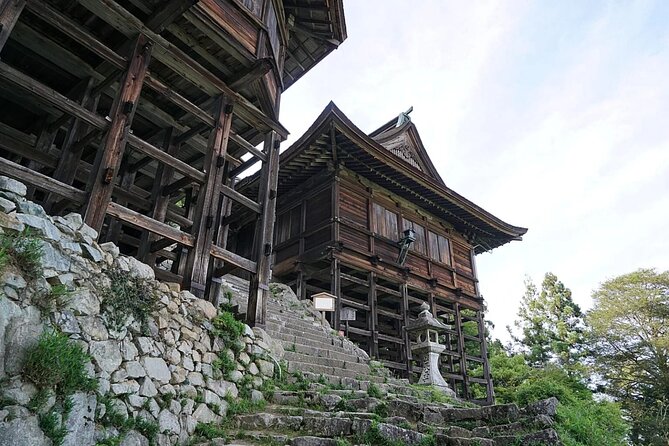
Enryakuji spreads across Mount Hiei rather than sitting as one compact building beside a road. That mountain setting is part of its character, but it also means you should expect walking between areas. The temple grounds, forest paths, and changing views make the visit feel spacious and reflective. At the same time, the size and slopes may be tiring if you want a completely effortless day.
I especially like the contrast between the two main stops. Hiyoshi Taisha brings you under the cedars, close to sacred trees and Kogane no Oiwa. Enryakuji feels more institutional and historically weighty, with major halls connected to Tendai Buddhism and Saichō’s work.
The tour description also refers to Zen traditions and Japan’s spiritual development. Enryakuji is specifically the head temple of Tendai Buddhism, so it is best to think of the day as a broad introduction to Japanese religious culture rather than a lesson in Zen alone.
What the $182.74 price really covers
At $182.74 per person, this is not a cheap way to fill a morning. The price makes more sense when you add up what is included: an English-speaking guide, transportation during the tour, and admission fees at all tour locations.
The train and cable car connections are important parts of the value. You do not have to work out the route to Hiyoshi Taisha, find the cable car, or handle admissions at the shrine and temple on your own. You also avoid spending the day watching the clock and worrying about the next connection.
A private visit would cost much more, while a self-guided trip could cost less. The tradeoff is that independent visitors have greater freedom and can choose their own lunch stop and pace. This tour is aimed at people who value explanation, transport help, and a well-planned route.
Lunch is not included. Set aside extra money for food, and ask the guide when the meal break will happen. The supplied details do not name a restaurant or specify a set lunch location, so do not assume that a meal is part of the booking.
The 12-person maximum helps support the price. A small group allows the guide to explain details at the shrine and temple without shouting across a crowd. It also makes it easier to keep the group together during the walking sections.
Who will enjoy this mountain day most
I would recommend this tour to you if you have already seen some of central Kyoto and want a quieter, more scenic outing. It is also a strong choice if religious history interests you, but you prefer seeing sacred places in their natural setting rather than visiting one urban temple after another.
It suits people who like a mix of transport and walking. The train and cable car provide memorable movement through the region, while Hiyoshi Taisha and Enryakuji require time on foot.
The tour may also work well for first-time visitors who want cultural context. A guide can explain why the shrine matters, what Kogane no Oiwa represents, and how Enryakuji fits into Japanese Buddhism. That extra layer can turn a pleasant mountain visit into a more meaningful one.
You should think twice if you want a slow day with no fixed schedule. Seven and a half hours is a long commitment, and the group will follow a planned route. You should also consider the walking if you have mobility concerns. The activity says most people can participate, but it does not give detailed information about walking distances, stairs, or terrain.
Practical details that shape the day
The tour starts at 9:00 a.m. at Starbucks Coffee in Kyoto Tower Sando and returns to that same meeting point. Allow enough time to reach Kyoto Station and find the correct Starbucks inside the Kyoto Tower area.
A mobile ticket is provided, which keeps the booking simple. Confirmation is received at the time of booking, and the activity is near public transportation.
The tour runs with a maximum of 12 people and includes an English-speaking guide. Guide Justin has been praised for being personable and for explaining Japanese culture clearly. Guides can vary by departure, so you should not assume he will lead every date.
Wear shoes that are comfortable for walking. The day includes shrine grounds, mountain paths, a cable car ride, and temple areas spread across Mount Hiei. The exact walking distance is not stated, so sensible footwear is the safest choice.
Build in flexibility for weather. The Lake Biwa views are an important part of the cable car ride and mountain visit, but cloud or haze can change what you see. The shrine and temple remain worthwhile for their cultural importance even when the outlook is not at its best.
Free cancellation is available if you cancel at least 24 hours before the start time. Cancellations made within 24 hours are not refunded, and late changes are not accepted. The cut-off uses local Japanese time.
Should you book Sacred Peak and Scenic View?
Book this tour if you want a guided mountain escape from Kyoto that combines nature, religious sites, and memorable transport. The pairing of Hiyoshi Taisha with Enryakuji is thoughtful, the Sakamoto Cable Car adds real scenic appeal, and the small group makes the day more personal than a large bus excursion.
The price is easier to justify if you would otherwise struggle to organize the train, cable car, admissions, and route yourself. It is less attractive if you are happy traveling independently or if you want lunch and every expense bundled into one fee.
For the best fit, choose it after checking that you are comfortable with a full day, walking around mountain sites, and paying separately for food. If that sounds right, this is one of Kyoto’s more rewarding ways to trade crowded city streets for cedar trees, Lake Biwa views, and the spiritual center of Mount Hiei.
FAQ
How long does the tour last?
The tour lasts approximately 7 hours and 30 minutes.
What time does the tour begin?
It starts at 9:00 a.m.
Where does the tour meet?
The meeting point is Starbucks Coffee in Kyoto Tower Sando, at Kyoto Tower, 7211 Higashishiokoji-cho, Shimogyo Ward, Kyoto 600-8216.
Where does the tour end?
The activity ends back at the meeting point.
Is lunch included?
No. Lunch is not included in the tour price.
Is transportation included?
Yes. Transportation during the tour is included, along with entry fees at all tour locations.
How large is the group?
The tour has a maximum of 12 travelers.
Recently added around Kyoto
- Higashiyama | Kyoto: Sakura Season Private Rickshaw Tour★ 5.0 · 3 reviews
- Kyoto Kimono Rental CHAMATSU|Kimono/Yukata Rental FamilyPlan★ 5.0 · 3 reviews
- Kyoto: Half-Day Private Guided Tour to the Old Town of Gion★ 4.4 · 3 reviews
- Nara Private Customizable Half Day Tour★ 5.0 · 3 reviews
- Kansai Region Hiking Adventure in Nara Kobe Kyoto and More★ 5.0 · 3 reviews
- Full Day Nara Deer, Temple, Shrine, Activities & Tea Ceremony★ 5.0 · 3 reviews
- Nara: Essential Private Tour with Deer Park and Temples★ 5.0 · 3 reviews
- Hiking Tour for Sacred Sites in Kyoto with a Guide★ 5.0 · 3 reviews
Kyoto Shrine Tours, compared.
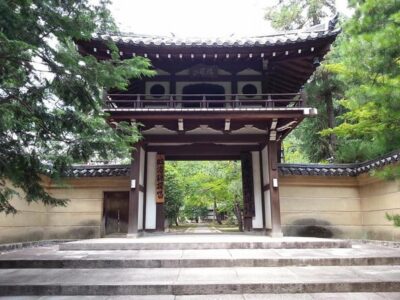
KYOTO Tea Ceremony with kimono near by Imamiya Jinjya Shrine
Read our review →
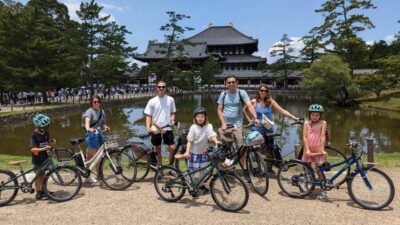
E-Bike Nara Highlights – Todaiji, Knives, Deer, Shrine
Read our review →
Kyoto Magical Night English Tour: Gion & Fushimi Inari Shrine
Read our review →
Fushimi Inari Shrine and Tofukuji Temple E-Bike Tour
Read our review →
Early Morning Fushimi Inari Shrine – Beat the Crowds
Read our review →Browse the lists this tour appears in