
REVIEW · FUSHIMI INARI SHRINE TOURS
Kyoto: Fushimi Inari Shrine Walking Tour
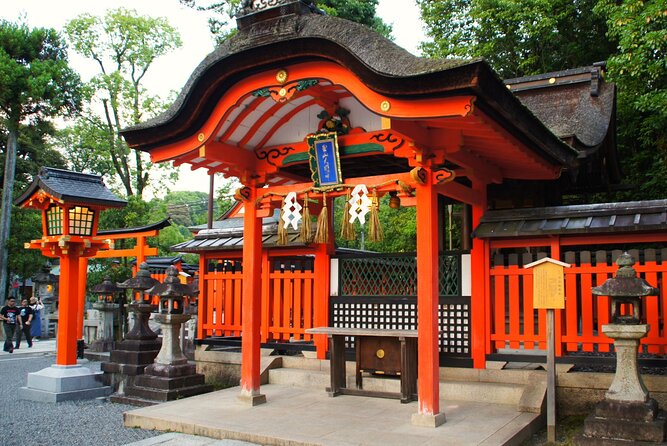
Fushimi Inari-taisha is more than a tunnel of orange-red gates. It is a working Shinto shrine where fox statues, offerings, prayers, and mountain paths all connect to the worship of Inari. This two-hour evening walk gives you the stories and customs that are easy to miss when you explore alone.
I like the small group limit of 10 people, which makes it easier to hear the guide and ask questions. I also like the mix of cultural explanation and walking, especially the scenic forest trails and viewpoints above Kyoto. The main drawback is simple: the route includes a climb, and Fushimi Inari can still be very busy even during an evening tour.
In This Review
- Key Points Before You Book
- Why Fushimi Inari Needs More Than a Photo Stop
- Starting at 6:00 pm Near the Shrine
- Entering Fushimi Inari-taisha
- Walking Through the Orange-Red Torii Gates
- Foxes, Inari Worship, and Shrine Rituals
- Forest Trails and Kyoto Viewpoints
- What the Two-Hour Format Gives You
- Is $39.64 a Fair Price?
- Who Will Enjoy This Walk Most?
- Practical Details That Matter
- Should You Book the Fushimi Inari Walking Tour?
- FAQ
- How long does the Fushimi Inari walking tour last?
- What time does the tour begin?
- Where does the tour meet?
- Where does the tour end?
- What is included in the price?
- How many people can join the tour?
Key Points Before You Book
- Fox statues have a purpose: Your guide explains how foxes relate to Inari worship and why they appear throughout the shrine.
- The famous gates lead into the forest: You walk beyond the main entrance along mountain trails, not just stop for the standard gate photographs.
- The 6:00 pm start changes the feel: Evening timing can help you experience the shrine after the busiest part of the day, though crowds may still be present.
- The group is capped at 10: This is small enough for a personal walk without paying for a fully private tour.
- The price is $39.64 per person: That is reasonable if you want cultural context, navigation, and a guided climb rather than a quick self-guided visit.
- You return to the starting point: The two-hour activity begins and ends near Daily Yamazaki Fushimi Inari Shrine.
Why Fushimi Inari Needs More Than a Photo Stop
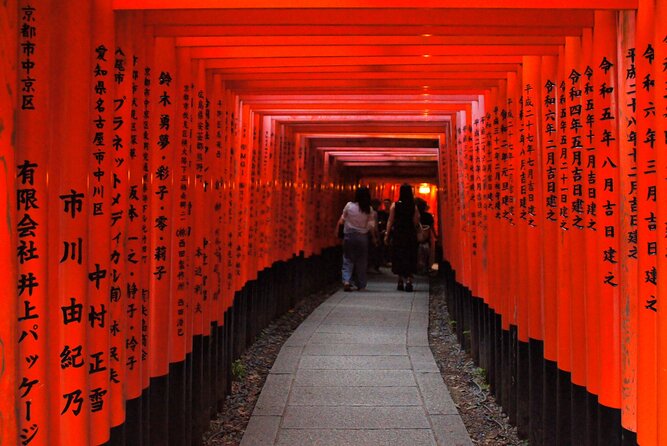
The orange-red torii gates are among Kyoto’s most familiar sights. Seen in photographs, they can look like a simple corridor through the trees. On foot, the experience is more layered. Each gate marks a donation to the shrine, and together they form a long route up Mount Inari.
The shrine is dedicated to Inari, a Shinto deity associated with rice, prosperity, business, and household well-being. Foxes appear throughout the grounds as messengers of Inari. That detail matters because it changes what you are looking at. A fox statue is not simply decoration, and the objects held in its mouth can carry meaning.
This tour is aimed at helping you read the place. You learn about shrine rituals, local customs, fox folklore, and the religious ideas connected to the gates. I find that useful at Fushimi Inari because the site is visually powerful but can otherwise feel like a long series of similar paths.
The guided format also helps with the shrine’s scale. You do not need to work out which trail to follow or decide how far to climb while trying to understand the site. Your guide takes care of the route while explaining what you see.
More ways to walk Fushimi Inari:
- Kyoto: Fushimi Inari, Kinkakuji, Bamboo Grove 1 Day Bus Tour
★ 4.8 · 4,316 reviews - Fushimi Inari Hidden Hiking Tour (Private Option Available)
★ 5.0 · 1,750 reviews - Kyoto/Osaka: Nara, Fushimi Inari Taisha, Arashiyama Bus Tour
★ 4.7 · 1,275 reviews
Starting at 6:00 pm Near the Shrine
The meeting point is Daily Yamazaki Fushimi Inari Shrine at 93 Fukakusa Inarionmaechō in Fushimi Ward. The tour begins at 6:00 pm and ends at the same meeting point, which keeps the logistics straightforward.
The location is near public transportation, making it practical to reach from other parts of Kyoto. You receive confirmation when booking, and the experience uses a mobile ticket. Keep your phone charged and have the booking details ready, since the meeting point is a shop near the shrine rather than a large formal tour office.
An evening start has both strengths and limits. It can bring a cooler, calmer feel to the forest paths, and the fading light may make the shrine feel more reflective. At the same time, the area can remain busy, especially near the entrance and the first section of gates. The tour does not promise an empty shrine, so book it for the guide’s insight rather than guaranteed solitude.
Entering Fushimi Inari-taisha
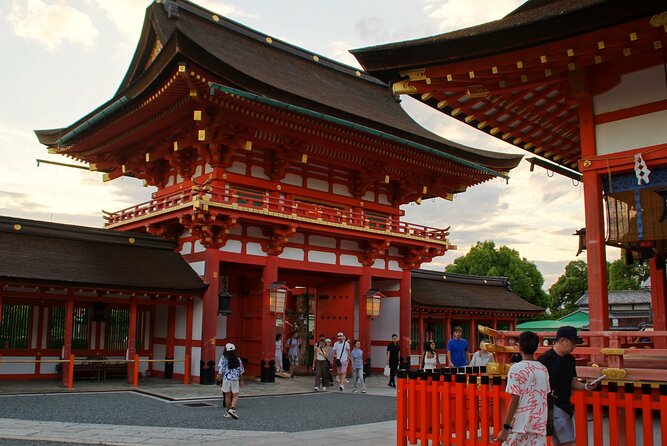
The walk begins at the shrine complex, where your guide introduces the religious setting before leading you farther into the grounds. This first explanation gives the visit a useful frame: you are not entering a themed attraction, but a sacred place that continues to serve local worshippers.
Expect to see torii gates in close succession as you move away from the main shrine area. The gates are striking, but the explanations add another layer. You learn why they were placed there and how donations connect to the continuing growth of the route.
The tour also covers traditional shrine practices. Your guide can explain the rituals taking place around you, helping you understand what is appropriate to observe and why certain gestures or offerings matter. This is one of the strongest reasons to choose a guided visit. Without context, it is easy to treat the shrine as a scenic walkway and miss the religious life around it.
The guide-led pace should also help you pause in the right places. Instead of stopping only at the busiest photo points, you can hear about details such as fox imagery, ritual spaces, and the meaning attached to different parts of the complex.
Walking Through the Orange-Red Torii Gates
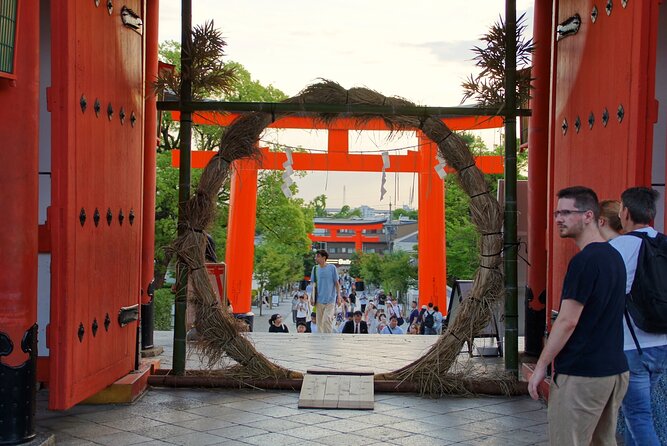
The central physical experience is the walk beneath the torii gates. The route feels enclosed at first, with repeated gates creating a strong visual rhythm. As you continue, the setting becomes more wooded and the sound of the city begins to fade.
That shift is important. Fushimi Inari is famous for its photographs, but its strongest moments often come when you stop looking at the gates as objects and notice how they guide you uphill through the trees. The tour’s historical and religious explanations help you see the route as a pilgrimage path, not just a photo backdrop.
The guide may also point out areas many people pass without noticing. The supplied experience details describe quieter paths, reflection spots, and sections that are often missed on a basic visit. Those stops can make the walk feel more personal, particularly if you have already seen the famous entrance images and want something beyond the standard view.
You should still expect other people around you. One of the strongest comments about the experience described it as busy but worth the effort. That is a fair warning. The opening gates can be crowded, and the narrow route requires patience when people stop for photos.
More Kyoto shrines:
- KYOTO Tea Ceremony with kimono near by Imamiya Jinjya Shrine
★ 5.0 · 343 reviews - Kyoto: 3-Hour Fushimi Inari Shrine Hidden Hiking Tour
★ 4.9 · 270 reviews - E-Bike Nara Highlights – Todaiji, Knives, Deer, Shrine
★ 4.8 · 186 reviews - Kyoto Magical Night English Tour: Gion & Fushimi Inari Shrine
★ 5.0 · 97 reviews
Foxes, Inari Worship, and Shrine Rituals
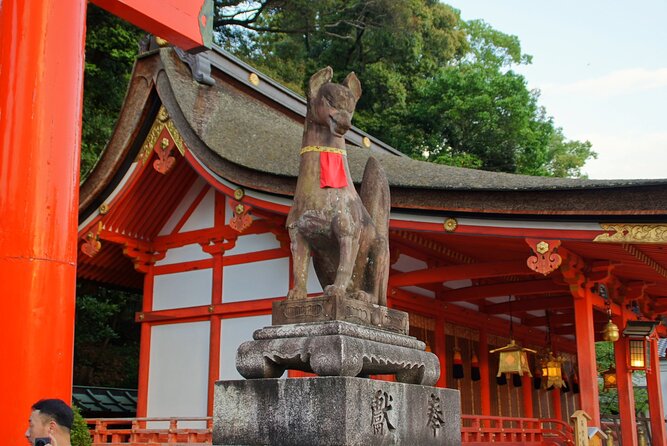
The cultural explanations are the heart of the walk. Inari worship is tied to rice, prosperity, and practical hopes, so the shrine connects spiritual belief with everyday life in Japan. Your guide explains how those traditions appear in the grounds and why visitors leave offerings or make prayers.
Foxes are central to the visual identity of Fushimi Inari. They are regarded as messengers of Inari, and different statues may be shown carrying symbolic objects. Learning those details gives you something specific to look for as you move through the shrine.
The tour also addresses the customs taking place around you. That can include how people approach a shrine, how they show respect, and how to interpret the various ritual spaces. I value this kind of explanation because it lets you observe without treating sacred actions as entertainment.
The experience is not presented as a lecture. The small group gives you room to ask questions about Japanese spirituality, local traditions, and the connection between the shrine and the surrounding district. Several descriptions of the walk stress the guide’s friendly manner and willingness to explain what the group sees. No individual guide is named in the available details, so you should not book expecting a particular person.
Forest Trails and Kyoto Viewpoints
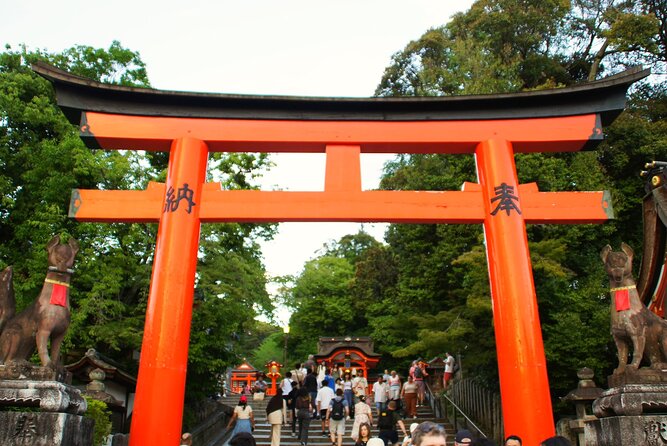
Fushimi Inari extends up Mount Inari, and the walk includes scenic trails rather than stopping at the lower shrine grounds. The route brings a moderate physical element to the tour. You should be comfortable walking uphill for part of the two hours and standing on an uneven outdoor route.
The reward is a change in atmosphere. The lower section is the most recognizable and often the most crowded. Farther along, the forest setting becomes more peaceful, and the gates are framed by trees rather than crowds. The walk also includes panoramic views toward Kyoto as you gain height.
The climb is not something to dismiss. One direct account described the route as quite a climb, even while praising the tour. If you want a flat cultural walk, this is not the right choice. Wear practical shoes, bring water, and avoid treating the experience as a quick stop between other attractions.
The evening timing may make the forest feel especially calm, but the exact light and crowd level will vary. You should also keep your expectations sensible about photography. Some of the best viewpoints may be reached during a steady group walk, so you will have time for photos but not unlimited time at every spot.
What the Two-Hour Format Gives You
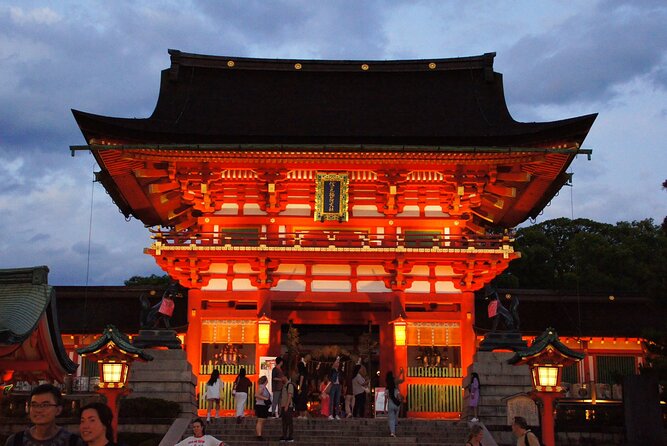
Two hours is long enough to go beyond the entrance without turning the visit into a full-day hike. It is also short enough to fit into a Kyoto evening, perhaps before dinner or after other sightseeing in the Fushimi area.
The time is best used for a focused introduction rather than a complete exploration of every trail on the mountain. Fushimi Inari is large, and you will not see every corner in two hours. The benefit is that you get a clear route with a guide who can select worthwhile sections and keep the group moving.
I like this format for a first visit. You learn how the shrine works, see the main torii route, walk through the forest, and reach viewpoints without spending hours trying to plan the route yourself. If you have already explored Fushimi Inari and want to hike much farther up the mountain, you may prefer an independent visit with more time.
The group cap matters here. With no more than 10 people, the guide should be able to keep the party together and answer questions without the feel of a large procession. It also makes it easier to hear explanations near the gates, where ambient noise and foot traffic can be distracting.
Is $39.64 a Fair Price?
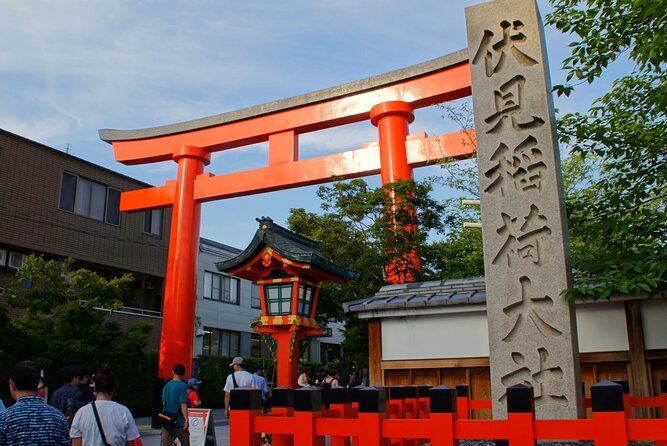
At $39.64 per person, this is not the cheapest way to see Fushimi Inari. Admission to the shrine itself does not require a separate fee, so you are paying mainly for the English-speaking guide, the route planning, historical context, and the convenience of moving through the site with someone who knows what to point out.
That price makes sense if you would otherwise arrive, take photographs, and leave without understanding the fox statues, torii donations, or rituals. The added value is not the ticket. It is the interpretation.
The price is also reasonable for a small group capped at 10 people. A large group could make the climb and explanations less enjoyable, while a private tour would cost more. This sits in the middle: more personal than a mass tour, but not priced like a private guide.
I would skip it if you are mainly seeking photographs and already know the shrine well. You can visit independently and spend as long as you like. I would choose it if this is your first Fushimi Inari visit, you want cultural background, or you prefer not to navigate a mountain shrine alone.
Who Will Enjoy This Walk Most?
This experience suits you if you want a blend of sightseeing and learning. It is especially useful for first-time visitors to Kyoto who recognize the torii gates but want to understand the place behind the image.
It also suits solo visitors and couples who like asking questions without arranging a private tour. The small group should help the walk feel more connected, and the guide can point out details that are easy to miss when you are focused on taking pictures.
You should be ready for a climb and an outdoor walk. Most people can participate, according to the activity information, but the route is not described as flat or effortless. If you have limited energy, the uphill sections may be the deciding factor.
Families with older children may also find the fox stories and repeated gates engaging, though the two-hour walk requires patience. Food and drinks are not included, and tips are optional, so plan those separately.
Practical Details That Matter
The activity includes an English-speaking guide, historical information about the district, and entry to Fushimi Inari-taisha Shrine. Food, drinks, and tips are not included.
The tour starts daily at 6:00 pm. It ends at the original meeting point, which is useful if you need to continue elsewhere in Kyoto afterward. The activity is near public transportation, but the provided details do not specify a particular train station or return route, so check your own connection before setting off.
Free cancellation is available if you cancel at least 24 hours before the local start time. Changes or cancellations made within 24 hours are not accepted for a refund.
The current rating is 5 out of 5 from 72 ratings, with a 100 percent recommendation figure. That strong response matches the clearest strengths of the experience: friendly guiding, useful cultural context, a well-managed pace, and access to quieter sections and viewpoints.
Should You Book the Fushimi Inari Walking Tour?
I would book this tour if you want Fushimi Inari to feel like a sacred mountain shrine rather than a line of orange gates. The guide’s explanations about Inari, fox messengers, rituals, and local customs give meaning to details you might otherwise pass without notice.
The best reason to book is the combination of a small group, a two-hour route, and forest viewpoints. The main reason to hesitate is the climb, along with the fact that the shrine can still be crowded at 6:00 pm.
For a first visit, $39.64 is a fair exchange for cultural context and easy navigation. For a repeat visit focused on photography or a longer hike, independent exploration may offer better value. Choose this walk when you want to understand Fushimi Inari as well as see it.
FAQ
How long does the Fushimi Inari walking tour last?
The tour lasts approximately two hours.
What time does the tour begin?
The activity begins daily at 6:00 pm.
Where does the tour meet?
You meet at Daily Yamazaki Fushimi Inari Shrine, 93 Fukakusa Inarionmaechō, Fushimi Ward, Kyoto, 612-0881, Japan.
Where does the tour end?
The activity ends back at the meeting point.
What is included in the price?
The price includes an English-speaking guide, historical insights into the district, and entry to Fushimi Inari-taisha Shrine.
How many people can join the tour?
The group has a maximum of 10 people.
More Walking Tours in Kyoto
- Kyoto Geisha Walking Tour: Gion District & Hidden Gems
★ 4.7 · 3,273 reviews - Kyoto: Gion Magical Night Walking Tour with Geisha Trivia
★ 4.9 · 2,393 reviews - Kyoto: Gion Geisha District Walking Tour – Stories of Geisha
★ 4.7 · 2,187 reviews - Night Walk in Gion: Kyoto’s Geisha District
★ 4.5 · 2,003 reviews
Recently added around Kyoto
- Higashiyama | Kyoto: Sakura Season Private Rickshaw Tour★ 5.0 · 3 reviews
- Kyoto Kimono Rental CHAMATSU|Kimono/Yukata Rental FamilyPlan★ 5.0 · 3 reviews
- Kyoto: Half-Day Private Guided Tour to the Old Town of Gion★ 4.4 · 3 reviews
- Nara Private Customizable Half Day Tour★ 5.0 · 3 reviews
- Kansai Region Hiking Adventure in Nara Kobe Kyoto and More★ 5.0 · 3 reviews
- Full Day Nara Deer, Temple, Shrine, Activities & Tea Ceremony★ 5.0 · 3 reviews
- Nara: Essential Private Tour with Deer Park and Temples★ 5.0 · 3 reviews
- Hiking Tour for Sacred Sites in Kyoto with a Guide★ 5.0 · 3 reviews
Fushimi Inari Shrine Tours, compared.
Fushimi Inari, Kinkakuji, Bamboo Grove 1 Day Bus Tour
Read our review →
Fushimi Inari Hidden Hiking Tour (Private Option Available)
Read our review →
Kyoto/Osaka: Nara, Fushimi Inari Taisha, Arashiyama Bus Tour
Read our review →
Nijo, Kinkaku-ji, Arashiyama, Kiyomizu & Fushimi Inari
Read our review →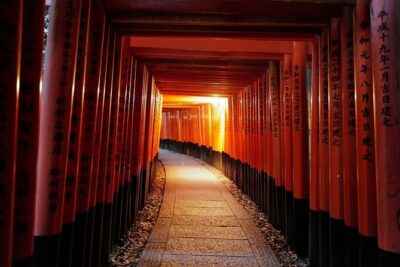

Kyoto Early Bird English Tour: Fushimi-Inari and Arashiyama
Read our review →
Fushimi, Arashiyama – Bamboo, Monkey, Torii & Secrets
Read our review →Browse the lists this tour appears in