
REVIEW · NARA DAY TRIPS
Nara: Great Buddha, Kasuga Shrine & Deer Park Tour
Nara’s famous deer are only the opening act. The real reward is seeing how Shinto belief, Buddhist power, and daily life meet in one walk through Japan’s old capital. You’ll feed the deer in Nara Park, follow lantern-lined paths to Kasuga Taisha, and finish beneath the enormous wooden roof of Todai-ji’s Great Buddha Hall.
I like two things here. First, the route joins Nara’s three essential sights without asking you to sort out temple tickets or shrine access yourself. Second, the guides tend to make the experience personal. Eri, Takashi, Yayoi, Teppei, and Nobu are praised for clear explanations, local suggestions, patience, and help with trains or buses after the tour.
The main consideration is the pace. The tour lasts three hours, with plenty of walking and steps, and the deer park paths can be hot, rainy, or crowded. You’ll see the major sights, but this is not a slow, lingering day at each one.
In This Review
- Key points to know before booking
- Why this three-hour Nara route works
- Meeting your guide at Himuro Shrine
- Nara Park and the deer: more than a photo stop
- Kasuga Taisha and its lantern-lined forest paths
- Todai-ji and the colossal Great Buddha
- What the guides add to the experience
- Is $77 a good value?
- Who should book this Nara tour?
- Final call: book it for context, not just convenience
- FAQ
- How long does the Nara tour last?
- Where does the tour begin?
- Where does the tour end?
- Which sights are included?
- Is Todai-ji admission included?
- Is Kasuga Taisha admission included?
- Are deer crackers included?
- What languages are available?
- Can I book a private tour?
Key points to know before booking
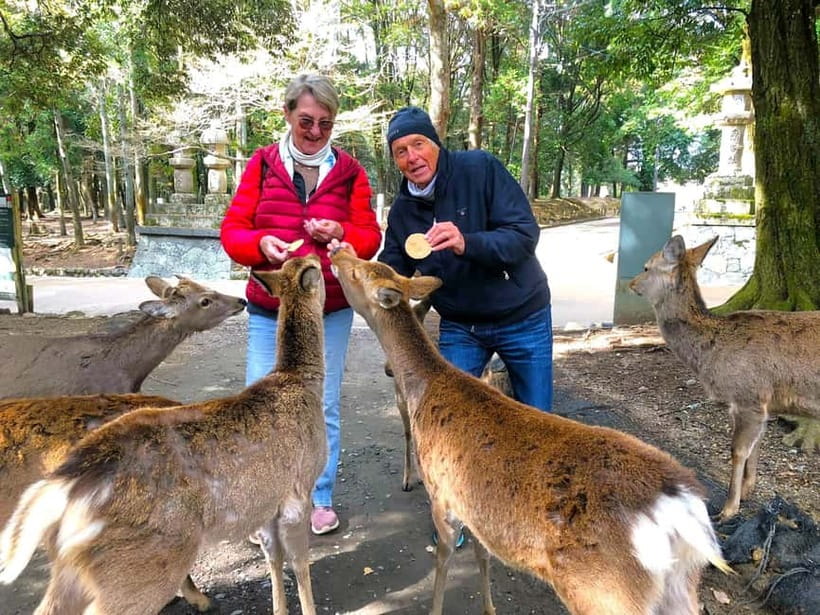
- Feed Nara’s sacred deer: Deer crackers are included, giving you a simple way to interact with the animals while learning why they matter in Shinto tradition.
- Enter Kasuga Taisha’s special inner area: The tour includes admission beyond the basic shrine grounds, plus an explanation of purification and shrine customs.
- Finish at Todai-ji’s Great Buddha: Admission to the temple is included, so you can stand before one of Japan’s most powerful religious monuments without arranging a separate ticket.
- Start at Himuro Shrine: Meet your guide in front of the torii gate, where they will hold a yellow DeepExperience sign.
- Learn from a live English-speaking guide: The tour is offered in English or Japanese, with private and small-group formats available.
- Plan for a walking tour: Nara Park, Kasuga Taisha, and Todai-ji are linked by pleasant paths, but you should be ready for three hours on your feet.
Why this three-hour Nara route works
Nara can look easy on a map. The sights sit close enough together to tempt you into a quick self-guided loop. But the meaning behind them is not always obvious. Why do deer roam freely? Why are there so many lanterns at Kasuga Taisha? Why is Todai-ji’s Buddha so huge?
A good guide connects those questions. This tour moves from nature and Shinto practice to Buddhist architecture and imperial history in a sensible order. Nara was Japan’s first permanent capital in the eighth century, and its religious buildings helped shape the country’s early identity.
The schedule gives about 30 minutes to Nara Park, one hour at Kasuga Taisha, and one hour at Todai-ji. The remaining time covers walking between the sites and the practical business of getting oriented. You will not visit every corner of the park or shrine, but you will get a focused introduction to Nara’s best-known landmarks.
The tour ends near Kasuga Taisha’s second torii gate, with two listed drop-off points in the same area. That matters if you want to continue sightseeing, find lunch, or make your own way back toward Nara’s stations.
More day trips to Nara:
- World Heritage Kyoto & Nara Uji Authentic Matcha Experience
★ 5.0 · 1,573 reviews - Nara Half Day Trip Walking Tour (Private Option Available)
★ 5.0 · 937 reviews - Nara Early Morning Tour (Kyoto or Osaka Departure Available)
★ 5.0 · 676 reviews
Meeting your guide at Himuro Shrine
Your tour begins in front of the torii gate of Himuro Shrine. Look for the guide holding a yellow sign with the DeepExperience logo. This is a useful arrangement because the torii gives you a clear landmark rather than sending you into a busy station or an unnamed street corner.
The meeting point also places you near Nara Park and the main cultural sights. You need to arrange your own transportation to Himuro Shrine, and transport to or from the meeting point is not included. If you are arriving from Kyoto or Osaka, leave enough time to find the shrine before the scheduled start.
The guides are a major part of the experience. English-speaking guides including Eri, Takashi, Yayoi, Yoshi, Nobu, Tomoe, Ryan, and Teppei have been praised for warmth, clear historical explanations, and willingness to answer questions. Some guides also help with practical matters. Nobu walked one guest to the train station and assisted with buying an express train ticket. Takashi helped guests with local bus information and sent photos afterward.
That extra help is not guaranteed as a formal part of the tour, but it shows the kind of useful contact you may get from a private or small-group format. If you have particular interests, such as Japanese religious customs, local food, or transportation, ask early. The guides are used to adjusting the conversation.
Nara Park and the deer: more than a photo stop
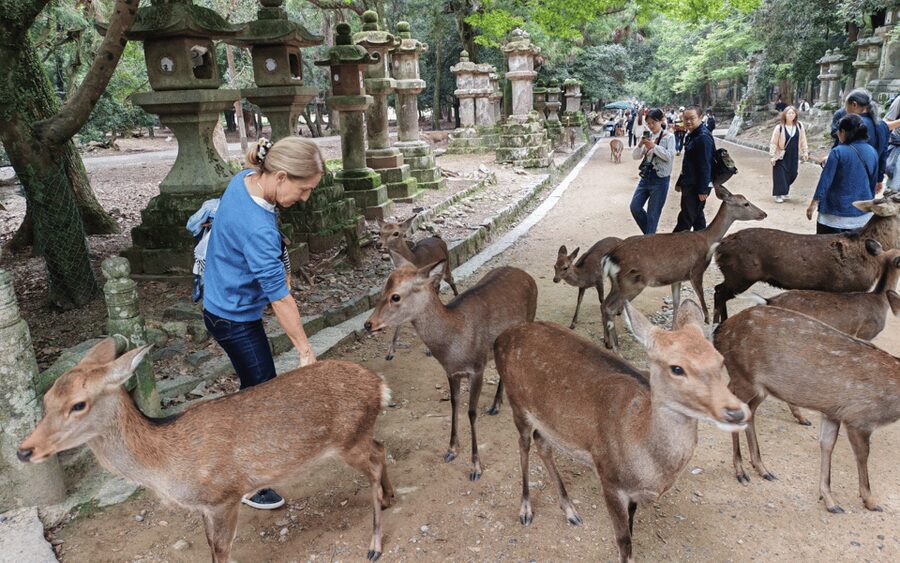
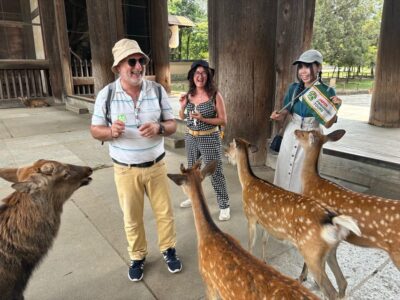
Nara Park is the most playful part of the tour. Deer move freely through the open parkland, and you can buy or receive special deer crackers, called shika senbei, to feed them. These are the correct food for the animals, so use the crackers rather than offering snacks from your own bag.
Your guide explains the deer’s role as sacred messengers in Shinto belief, especially in connection with Kasuga Taisha. Their presence gives Nara a quality you will not find at a standard temple complex. You are not simply looking at an old monument. You are watching a living tradition play out around you as deer wander past worshippers, families, and tour groups.
There is a practical side to the encounter. Deer are accustomed to people, but they are still animals. Keep the crackers visible, feed them carefully, and follow your guide’s instructions. Once your crackers are gone, show the deer your empty hands. This helps prevent a persistent animal from expecting more.
The 30-minute park visit is enough for an introduction and a few photographs. It is not enough for a long walk through every section of Nara Park. That is fine for a first visit, especially if the deer are your main interest and you want to save your energy for Kasuga Taisha and Todai-ji.
The park can be demanding in summer. One guide supplied neck coolers during a very hot outing, while another tour continued successfully in heavy rain. Those personal touches may depend on the guide and conditions, so bring water and weather protection rather than counting on extra supplies.
Kasuga Taisha and its lantern-lined forest paths
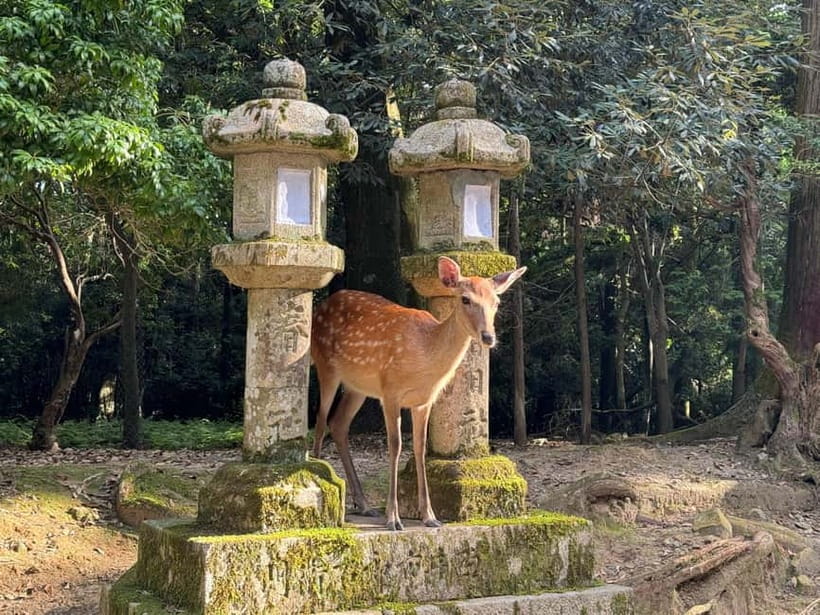
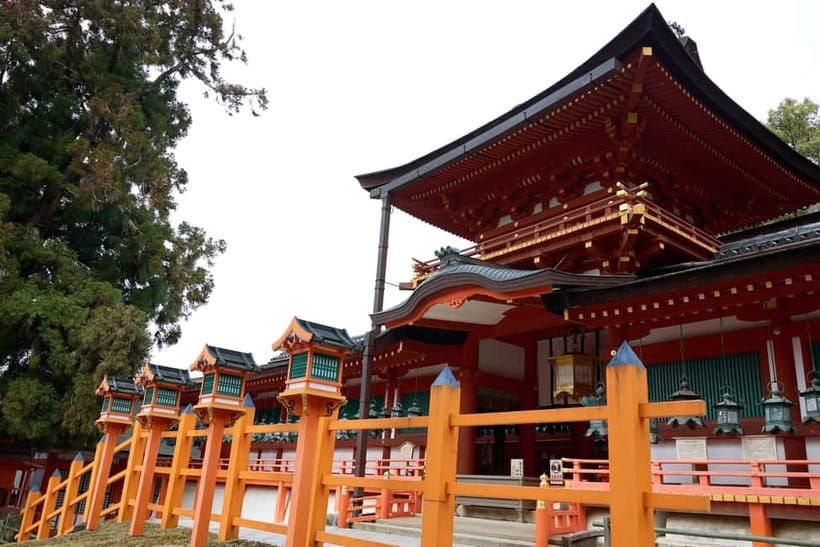
From the park, the route continues to Kasuga Taisha, one of Nara’s most important Shinto shrines. Founded in 768 for the powerful Fujiwara clan, the shrine served as a place of ritual and aristocratic worship. Its setting is just as important as its buildings: the shrine is surrounded by an old forest preserved for more than a thousand years.
The walk to Kasuga Taisha helps you shift pace. Todai-ji is about monumental scale, while Kasuga feels quieter and more intimate. Stone lanterns line the approach, and bronze lanterns hang around the shrine buildings. Worshippers donated these lanterns over many generations, creating a visual record of devotion.
During special festivals, the lanterns are illuminated. On a normal visit, you will generally see them unlit, but their number and placement still make the approach memorable. Your guide can explain how the lanterns relate to prayer, offerings, and the shrine’s long connection with the Fujiwara family.
The tour includes the shrine’s special inner shrine admission. This is an important value point because you are not limited to a quick look at the outer approach. You also receive an explanation of Shinto practices, including purification and architectural features that may otherwise seem mysterious.
Pay attention to the small rituals. Shinto spaces are not simply old buildings to photograph. The torii marks a transition into sacred ground, purification prepares visitors for worship, and the arrangement of the shrine buildings reflects religious customs. A guide helps you understand what to do and what you are seeing without turning the visit into a lecture.
The one-hour stop is well judged for a first visit. You have time to appreciate the approach, enter the included area, ask questions, and take pictures. If you want a very quiet visit or a long forest walk, you may want to return independently after the tour.
More Kyoto shrines:
- E-Bike Nara Highlights – Todaiji, Knives, Deer, Shrine
★ 4.8 · 186 reviews - E-Bike Nara Highlights – Todaiji, Knives, Deer, Shrine, and Gems
★ 4.5 · 34 reviews - Full Day Nara Deer, Temple, Shrine, Activities & Tea Ceremony
★ 5.0 · 3 reviews - KYOTO Tea Ceremony with kimono near by Imamiya Jinjya Shrine
★ 5.0 · 343 reviews
Todai-ji and the colossal Great Buddha
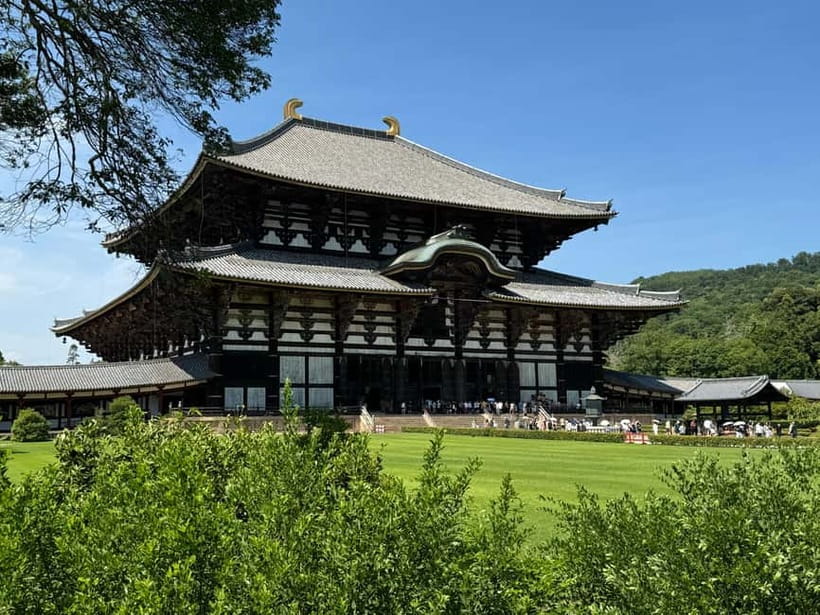
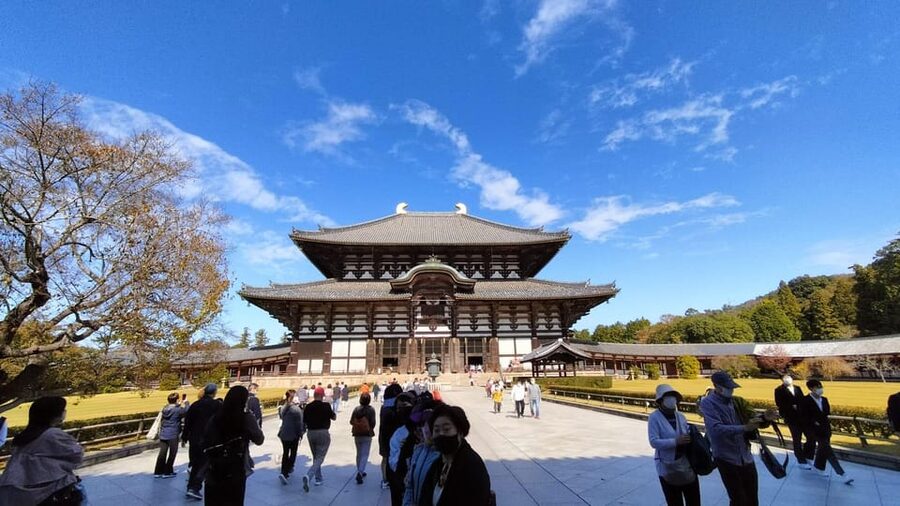
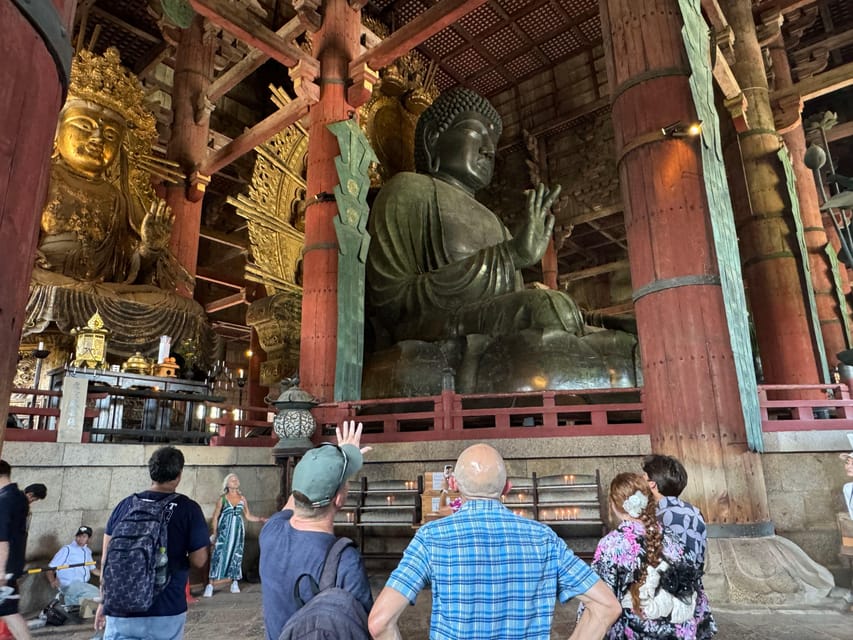
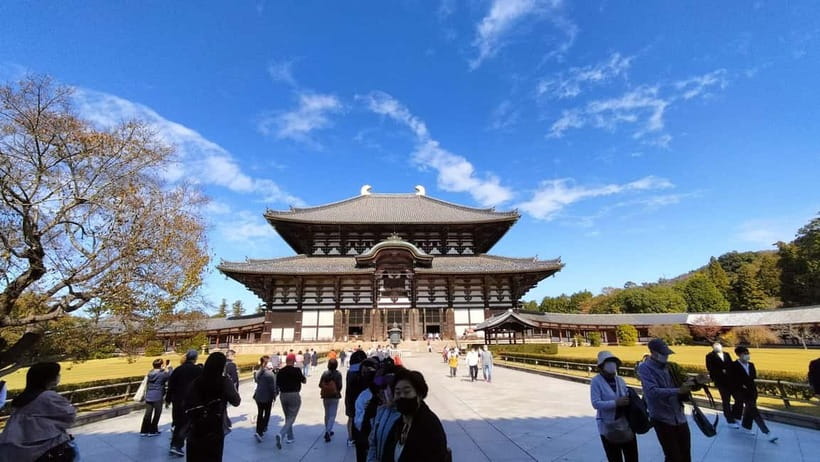
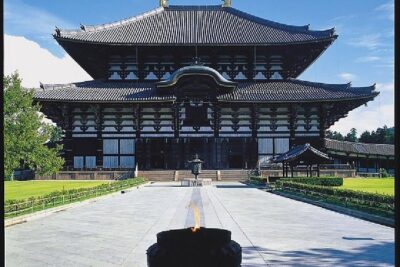
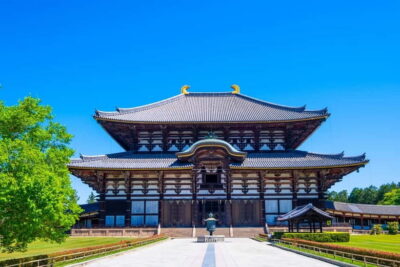
Todai-ji provides the tour’s grand finish. You enter the Daibutsuden, or Great Buddha Hall, a huge wooden structure that is among the largest of its kind in the world. Inside is the bronze Great Buddha, cast in the eighth century and representing Vairocana Buddha.
The first impression is scale. The hall is enormous, and the statue makes individual visitors look tiny. Yet the Buddha’s calm expression keeps the experience from feeling like a display of brute size. The monument reflects both spiritual ambition and the political power of early Japan.
Your guide explains the effort required to create the statue and the hall. That context matters. Without it, you may see a large bronze figure in a famous building. With it, you can better understand why Todai-ji became such a central symbol of Nara and early Japanese Buddhism.
Todai-ji admission is included. This saves you one decision and makes the final stop easy to enjoy. The one-hour visit gives you time for the hall, the Buddha, photographs where permitted, and questions about Buddhist imagery and construction.
Todai-ji can be the busiest stop on the route. The scale draws large numbers of people, and the approach may feel less quiet than Kasuga Taisha. Still, the contrast works well. Kasuga introduces you to a forest shrine and native Japanese religion. Todai-ji brings you into a vast Buddhist monument built with national ambition.
What the guides add to the experience
The strongest reason to book a guided walk is not simply navigation. Nara’s famous places are easy to find, but their religious symbols and historical connections are less easy to read.
Guides such as Takashi and Eri have been praised for giving clear explanations while leaving time for photos and questions. Teppei is noted for patience and for discussing Japanese daily life as well as temple history. Yayoi brings energy to the story of Nara, while Yoshi is praised for answering questions with care. Tomoe made a private tour feel relaxed, and Hana combined English conversation with Japanese practice.
These details suggest a useful pattern: the tour is not locked into one stiff script. A small group or private booking gives you more room to ask about subjects that interest you. You may discuss Shinto and Buddhism, Japanese customs, food, local transportation, or quieter places around the main route.
Some guides also offer practical food suggestions. Eri helped guests with restaurant ideas and local recommendations. Those tips can be especially useful because the tour ends near the shrine rather than at a single restaurant or station.
The quality of a walking tour depends heavily on the person leading it. The high 4.8 rating from 62 reviews and the repeated praise for specific guides suggest strong consistency, but you should still treat the exact guide as part of the day’s variable. The listed languages are English and Japanese.
Is $77 a good value?
At $77 per person, this is not the cheapest way to walk through Nara. You can visit public areas on your own and read about the sights before arriving. The price makes more sense when you count what is included: a live guide, Todai-ji admission, Kasuga Taisha’s special inner shrine admission, and deer crackers.
The real value is time and interpretation. In three hours, you move through the park, shrine, and temple without stopping to work out where to go next or how the religious sites fit together. For a first visit to Nara, that can prevent a pleasant morning from becoming a string of disconnected photo stops.
The price is easier to justify for a private or small group, especially if you want to ask questions or need help with transport afterward. Solo visitors and couples may find the personal attention worthwhile. Larger families should compare the total cost with a self-guided visit, especially if everyone is comfortable reading signs and managing tickets.
Food, drinks, and transportation to and from the meeting point cost extra. Plan for those separately. The included crackers are a small item, but they make the deer encounter easier and more orderly.
You can cancel up to 24 hours in advance for a full refund, and the reserve-now, pay-later option keeps your plans flexible. Check the available start times before booking because the tour is three hours long and the conditions in Nara can change with the season.
Who should book this Nara tour?
I would choose this tour for a first-time visitor who wants the essential Nara sights with clear cultural context. It also suits anyone traveling on a tight schedule from Kyoto or Osaka, since the route concentrates the park, shrine, and Great Buddha into one guided outing.
Families may like the deer crackers and the change of scenery between outdoor paths and grand interiors. A private format can make the pace easier for children or older relatives, although the walking and steps still deserve attention.
This is also a good choice if you care about the difference between Shinto and Buddhism. The tour does not treat Kasuga Taisha and Todai-ji as interchangeable old buildings. It shows how two belief systems shaped the city side by side.
You may prefer to explore alone if you want to spend hours photographing lanterns, wander deep into the park, or visit at your own slow pace. Three hours is a focused introduction, not a full-day Nara program. You will also need to manage your own food and return transport.
Final call: book it for context, not just convenience
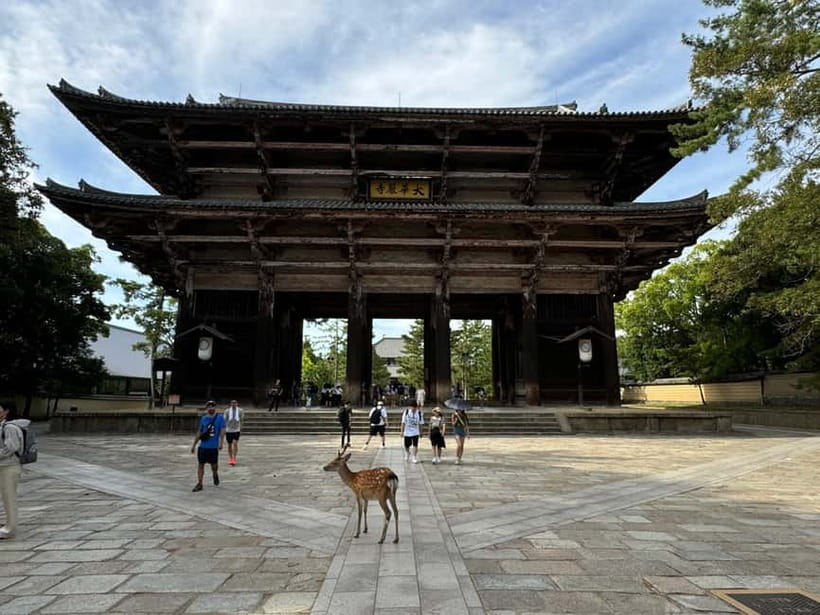
Book this tour if you want Nara’s famous sights to make sense, not merely appear on your camera. The deer are memorable, but the stronger experience comes from linking them to Kasuga Taisha, then seeing Todai-ji as the Buddhist answer in wood and bronze.
The included admissions and crackers make $77 reasonable, especially for a small or private group. Just wear comfortable shoes, prepare for weather, and expect a steady walk. If you want a friendly guide who can answer questions and help with the next leg of your journey, this is a practical way to spend three hours in Nara.
FAQ
How long does the Nara tour last?
The tour lasts three hours.
Where does the tour begin?
It begins in front of the torii gate of Himuro Shrine. Your guide will hold a yellow sign with the DeepExperience logo.
Where does the tour end?
The tour has two listed drop-off locations near Kasuga Taisha’s second torii gate, including 二之鳥居 and 春日大社二之鳥居.
Which sights are included?
The tour visits Nara Park, Kasuga Taisha, and Todai-ji Temple.
Is Todai-ji admission included?
Yes. The Todai-ji Temple admission fee is included.
Is Kasuga Taisha admission included?
Yes. Admission to Kasuga Taisha’s special inner shrine area is included.
Are deer crackers included?
Yes. Deer crackers, called shika senbei, are included for feeding the deer in Nara Park.
What languages are available?
The live tour guide is available in English or Japanese.
Can I book a private tour?
Yes. Private and small-group formats are available.
Recently added around Nara
- Nara Private Customizable Half Day Tour★ 5.0 · 3 reviews
- Full Day Nara Deer, Temple, Shrine, Activities & Tea Ceremony★ 5.0 · 3 reviews
- Nara: Essential Private Tour with Deer Park and Temples★ 5.0 · 3 reviews
- Discover the Essence of Nara Ink Through Your Senses★ 5.0 · 3 reviews
- Private Journey in Nara’s Historical Wonder★ 5.0 · 3 reviews
- Nara:Private Tea Ceremony(Max 5 ppl) -Master Matcha Making-★ 5.0 · 3 reviews
- Nara Takayama Tea Whisk Craft and Tea Culture Experience★ 5.0 · 3 reviews
- Nara: Half-Day Private Tour of 4 Must-See Spots & Deer Park★ 5.0 · 3 reviews
Nara Day Trips, compared.
World Heritage Kyoto & Nara Uji Authentic Matcha Experience
Read our review →
Kyoto/Osaka: Nara, Fushimi Inari Taisha, Arashiyama Bus Tour
Read our review →
Nara Half Day Trip Walking Tour (Private Option Available)
Read our review →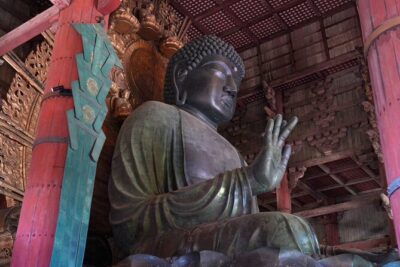
Nara Early Morning Tour (Kyoto or Osaka Departure Available)
Read our review →
Kyoto/Osaka: Kinkakuji, Bamboo Forest, and Nara Deer Park
Read our review →Browse the lists this tour appears in