
REVIEW · NARA DAY TRIPS
Nara Private Tour: Flexible Pickup from Kyoto, Osaka, or Nara
Nara’s best moments are wonderfully close together: deer wander through the park, stone lanterns line the forest at Kasuga Taisha, and Todai-ji’s enormous wooden hall puts Japan’s early Buddhist age into physical form. This private tour lets you choose three or four major sights instead of marching through a fixed checklist.
I like the flexible format and the chance to have a local guide explain details you could easily miss on your own. I also like that guides such as Toshi, Kiyoto, and Chiko have adjusted the day to suit different interests and walking speeds. The main catch is simple: entrance fees, meals, transport, and optional private driving are extra, so the final cost can rise beyond the advertised $131.38 per person.
In This Review
- Key points at a glance
- Why a private Nara day works so well
- Starting with deer at Nara Park
- Todai-ji and the Great Buddha
- Kasuga Taisha among lanterns and forest
- Naramachi, the old merchant quarter
- Shosoin and the material world of the Nara period
- Heijō Palace Site and the first capital
- Yakushi-ji’s twin pagodas
- Horyu-ji, the long-distance choice
- What the guides add to the day
- Cost, transport, and walking
- Who should book this Nara tour?
- Should you book it?
- FAQ
- Where does the tour start and end?
- Can I be picked up from Kyoto, Osaka, or Nara?
- How long does the tour last?
- How many sights can I choose?
- Are admission fees included?
- Is transportation included?
- Is this a private activity?
Key points at a glance
- Choose your own Nara: Select three or four places from temples, shrines, gardens, deer parks, and historic districts.
- Private attention: Only your group takes part, allowing the guide to adjust the pace and explain sites in a more personal way.
- Todai-ji is the anchor: Plan about 90 minutes for the Great Buddha and its huge wooden hall.
- Kasuga Taisha takes time: Its lanterns, deer, and forest setting deserve more than a quick photo stop.
- Meet at JR Nara Station: The listed start and finish are at the station, though pickup is offered and should be confirmed before booking.
- Budget for extras: Admission, food, public transport, and optional private transport are not included.
Why a private Nara day works so well
Nara was Japan’s first permanent capital, and its central sights give you a compact introduction to the country’s early court and Buddhist culture. The city is easy to remember because the experience is not only about buildings. You get deer in the park, quiet paths through old forest, grand wooden architecture, and a traditional merchant quarter.
A private format is useful here because the possible stops are quite different. You can focus on major landmarks, spend more time in quiet places, or add a historic neighborhood for a slower walk. Your guide can help you avoid wasting time on a site that does not match your interests.
The advertised duration is about four to eight hours. That is a wide range, but it reflects the custom nature of the outing. Three nearby highlights can fit into a shorter half-day. Horyu-ji, Heijō Palace Site Historical Park, or Yakushi-ji require more planning and may make the day longer.
You should choose your three or four priorities before meeting your guide. If you arrive with a long wish list, the day can become a rushed series of photo stops. A short list gives you time to look, ask questions, and enjoy Nara at a human pace.
More day trips to Nara:
- World Heritage Kyoto & Nara Uji Authentic Matcha Experience
★ 5.0 · 1,573 reviews - Nara Half Day Trip Walking Tour (Private Option Available)
★ 5.0 · 937 reviews - Nara Early Morning Tour (Kyoto or Osaka Departure Available)
★ 5.0 · 676 reviews
Starting with deer at Nara Park
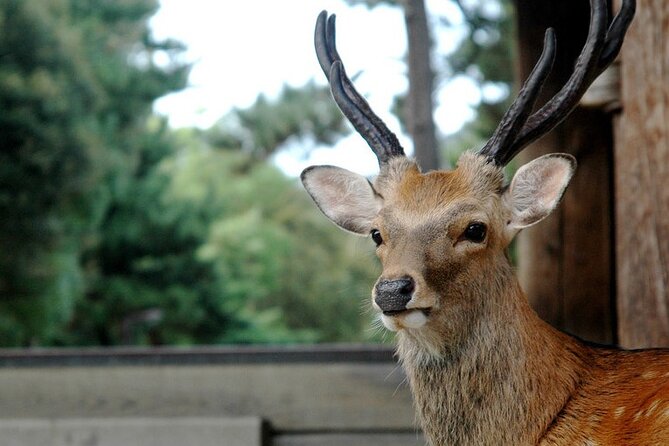
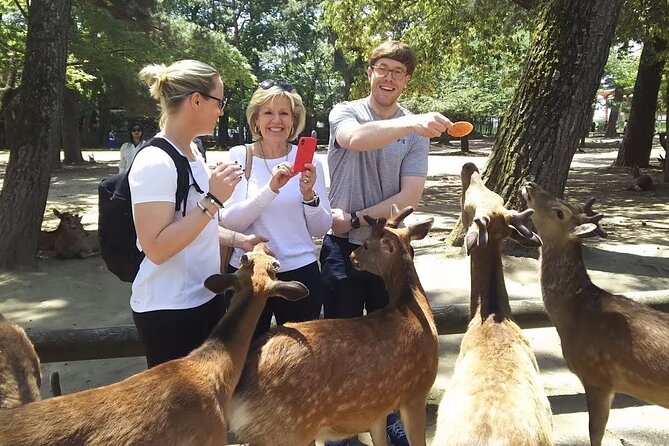
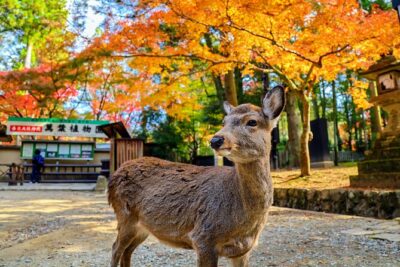
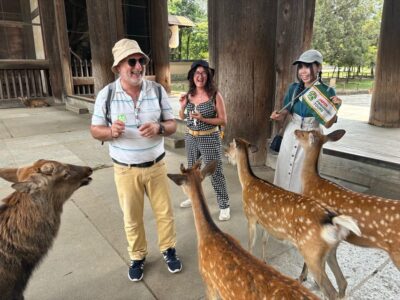
Nara Park is the natural first chapter for many people. The free-roaming deer are the city’s signature sight, and you can see them moving around the park near major religious sites. They are considered messengers of the gods, which gives the encounter a place in local tradition rather than making it just an animal photo opportunity.
The listed time here is only 15 minutes, but that is best treated as a minimum rather than a full visit. If you want time with the deer, photos, and a proper walk toward Todai-ji or Kasuga Taisha, you will need to discuss the schedule with your guide.
The park can feel playful and relaxed, but keep your attention on the animals and your belongings. The supplied information does not specify feeding arrangements, so ask your guide about the correct local practice rather than assuming what is allowed.
Nara Park also works as a practical connector. Todai-ji and Kasuga Taisha are both associated with the park, so combining them can reduce unnecessary backtracking. If you want a quieter outdoor day, the park can also lead toward Mt. Wakakusa, which several reported outings paired with Kasuga Taisha and other nearby sights.
Todai-ji and the Great Buddha
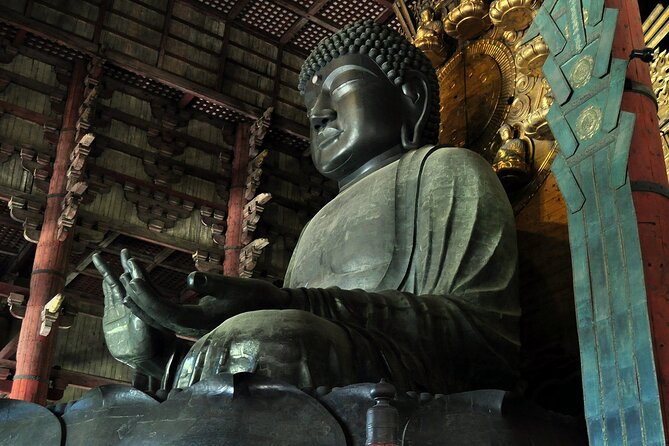
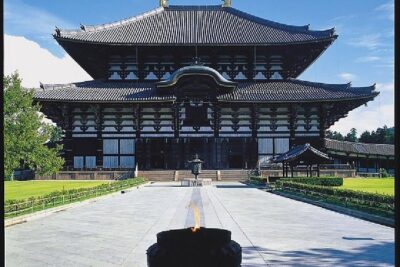
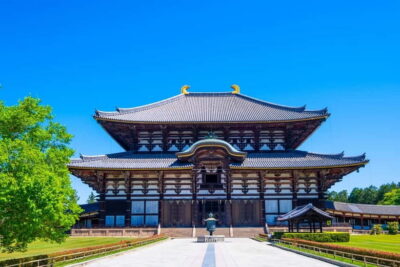
Todai-ji is the major architectural event of the tour. Its Daibutsuden, or Great Buddha Hall, is one of the world’s largest wooden buildings, and inside you find the enormous Daibutsu statue. Even before you know the details, the size of the hall changes your sense of scale.
The planned visit lasts about 90 minutes, which is sensible. You need time to take in the building from outside, enter the hall, see the Great Buddha, and hear why the temple matters. A local guide can connect the structure to Nara’s role as the early capital and explain the religious purpose behind its grand scale.
Admission is listed as free in the supplied details, but the general inclusions say entrance fees for you and the guide are not included. That is a point to clarify before the day begins, since the two details do not fully agree. Ask the provider what, if anything, is payable at Todai-ji.
Todai-ji is the stop I would protect if time becomes tight. It is Nara’s most recognizable sight, and it gives the day a strong center. Still, do not let the Great Buddha crowd every other choice off your plan. Kasuga Taisha offers a very different mood, and Naramachi gives you a look at ordinary town life.
Kasuga Taisha among lanterns and forest
Kasuga Grand Shrine, also called Kasuga Taisha, is the quieter counterpoint to Todai-ji. Its vermilion buildings, ancient forest, and thousands of stone and bronze lanterns create a more gradual experience. Instead of one huge interior space, you move through a sacred setting where details appear along the path.
The suggested visit is 90 minutes, and I would keep that time. The lanterns are the visual draw, but the surrounding forest is just as important. Deer are also connected with the shrine as divine messengers, so the stop brings together Nara’s two familiar themes: sacred animals and old religious tradition.
The main admission fee is not included. You also need to account for walking. The tour calls for moderate physical fitness, and comfortable shoes are a must. Outdoor conditions matter here, since the activity operates rain or shine.
Several possible day plans described in the tour material included Kasuga Taisha with Mt. Wakakusa and Isuien Garden. Those combinations suit you if you prefer trees, paths, views, and a less museum-like day. They also depend more on weather than a temple-focused route.
A few more Nara experiences worth comparing
- Nara 6hr Private Tour with Government-Licensed Guide
★ 5.0 · 219 reviews - Nara: Private Tour with Private Guide
★ 4.8 · 66 reviews - Private Nara Tour and Sake Tasting (Departing from Kyoto/Nara)
★ 5.0 · 40 reviews - Nara: Private Walking Tour with a Local
★ 4.3 · 36 reviews
Naramachi, the old merchant quarter
The old town area is filled with traditional wooden machiya houses, small shops, and cafés. It gives you a useful change of scale after the grand temples. Here, you are looking at the kind of buildings and streets connected with merchant life rather than imperial or religious power.
The area is well suited to a leisurely walk. You might find the atmosphere more relaxed than at the headline sights, and a guide can point out features of the traditional wooden homes that are easy to pass without noticing.
Naramachi also makes a smart choice for a group with mixed interests. Someone who has had enough temple architecture can enjoy the streets and cafés, while a history-minded visitor still gets a sense of how Nara developed beyond the palace and shrine grounds.
The supplied schedule does not give a fixed length for this stop. That is another reason to name it as one of your priorities in advance. It can be a brief walk or a meaningful part of the day, depending on your chosen route.
Shosoin and the material world of the Nara period
Shosoin is described as a historic treasure house preserving imperial objects from the eighth-century Nara period. Its collection includes silk textiles, musical instruments, and pieces showing Silk Road influence. These objects help you understand that ancient Japan was connected to wider Asian trade and culture.
The listed time is 15 minutes, so this is a short stop rather than a full museum session. You should confirm exactly what can be viewed during your visit. The supplied details describe the collection and historical role, but they do not promise a particular exhibition or interior access.
I would choose Shosoin if you enjoy objects, craftsmanship, and cultural connections. If your priority is dramatic architecture or open-air scenery, Todai-ji, Kasuga Taisha, or Heijō Palace may give you more immediate impact.
Heijō Palace Site and the first capital
Heijō Palace Site Historical Park takes you back to the city’s imperial center. This was the palace of Japan’s first permanent capital, and reconstructed buildings such as the Audience Hall help you picture court life during the Nara period.
The suggested visit is 90 minutes, with admission not included. The site is a good choice for someone who wants political and civic history alongside temples. It can also balance a day that otherwise focuses heavily on deer and Buddhist monuments.
The palace area differs from the compact park sights. Make sure your guide explains how it fits into the day’s transport plan, especially if you are relying on trains or buses. All public transport fares for you and the guide are extra.
Yakushi-ji’s twin pagodas
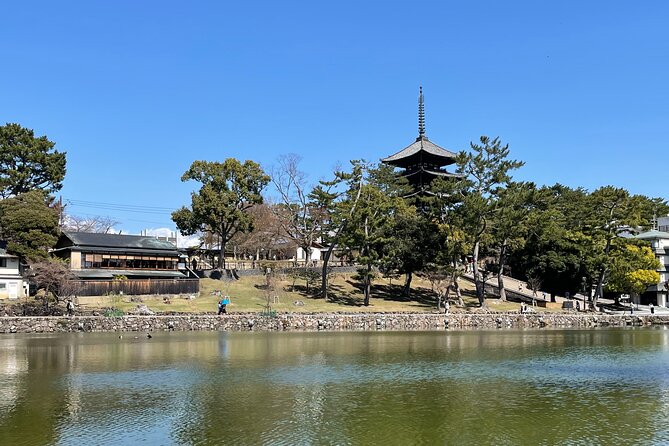
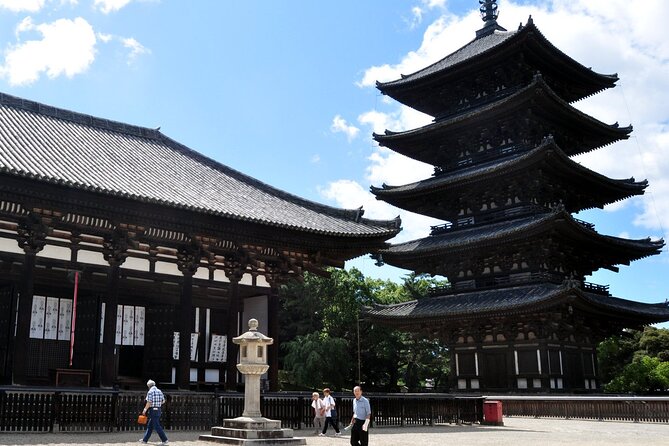
Yakushi-ji is dedicated to Yakushi Nyorai, the Buddha of healing. Its twin pagodas and refined architecture make it a strong choice for you if temple design interests you, but you want something beyond Todai-ji’s massive scale.
The suggested visit is 30 minutes, and admission is not included. That short timing makes it easier to add to a broader route, though you should not expect a long, unhurried exploration at that pace.
Yakushi-ji works best as part of a temple-focused day. Pairing it with Heijō Palace or Horyu-ji creates a more historically focused outing, while pairing it with Nara Park and Kasuga Taisha gives you a wider sample of the city.
Horyu-ji, the long-distance choice
Horyu-ji is a UNESCO World Heritage site and home to the world’s oldest wooden buildings. Founded by Prince Shotoku, the complex includes a five-story pagoda and Main Hall. The planned visit is two hours, making it the most time-hungry option on the list.
This is the choice for you if ancient wooden architecture is the main reason you came to Nara. It offers a different kind of importance from Todai-ji: less overwhelming mass, more attention to early timber construction and the survival of very old structures.
Because the visit is longer and the tour does not include transport fares, Horyu-ji may not fit comfortably with several central Nara stops in a four-hour outing. Ask your guide to build the route around it rather than trying to squeeze it into the final hours.
What the guides add to the day
The guide is the core service included in the price. The strongest praise centers on friendliness, patience, local familiarity, and the ability to adjust plans as the day develops. Toshi is described as sharing personal knowledge of Nara and Japanese culture, while Kiyoto is noted for adapting the route to changing needs. Chiko is praised for helping fit a great deal into a day.
That flexibility matters more than a memorized speech. You can ask for clearer explanations, slow down at a favorite site, or shift the balance toward nature, shrines, old streets, or architecture.
The experience is not equally strong for every style of visitor. One assessment found the guide friendly but felt the explanations were limited and the route could have included another place. I would treat that as useful planning advice: tell your guide what level of historical detail you want, and agree on the number of stops before setting out.
The tour is private, so only your group participates. That makes conversation easier and avoids being tied to strangers with different energy levels. It also means the value depends partly on your group size. At $131.38 per person, a solo booking costs more per head than a larger private group, while group discounts may improve the price for families or friends.
Cost, transport, and walking
The $131.38 price covers a professional local guide, not a complete day package. Meals and drinks for you and the guide are extra. Public transportation fares for both are extra, and private transport can be arranged for an additional fee.
Pickup is offered, but the stated meeting point is JR Nara Station at 1 Sanjohonmachi. The listed end point is back at the meeting point. If you are coming from Kyoto, Osaka, or another part of Nara, confirm the exact pickup arrangement before booking rather than assuming a hotel transfer is included.
This matters because the route options are spread across different parts of the city. Central highlights are easier to combine on foot, while Horyu-ji and some other choices may require more transport planning.
Expect a moderate amount of walking. Wear comfortable shoes, and remember that the tour runs rain or shine. Outdoor stops such as Nara Park, Kasuga Taisha, and Mt. Wakakusa are more pleasant in good weather, but the private format still gives you a chance to adjust the emphasis.
Free cancellation is available up to 24 hours before the start time. Changes or cancellations inside that window are not accepted for a refund.
Who should book this Nara tour?
I would choose this experience if you want a custom day rather than a fixed group route. It suits first-time visitors who want help linking Nara Park, Todai-ji, Kasuga Taisha, and Naramachi without spending the day figuring out the order.
It also suits families and friends who have different priorities. One person can focus on deer, another on old buildings, and another on gardens or palace history. The guide can shape the day around the group instead of forcing everyone into the same pace.
I would think twice if you want transport, admissions, meals, and a fixed all-inclusive price. This is a guide service with optional transport, not a fully packaged sightseeing vehicle. You also need to be comfortable walking and making choices.
Should you book it?
Book this private Nara tour if personal planning and local explanation matter more to you than a fixed itinerary. Pick three or four sights, protect enough time for Todai-ji and Kasuga Taisha, and ask about admission and pickup details before paying.
For the best value, book with a small group, state your interests clearly, and decide if Horyu-ji belongs in the plan before the day begins. If you want Nara’s famous deer, major temples, and old town with room to adjust, this is a flexible and sensible way to do it. If you want every cost included or prefer to see the city independently, the extra planning and add-on fees may not suit you.
FAQ
Where does the tour start and end?
The listed meeting point is JR Nara Station at 1 Sanjohonmachi, Nara. The activity ends back at the meeting point.
Can I be picked up from Kyoto, Osaka, or Nara?
Pickup is offered, but the supplied details do not specify the exact locations or any related fee. Confirm the pickup arrangement with the provider before booking.
How long does the tour last?
The experience lasts approximately four to eight hours. The exact length depends on your chosen sights and route.
How many sights can I choose?
You are asked to select three to four must-see places from the available options.
Are admission fees included?
The general inclusions state that entrance and admission fees for you and the guide are not included. However, Todai-ji and Nara Park are shown with free admission in the stop details, so confirm the current arrangements for each selected site.
Is transportation included?
No. Public transportation fares for you and the guide are extra. Private transportation is optional and costs an additional fee.
Is this a private activity?
Yes. Only your group participates in the tour, and the guide can adjust the pace and focus around your selected stops.
Recently added around Nara
- Nara Private Customizable Half Day Tour★ 5.0 · 3 reviews
- Full Day Nara Deer, Temple, Shrine, Activities & Tea Ceremony★ 5.0 · 3 reviews
- Nara: Essential Private Tour with Deer Park and Temples★ 5.0 · 3 reviews
- Discover the Essence of Nara Ink Through Your Senses★ 5.0 · 3 reviews
- Private Journey in Nara’s Historical Wonder★ 5.0 · 3 reviews
- Nara:Private Tea Ceremony(Max 5 ppl) -Master Matcha Making-★ 5.0 · 3 reviews
- Nara Takayama Tea Whisk Craft and Tea Culture Experience★ 5.0 · 3 reviews
- Nara: Half-Day Private Tour of 4 Must-See Spots & Deer Park★ 5.0 · 3 reviews
Nara Day Trips, compared.
World Heritage Kyoto & Nara Uji Authentic Matcha Experience
Read our review →
Kyoto/Osaka: Nara, Fushimi Inari Taisha, Arashiyama Bus Tour
Read our review →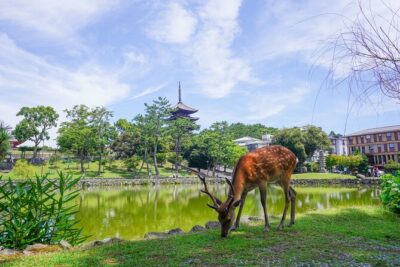
Nara Half Day Trip Walking Tour (Private Option Available)
Read our review →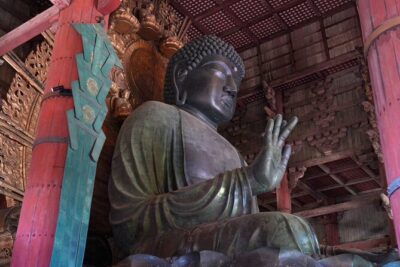
Nara Early Morning Tour (Kyoto or Osaka Departure Available)
Read our review →
Kyoto/Osaka: Kinkakuji, Bamboo Forest, and Nara Deer Park
Read our review →Browse the lists this tour appears in