
REVIEW · GION GEISHA DISTRICT TOURS
MEET MAIKO: Meet-&-Greet, Maiko Show & Experience in Kyoto
Kyoto’s Maiko are not actors in costume. They are young women training in the traditional arts of dance, music, manners, and conversation. This 45-minute program gives you a direct introduction through two short dances, a question period, and a personal photo session.
I like the chance to ask questions rather than simply watch from a distance. I also like the Hanameishi, a cheerfully customized name card presented by the Maiko, which is more personal than the usual paper souvenir. The main point to consider is the performance length: both dances together last only about 8 to 10 minutes, so this is mainly a meeting and cultural introduction, not a full stage show.
In This Review
- Key points at a glance
- Meeting a Maiko at Kyoto Handicraft Center
- Two dances in about ten minutes
- A clear English introduction to Maiko and Geiko life
- The question period is the heart of the visit
- Ten to fifteen minutes for photographs
- The Hanameishi makes the goodbye personal
- Is $50.08 a fair price?
- Who will get the most from this activity?
- Planning your arrival and departure
- Should you book Meet Maiko?
- FAQ
- How long does the Maiko experience last?
- Where does the experience take place?
- What happens during the 45-minute program?
- Is the experience private?
- Can I take photographs?
- Are seats provided?
- Is transportation included?
- Can I cancel for a refund?
Key points at a glance
- Two traditional dances: The performance portion lasts about 8 to 10 minutes in total, giving you a focused look at Maiko dance.
- Direct questions: An English-speaking staff member provides background, then you can ask the Maiko questions yourself.
- Personal photo time: You get 10 to 15 minutes for commemorative pictures using your own camera or smartphone.
- Small-group setting: The capacity is 30 people, with seats for everyone and free seating.
- Kyoto Handicraft Center venue: The activity begins and ends at 17 Shogoin Entomicho, with Japanese goods available for browsing afterward.
- Simple, flexible booking: Confirmation arrives at booking, and cancellation is free up to 24 hours before the start time.
Meeting a Maiko at Kyoto Handicraft Center
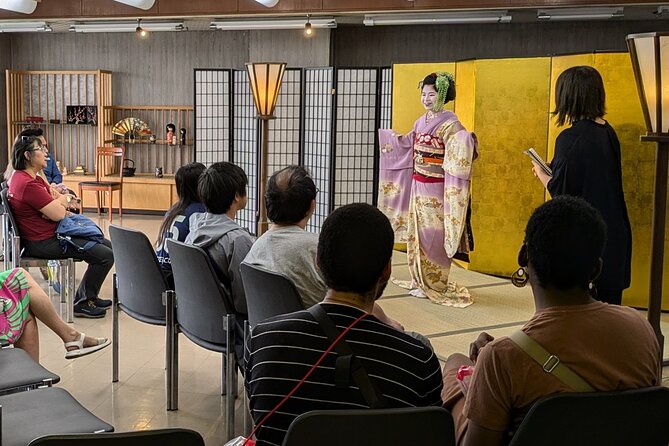
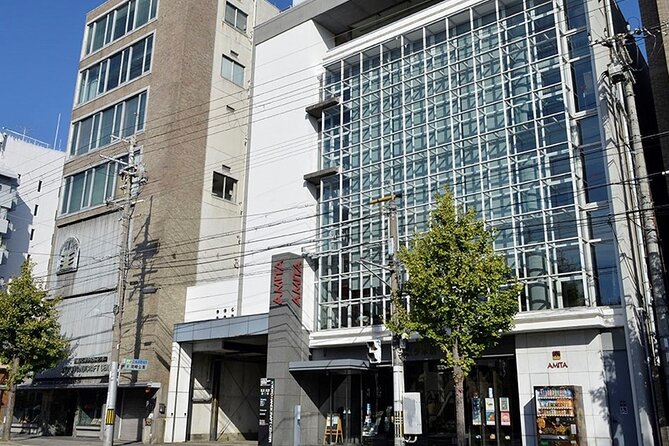
The activity takes place at Kyoto Handicraft Center, at 17 Shogoin Entomicho in Sakyo Ward. This is useful if you want to pair the event with time looking at Japanese crafts, since you can browse the center after the presentation.
Reception opens 30 minutes before the scheduled start. I would arrive at least 10 minutes early, and earlier if you are coming by bus. Kyoto buses can be crowded, and taxis can be hard to catch during busy seasons. The practical lesson is simple: allow extra time rather than planning to arrive at the last minute.
This is a shared activity, not a private appointment. Up to 30 people can take part, and seating is free seating, but everyone can sit. That makes the experience more relaxed than standing in a crowded viewing area, though you will not have a private conversation with the Maiko.
The meeting point is also the end point. There is no included transportation or hotel pickup, so you handle your own route to the center. The venue is near public transportation, but the supplied information does not specify a particular station or bus route, so check your route on the day of your visit.
More evenings in Gion:
- Kyoto Geisha Walking Tour: Gion District & Hidden Gems
★ 4.7 · 3,273 reviews - Kyoto: Gion Magical Night Walking Tour with Geisha Trivia
★ 4.9 · 2,393 reviews - Kyoto: Gion Geisha District Walking Tour – Stories of Geisha
★ 4.7 · 2,187 reviews
Two dances in about ten minutes
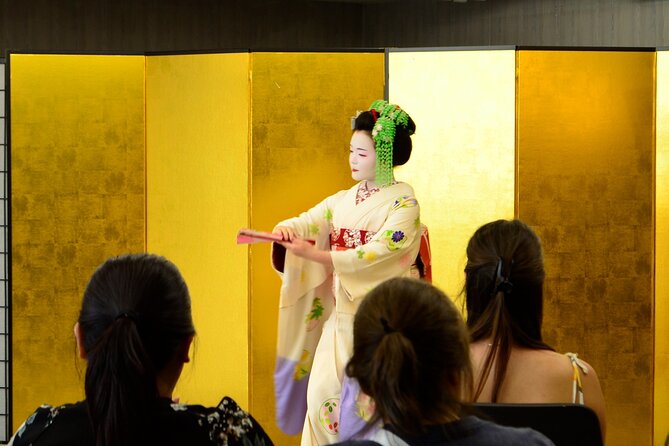
The program begins with an introduction, followed by two traditional dances. Together, they take about 8 to 10 minutes. This is the most visually striking portion, with the Maiko’s formal clothing, careful movements, and composed stage presence offering a brief look at a demanding traditional art.
Keep your expectations in the right place. You are not attending a long theater performance or a full evening of entertainment. The dances are short by design, and much of the value comes from seeing them in person before learning about the world behind the performance.
Photography is allowed during the event. That means you can take pictures during the dances, though you should remain considerate of the people seated around you and avoid letting your phone block their view. The formal setting and detailed costume make this a good moment to have your camera ready.
The short dance segment may feel too brief if performance time is your main reason for booking. If you want a longer cultural show, you should treat this activity as an introduction rather than a concert. If your goal is a close look at Maiko tradition followed by conversation and photos, the format makes more sense.
A clear English introduction to Maiko and Geiko life
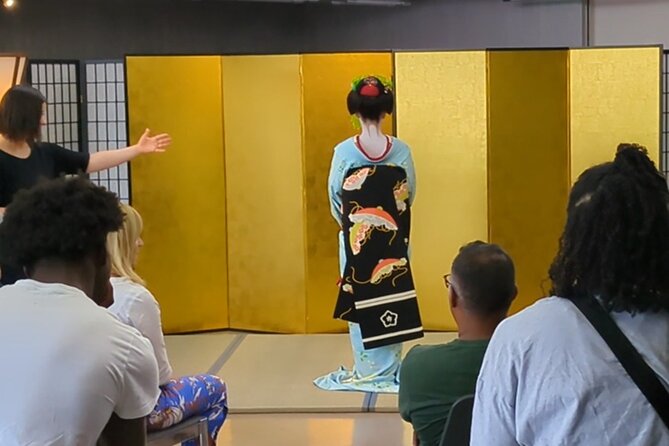
After the dances, an English-speaking staff member explains the basic background of the Maiko and Geiko world. This is important because the clothing, training, customs, and titles can be unfamiliar if you are encountering them for the first time.
The explanation is brief, so it should give you a useful foundation without turning the 45-minute event into a lecture. You will learn enough context to make the dance and conversation easier to understand, then have a chance to ask about what interests you most.
The distinction between Maiko and Geiko is part of what makes this experience meaningful. A Maiko is a young apprentice in Kyoto’s traditional entertainment world, while Geiko is the Kyoto term commonly used for a fully trained performer. The activity may feature a Maiko or Geiko, so the exact person appearing can vary.
The staff member’s role also helps keep the session moving. With as many as 30 people, a little structure matters. You get background in English, then the questions are handled in a way that lets the whole group participate.
The question period is the heart of the visit
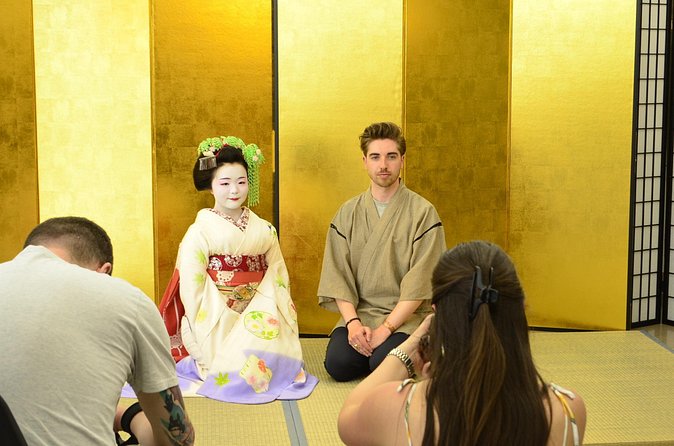
The question and answer session gives this activity its strongest personal touch. Instead of only watching a formal dance, you can ask the Maiko about her work and daily world through the support of the English-speaking staff.
You should think about questions before arriving. A short session can pass quickly, and a prepared question is more useful than trying to think of one on the spot. Ask about the performance, training, clothing, customs, or the path from Maiko to Geiko, as long as your question fits the time and setting.
The event does not promise a private conversation, so your questions are shared with the group. That is a reasonable tradeoff for the price and the chance to meet a real practitioner of the tradition rather than simply seeing a costumed presentation.
The strongest element here is the Maiko’s presence. The program gives you a chance to notice her poise and manner at close range, then hear answers directly. That personal exchange is likely to stay with you longer than a short dance viewed from a distant theater seat.
A few more Kyoto experiences worth comparing
- Kyoto Gion Cultural Walk & Geisha Show with Dining Options
★ 5.0 · 518 reviews - Kyoto Gion Cultural Walk & Geisha Show with Dining Options
★ 5.0 · 483 reviews - 1 Hour Geisha Show in Kyoto
★ 5.0 · 452 reviews - Kyoto: Samurai Kenbu Traditional Sword Dancing Show
★ 4.5 · 426 reviews
Ten to fifteen minutes for photographs
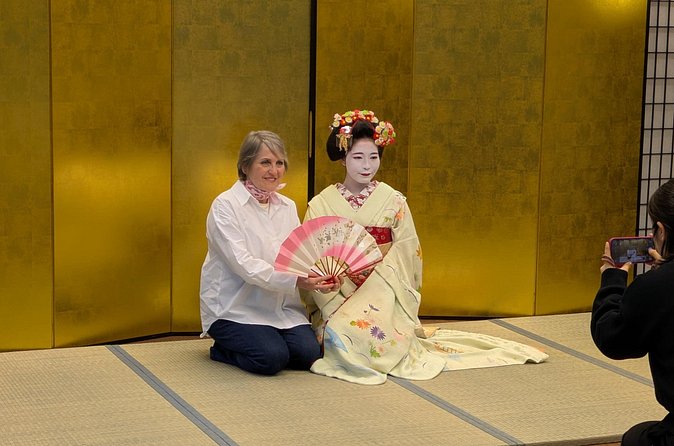
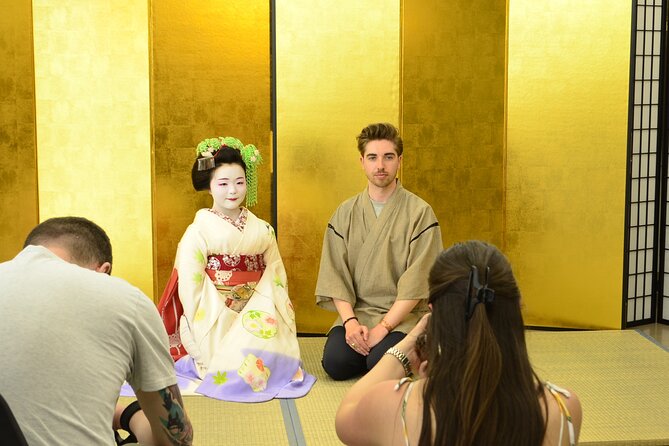
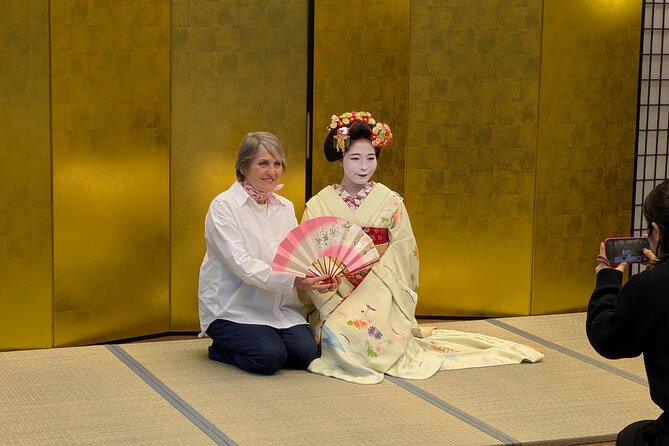
After the questions, the schedule sets aside 10 to 15 minutes for photos with the Maiko. You use your own camera or smartphone, and a photographer is not included.
This is a practical arrangement for most people. You do not need to pay for a separate photo package, and you keep the images immediately. It also means you may need to ask another person in the group or a staff member to take the picture, so have your phone ready and know how you want the shot framed.
Because the group can include up to 30 people, the photo period is shared. You should expect a commemorative picture rather than a long private portrait session. The time is enough for a simple photograph, but not for endless retakes or a large collection of posed images.
Photography is permitted during the event, and the photo session is one of the clearest reasons to choose this program over a performance you can only watch. You leave with a personal record of the meeting, provided your own device is working and ready.
The Hanameishi makes the goodbye personal
Before you leave, the Maiko presents a Hanameishi. This is a customized name card, traditionally connected with a Maiko’s name and presentation style. It is a small item, but it gives the experience a distinct ending.
You also receive a small gift. Neither item replaces a larger souvenir, but both are included and easy to carry. I appreciate this kind of ending because it connects the memory to the person you met, rather than handing you a generic brochure on the way out.
After the show, you have the opportunity to shop for high-quality Japanese goods at the Kyoto Handicraft Center. Shopping is not part of the ticket price, and you are not required to buy anything. Still, the location makes it convenient if you want to continue with craft browsing instead of heading directly to your next sightseeing stop.
Is $50.08 a fair price?
At $50.08 per person, this is not the cheapest way to spend 45 minutes in Kyoto. The dance portion is short, and transportation, food, drinks, and a local guide are not included.
The value comes from access. You are paying for a scheduled meeting with a real Maiko or Geiko, English support, two dances, a question session, photographs, a custom Hanameishi, and a small gift. For someone specifically interested in Kyoto’s traditional arts, that combination is more useful than paying only to watch a brief performance.
I would book it if you want a compact cultural activity that fits neatly between other plans. You receive a clear beginning and end, guaranteed seating, and a chance to ask questions. It also works well for families and first-time visitors who want an introduction without committing to a much longer evening program.
I would hesitate if you mainly want an extended dance show. In that case, 8 to 10 minutes of performance may not feel like enough for the price. The Q&A and photo time are not extras tacked on at the end. They are a major part of what you are buying.
The average booking lead time is about 18 days. That suggests you should not assume you can leave this until the last afternoon of your trip, especially if your Kyoto dates are fixed. Confirmation is provided at booking, and free cancellation is available until 24 hours before the start time.
Who will get the most from this activity?
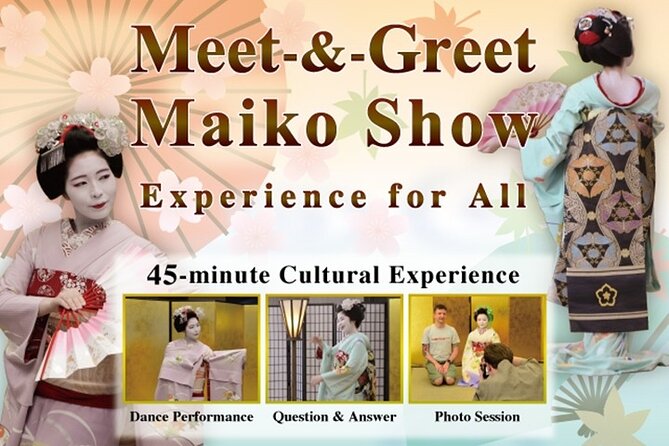
This experience suits you if you want direct contact with Kyoto culture in a short format. It is especially appealing if you enjoy asking questions, taking photos, and learning the meaning behind a performance rather than simply watching from a theater seat.
It is also a good choice for a first visit to Kyoto. The staff provides English background, the event lasts less than an hour, and the craft center gives you somewhere to browse afterward. You can add it to a day of sightseeing without giving up half a day.
Families can take part, since most people can participate and all participants can be seated. The group size is limited to 30, which is more manageable than a large public show, though the experience is still shared and not tailored to one family.
You may want to skip it if you dislike group activities or want an entirely private encounter. The program is not private, and the photo session and questions must fit the group schedule. You should also pass if your priority is a long dance performance rather than an introduction to the person and tradition.
Planning your arrival and departure
The activity does not include a shuttle, taxi, or local guide. You make your own way to Kyoto Handicraft Center and return from the same location after the program.
Build in extra time for Kyoto traffic. City buses may be crowded, and taxis can be difficult to find during high season. Arriving 30 minutes early gives you time for reception and avoids the stress of rushing in wearing the wrong expression for a formal cultural event.
If you arrive late, you can still enter during the event. That is helpful, but it is better treated as a safety net rather than a plan. Late entry may mean missing the introduction or part of the dance, and your arrival could disturb the seated group.
Bring the phone or camera you want to use for photos. A photographer is not provided, and the included commemorative photo uses your own equipment. Since the program moves from dance to explanation to questions to photographs, it helps to have your device charged and ready before the start.
Should you book Meet Maiko?
Book this experience if you want a brief, personal introduction to Kyoto’s Maiko and Geiko tradition, with enough time to ask questions and take a photo. The best parts are the Maiko’s graceful presence, the direct conversation, and the custom Hanameishi at the end.
Do not book it expecting a full-length performance. The dances last only 8 to 10 minutes in total, and the rest of the 45 minutes is devoted to explanation, questions, photographs, and the farewell gift.
For the right audience, the price is fair because the meeting itself is the point. For a longer stage show, spend your budget elsewhere. For a compact cultural experience with a real person, English assistance, seating, and a useful location near Japanese crafts, this is a sensible Kyoto addition.
FAQ
How long does the Maiko experience last?
The activity lasts approximately 45 minutes.
Where does the experience take place?
It takes place at Kyoto Handicraft Center, 17 Shogoin Entomicho, Sakyo Ward, Kyoto, 606-8323, Japan.
What happens during the 45-minute program?
The program includes an introduction, two traditional dances lasting about 8 to 10 minutes in total, an English explanation of the Maiko and Geiko world, a question and answer session, 10 to 15 minutes for photographs, and a farewell with a Hanameishi and small gift.
Is the experience private?
No. You join other people, and the maximum group size is 30 participants.
Can I take photographs?
Yes. Photography is allowed during the event, and you can take a commemorative photo with the Maiko using your own camera or smartphone.
Are seats provided?
Yes. Seating is free seating, and all participants can be seated.
Is transportation included?
No. Transportation and shuttle service are not included. You are responsible for getting to and from Kyoto Handicraft Center.
Can I cancel for a refund?
Yes. You can cancel up to 24 hours before the experience start time for a full refund. Cancellations or changes made less than 24 hours before the start time are not accepted for a refund.
Recently added around Kyoto
- Higashiyama | Kyoto: Sakura Season Private Rickshaw Tour★ 5.0 · 3 reviews
- Kyoto Kimono Rental CHAMATSU|Kimono/Yukata Rental FamilyPlan★ 5.0 · 3 reviews
- Nara Private Customizable Half Day Tour★ 5.0 · 3 reviews
- Kyoto: Half-Day Private Guided Tour to the Old Town of Gion★ 4.4 · 3 reviews
- Kansai Region Hiking Adventure in Nara Kobe Kyoto and More★ 5.0 · 3 reviews
- Full Day Nara Deer, Temple, Shrine, Activities & Tea Ceremony★ 5.0 · 3 reviews
- Nara: Essential Private Tour with Deer Park and Temples★ 5.0 · 3 reviews
- Hiking Tour for Sacred Sites in Kyoto with a Guide★ 5.0 · 3 reviews
Gion Geisha District Tours, compared.

Kyoto Geisha Walking Tour: Gion District & Hidden Gems
Read our review →
Gion Magical Night Walking Tour with Geisha Trivia
Read our review →
Gion Geisha District Walking Tour – Stories of Geisha
Read our review →
Best of Kyoto: Gion, Geisha, Pagodas & Cobblestones
Read our review →

Kyoto Night Foodie Tour in Gion (9+ dishes + 6 Sake tastings)
Read our review →
Kyoto Gion Geisha District Walking Tour – The Stories of Geisha
Read our review →
Kyoto Gion: 2-Hour Geisha Culture & History Walking Tour
Read our review →Browse the lists this tour appears in