
REVIEW · GION GEISHA DISTRICT TOURS
Maiko Dance and Tea Ceremony on a Noh Stage in Kyoto
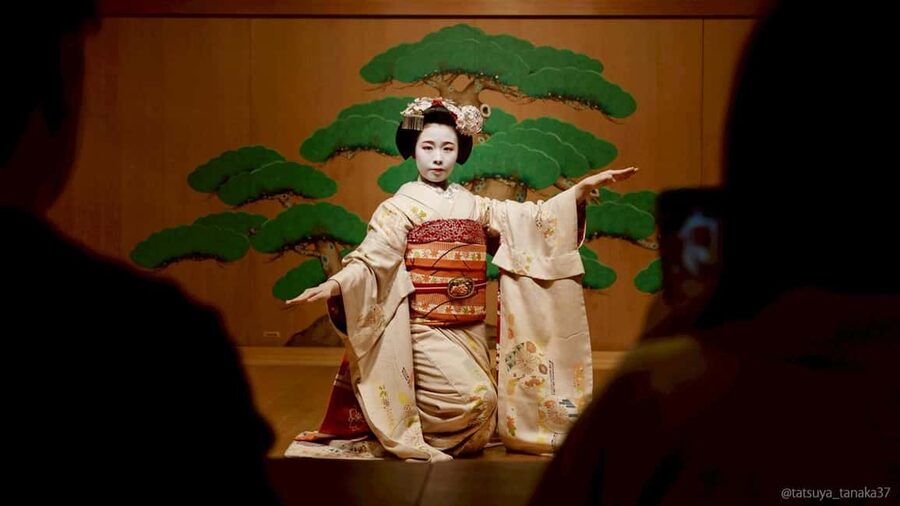
The most striking part of this Kyoto experience is the setting: a maiko performs on an authentic Noh stage, not in a noisy dinner hall or crowded street show. The quiet wooden theater gives the dance room to breathe, and you get a close look at a living Japanese tradition.
I like the mix of watching and doing. You see the maiko dance, then take part in a tea ceremony with freshly prepared matcha and seasonal sweets. I also like the chance to take photos and chat with the maiko in an intimate setting. The main consideration is the price, $141 per person for only 60 to 90 minutes, so this suits you best if focused cultural experiences matter more than a long sightseeing stop.
In This Review
- Key points
- A maiko performance in the quiet of a Noh theater
- How the 60 to 90 minute program unfolds
- Why the Noh stage matters
- The tea ceremony: matcha, sweets, and careful movement
- Meeting and speaking with the maiko
- What the $141 price includes
- Practical details before you book
- Who will enjoy this Kyoto experience most
- Should you book the maiko dance and tea ceremony?
- FAQ
- Where does the maiko dance and tea ceremony take place?
- How long does the experience last?
- What is included in the price?
- Is transportation included?
- Is English available?
- Can I take photos?
- What should I bring?
- Can I cancel my reservation?
Key points
- Dance on a real Noh stage: The performance takes place at Kurochiku Tensho-kan in Kyoto, giving the program a formal and traditional setting.
- Tea prepared by a maiko: Matcha is made with careful, practiced movements and served with seasonal Japanese sweets.
- A compact cultural experience: The session lasts about one hour to 90 minutes, making it easy to fit into a Kyoto day.
- English support is available: A professional English interpreter guide helps explain what you are seeing and doing.
- Photos and conversation included: You have an opportunity to take pictures and speak with the maiko in a small indoor setting.
- Remember your socks: You remove your shoes before entering, and socks are required.
A maiko performance in the quiet of a Noh theater
Kyoto offers plenty of cultural shows, but the stage changes how this one feels. A Noh theater is designed for poise, precision, and attention. Against that plain wooden backdrop, the maiko’s movement becomes the focus.
A maiko is an apprentice geisha, trained in traditional arts and formal presentation. Here, you are not simply watching a dance from a distance. The format lets you see the controlled gestures, posture, and costume details at close range.
The performance is graceful rather than flashy. I would not choose this if you want a loud, fast-paced entertainment show. You should choose it if you enjoy small details and want a calm introduction to one of Kyoto’s most recognizable cultural traditions.
The setting also gives the program a sense of occasion. You enter a dignified space, sit comfortably, and watch the performance without needing to move around the city. For a first visit to Kyoto, this can provide useful cultural context before you explore the city’s shrines, teahouses, and traditional districts.
More evenings in Gion:
- Kyoto Geisha Walking Tour: Gion District & Hidden Gems
★ 4.7 · 3,273 reviews - Kyoto: Gion Magical Night Walking Tour with Geisha Trivia
★ 4.9 · 2,393 reviews - Kyoto: Gion Geisha District Walking Tour – Stories of Geisha
★ 4.7 · 2,187 reviews
How the 60 to 90 minute program unfolds
The exact order may depend on the option and the day, but the experience centers on two parts: the maiko dance and the tea ceremony. An English-speaking interpreter guide helps you follow the presentation in English and Japanese.
You begin indoors at Kurochiku Tensho-kan. The meeting point can vary by booking option, so check your confirmation carefully. For the listed arrangement, you should arrive at the first-floor reception at least 15 minutes before your starting time.
Once inside, you remove your shoes and take a seat. Comfortable seating is arranged for relaxed viewing, though you should still wear clothing that allows you to sit comfortably on the floor or in a traditional indoor arrangement if required.
The dance gives you the first window into the maiko’s training. Her movements are deliberate, and the formal stage keeps your attention on gesture, rhythm, and presentation. You do not need prior knowledge of Japanese dance to appreciate it, but an interpreter can help explain what you are seeing.
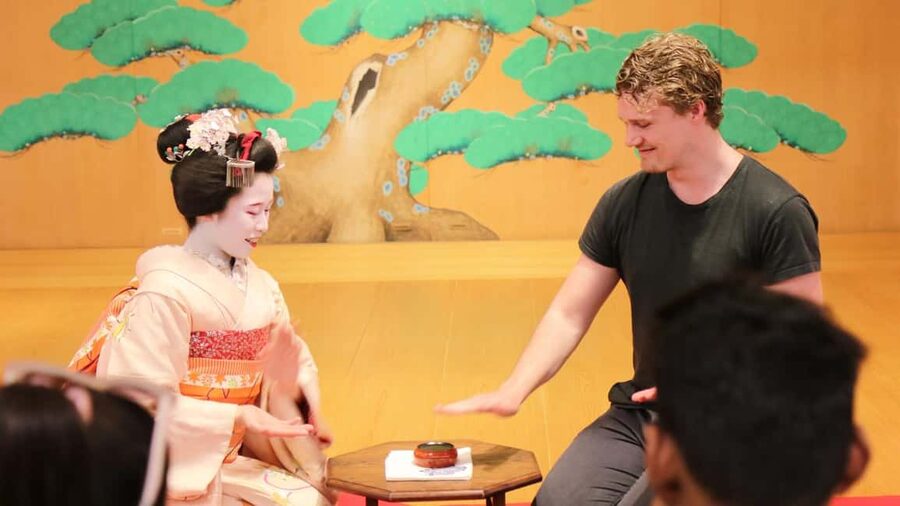
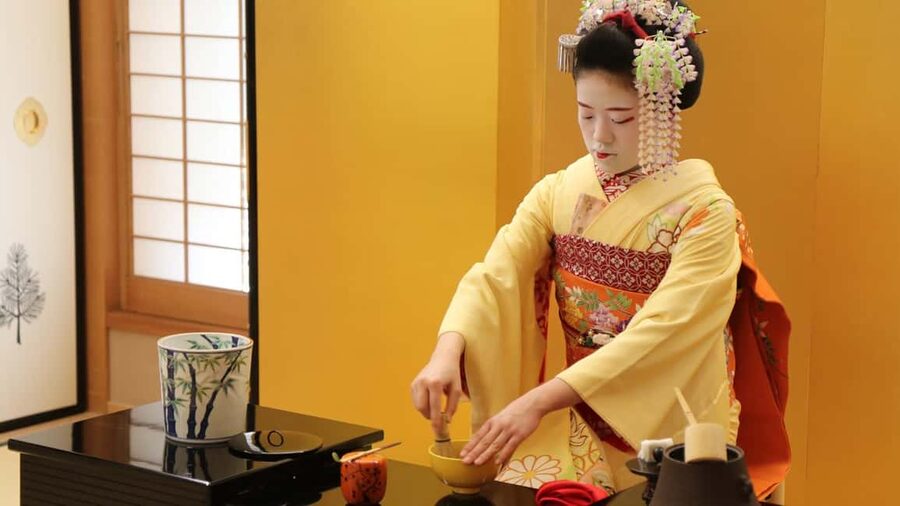
The tea ceremony follows as the more hands-on part of the program. A maiko prepares matcha with refined, careful motions, and you receive the tea with seasonal Japanese sweets. The sweets are not just a snack. Their seasonal character is part of the Japanese appreciation of time, presentation, color, and taste.
I like this change of pace. The dance asks you to watch closely. The tea ceremony asks you to notice what is in front of you, from the preparation of the matcha to the sweet served alongside it. Together, the two parts show different sides of Japanese hospitality.
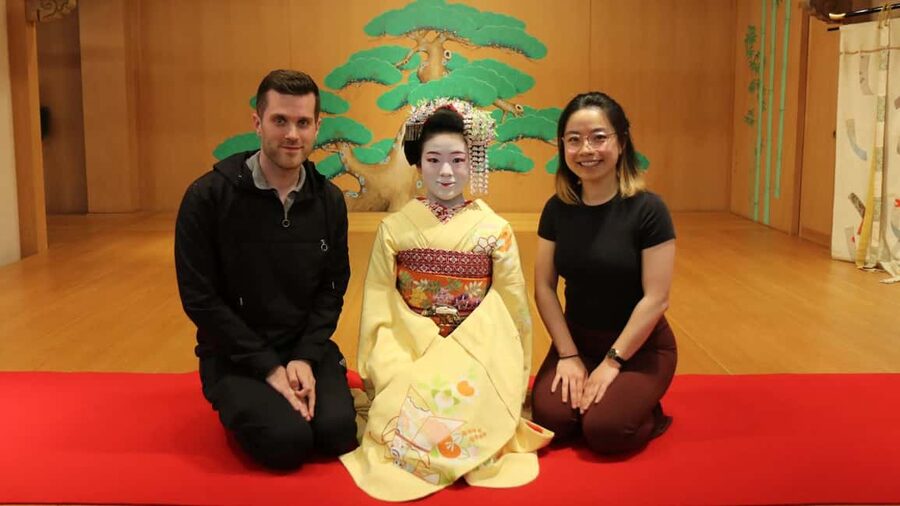
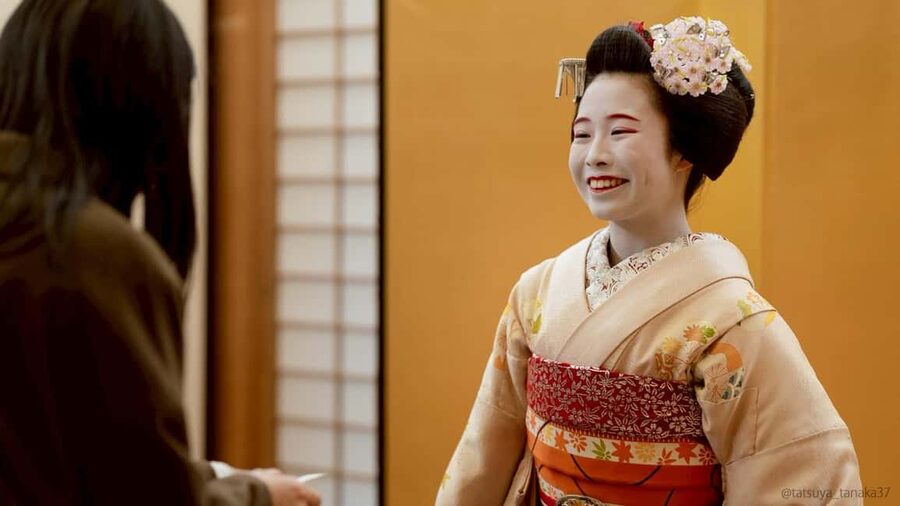
The session also includes time to take photos and chat with the maiko. That makes the experience more personal than a stage performance where you simply sit in the dark and leave. Photo opportunities can be especially useful if you want a lasting reminder of the costume, setting, and formal atmosphere.
Why the Noh stage matters
The Noh stage is more than a backdrop. Traditional Japanese performance spaces often use restraint rather than decoration to create mood. The open stage, polished wood, and quiet surroundings help you notice small movements that might be lost in a larger theater.
This matters because maiko dance is built around control. A turn of the head, the movement of a sleeve, or the way a fan is held can carry more weight than a large theatrical gesture. The stage gives those details a proper setting.
The space also helps distinguish this activity from a general cultural demonstration. You are not moving through a museum display or watching a recorded presentation. You are seated in a working performance environment with a maiko present in front of you.
Still, the formal atmosphere may not suit everyone. If you prefer casual interaction, modern performances, or a long explanation of Japanese history, this program may feel brief and restrained. Its strength is focus, not scale.
The tea ceremony: matcha, sweets, and careful movement
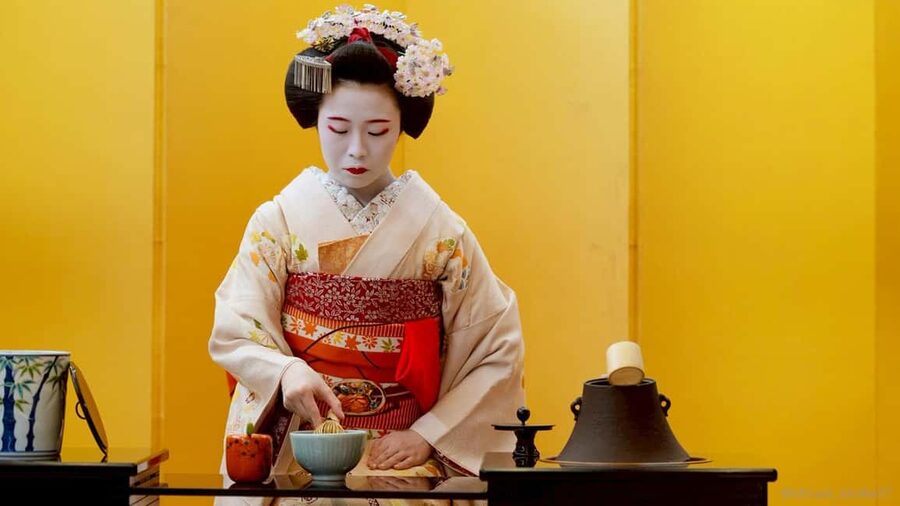
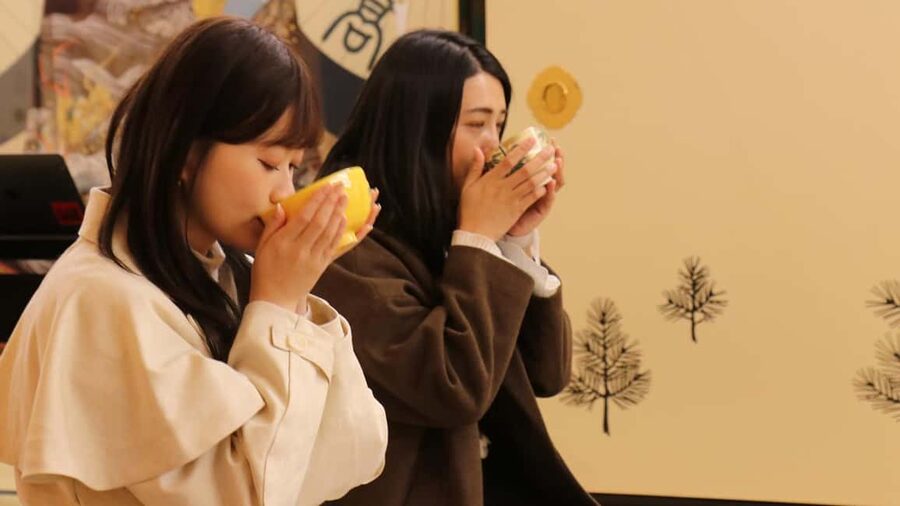
The tea ceremony offers the clearest chance to participate. You receive freshly prepared matcha and a seasonal Japanese sweet, with the maiko handling the preparation in a precise and practiced way.
You do not need to know the correct etiquette in advance. The interpreter guide is there to help, and the setting is intended for relaxed enjoyment. Pay attention to the sequence, but do not worry about getting every movement perfect.
The matcha itself has a distinct taste that may be unfamiliar if you normally drink coffee or black tea. It is traditionally whisked into a frothy drink, and the sweet served alongside it helps balance the tea’s bitterness.
The seasonal sweet is an important detail. Japanese sweets often reflect the time of year through shape, color, and ingredients. You may find that the presentation is as memorable as the flavor, although the exact sweet is not specified in advance.
I especially like this portion for people who want more than a photo opportunity. You are not only watching a maiko, but also receiving an example of Japanese hospitality in action. The ceremony makes the visit feel connected to everyday ideas of care, respect, and attention.
The drawback is that matcha is not universally loved. If you dislike green tea or sweets, this part may hold less appeal. Even then, the preparation itself remains worth observing because the movements are central to the cultural experience.
More tea ceremonies in Kyoto:
- Kyoto: Tea Ceremony in a Traditional Tea House in Kiyomizu
★ 4.9 · 3,519 reviews - Kyoto: Tea Ceremony Ju-An at Jotokuji Temple
★ 4.9 · 3,207 reviews - Kyoto: 45-Minute Tea Ceremony Lesson Experience
★ 4.3 · 2,378 reviews - Kyoto: Table-Style Tea Ceremony at a Kyo-Machiya
★ 4.9 · 1,211 reviews
Meeting and speaking with the maiko
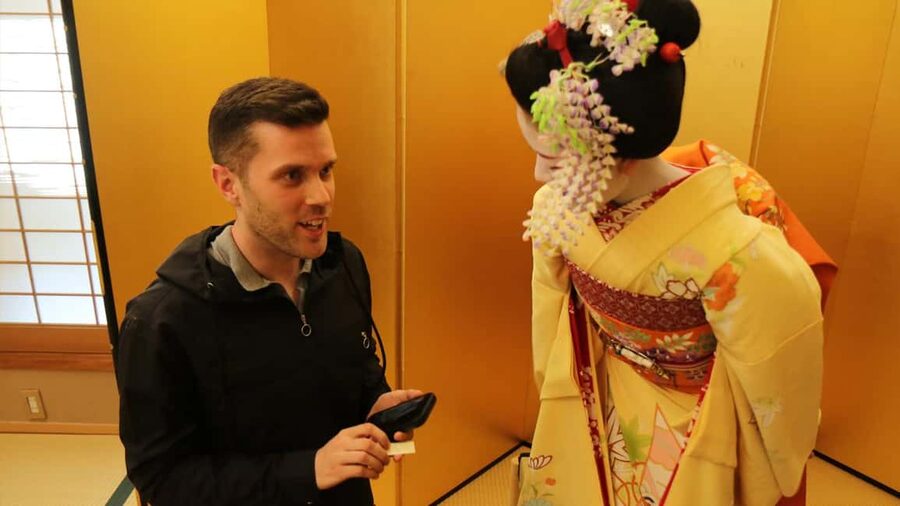
The opportunity to chat with the maiko adds an element that many formal cultural performances lack. After watching the dance and tea preparation, you can take photos and speak with her in the intimate indoor setting.
The available information does not promise a long private conversation, so I would treat this as a chance for brief interaction rather than an extended interview. Keep your questions polite and focused, and follow any instructions from the guide about photography.
English-speaking staff and a professional English interpreter guide make a real difference here. Without language help, it can be difficult to understand the meaning behind the dance or know how to take part in the tea ceremony. The tour also operates in Japanese, so language support is built into the experience rather than left to chance.
The two published ratings from Linda of the United States and David of Australia both describe the event as excellent, with Linda praising every part of it and David calling it interesting and entertaining. That fits the program’s strongest quality: it combines a serious traditional art with enough personal contact to keep the hour engaging.
What the $141 price includes
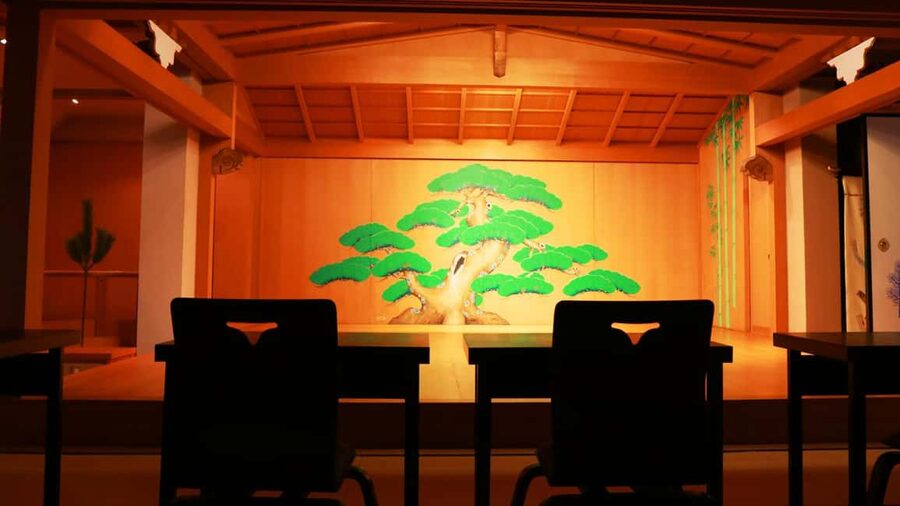
At $141 per person, this is not a bargain attraction. You are paying for a short, carefully arranged cultural encounter rather than a full-day tour. The price includes the maiko’s appearance, the Noh stage setting, the interpreter guide, matcha, seasonal sweets, and a Japanese-patterned handkerchief for each participant.
The maiko dispatch fee is part of the cost as well. That helps explain why the price is higher than a basic tea demonstration. You are paying for access to a performer, a formal venue, interpretation, and a structured presentation.
I see the value most clearly for you if this is one of your main Kyoto cultural activities. The price is harder to justify if you are trying to pack in many inexpensive sights or if you only want a quick photograph with a maiko.
Transportation is not included. You need to make your own way to the meeting point, and that point can vary depending on the option you book. Build in extra time, especially since the instructions ask you to arrive 15 minutes early at the first-floor reception for the listed venue.
The handkerchief is a small but useful souvenir. It does not transform the value of the booking, but it gives you something practical to take home instead of a generic paper ticket or digital memory.
Practical details before you book
Advance reservations are required. Starting times vary, so you need to check availability for your date rather than assume the program runs continuously.
Bring socks. You remove your shoes indoors, and this is not the time to discover that your footwear choice leaves you uncomfortable or unprepared. Comfortable clothes are also wise because the seating is arranged for a relaxed traditional-style experience.
The duration is listed as 1 hour to 90 minutes. That makes it easy to pair with another Kyoto activity, but do not plan a tight connection immediately afterward. The longer version may use the full 90 minutes, and you should allow time to leave the venue.
The meeting point may differ by option. Read the booking details closely and confirm the correct location before setting out. For the Kurochiku Tensho-kan arrangement, arrive at the first-floor reception at least 15 minutes before the scheduled start.
The program takes place indoors, which is helpful on a rainy Kyoto day or during hot summer weather. It also means the experience is less dependent on outdoor conditions than a walking tour.
Free cancellation is available up to 24 hours before the start time for a full refund. You can also reserve now and pay later, which gives you some flexibility while planning a Kyoto itinerary. If the organizers cancel because of insufficient participation or operational reasons, they will offer an alternative date or a refund.
Who will enjoy this Kyoto experience most
I would recommend this activity to first-time visitors who want a clear, manageable introduction to maiko culture. It also suits returning visitors who have already seen Kyoto’s major temples and want a more focused arts experience.
Couples, solo visitors, and small family groups can all appreciate the format. The performance is short enough for children with an interest in dance or Japanese culture, though the formal and quiet mood may not hold the attention of very young children.
Photography-minded visitors will appreciate the stage, costume, and chance to take pictures. You should still follow the guide’s instructions and avoid treating the encounter like a casual photo shoot. The setting calls for respect.
This is also a good choice for you if language is a concern. The professional English interpreter guide can explain the ceremony and help you understand what is happening. English and Japanese are available.
I would be more cautious if your main goal is transportation, sightseeing coverage, or a long tour. No private transportation is provided, and the experience focuses on one venue rather than several Kyoto sights. At $141, you should want this specific cultural program, not simply something to fill an open hour.
Should you book the maiko dance and tea ceremony?
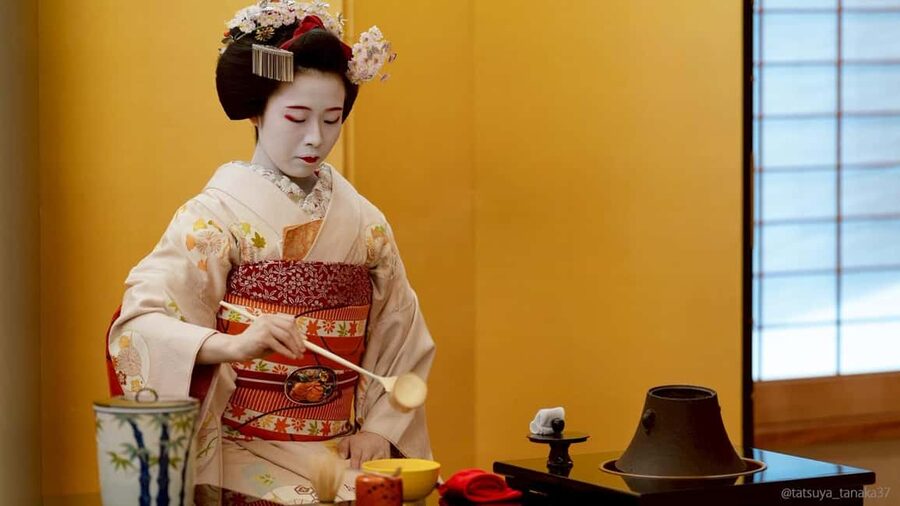
Book it if you want a polished, intimate look at Japanese performance and hospitality in a formal Kyoto setting. The combination of an authentic Noh stage, maiko dance, matcha, seasonal sweets, interpretation, photos, and conversation gives you more substance than a short performance alone.
Think carefully about the cost and length. At 60 to 90 minutes, it is a concentrated experience, not a full afternoon. But if the subject interests you, the setting and personal interaction make the price easier to understand.
My practical advice is to reserve ahead, wear socks, arrive early, and leave room in your schedule afterward. For a calm, memorable cultural stop that brings you close to two traditional arts, this is a strong choice.
FAQ
Where does the maiko dance and tea ceremony take place?
The experience takes place on a Noh stage in Kyoto, with the listed arrival point at the first-floor reception of Kurochiku Tensho-kan. The exact meeting point may vary by the option booked.
How long does the experience last?
The duration is between 1 hour and 90 minutes. Starting times vary, so check availability for your chosen date.
What is included in the price?
The price includes matcha, seasonal Japanese sweets, a Japanese-patterned handkerchief, a professional English interpreter guide, use of the Noh stage venue, and the maiko dispatch fee.
Is transportation included?
No. Private transportation is not included, so you must make your own way to the meeting point.
Is English available?
Yes. A professional English interpreter guide is included, and the activity is available in English and Japanese.
Can I take photos?
Yes. The experience allows time for photos and conversation with the maiko. Follow the guide’s instructions during the performance and tea ceremony.
What should I bring?
Bring socks because you remove your shoes before taking part indoors. Comfortable clothing is also a sensible choice.
Can I cancel my reservation?
You can cancel up to 24 hours before the start time for a full refund. If the activity is canceled because of insufficient participation or operational reasons, an alternative date or refund will be provided.
Recently added around Kyoto
- Higashiyama | Kyoto: Sakura Season Private Rickshaw Tour★ 5.0 · 3 reviews
- Kyoto Kimono Rental CHAMATSU|Kimono/Yukata Rental FamilyPlan★ 5.0 · 3 reviews
- Kyoto: Half-Day Private Guided Tour to the Old Town of Gion★ 4.4 · 3 reviews
- Nara Private Customizable Half Day Tour★ 5.0 · 3 reviews
- Kansai Region Hiking Adventure in Nara Kobe Kyoto and More★ 5.0 · 3 reviews
- Full Day Nara Deer, Temple, Shrine, Activities & Tea Ceremony★ 5.0 · 3 reviews
- Nara: Essential Private Tour with Deer Park and Temples★ 5.0 · 3 reviews
- Hiking Tour for Sacred Sites in Kyoto with a Guide★ 5.0 · 3 reviews
Gion Geisha District Tours, compared.
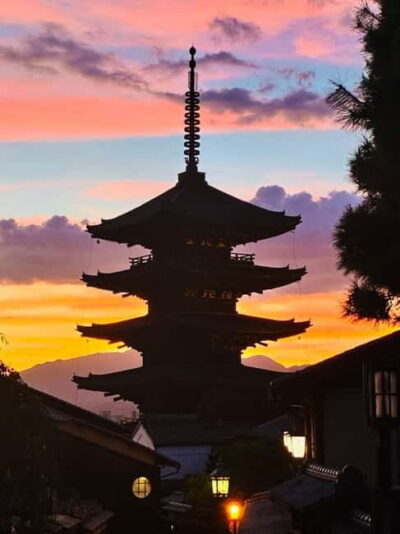
Kyoto Geisha Walking Tour: Gion District & Hidden Gems
Read our review →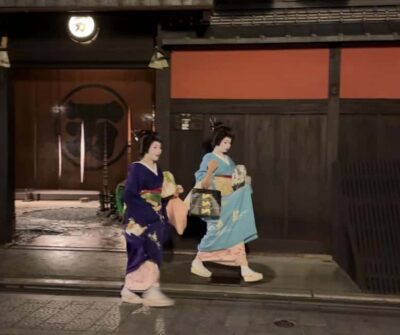
Gion Magical Night Walking Tour with Geisha Trivia
Read our review →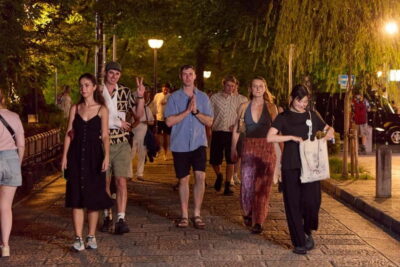
Gion Geisha District Walking Tour – Stories of Geisha
Read our review →
Best of Kyoto: Gion, Geisha, Pagodas & Cobblestones
Read our review →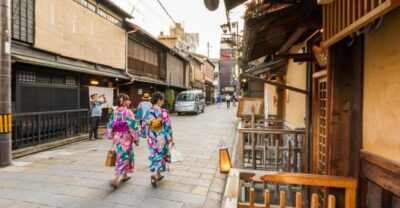

Kyoto Night Foodie Tour in Gion (9+ dishes + 6 Sake tastings)
Read our review →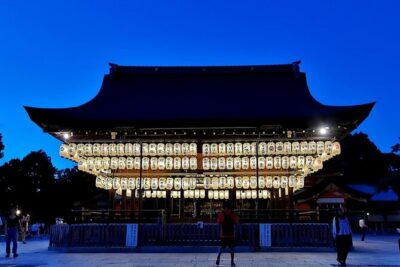
Kyoto Gion Geisha District Walking Tour – The Stories of Geisha
Read our review →
Kyoto Gion: 2-Hour Geisha Culture & History Walking Tour
Read our review →Browse the lists this tour appears in