
REVIEW · GION GEISHA DISTRICT TOURS
Kyoto: Tea Ceremony with Maiko
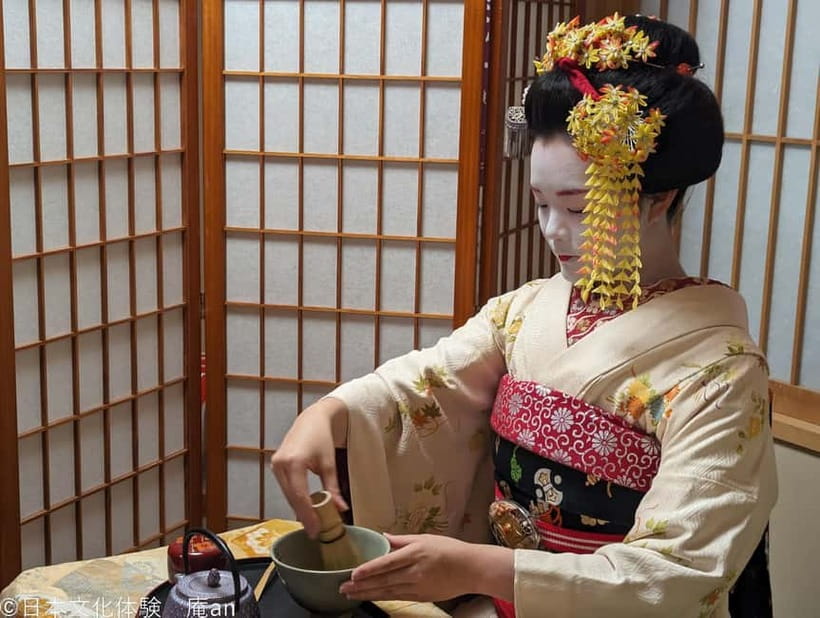
Meeting a maiko over a bowl of freshly whisked matcha gives this short Kyoto activity its appeal. You are not watching from a distant street corner. You sit close, hear an explanation of her world, and then try the tea-making ritual yourself. The direct Q&A is especially valuable, since it turns a formal performance into a personal encounter.
I like the easy Gojo Station location, just a minute from Exit 1, and the low $28 price for a 45-minute introduction to two Kyoto traditions. I also like that you receive two small ohigashi sweets, a photo opportunity, and a Senjafuda charm. The main consideration is that the venue is in a regular building rather than a traditional ochaya, and English interpretation is provided as much as possible rather than guaranteed.
In This Review
- Key points to know before booking
- Meeting a maiko without chasing Kyoto’s private world
- The 45-minute schedule, from greeting to Senjafuda
- What the tea lesson is really like
- The Q&A gives the visit its human side
- Photographs, etiquette, and the Senjafuda gift
- Is $28 a fair Kyoto price?
- Finding the building near Gojo Station
- Who will enjoy this experience most?
- Cancellation rules and timing that matter
- Should you book the Gojo maiko tea ceremony?
- FAQ
- Where is the tea ceremony held?
- How long does the experience last?
- Is the host always a maiko?
- What is included in the price?
- Is English interpretation available?
- Do I need previous tea ceremony experience?
- Are children charged?
- Can I cancel for a full refund?
Key points to know before booking
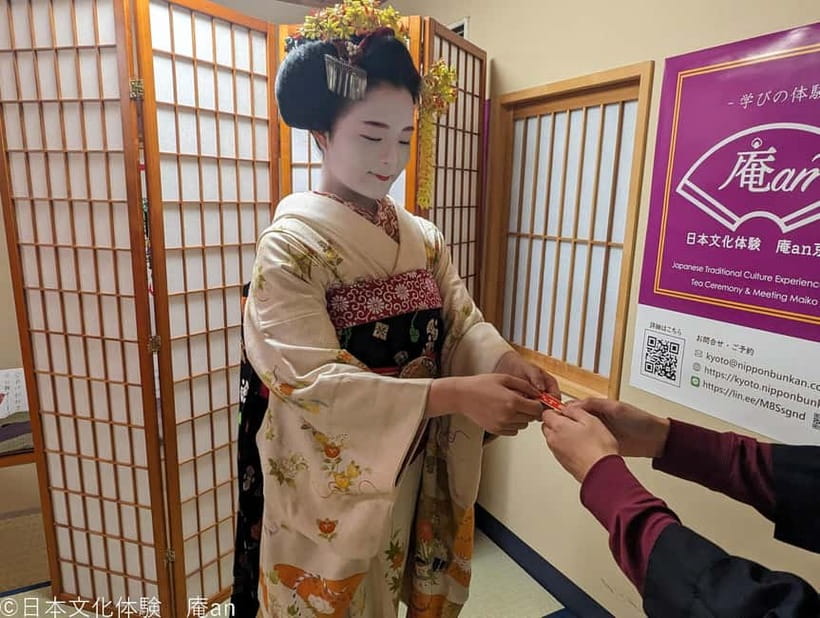
- A real maiko leads the tea experience: She demonstrates how to prepare and drink matcha, then lets you make your own cup.
- The Q&A is the heart of the visit: You can ask directly about a maiko’s daily life and path toward becoming a geiko.
- The activity is close to Gojo Station: Exit 1 is about a one-minute walk from the entrance on Gojo-dori.
- Your $28 includes more than tea: You receive matcha, two dried Japanese sweets, a photo opportunity, and a Senjafuda.
- A geiko may host on some dates: The exact performer depends on the event date.
- Allow more than the advertised 45 minutes if needed: Late arrivals cannot be accommodated, and the building requires stairs.
Meeting a maiko without chasing Kyoto’s private world
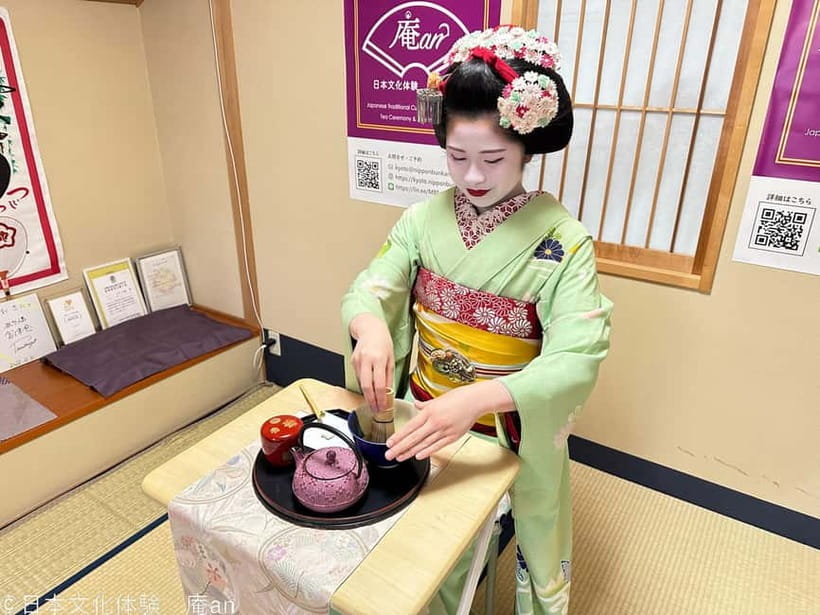
Maiko are young women in training to become geiko, Kyoto’s traditional entertainers. Their formal dress, white makeup, elaborate hair, and careful manners are part of a demanding performance tradition that is usually connected to private dinners and appointments.
This program gives you a respectful, arranged way to meet one. You are not trying to spot a maiko on the street or interrupt her on the way to work. Instead, she enters the room, greets the group, demonstrates tea preparation, and answers questions in a setting designed for visitors.
That distinction matters. The experience is not a visit to an ochaya, and it does not pretend to be one. The venue is inside a building near Gojo Station, with a relaxed atmosphere and friendly staff. If you are looking for old wooden architecture, tatami rooms, or the feeling of a private Kyoto banquet house, this will feel fairly plain.
If your priority is a close, understandable introduction to maiko culture, the ordinary setting is less important. You get time to look carefully, listen, and ask questions without the pressure of a formal dinner.
More evenings in Gion:
- Kyoto Geisha Walking Tour: Gion District & Hidden Gems
★ 4.7 · 3,273 reviews - Kyoto: Gion Magical Night Walking Tour with Geisha Trivia
★ 4.9 · 2,393 reviews - Kyoto: Gion Geisha District Walking Tour – Stories of Geisha
★ 4.7 · 2,187 reviews
The 45-minute schedule, from greeting to Senjafuda
The program is compact. The main portion ends at about 30 minutes, followed by photographs and the gift presentation. You should expect to leave the room at around the 45-minute mark.
The session begins with a greeting from the maiko. Depending on the date, a geiko may host instead. The distinction is useful to understand before you book: you are guaranteed an encounter with one of Kyoto’s traditional entertainers, but not necessarily a maiko at every session.
Next comes the tea ceremony. The maiko demonstrates the basic process for making matcha and explains what you should do. You then prepare your own bowl. This is not an advanced tea-school lesson, and the short format does not allow for a full study of tea ceremony etiquette. It does, however, give you a practical sense of the movements and care behind the drink.
Your matcha is served with two dried Japanese sweets called ohigashi. These sweets are small, neat, and designed to balance the bitterness of powdered green tea. They also make the activity feel more complete than a quick demonstration followed by a sip.
The Q&A follows. This is where the encounter becomes more than a photo stop. You can ask about the maiko’s daily life, training, work, and transition toward becoming a geiko. Questions are answered in Japanese, with English translation provided as much as possible.
At about the 30-minute point, the formal part ends. You can take a commemorative photograph beside the maiko, then receive a Senjafuda. This small paper charm is traditionally associated with a person’s name and good fortune, making it a more personal souvenir than a standard printed ticket or brochure.
What the tea lesson is really like
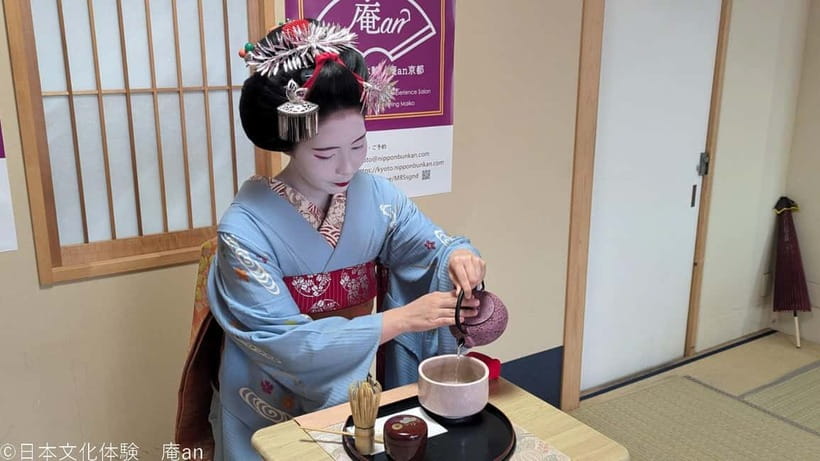
Matcha preparation looks simple until you try it. The motions are controlled and deliberate, and the maiko’s demonstration helps you understand that the ritual is not just about mixing powder and hot water.
You will be shown how to make the tea, then given the chance to whisk your own. The activity is friendly rather than intimidating. You do not need special preparation, prior knowledge, or experience with Japanese tea ceremony.
The two ohigashi are an important part of the tasting. Their sweetness softens the strong, grassy flavor of matcha. If you have only tried matcha in a modern latte or dessert, this gives you a more traditional taste.
Keep your expectations in proportion. In 30 to 40 minutes, you will learn the basic idea rather than master the formal tea ceremony. That is a fair trade for visitors with a tight Kyoto schedule. The program offers a taste of the tradition without asking you to spend half a day in a formal school.
The Q&A gives the visit its human side
Photos are attractive, but the question period is likely to be the most memorable part. The maiko is not simply presented as a costumed figure. You can ask about the person behind the makeup and clothing.
Past sessions have included thoughtful answers about the life of a maiko and the path toward becoming a geiko. Masaya-san, one host mentioned by name, led the tea lesson confidently in Japanese while an interpreter helped the group follow along.
English support is not described as a fully guaranteed language service. The stated language is Japanese, with translation provided as much as possible when requested. If understanding every answer is important to you, contact the operator in advance about adding English assistance.
The quality of this part will also depend on the questions in the room. Ask about training, daily routines, performance work, clothing, or the move from maiko to geiko. A little preparation will help you get more from the short session.
More tea ceremonies in Kyoto:
- Kyoto: Tea Ceremony in a Traditional Tea House in Kiyomizu
★ 4.9 · 3,519 reviews - Kyoto: Tea Ceremony Ju-An at Jotokuji Temple
★ 4.9 · 3,207 reviews - Kyoto: 45-Minute Tea Ceremony Lesson Experience
★ 4.3 · 2,378 reviews - Kyoto: Table-Style Tea Ceremony at a Kyo-Machiya
★ 4.9 · 1,211 reviews
Photographs, etiquette, and the Senjafuda gift
The photo opportunity comes after the tea and questions. You can take a commemorative picture directly beside the maiko, which is quite different from trying to photograph a performer from across a street.
Use the moment with care. The program provides a formal opportunity for pictures, so there is no need to crowd the maiko or take photographs during a demonstration unless staff indicate that it is acceptable. Listen to the host’s instructions and keep the tone respectful.
The Senjafuda is presented as a lucky charm at the end. It adds a small Kyoto detail to the experience and gives you something connected to the person you met. The charm is included in the price, along with the tea, sweets, and photograph opportunity.
Some sessions may include additional elements according to individual accounts, such as a dance or a game, but these are not listed among the standard inclusions. Book this primarily for the tea, Q&A, photograph, and Senjafuda. Treat anything beyond those items as a possible extra, not a promise.
Is $28 a fair Kyoto price?
At $28 per person, this is a reasonable short activity, especially if you want a cultural stop near Kyoto Station rather than a longer formal tea ceremony. The price covers a rare kind of encounter, hands-on matcha preparation, two sweets, a photo opportunity, and the lucky charm.
The value is strongest for visitors who have only a short window in Kyoto. You can fit it between sightseeing stops without committing to a long meal or evening entertainment. The Gojo location also makes it simple to reach from central Kyoto by subway.
It is less compelling if you want a full tea-school lesson, a traditional house, or a long cultural performance. Those experiences usually require more time and may cost more. Here, you are paying for access and conversation as much as for the tea itself.
Children under two who sit on a parent’s lap are free. Children who need their own seat pay the same fee as one participant. That rule can affect the total cost for families, so check the seating needs of each child before booking.
Finding the building near Gojo Station
The meeting point is one minute from Exit 1 of Gojo Station on the Subway Karasuma Line. The entrance faces the main street, Gojo-dori.
Finding the exact door can still take a moment. One useful route is to leave through Exit 1, walk straight, cross a very small street, and continue ahead. The venue is above the Carnival supermarket, before the next small street, with stairs leading up.
There is no elevator in the building. You will need to use stairs to reach the venue, so plan accordingly if anyone in your group has mobility concerns. The activity itself is short, but rushing up at the last moment is not a good idea.
Arrive early. The event cannot be held for late arrivals, and latecomers are not entitled to a refund. This is particularly important if you are coming from Kyoto Station, connecting from another activity, or traveling with children.
Who will enjoy this experience most?
I would choose this for a first visit to Kyoto when you want a clear introduction to maiko culture without a large time commitment. It also suits you if you enjoy asking questions, trying a hands-on activity, and taking home a small cultural souvenir.
It works well for couples, families with older children, and solo visitors who want a structured encounter. The activity requires no special preparation, and the staff explain how the session works.
It may not suit you if you expect a private traditional house or a fully English-language presentation. The setting is a building, the instructor speaks Japanese, and translation is offered as much as possible. Visitors seeking a serious tea ceremony lesson should also look for a longer specialist class.
The program can sometimes be held with people who are having lunch or dinner. That may make the room feel less like a private appointment and more like a shared venue. If you prefer a completely quiet, exclusive setting, confirm the format before booking.
Cancellation rules and timing that matter
You can cancel up to eight days in advance for a full refund. Cancellation fees apply after that period, and changing the date or time within seven days of the booking can also bring a fee.
The operating hours are 10:00 AM to 5:00 PM. Reservations received after 5:00 PM are processed the next day. The activity lasts 45 minutes, but you should add travel time and arrive early because the host will not wait for delayed arrivals.
If you cancel, the operator does not cover your transportation costs to the venue. Check your route and timing before setting out, especially if this experience is connected to a train departure or another prepaid booking.
Should you book the Gojo maiko tea ceremony?
Book it if you want a short, fairly priced meeting with a Kyoto maiko or geiko, plus a simple matcha lesson and direct questions. The strongest features are the close contact, the chance to prepare your own tea, and the personal conversation. The experience gives you more than a staged photograph, while remaining easy to fit into a crowded itinerary.
Skip it if the building setting disappoints you, if stairs are a problem, or if you need guaranteed English interpretation. Also skip it if your main goal is a full formal tea ceremony in a historic house.
For most visitors, the $28 price makes sense as a compact cultural stop near Gojo Station. Arrive early, prepare a few questions, and book only if you are comfortable with the possibility of a geiko hosting instead of a maiko.
FAQ
Where is the tea ceremony held?
The meeting point is a one-minute walk from Exit 1 of Gojo Station on the Subway Karasuma Line. The entrance faces Gojo-dori and is above the Carnival supermarket.
How long does the experience last?
The advertised duration is 45 minutes. The main program ends at about 30 minutes, followed by photographs, the Senjafuda presentation, and departure from the room at around 45 minutes.
Is the host always a maiko?
No. Depending on the event date, the session may be hosted by a maiko or a geiko.
What is included in the price?
The price includes the tea ceremony with the maiko or geiko, matcha, two dried Japanese sweets called ohigashi, a photo opportunity, and a Senjafuda lucky charm.
Is English interpretation available?
The instructor’s language is Japanese. English translation will be provided as much as possible if you request it, and you should contact the operator if you would like to add English assistance.
Do I need previous tea ceremony experience?
No. The program explains how to make matcha, and no special preparation is required.
Are children charged?
Children under two who sit on a parent’s lap are free. A child who requires their own seat pays the same fee as one participant.
Can I cancel for a full refund?
You can cancel up to eight days in advance for a full refund. Cancellation fees apply according to the stated cancellation policy after that point.
Recently added around Kyoto
- Higashiyama | Kyoto: Sakura Season Private Rickshaw Tour★ 5.0 · 3 reviews
- Kyoto Kimono Rental CHAMATSU|Kimono/Yukata Rental FamilyPlan★ 5.0 · 3 reviews
- Nara Private Customizable Half Day Tour★ 5.0 · 3 reviews
- Kyoto: Half-Day Private Guided Tour to the Old Town of Gion★ 4.4 · 3 reviews
- Kansai Region Hiking Adventure in Nara Kobe Kyoto and More★ 5.0 · 3 reviews
- Full Day Nara Deer, Temple, Shrine, Activities & Tea Ceremony★ 5.0 · 3 reviews
- Nara: Essential Private Tour with Deer Park and Temples★ 5.0 · 3 reviews
- Hiking Tour for Sacred Sites in Kyoto with a Guide★ 5.0 · 3 reviews
Gion Geisha District Tours, compared.
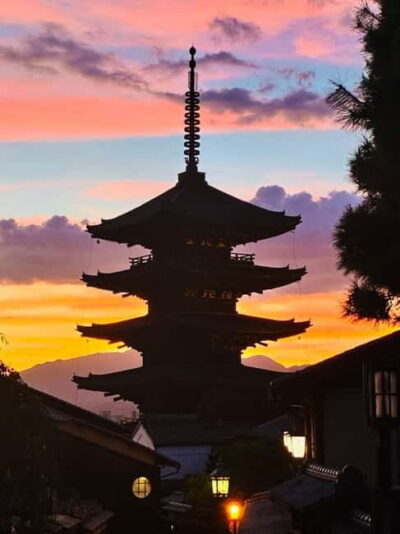
Kyoto Geisha Walking Tour: Gion District & Hidden Gems
Read our review →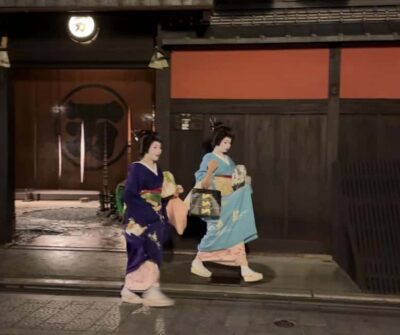
Gion Magical Night Walking Tour with Geisha Trivia
Read our review →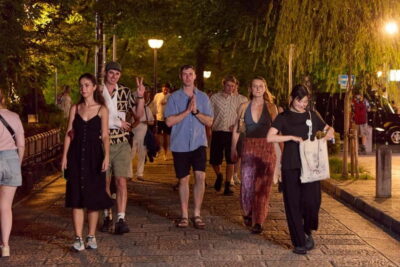
Gion Geisha District Walking Tour – Stories of Geisha
Read our review →
Best of Kyoto: Gion, Geisha, Pagodas & Cobblestones
Read our review →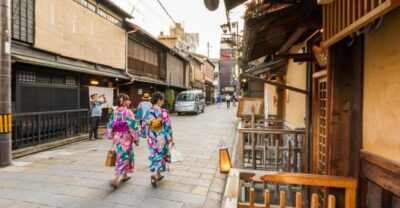
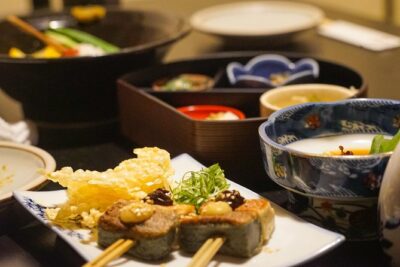
Kyoto Night Foodie Tour in Gion (9+ dishes + 6 Sake tastings)
Read our review →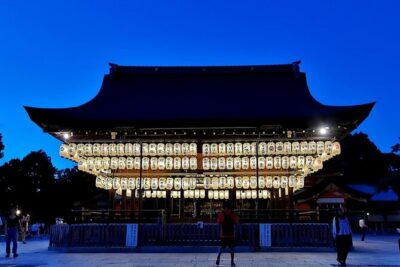
Kyoto Gion Geisha District Walking Tour – The Stories of Geisha
Read our review →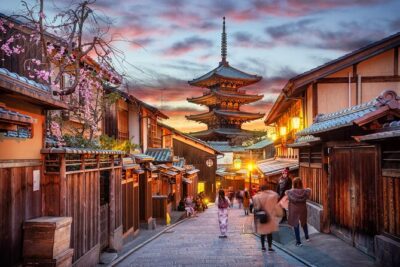
Kyoto Gion: 2-Hour Geisha Culture & History Walking Tour
Read our review →Browse the lists this tour appears in