
REVIEW · GION GEISHA DISTRICT TOURS
Kyoto: Private Walking Tour with Kiyomizu Temple & Gion
Kyoto’s best-known sights make more sense when you connect them on foot, and this private walking tour does just that. In 210 minutes, you move from Kiyomizu Temple and its hillside lanes to Yasaka Shrine, Gion, and Nishiki Market, with a guide explaining what you are seeing rather than leaving you to guess.
I like the chance to learn the proper way to pray at a Japanese shrine, and I like that the route includes Gion’s quieter lanes as well as its famous streets. The main drawback is the pace: you will walk more than 3 miles, often on sloping or crowded streets, and the $174 price covers the guide but not temple admission, transport, or food.
In This Review
- Key points at a glance
- Why this route works so well in Kyoto
- Kiyomizu Temple and the hillside observatory
- Ninenzaka and Sannenzaka, Kyoto’s old shopping lanes
- Yasaka Shrine and the right way to pray
- Gion, from Minamiza to Hanamikoji Street
- Optional streets before the market
- Nishiki Market and the taste of Kyoto
- What $174 means for two people
- Who should book this walking tour
- Small practical details that matter
- Should you book it?
- FAQ
- How long does the Kyoto private walking tour last?
- What places are included in the route?
- Is transportation to Kiyomizu Temple included?
- Is the entrance fee to Kiyomizu Temple included?
- Can I meet a maiko or geisha during the tour?
- How much walking is involved?
Key points at a glance
- Kiyomizu Temple viewpoint: See the main gate, temple buildings, and the famous observatory with historical context from your guide.
- Shrine customs at Yasaka: Learn how to approach the main stage and use the underground water said to benefit body and mind.
- Gion beyond the postcard view: Walk Hanamikoji Street, see Minamiza Kabuki theatre, and visit lanes lined with traditional ochaya teahouses.
- Kyoto food at Nishiki Market: Browse seafood, pickles, karaage, takoyaki, green tea, sweets, and other local foods.
- Private attention: The tour is for your group, with an English-speaking guide and hotel-lobby pickup.
- A serious walking day: Expect more than 5 kilometers on foot, so comfortable shoes matter more than stylish ones.
Why this route works so well in Kyoto
Kyoto can feel like a pile of famous names on a map. Kiyomizu Temple is here, Gion is there, Nishiki Market is somewhere downtown, and Yasaka Shrine sits between them. On your own, you can visit all four, but the links between them may blur.
This tour gives the day a clear shape. You begin with one of Kyoto’s major Buddhist temples, continue through old shopping lanes and a Shinto shrine, then reach Gion and the downtown food streets. I like this progression because it shows several sides of Kyoto in a short time: religion, traditional architecture, performance culture, neighborhood streets, and food.
The private format is especially useful if you want to ask questions. You are not tied to a large group’s pace, and a guide can spend more time on the subjects that interest you. Past feedback specifically praised Phillip for explaining the places in detail, while another booking described the guide as friendly, accommodating, and well informed. The available feedback is limited, but it points to the guide’s explanations and personal attention as the strongest part of the experience.
More evenings in Gion:
- Kyoto Geisha Walking Tour: Gion District & Hidden Gems
★ 4.7 · 3,273 reviews - Kyoto: Gion Magical Night Walking Tour with Geisha Trivia
★ 4.9 · 2,393 reviews - Kyoto: Gion Geisha District Walking Tour – Stories of Geisha
★ 4.7 · 2,187 reviews
Kiyomizu Temple and the hillside observatory
Kiyomizu Temple is the visual anchor of the tour. Your guide takes you through the main gate, into the temple area, and toward the large observatory. This is not simply a photo stop. You get an explanation of the temple’s past and the purpose of the buildings you pass.
The observatory is the main payoff. From here, you get a broad view over Kyoto, with the temple’s wooden structure adding a dramatic foreground. Your guide can help place what you see and explain why this temple has such a central role in Kyoto sightseeing.
The approach matters, too. Kiyomizu Temple is reached through an uphill area, and the walk around the site includes steps and uneven surfaces. The tour information says it is wheelchair accessible, but it also says the experience is not suitable for people with mobility impairments and requires more than 3 miles of walking. Take those warnings seriously. If you tire easily, have trouble with inclines, or need a slower pace, ask about the physical demands before booking.
Transport to Kiyomizu Temple is not included. Pickup is included from your hotel lobby, but you are responsible for the taxi or public transportation cost needed for the temple portion. The exact arrangement can affect the day, so confirm where the guide will meet you and how you will reach the first stop.
Admission to Kiyomizu Temple is also separate. That keeps the headline price simple, but it means your final cost will be higher than $174 if you add transport and temple entry. For two people, the guide cost works out to $87 per person before those extras. For a private group of two, that can be fair if you value personal explanations and flexibility. For a solo participant, the same group price is harder to justify.
Ninenzaka and Sannenzaka, Kyoto’s old shopping lanes
After Kiyomizu Temple, you walk down Ninenzaka and Sannenzaka. These sloping streets are lined with food shops, souvenir stores, and traditional-looking buildings. They are a natural bridge between the temple and Gion.
This is a good place to slow down for a few minutes, but do not treat it as a quiet village street. It is one of Kyoto’s popular sightseeing areas, and the lanes can be crowded. Your guide helps you focus on the details instead of getting lost in a chain of shops.
You may find small snacks, sweets, tea, crafts, and souvenirs here. The itinerary allows time for stops, but the tour has a lot to cover. If you want to shop seriously, tell your guide early. Otherwise, you could spend the whole afternoon sampling and still never reach Nishiki Market.
The streets are also part of the physical challenge. Slopes, steps, and crowds make comfortable shoes essential. Leave large luggage behind, as bags are not allowed on the tour. A small day bag is the practical choice.
Yasaka Shrine and the right way to pray
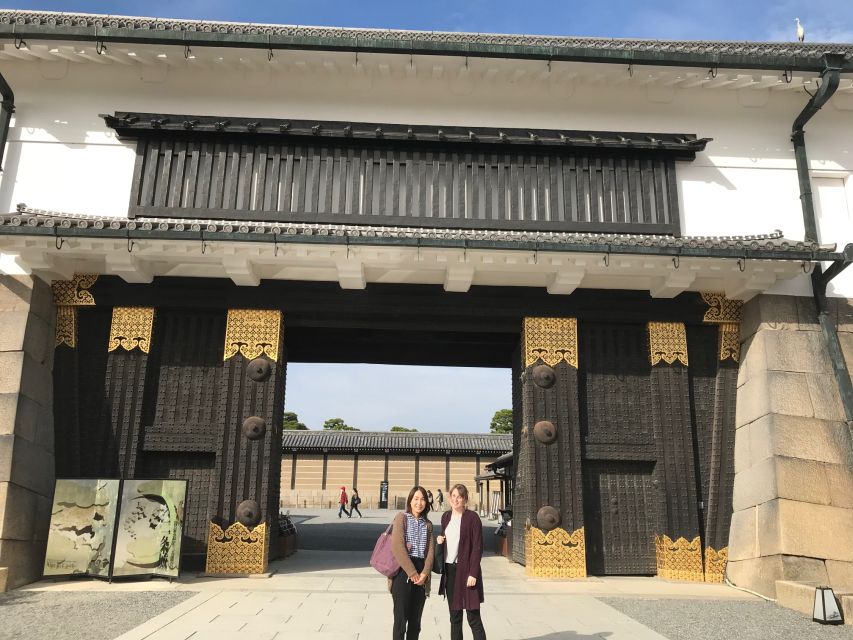
Yasaka Shrine sits at the eastern end of Gion, making it an efficient next stop. Here, the focus shifts from Buddhist temple customs to Shinto practice.
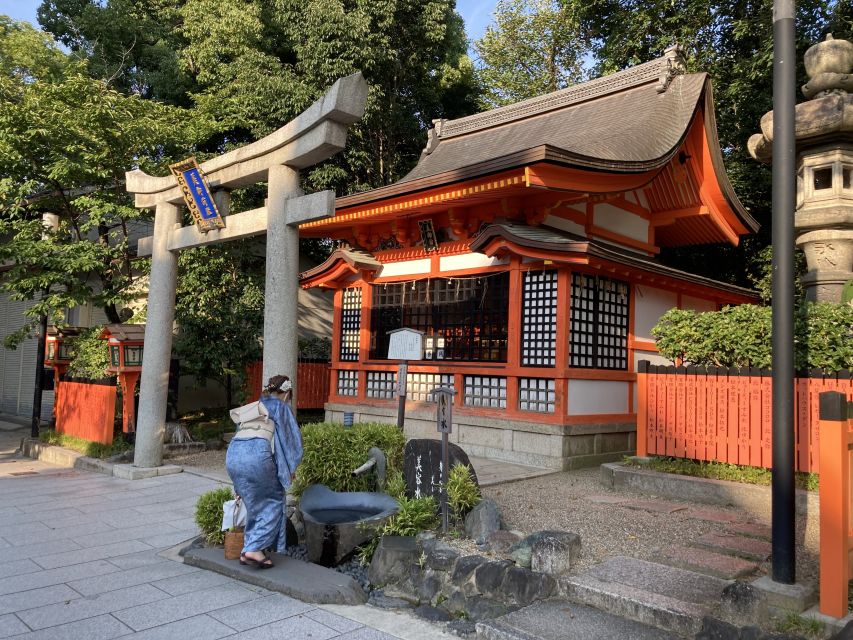
Your guide explains how to pray at a Japanese shrine and what the main stage was set up for. That kind of instruction is useful because shrine visits can feel confusing if you do not know the basic sequence. You can take part respectfully rather than copying the nearest person and hoping for the best.
The tour also includes a chance to touch underground water believed to improve the beauty of body and mind. Treat that belief as part of the shrine’s traditional practice, not as a promise. The point is the custom and the story attached to it.
Yasaka Shrine is a helpful pause in the route. After the temple’s grand buildings and hillside views, the shrine gives you a different religious setting without requiring another long transfer. Your guide can also explain how the shrine connects with local festivals and Gion’s traditional culture, though the amount of detail will depend on your questions and the time available.
More visits to Kiyomizu-dera:
- Kyoto: Tea Ceremony in a Traditional Tea House in Kiyomizu
★ 4.9 · 3,519 reviews - Kyoto: Nijo Castle, Kiyomizu & Fushimi Inari Guided Tour
★ 4.7 · 700 reviews - Kyoto: Nijo, Kinkaku-ji, Arashiyama, Kiyomizu & Fushimi Inari
★ 5.0 · 699 reviews - Kyoto Tea Ceremony & Kiyomizu-dera Temple Walking Tour
★ 5.0 · 115 reviews
Gion, from Minamiza to Hanamikoji Street
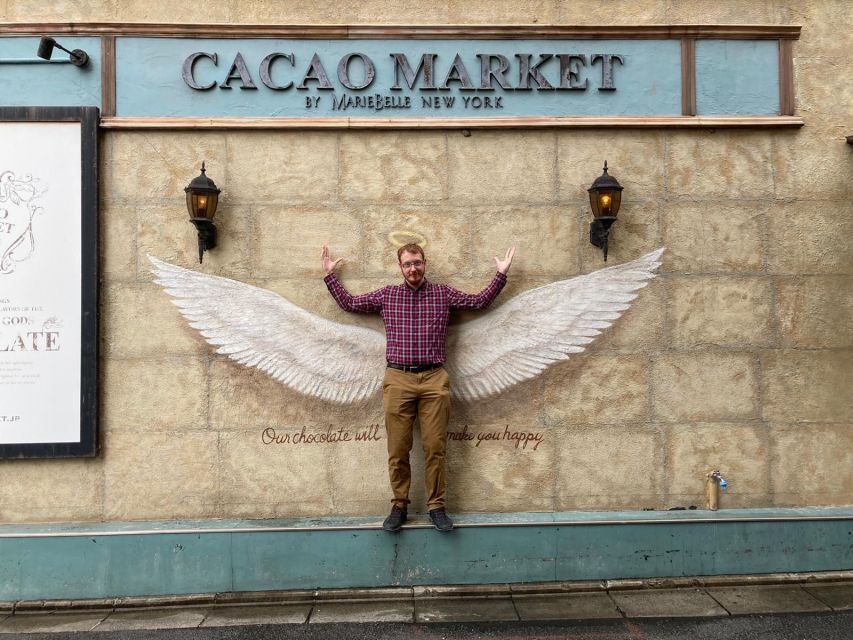
From Yasaka Shrine, you enter Gion. The tour includes Minamiza Kabuki theatre and Hanamikoji Street, two useful landmarks for understanding Kyoto’s performing arts district.
Minamiza is associated with kabuki, Japan’s classical theatre form. Even if you are not attending a performance, seeing the theatre helps explain why this part of Kyoto has long attracted entertainers, performers, and visitors.
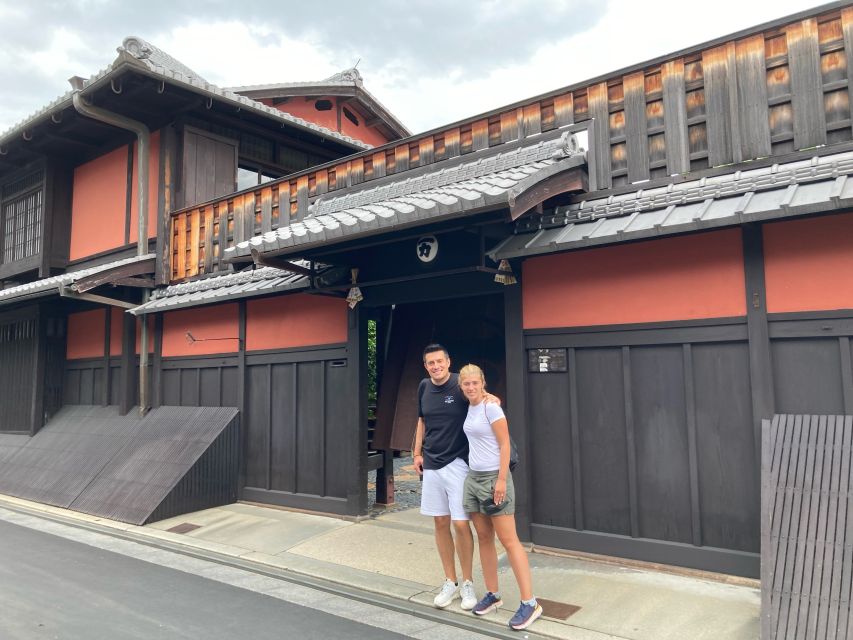
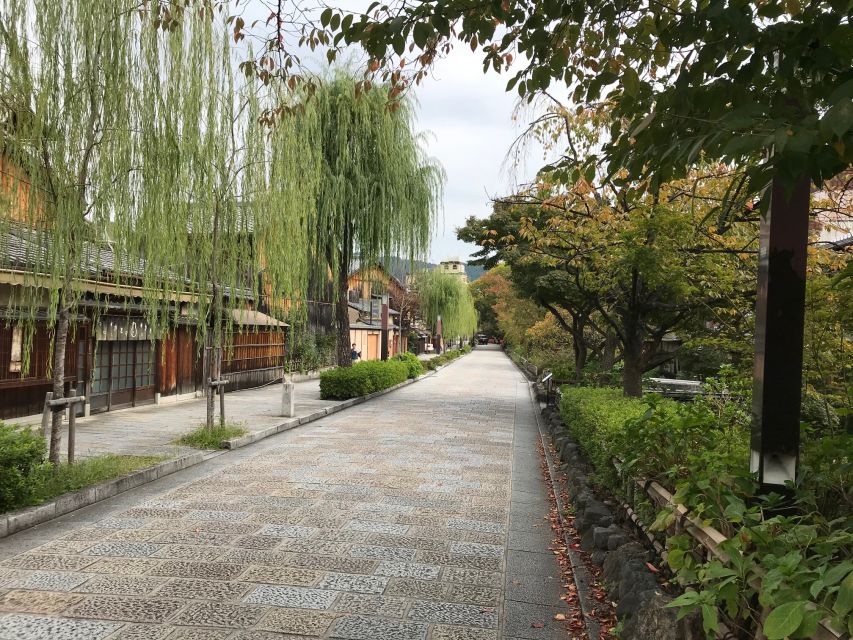
Hanamikoji is one of Gion’s best-known traditional streets. Its wooden facades and tea houses create the familiar Kyoto image, but this is also a working neighborhood. Walk quietly, stay out of private entrances, and avoid blocking the street for photographs.
Your guide takes you into some of Gion’s backstreets, where ochaya teahouses can be found. These are traditional establishments connected with geisha entertainment and hospitality. The tour does not promise a geisha or maiko sighting during the day, and you should not expect one. You might encounter one if you return to Gion in the evening, but that would be separate from this daytime experience.
That limitation is actually useful to know. This is a tour about place and culture, not a staged geisha encounter. You see the streets where this tradition operates, while your guide explains the setting and its boundaries. The backstreets may be more informative than a quick photo of someone hurrying to an appointment.
Optional streets before the market
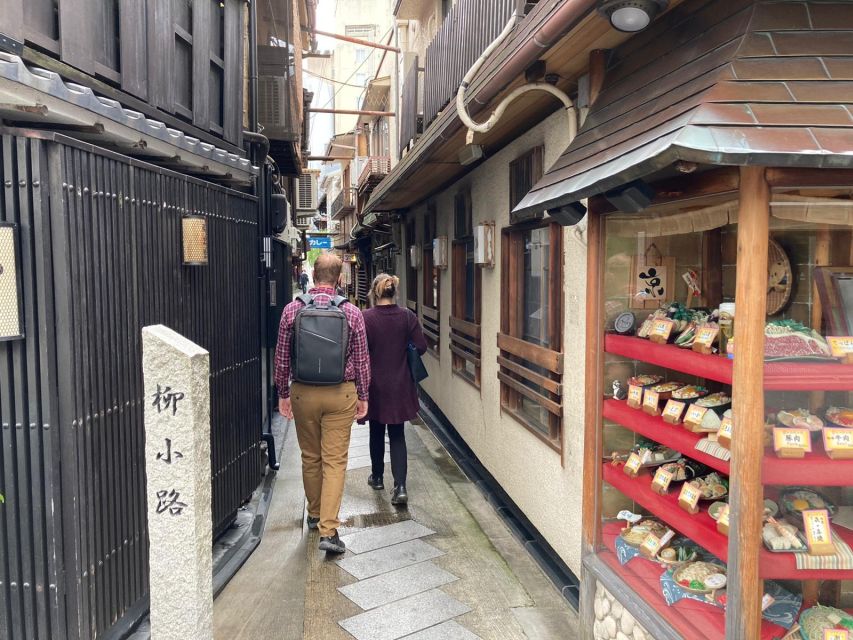
If time permits, the route continues through Shin Kyogoku Street, Sanjo Street, and Kiyamachi Street before reaching Ponto Street. These areas bring you into modern central Kyoto, with shops, cafes, and restaurants mixed into the older city fabric.
The phrase if time permits matters. The tour already includes Kiyomizu Temple, Ninenzaka, Yasaka Shrine, Gion, and Nishiki Market. The optional streets are best viewed as a bonus, not a guaranteed sightseeing block.
This is also the point where you can stop for coffee or lunch. The tour description allows breaks, but food and drinks are not included. If you want a proper meal, tell the guide before the schedule gets tight. A quick stop may fit more easily than a long restaurant lunch.
Ponto Street is a useful ending point for the Gion and central Kyoto portion because it shows another side of the city’s dining and nightlife areas. You are no longer looking only at temples and traditional houses. You are seeing the commercial streets that keep central Kyoto moving today.
Nishiki Market and the taste of Kyoto
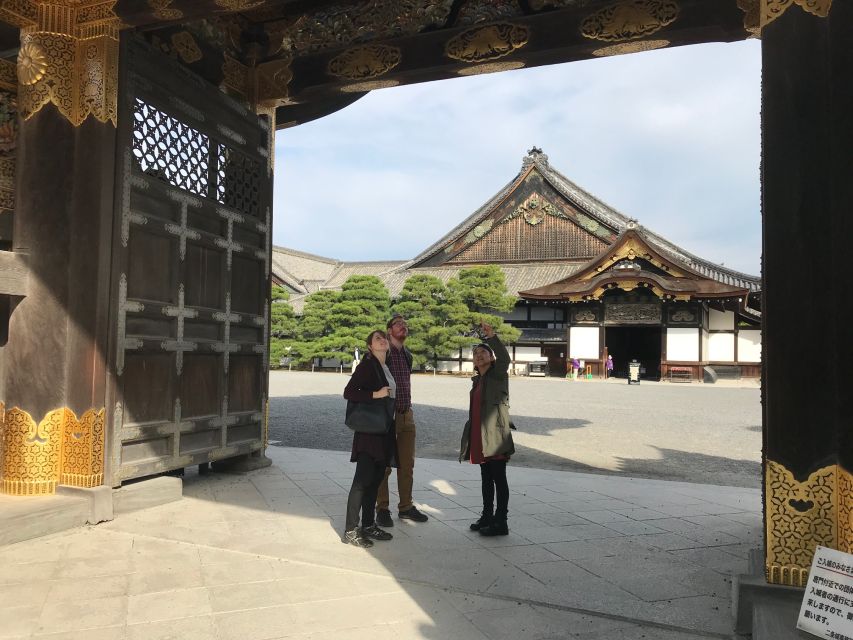
Nishiki Market is the final major stop, and it changes the tour from sightseeing to sampling. The covered market is known for a wide range of Japanese foods and kitchen goods.
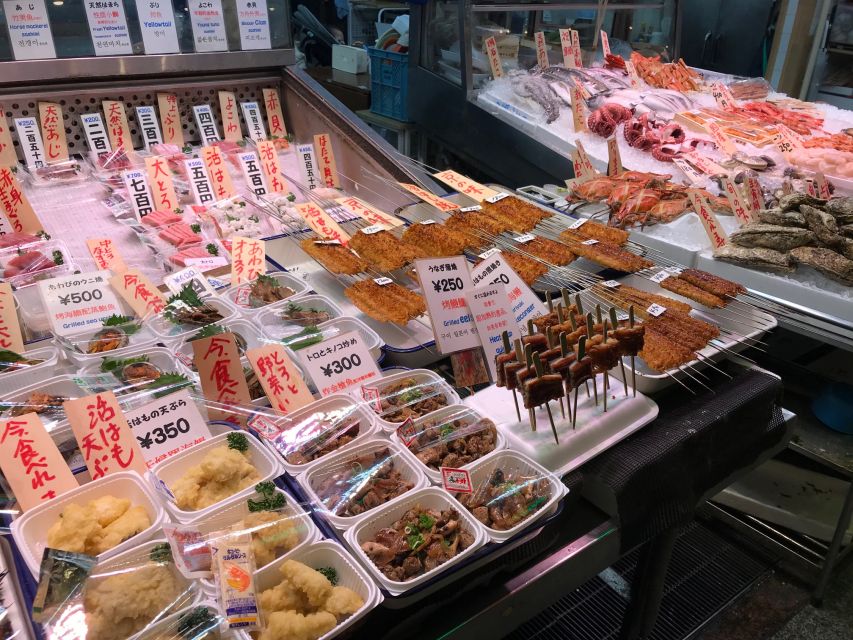
You might find seafood, Japanese pickles, deep-fried foods, karaage, takoyaki, Japanese spices, ice cream, green tea, egg rolls, and other local specialties. You can stop, taste, and buy food as you go. Since purchases are not included, bring a payment method and allow room in your budget for small samples or snacks.
The market is more than a place to grab lunch. It shows ingredients and food habits that are easy to miss in a standard restaurant meal. Your guide can help identify unfamiliar items and explain what you are looking at. That is one of the clearest advantages of having a private guide here: you can ask about something that catches your eye instead of walking past it.
Nishiki also sells Japanese knives, teacups, and plates. These can make good souvenirs, but they are not weightless. If you are traveling with carry-on luggage or continuing to another city, think about what you can safely pack before buying tableware or a knife.
The market can be crowded, and the narrow passage is not a place for leisurely strolling three people abreast. Keep your bag close, move with the flow, and be ready to pause at the side when you want to taste something.
What $174 means for two people
The listed price is $174 per group of up to two people. That is not a cheap city walk, but private guiding changes the calculation. You are paying for an English-speaking guide who can adjust explanations to your interests and keep the route focused on your group.
For two people, the cost is $87 each before additional expenses. You still need to cover transportation to Kiyomizu Temple, the temple entrance fee, and anything you eat or purchase at Nishiki Market or along the route. The guide service is included, but the day is not all-inclusive.
I would consider it reasonable for a couple or two friends who want context at several major sights without joining a large group. It is less attractive if you are comfortable researching the temples yourself, prefer a slow independent day, or mainly want time for shopping.
The 210-minute length is another value question. It is long enough to connect several districts, but short enough that the schedule must keep moving. You get breadth rather than a deep visit to each stop. A private guide helps with that, since you can avoid wasting time on places that do not interest you, but you cannot expect a relaxed, unhurried afternoon at every location.
The option to reserve now and pay later, along with cancellation up to 24 hours in advance for a full refund, gives you useful planning flexibility. Still, check availability and starting times before building the rest of your Kyoto day around it.
Who should book this walking tour
I would recommend this experience to first-time Kyoto visitors who want several major neighborhoods connected by clear explanations. It suits couples, friends, and small private groups who enjoy walking and want to ask questions along the way.
It is also a good choice if you want an introduction to different parts of Kyoto culture in one outing. You see Buddhist and Shinto sites, traditional entertainment streets, a kabuki theatre, old shopping lanes, and a food market. That range is the tour’s main strength.
You should think twice if you have limited mobility or dislike hills, steps, crowds, and more than 5 kilometers on foot. The experience is not built around long rests. It also may not suit serious shoppers, since the schedule prioritizes seeing many places over spending a long time in any one market or shop.
Families may appreciate the private format, but the walking distance and market crowds still matter. Children who enjoy food tasting and variety may find Nishiki Market fun, while children who need a slow pace could struggle by the final stop.
Small practical details that matter
Wear supportive shoes, not new shoes and certainly not decorative footwear that has never met a Kyoto slope. Bring water, keep your luggage at the hotel, and carry only what you need for several hours on foot.
Wait in your hotel lobby five minutes before the scheduled pickup time. Because transportation to Kiyomizu Temple is not included, make sure you understand how that first transfer will work.
The tour is offered in English with a live guide. Phillip is one guide associated with the experience, and the detailed feedback about his explanations makes him worth requesting if the booking system allows it. A private group also means you can ask for more detail about shrine customs, food, theatre, or Gion instead of receiving a fixed lecture.
Should you book it?
Book this tour if you want a well-connected introduction to Kyoto and value an informed local guide more than the lowest possible price. The route covers a lot, and the private format gives you a better chance to understand what you are seeing at Kiyomizu Temple, Yasaka Shrine, Gion, and Nishiki Market.
Skip it if you want a slow day, have mobility concerns, or are happy visiting the sights without help. Also budget for transport, temple admission, and food before deciding that $174 is your full cost.
For two active people, this is a practical way to turn a scattered list of Kyoto highlights into one coherent walking day. The strongest reason to book is not simply the number of stops. It is the guide’s ability to explain the customs, streets, and food that can otherwise pass by as attractive scenery.
FAQ
How long does the Kyoto private walking tour last?
The tour lasts 210 minutes, or three and a half hours.
What places are included in the route?
The route includes Kiyomizu Temple, Ninenzaka and Sannenzaka streets, Yasaka Shrine, Gion, Minamiza Kabuki theatre, Hanamikoji Street, selected Gion backstreets, and Nishiki Market. Shin Kyogoku Street, Sanjo Street, Kiyamachi Street, and Ponto Street may be included if time permits.
Is transportation to Kiyomizu Temple included?
No. The cost of a taxi or public transportation to Kiyomizu Temple is not included.
Is the entrance fee to Kiyomizu Temple included?
No. You pay the Kiyomizu Temple entrance fee separately.
Can I meet a maiko or geisha during the tour?
The daytime tour does not promise a maiko or geisha meeting. You may see one if you return to Gion in the evening, but that is not part of the scheduled experience.
How much walking is involved?
You should expect to walk more than 3 miles, or 5 kilometers, during the tour. Comfortable shoes are required, and the experience is not suitable for people with mobility impairments.
More Walking Tours in Kyoto
- Night Walk in Gion: Kyoto’s Geisha District
★ 4.5 · 2,003 reviews - Kyoto Gion Geisha District Walking Tour – The Stories of Geisha
★ 5.0 · 1,441 reviews - Nishiki Market Brunch Walking Tour (7 Tastings + Brunch)
★ 5.0 · 1,355 reviews - Kyoto Arashiyama Walking Tour: Bamboo, Monkeys, Gardens & Secrets
★ 5.0 · 1,216 reviews
More Temples in Kyoto
- Kyoto: Tea Ceremony Ju-An at Jotokuji Temple
★ 4.9 · 3,207 reviews - Arashiyama Bamboo, Temple, Monkeys, or Secret Sake Brewery
★ 4.8 · 886 reviews - Kyoto: Arashiyama Bamboo Forest, Monkeys, Matcha & Temple Tour
★ 5.0 · 759 reviews - Kyoto: Ninnaji Temple Entry Ticket
★ 4.2 · 650 reviews
Recently added around Kyoto
- Higashiyama | Kyoto: Sakura Season Private Rickshaw Tour★ 5.0 · 3 reviews
- Kyoto Kimono Rental CHAMATSU|Kimono/Yukata Rental FamilyPlan★ 5.0 · 3 reviews
- Kyoto: Half-Day Private Guided Tour to the Old Town of Gion★ 4.4 · 3 reviews
- Nara Private Customizable Half Day Tour★ 5.0 · 3 reviews
- Kansai Region Hiking Adventure in Nara Kobe Kyoto and More★ 5.0 · 3 reviews
- Full Day Nara Deer, Temple, Shrine, Activities & Tea Ceremony★ 5.0 · 3 reviews
- Nara: Essential Private Tour with Deer Park and Temples★ 5.0 · 3 reviews
- Hiking Tour for Sacred Sites in Kyoto with a Guide★ 5.0 · 3 reviews
Gion Geisha District Tours, compared.

Kyoto Geisha Walking Tour: Gion District & Hidden Gems
Read our review →
Gion Magical Night Walking Tour with Geisha Trivia
Read our review →
Gion Geisha District Walking Tour – Stories of Geisha
Read our review →
Best of Kyoto: Gion, Geisha, Pagodas & Cobblestones
Read our review →

Kyoto Night Foodie Tour in Gion (9+ dishes + 6 Sake tastings)
Read our review →
Kyoto Gion Geisha District Walking Tour – The Stories of Geisha
Read our review →
Kyoto Gion: 2-Hour Geisha Culture & History Walking Tour
Read our review →Browse the lists this tour appears in