
REVIEW · WORKSHOPS
Kyoto: Private Aerial Yoga Class
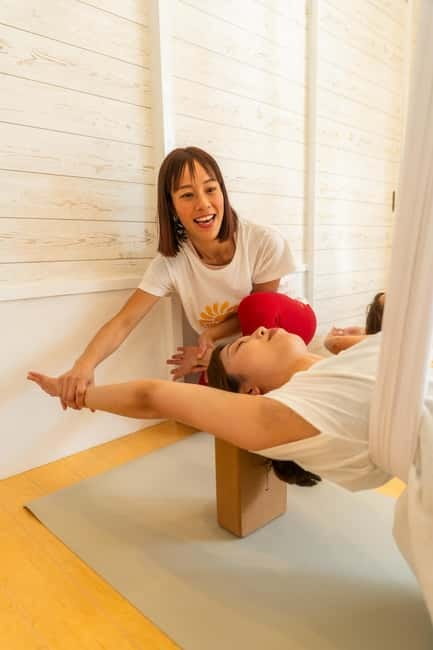
A hammock, a yoga mat, and one hour are enough to make this Kyoto activity feel very different from a standard class. At SUNNY YOU Yoga Studio, you choose between low aerial yoga, with part of your body supported near the floor, or basic aerial yoga, with the hammock set around waist height. The lesson is private and taught in English, so the instructor can adjust the pace to your body and mood.
I especially like the choice between two heights, and the fact that beginners do not need to arrive limber or fearless. I also like the studio’s location near Omuro Ninnaji Station, a quiet Kyoto area with several beautiful temples nearby. The main caution is simple: this is not suitable for people with vertigo, high blood pressure, certain height concerns, or a body weight above 209 pounds, or 95 kilograms.
In This Review
- Key Points Before You Book
- A One-Hour Reset Near Omuro Ninnaji
- Finding SUNNY YOU Yoga Studio in Kyoto
- Low Aerial Yoga: The Best First Step
- Basic Aerial Yoga at Waist Height
- English Guidance and Private Attention
- What to Wear and Bring
- What the $61 Price Really Buys
- Who Should Choose This Class
- A Good Match for a Temple Day
- Should You Book It?
- FAQ
- Where is the aerial yoga class held?
- How long does the class last?
- Is the class taught in English?
- Can beginners join?
- What is the difference between low aerial yoga and basic aerial yoga?
- What should I bring and wear?
- Who cannot join this activity?
Key Points Before You Book
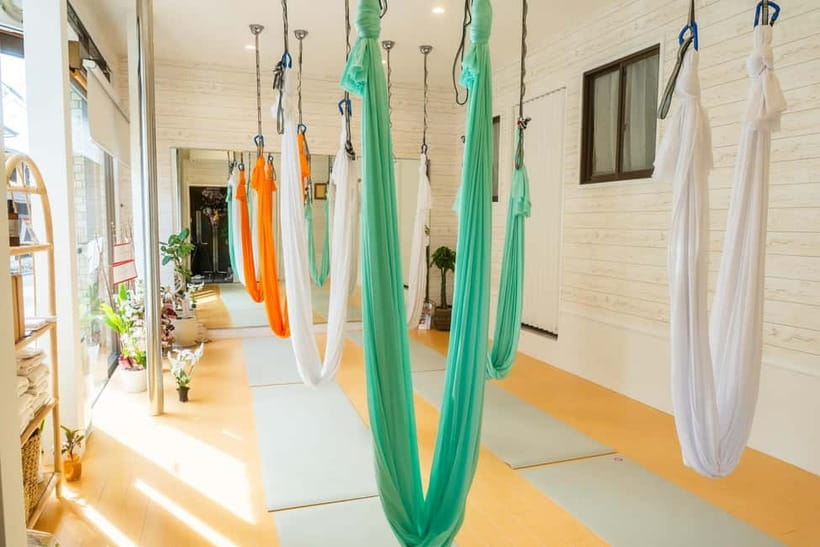
- Choose your comfort level: Low aerial yoga keeps you close to the mat, while basic aerial yoga places the hammock at waist height.
- Private English instruction: The class is tailored to your physical and mental condition rather than run as a large group session.
- A useful beginner option: The low setup supports stiff bodies, limited mobility, motion sickness, and fear of heights.
- A distinct Kyoto location: The studio is three minutes from Randen Omuro Ninnaji Station and five minutes from the city bus stop.
- Bring the right clothes: Pack water and a towel, wear a T-shirt and long pants, and leave shorts and sleeveless shirts at home.
- Good value for a focused hour: At $61 per person, the price buys private attention, equipment, English guidance, and a choice of class style.
A One-Hour Reset Near Omuro Ninnaji
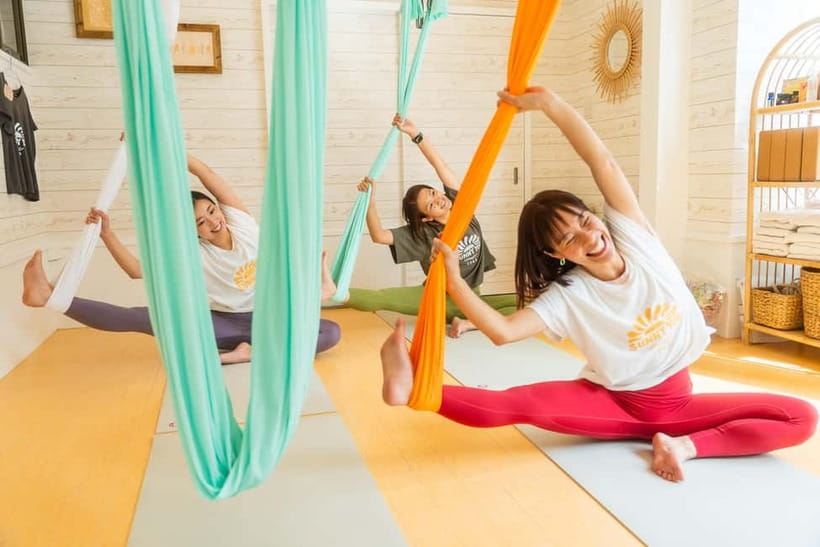
This private lesson is less about performing difficult tricks and more about finding a comfortable relationship with the hammock. The fabric supports your weight, helps you stretch, and gives the instructor a useful way to adjust poses without forcing your body.
You can choose low aerial yoga if you are new to the practice, uneasy around heights, prone to motion sickness, or simply want a gentler start. The hammock stays close to the floor, and part of your body remains on the mat. That setup removes much of the psychological hurdle. You can focus on breathing, balance, and stretching without feeling as if you are fully suspended.
Basic aerial yoga uses a hammock at waist height. You perform poses in the air, with the fabric supporting some of your body weight. The class is designed to work your core and flexibility while also helping with posture, circulation, and relaxation.
The one-hour format is a sensible length for a sightseeing day. You get enough time to try the equipment and settle into the movements, but not so much that the activity takes over your schedule. Since the class is private, the lesson can respond to how you feel that day. You do not need to keep pace with strangers or explain your physical limits to a room full of people.
More workshops and classes in Kyoto:
- Kyoto: 45-Minute Tea Ceremony Lesson Experience
★ 4.3 · 2,378 reviews - Kyoto : Chopsticks Making Workshop in Gion with Engraving Option
★ 5.0 · 958 reviews - Kyoto: Samurai Sword Class by Experts in Traditional Arts
★ 4.9 · 657 reviews
Finding SUNNY YOU Yoga Studio in Kyoto
The studio is in a small yellow-brick-style building with a SUNNY YOU Yoga Studio sign in front. The meeting point is close to Omuro Ninnaji Station, making it easy to combine with temple visits in northwestern Kyoto.
From Randen Omuro Ninnaji Station, allow about three minutes on foot. From the city bus stop at Omuro Ninnaji, allow about five minutes. These short walks make the class fairly easy to add before or after sightseeing.
If you arrive by taxi, pay attention to the one-way street in front of the studio. You should get out promptly rather than expecting the taxi to wait there. That is a small point, but it can save a rushed arrival on a narrow Kyoto street.
The neighborhood is one of the best reasons to place this activity in your day rather than treating it as a stand-alone appointment. Omuro Ninnaji and nearby temples give you a calm setting for a walk before or after class. The area is also described as being within reach of some of Kyoto’s most beautiful temple sights.
Low Aerial Yoga: The Best First Step
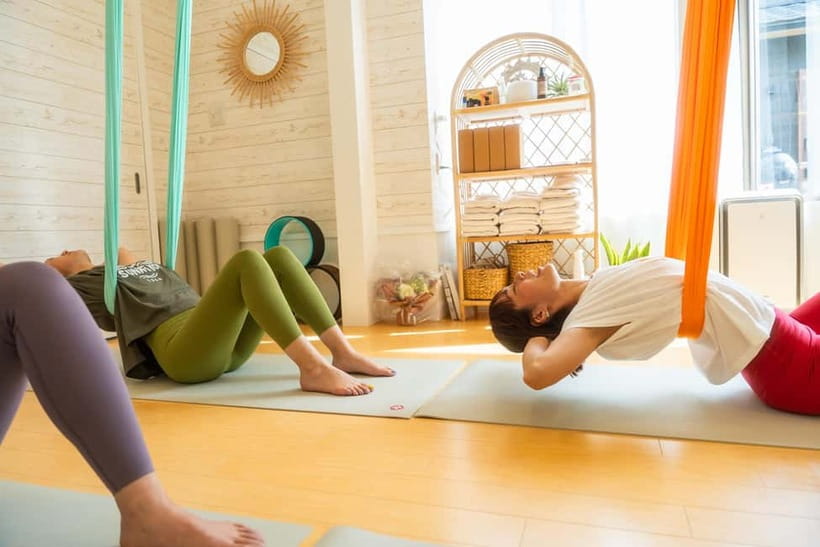
Low aerial yoga is the safer choice for most first-timers. The hammock sits close to the ground, and you keep part of your body on the mat. That gives you support while you learn how the fabric feels around your arms, legs, and torso.
I would choose this option if you have stiff muscles, limited mobility, or a general dislike of unstable equipment. It also makes sense if you are prone to motion sickness. You still get the unusual feeling of working with a suspended hammock, but the low position reduces the sense of height and movement.
The hammock can make stretching feel more accessible. Instead of asking your body to reach a pose under its own power, you can use the fabric for support. That may help you relax into a stretch and notice areas of tension without pushing too hard.
This class is also a practical choice if your mental state varies from day to day. A private instructor can keep the session calm and adjust the challenge. You can experience aerial yoga as a supported movement class rather than an acrobatic performance.
Do not assume low aerial yoga is effortless. You still use balance, strength, and concentration. The difference is that the floor remains close, and the hammock gives you a more secure starting point.
Basic Aerial Yoga at Waist Height
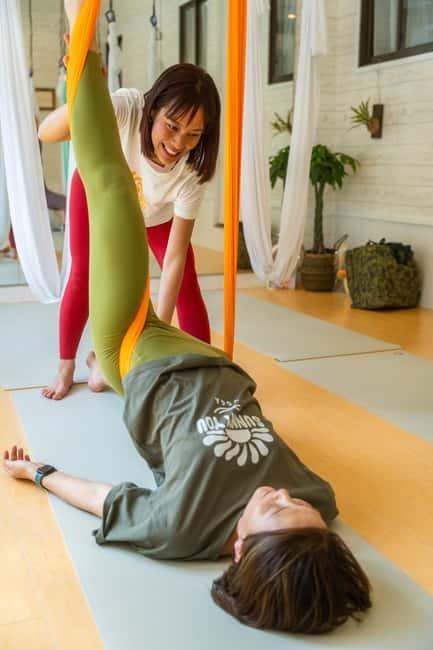
Basic aerial yoga raises the challenge without turning the activity into a circus act. The hammocks are set around waist height, allowing you to perform poses with your body partly supported in the air.
The most noticeable change is the feeling of weightlessness. The hammock takes pressure off parts of your body while asking your core to stabilize you. That combination can make familiar yoga movements feel new.
This option is aimed at people who want more work for their core and flexibility. It may also help you pay closer attention to posture, since the hammock makes alignment easier to feel. The class description also connects the practice with circulation and relaxation, so the session is not only about strength.
If you are uncertain, ask to begin with low aerial yoga. The two formats are offered as choices, and the low option is specifically recommended for people who are new or afraid of heights. The instructor can help you decide how much suspension feels right.
One useful detail is that the class can include both styles. A booking experience with the instructor involved trying both low and higher aerial silks, which suggests that the lesson can offer variety when appropriate. Still, you should not assume that every session follows the same sequence. Your class is tailored to your current condition.
A few more Kyoto experiences worth comparing
- Fushimi Inari Hidden Hiking Tour (Private Option Available)
★ 5.0 · 1,750 reviews - Private Kyoto Tour with a Local, Highlights & Hidden Gems, Personalised
★ 5.0 · 1,543 reviews - Kyoto 6hr Private Tour with Government-Licensed Guide
★ 5.0 · 1,369 reviews - 10 Must-see Spots in Kyoto One Day Private Tour (up to 7 people)
★ 5.0 · 1,108 reviews
English Guidance and Private Attention
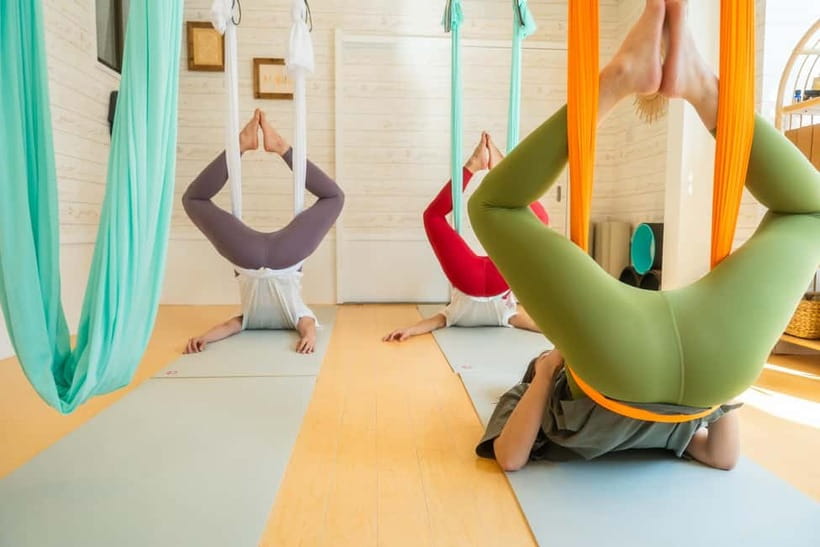
The instructor teaches entirely in English. That matters in a physical activity, where a small misunderstanding can affect comfort and safety. You can ask questions, explain concerns, and request a slower explanation without relying on demonstrations alone.
The class is for a private group, so the experience feels more personal than a standard studio class. The instructor can watch your form and respond to your comfort level. This is particularly useful when you are learning how to sit, lean, stretch, or balance in the hammock.
The instructor’s name appears as Agasa-san in one account and Agata-san in another. The comments describe a warm, positive teaching style and an effective class structure. The important practical point is that you receive direct guidance from the studio’s English-speaking instructor rather than following a recorded lesson.
You should still communicate clearly about your experience and limitations. Private instruction does not remove the need to follow the health restrictions. People with vertigo, high blood pressure, or a fear of heights should not treat the private format as a reason to ignore those warnings.
What to Wear and Bring
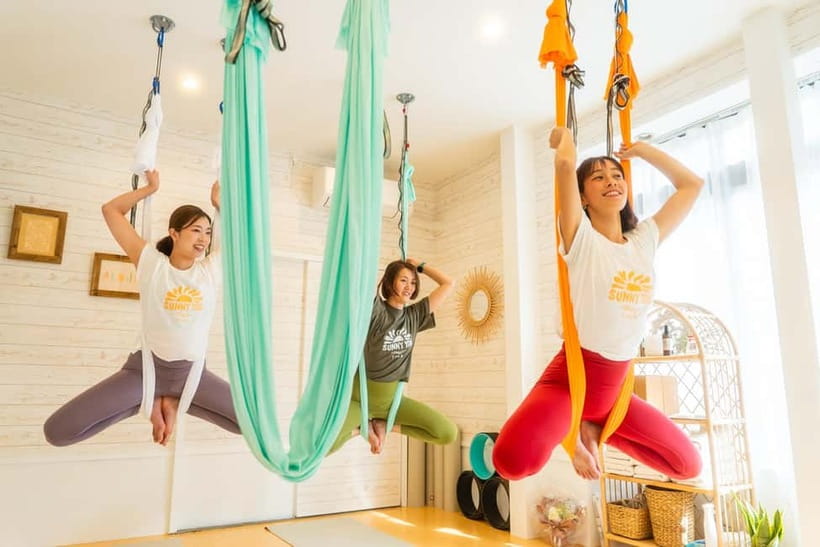
The clothing rules are more specific than at some ordinary yoga classes. Wear comfortable clothing, a T-shirt, and long pants. Shorts and sleeveless shirts are not allowed.
Long pants make sense here because the hammock contacts your legs and body as you move. Comfortable fabric will help you concentrate on the poses instead of adjusting your clothes. Bring a towel and water, too.
A yoga mat is provided, so you do not need to pack one. The class lasts only an hour, but aerial movement can still be physical, especially in the basic waist-height format. Water is worth carrying from the start.
Arrive dressed for movement and ready to follow the studio’s clothing rules. That keeps the start of the lesson simple and avoids wasting time on a change of plans.
What the $61 Price Really Buys

At $61 per person, this is not the cheapest way to spend an hour in Kyoto. You are paying more than you would for a basic group yoga class, but the comparison is not quite fair. This is a private session with English instruction, equipment, a mat, and a choice between two forms of aerial yoga.
The private format is where much of the value lies. If you are new to aerial yoga, direct guidance can make the class more useful than a cheaper group session where the instructor has less time for each person. You can also select a lower level of challenge rather than paying for an activity that feels too difficult.
The price makes the most sense for a solo visitor, couple, or small private group that wants a focused experience. It is less compelling if you are looking only for a low-cost workout or already practice aerial yoga regularly.
The setting adds some value, too. You can pair the class with a temple-area walk, making the hour part of a wider day in Omuro rather than a trip across Kyoto for one appointment. The option to reserve now and pay later, along with free cancellation up to 24 hours before the class for a full refund, also gives you some planning flexibility.
Who Should Choose This Class
I would point first-time aerial yoga students toward the low class. It is also the sensible pick for anyone worried about heights, motion sickness, stiffness, or limited mobility.
Basic aerial yoga suits you better if you want to work on core strength and flexibility and feel comfortable with poses at waist height. You should be ready for a different kind of balance work, but the class remains suitable for beginners.
This experience is a strong fit for:
- People who want a quiet, unusual activity between temple visits
- Couples or friends who prefer a private class
- Visitors who need English instruction
- Beginners who want a controlled introduction to aerial yoga
- People looking for both stretching and strength work
- Anyone who enjoys trying a new physical activity without joining a large group
It is not suitable for people with vertigo, altitude sickness, high blood pressure, or a serious fear of heights. It is also not offered to people over 70 years old or people over 209 pounds, or 95 kilograms. These limits are firm details to check before booking.
A Good Match for a Temple Day
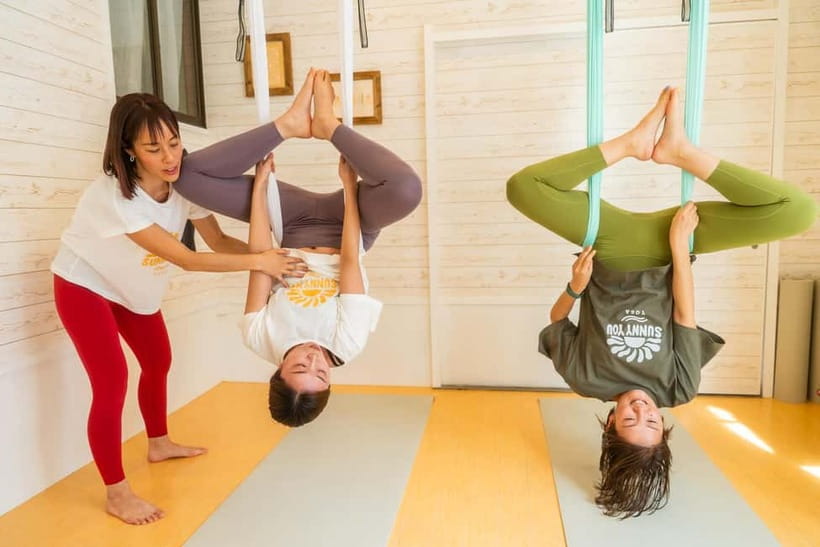
The studio’s location gives this activity a useful Kyoto rhythm. You can spend part of the day around Omuro Ninnaji and nearby temples, then use the yoga class as a change of pace. Instead of adding another crowded sightseeing stop, you get an hour of movement and quiet attention.
I like that the activity does not pretend to be a major athletic production. Its appeal is personal. You try a different way to stretch, strengthen, and relax, then return to the city’s cultural sights with a fresh break in your schedule.
The only real limitation is that the class itself lasts one hour. If you want a long wellness retreat, massage, or full-day program, this will feel brief. If you want a manageable activity with a clear start and finish, the timing works well.
Should You Book It?
Book this class if you want a private, English-language introduction to aerial yoga and like the idea of combining it with a visit to Kyoto’s Omuro temple area. At $61, it offers good value for private instruction, equipment, and a choice of difficulty, especially for first-timers.
Choose low aerial yoga if you have any concern about heights or movement. Choose basic aerial yoga if you want more core and flexibility work. Skip it if you have vertigo, high blood pressure, altitude sickness, or any of the stated age and weight restrictions. For the right person, this is a calm, memorable way to add something physical and personal to a Kyoto itinerary.
FAQ
Where is the aerial yoga class held?
The class is held at SUNNY YOU Yoga Studio, a small yellow-brick-style studio with a sign in front. It is three minutes on foot from Randen Omuro Ninnaji Station and five minutes from the city bus stop at Omuro Ninnaji.
How long does the class last?
The private aerial yoga lesson lasts one hour. Starting times depend on availability.
Is the class taught in English?
Yes. The instructor conducts the class entirely in English.
Can beginners join?
Yes. Both low aerial yoga and basic aerial yoga are suitable for beginners. Low aerial yoga is recommended if you are new to the practice or afraid of heights.
What is the difference between low aerial yoga and basic aerial yoga?
Low aerial yoga uses hammocks set close to the floor, with part of your body remaining on the mat. Basic aerial yoga uses hammocks set at waist height and includes poses performed in the air.
What should I bring and wear?
Bring a towel and water. Wear comfortable clothes, a T-shirt, and long pants. Shorts and sleeveless shirts are not allowed. A yoga mat is provided.
Who cannot join this activity?
The activity is not suitable for people with a fear of heights, vertigo, altitude sickness, or high blood pressure. It is also not suitable for people over 70 years old or people over 209 pounds, or 95 kilograms.
Recently added around Kyoto
- Higashiyama | Kyoto: Sakura Season Private Rickshaw Tour★ 5.0 · 3 reviews
- Kyoto Kimono Rental CHAMATSU|Kimono/Yukata Rental FamilyPlan★ 5.0 · 3 reviews
- Kyoto: Half-Day Private Guided Tour to the Old Town of Gion★ 4.4 · 3 reviews
- Nara Private Customizable Half Day Tour★ 5.0 · 3 reviews
- Kansai Region Hiking Adventure in Nara Kobe Kyoto and More★ 5.0 · 3 reviews
- Full Day Nara Deer, Temple, Shrine, Activities & Tea Ceremony★ 5.0 · 3 reviews
- Nara: Essential Private Tour with Deer Park and Temples★ 5.0 · 3 reviews
- Hiking Tour for Sacred Sites in Kyoto with a Guide★ 5.0 · 3 reviews
Workshops, compared.

Chopsticks Making Workshop in Gion with Engraving Option
Read our review →
Samurai Sword Class by Experts in Traditional Arts
Read our review →
Ramen Cooking Class at a Ramen Factory with Souvenir
Read our review →
Ninja 1-hour Hands-on Lesson by Japanese master in Kyoto -Entry
Read our review →
The Original Small-Group Sushi Making Class in Kyoto
Read our review →
Japanese Washoku Bento Small Group Cooking Class
Read our review →Browse the lists this tour appears in