
REVIEW · KYOTO ZEN MEDITATION EXPERIENCES
Kyoto Off The Beaten Path: Hidden Zen Garden & Magical Shrine
Kyoto’s best moments are not always found on its busiest streets. This four-hour morning walk moves from the sacred forest of Shimogamo Shrine to Sanjusangendo’s remarkable hall of 1,001 Kannon statues, then finishes at Tofuku-ji, one of the city’s important Zen temples. The early 8:00 a.m. start is a smart choice for a calmer visit.
I like two things right away: the small maximum group of eight, which should make questions and conversation easier, and the route’s mix of nature, Buddhist art, and temple architecture. I also like that the walk finishes at Tofukuji Station, so you can continue your day without backtracking.
The main consideration is physical. This is an active walking tour lasting about four hours, and the operator does not recommend it for people with weak legs or joints. You also pay ¥1,100 in entrance fees, plus any drinks, on top of the $97.55 tour price.
In This Review
- Key points at a glance
- Why this Kyoto morning route works
- Entering Shimogamo Shrine through its sacred forest
- Sanjusangendo and its 1,001 figures of Kannon
- Tofuku-ji for Zen architecture and garden space
- What the $97.55 price buys you
- The small-group format and guide experience
- Who should book this walk
- Booking details worth knowing
- Should you book Kyoto Off the Beaten Path?
- FAQ
- How long does the Kyoto Off the Beaten Path tour last?
- What time does the tour start?
- Where does the tour meet?
- Where does the tour end?
- Which places are included in the tour?
- Are admission fees included?
- Is the tour suitable for people with limited mobility?
- How many people can join the tour?
- What is included in the tour price?
Key points at a glance
- An early start at 8:00 a.m. helps you see Kyoto’s sacred sites before the day grows crowded.
- Shimogamo Shrine includes a protected ancient forest, giving the morning a quiet, natural beginning.
- Sanjusangendo contains 1,001 Kannon statues, a powerful indoor art and religious experience.
- Tofuku-ji supplies the Zen focus, with temple buildings, garden views, and a lesson in Japanese temple design.
- The group is limited to eight people, a useful size for a personal English-language walking tour.
- Extra costs total ¥1,100 per person, covering Sanjusangendo and the Zen garden entrance fees.
Why this Kyoto morning route works
Many Kyoto tours gather around the same famous streets and temples. This route takes a different approach. It links three major religious sites, but it does not treat them as quick photo stops. The guide’s role is to explain Japanese culture, history, and society while you move at a slower pace.
That mix matters. A shrine and a Buddhist temple are not interchangeable, and seeing both helps you understand the different religious traditions that shaped Kyoto. The route also gives you three distinct settings: woodland, a grand hall filled with sculpture, and a Zen temple complex.
The 8:00 a.m. start is one of the strongest practical features. You will need to get to the McDonald’s at Shichijo Keihan in Higashiyama before the tour begins, but the early hour pays off. Kyoto’s major sites can become crowded later, so beginning in the morning gives the first part of the walk a better chance of feeling peaceful.
The group limit of eight is another plus. A small group cannot remove every delay, but it usually makes a guided visit more flexible. You can hear the English-speaking guide more easily, ask about details that catch your eye, and avoid the feel of a large procession.
More Zen sittings in Kyoto:
- Kyoto Zen Meditation & Garden Tour at a Zen Temple with Lunch
★ 5.0 · 441 reviews - Kyoto: Zen Experience in a Hidden Temple
★ 5.0 · 437 reviews - Kyoto: Tea Ceremony Meditation – Make Matcha with Tea Master
★ 4.8 · 406 reviews
Entering Shimogamo Shrine through its sacred forest
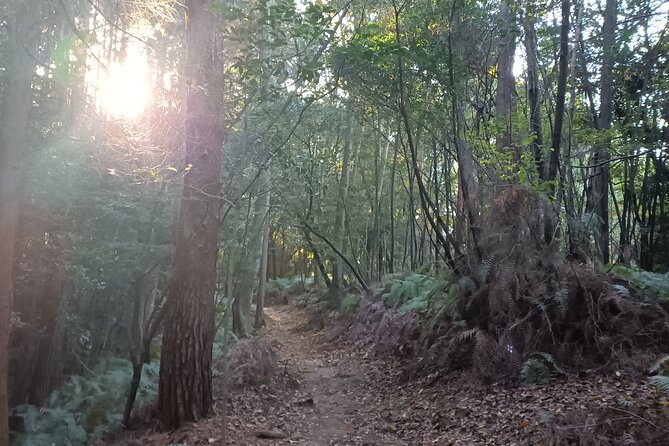
The first stop is Shimogamo Jinja, formally known as Shimogamo Shrine. It is a UNESCO World Heritage Site, but the key pleasure here is not simply checking a famous name off your list. You first pass through an ancient forest that has protected the shrine for centuries.
That forest gives the morning a soft start. Instead of stepping straight from a busy road into a crowded complex, you have a chance to slow down and notice the connection between the shrine and its natural setting. The route makes the forest part of the experience, not just a path to the main buildings.
Your guide can provide context about the shrine’s place in Japanese culture and explain how a Shinto site differs from the Buddhist temples later in the morning. That kind of explanation is useful because customs, architecture, and religious symbols can otherwise blur together when you visit several sites in one day.
Plan on about an hour here. Admission is free, so this portion adds value without adding to your entrance costs. It is also a good place to settle into the walking pace before the route becomes more focused on indoor art and temple grounds.
The drawback is that the visit is still part of a four-hour schedule. You should not expect a long, unstructured period to wander every corner of the shrine grounds. If you want extensive photography time or a slow private visit, you may prefer to return on your own later.
Sanjusangendo and its 1,001 figures of Kannon
Sanjusangendo brings a very different mood. The temple is known for its collection of 1,001 statues of Kannon, the Buddhist goddess of mercy, along with guardian deities. This is the visual centerpiece of the tour, and it gives you something that a simple temple walk cannot: a concentrated encounter with Buddhist sculpture.
The scale of the collection is the point. One statue can invite close attention, but a hall filled with so many figures creates a much stronger impression. Your guide can help you understand what you are seeing rather than leaving you to count rows of statues and move on.
You have about an hour here. That is enough for a focused visit, especially if the guide explains the religious meaning and artistic details as you go. It may feel short if you prefer to linger quietly, study every figure, or take your time with the surrounding grounds.
Sanjusangendo also includes an East Garden Pond and Strolling Garden. These outdoor areas change the rhythm after the large interior hall. You can take a quieter walk, look across the pond, and listen as the guide connects the garden design with Japanese ideas about temple spaces.
Admission is not included. The stated entrance fee is ¥600 per person. Bring some yen or be ready to pay this cost separately, since it is one of the two required admissions on the route.
Tofuku-ji for Zen architecture and garden space
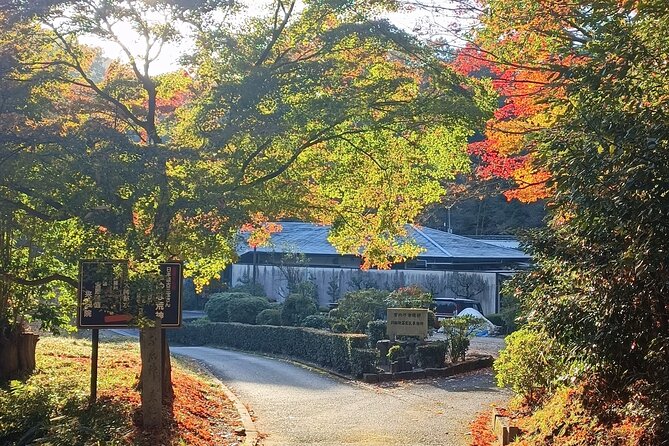
The final stop is Tofuku-ji, a renowned Zen Buddhist temple founded in 1236. It is the head temple of the Rinzai school of Zen Buddhism, and the visit gives the tour its clearest architectural and garden focus.
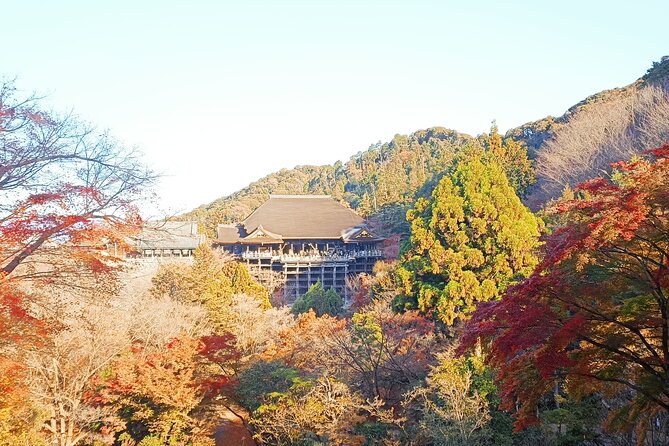
Tofuku-ji is also famous for autumn foliage. The timing of your visit will affect what you see, but the temple remains worthwhile outside the leaf season because of its historic buildings and Zen setting. The tour is not built around a promise of peak autumn color, so you should choose it for the temple itself rather than assume a particular seasonal display.
The two-hour allotment makes Tofuku-ji the longest stop. That is a sensible choice. A large temple complex needs more time than a single hall, and the longer visit gives the guide room to discuss temple architecture, Zen practice, and the way buildings and gardens work together.
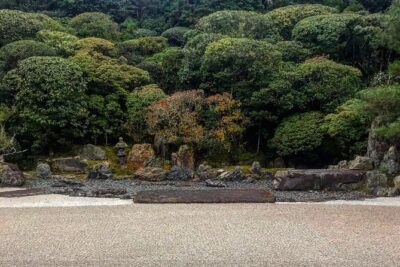
A Zen garden is not simply an ornamental patch of gravel and stones. Its arrangement, empty space, and controlled lines are part of the experience. You may find the garden more rewarding once you know what to look for, which is where the guide can add real value.
The Zen garden entrance fee is ¥500 per person. Combined with Sanjusangendo’s ¥600 admission, the extra cost is ¥1,100. This is modest compared with the total price, but it is important to include it when you compare this tour with other half-day options.
The tour ends at Tofukuji Station, in front of Family Mart. That is convenient. You finish near public transportation rather than being returned to the starting point, and you can use the station to continue exploring Kyoto.
More Kyoto shrines:
- KYOTO Tea Ceremony with kimono near by Imamiya Jinjya Shrine
★ 5.0 · 343 reviews - Kyoto: 3-Hour Fushimi Inari Shrine Hidden Hiking Tour
★ 4.9 · 270 reviews - E-Bike Nara Highlights – Todaiji, Knives, Deer, Shrine
★ 4.8 · 186 reviews - Kyoto Magical Night English Tour: Gion & Fushimi Inari Shrine
★ 5.0 · 97 reviews
What the $97.55 price buys you
At $97.55 per person, this is not a bargain admission package. The entrance fees are extra, and the tour price does not include water or other drinks. The value comes from the guide, the route planning, the small group, and the time saved figuring out how to connect three sites.
You are paying for more than transportation between attractions, though transportation details are not specified as part of the package. The experience is presented as a walking tour, and its main benefit is having an English-speaking local guide explain what you are seeing while you move through the sites.
The value is strongest if you care about context. If you already know Kyoto’s religious architecture and prefer to visit silently at your own pace, you may find the price harder to justify. If you want help making sense of Shinto forests, Buddhist sculpture, and Rinzai Zen spaces in one morning, the fee is easier to defend.
The four-hour length is also useful for trip planning. It fills a morning without taking your entire day, leaving time for lunch and another Kyoto activity. Because it ends at Tofukuji Station, you do not lose extra time returning to the original meeting point.
Bring water, since drinks are not included. Comfortable shoes are essential, and you should be prepared for steady walking and time on your feet. The operator recommends a moderate fitness level and does not recommend the experience for people with weak legs or joints.
The small-group format and guide experience
The tour includes an experienced local guide with a good command of English. No individual guide name is provided, so you should not book expecting a particular person. You can expect the guide to supply cultural and historical explanations throughout the route.
The group maximum is eight people. That is small enough to keep the experience fairly personal, especially at the shrine and temple stops where you may have questions about customs or design.
One particularly useful feature is the balance between explanation and movement. You are not spending four hours in a lecture, but you are also not being dropped at three sites with only a meeting time. The route is designed for learning as you walk.
An early start also improves the guide experience. At 8:00 a.m., the group has a better chance of moving through the first site without the heavier foot traffic that builds later. The morning schedule is one reason this tour received its strongest praise for avoiding the rush and offering historical insight along the way.
Who should book this walk
I would recommend this experience to someone visiting Kyoto for the first time who wants more than the city’s most crowded headline attractions. It is especially suitable if you like religious art, temple architecture, gardens, and clear cultural explanations.
It also works well for people who prefer a planned half-day. You do not need to create your own route between Shimogamo Shrine, Sanjusangendo, and Tofuku-ji, and you finish at a station with the rest of the day ahead.
The tour is less suitable if you dislike early starts or active walking. It is also not the right pick if your priority is a leisurely, unstructured visit at one single temple. The schedule gives each stop a defined amount of time, with Tofuku-ji receiving the longest visit.
Autumn foliage fans should keep expectations measured. Tofuku-ji is famous for its fall color, but the tour does not guarantee peak foliage. The site’s architecture, Zen connection, and garden are the dependable reasons to go.
Booking details worth knowing
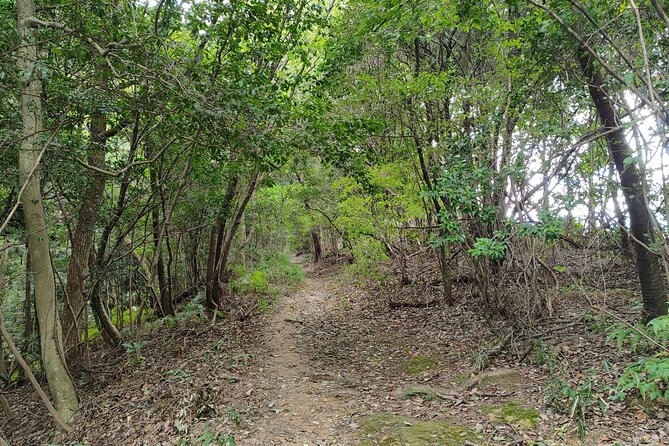
The meeting point is McDonald’s at Shichijo Keihan, 229 Hiyoshicho, Higashiyama Ward. The start time is 8:00 a.m., so allow enough time to reach the meeting point before the group leaves.
The tour runs for about four hours and ends in front of Family Mart at Tofukuji Station, 12 Chome Honmachi, Higashiyama Ward. Both the start and end points are near public transportation.
Confirmation is provided at booking. The experience requires good weather and a minimum number of participants. If poor weather or insufficient enrollment causes cancellation, you are offered another date or experience, or a full refund.
For a standard cancellation, you can cancel at least 24 hours before the local start time for a full refund. Changes or cancellations inside that 24-hour window are not accepted and are not refunded.
Should you book Kyoto Off the Beaten Path?
Book it if you want a small-group morning walk with substance. Shimogamo’s forest, Sanjusangendo’s 1,001 Kannon figures, and Tofuku-ji’s Zen setting give you three different ways to see Kyoto, while the guide supplies the links between them.
Skip it if you want a private pace, have difficulty walking for several hours, or are trying to avoid extra entrance fees. For everyone else, the early start, thoughtful route, and Tofukuji Station finish make this a practical way to spend a Kyoto morning away from the most crowded circuit.
FAQ
How long does the Kyoto Off the Beaten Path tour last?
The experience lasts approximately four hours.
What time does the tour start?
The tour starts at 8:00 a.m.
Where does the tour meet?
The meeting point is McDonald’s at Shichijo Keihan, 229 Hiyoshicho, Higashiyama Ward, Kyoto, 605-0993, Japan.
Where does the tour end?
The tour ends in front of Family Mart at Tofukuji Station, 12 Chome Honmachi, Higashiyama Ward, Kyoto, 605-0981, Japan.
Which places are included in the tour?
The route visits Shimogamo Shrine, Sanjusangendo Temple, and Tofuku-ji Temple.
Are admission fees included?
No. Sanjusangendo has an entrance fee of ¥600 per person, and the Zen garden entrance fee at Tofuku-ji is ¥500 per person.
Is the tour suitable for people with limited mobility?
The tour requires a moderate level of physical fitness and is not recommended for people with weak legs or joints.
How many people can join the tour?
The maximum group size is eight people.
What is included in the tour price?
The price includes an experienced local guide with a good command of English. Water and other drinks, alcohol excluded, are not included.
More Gardens in Kyoto
- Kyoto Arashiyama Walking Tour: Bamboo, Monkeys, Gardens & Secrets
★ 5.0 · 1,216 reviews - Kyoto Arashiyama Bamboo forest & Garden Half-Day Walking Tour
★ 5.0 · 413 reviews - Kyoto: Zen Garden, Zen Mind (Private)
★ 5.0 · 126 reviews - Kyoto Kiyomizu Tea Ceremony with Scenic Garden Views
★ 5.0 · 101 reviews
Recently added around Kyoto
- Higashiyama | Kyoto: Sakura Season Private Rickshaw Tour★ 5.0 · 3 reviews
- Kyoto Kimono Rental CHAMATSU|Kimono/Yukata Rental FamilyPlan★ 5.0 · 3 reviews
- Kyoto: Half-Day Private Guided Tour to the Old Town of Gion★ 4.4 · 3 reviews
- Nara Private Customizable Half Day Tour★ 5.0 · 3 reviews
- Kansai Region Hiking Adventure in Nara Kobe Kyoto and More★ 5.0 · 3 reviews
- Full Day Nara Deer, Temple, Shrine, Activities & Tea Ceremony★ 5.0 · 3 reviews
- Nara: Essential Private Tour with Deer Park and Temples★ 5.0 · 3 reviews
- Hiking Tour for Sacred Sites in Kyoto with a Guide★ 5.0 · 3 reviews
Kyoto Zen Meditation Experiences, compared.
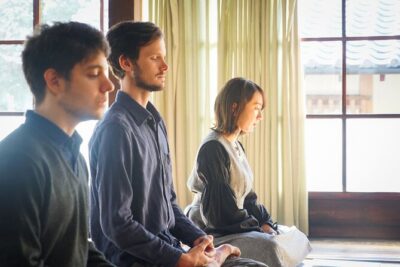
Kyoto Zen Meditation & Garden Tour at a Zen Temple with Lunch
Read our review →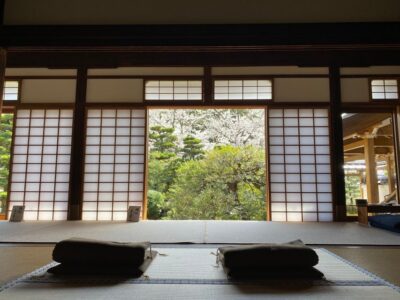
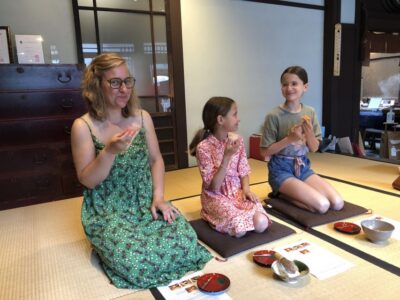
Tea Ceremony Meditation – Make Matcha with Tea Master
Read our review →
4.5-Hour Kyoto Bike Tour with Lunch and UNESCO Zen Temples
Read our review →
Zen Meditation and Garden Tour at a Temple with Lunch
Read our review →
Arashiyama Guided Tour, Bamboo, Monkey, Zen Temple
Read our review →Browse the lists this tour appears in