
REVIEW · KYOTO TEA CEREMONY EXPERIENCES
Kyoto near Fushimiinari Wagashi making&Small Group Tea Ceremony
Making a Japanese sweet with your own hands, then eating it during a formal tea ceremony, gives this short Kyoto experience a useful rhythm. You begin in a local kitchen, move through a small garden, and finish in a traditional room near Fushimi Inari.
I like the hands-on wagashi lesson, since you are not simply watching a demonstration. I also like the small group size, capped at eight, and the friendly English instruction from guides such as Miho, who explains both the practical steps and the meaning behind the ceremony.
The main consideration is time. At about 75 minutes, this is a compact introduction rather than an in-depth tea school. You also need to sit on tatami unless you request chairs, and matcha contains caffeine.
In This Review
- Key Points Before You Book
- A Short Cultural Lesson Near Fushimi Inari
- Making Wagashi in the Kitchen
- Crossing the Tiny Garden Into the Tea Room
- Learning the Meaning Behind Matcha
- What the Small Group Size Changes
- How the Location Fits a Fushimi Inari Visit
- Is $52.26 a Fair Price?
- Practical Details That Matter
- Who Will Enjoy This Most?
- Should You Book the Wagashi and Tea Ceremony?
- FAQ
- How long does the wagashi and tea ceremony experience last?
- Where does the experience start?
- Is the class taught in English?
- How many people can join the class?
- Do I need to sit on the tatami floor?
- Can children participate?
Key Points Before You Book
- Make your own wagashi: You prepare one kind of Japanese traditional sweet in the host’s kitchen, then eat it during the ceremony.
- Learn to prepare matcha: The host demonstrates the formal process, and you make a bowl for yourself afterward.
- Small group setting: The class accepts no more than eight people, which leaves room for questions and personal guidance.
- Near Fushimi Inari: The meeting point is about a 10-minute walk from Fushimi Inari Taisha, according to the experience information.
- Traditional home atmosphere: The ceremony takes place in an authentic Japanese-style room, with a small garden walk when weather allows.
- Bring socks: Bare feet are not permitted in the room. Easy-to-remove shoes are also a smart choice.
A Short Cultural Lesson Near Fushimi Inari
This experience works because it combines two parts of Japanese food culture that are often presented separately. You first make wagashi, a delicate Japanese sweet, then use it in the setting where such sweets are traditionally served with matcha.
The house is at 38-4 Fukakusa Watamoricho in Kyoto’s Fushimi Ward. The class starts at 9:45 a.m. and returns to the same place at the end. Its location near Fushimi Inari makes it easy to pair with one of Kyoto’s best-known sights, though you should allow enough time to find the house and arrive promptly.
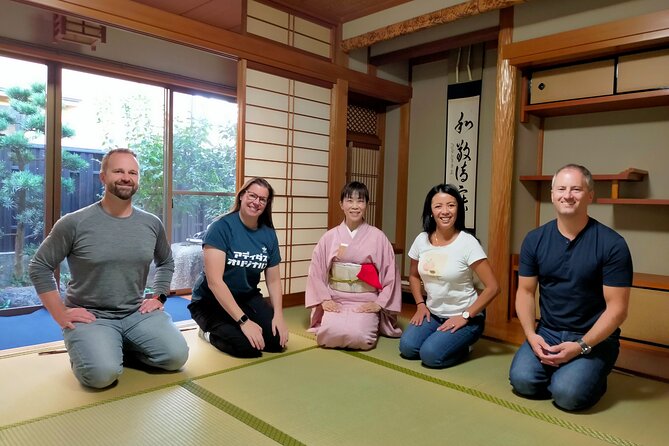
The setting is intentionally domestic. This is not a large cultural hall with a stage and rows of seats. An English-speaking host welcomes you into a local house and begins in the kitchen. That gives the class a personal feel, closer to being invited into someone’s home than attending a polished tourist performance.
You should keep your expectations sensible. The session is formal in parts, but it is also designed to feel friendly and approachable. You will learn the basic manners and sequence of tea ceremony without needing prior knowledge of Japanese customs.
More tea ceremonies in Kyoto:
- Kyoto: Tea Ceremony in a Traditional Tea House in Kiyomizu
★ 4.9 · 3,519 reviews - Kyoto: Tea Ceremony Ju-An at Jotokuji Temple
★ 4.9 · 3,207 reviews - Kyoto: 45-Minute Tea Ceremony Lesson Experience
★ 4.3 · 2,378 reviews
Making Wagashi in the Kitchen
The first stage takes place in the kitchen, where you learn to make one kind of wagashi. The class is hands-on, so you handle the ingredients and shape the sweet rather than simply watching the host work.
That detail matters. Wagashi can look almost too neat and precise to make at home, but the point here is not to produce a museum piece. It is to understand how the sweet is formed and why it belongs with matcha. The process is described as a little sticky, so you should expect a practical cooking lesson rather than a spotless craft demonstration.
Once finished, your sweet becomes part of the tea ceremony. You will savor what you made before drinking matcha, following the order explained by the instructor. That connection makes the lesson more memorable: you are not making a snack as a separate activity, but preparing an important part of the tea service.
The class teaches only one type of wagashi, which is appropriate for a 75-minute experience. If you want a broad survey of Japanese confectionery or a long cooking workshop, this will feel limited. If you want one useful recipe-style skill to take home, it fits the available time well.
You also leave with something you can repeat for friends. The hosts explain that you will be able to prepare wagashi and serve matcha after the class. The experience does not promise a take-home kit, so think of the souvenir as the method and memory rather than packaged food.
Crossing the Tiny Garden Into the Tea Room
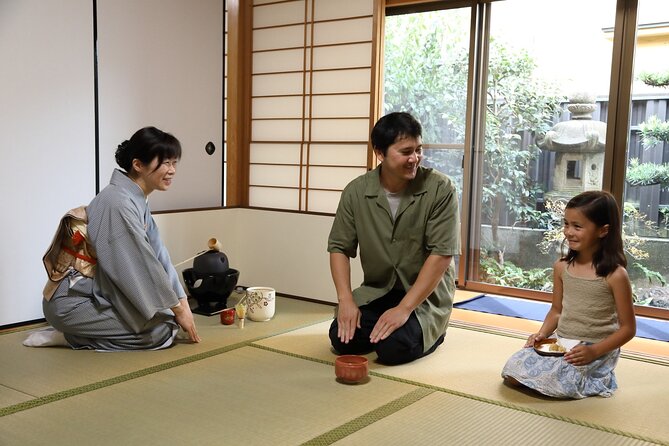
After the kitchen lesson, the host explains how to attend the tea ceremony. When the weather is suitable, you walk outside through a tiny garden before entering the Japanese-style room.
This short transition is part of the lesson. The movement from the kitchen to the garden and then into the tea room helps you notice the change from everyday cooking to a more formal setting. If it rains, the outdoor walk may not take place, but the ceremony still moves into the room.
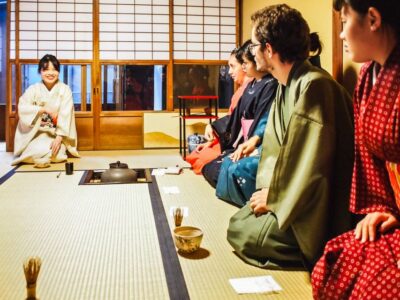
Inside, you sit on tatami flooring. The instructor explains the history of tea ceremony and discusses the meaning of the hanging scroll on the wall. These details give the room context, so you are not simply sitting in a traditional space without knowing what to look for.
Tatami seating can be hard on knees and ankles, especially if you are not used to sitting on the floor. Chairs can be prepared if you request them when booking, so make that need clear in advance and state how many chairs you require. Socks are mandatory, and easy-to-remove shoes will make the transitions less awkward.
The room is authentic in the practical sense: you enter a real Japanese-style home and follow customs connected to the setting. At the same time, the instructor explains what to do, so you are not expected to guess when to bow, where to look, or how to handle the tea.
Learning the Meaning Behind Matcha
The tea ceremony demonstration is led by the host, with English-speaking instructors providing explanation and guidance. The instructors are licensed guide interpreters, which is useful here because the value of the session depends on understanding small actions and symbols.
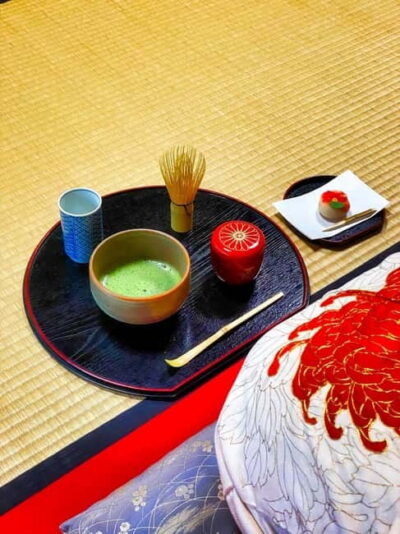
First, the instructor shows you how to drink a bowl of matcha. You then enjoy the wagashi you made while watching the process. The sweet balances the bitter, grassy taste of the tea, and the order of serving helps you understand why Japanese confectionery is part of the ceremony.
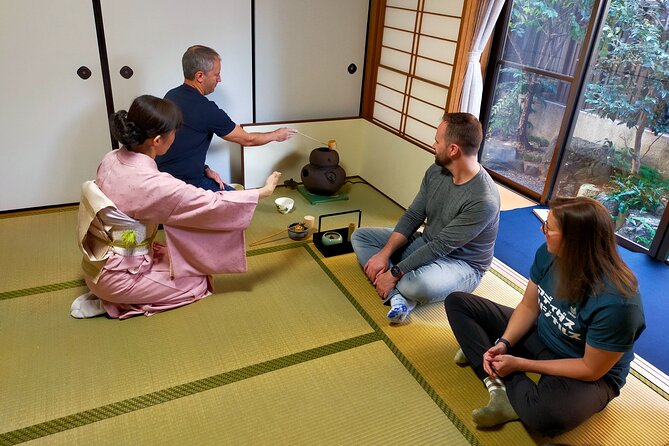
Next, the host demonstrates the ceremonial preparation of matcha. Pay attention to the measured movements, the use of the whisk, and the calm pace. The point is not speed. It is the care given to preparing and presenting a simple bowl of tea.
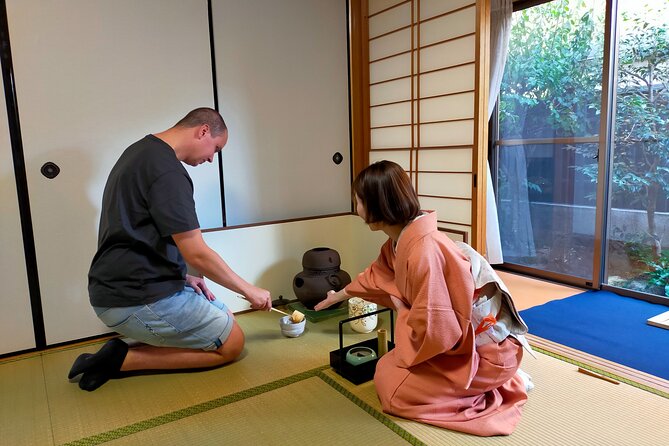
After the demonstration, you prepare matcha yourself. You get two bowls of matcha in total, along with the Japanese traditional confectionaries. One bowl is part of the host’s demonstration and service, while the other gives you a chance to practice the process. The exact division can depend on how the session is conducted, but the experience clearly includes a practical opportunity to make tea yourself.
This is the most useful part for anyone who wants to recreate the experience at home. You will not become a tea master in one hour, but you will understand the basic preparation and gain enough confidence to serve matcha to friends.
More wagashi sweet-making classes:
- Kyoto Food Tour of 10 Tastings with Wagyu, Mochi & More Surprises
★ 5.0 · 85 reviews - Kyoto Wagashi(Japanese sweets) Cooking Class near Fushimiinari
★ 5.0 · 60 reviews - Kyoto: Wagashi (Japanese sweets) Cooking near Fushimiinari
★ 5.0 · 40 reviews - 2 Types of Japanese Sweets making and Tea Ceremony
★ 4.6 · 17 reviews
What the Small Group Size Changes
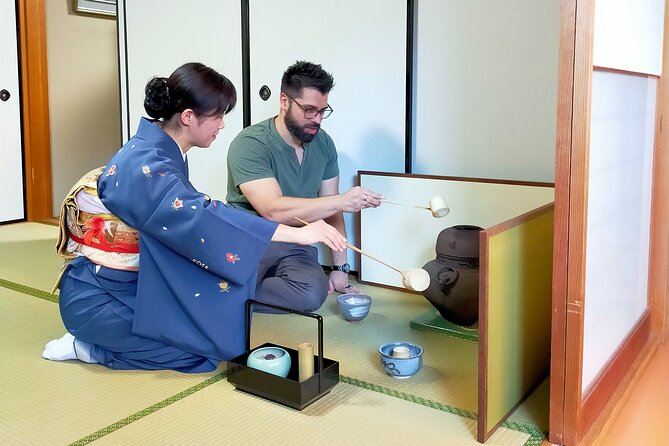
With a maximum of eight people, the class has a more personal scale than a large sightseeing activity. You can see the wagashi preparation and tea demonstration clearly, and there is a better chance to ask questions in English.
The small group also suits the subject. Tea ceremony depends on quiet observation, careful movements, and attention to the room. Eight people still make it a shared activity, but the group should not overwhelm the home setting.
The experience requires at least two people for a reservation, although solo participants can contact the provider to see if an arrangement is possible. Children aged eight to twelve must attend with at least one adult. Children aged seven or younger cannot take part.
This is not a strong choice for anyone who does not consume caffeine. The activity includes matcha, and the details do not indicate a caffeine-free substitute. If you are sensitive to caffeine, ask before booking rather than hoping to skip that part.
How the Location Fits a Fushimi Inari Visit
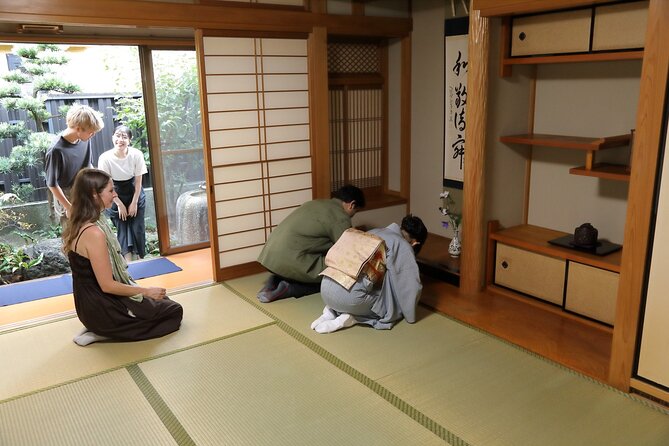
The class takes place in Fushimi Ward, close to Fushimi Inari Taisha. The experience information places the shrine roughly a 10-minute walk away, making the class easy to combine with a visit to the famous orange torii gates.
The 9:45 a.m. start is useful if you want to build a morning around the shrine and tea ceremony. You could attend the class first, then walk toward Fushimi Inari, or visit the shrine before the class if you can reach the meeting point on time. The class itself ends back at the starting location.
Do not treat the nearby shrine as part of the tour. The activity does not include a shrine visit, walking tour, or hotel transportation. You arrange your own way to 38-4 Fukakusa Watamoricho, and the experience ends there.
The neighborhood setting is one of the best reasons to choose this activity instead of a ceremony in a busy central venue. You are still close to one of Kyoto’s major sights, but the class takes place in a local house away from the main shrine crowds.
Is $52.26 a Fair Price?
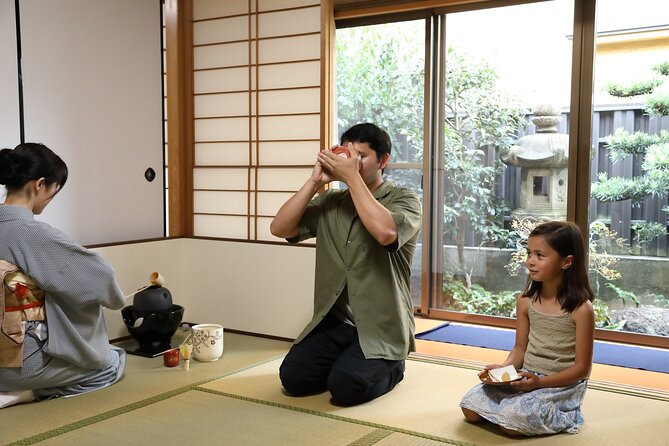
At $52.26 per person, the price is reasonable for a 75-minute experience that includes instruction, all fees and taxes, wagashi making, two bowls of matcha, and traditional sweets.
The value comes from the combination rather than the length. A short tea demonstration alone might feel thin, but this session gives you a cooking lesson, cultural explanation, garden transition, formal ceremony, and hands-on matcha practice. You also get English-language instruction throughout.
The small group cap strengthens the value. You are paying for a guided activity with a personal scale, not just admission to watch someone prepare tea. The licensed guide interpreters should also help you understand the meaning of the scroll, room, gestures, and sequence.
Still, the price may feel high if you only want to taste matcha or take photographs in a traditional room. You are paying for participation and explanation. The experience earns its price best when you take part fully, ask questions, and treat the wagashi and tea preparation as skills to remember.
There is no hotel pickup or drop-off, and gratuity is not included. Since the tour lasts only about an hour and fifteen minutes, its value improves when you combine it with Fushimi Inari rather than traveling across Kyoto solely for the class.
Practical Details That Matter
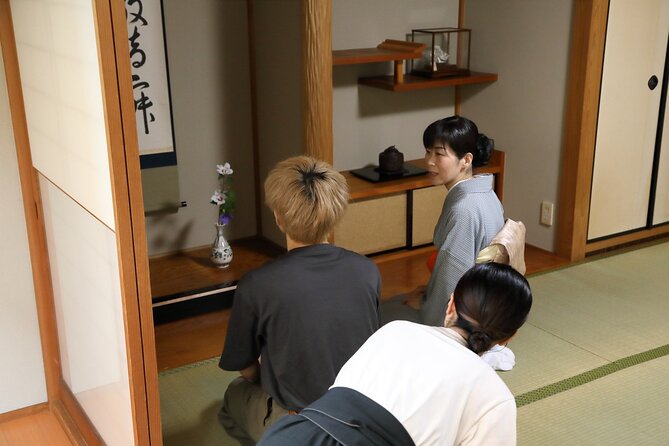
Confirmation is provided when you book, and the ticket is mobile, so you can keep the voucher on your phone. The meeting point is near public transportation, but no hotel transfer is offered.
Wear or bring socks. Bare feet are not allowed in the tea room. Shoes that come off easily are best, since you will enter a Japanese-style room and may also move between the house, garden, and ceremony space.
The activity requires good weather because the garden walk is part of the planned movement between spaces. If poor weather causes cancellation, you are offered another date or a full refund.
You can cancel for a full refund up to 24 hours before the local start time. Changes or cancellations inside that 24-hour window are not accepted, so keep your Fushimi Inari plans flexible until you are sure of your schedule.
Who Will Enjoy This Most?
I would choose this for you if you want a cultural activity that is personal, short, and close to one of Kyoto’s major sights. It suits first-time visitors who want a clear introduction to tea ceremony without committing to a long formal session.
It is also a good match for families with older children. Kids aged eight and above can take part under the stated conditions, and making the sweet gives them something active to do before the quieter ceremony begins.
Couples, friends, and solo visitors who can arrange a place should also find the small setting appealing. The class has enough structure to feel special, but the English explanations keep it from becoming intimidating.
I would skip it if you dislike caffeine, cannot sit on tatami even with a chair, or want a full-day food workshop. You should also look elsewhere if your main goal is a large-scale performance or a tour with hotel transportation.
Should You Book the Wagashi and Tea Ceremony?
Book this experience if you want to do more than watch a tea ceremony. The strongest feature is the sequence: make wagashi, learn how to receive tea, watch the host prepare matcha, then prepare a bowl yourself.
The local-house setting, English explanations, and eight-person limit give the session a friendly scale. Its proximity to Fushimi Inari makes the $52.26 price easier to justify, especially as part of a morning in the area.
Go in ready to remove your shoes, wear socks, taste matcha, and participate. If you do, this compact class gives you a practical souvenir: the ability to make a Japanese sweet and serve matcha to friends at home.
FAQ
How long does the wagashi and tea ceremony experience last?
The activity lasts approximately 1 hour and 15 minutes.
Where does the experience start?
It starts at 38-4 Fukakusa Watamoricho, Fushimi Ward, Kyoto, 612-0022, Japan. The activity ends back at the same meeting point.
Is the class taught in English?
Yes. An English-speaking instructor leads the session, and the instructors are licensed guide interpreters.
How many people can join the class?
The group has a maximum of eight participants.
Do I need to sit on the tatami floor?
The tea ceremony takes place on tatami, but chairs can be prepared if you request them when booking. You should also bring or wear socks because bare feet are not allowed.
Can children participate?
Children aged eight to twelve must attend with at least one adult. Children aged seven or younger cannot participate.
Recently added around Kyoto
- Higashiyama | Kyoto: Sakura Season Private Rickshaw Tour★ 5.0 · 3 reviews
- Kyoto Kimono Rental CHAMATSU|Kimono/Yukata Rental FamilyPlan★ 5.0 · 3 reviews
- Kyoto: Half-Day Private Guided Tour to the Old Town of Gion★ 4.4 · 3 reviews
- Nara Private Customizable Half Day Tour★ 5.0 · 3 reviews
- Kansai Region Hiking Adventure in Nara Kobe Kyoto and More★ 5.0 · 3 reviews
- Full Day Nara Deer, Temple, Shrine, Activities & Tea Ceremony★ 5.0 · 3 reviews
- Nara: Essential Private Tour with Deer Park and Temples★ 5.0 · 3 reviews
- Hiking Tour for Sacred Sites in Kyoto with a Guide★ 5.0 · 3 reviews
Kyoto Tea Ceremony Experiences, compared.
Tea Ceremony in a Traditional Tea House in Kiyomizu
Read our review →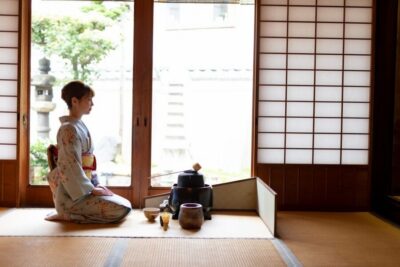
Tea Ceremony in 100-year-old Kyo-Machiya Townhouse
Read our review →
Browse the lists this tour appears in