
REVIEW · GION GEISHA DISTRICT TOURS
Kyoto: Meet-and-Greet, Maiko Show and Experience
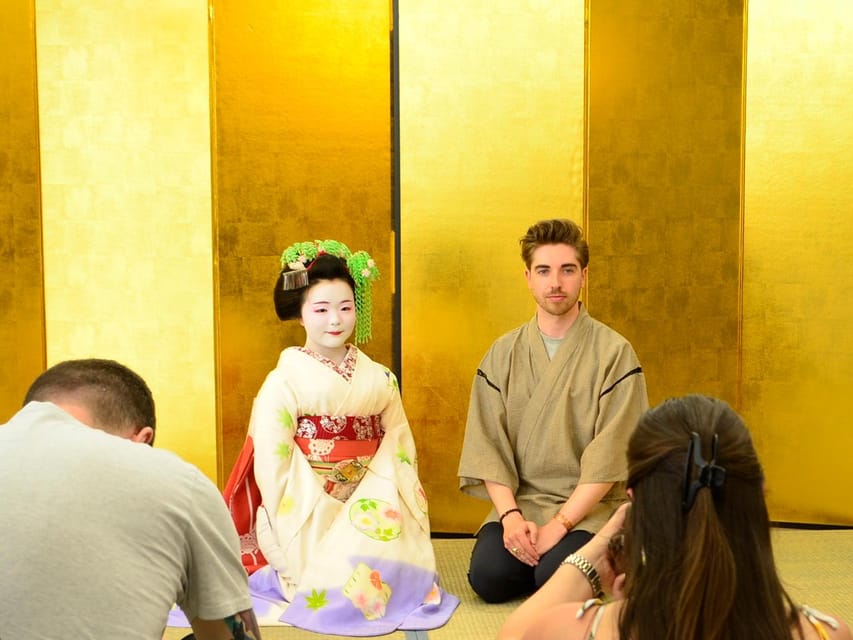
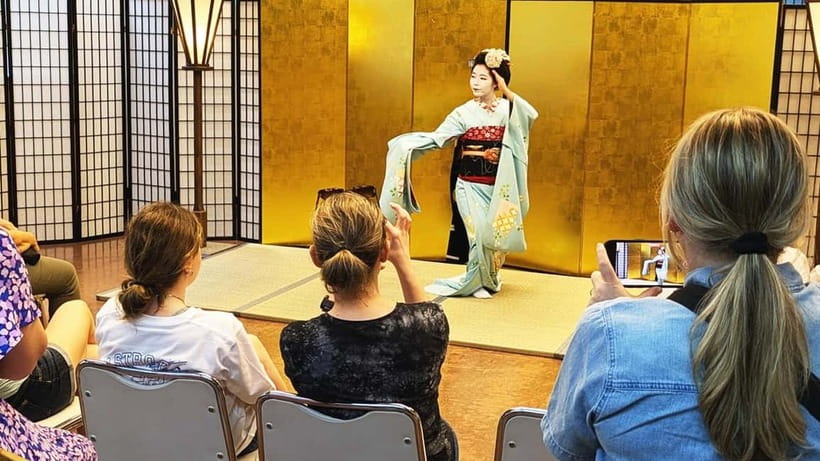
A young maiko enters in a formal kimono, ornate hair ornaments, and the familiar white makeup of Kyoto’s geisha tradition. She performs two delicate dances, then sits down for translated questions. I like the respectful setting and the chance to learn directly from the performer, rather than trying to spot someone in Gion from a distance.
I also like the small group, English-speaking moderation, and included photograph. The main drawback is time: the dances last only 8 to 10 minutes in total, and some of your 45 minutes goes to photos. The room inside the Handicraft Center can also feel more like a clean retail venue than an old Kyoto teahouse.
In This Review
- Key points at a glance
- What a maiko is, and why this meeting matters
- Arriving at the Kyoto Handicraft Center
- The opening introduction and stage entrance
- Two traditional dances in 8 to 10 minutes
- The English explanation of maiko training
- Asking questions directly through the interpreter
- The 10 to 15-minute photo session
- Shopping for Japanese crafts after the show
- Is $44 a fair price for 45 minutes?
- Who will get the most from this experience?
- Practical tips for a smooth visit
- Should you book the Kyoto maiko meeting?
- FAQ
- How long does the maiko experience last?
- Where is the meeting point?
- Is the event conducted in English?
- Can I take photographs?
- Is transportation included?
- Can young children attend?
Key points at a glance
- Two dances in close view: The performance lasts about 8 to 10 minutes, with free seating so everyone can watch.
- Questions are central: An English-speaking host explains the tradition and translates your questions to the maiko.
- A useful introduction to maiko life: You hear about training in dance, music, tea ceremony, conversation, etiquette, and hospitality.
- Small-group atmosphere: Capacity is limited to 30 people, which gives the question period a more personal feel.
- Photo and souvenir included: You may take a commemorative picture with your own camera or phone, then receive a small gift.
- Easy to pair with shopping: The Kyoto Handicraft Center sells Japanese crafts and gifts after the show.
What a maiko is, and why this meeting matters
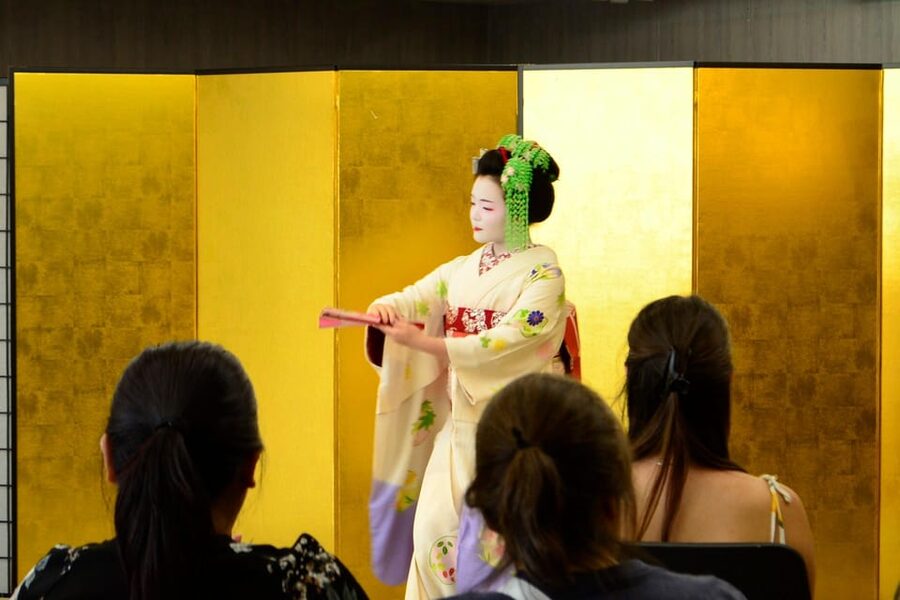
If you know geisha mainly from films or photographs, this short program gives you a clearer picture. A maiko is a young apprentice geiko, the Kyoto term for geisha. She is still training and developing her own style before becoming a geiko.
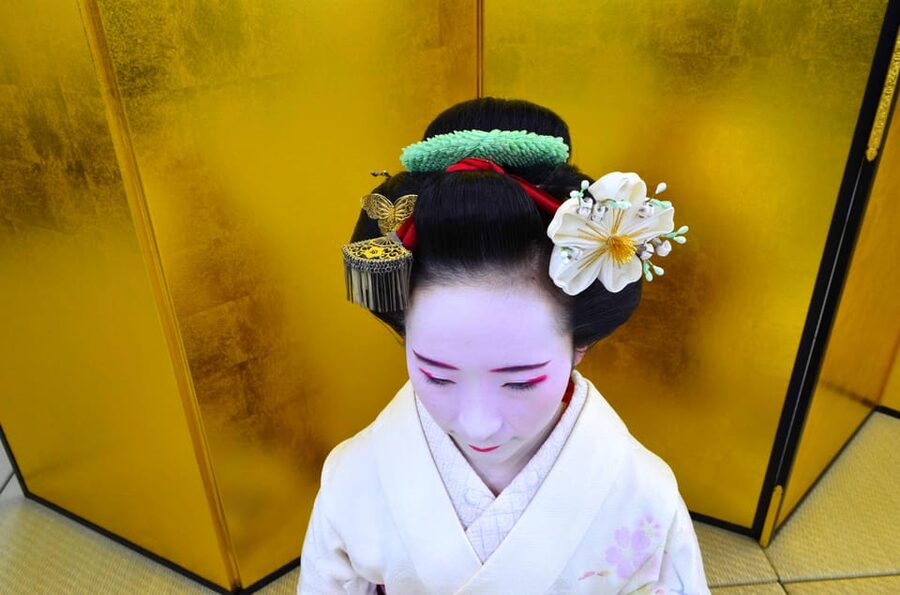
Her appearance is part of that training and tradition. You will see a patterned kimono, a carefully arranged hairstyle with distinctive ornaments, and white face makeup with red and black details. The clothing is not a costume chosen for a tourist show. It is a formal part of the maiko’s professional identity, and the host explains what you are seeing.
The work involves far more than dancing. Maiko train in traditional dance and music, study the tea ceremony, and practice conversation, social etiquette, and hospitality. Their professional role is to entertain at teahouses and banquet halls while they continue learning.
That context makes the meeting worthwhile. You are not simply watching an exotic performance. You are seeing one stage in a demanding artistic career and can ask about the work in a polite, structured setting.
More evenings in Gion:
- Kyoto Geisha Walking Tour: Gion District & Hidden Gems
★ 4.7 · 3,273 reviews - Kyoto: Gion Magical Night Walking Tour with Geisha Trivia
★ 4.9 · 2,393 reviews - Kyoto: Gion Geisha District Walking Tour – Stories of Geisha
★ 4.7 · 2,187 reviews
Arriving at the Kyoto Handicraft Center
The meeting point is the Kyoto Handicraft Center’s West Building. Enter on the first floor, take the elevator to the second floor, and look for the MEET MAIKO welcome sign.
The center is a practical venue. It is easy to combine with browsing Japanese crafts, paintings, dolls, and souvenirs, and you can shop after the presentation. Some displays include museum-level pieces marked not for sale, so allow a few minutes to look around instead of treating the building as only a meeting point.
Reception opens 30 minutes before the scheduled show. I would arrive at least 10 minutes early, especially in a busy season. Kyoto taxis can be hard to catch, and city buses may be crowded, so give yourself a generous buffer.
The retail setting has both advantages and limits. It is accessible, familiar, and straightforward to find. On the other hand, it does not provide the old-fashioned atmosphere of a lantern-lit teahouse. If you want candlelight, traditional architecture, or a long theatrical production, this is not that kind of event.
The opening introduction and stage entrance
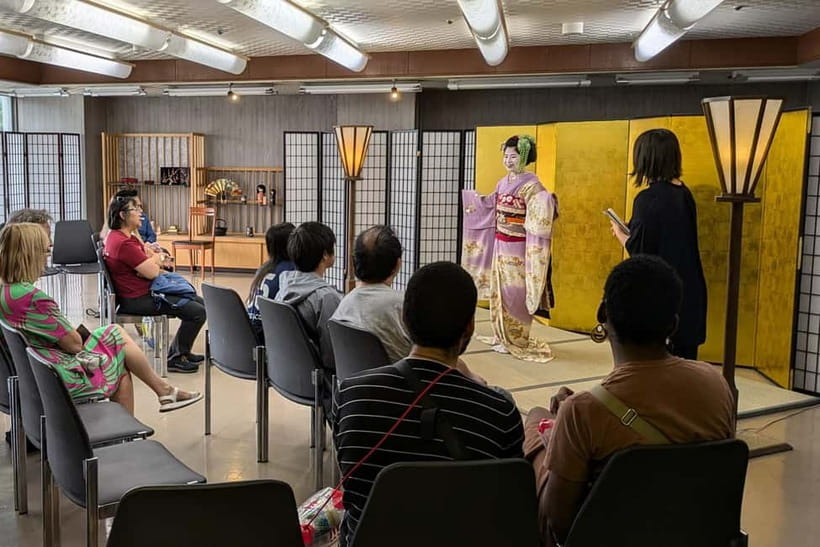
Once seated, the English-speaking host begins with an introduction and invites the maiko onto the stage. This opening gives you basic cultural bearings before the dancing starts, which helps you notice details beyond the makeup and kimono.
The host also introduces the maiko’s attire. You may hear about the clothing, hairstyle, hair ornaments, and makeup, as well as the broader role of a maiko in Kyoto. An interpreter or moderator bridges the language gap throughout the program.
Past sessions have included an interpreter named Mina and a maiko named Kanoshizu-san. Names may vary by date, so think of those as examples rather than a guarantee. The important point is that the format is designed for English speakers, and the host guides the exchange rather than leaving you to guess what is being said.
The tone is formal but not stiff. The maiko is presented as an artist and young professional, not as a novelty. That distinction matters, especially in a culture that is often reduced to quick photographs in Gion.
Two traditional dances in 8 to 10 minutes
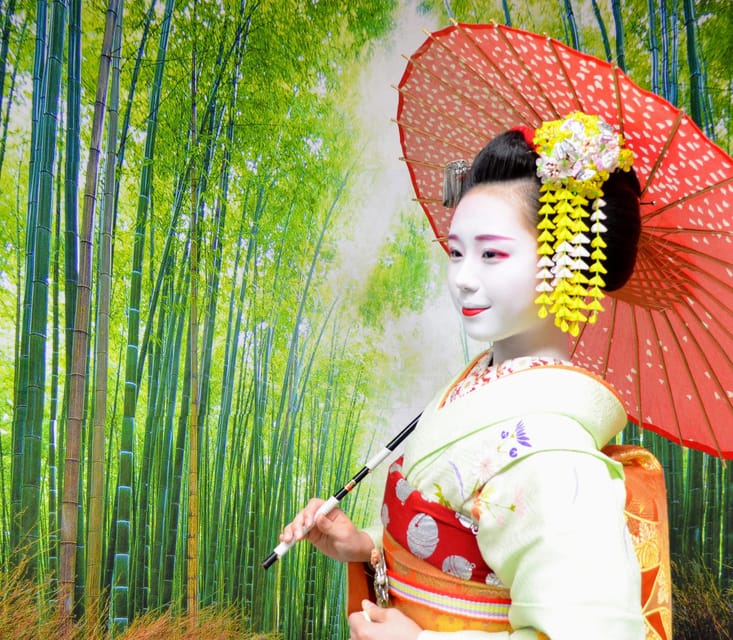
The maiko performs two traditional dances, together lasting about 8 to 10 minutes. This is the visual heart of the program, and the close seating lets you notice the measured hand movements, controlled steps, posture, and movement of the kimono.
Do not expect a long stage show. The performance is an introduction, not a full evening of dance. Some people will wish for more dancing, particularly because the performance is so short. Others will appreciate that the program leaves time for questions and a photograph.
The dances reward close attention. The gestures are small and deliberate, so sitting near the front is useful. Seats are unassigned, but all participants can be seated. Arriving early gives you a better chance to choose a preferred place.
Photography is allowed during the event. Still, I would keep your phone use sensible during the dances. The value is in watching the full movement, not viewing everything through a screen.
The performance is also family-friendly in its subject matter and structure. Children aged two and under may attend free if they do not need their own seat. Keep in mind that a quiet room and slow performance may be difficult for very young children. One session was disrupted by children shouting, which made the atmosphere uncomfortable for everyone. If you bring children, explain beforehand that this is a seated cultural presentation.
A few more Kyoto experiences worth comparing
- Kyoto Gion Cultural Walk & Geisha Show with Dining Options
★ 5.0 · 518 reviews - Kyoto Gion Cultural Walk & Geisha Show with Dining Options
★ 5.0 · 483 reviews - 1 Hour Geisha Show in Kyoto
★ 5.0 · 452 reviews - Kyoto: Samurai Kenbu Traditional Sword Dancing Show
★ 4.5 · 426 reviews
The English explanation of maiko training
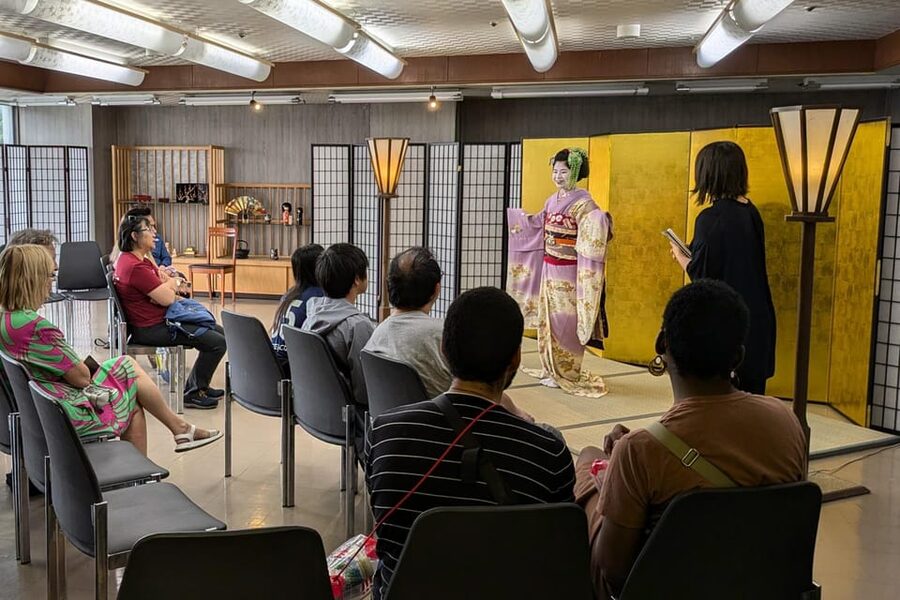
After the dances, the host gives more background and helps explain the maiko’s daily work and training. This is where the program moves beyond the visual appeal of the costume.
You learn that a maiko studies dance, music, tea ceremony, conversation, manners, and hospitality. The discussion can also touch on the path from apprentice maiko to geiko. The explanations are aimed at people with little prior knowledge, so you do not need to study the subject before arriving.
I find this part especially useful because it corrects a common misunderstanding. Maiko are not simply performers hired to pose in traditional clothing. They are apprentices working within a formal art tradition, with years of preparation behind the public presentation.
The host’s role is important. A good moderator explains cultural details without overwhelming you, translates questions accurately, and keeps the exchange moving. The strongest sessions have been praised for clear interpretation and gentle handling of sensitive questions.
The schedule is fairly tight. If the audience asks many questions, the host may need to keep answers moving. That is a practical tradeoff of a 45-minute event: you get a focused introduction, but not an unhurried conversation.
Asking questions directly through the interpreter
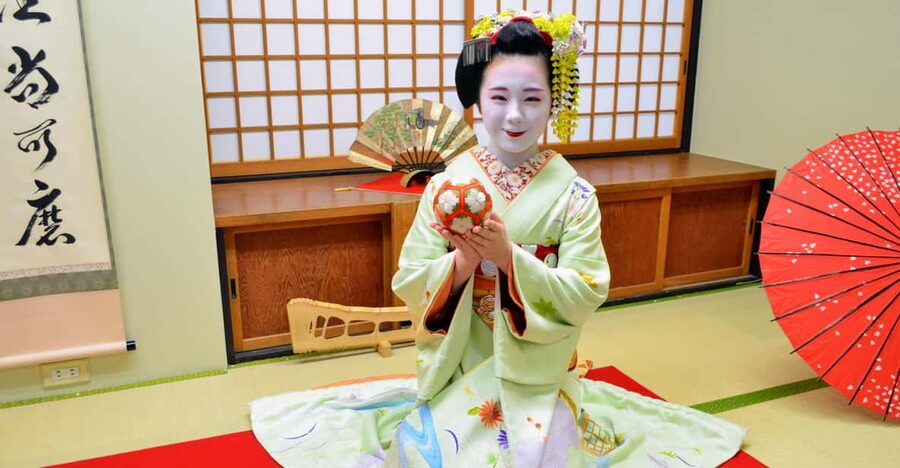
The question-and-answer period is the most personal part of the experience. You can ask about the maiko’s training, work, views, and life within the tradition. The host translates between English and Japanese, allowing you to hear answers rather than relying only on a prepared speech.
This section gives the program its real value. A dance can show you grace and discipline, but a conversation helps you understand the person behind the performance. Several sessions have included questions about becoming a maiko, continuing toward geiko status, and the demands of the training.
The group limit of 30 works well here. It is large enough to create a shared experience, but small enough for audience participation. You should not assume a long private conversation, however. Each person has limited time, and the host must give others a chance to speak.
Ask concise, respectful questions. The best questions focus on training, performance, clothing, daily work, or the maiko’s own path. Avoid treating her as a fictional geisha character or pressing for personal details that do not fit the setting.
The exchange can be touching because many maiko are young. One performer described in the program was 18, which made the discipline and poise of the presentation especially striking. That age also makes respectful framing important. You are meeting a young apprentice at work, not purchasing access to her private life.
The 10 to 15-minute photo session
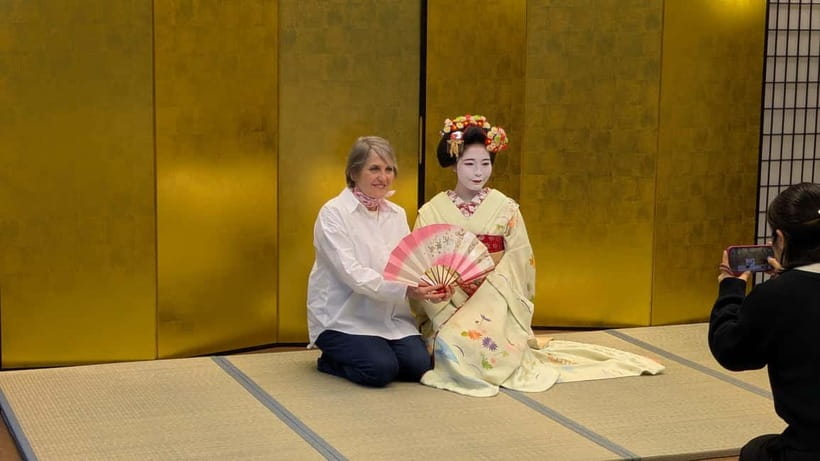
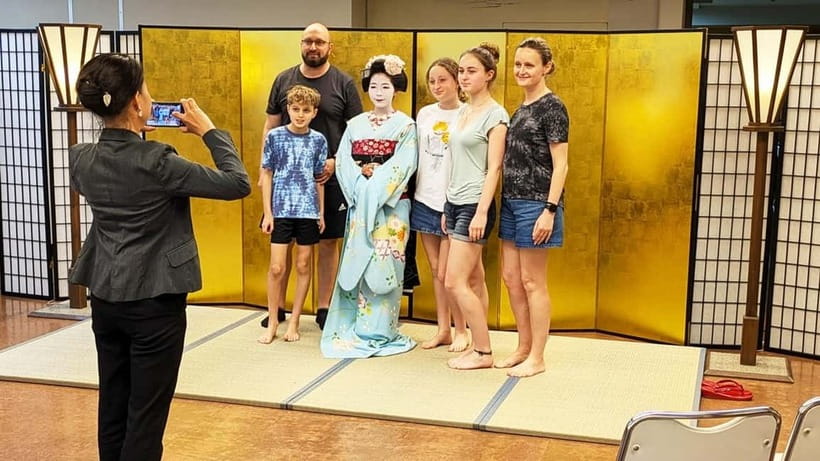
At the end, you can take a commemorative photograph with the maiko using your own camera or smartphone. A photographer is not included, so you will need to hand your phone or camera to another member of your party, or ask the staff for help if available.
The photo session lasts about 10 to 15 minutes. It is organized rather than spontaneous, so expect a quick group rotation instead of a long personal portrait session. This keeps the experience moving and allows everyone a chance.
I like the fact that the picture is included without an extra photographer fee. It gives you a simple reminder of the meeting and avoids the pressure of buying a professional package. If the photo matters to you, check your phone battery and clear some storage before arriving.
The photo portion is also the part most likely to disappoint people who would rather have another dance. The event description promises a photo opportunity, not a professional shoot or extended one-to-one time. Decide in advance what matters more to you: the keepsake or additional performance time.
Photography is allowed during the rest of the event, too. Be considerate of the performer and the people seated behind you. A small, quiet camera or phone is less distracting than standing up repeatedly.
Shopping for Japanese crafts after the show
After the presentation, you can browse the Kyoto Handicraft Center. The shopping area sells high-quality Japanese goods, including locally made paintings, dolls, and souvenirs. It is a convenient way to continue the cultural theme without making another stop across town.
The center is not just a quick gift shop. Displays include more expensive and carefully made pieces, and some museum-level objects in cabinets are marked not for sale. I would look around even if you do not plan to buy anything. It gives you a better sense of Japanese craft traditions and materials.
This shopping stop is optional, and nothing in the activity requires you to purchase anything. That is helpful if you have a full day of sightseeing or a strict luggage limit. It also gives you somewhere to browse before the show if you arrive early.
The retail setting may shape your expectations. You are attending a cultural program inside a craft center, not entering a historic entertainment district. For some people, that makes the event feel safe, organized, and non-sleazy. For others, the room may feel corporate or sterile compared with Kyoto’s older streets.
Is $44 a fair price for 45 minutes?
At $44 per person, this is not the cheapest short activity in Kyoto. It is also not priced like a private maiko dinner or a full evening of traditional entertainment. The value comes from combining a live performance, English interpretation, direct questions, a photo, and a small gift in one compact visit.
The short length is both a strength and a weakness. You can fit it into a crowded Kyoto day, perhaps before or after other sights near the Handicraft Center. You do not lose half a day, and you get a clear introduction without needing prior knowledge.
The cost is easier to justify if seeing a maiko is high on your list and you want a reliable, respectful setting. Spotting a maiko in Gion is uncertain, and approaching someone working in the district is not appropriate. Here, the meeting is arranged for cultural exchange, with an English-speaking host to guide it.
The price may feel high if you mainly want a long dance show. Since the two dances total only 8 to 10 minutes, the program is best understood as a meeting and introduction with performance, not a performance with a brief introduction.
Free cancellation up to 24 hours before the start and the option to reserve now and pay later reduce the risk of fitting it into an uncertain itinerary. The activity is wheelchair accessible, and all participants can sit.
Who will get the most from this experience?
I would recommend it to first-time visitors who want a clear introduction to Kyoto’s maiko tradition. It suits couples, families with older children, and anyone curious about Japanese arts but unsure how to approach the subject respectfully.
It is also a good choice for people who have tried other cultural activities and want something short. The format is direct: introduction, two dances, explanation, questions, photographs, and a small gift.
You may want to skip it if you expect candlelight, historic interiors, a full concert, or a private meeting. The event is shared with other participants, and the venue is a modern handicraft center. It is intimate in scale, but it is not private.
I would also think carefully about your interest in conversation. If you only want photographs, the dance and Q&A may feel longer than necessary. If you want to understand maiko life, the questions and interpretation are what make the $44 worthwhile.
Practical tips for a smooth visit
Arrive early enough to find the West Building, take the elevator to the second floor, and settle into your seat. Reception begins 30 minutes before show time, and arriving at least 10 minutes early is recommended.
Allow extra time for transport. Kyoto buses can be crowded, and taxis are difficult to catch during high season. Late arrivals may still enter during the event, but entering after the performance starts is less comfortable for you and more distracting for those already seated.
Bring a charged phone or camera for the photo session. Since there is no included photographer, plan how someone will take the picture.
Think of two or three respectful questions before you arrive. Questions about training, dance, clothing, music, or the path toward becoming a geiko are likely to produce a more useful exchange than broad questions about geisha stereotypes.
Plan time to browse the Handicraft Center afterward. You may find Japanese-made gifts, paintings, dolls, and other crafts, and the displays offer a useful follow-up to the maiko presentation.
Should you book the Kyoto maiko meeting?
Book it if you want a short, organized cultural introduction with a real maiko, English interpretation, two traditional dances, and a chance to ask questions. The small group and respectful moderation make this a better option than trying to photograph someone in Gion.
Go in with accurate expectations. The dancing is brief, the venue is commercial rather than historic, and the photo session takes a meaningful part of the schedule. For me, the conversation is the deciding factor. If you want context and a personal connection to the tradition, $44 is reasonable. If you want an extended stage performance, spend your money elsewhere.
FAQ
How long does the maiko experience last?
The scheduled duration is 45 minutes. The program includes an introduction, two dances lasting 8 to 10 minutes in total, background information, questions, and a 10 to 15-minute photo session.
Where is the meeting point?
Go to the Kyoto Handicraft Center West Building. On the first floor, take the elevator to the second floor and look for the MEET MAIKO welcome sign.
Is the event conducted in English?
Yes. English-speaking staff host the event and translate the questions and answers between the audience and the maiko.
Can I take photographs?
Yes. Photography is allowed during the event, and you may take a commemorative photograph with the maiko using your own camera or smartphone.
Is transportation included?
No. Transportation and shuttle fees are not included. You must make your own way to the Kyoto Handicraft Center.
Can young children attend?
Children aged 0 to 2 may attend free if they do not occupy a separate seat. The event has free seating, and all participants can be seated.
Recently added around Kyoto
- Higashiyama | Kyoto: Sakura Season Private Rickshaw Tour★ 5.0 · 3 reviews
- Kyoto Kimono Rental CHAMATSU|Kimono/Yukata Rental FamilyPlan★ 5.0 · 3 reviews
- Kyoto: Half-Day Private Guided Tour to the Old Town of Gion★ 4.4 · 3 reviews
- Nara Private Customizable Half Day Tour★ 5.0 · 3 reviews
- Kansai Region Hiking Adventure in Nara Kobe Kyoto and More★ 5.0 · 3 reviews
- Full Day Nara Deer, Temple, Shrine, Activities & Tea Ceremony★ 5.0 · 3 reviews
- Nara: Essential Private Tour with Deer Park and Temples★ 5.0 · 3 reviews
- Hiking Tour for Sacred Sites in Kyoto with a Guide★ 5.0 · 3 reviews
Gion Geisha District Tours, compared.

Kyoto Geisha Walking Tour: Gion District & Hidden Gems
Read our review →
Gion Magical Night Walking Tour with Geisha Trivia
Read our review →
Gion Geisha District Walking Tour – Stories of Geisha
Read our review →
Best of Kyoto: Gion, Geisha, Pagodas & Cobblestones
Read our review →

Kyoto Night Foodie Tour in Gion (9+ dishes + 6 Sake tastings)
Read our review →
Kyoto Gion Geisha District Walking Tour – The Stories of Geisha
Read our review →
Kyoto Gion: 2-Hour Geisha Culture & History Walking Tour
Read our review →Browse the lists this tour appears in