
REVIEW · FUSHIMI INARI SHRINE TOURS
Kyoto: Half-day Guided Bike Tour with Fushimi Inari
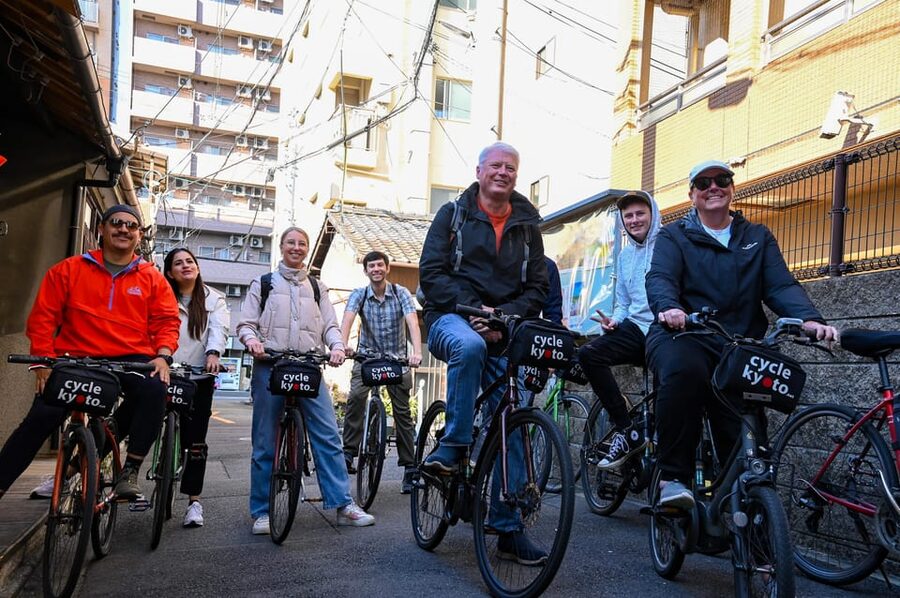
South Kyoto is much easier to understand from a bicycle seat. This small-group ride links major temples with canals, rivers, neighborhood streets, and the orange torii gates of Fushimi Inari, all in three and a half hours. I especially like the gentle pace and the mix of famous sights with quieter streets.
I also like the practical route. You do not spend the whole morning fighting for space on crowded buses, and the group is limited to eight people. The main consideration is physical: you need to ride confidently, and the tour can cover more than 15 kilometers. An e-bike costs an extra 3,000 yen.
In This Review
- Key points at a glance
- Why cycling works so well in South Kyoto
- Starting near Kyoto Station
- Toji, Kyoto’s oldest temple
- Higashi-Honganji and Kyoto’s temple scale
- Following the Takase Canal and Kamo River
- Gion by backstreet instead of main street
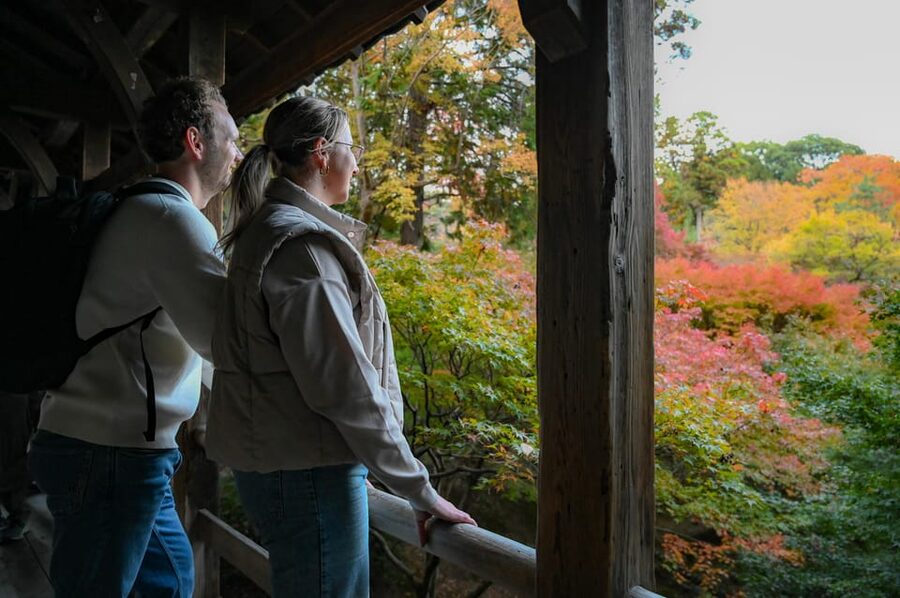
- Tofukuji for photographs and a change of pace
- Fushimi Inari and its orange torii gates
- The bikes, pace, and e-bike option
- What the $77 price buys you
- Which guide style suits this ride
- Practical preparation for your morning
- Should you book the South Kyoto bike tour?
- FAQ
- How long does the Kyoto bike tour last?
- Where does the tour start and finish?
- How do I find Cycle Kyoto from Kyoto JR Station?
- What language is the tour conducted in?
- How many people can join the public tour?
- Is bicycle rental included in the price?
- Can I use an e-bike?
- What age do you need to be to join?
- What should I bring?
- Can I cancel the tour for a full refund?
Key points at a glance
- A smart South Kyoto route: Toji, Higashi-Honganji, Gion, Tofukuji, the Kamo River, and Fushimi Inari fit into one well-planned morning.
- Small group, personal feel: With no more than eight participants, your guide can answer questions and adjust the pace when possible.
- Backstreets beyond the postcard views: The ride uses local streets, the Takase Canal, and riverside paths rather than relying only on Kyoto’s main tourist corridors.
- Strong guide team: Jay, Julian, Indra, Sean, Juan, Mayco, and other Cycle Kyoto guides are praised for clear explanations, patience, and a relaxed manner.
- Good bike setup: Bicycle rental, helmet, water, bike pouch, and different bike and helmet sizes are provided.
- Know your limits: The public tour requires a minimum age of 13 and is not suitable for people who cannot ride or who have back problems.
Why cycling works so well in South Kyoto
Kyoto’s famous sights are spread across the city. On foot, you can spend much of your day moving between them. By bus, you may deal with crowded vehicles and slow traffic. This bike tour solves part of that problem by joining places that sit within a practical cycling route.
The ride begins at Cycle Kyoto near Kyoto JR Station. From there, you move into central and southern Kyoto, using ordinary streets, the Takase Canal, and the Kamo River to connect the temples. That matters because the journey between sights becomes part of the outing rather than dead time.
I like this kind of sightseeing because you get a better feel for the city between the monuments. You see the change from large temple grounds to residential streets, then into Gion’s old teahouse quarter and the shrine approach at Fushimi Inari.
The tour lasts 210 minutes. That is long enough to cover a lot, but short enough to leave most of your day open. You should expect a real ride, not simply a short bicycle transfer between two attractions. One participant recorded more than 15 kilometers, so comfortable clothing and shoes are important.
More ways to walk Fushimi Inari:
- Kyoto: Fushimi Inari, Kinkakuji, Bamboo Grove 1 Day Bus Tour
★ 4.8 · 4,316 reviews - Fushimi Inari Hidden Hiking Tour (Private Option Available)
★ 5.0 · 1,750 reviews - Kyoto/Osaka: Nara, Fushimi Inari Taisha, Arashiyama Bus Tour
★ 4.7 · 1,275 reviews
Starting near Kyoto Station
The meeting point is at Cycle Kyoto, close to Kyoto JR Station. From the station, go past Avanti, cross one set of traffic lights, pass the Daily Yamazaki convenience store, and take the next left.
That location is useful if you are arriving by train or planning another Kyoto activity afterward. Still, allow time to find it. The directions use nearby landmarks, and you will want to arrive without rushing through the safety briefing.
The briefing takes about 15 minutes. You receive your bicycle, helmet, and water, and the guide explains how the ride will work. A small pouch on the bicycle is available for personal items, though you should keep your belongings light.
The public tour is conducted in English and is limited to eight people. That is a good size for city cycling. You are not lost in a long line of bikes, and a guide can keep an eye on the group while still speaking with you.
Toji, Kyoto’s oldest temple
The first major stop is Toji, described as Kyoto’s oldest temple and recognized as a UNESCO heritage site. The tour allows about 35 minutes here, giving you time to look around while your guide explains the site.
Toji is a strong opening stop because it immediately puts Kyoto’s religious architecture and long connection with Buddhism in front of you. The setting also gives you a sense of how grand temple grounds can feel after the short ride from the station area.
You should not expect a full, leisurely temple visit during this tour. Thirty-five minutes is enough for an introduction and a guided look, but not for studying every building or spending a quiet hour on the grounds. The benefit is that Toji is one part of a much broader morning.
Your guide’s explanations are a major part of the value here. Jay, Julian, Indra, Sean, Juan, and Mayco have each been praised for sharing cultural background, answering questions, and keeping the mood easy. Guide assignments can change, so you should not book on the assumption that one particular person will lead your group.
Higashi-Honganji and Kyoto’s temple scale
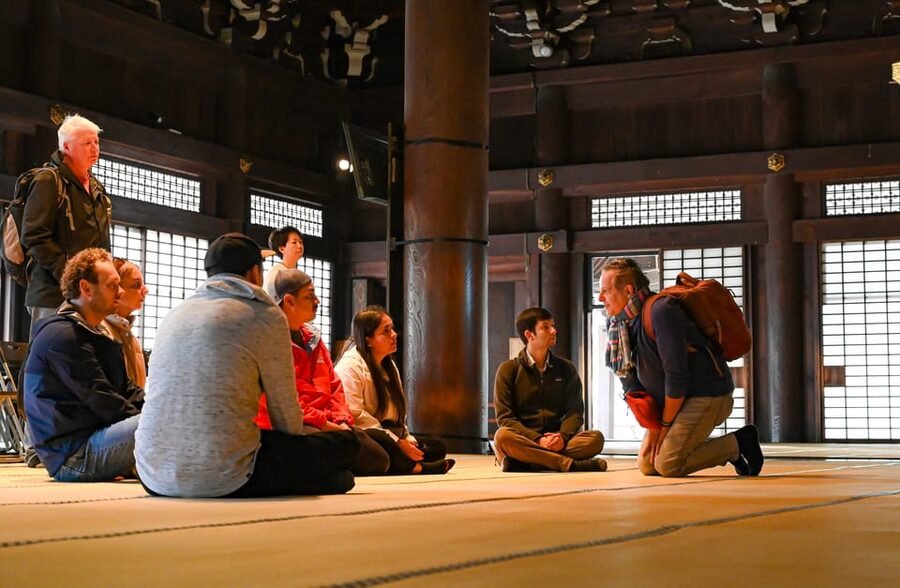
The route then visits Higashi-Honganji for roughly 35 minutes. It is one of Japan’s largest temples, so this stop gives you another view of Kyoto’s religious life, with a sense of scale that differs from the smaller neighborhood sites.
I like having both Toji and Higashi-Honganji in the same morning. You are not simply checking off one famous temple. You get two substantial temple settings, and the guide can help explain what you are seeing instead of leaving you to guess at the details.
The stop also shows the value of a guided ride. If you visited these places alone, you could admire the buildings but miss much of the context. The English-speaking guide adds structure and helps you use limited sightseeing time well.
The pace remains active. You will be getting back on the bike after each visit, so this is not ideal if you want a slow temple morning with long stretches of sitting and reflection. It is better for you if variety matters more than extended time at one site.
More bike days around Kyoto:
- Hidden Kyoto E-Biking tour
★ 5.0 · 1,843 reviews - Bike Tour Exploring North Kyoto plus Lunch
★ 5.0 · 1,087 reviews - Arashiyama Bamboo Forest & Hidden Gems Bike Tour (Early Bird)
★ 5.0 · 613 reviews - 5 Top Highlights of Kyoto Full Day Bike Tour (E-bike option)
★ 5.0 · 511 reviews
Following the Takase Canal and Kamo River
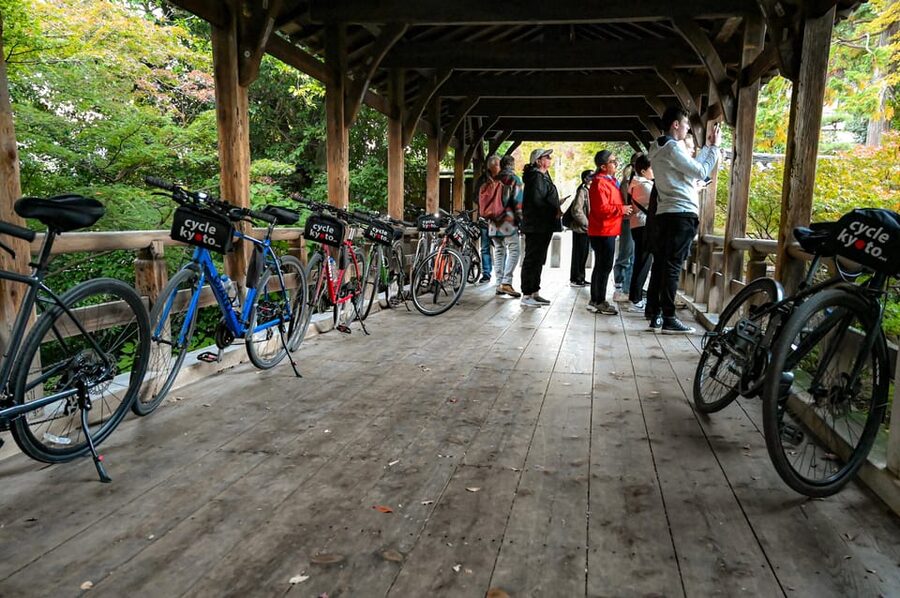
After the early temple visits, the route follows the Takase Canal for about 10 minutes and reaches the Kamo River for around 15 minutes. These are shorter stops, but they give the tour breathing room between temple grounds and city streets.
The canal section is one of the more appealing parts of the route because it shifts your attention from grand buildings to Kyoto’s everyday setting. Along the Kamo River, you get another change of mood. The water and open space make a pleasant contrast with the tight streets of central Kyoto.
These portions are also where the bicycle format earns its keep. You are not merely being driven past the river. You are moving at a pace that lets you notice the route while still covering ground.
Weather matters here. The tour runs in ordinary outdoor conditions, and one guide, Julian, kept a group moving comfortably despite poor weather. Even so, check the forecast before departure and bring warm clothing when needed. Sunscreen is sensible in bright weather, and rain can make a bicycle outing less comfortable.
Gion by backstreet instead of main street
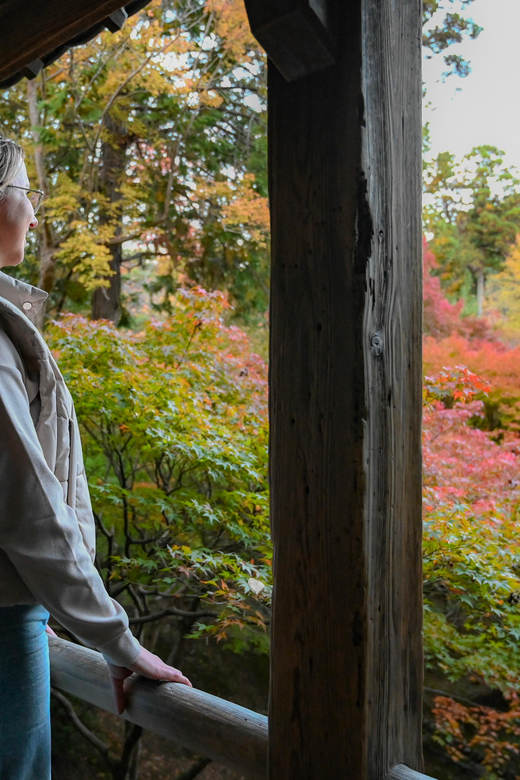
The group spends about 30 minutes in Gion, Kyoto’s famous geisha and teahouse district. Rather than treating Gion as one quick photo stop, the ride takes you through its backstreets.
This is one of my favorite ideas in the itinerary. Gion’s best-known streets can feel crowded, while the side streets offer a calmer look at the district’s traditional character. You should remain respectful, follow your guide’s instructions, and remember that Gion is a living neighborhood, not a stage set.
Cycling also lets you see more of the area than a short walking visit from one landmark. You get a sense of how the district connects to the wider city, and the guide can point out details you might pass without noticing.
The tradeoff is that a bicycle is not a magic answer to crowds. You will still share streets with pedestrians and other vehicles, and there may be moments when you need to slow down or walk the bike. The small group helps, but you should expect an urban ride rather than a traffic-free path.
Tofukuji for photographs and a change of pace
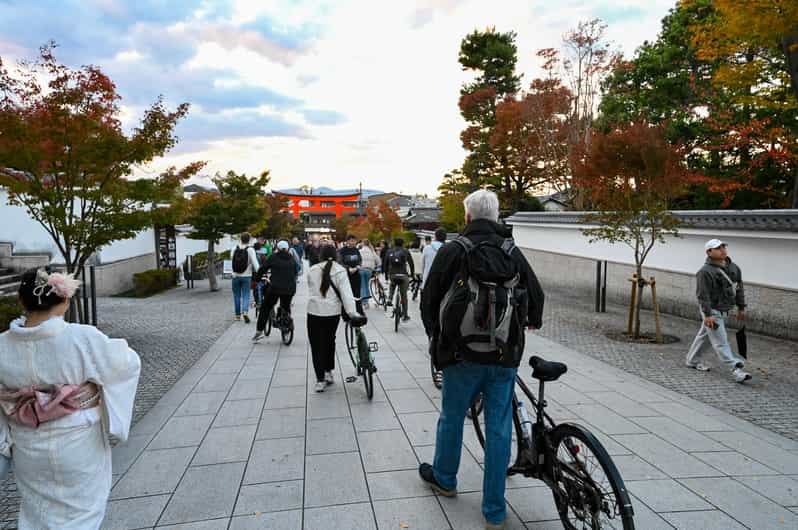
The tour continues to Tofukuji Temple, with about 30 minutes set aside for a photo stop. Tofukuji is widely admired for its temple buildings and scenic grounds, making it a natural place to pause with a camera.
This stop is shorter and less focused on a full guided visit. Think of it as a chance to take photographs and appreciate the setting before continuing toward Fushimi Inari. Bring your camera, but do not let photography turn the stop into a frantic scramble. The value is in the contrast between the ride through local streets and the composed temple views.
The cycling route through the neighborhood is another worthwhile part of the visit. You pass through local streets rather than moving directly from one headline attraction to the next. That is the sort of transition you cannot get from a simple list of taxi stops.
If you are hoping to spend a long time inside every temple, this tour will feel brisk. If you want a carefully linked introduction to several South Kyoto sights, the timing makes sense.
Fushimi Inari and its orange torii gates
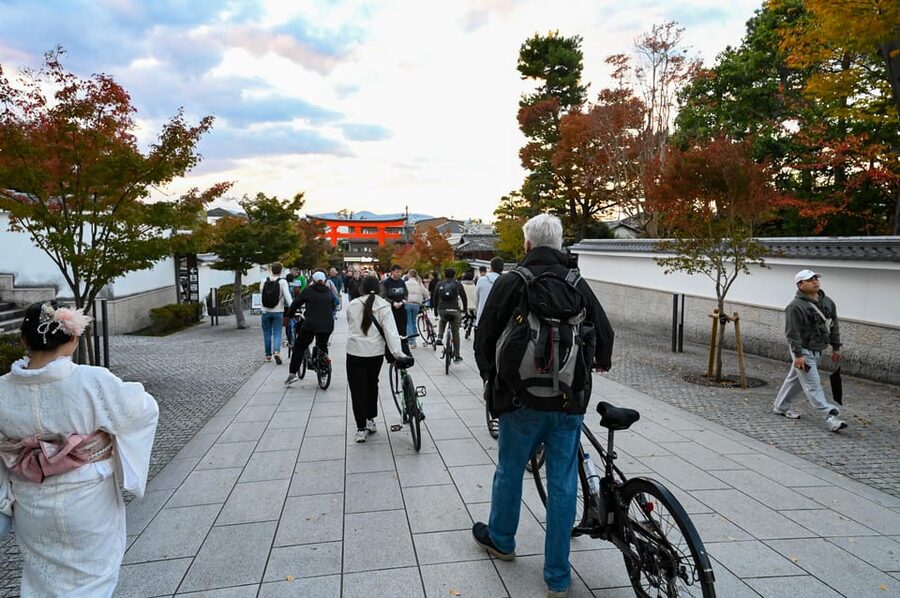
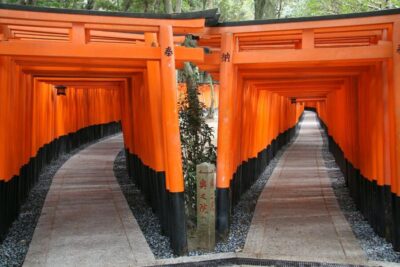
The final major stop is Fushimi Inari Taisha, with about 45 minutes for a guided visit. The shrine is famous for its thousands of orange torii gates, and it is the biggest visual moment of the tour.
You leave the bicycle to walk around the shrine area and see the gates up close. The guide helps give the place context, while you have time to take photographs and experience the shift from city streets to the shrine’s wooded approach.
Forty-five minutes is useful, but it is not enough to walk the entire mountain route. Fushimi Inari extends far beyond the first gate-lined section, and a complete visit requires much more time. Here, the tour gives you a strong introduction and then returns to Cycle Kyoto.
That limitation is worth keeping in mind when planning your Kyoto days. If Fushimi Inari is your top priority, you may want a separate visit with several hours available. If you want to combine it with other important South Kyoto sights, this tour saves you the trouble of arranging the connections yourself.
The bikes, pace, and e-bike option
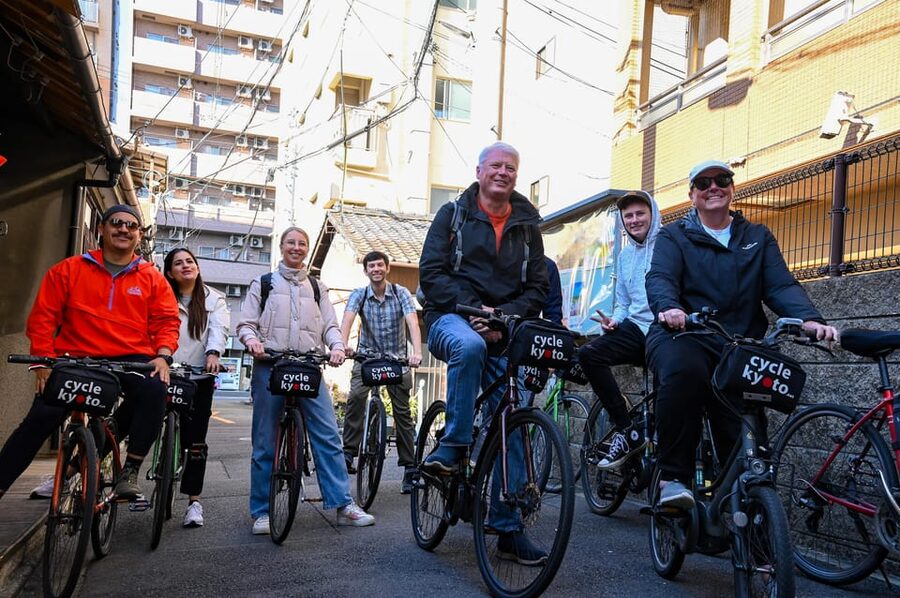
Bicycle rental, a helmet, and water are included. The bikes are described as being in good condition, with a range of sizes and helmets available. You should wear clothes suitable for cycling and shoes that will not make pedaling awkward.
The ride is intended to be gentle rather than a race. One small group had only four participants and was able to adjust how long they spent at stops. That kind of flexibility can depend on the day and the group, but a smaller party generally makes it easier for the guide to respond to different needs.
An e-bike is available on request for an additional 3,000 yen. This is worth considering if you are uncertain about cycling more than 15 kilometers, if you dislike hills and longer rides, or if you want to save energy for walking around the temples. You should arrange the upgrade in advance rather than count on one being available.
The tour is not suitable for people who cannot ride a bicycle or who have back problems. Children under 13 cannot join the public tour, and the minimum age is 13. Smoking, alcohol, and drugs are not allowed.
What the $77 price buys you
At $77 per person, this is not the cheapest way to see Kyoto’s temples. It is also more than simply renting a bicycle for half a day. The price includes the bike, helmet, water, English-speaking guide, and a route that connects several major sights without requiring you to plan the transport.
I think the value is strongest if you are visiting Kyoto for a limited time or feel unsure about navigating the city by bike. You are paying for the route design and the guide’s explanations as much as for the bicycle itself.
The price is less compelling if you already know Kyoto well, prefer long unstructured visits, or only want to see Fushimi Inari. In those cases, renting a bike independently or using public transport may give you more control.
The small group improves the value. With a maximum of eight people, the outing should feel more personal than a large coach tour, and the guide has a reasonable chance to answer individual questions. The strong overall score of 4.9 from 21 ratings also points to a consistently well-received format, though your enjoyment will still depend on weather, cycling comfort, and the guide assigned that day.
Which guide style suits this ride
Cycle Kyoto uses several English-speaking guides. Jay has been praised for his passion and for making everyone feel comfortable. Julian is known for keeping the ride enjoyable when the weather turns poor. Indra has been noted for insider details and for making well-known places feel less crowded.
Sean has been described as fun and informative, while Juan is praised for patience and an easygoing manner. Mayco has also received strong praise for guiding the tour and explaining Kyoto.
You cannot necessarily choose among these guides, but the pattern is useful. This tour suits you if you want a guide who talks about culture and history while keeping the ride relaxed. It is less suitable if you prefer silence, independent wandering, or a strict focus on photography.
Practical preparation for your morning
Wear comfortable clothes, proper walking shoes, and layers suited to the forecast. You will alternate between cycling, standing at temple sites, walking around Fushimi Inari, and getting back on the bicycle.
Bring sunscreen and a camera. A small pouch is provided on the bicycle for personal items, but pack lightly and avoid bringing anything you would worry about carrying during the ride.
Check the weather before you leave. The tour can continue in less-than-perfect conditions, but wet streets, cold air, or strong sun will affect your comfort. Water is included, which is helpful, but you should still arrive ready for an outdoor activity.
The meeting directions are specific, so save them before setting out. After the tour, you return to Cycle Kyoto, making it easy to continue from the station area or plan another activity nearby.
Should you book the South Kyoto bike tour?
I would book this tour if you want to see several major sights in one morning and like the idea of reaching them by backstreet and riverside routes. It is especially useful early in a Kyoto visit, when a guide can help you understand the city’s layout and religious sites.
I would also choose it if you are comfortable cycling and want something more active than a walking or bus tour. The mix of Toji, Higashi-Honganji, Gion, Tofukuji, and Fushimi Inari gives you a broad first look at South Kyoto.
I would skip it if you cannot ride confidently, have back problems, or want a long, quiet visit at Fushimi Inari alone. You should also think twice if rain or cold would spoil an outdoor morning.
For most visitors who enjoy a moderate ride, the $77 cost is reasonable. You get a well-planned route, a small group, an English-speaking guide, and a practical look at Kyoto that is difficult to organize as smoothly on your own.
FAQ
How long does the Kyoto bike tour last?
The tour lasts 210 minutes, or three and a half hours.
Where does the tour start and finish?
It starts and finishes at Cycle Kyoto, near Kyoto JR Station.
How do I find Cycle Kyoto from Kyoto JR Station?
Go past Avanti, cross one set of traffic lights, pass the Daily Yamazaki convenience store, and take the next left.
What language is the tour conducted in?
The tour has a live English-speaking guide.
How many people can join the public tour?
The group is limited to eight participants.
Is bicycle rental included in the price?
Yes. The price includes bicycle rental, a helmet, a guide, and water.
Can I use an e-bike?
E-bikes are available on request for an upgrade fee of 3,000 yen.
What age do you need to be to join?
The minimum age for the public tour is 13. Children under 13 cannot join.
What should I bring?
Bring comfortable clothes, comfortable shoes, warm clothing when needed, sunscreen, and a camera. A small pouch for personal items is provided on the bicycle.
Can I cancel the tour for a full refund?
Yes. You can cancel up to 24 hours before departure for a full refund.
More Half-Day in Kyoto
- Kyoto Arashiyama Bamboo forest & Garden Half-Day Walking Tour
★ 5.0 · 413 reviews - Half-Day Private Walking Tour in Kyoto
★ 5.0 · 57 reviews - Kyoto top must-see Golden pavilion and Bamboo forest half-day Private tour
★ 5.0 · 52 reviews - Perfect Nara Park Half-Day Bus Tour with English Speaking Guide
★ 5.0 · 49 reviews
Recently added around Kyoto
- Higashiyama | Kyoto: Sakura Season Private Rickshaw Tour★ 5.0 · 3 reviews
- Kyoto Kimono Rental CHAMATSU|Kimono/Yukata Rental FamilyPlan★ 5.0 · 3 reviews
- Nara Private Customizable Half Day Tour★ 5.0 · 3 reviews
- Kyoto: Half-Day Private Guided Tour to the Old Town of Gion★ 4.4 · 3 reviews
- Kansai Region Hiking Adventure in Nara Kobe Kyoto and More★ 5.0 · 3 reviews
- Full Day Nara Deer, Temple, Shrine, Activities & Tea Ceremony★ 5.0 · 3 reviews
- Nara: Essential Private Tour with Deer Park and Temples★ 5.0 · 3 reviews
- Hiking Tour for Sacred Sites in Kyoto with a Guide★ 5.0 · 3 reviews
Fushimi Inari Shrine Tours, compared.
Fushimi Inari, Kinkakuji, Bamboo Grove 1 Day Bus Tour
Read our review →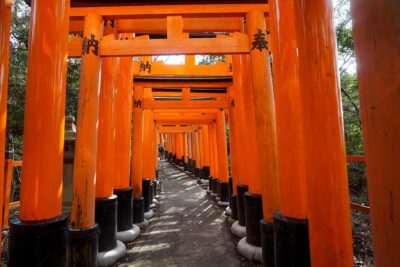
Fushimi Inari Hidden Hiking Tour (Private Option Available)
Read our review →
Kyoto/Osaka: Nara, Fushimi Inari Taisha, Arashiyama Bus Tour
Read our review →
Nijo, Kinkaku-ji, Arashiyama, Kiyomizu & Fushimi Inari
Read our review →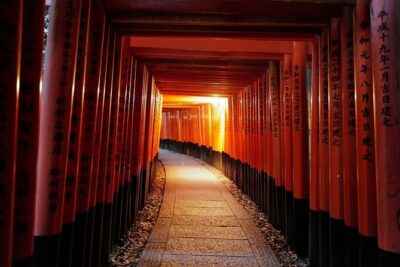
Kyoto Early Bird English Tour: Fushimi-Inari and Arashiyama
Read our review →
Fushimi, Arashiyama – Bamboo, Monkey, Torii & Secrets
Read our review →Browse the lists this tour appears in