
REVIEW · GION GEISHA DISTRICT TOURS
Kyoto Gion Tea ceremony & Wabi-sabi Walking Tour
Kyoto’s tea ceremony is about far more than drinking powdered tea. This 3.5-hour walk links Gion’s old streets, Zen temples, pottery, paintings, gardens, and a final tea ceremony so you can see how Japanese ideas of beauty fit together. I especially like the stop at Kenninji, described as Kyoto’s oldest Zen temple, and the chance to choose a tea bowl by season and taste.
I also like the small group limit of seven, the included temple admission, and the English explanations that give the ceremony some meaning before you sit down for matcha. The main drawback is timing: the tour cannot wait for late arrivals, and one booking ended after only 90 minutes because the participant had the wrong start time. Check your confirmation carefully and arrive early.
In This Review
- Key points to know before booking
- Why this Gion tea experience feels different
- Meeting in Gion beside the Izumo no Okuni statue
- Walking through Gion and learning the setting
- Kenninji, Kyoto’s oldest Zen temple
- Higashiyama stops for matcha, pottery, and Japanese art
- Entoku-in and the quiet language of wabi-sabi
- The 45-minute tea ceremony
- What the $92 price includes
- Timing, weather, and physical demands
- Who will get the most from this experience
- Should you book the Kyoto Gion tea tour?
- FAQ
- Where does the tour meet?
- How long does the experience last?
- What language is the tour conducted in?
- How large is the group?
- Is matcha included?
- Are temple admission fees included?
- Can children join the tea ceremony?
- Is the tour accessible by wheelchair or stroller?
Key points to know before booking
- Wabi-sabi is taught through places and objects: You see Zen gardens, Japanese paintings, pottery, and tea bowls rather than hearing only a classroom explanation.
- Kenninji and Entoku-in add real cultural context: Two temple admissions are included, with guided visits at both.
- The tea ceremony lasts about 45 minutes: You receive matcha and a small seasonal snack under the direction of a tea master.
- The group is limited to seven people: That makes questions and explanations easier than on a large coach tour.
- Masa has led this experience: Direct feedback describes his explanations and friendly manner in especially warm terms.
- The route is not suitable for wheelchair users: Some locations are also difficult with a stroller.
Why this Gion tea experience feels different
Many Kyoto tea activities take place in a single room. This one spends most of its time walking first, then uses the tea ceremony as the final piece of the lesson. That order matters.
You begin with Gion, where the setting gives you a sense of Kyoto’s old entertainment and temple district. From there, the guide introduces tea culture through places and objects: a matcha shop, a Zen temple, pottery, paintings, and a dry garden. By the time you sit for tea, you have already heard about the ideas behind the ritual and seen examples of the quiet, imperfect beauty associated with wabi-sabi.
I like this approach because the word does not remain an abstract slogan. You get to consider it through an uneven tea bowl, a restrained garden, a worn temple setting, or a simple seasonal sweet. The experience asks you to notice rather than simply consume.
The tour is led in English and limited to seven participants. That is a good size for a walking route with several short stops. You should be able to hear the guide and ask questions without holding up a large crowd. Guides have included Masa, whose explanations of temples and tea culture received particular praise. The exact guide is not guaranteed, so think of Masa as an example rather than a promise.
More evenings in Gion:
- Kyoto Geisha Walking Tour: Gion District & Hidden Gems
★ 4.7 · 3,273 reviews - Kyoto: Gion Magical Night Walking Tour with Geisha Trivia
★ 4.9 · 2,393 reviews - Kyoto: Gion Geisha District Walking Tour – Stories of Geisha
★ 4.7 · 2,187 reviews
Meeting in Gion beside the Izumo no Okuni statue
The meeting point is in front of the Izumo no Okuni statue, directly outside Exit 5 of Gion-Shijo Station on the Keihan Line. Look for a guide holding an orange Magical Trip signboard.
This is a useful starting point because you are already at the edge of Gion, but do not treat the meeting time casually. The tour starts on time, and you cannot join later, receive a refund, or reschedule if you miss the group. I would arrive early enough to find Exit 5, check the statue, and locate the orange sign without rushing.
The activity lasts 210 minutes, or three and a half hours. Since the route includes walking, temple visits, shopping or viewing stops, and a seated ceremony, wear shoes and clothes you can manage comfortably for several hours. Kyoto can be very hot or cold: summer temperatures may reach 40°C, while winter lows can fall to -5°C. Dress for the forecast, not for an idealized picture of Kyoto.
Walking through Gion and learning the setting
The first guided section in Gion lasts about 30 minutes. The guide uses the district to introduce the cultural setting for tea and explain how Kyoto’s traditional arts connect with daily life and formal hospitality.
This is not simply a photo stop. The value is in having someone point out what you might otherwise pass without noticing. You will walk through a historic part of central Kyoto before moving toward temple grounds and Higashiyama. The guide also begins explaining the tea ceremony’s purpose, including the idea that beauty can be found in the inner qualities of an object or moment, not only in its outward appearance.
That theme is central to the whole experience. A guide who only explains how to prepare matcha would leave out the part that makes Kyoto’s ceremony so distinctive. Here, the walk gives you a chance to ask questions before the formal tea service begins.
Kenninji, Kyoto’s oldest Zen temple
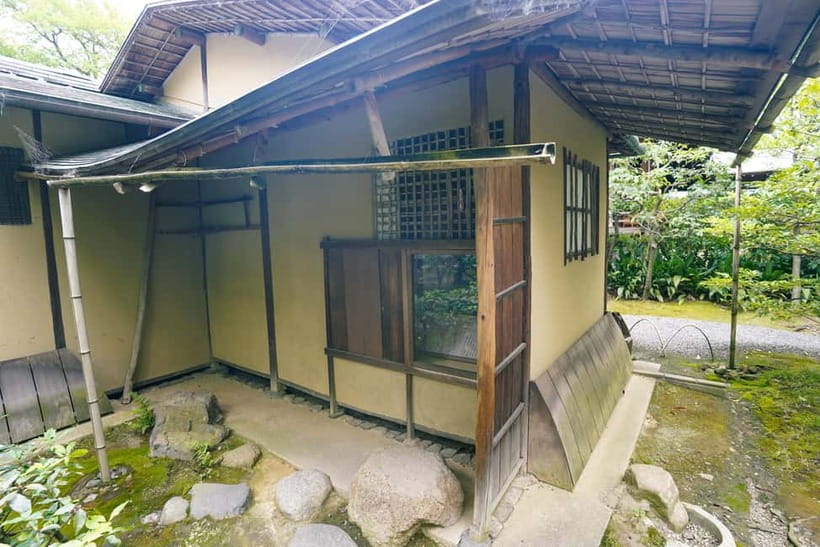
Kenninji receives about 30 minutes. It is presented as Kyoto’s oldest Zen temple, making it one of the most important stops on the route.
The guide explains the temple’s place in the story of tea ceremony and Zen practice. The stop gives you a historical frame for the ideas discussed later, rather than presenting tea as an isolated tourist activity. You will have time for a guided visit and sightseeing, with the included temple admission covering this part of the day.
Kenninji is also a useful counterpoint to the more polished, performance-like parts of a tea ceremony. Temples remind you that the tradition grew from a wider religious and artistic culture. If you enjoy having context before trying something yourself, this stop earns its place.
The pace is fairly brisk. Thirty minutes is enough for an introduction, but not enough for a slow, independent exploration of every corner. If you prefer spending a full morning at one temple, this tour will feel too compressed. If you want several connected sights without arranging them yourself, the short visit works well.
More tea ceremonies in Kyoto:
- Kyoto: Tea Ceremony in a Traditional Tea House in Kiyomizu
★ 4.9 · 3,519 reviews - Kyoto: Tea Ceremony Ju-An at Jotokuji Temple
★ 4.9 · 3,207 reviews - Kyoto: 45-Minute Tea Ceremony Lesson Experience
★ 4.3 · 2,378 reviews - Kyoto: Table-Style Tea Ceremony at a Kyo-Machiya
★ 4.9 · 1,211 reviews
Higashiyama stops for matcha, pottery, and Japanese art
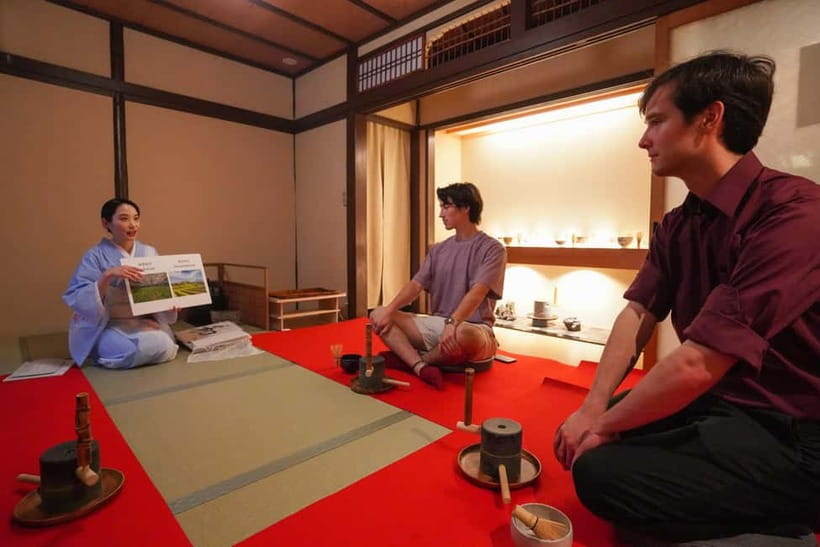
Several short stops follow in Higashiyama. One includes a famous matcha shop, where the guide continues the discussion of powdered green tea and its place in Kyoto. Other stops involve tea utensils, a traditional pottery shop, and Japanese artworks.
These sections are brief, generally around 10 minutes each, so you should not expect a long shopping session or a full museum visit. Their purpose is to help you look at tea objects with a more informed eye. A bowl is not only a container. Its shape, surface, color, season, and signs of handwork can all affect how it feels in a tea setting.
The pottery stop is especially useful because the final ceremony includes choosing a bowl according to season and taste. Seeing bowls before the ceremony gives that choice more meaning. You are not just handed a cup and told to drink. You have already considered why a tea bowl might be valued for its quiet character or irregular form.
The shopping element should be kept in proportion. This is not designed as a buying tour, and the published timing gives only a short period for these stops. You can look, listen, and ask questions, but do not build your schedule around making a major pottery purchase.
Entoku-in and the quiet language of wabi-sabi
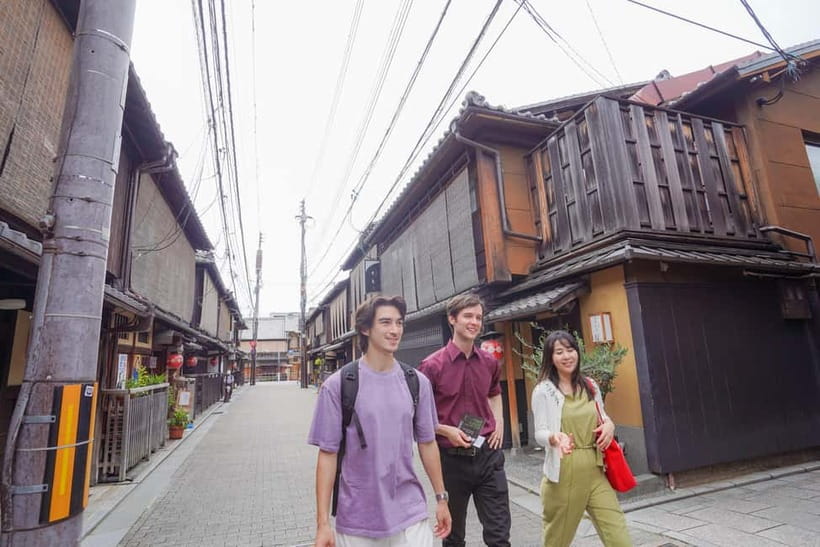
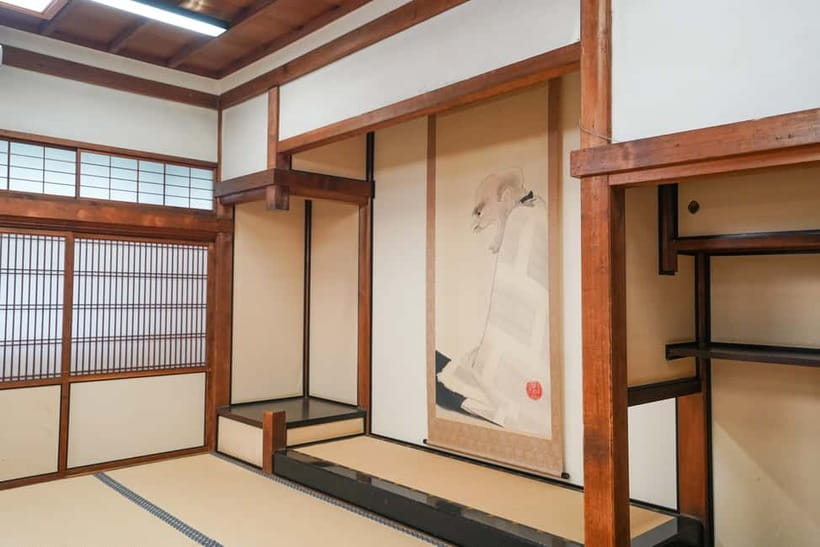
Entoku-in receives about 30 minutes and brings together several of the tour’s main ideas. You will see Japanese paintings and a karesansui, or dry Zen garden, while the guide explains how wabi-sabi can be understood through art, space, age, and restraint.
A dry garden gives you a good chance to slow down. Instead of colorful plant displays or grand decoration, the arrangement relies on stones, gravel, space, and suggestion. The experience encourages you to notice what is not there as much as what is there.
This is where the tour’s theme becomes more practical. You can compare the stillness of the garden with the handmade character of pottery and the careful movements of the tea service. I like that the guide does not rely only on a definition of wabi-sabi. The route lets you encounter several versions of it.
Again, the 30-minute visit has limits. You will get an introduction and time to look, but not a long period for private contemplation. If you need extensive time at every temple, consider visiting Entoku-in separately on another day. If you want a clear, guided introduction, this is a useful stop.
The 45-minute tea ceremony
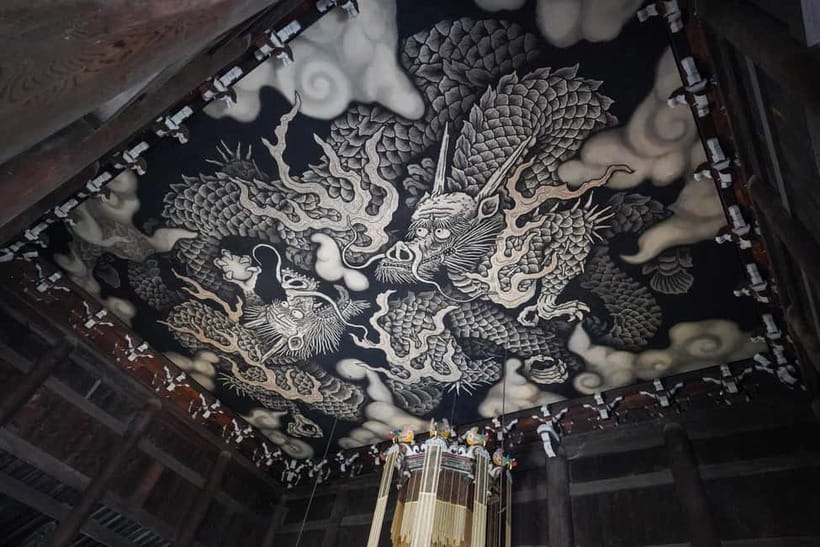
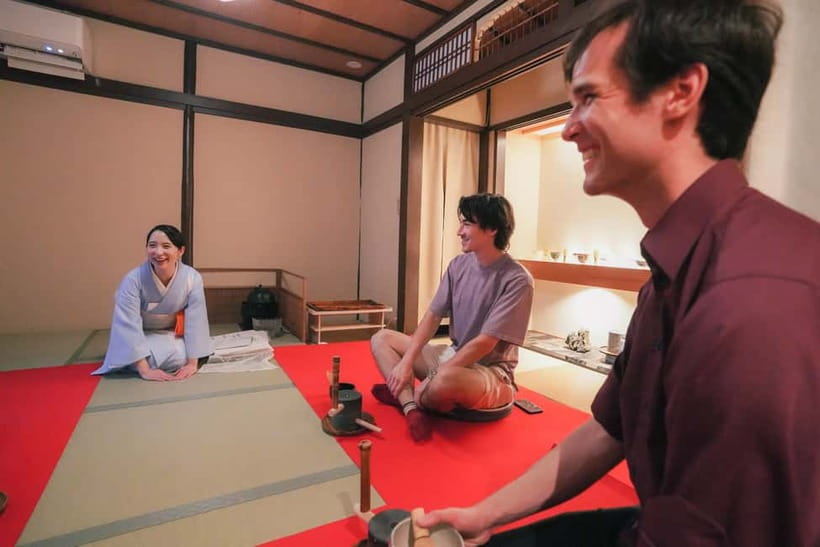
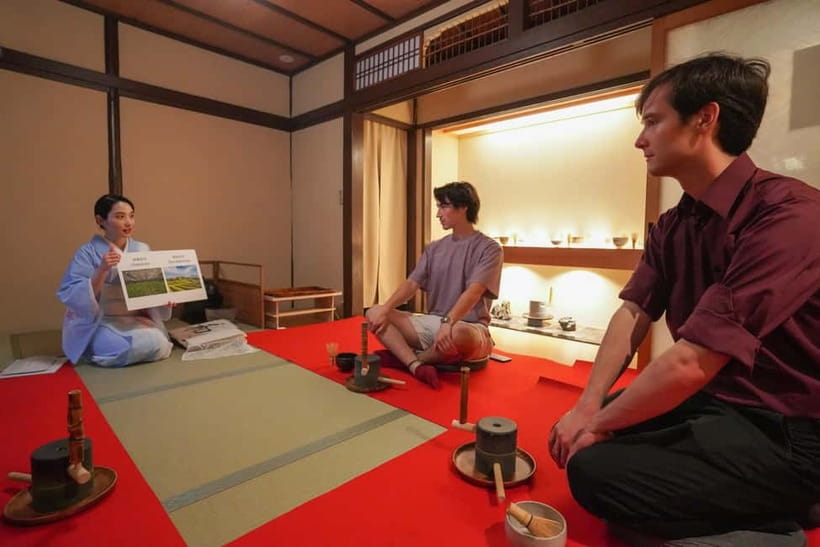
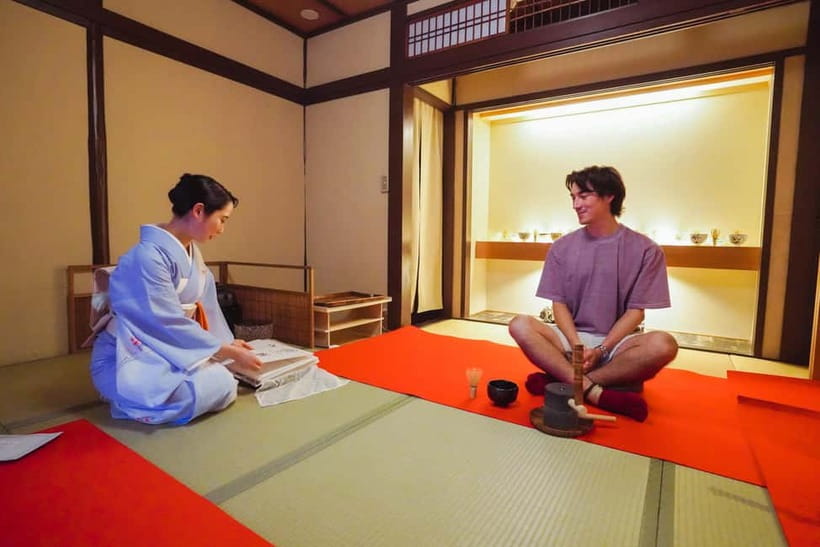
The final tea ceremony lasts about 45 minutes and takes place in Higashiyama. A tea master leads the session, and you receive matcha along with a small seasonal snack.
The ceremony is the main reason to book, but the earlier walking tour makes it more rewarding. You have already heard about the meaning of tea, looked at utensils, and considered wabi-sabi through temples and art. Now you can pay attention to the room, the bowl, the movements, and the order of service instead of treating the event as simply a cup of green tea.
You will choose a tea bowl according to the season and your taste. That is one of the more personal details in the program. It gives you a small decision within a highly formal tradition and links the objects seen during the walk to the tea you are about to drink.
The snack is small and seasonal, so do not count on this as a meal. Matcha also has a strong, grassy flavor that some people enjoy and others find bitter. The ceremony is about the full setting and process, not only the taste.
Children must be at least six years old to take part in the tea ceremony. Younger children may accompany the group, but one adult must remain outside the facility with them during the ceremony. This makes the experience easier for families with older children than for families with toddlers.
What the $92 price includes
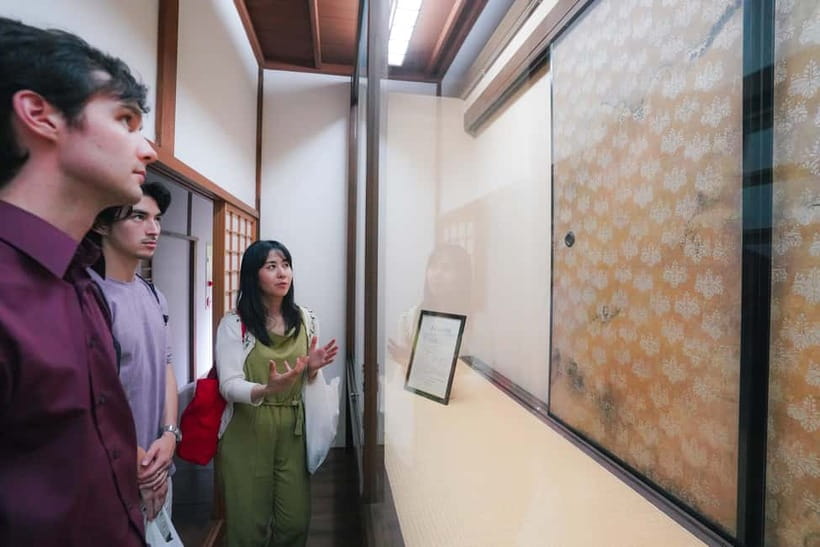
At $92 per person, this is not the least expensive way to drink matcha in Kyoto. The price makes more sense when you count the pieces included: a 210-minute guided walk, an English-speaking guide, admission to two temples, the tea ceremony, matcha, a seasonal snack, and photos taken during the tour.
I see the value in the combination. You are not paying only for tea. You are paying for a route that connects Gion, Kenninji, Higashiyama, Entoku-in, Japanese art, pottery, Zen gardens, and tea culture in one afternoon. Independent visitors can see some of these places on their own, but they would need to plan the route, arrange temple admission, find a tea ceremony, and supply the cultural explanations.
The price is harder to justify if you mainly want a quick cup of matcha or already have a strong background in Japanese tea. In that case, the walking and introductory explanations may feel repetitive. For a first visit to Kyoto, though, the route offers a practical way to connect several major themes without spending a full day on a single formal ceremony.
The group limit of seven also helps. A small group does not guarantee a perfect experience, but it usually gives the guide more room to answer questions and explain the objects in front of you.
Timing, weather, and physical demands
The tour covers several areas on foot, and some sites are not accessible by wheelchair or stroller. It is not suitable for wheelchair users. The supplied information does not give a total walking distance, so you should be ready for a multi-hour city walk with temple visits and a seated ceremony.
Weather can affect the activity. The tour may be canceled for safety if conditions are unsuitable, and Kyoto’s temperature range can be severe. In summer, carry water and protect yourself from the heat. In winter, bring enough layers for time outdoors between indoor and temple stops.
The most important practical tip is to confirm the start time. One participant had a conflicting time in the invitation and arrived with too little time to take part in the ceremony. That kind of mistake is especially costly here because the final tea service comes late in the route. Check the time and meeting point before leaving your hotel, then arrive early.
Free cancellation and rescheduling are available until 24 hours before the start time. After that point, the strict no-late-entry rule matters.
Who will get the most from this experience
I would choose this tour if you want a first, guided look at Kyoto’s tea culture rather than a stand-alone demonstration. It suits you if you enjoy temples, gardens, art, and small historical details, and if you want those subjects tied together by one clear theme.
It is also a good fit for couples, solo visitors, and families with children aged six or older who can manage a quiet ceremony. The small group makes it easier to ask about etiquette, tea bowls, Zen, or wabi-sabi as the day unfolds.
I would choose something shorter if your schedule is tight. At three and a half hours, this is a serious block of time, and the ceremony comes near the end. I would also look elsewhere if you need step-free access, dislike guided walks, or want a meal rather than a small sweet.
Should you book the Kyoto Gion tea tour?
Book it if you want the ceremony to mean more than a photo opportunity. The best feature is the progression from Gion and Zen temples to pottery, art, garden design, and finally tea. Strong guide explanations, especially those associated with Masa, add useful context without making you study Japanese culture in advance.
Skip it if your main goal is a fast matcha tasting, extensive shopping, or a long private visit at one temple. Also check your start time carefully, arrive early, and plan for Kyoto’s weather. For the right visitor, $92 buys a well-connected cultural outing, not just a beverage.
FAQ
Where does the tour meet?
Meet in front of the Izumo no Okuni statue, directly outside Exit 5 of Gion-Shijo Station on the Keihan Line. The guide will hold an orange signboard marked Magical Trip Tour.
How long does the experience last?
The tour lasts 210 minutes, or three and a half hours.
What language is the tour conducted in?
The live guide speaks English.
How large is the group?
The group is limited to seven participants, although other participants may join your booking.
Is matcha included?
Yes. The tea ceremony includes matcha and a small seasonal snack.
Are temple admission fees included?
Yes. Admission fees for two temples are included.
Can children join the tea ceremony?
Children must be at least six years old to take part. Younger children may come along, but one adult must stay outside the facility with them during the ceremony.
Is the tour accessible by wheelchair or stroller?
The tour is not suitable for wheelchair users, and some locations are not accessible by wheelchair or stroller.
More Walking Tours in Kyoto
- Night Walk in Gion: Kyoto’s Geisha District
★ 4.5 · 2,003 reviews - Kyoto Gion Geisha District Walking Tour – The Stories of Geisha
★ 5.0 · 1,441 reviews - Nishiki Market Brunch Walking Tour (7 Tastings + Brunch)
★ 5.0 · 1,355 reviews - Kyoto Arashiyama Walking Tour: Bamboo, Monkeys, Gardens & Secrets
★ 5.0 · 1,216 reviews
Recently added around Kyoto
- Higashiyama | Kyoto: Sakura Season Private Rickshaw Tour★ 5.0 · 3 reviews
- Kyoto Kimono Rental CHAMATSU|Kimono/Yukata Rental FamilyPlan★ 5.0 · 3 reviews
- Kyoto: Half-Day Private Guided Tour to the Old Town of Gion★ 4.4 · 3 reviews
- Nara Private Customizable Half Day Tour★ 5.0 · 3 reviews
- Kansai Region Hiking Adventure in Nara Kobe Kyoto and More★ 5.0 · 3 reviews
- Full Day Nara Deer, Temple, Shrine, Activities & Tea Ceremony★ 5.0 · 3 reviews
- Nara: Essential Private Tour with Deer Park and Temples★ 5.0 · 3 reviews
- Hiking Tour for Sacred Sites in Kyoto with a Guide★ 5.0 · 3 reviews
Gion Geisha District Tours, compared.

Kyoto Geisha Walking Tour: Gion District & Hidden Gems
Read our review →
Gion Magical Night Walking Tour with Geisha Trivia
Read our review →
Gion Geisha District Walking Tour – Stories of Geisha
Read our review →
Best of Kyoto: Gion, Geisha, Pagodas & Cobblestones
Read our review →
Kyoto Night Foodie Tour in Gion (9+ dishes + 6 Sake tastings)
Read our review →
Kyoto Gion Geisha District Walking Tour – The Stories of Geisha
Read our review →
Kyoto Gion: 2-Hour Geisha Culture & History Walking Tour
Read our review →Browse the lists this tour appears in