
REVIEW · DESSERT TOURS
Japanese Traditional Sweets ”Nerikiri” making
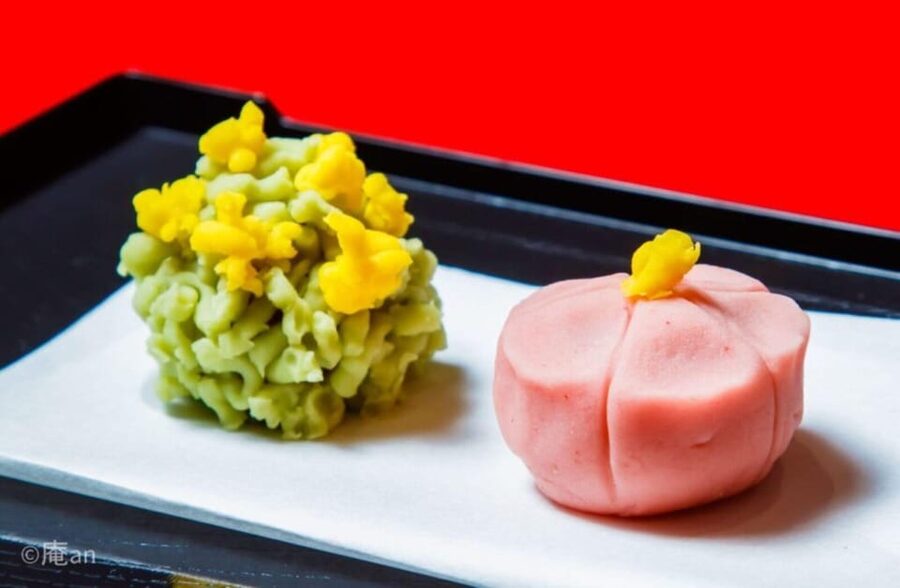
The best part of this Kyoto workshop is that you turn humble bean paste into two small works of edible art. In 65 minutes, you make a seasonal flower-shaped nerikiri and a kinton-style nerikiri, then eat both on the spot.
I like the use of white and red bean paste from long-established Kyoto shops, and I like the modest $11 price, which makes this an easy add-on between sightseeing stops. The main drawback is language: the instructor speaks Japanese, and English help is offered when possible, but detailed demonstrations may be limited.
In This Review
- Key points at a glance
- What nerikiri tells you about Japanese sweets
- Finding the studio near Gojo Station
- The opening explanation and first sweet
- The kinton nerikiri and the value of making two
- Picture time, then eat your handmade sweets
- How the $11 price works for a Kyoto day
- Language, instruction, and how to get the most from it
- Who should book this workshop
- Booking, cancellation, and arrival advice
- My take: a small Kyoto activity with a clear payoff
- FAQ
- How long does the nerikiri-making experience last?
- How much does the experience cost?
- What sweets will I make?
- Can I eat the sweets at the venue?
- Is the class taught in English?
- Where is the meeting point?
- Is the venue wheelchair accessible?
Key points at a glance
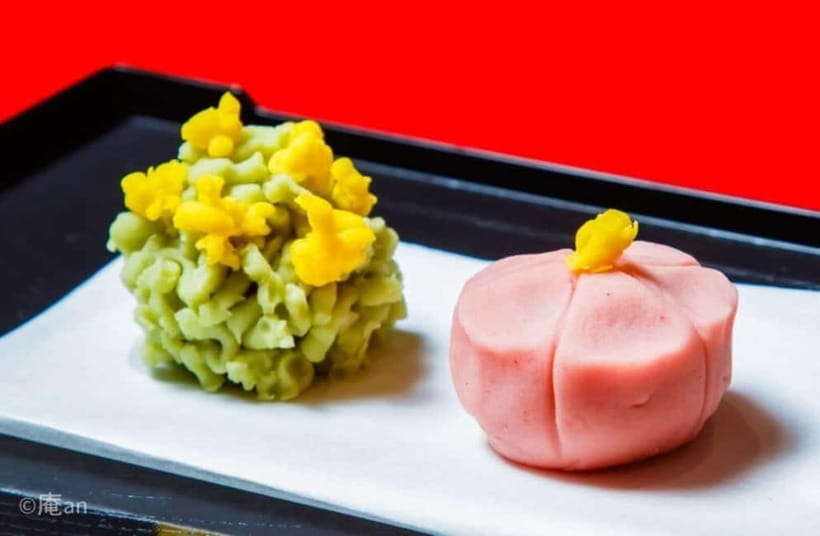
- Two seasonal sweets: Make a flower-shaped nerikiri and a kinton nerikiri, with designs tied to the season.
- Kyoto-made ingredients: Work with white and red bean paste produced by long-established Kyoto shops.
- Short and affordable: The session lasts 65 minutes and costs $11 per person.
- Eat what you make: There is no need to wait for a special meal or arrange transport. Your sweets are ready to enjoy at the end.
- Easy Gojo access: The venue is one minute from Exit 1 of Gojo Station on the Subway Karasuma Line.
- Japanese-led instruction: English translation is available as much as possible, so watch the demonstrations closely and ask for help early.
What nerikiri tells you about Japanese sweets
Nerikiri is a traditional Japanese sweet made for careful presentation as much as for eating. Its soft bean-paste base can be shaped into flowers, seasonal forms, and other delicate designs. This workshop gives you a hands-on look at that craft without asking you to commit half a day to it.
The timing is useful for a Kyoto sightseeing schedule. You are not signing up for a long cooking class with several dishes, a market visit, or a full meal. You spend about an hour making two sweets, taking pictures, and eating the results. I see that as the right scale for a busy day in Kyoto.
The seasonal angle is important. Japanese sweets often reflect the time of year through color and shape, so the designs give the class a stronger connection to Japanese food culture than a generic dessert-making activity. The exact appearance of the sweets can vary by season, but the program includes one flower-shaped nerikiri and one kinton nerikiri.
A few more Kyoto experiences worth comparing
- Kyoto: Japanese Traditional Sweets Making and Tea Ceremony
★ 4.4 · 314 reviews - Kyoto Wagashi(Japanese sweets) Cooking Class near Fushimiinari
★ 5.0 · 60 reviews - Kyoto: Wagashi (Japanese sweets) Cooking near Fushimiinari
★ 5.0 · 40 reviews
Finding the studio near Gojo Station
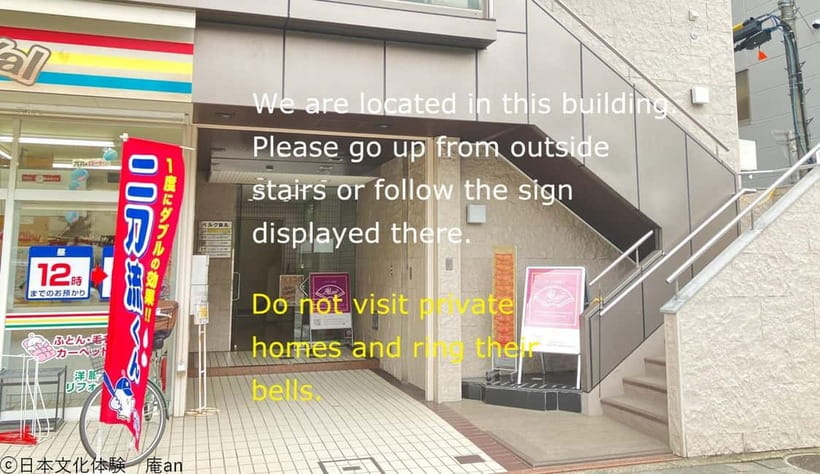
The meeting point is on Gojo-dori, with the entrance facing the main street. From Exit 1 of Gojo Station on the Subway Karasuma Line, the walk takes about one minute. That is a real advantage if you are fitting this around the Kyoto Station area, central Kyoto, or a day based on the subway.
Use the street-facing entrance rather than looking for a quiet side entrance. The provided location is at approximately 34.996419, 135.761803. Arrive with enough time to find the door and settle in, since the event cannot be held for late arrivals.
The operation hours are 10:00 to 17:00. Reservations received after 17:00 are processed the next day, so do not expect a late-evening class or last-minute nighttime booking.
One practical caution concerns access inside the building. The activity is described as wheelchair accessible, but there is no elevator, and you must use stairs to reach each venue. If you use a wheelchair or have difficulty with stairs, contact the provider before booking and confirm exactly how access will work on your date.
The opening explanation and first sweet
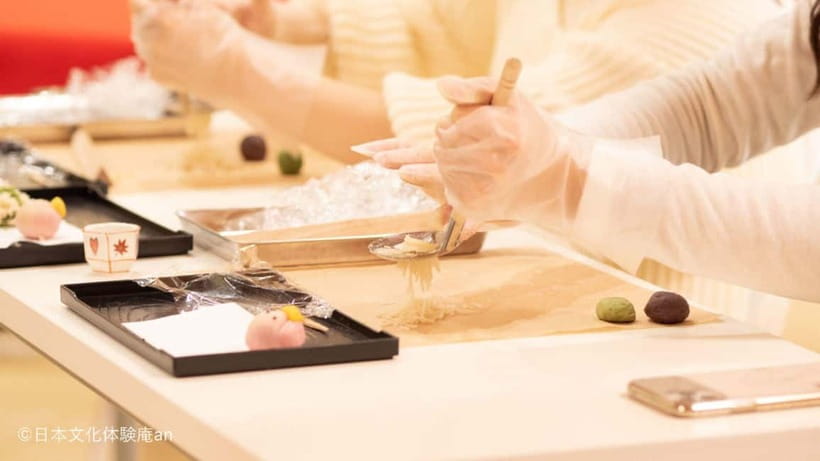
The session begins with an explanation of Japanese traditional sweets. This sets up the ingredients and the purpose of nerikiri before you start shaping anything. Since the instructor’s primary language is Japanese, you should pay close attention to the visual demonstration and ask for English help as soon as you need it.
The first project is a flower-shaped nerikiri. This is the moment when the class shifts from explanation to handwork. You use the prepared white or red bean paste and shape it into a seasonal form. The appeal is not technical perfection. It is seeing a plain lump of paste take on a recognizable design through simple, careful movements.
The process is suitable for a wide range of ages and skill levels. A child around 10 to 12 can enjoy the activity, especially with an adult nearby. Younger children who sit on a parent’s lap are free, but only children under two qualify for that free admission.
The workshop does not promise that you will learn the complete recipe from raw ingredients. The focus is shaping the prepared paste. If you want a class that teaches you how to cook the bean paste or recreate every ingredient at home, this is not that kind of lesson.
The kinton nerikiri and the value of making two
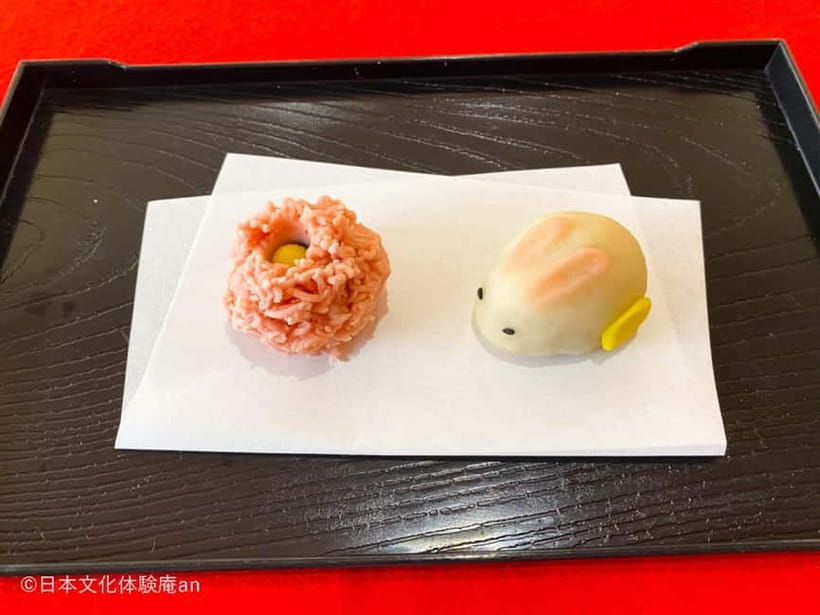
The second project is kinton nerikiri. Making two different sweets gives the session a useful rhythm. You get a first attempt to understand the texture and technique, then a second chance to apply what you have just learned.
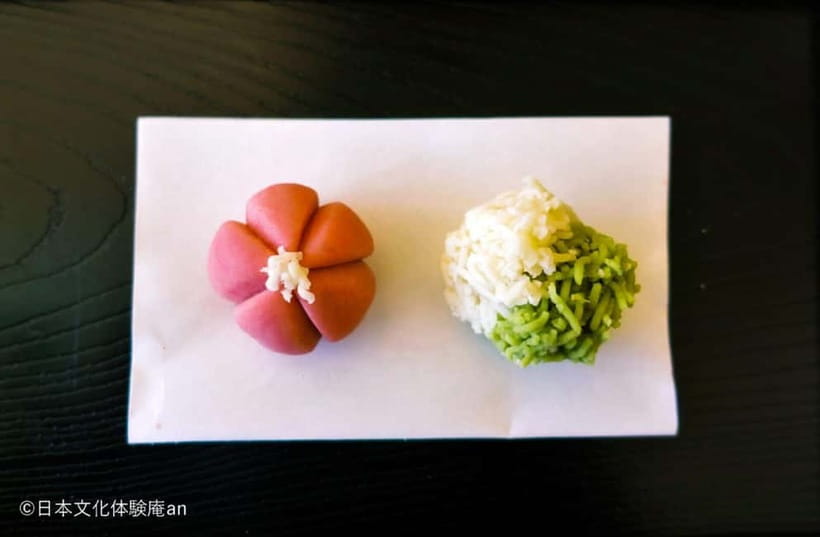
That second piece also gives you more than one finished design to photograph. When both sweets are arranged on a plate, the activity takes on its art-project quality. You can see the difference between a sweet made by hand and one selected from a shop display, even if your own work is not perfectly shaped.
I like this two-piece format for visitors who want a cultural activity but do not want a demanding class. You leave with something you made yourself, and you can taste both pieces immediately. There is no need to guess if the finished food is edible or wait for a later meal.
The ingredients matter here. The class uses white and red bean paste produced by long-established Kyoto shops. That does not mean you are visiting those shops, and it does not turn the workshop into a confectionery tour. It does mean the basic ingredient connects your small project to Kyoto’s established wagashi tradition.
A completely different side of Kyoto:
- PERFECT KYOTO 1-Day Bus Tour
★ 5.0 · 13,518 reviews - Kyoto: Fushimi Inari, Kinkakuji, Bamboo Grove 1 Day Bus Tour
★ 4.8 · 4,316 reviews - Kyoto: Tea Ceremony in a Traditional Tea House in Kiyomizu
★ 4.9 · 3,519 reviews - Kyoto Geisha Walking Tour: Gion District & Hidden Gems
★ 4.7 · 3,273 reviews
Picture time, then eat your handmade sweets
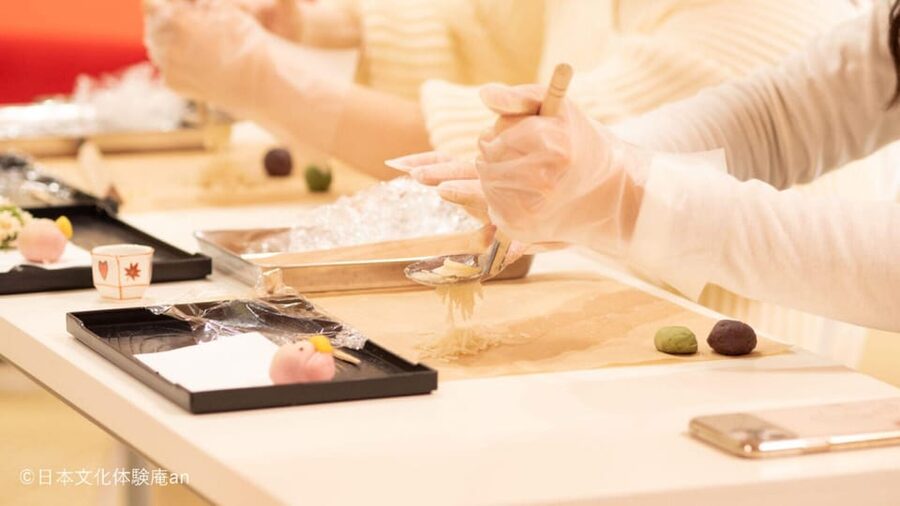
After the making portion, there is time for pictures. Use it. Nerikiri is designed to look good, and the seasonal forms can be more memorable than a standard food souvenir. Photograph the sweets before you eat them, especially if you have made them with family or friends.
The schedule gives about 55 minutes before the eating portion, with departure at the 65-minute mark. That means the class moves at a steady pace. You will not have an unlimited amount of time to reshape every detail, so listen carefully and keep moving with the instructor.
Then comes the best practical feature: you eat the sweets on the spot. The experience includes the nerikiri-making set, so the two sweets you make are part of the activity rather than an extra purchase.
If you want to carry them away, a takeout box costs 100 JPY. Ask about that option before you leave. The sweets are delicate, and the box is a sensible small extra if you want to show them to someone later.
You can also add tatedashi matcha for 500 JPY. Matcha is not included in the base price, so think of it as an optional pairing rather than part of the class. A completion certificate is another optional extra at 300 JPY.
How the $11 price works for a Kyoto day
At $11 per person, this is one of the easier Kyoto activities to fit into a larger itinerary. You are paying for a structured cultural experience, prepared ingredients, instruction, and two sweets. You are not paying for a full meal or a long professional cooking course.
The value is strongest if you want three things: a short session, a central location, and something you can make and eat. The price also works well for a family or small group that wants an activity with a clear beginning and end.
The value is weaker if your main goal is detailed culinary training. You will shape prepared white and red bean paste, but the information provided does not promise a full recipe, a lesson in cooking the paste, or a take-home ingredient kit.
Budget a little extra if you want the takeout box, matcha, or certificate. These costs are small, but the base price does not include them. You can also reserve now and pay later, which helps if your Kyoto plans are still changing.
Language, instruction, and how to get the most from it
The instructor is Japanese-speaking. English translation will be provided as much as possible, but it is not presented as a fully English-language class. One useful approach is to watch the instructor’s hands closely before you begin, then copy the movements rather than relying only on spoken instructions.
If you need clarification, ask promptly. Do not wait until the paste has already been shaped incorrectly. The class is short, and the instructor cannot keep the event open for delays or extend the schedule for late arrivals.
The language limit does not automatically make the workshop difficult. The activity is visual and tactile, and the core task is straightforward enough for many ages and ability levels. Still, the experience will suit you better if you are comfortable with a Japanese-led demonstration and some English assistance instead of expecting continuous English commentary.
The strongest fit is for someone who wants to try a traditional Japanese food craft without needing advanced cooking skills. It is also a good choice for a parent and older child, couples, friends, or solo visitors who enjoy a calm creative break.
Who should book this workshop
I would point you toward this class if you want a low-cost activity close to public transport. Gojo Station makes it easy to add to a day in Kyoto without arranging a long transfer, and the 65-minute duration keeps it from taking over your schedule.
It also suits anyone who enjoys food that looks as good as it tastes. The flower shape, kinton form, seasonal design, and picture time give the activity a visual side that ordinary snack stops do not provide.
Families should note the age detail. Children under two sitting on a parent’s lap are free, while other participants need to be included in the reservation. Since everyone who enters must participate, do not bring a nonparticipating companion expecting them to sit in the room.
You may want to skip it if you need a fully English-speaking instructor, cannot manage stairs, or want to learn the entire confectionery process from start to finish. In those cases, contact AN KYOTO before booking and ask what help is available on your chosen date.
Booking, cancellation, and arrival advice
You can cancel up to 24 hours in advance for a full refund. After that point, a cancellation fee applies, and changing the date or time after the fee has been incurred can bring an additional specified charge.
Late arrival is a serious issue. The event will not be held for delays, whatever the cause, and the provider does not compensate travel expenses if you cancel. I would plan to reach Gojo Station early, then walk directly to the street-facing entrance.
The provider also asks you to contact them if you would like to reserve the property. Since English support is offered as much as possible rather than guaranteed, this is a good chance to confirm language help, stair access, and any special needs before you commit.
My take: a small Kyoto activity with a clear payoff
Book this nerikiri workshop if you want a short, inexpensive way to make something traditional and eat it right away. The strongest reasons are the Kyoto-produced bean paste, the two seasonal designs, the central Gojo location, and the fact that the class works for many ages and skill levels.
Go in knowing what you are buying. This is a shaping workshop, not a full confectionery course. Instruction is Japanese-led, English help may be limited, and the building requires stairs. For the right participant, though, the compact format is the point: in just over an hour, you make two attractive sweets, learn a little about Japanese confectionery, take pictures, and enjoy your own handiwork.
FAQ
How long does the nerikiri-making experience last?
The full activity lasts 65 minutes. The program includes making the two sweets, picture time, eating, and room departure.
How much does the experience cost?
The listed price is $11 per person. A takeout box costs 100 JPY, tatedashi matcha costs 500 JPY, and an experience completion certificate costs 300 JPY.
What sweets will I make?
You will make two seasonal Japanese sweets called nerikiri. The program includes a flower-shaped nerikiri and a kinton nerikiri.
Can I eat the sweets at the venue?
Yes. Eating your handmade sweets on the spot is included in the experience.
Is the class taught in English?
The instructor speaks Japanese. English translation will be provided as much as possible, but a fully English-language class is not guaranteed.
Where is the meeting point?
The venue is a one-minute walk from Exit 1 of Gojo Station on the Subway Karasuma Line. The entrance faces Gojo-dori.
Is the venue wheelchair accessible?
The activity is listed as wheelchair accessible, but the building has no elevator and you must use stairs to reach each venue. Contact the provider before booking to confirm the access arrangements for your needs.
Recently added around Kyoto
- Higashiyama | Kyoto: Sakura Season Private Rickshaw Tour★ 5.0 · 3 reviews
- Kyoto Kimono Rental CHAMATSU|Kimono/Yukata Rental FamilyPlan★ 5.0 · 3 reviews
- Kyoto: Half-Day Private Guided Tour to the Old Town of Gion★ 4.4 · 3 reviews
- Nara Private Customizable Half Day Tour★ 5.0 · 3 reviews
- Kansai Region Hiking Adventure in Nara Kobe Kyoto and More★ 5.0 · 3 reviews
- Full Day Nara Deer, Temple, Shrine, Activities & Tea Ceremony★ 5.0 · 3 reviews
- Nara: Essential Private Tour with Deer Park and Temples★ 5.0 · 3 reviews
- Hiking Tour for Sacred Sites in Kyoto with a Guide★ 5.0 · 3 reviews
Dessert Tours, compared.
Japanese Traditional Sweets Making and Tea Ceremony
Read our review →
Kyoto Wagashi(Japanese sweets) Cooking Class near Fushimiinari
Read our review →
Wagashi (Japanese sweets) Cooking near Fushimiinari
Read our review →
Traditional Tea Ceremony with Matcha & Sweets in Gion
Read our review →
2 Types of Japanese Sweets making and Tea Ceremony
Read our review →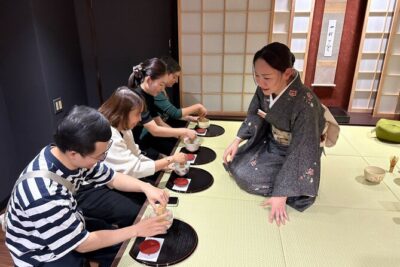
Traditional Tea Ceremony with Matcha and Sweets in Kyoto
Read our review →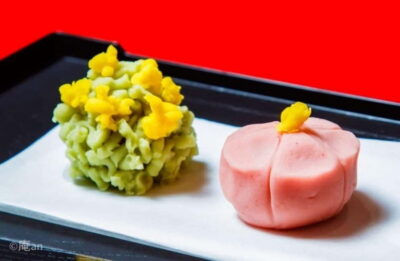
Japanese Traditional Sweets making with Tatedashi Matcha
Read our review →Browse the lists this tour appears in