
REVIEW · KINKAKU-JI GOLDEN PAVILION TOURS
Kyoto: Kinkaku-ji Temple & Serene Garden Guided Tour with Tickets
Kinkaku-ji may be Kyoto’s most photographed temple, but the real surprise comes afterward at Ninna-ji, where you can enter a rarely opened Main Hall for chanting and a conversation with a monk. This small-group tour links two very different UNESCO sites in about three hours.
I like the intimate group size, capped at seven, and the way the guide adds meaning to what you are seeing instead of leaving you to stare at gold leaf and move on. I also like the unusual access at Ninna-ji, including the rotating sutra shelf and the chance to ask questions about Buddhist practice.
The main consideration is pace. An hour at Kinkaku-ji and one hour 45 minutes at Ninna-ji gives you a useful introduction, but not unlimited time for photography or quiet wandering. Ninna-ji’s special activities can also change according to temple conditions.
In This Review
- Key points at a glance
- Why these two Kyoto temples work well together
- Kinkaku-ji: more than a golden photograph
- Ninna-ji: where the tour becomes unusual
- A useful change of mood from gold to quiet
- The guide makes the difference
- What the $48.86 price actually buys
- Timing, meeting point, and practical comfort
- Who will get the most from this tour
- Should you book the Kinkaku-ji and Ninna-ji tour?
- FAQ
- How long is the Kyoto Kinkaku-ji and Ninna-ji tour?
- How much does the tour cost?
- Are admission tickets included?
- What is the group size?
- Where does the tour begin?
- Where does the tour end?
- What will I see at Kinkaku-ji?
- What happens at Ninna-ji?
- Can the Ninna-ji program change?
- Is cancellation free?
Key points at a glance
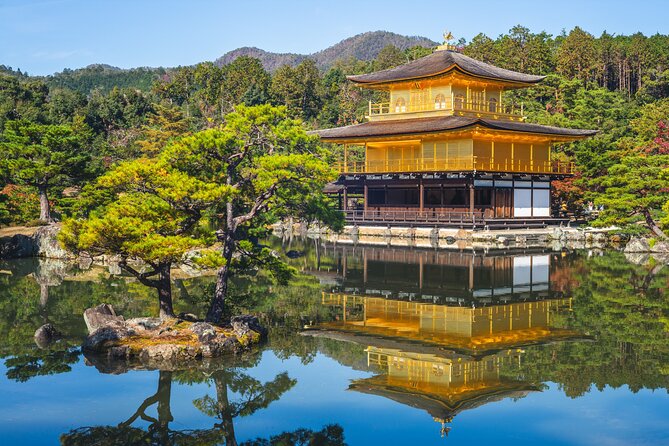
- A two-temple contrast: See the lavish Golden Pavilion, built for a shogun, then visit the calmer imperial temple of Ninna-ji.
- Rare Main Hall access: Enter a part of Ninna-ji that is not normally open to the public for a monk-led chanting session.
- A small group of seven or fewer: The format gives you a better chance to hear explanations and ask questions.
- More than a photo stop: Learn about power, devotion, Zen, and Shingon Buddhism while visiting actual temple buildings and gardens.
- Taxi transfer between sites: The guided route can include a comfortable taxi ride from Kinkaku-ji to Ninna-ji, useful because Ninna-ji is not in the most convenient spot.
- Good value at $48.86: Tickets are included, and the price covers access and guidance at two major Kyoto sights.
Why these two Kyoto temples work well together
Kyoto has no shortage of temples, and it is easy to collect them like stamps. This tour works better than a simple two-stop checklist because Kinkaku-ji and Ninna-ji offer very different views of Japanese religious and imperial life.
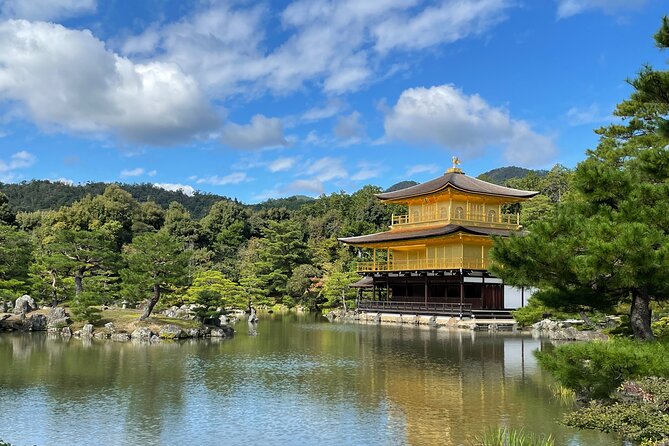
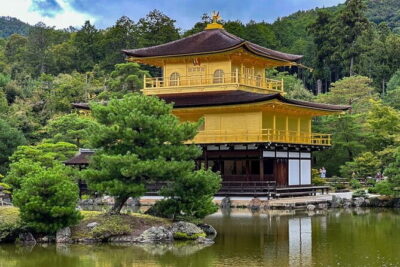
Kinkaku-ji is about display. Its gold-covered upper floors gleam above a pond, surrounded by carefully arranged gardens. The temple began as a retirement villa for shogun Ashikaga Yoshimitsu, a reminder that religious buildings in Japan have often been tied to political power and personal prestige.
Ninna-ji is quieter in spirit. Founded in 888 by Emperor Uda, it became the head temple of the Omuro school of Shingon Buddhism and remained closely linked to the imperial family. Here, the emphasis shifts from a glittering exterior to sacred rooms, ritual, teaching, and long religious practice.
That contrast gives your guide something worthwhile to explain. You are not just seeing two attractive compounds. You are comparing a samurai’s grand retreat with an imperial Buddhist center.
More trips to the Golden Pavilion:
- Kyoto: Nijo, Kinkaku-ji, Arashiyama, Kiyomizu & Fushimi Inari
★ 5.0 · 699 reviews - Kyoto: Kinkakuji, Golden Pavilion Guided Tour
★ 4.7 · 71 reviews - Kyoto top must-see Golden pavilion and Bamboo forest half-day Private tour
★ 5.0 · 52 reviews
Kinkaku-ji: more than a golden photograph
The first hour is spent at Kinkaku-ji, also called the Golden Pavilion. The view across the pond is the obvious highlight, and it deserves its fame. The gold leaf catches the light, while the pavilion’s reflection changes as you move along the path.
The building you see today is a reconstruction, but the historical story remains compelling. Yoshimitsu first built the site as a retirement villa. After his death, it became a Zen Buddhist temple. That change from elite residence to religious site helps explain why the temple feels both luxurious and contemplative.
A guide is especially useful here because the pavilion itself can dominate your attention. You will visit the Shariden, the Karamon Gate, Rikushu-no-taki, Anmintaku, Hakujanotsuka, the Yukatei Teahouse, and Fudo Hall. These names can blur together when you are walking on your own, but a good explanation helps you see the grounds as a sequence of places with distinct purposes.
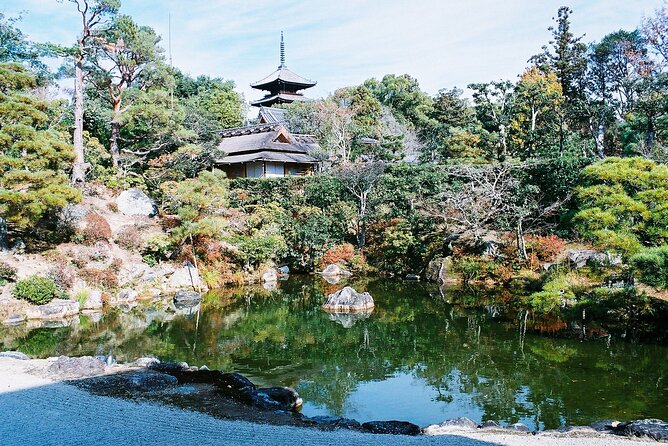
The garden is an important part of the visit. The pavilion does not simply sit beside a pond as a decorative object. The water, rocks, trees, and framed views are arranged to create a borrowed scene, with the surrounding setting becoming part of the composition.
You will likely want photographs here, and the tour allows time for them, but the one-hour schedule asks you to stay moving. If your main goal is slow garden study, this will feel brisk. If you want a clear introduction and the key sights without spending half a day at one temple, the timing is sensible.
Ninna-ji: where the tour becomes unusual
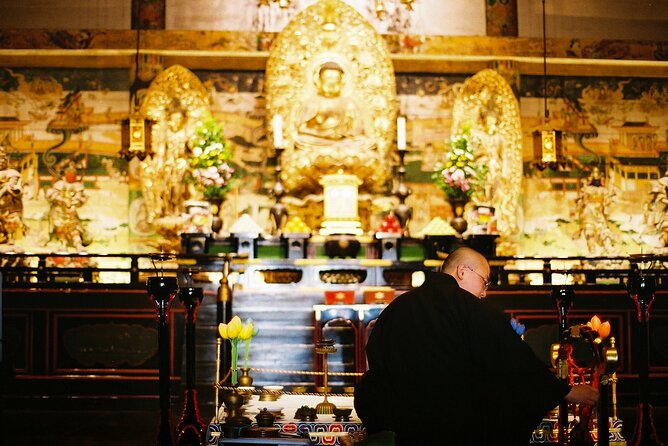
Ninna-ji receives one hour 45 minutes, and this is where the experience offers something most ordinary sightseeing visits do not. The temple is known for its five-story pagoda, gardens, and Omuro cherry trees, but the important moment is entering the Main Hall for a sacred chanting session led by a monk.
The exact program at Ninna-ji can change because the temple controls access and activities. That is worth accepting before you book. The special entry is a major reason to choose this tour, but it should not be treated as a guaranteed performance with a fixed script.
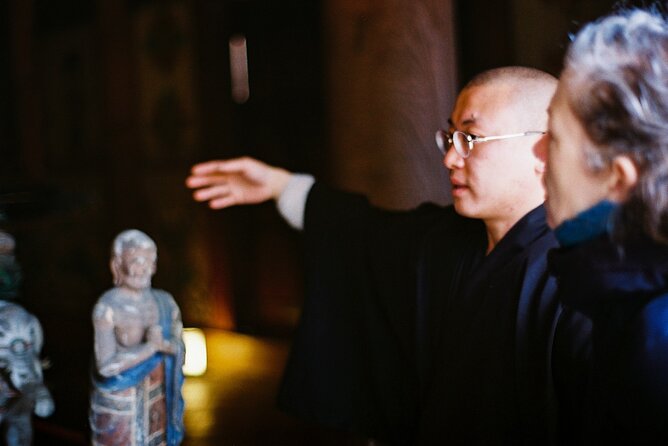
When the session takes place, you can listen to the monk and then take part in a question-and-answer conversation. This gives you a chance to ask about Buddhist traditions in a direct, human setting. The guide helps with context, while the monk provides a view from inside the practice itself.
That personal exchange is the strongest feature of the tour. You are not simply looking at an old hall through a doorway. You are being invited to consider how chanting, devotion, and temple life function today.
The tour also visits the Sutra Hall, where you can see and interact with a rotating sutra shelf. This is a small but memorable detail. It turns an abstract religious idea into something physical, and your guide can explain why the shelf has meaning within Buddhist practice.
A photo with the monk may be possible before the group visits the Imperial Residence. The residence brings the visit back to Ninna-ji’s courtly side, showing how closely the temple has been connected with imperial culture.
A useful change of mood from gold to quiet
Kinkaku-ji can feel visually intense. The gold façade, reflective pond, and steady stream of sightseers make it a place you take in quickly through the eyes. Ninna-ji offers a slower mood, even though the tour continues at a planned pace.
That change is one of the best reasons to keep both temples in the same outing. You begin with a famous image and finish with conversation, ritual, and rooms connected to imperial life.
The route also helps you avoid treating Ninna-ji as an afterthought. Its location can be inconvenient, and getting there independently takes more planning than visiting a central Kyoto attraction. A taxi transfer from Kinkaku-ji has been used on this tour, making the connection easier and protecting your limited three-hour schedule.
Because the tour ends at Ninna-ji, you can continue exploring that area afterward if you wish, though no further itinerary is specified. The stated end point is Ninna-ji Temple at 33 Omuroōuchi, in Kyoto’s Ukyo Ward.
More Kyoto temples worth a morning:
- Kyoto: Tea Ceremony Ju-An at Jotokuji Temple
★ 4.9 · 3,207 reviews - Arashiyama Bamboo, Temple, Monkeys, or Secret Sake Brewery
★ 4.8 · 886 reviews - Kyoto: Arashiyama Bamboo Forest, Monkeys, Matcha & Temple Tour
★ 5.0 · 759 reviews - Kyoto: Ninnaji Temple Entry Ticket
★ 4.2 · 650 reviews
The guide makes the difference
This experience depends heavily on the guide. The strongest guide names associated with the tour are Ellie, Eriko, and Eri. Ellie is described as friendly, fun, passionate, and clear in English, while Eriko is praised for her enthusiasm. Eri is noted for making the stories at Kinkaku-ji enjoyable.
Those personal details matter because temple visits can become a string of dates, names, and architectural terms. A guide who can explain why Yoshimitsu built Kinkaku-ji, how Ninna-ji relates to Emperor Uda, and what the sutra shelf represents gives the buildings a human scale.
The group limit of seven is another advantage. You are not trying to catch instructions from the back of a large crowd. A small group also makes the monk’s question-and-answer session more natural, though the amount of time each person gets will depend on the group.
English ability is specifically highlighted in the available tour information. If you want a guide who can explain Japanese religion in clear English rather than simply point out names, this is one of the tour’s main strengths.
What the $48.86 price actually buys
At $48.86 per person, this is not the cheapest way to see Kinkaku-ji. You can visit a temple independently for less when admission is modest and you are comfortable arranging transport and reading background information yourself.
The value comes from the combination. Your fee includes admission to both sites, a small group, a guide, the connection between the temples, and access to a special Ninna-ji program when temple circumstances allow it. The monk-led session and Sutra Hall visit are the parts that make the price easier to justify.
The tour also saves you preparation time. You do not need to work out how to connect two sites, identify the important buildings at Kinkaku-ji, or figure out what you are seeing in Ninna-ji’s religious rooms.
I would book it if you want interpretation and access rather than only photographs. I would skip it if you prefer to wander alone, set your own pace, or spend a long time waiting for the perfect Golden Pavilion picture.
The tour is often booked about 60 days ahead. That does not mean every date will sell out, but it is a useful warning if your Kyoto schedule is fixed. A mobile ticket is provided, and confirmation arrives at booking.
Timing, meeting point, and practical comfort
The tour begins at Yamazaki-an, 25 Kinugasa Babachō, in Kyoto’s Kita Ward. The listed start point is near public transportation, and the tour ends at Ninna-ji Temple, 33 Omuroōuchi, in the Ukyo Ward.
The total duration is about three hours. Kinkaku-ji receives one hour, while Ninna-ji receives one hour 45 minutes. That division makes sense because Ninna-ji contains the longer guided program and more time-sensitive access.
Wear shoes and clothing that make it easy to walk through temple grounds. The available information does not give a detailed accessibility statement, but most people can take part. Since the route includes temple grounds, gardens, and several named sites, you should be ready for steady walking.
The Ninna-ji schedule may change. This is not a minor footnote, since the monk session and Main Hall access are among the tour’s biggest draws. Think of the special program as an opportunity arranged with the temple, not a museum exhibit operating on an unchanging timetable.
Free cancellation is available if you cancel at least 24 hours before the local start time. Changes or cancellations inside that window are not accepted for a refund.
Who will get the most from this tour
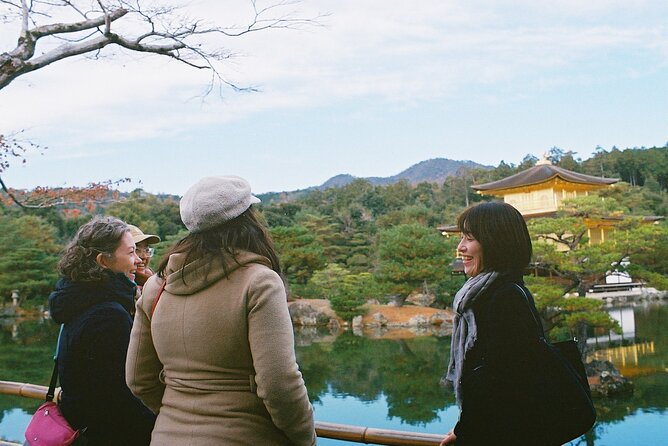
I would recommend this tour to first-time Kyoto visitors who want a strong introduction to two major temples without spending a full day on the subject. It also suits anyone interested in Japanese religion, imperial culture, or the relationship between political power and Buddhist institutions.
Families and mixed-interest groups may appreciate the clear contrast. Kinkaku-ji supplies the instant visual payoff, while Ninna-ji offers a more personal and thoughtful experience. The small group should also help if you have questions.
It is less suitable for independent temple experts who already know the sites well. You may find the fixed pace restrictive if you want to linger at the pond, study every garden feature, or photograph the pagoda from several angles.
It is also not the right choice if you need a firm guarantee of the monk-led session. The temple may adjust the Ninna-ji program, and the experience can change according to its circumstances.
Should you book the Kinkaku-ji and Ninna-ji tour?
Book it if you want more than the standard Golden Pavilion photo. The tour’s best feature is the shift from Kinkaku-ji’s public grandeur to Ninna-ji’s quieter access, where a monk-led session, questions, and the rotating sutra shelf can give you a closer look at Buddhist life.
The $48.86 price is fair for a small group with both admissions and guided transport between sites, especially if Ninna-ji would be awkward for you to reach alone. Just keep your expectations flexible at the second temple and remember that three hours is an introduction, not a complete study of either place.
For a focused Kyoto morning or afternoon, this is a strong pick. You get two UNESCO World Heritage temples, two very different stories, and a guide who can connect the gold, gardens, imperial rooms, and Buddhist practice into one readable visit.
FAQ
How long is the Kyoto Kinkaku-ji and Ninna-ji tour?
The tour lasts approximately three hours.
How much does the tour cost?
The listed price is $48.86 per person.
Are admission tickets included?
Yes. Admission tickets to Kinkaku-ji and Ninna-ji are included.
What is the group size?
The tour has a maximum of seven participants.
Where does the tour begin?
It begins at Yamazaki-an, 25 Kinugasa Babachō, Kita Ward, Kyoto, 603-8362, Japan.
Where does the tour end?
The tour ends at Ninna-ji Temple, 33 Omuroōuchi, Ukyo Ward, Kyoto, 616-8092, Japan.
What will I see at Kinkaku-ji?
You will see the Golden Pavilion and visit sites including Shariden, Karamon Gate, Rikushu-no-taki, Anmintaku, Hakujanotsuka, Yukatei Teahouse, and Fudo Hall.
What happens at Ninna-ji?
The program can include entry to the Main Hall, a chanting session led by a monk, a question-and-answer session, the Sutra Hall and its rotating sutra shelf, a photo with the monk, and the Imperial Residence.
Can the Ninna-ji program change?
Yes. The details at Ninna-ji may change according to the temple’s circumstances.
Is cancellation free?
Yes, if you cancel at least 24 hours before the experience’s start time. Cancellations or changes made less than 24 hours before the start time are not refunded or accepted.
More Gardens in Kyoto
- Kyoto Arashiyama Walking Tour: Bamboo, Monkeys, Gardens & Secrets
★ 5.0 · 1,216 reviews - Kyoto Zen Meditation & Garden Tour at a Zen Temple with Lunch
★ 5.0 · 441 reviews - Kyoto Arashiyama Bamboo forest & Garden Half-Day Walking Tour
★ 5.0 · 413 reviews - Kyoto: Zen Garden, Zen Mind (Private)
★ 5.0 · 126 reviews
Recently added around Kyoto
- Higashiyama | Kyoto: Sakura Season Private Rickshaw Tour★ 5.0 · 3 reviews
- Kyoto Kimono Rental CHAMATSU|Kimono/Yukata Rental FamilyPlan★ 5.0 · 3 reviews
- Kyoto: Half-Day Private Guided Tour to the Old Town of Gion★ 4.4 · 3 reviews
- Nara Private Customizable Half Day Tour★ 5.0 · 3 reviews
- Kansai Region Hiking Adventure in Nara Kobe Kyoto and More★ 5.0 · 3 reviews
- Full Day Nara Deer, Temple, Shrine, Activities & Tea Ceremony★ 5.0 · 3 reviews
- Nara: Essential Private Tour with Deer Park and Temples★ 5.0 · 3 reviews
- Hiking Tour for Sacred Sites in Kyoto with a Guide★ 5.0 · 3 reviews
Kinkaku-ji Golden Pavilion Tours, compared.
Nijo, Kinkaku-ji, Arashiyama, Kiyomizu & Fushimi Inari
Read our review →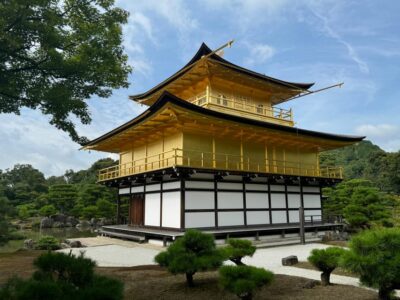
Kyoto top must-see Golden pavilion and Bamboo forest half-day Private tour
Read our review →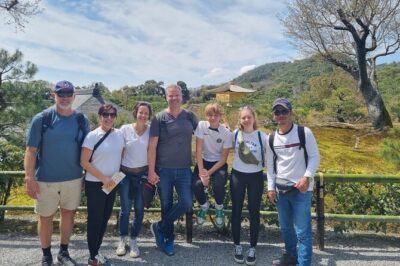
Kyoto Bamboo Forest & Golden Pavilion E-Bike Tour
Read our review →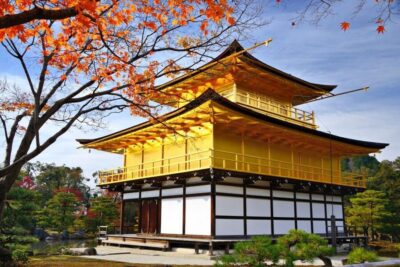
Golden Pavilion, Nijo Castle, & Nishiki Market Half day tour
Read our review →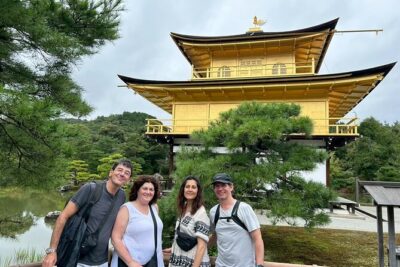
Crowd-Free Kyoto: Fushimi Inari, Nijo Castle & Kinkaku-ji
Read our review →
Kyoto & Nara Day Tour: Golden Pavilion, Fushimi Inari & Deer Park
Read our review →
Kyoto Arashiyama & Golden Pavilion One-Day Walking Tour
Read our review →Browse the lists this tour appears in