
REVIEW · NISHIKI MARKET FOOD TOURS
Kyoto: Nishiki Market and Depachika Food Tour with a Local
Kyoto’s best food discoveries are often small, unfamiliar, and easy to miss. This two-hour walk takes you from Daimaru’s basement food hall to Nishiki Market, where a local guide helps you understand what you are seeing and tasting. You may try yuba sashimi, a soy milk donut, Nishiki gyoza, and tempura hamo fish.
I like the small group of no more than nine people, which makes it easier to ask questions and keep up in crowded aisles. I also like the mix of polished department-store foods and traditional market stalls. The main drawback is that the listed stop times add up to three hours, while the experience is advertised as two, so I would confirm the exact schedule before booking.
In This Review
- Key points to know before booking
- Starting at Apple Kyoto, then heading underground
- Daimaru’s depachika: Kyoto food behind department-store doors
- Nishiki Market, Kyoto’s food street
- Nishiki-Tenmangu Shrine, a quiet finish
- What the guide adds to the food
- Is $42 good value?
- Who should book this Kyoto food walk?
- Practical advice for a smoother visit
- Should you book it?
- FAQ
- How long does the tour last?
- Where does the tour begin?
- Where does the tour finish?
- What food is included?
- Are extra food and drinks included?
- What language is the tour offered in?
- How large is the group?
- What should I bring?
- Can I cancel the booking?
Key points to know before booking
- Two very different food stops: Compare the elegant Daimaru depachika with the older-style stalls of Nishiki Market.
- Four named tastings: Expect yuba sashimi, a soy milk donut, Nishiki gyoza, and tempura hamo fish.
- Local guidance matters: Guides such as Mao, Ai, Boris, Kats, Richard, and Jasmine have explained ingredients, customs, and Kyoto food traditions clearly.
- A shrine visit adds cultural context: Nishiki-Tenmangu provides a quiet pause after the food stops.
- Good for a short gap in your day: Multiple start times make this useful when you have only a couple of free hours.
- Bring cash and comfortable shoes: Hotel transport is not included, and the tour involves walking and standing.
Starting at Apple Kyoto, then heading underground
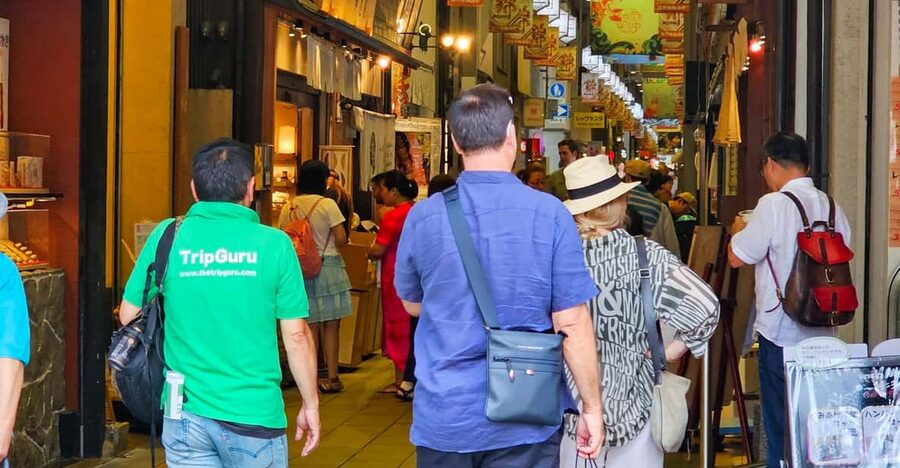
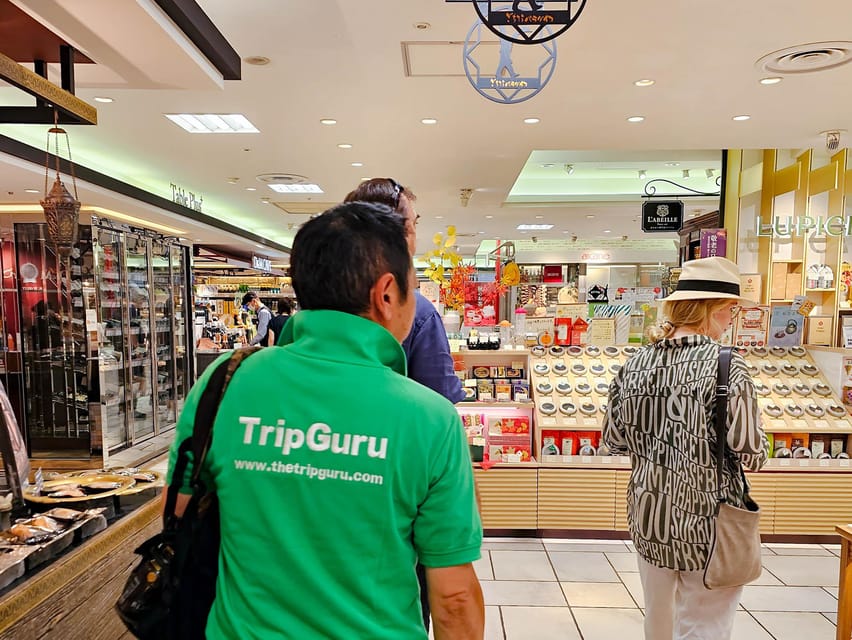
You meet your guide outside Apple Kyoto. Look for a TripGuru shirt or sign, and arrive at least 10 minutes early. The guide waits only 10 minutes before moving on, so allow extra time for traffic and for finding the meeting point.
This is a walking tour, not a vehicle-based outing. You move through department-store corridors, market lanes, and shrine grounds, so comfortable shoes are essential. The route finishes at Kyoto-Kawaramachi Station, giving you a useful place to continue sightseeing or return to your hotel.
The group is limited to nine participants. That size is small enough for a guide to explain an unfamiliar dish without turning the whole stop into a speech. It also helps when you want to ask about ingredients, etiquette, or where to eat later.
English is the stated tour language. The guides have included Mao, Ai, Boris, Kats, Richard, Jasmine, Vincent, Yoku, Miya, Brook, and Simon. Individual styles will differ, but the strongest part of this experience is the guide’s ability to make Japanese food less intimidating. Boris, for example, was praised for explaining food, culture, and history while adapting to a child’s more cautious taste. Richard was especially useful for recommendations about food and drinks.
More food walks through Nishiki Market:
- Nishiki Market Brunch Walking Tour (7 Tastings + Brunch)
★ 5.0 · 1,355 reviews - Kimono Tea Ceremony at Kyoto Maikoya, NISHIKI
★ 5.0 · 911 reviews - Kyoto Nishiki Market Food and Culture Walking Tour
★ 5.0 · 412 reviews
Daimaru’s depachika: Kyoto food behind department-store doors
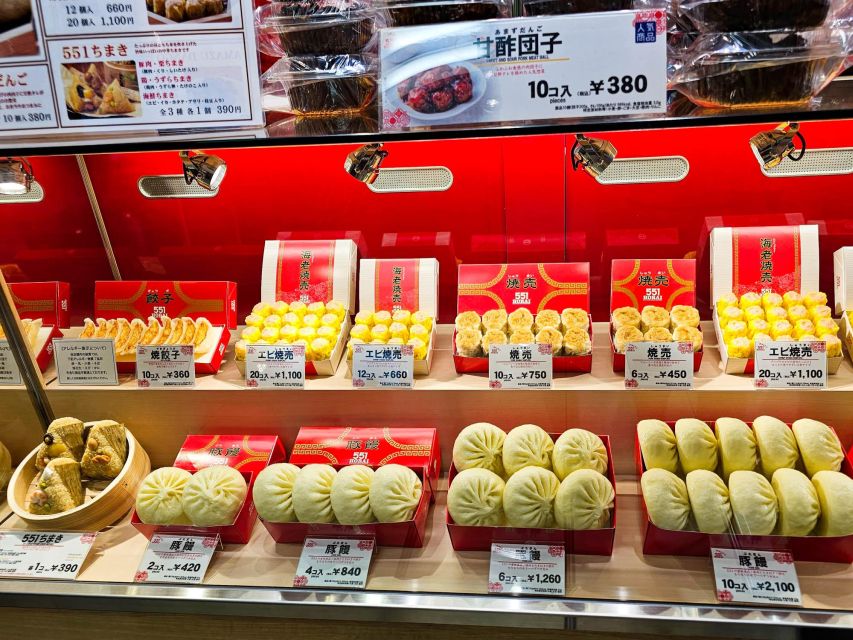
The first major stop is Daimaru Kyoto, where you visit a depachika. The word refers to an underground department-store food hall, and it is one of the most useful places in Japan for seeing how carefully prepared food is presented and sold.
Expect counters filled with Japanese sweets, prepared dishes, produce, boxed meals, and international delicacies. The setting is clean and orderly, but it is not just a place for expensive snacks. A depachika gives you a quick look at Japanese food culture: seasonal presentation, gift packaging, precise displays, and an impressive range of small portions.
This part of the tour is especially helpful if you are unsure what to buy on your own. You can see foods up close, ask what they contain, and learn which items are suited to a quick meal, a gift, or a special treat. One guide helped a participant distinguish useful bento choices from an overpriced cantaloupe, a practical bit of advice if you are still learning how Japanese food shopping works.
The included tastings are not limited to one style of food. Yuba sashimi, made from tofu skin, offers a delicate Kyoto specialty. The soy milk donut gives you something sweeter and more familiar. At Nishiki Market, the planned tastings add Nishiki gyoza and tempura hamo fish, creating a useful contrast between soft, mild flavors and richer fried food.
There is one point to clarify. The tour information lists Daimaru as a 1.5-hour food-market visit, then lists Nishiki Market for one hour and the shrine for 30 minutes. Since the whole activity is also described as lasting two hours, these figures appear to be approximate or overlapping. If your day is tightly planned, ask the operator how much time the group normally spends at each stop.
Nishiki Market, Kyoto’s food street
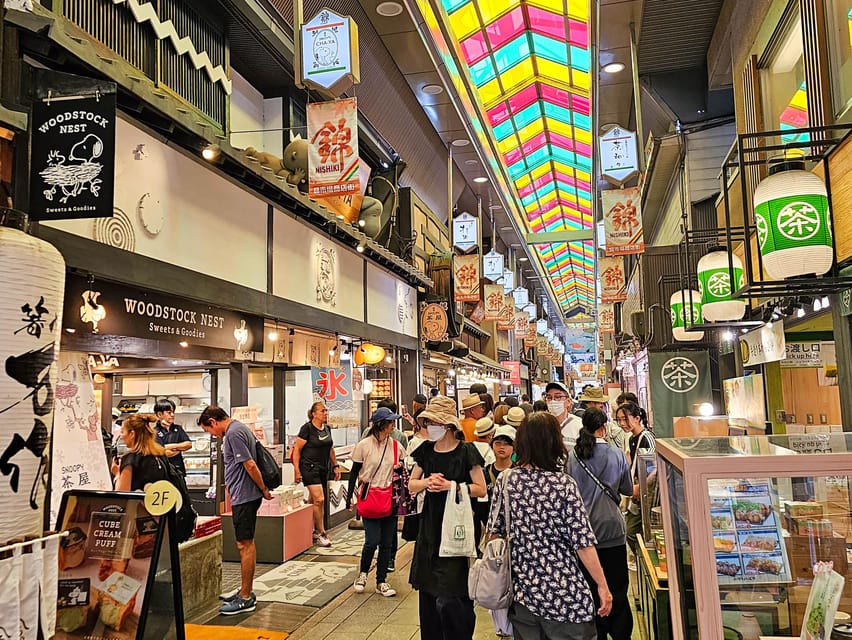
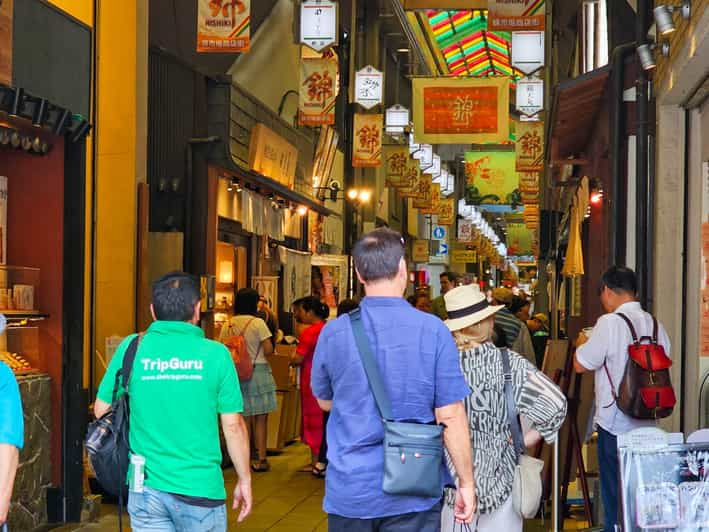
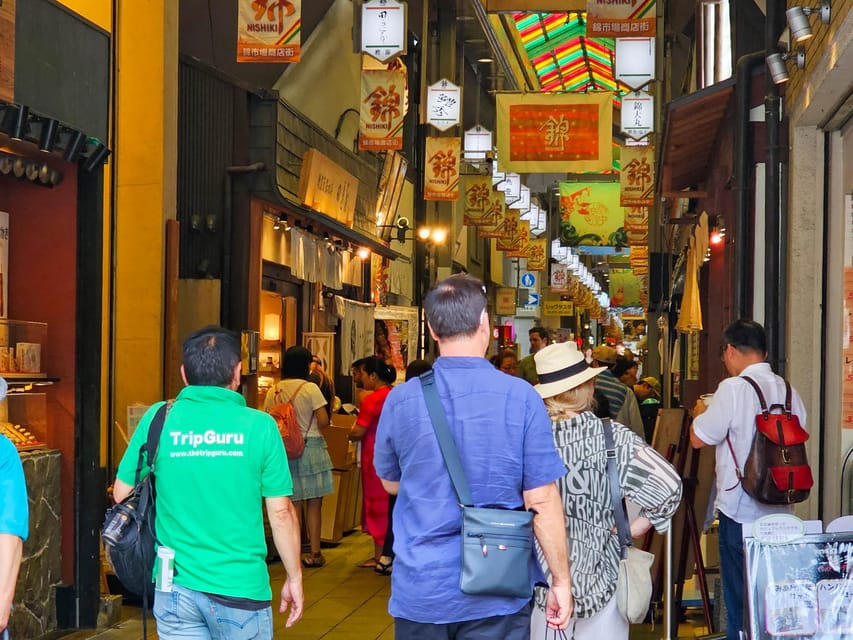
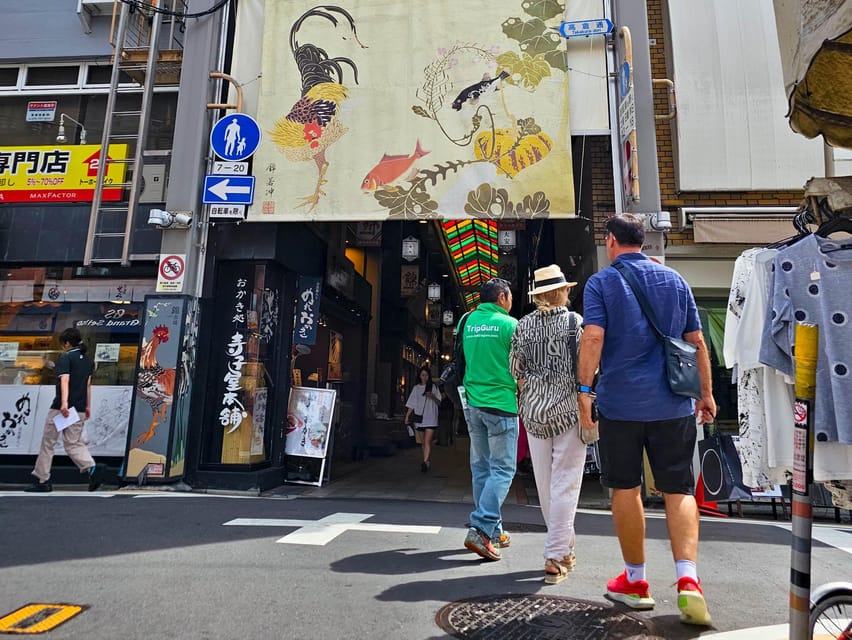
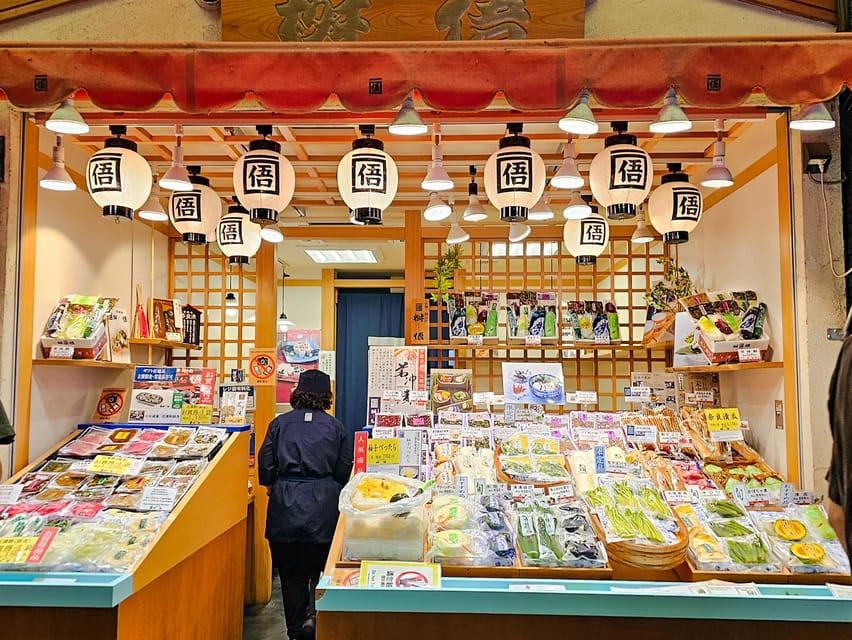
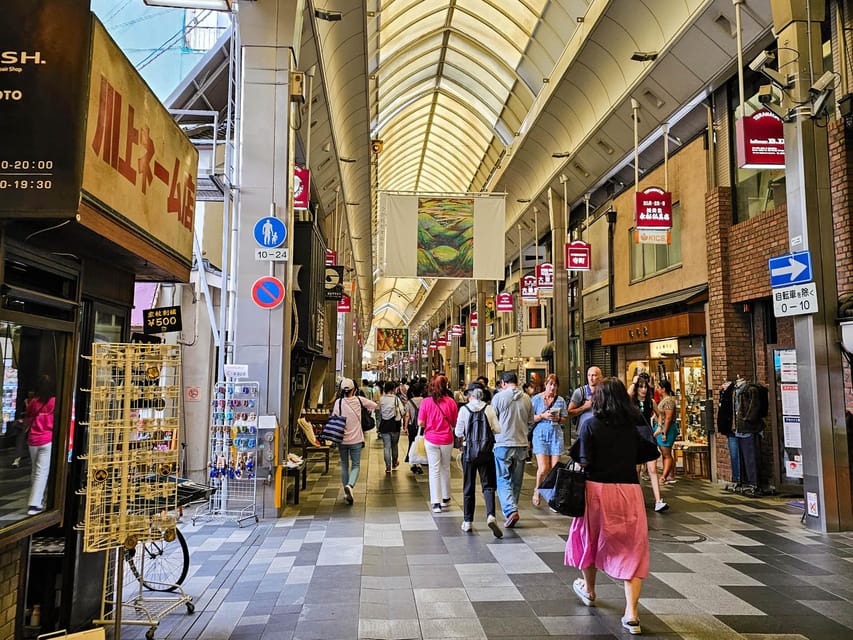
From Daimaru, the route continues to Nishiki Market. This covered shopping street is known for Kyoto specialties, seasonal ingredients, prepared foods, kitchen tools, knives, and cookware. It is compact but busy, with narrow passages and many things competing for your attention.
I find a guide particularly useful here because Nishiki can be hard to read at first. A stall may display an ingredient without much explanation in English, and a food that looks familiar may be prepared in a completely different way. Your guide can point out what is local, explain how a dish is traditionally eaten, and help you decide what is worth tasting.
The listed food includes Nishiki gyoza and tempura hamo. Hamo is pike conger, a fish associated with Kyoto cuisine and treated with a special cutting technique because of its fine bones. You do not need prior knowledge to enjoy it, but hearing the reason behind the preparation makes the bite more meaningful.
The market also offers more than food. You might pause at a knife shop, look at traditional cookware, or notice families who have operated their stalls for generations. The long-running family businesses give the market a sense of continuity, though this is still a working commercial area rather than a quiet museum.
The food tastings are included, but additional food and drinks are not. That distinction matters. You receive the listed samples, yet you may want to buy extra snacks, drinks, or gifts as you walk. Bring cash, since it is specifically recommended, and keep your spending separate from the tour price.
One past booking exposed a useful weakness: the guide and participant had different expectations about when food would be served. The participant expected the guide to announce each tasting, while the guide was waiting for a request. To avoid this, ask early which foods are included and when you will try them. A clear question can prevent disappointment.
Nishiki-Tenmangu Shrine, a quiet finish
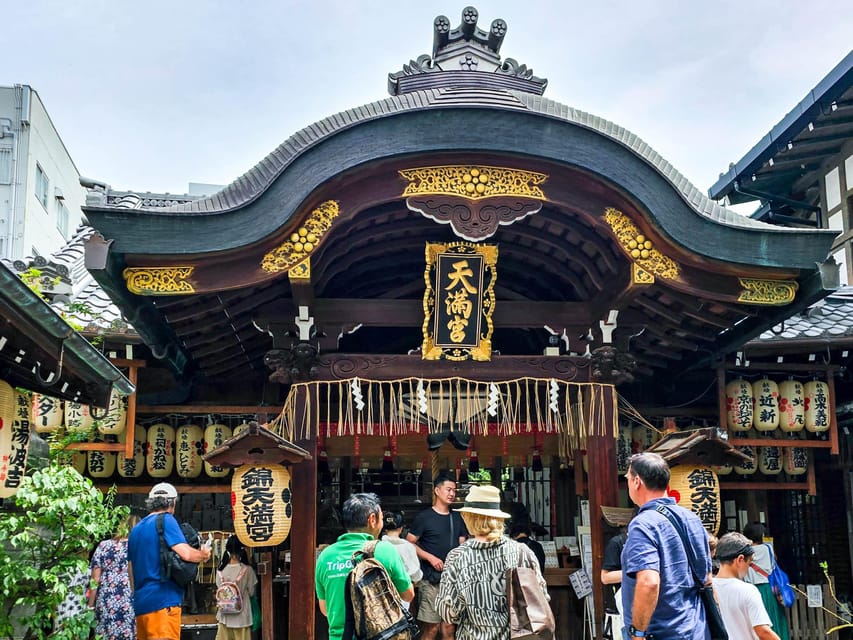
After the market, you visit Nishiki-Tenmangu Shrine. The shrine is dedicated to the deity of learning and offers a sharp change from the tight market lanes.
Your guide can explain the basic customs, including cleansing your hands at the sacred water fountain. You will also have time to look at the architecture and take a breath before the tour ends. This is a short cultural stop, not a full temple or shrine tour, but it gives the food walk a better sense of place.
I like this pause because the experience is not only about collecting bites. Food in Kyoto is tied to custom, season, craftsmanship, and local identity. A brief shrine visit helps you shift from shopping and tasting to observing the city around you.
The tour ends at Kyoto-Kawaramachi Station. That is convenient if you want to continue around central Kyoto, return by train, or use the station as a landmark while exploring on your own. Hotel pickup and drop-off are not included, so you are responsible for reaching Apple Kyoto and making your own way afterward.
More food tours in Kyoto:
- Kyoto Night Foodie Tour in Gion (9+ dishes + 6 Sake tastings)
★ 5.0 · 1,762 reviews - 3-Hour Kyoto Insider Sake Brewery Tour with Tastings & Pairings
★ 5.0 · 917 reviews - Arashiyama Bamboo, Temple, Monkeys, or Secret Sake Brewery
★ 4.8 · 886 reviews - Kyoto: Insider Sake Brewery Tour with Sake and Food Pairing
★ 5.0 · 704 reviews
What the guide adds to the food
The food itself is only half the value. Nishiki Market is easy to visit without a guide, but it is much harder to understand without one. A local can explain why tofu skin matters in Kyoto, how to approach unfamiliar fish, and which foods are regional rather than generic Japanese fare.
The best guides also adjust the pace. Katherine’s guide was patient when the group spent extra time in Daimaru, while Mao accommodated a scheduling mix-up and still kept the experience friendly. Boris handled a child’s cautious eating habits without making the more adventurous members of the group settle for less.
Several guides have also helped people plan the rest of their Kyoto stay. Richard offered food and drink suggestions, and Kats gave practical ideas for places to visit after the tour. That kind of informal local advice can be worth a lot, especially near the beginning of a trip, when you are still learning how to choose restaurants and market foods.
You should not expect a formal cooking class or a long sit-down meal. This is a moving food walk. Tastings are spread across the route, and you will spend much of the time standing or walking. If you prefer a structured meal with large portions, this may feel light. If you want an introduction to foods you might not try alone, it works better.
Is $42 good value?
At $42 per person, the price is reasonable for a small-group guided walk with four listed tastings and an English-speaking guide. You are paying not just for the food, but for help navigating two very different places and for explanations that can make unfamiliar dishes easier to appreciate.
The value is strongest for first-time visitors to Kyoto. If you already know Nishiki Market well and feel comfortable choosing Japanese foods on your own, you may prefer to spend the money directly at the stalls. You could also easily spend more than $42 once you begin buying extra snacks and drinks.
The group limit helps protect the value. A group of nine is easier to manage than a large food tour, especially in a narrow market. It also gives you a fair chance to hear the guide and ask questions.
Still, keep expectations realistic. Four included tastings do not mean unlimited sampling. Additional purchases cost extra, and the tour lasts only two hours according to the main description. Think of it as an orientation with food, not a full day of eating.
Who should book this Kyoto food walk?
I would recommend it to you if you:
- Have only a short opening in your Kyoto schedule
- Want an introduction to Japanese food without researching every stall
- Prefer a small group to a large bus-style tour
- Enjoy asking questions about ingredients, customs, and local specialties
- Want both a department-store food hall and a traditional market
- Are comfortable walking and standing for the duration
It is less suitable if you have mobility limitations, heart problems, respiratory issues, or are pregnant, since the activity is not designed for those conditions. It may also be frustrating if you need a fully timed itinerary, because the published stop lengths do not match the advertised two-hour total.
Families can do well here, especially with a flexible guide. Boris adapted to a child’s more selective taste, which shows the benefit of a small group. Still, the market is busy, and the experience depends on walking at the group’s pace.
Practical advice for a smoother visit
Wear shoes you can walk in comfortably. Bring a camera if you want to record the market displays, but keep your hands free enough to move through narrow aisles.
Bring cash for extra purchases. The included tastings are specified, but personal spending, drinks, and additional food are not covered. If a particular dish interests you, ask the guide whether it is part of the included tasting or something you would need to buy separately.
Arrive early. Traffic can be heavier than navigation apps suggest, and the guide will wait a maximum of 10 minutes. I would avoid scheduling another activity immediately afterward, especially if you expect to shop or ask many questions.
You can cancel without a fee up to 24 hours before the activity for a full refund. The reserve-now, pay-later option also helps if your Kyoto plans are still shifting.
Should you book it?
Book this tour if you want a friendly, compact introduction to Kyoto’s food culture and would rather have a local explain the market than simply wander through it. The combination of yuba sashimi, soy milk donut, gyoza, hamo, Daimaru, Nishiki Market, and a shrine visit gives you a good range in a short time.
I would book it near the start of your Kyoto stay, when guide suggestions can shape the rest of your meals. Just confirm the actual timing, ask which tastings are included, and leave room for your own purchases. If you want a long, leisurely food feast, choose something longer. If you want a practical first look at Kyoto’s food scene for $42, this is a sound choice.
FAQ
How long does the tour last?
The main activity description gives the duration as two hours. The stop-by-stop information lists time totals that add up to three hours, so you should confirm the precise schedule before booking if timing matters.
Where does the tour begin?
The meeting point is Apple Kyoto. Your guide will wear a TripGuru shirt or hold a TripGuru sign.
Where does the tour finish?
The experience finishes at Kyoto-Kawaramachi Station.
What food is included?
The listed tastings are yuba sashimi, soy milk donut, Nishiki gyoza, and tempura hamo fish.
Are extra food and drinks included?
No. Additional food, drinks, and personal expenses are not included.
What language is the tour offered in?
The tour is conducted in English with a live English-speaking guide.
How large is the group?
The activity is limited to nine participants.
What should I bring?
Bring comfortable shoes, a camera, and cash.
Can I cancel the booking?
Yes. You can cancel up to 24 hours in advance for a full refund. You can also reserve now and pay later.
More Shopping Tours in Kyoto
- Nishiki Market Lunch Tour
★ 5.0 · 47 reviews - Nishiki Market Food Tour with Cooking Class
★ 4.9 · 42 reviews - Kyoto Nishiki Market Tour
★ 5.0 · 32 reviews - Golden Pavilion, Nijo Castle, & Nishiki Market Half day tour
★ 5.0 · 29 reviews
More Markets in Kyoto
- Kyoto: Nishiki Market Tea Ceremony with Koto Performance
★ 4.8 · 294 reviews - Kyoto: Nishiki Market Brunch Walking Tour-7 Tastings+Brunch
★ 4.8 · 197 reviews - Kyoto: Local Food Tasting Tour at the Nishiki Market
★ 4.7 · 135 reviews - Kyoto: Nishiki Market Tour with a Local Foodie & Tastings
★ 4.5 · 67 reviews
Recently added around Kyoto
- Higashiyama | Kyoto: Sakura Season Private Rickshaw Tour★ 5.0 · 3 reviews
- Kyoto Kimono Rental CHAMATSU|Kimono/Yukata Rental FamilyPlan★ 5.0 · 3 reviews
- Kyoto: Half-Day Private Guided Tour to the Old Town of Gion★ 4.4 · 3 reviews
- Nara Private Customizable Half Day Tour★ 5.0 · 3 reviews
- Full Day Nara Deer, Temple, Shrine, Activities & Tea Ceremony★ 5.0 · 3 reviews
- Nara: Essential Private Tour with Deer Park and Temples★ 5.0 · 3 reviews
- Kansai Region Hiking Adventure in Nara Kobe Kyoto and More★ 5.0 · 3 reviews
- Hiking Tour for Sacred Sites in Kyoto with a Guide★ 5.0 · 3 reviews
Nishiki Market Food Tours, compared.
Kyoto Nishiki Market Food and Culture Walking Tour
Read our review →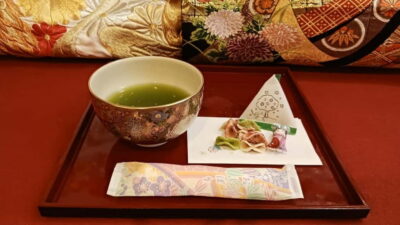
Nishiki Market Tea Ceremony with Koto Performance
Read our review →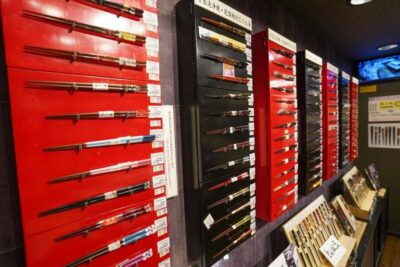
Nishiki Market Brunch Walking Tour-7 Tastings+Brunch
Read our review →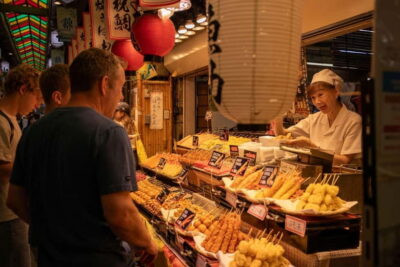
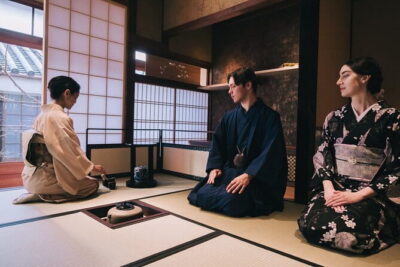
Kimono Tea Ceremony Experience at Kyoto Oritzuruya, Nishiki
Read our review →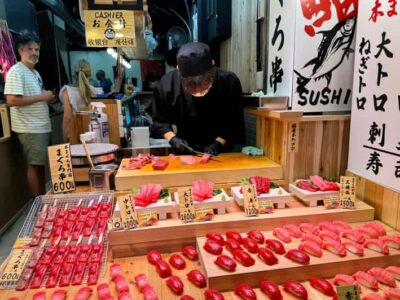
Nishiki Market Tour with a Local Foodie & Tastings
Read our review →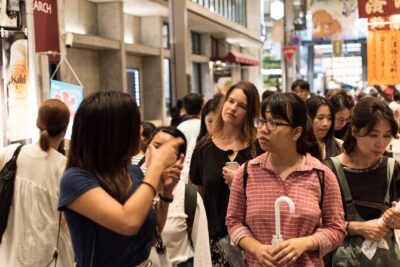
Browse the lists this tour appears in