
REVIEW · KYOTO CALLIGRAPHY CLASSES
【OKADA】Kyoto Japanese calligraphy experience (shodo)
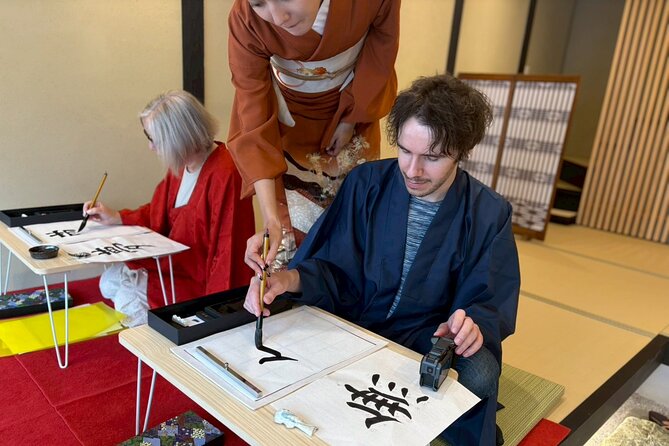
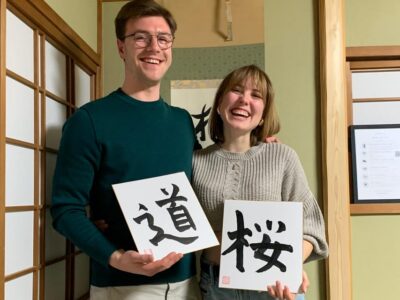
The best part of this Kyoto experience is that you do not just look at Japanese art, you make a piece of it. In about an hour, English-speaking instructors guide you from the meaning of kanji to the final brushstroke, using traditional fude brushes and sumi ink. I like the small maximum group of eight, and I like that your finished work goes home on a shikishi board.
The class is also a good fit for families. The instructors are patient and encouraging, and they have kept both a six-year-old and an eleven-year-old engaged. The main consideration is time: one hour gives you a pleasant introduction, not a full study of shodo. Kimono rental is also separate, and the class itself takes place at a set meeting point rather than as part of a wider walking tour.
In This Review
- Key points to know before booking
- Why this one-hour Kyoto class works
- Getting started with brush, ink, and posture
- Choosing and understanding your kanji
- From practice sheets to the shikishi board
- Optional calligraphy on a Japanese fan
- What the $45.81 price includes
- Who will enjoy this experience most
- Location, timing, and practical planning
- The teaching style and overall feel
- Should you book this Kyoto calligraphy class?
- FAQ
- How long does the Kyoto calligraphy experience last?
- Is the calligraphy lesson taught in English?
- Do I need previous Japanese calligraphy experience?
- What is included in the booking?
- Can I write calligraphy on a Japanese fan?
- Is kimono rental included?
Key points to know before booking
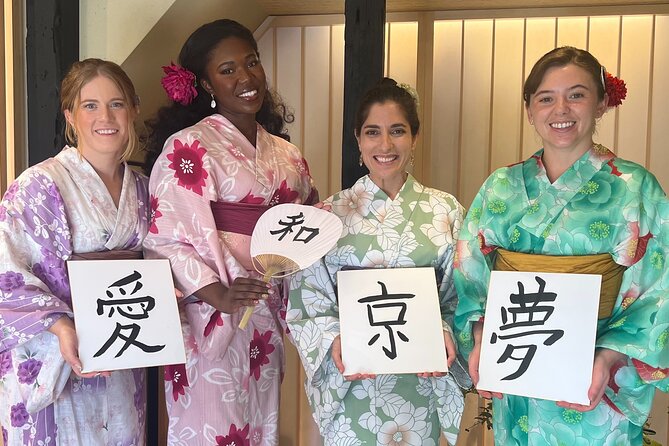
- You create a take-home shikishi board: Your final calligraphy is mounted on a square art board, giving you a more lasting souvenir than loose practice paper.
- The lesson is taught in English: You receive help with kanji meaning, posture, brush handling, and stroke order without needing Japanese.
- The class lasts about one hour: It fits neatly between sightseeing stops in Kyoto’s Higashiyama area.
- The group is limited to eight people: This keeps the lesson personal and gives the instructor time to correct your technique.
- Fan calligraphy costs extra: Add a sensu folding fan for ¥1,500 or an uchiwa flat fan for ¥800.
- Families and beginners are welcome: No previous brushwork is needed, and the activity has worked well for children as young as six.
Why this one-hour Kyoto class works
Japanese calligraphy, or shodo, can look simple from across a room. A few dark strokes appear on white paper, yet each stroke depends on pressure, speed, angle, and order. This workshop gives you a short, friendly introduction to those choices without asking you to commit to a long formal lesson.
I like the way the class begins with meaning, not just mechanics. You learn about kanji characters and what they represent before putting ink on paper. That matters because your finished piece becomes more personal when you understand the character you are writing.
The workshop is designed for international visitors, so the instruction is available in English. You do not need to read Japanese or arrive with artistic training. The goal is not perfect professional calligraphy. It is to help you use the brush with enough control to create something you will want to keep.
The setting is at 102 Tatsumicho in Kyoto’s Higashiyama Ward, with the activity beginning and ending at the same location. It is near public transportation, but transportation to and from the venue is not included. Plan your route before class, especially if you are fitting this into a busy day of temples and shopping.
More calligraphy classes:
- Kyoto: Calligraphy class at Buddhist temple in city center
★ 5.0 · 167 reviews - Kyoto: Japanese Calligraphy Class
★ 4.8 · 89 reviews - Kyoto: Japanese Calligraphy Workshop
★ 4.7 · 84 reviews
Getting started with brush, ink, and posture
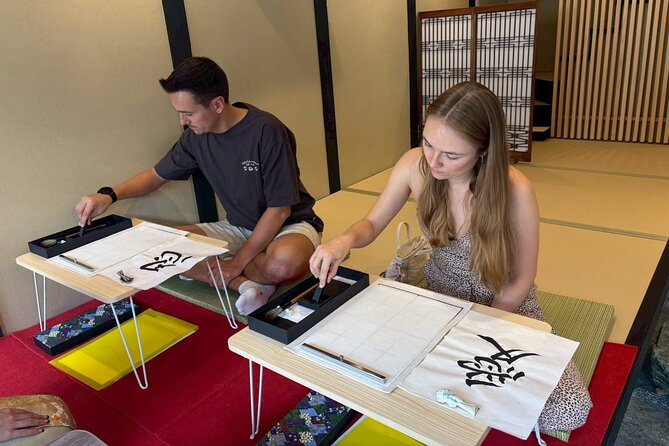
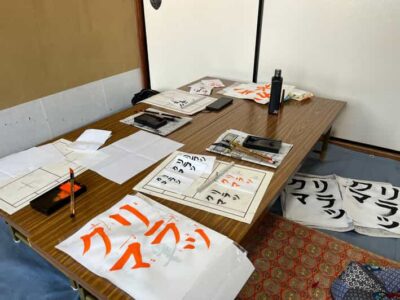
At the beginning, the instructor introduces the basic tools: a fude brush, sumi ink, and paper. You also receive practice sheets, which are important because your first marks are meant to be attempts, not masterpieces.
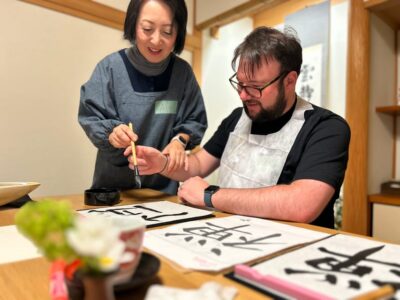
Expect guidance on proper posture and brush technique. These details can feel fussy at first, but they help you understand why the brush behaves differently from a pen. Your grip, arm position, and pressure affect the width and finish of every line.
You also learn stroke order. This is more than a memorization trick. The order helps create a balanced character and gives the writing a natural rhythm. The instructor can show you where to begin, how to move through the character, and when to lift the brush.
The use of real ink gives the lesson a more traditional feel than a craft activity built around markers or printed templates. Sumi ink is dark and decisive. You get practice sheets because the final board is not where you want to discover that you are holding the brush too tightly.
Choosing and understanding your kanji
A central part of the session is learning the history and meaning of kanji characters. The exact character choices are not specified in the activity details, so you should expect instruction rather than a guaranteed list of words.
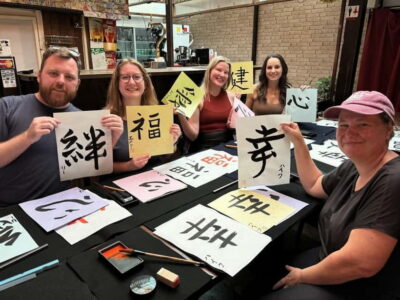
This is useful for visitors who want more than decorative Japanese lettering. A character can carry an idea, a hope, or a quality that makes the finished work meaningful. Understanding the symbol gives you a better chance of choosing something that fits your memory of Kyoto.
The class keeps this approachable. You are not expected to become fluent in Japanese in an hour. Instead, you gain a small piece of cultural context, then use it as the basis for your writing.
For a personal souvenir, think about what you want the piece to express before you arrive. You might choose a character connected with peace, strength, friendship, or another idea that matters to you, but the instructor will provide the actual guidance available in the class.
From practice sheets to the shikishi board
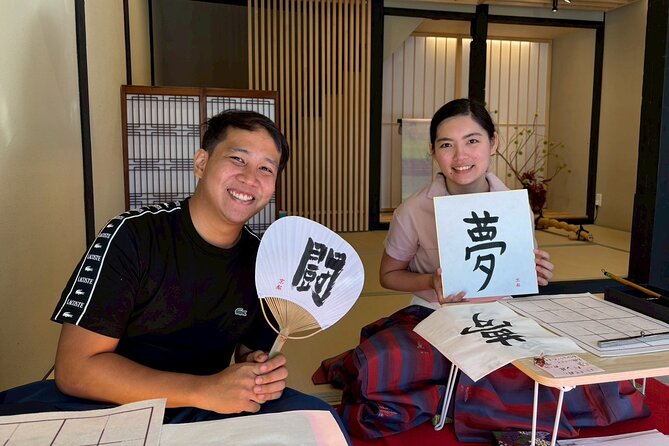
After practicing, you create your original calligraphy on a shikishi board. This is one of the strongest practical features of the experience. A loose sheet of practice paper can be hard to protect in luggage, while a board gives your final work a firmer format.
The process also gives you a clear goal. You start by learning, make several attempts, and then apply the techniques to one finished piece. That progression makes the hour feel like a real lesson rather than a quick photo opportunity.
Your instructor can help with brush movement and stroke order along the way. The teaching style is especially suited to beginners because patience and encouragement matter more here than speed. The family experience described for this class included a six-year-old, an eleven-year-old, and children who stayed interested throughout the session.
That does not mean every child will have the same attention span. Still, the short duration, hands-on tools, and visible result give families a better chance of success than a long lecture. Adults can enjoy the craft at their own level while children work through the same basic steps.
A completely different side of Kyoto:
- PERFECT KYOTO 1-Day Bus Tour
★ 5.0 · 13,518 reviews - Kyoto: Fushimi Inari, Kinkakuji, Bamboo Grove 1 Day Bus Tour
★ 4.8 · 4,316 reviews - Kyoto: Tea Ceremony in a Traditional Tea House in Kiyomizu
★ 4.9 · 3,519 reviews - Kyoto Geisha Walking Tour: Gion District & Hidden Gems
★ 4.7 · 3,273 reviews
Optional calligraphy on a Japanese fan
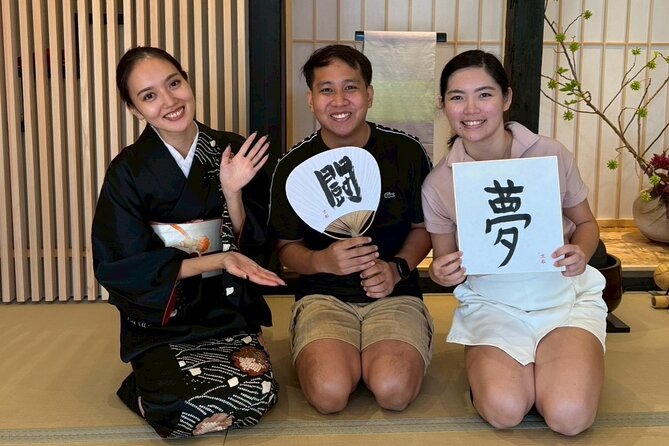
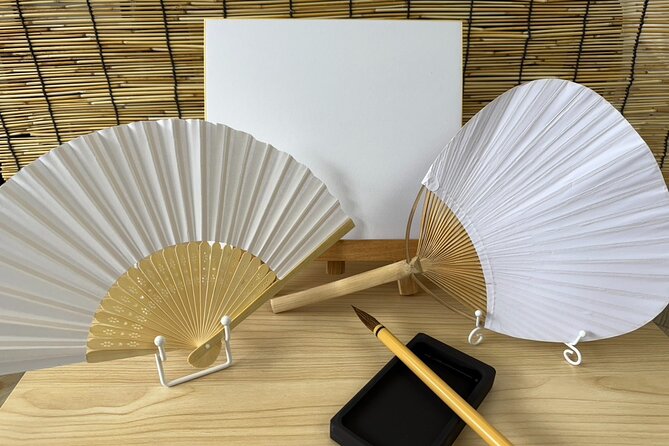
If you want a more unusual souvenir, you can add writing on a sensu folding fan for ¥1,500. A sensu folds for packing and has a distinctly Japanese form, making it a practical gift or keepsake.
An uchiwa flat fan is also available for ¥800. It does not fold, but it offers another surface for your calligraphy and costs less than the sensu option.
These upgrades are not included in the base price, so decide before the session if you want one. The included shikishi board already gives you a finished item to take home. The fan options make sense if you want a gift, prefer a different display piece, or are taking the class with family members who each want a separate object.
The class does not include kimono rental. Kimono rental is listed separately at approximately ¥5,000 or more. If dressing up is part of your Kyoto plan, budget for it as an additional activity rather than assuming it is part of the calligraphy booking.
What the $45.81 price includes
At $45.81 per person, the class is not the cheapest cultural activity in Kyoto, but the price covers more than a demonstration. You receive an English-language lesson, all calligraphy materials, practice sheets, instruction, and one shikishi board to take home.
I consider that fair value if you want an activity with a finished souvenir and direct help from an instructor. The small group limit also matters. With no more than eight people, the instructor has a reasonable chance to watch your brushwork and offer corrections.
The value is less clear if you only want a quick introduction or a photograph with a brush. You are paying for participation and guidance, not simply access to a studio. Visitors who prefer a packed sightseeing schedule may find the class less essential than Kyoto’s major temples.
Still, the one-hour length helps. You are not giving up half a day, and the fixed start and end point make it easier to combine with nearby plans. Add the cost of transportation, and remember that the optional fan surfaces and kimono rental are separate.
Who will enjoy this experience most
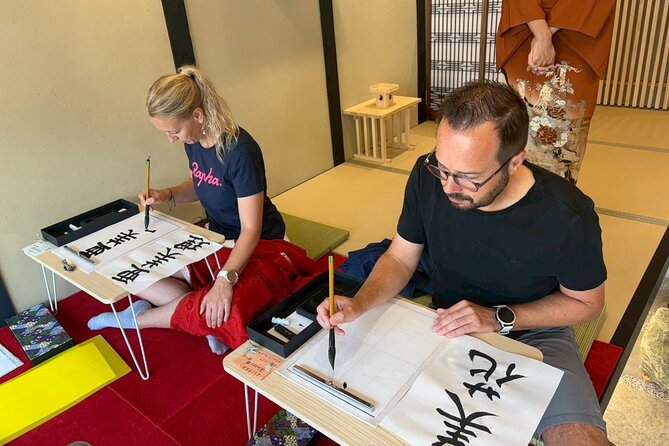
I would recommend this class to you if you want a quiet cultural break between Kyoto’s more crowded sights. It offers something your camera cannot provide: a souvenir made through your own hands, with a little understanding of how it came together.
It suits:
- First-time calligraphy students: You receive instruction from the basics and do not need prior experience.
- Families with children: The class has been successful with children aged six and eleven, and the instructors use patience and encouragement.
- Couples and friends: You can practice together, compare finished pieces, and share a creative hour.
- Solo visitors: The small group format gives you a structured activity without requiring a private booking.
- Gift shoppers: The shikishi board and optional fans can serve as personal presents.
You might want a different activity if your priority is wearing a kimono, touring multiple historic sites, or taking a longer art course. Those are not included here. This is a compact workshop with a clear beginning, practice period, and final piece.
Location, timing, and practical planning
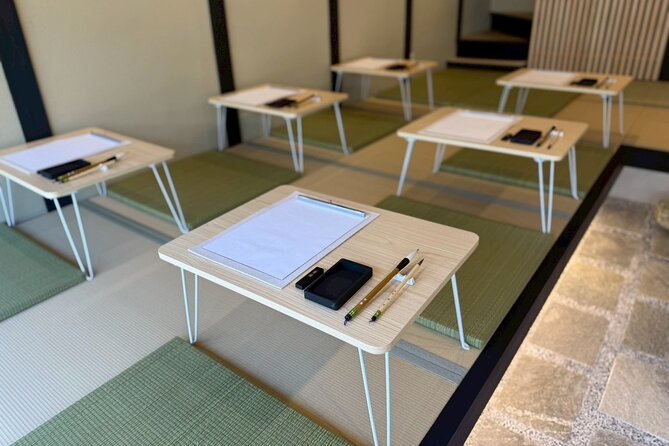
The meeting point is OKADA Kyoto Calligraphy Experience, 102 Tatsumicho, Higashiyama Ward, Kyoto 605-0855. The activity ends back at the meeting point, so you do not need to arrange a separate pickup or find your way to a different endpoint.
The venue is near public transportation, but the booking does not include transport. Use the address when planning your route, and allow enough time to arrive before the scheduled start. A one-hour class leaves little room for a late arrival if you also want the full practice and final writing stages.
Mobile ticketing makes the booking easy to carry on your phone. Confirmation is provided at booking. The class is listed as suitable for most people, though no detailed accessibility information is provided, so contact the operator if you have a specific mobility or participation concern.
The experience is generally booked about 14 days ahead. That is a useful planning signal for a small class with only eight places, particularly if you are visiting Kyoto during a busy season. Free cancellation is available up to 24 hours before the start time for a full refund. Changes or cancellations made within 24 hours are not accepted or refunded.
The teaching style and overall feel
The instructors are two young women who speak excellent English and have been described through their work as patient, professional, kind, and enthusiastic. Those qualities are especially important in calligraphy because beginners can become tense when ink meets paper.
A good instructor makes mistakes feel useful rather than embarrassing. Here, the teaching approach is encouraging, with attention kept on the process. That helps children stay involved and gives adults permission to produce imperfect but personal work.
The activity also has a calmer pace than many Kyoto sightseeing stops. You sit, focus on the brush, and pay attention to one character at a time. For me, that is part of the appeal. You get a cultural experience that asks you to slow down instead of rushing from one photo stop to the next.
The class remains introductory. Do not expect advanced calligraphic theory or a long discussion of Japanese art schools in sixty minutes. You get the essentials: meaning, posture, brush control, stroke order, practice, and a finished board.
Should you book this Kyoto calligraphy class?
Book it if you want a short, hands-on cultural activity with English instruction, a small group, and a souvenir you create yourself. It is particularly well suited to families, couples, and anyone who wants a quieter hour in the middle of a busy Kyoto itinerary.
The strongest reasons to choose it are the patient teaching, child-friendly format, and included shikishi board. The optional fan writing is a nice extra, but you do not need it for the class to feel complete.
Skip it if you are looking for kimono rental, a longer formal course, or a tour that includes transportation and several sights. For everyone else, the $45.81 cost is reasonable for a guided cultural lesson that leaves you with more than a purchased souvenir. You leave with a little brush practice, a better sense of kanji, and a piece of Kyoto made by your own hand.
FAQ
How long does the Kyoto calligraphy experience last?
The activity lasts approximately one hour.
Is the calligraphy lesson taught in English?
Yes. An English-speaking instructor provides the lesson and guidance.
Do I need previous Japanese calligraphy experience?
No. The activity is designed for beginners, and no prior experience is needed.
What is included in the booking?
The booking includes an English-speaking instructor, calligraphy materials such as a brush, ink, and paper, practice sheets, and one shikishi board to take home.
Can I write calligraphy on a Japanese fan?
Yes. Writing on a sensu folding fan costs an additional ¥1,500. Writing on an uchiwa flat fan costs an additional ¥800.
Is kimono rental included?
No. Kimono rental is not included. It is listed separately at approximately ¥5,000 or more.
Recently added around Kyoto
- Higashiyama | Kyoto: Sakura Season Private Rickshaw Tour★ 5.0 · 3 reviews
- Kyoto Kimono Rental CHAMATSU|Kimono/Yukata Rental FamilyPlan★ 5.0 · 3 reviews
- Kyoto: Half-Day Private Guided Tour to the Old Town of Gion★ 4.4 · 3 reviews
- Nara Private Customizable Half Day Tour★ 5.0 · 3 reviews
- Kansai Region Hiking Adventure in Nara Kobe Kyoto and More★ 5.0 · 3 reviews
- Full Day Nara Deer, Temple, Shrine, Activities & Tea Ceremony★ 5.0 · 3 reviews
- Nara: Essential Private Tour with Deer Park and Temples★ 5.0 · 3 reviews
- Photo Shoot with a Private Vacation Photographer in KYOTO, JAPAN★ 5.0 · 3 reviews
Kyoto Calligraphy Classes, compared.
Calligraphy class at Buddhist temple in city center
Read our review →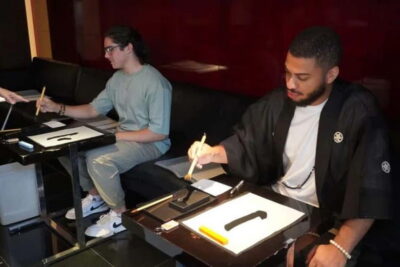
Kyoto Ninenzaka : Japanese Calligraphy Class in Townhouse
Read our review →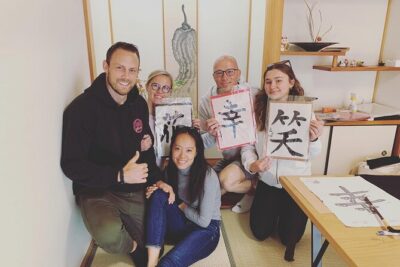
Private Japanese Calligraphy in Kyoto – Learn Shodō with a Master
Read our review →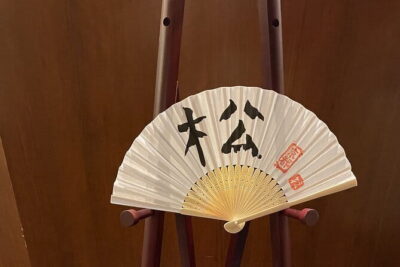
Japanese Calligraphy – Shodo – Lesson (near Kyoto Station)
Read our review →
Browse the lists this tour appears in