
REVIEW · FUSHIMI INARI SHRINE TOURS
TREASURES of Kyoto: Fushimi Inari, Kiyomizu Temple, and more!
Kyoto’s famous sights are much easier to enjoy before the tour buses arrive. This 7:00 am small-group outing takes you from Inari Station to Fushimi Inari, Kiyomizu-dera, and a preserved old district, with taxi fares between stops included.
I like the carefully chosen early timing, and I like that a group capped at 12 people gives you a fair chance to ask questions. The main drawback is value: at $98.53, you are paying for guidance and transport, not hard-to-get access, and an independent visitor can reach the two main shrines without paying a tour fee.
In This Review
- Key points to know before booking
- Why the 7:00 am start matters in Kyoto
- Fushimi Inari and its corridor of red gates
- Kiyomizu-dera after the shrine
- Cobblestone streets and preserved townhouses
- What the guide adds to the morning
- Is $98.53 a fair price?
- Group size, walking, and the pace
- Weather and cancellation details
- Who should book this Kyoto morning tour?
- Should you book it?
- FAQ
- How long does the Kyoto tour last?
- What time does the tour begin?
- Where does the tour begin?
- Where does the tour end?
- Which major sights are included?
- Is admission to Kiyomizu-dera included?
- Is there an admission fee for Fushimi Inari?
- Are taxi fares included?
- How many people can join the tour?
- Can I cancel for a full refund?
Key points to know before booking
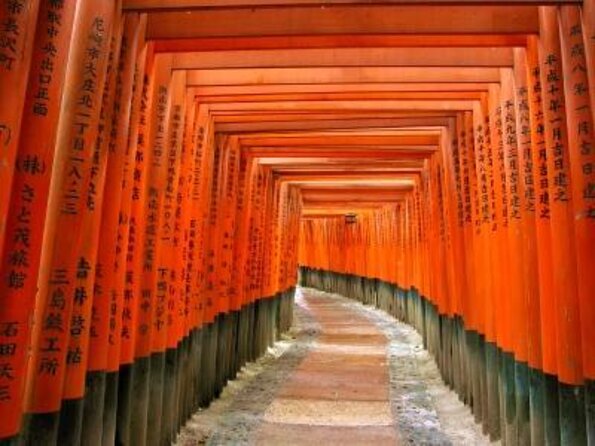
- Early access to Fushimi Inari: Begin at 7:00 am, when the torii gates are generally calmer than later in the day.
- Taxi fares are included: The tour uses taxis from one stop to the next, which saves time and reduces the strain of crossing Kyoto.
- Kiyomizu-dera is the main temple stop: Allow about an hour for the temple, views, and nearby approaches.
- A group of up to 12: This is small enough for more direct contact with the guide than a bus tour.
- The tour ends near Sanjūsangendō Temple: You finish at 657 Sanjūsangendōmawari in Kyoto’s Higashiyama Ward.
- Good for a tight schedule: Four hours covers major sights, but it does not leave much time for lingering or independent exploring.
Why the 7:00 am start matters in Kyoto
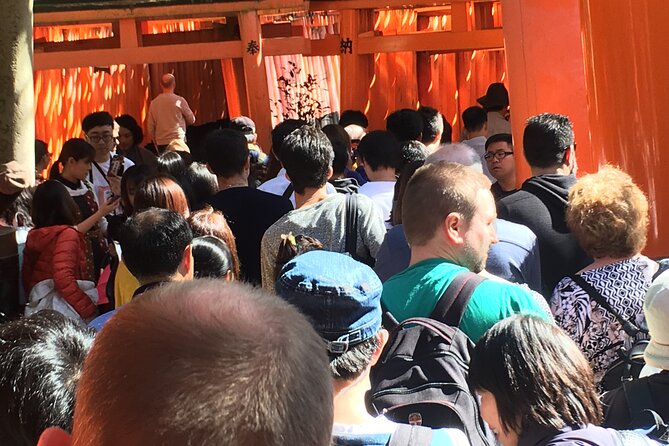
The strongest idea here is simple: visit Kyoto’s most famous religious sites early. Fushimi Inari and Kiyomizu-dera are among the city’s busiest sights, and the atmosphere can change sharply as tour groups and day visitors arrive.
Starting at 7:00 am gives you a better shot at quiet stretches of the shrine grounds and clearer views at Kiyomizu-dera. I would not call this a deserted Kyoto experience. These are major attractions, and other early risers will be around. Still, the timing is far better than arriving late in the morning.
The early start also makes the four-hour format useful. You see the central sights before much of the day gets away from you, then have the rest of the day for another neighborhood, a meal, or a museum. The tradeoff is an early alarm, so this works best if you are already staying in Kyoto and can reach Inari Station without a rushed cross-city trip.
More ways to walk Fushimi Inari:
- Kyoto: Fushimi Inari, Kinkakuji, Bamboo Grove 1 Day Bus Tour
★ 4.8 · 4,316 reviews - Fushimi Inari Hidden Hiking Tour (Private Option Available)
★ 5.0 · 1,750 reviews - Kyoto/Osaka: Nara, Fushimi Inari Taisha, Arashiyama Bus Tour
★ 4.7 · 1,275 reviews
Fushimi Inari and its corridor of red gates
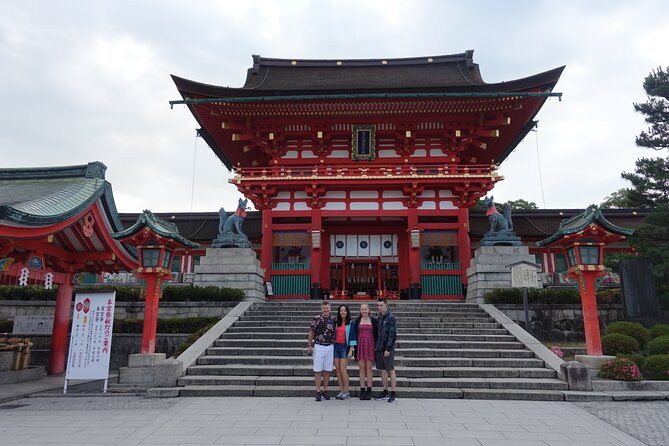
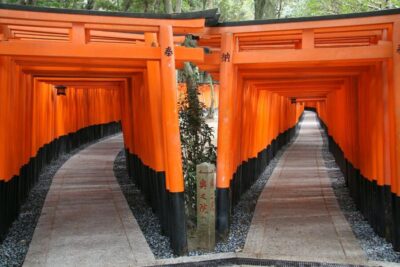
Your meeting point is Inari Station, at Fukakusa Inarionmaecho in Fushimi Ward. From there, the tour takes you through Fushimi Inari-taisha Shrine, famous for its long corridors of red-orange torii gates.
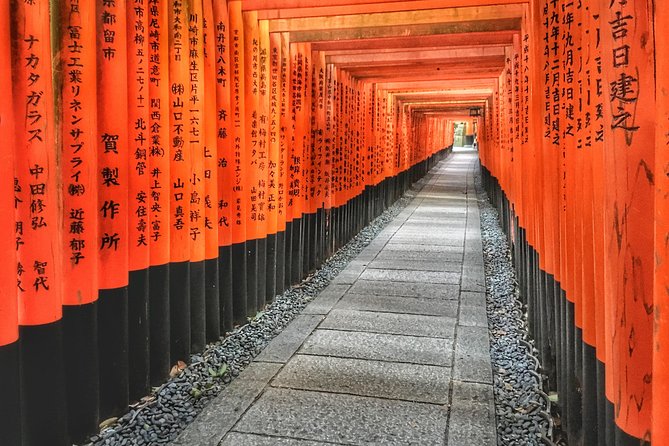
The gates are the visual heart of the visit. They form a maze-like path up the wooded shrine grounds, creating one of Kyoto’s most recognizable scenes. The tour allows about 45 minutes here, enough to walk through a section of the gates, pause for photographs, and hear an explanation of the shrine’s importance.
That time limit is both useful and restrictive. You will get the essential experience, but you will not have time to explore every path or make a long climb through the entire shrine complex. If you want a full morning hike at Fushimi Inari, this tour is not designed for that.
The guide’s role matters most here. The gates are easy to photograph, but a good explanation helps you see them as more than a scenic tunnel. You can ask questions in a small group, rather than trying to catch a guide’s attention among a large crowd.
Admission to Fushimi Inari is free, so none of the ticket price is paying for entry here. That point matters when judging the tour’s value. You are paying for the planned route, guide, small group, and taxis, not for an expensive admission ticket.
Kiyomizu-dera after the shrine
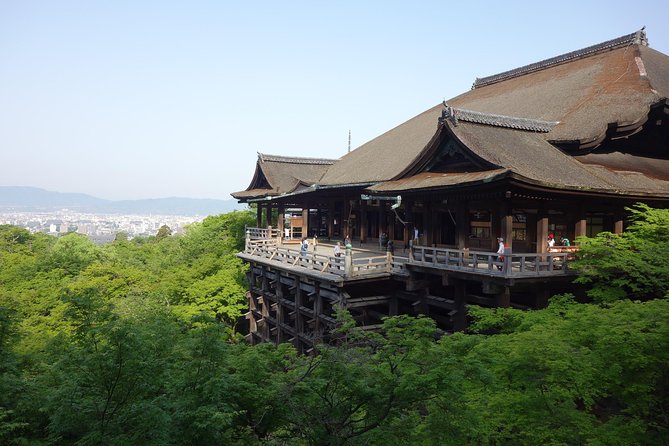
The second major stop is Kiyomizu-dera Temple, one of Kyoto’s best-known landmarks. You get about an hour here, with admission included.
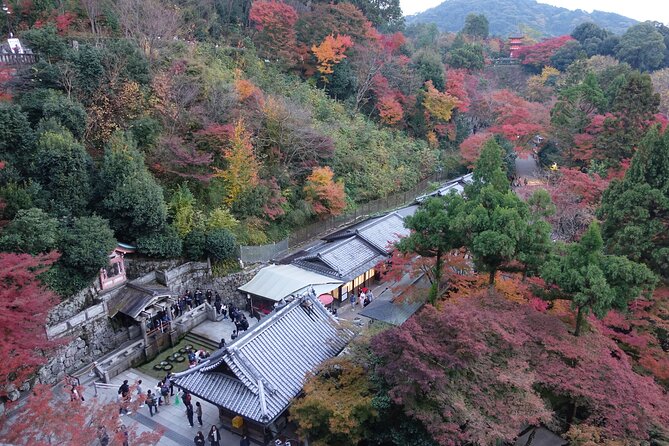
Kiyomizu-dera is prized for its elevated setting and broad views over Kyoto. The temple is especially appealing early in the day, when the approach and viewing areas can feel more manageable. The combination of temple architecture and city views gives this stop a different character from Fushimi Inari’s long, enclosed gate paths.
An hour is enough for a focused visit. You can see the main areas included in the guided route, take in the view, and listen to the guide’s explanation without turning the stop into a long temple study. It is not enough for an unhurried examination of every corner, nor does it allow much time to browse nearby shops.
The approach to Kiyomizu-dera includes sloping streets and cobblestones. Even with taxis between the main stops, you should expect walking at the shrine and temple grounds. One piece of practical advice comes directly from the shape of this tour: comfortable shoes matter more than stylish shoes.
The taxi transfers are a real convenience here. Kyoto’s major sights are not all next door, and moving by taxi keeps a four-hour schedule on track. It also helps if you do not normally walk long distances. The taxi arrangement does not eliminate walking, but it cuts out some of the less interesting travel between attractions.
Cobblestone streets and preserved townhouses

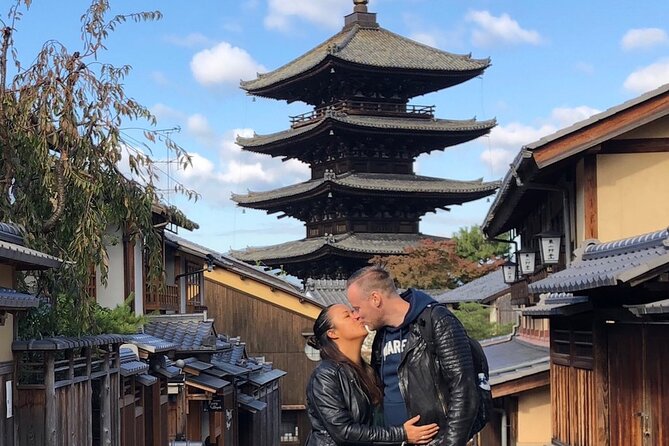
The route also includes time to wander through a preserved district of cobblestone streets, quaint shops, and traditional townhouses. The supplied details do not give this stop a separate name or a fixed duration, so you should think of it as a short neighborhood walk rather than a third full attraction.
This is an important change of pace. Fushimi Inari gives you shrine paths, and Kiyomizu-dera gives you a major temple and city views. The preserved district shows Kyoto at street level, with older buildings and small shops rather than one dramatic landmark.
Do not expect a long shopping session. The tour lasts about four hours, and the two named sights take up most of that time. If a particular shop or street catches your attention, you may need to return independently later.
The tour ends at Sanjūsangendō Temple, at 657 Sanjūsangendōmawari in Higashiyama Ward. The ending point is useful if you plan to continue sightseeing in the area, but the experience does not say that admission to Sanjūsangendō is included or that you visit the temple as a scheduled stop. Treat it as the drop-off point unless your guide tells you otherwise.
More visits to Kiyomizu-dera:
- Kyoto: Tea Ceremony in a Traditional Tea House in Kiyomizu
★ 4.9 · 3,519 reviews - Kyoto: Nijo Castle, Kiyomizu & Fushimi Inari Guided Tour
★ 4.7 · 700 reviews - Kyoto: Nijo, Kinkaku-ji, Arashiyama, Kiyomizu & Fushimi Inari
★ 5.0 · 699 reviews - Kyoto Tea Ceremony & Kiyomizu-dera Temple Walking Tour
★ 5.0 · 115 reviews
What the guide adds to the morning
A guide can make this experience worthwhile, but the quality of the commentary is central to the value. One guide specifically praised in the supplied material is Niall, described as the owner and as someone with a strong interest in Japanese culture. That kind of personal enthusiasm can bring more life to the shrine and temple stops.
The small group helps. With a maximum of 12 people, you should have a better chance to hear the explanations and ask questions than you would on a large coach tour. The format is still a group experience, so the pace will not be entirely your own.
The guide also keeps an eye on timing. That matters because the route combines two busy sights, a neighborhood walk, and taxi transfers in roughly four hours. Without a plan, it would be easy to lose time at the first stop and rush the second.
There is a limit to what a short tour can do. If you already know Kyoto’s religious traditions or have researched Fushimi Inari and Kiyomizu-dera, the commentary may not add enough to justify the price. One poor experience in the supplied feedback described the guide as unhelpful, so I would treat guide quality as the biggest variable in the purchase.
Is $98.53 a fair price?
At $98.53 per person, this is not a bargain sightseeing route. Both major sites can be visited independently, and Fushimi Inari does not charge admission. You can also use Kyoto’s rail and bus system, though the tour does not include a public transportation plan.
The price becomes easier to defend if you value three things:
- A fixed route that needs no research
- A guide who explains what you are seeing
- Taxi fares between stops
The included taxis are the clearest practical benefit. You are buying back time and avoiding the need to work out each transfer during a short morning. For a first visit, a family group, or anyone who finds long walks difficult, that can be worth real money.
The price is harder to defend if you are comfortable navigating Kyoto, have plenty of time, or mainly want photographs. Independent visits to Fushimi Inari and Kiyomizu-dera can cost far less, especially if you use trains and local transport. You also gain freedom to stay longer at one site or leave when you have seen enough.
My value judgment is conditional: this is a convenience-and-guidance purchase, not an admission-ticket bargain. Book it for a well-organized introduction, not because it gives you access that is otherwise unavailable.
Group size, walking, and the pace
The maximum group size is 12 people. That is small by standard sightseeing-tour measures, though it is not a private tour. You will still follow a shared schedule, and the guide may need to keep everyone together through the shrine paths and old streets.
The tour description says most people can participate, but the route is not completely effortless. Fushimi Inari involves walking through its torii-gate paths, while Kiyomizu-dera and the preserved district include uneven or sloping streets. A taxi reduces the distance between stops, not the walking within them.
If you normally enjoy city walking, the pace should feel manageable. If you have mobility concerns, the four-hour length alone does not tell the full story. Ask the provider about the walking sections before booking, since the available details do not provide a step-free route or a detailed accessibility plan.
A short tour also means the schedule has little slack. Arrive at Inari Station before the 7:00 am start. A late arrival could be especially awkward because the group is moving between sights rather than waiting at one fixed location.
Weather and cancellation details
The experience requires good weather. If poor weather causes a cancellation, you are offered another date or a full refund. The same applies if the minimum number of participants is not met, with the choice of another date, another experience, or a full refund.
You can cancel for a full refund up to 24 hours before the start time. Cancellations or changes made less than 24 hours before the local start time are not accepted for a refund.
That policy is fairly clear, but the weather rule is worth noting for an early outdoor route. Fushimi Inari and the walk between temple areas are best suited to a dry morning, so keep some flexibility in your Kyoto schedule if possible.
Who should book this Kyoto morning tour?
I would consider this tour a good fit for a first-time Kyoto visitor with only a short stay. You get two major sights, a traditional neighborhood, a guide, and taxi transfers in one compact block.
It also suits people who want structure. If planning train routes, temple times, and neighborhood connections feels like work, the prearranged morning removes that burden. The early start is a major advantage if you want to see Kyoto’s highlights before the busiest part of the day.
It may also suit anyone who prefers not to make long transfers on foot. The included taxis are more useful than they first appear, especially when the day is hot, rainy, or tiring.
I would be less likely to recommend it to an experienced Kyoto visitor, a strict budget traveler, or someone who wants slow, independent exploration. The route moves briskly, Fushimi Inari receives only about 45 minutes, and the preserved district is not given a long free period.
Should you book it?
Book this tour if you want an early, organized introduction to Kyoto and place a real value on taxis and a guide. The combination of Fushimi Inari, Kiyomizu-dera, and an old streetscape is well chosen, and the 7:00 am start improves the experience at both major sights.
Skip it if you are happy to plan your own morning. The two main attractions are accessible without a tour, and the $98.53 price is significant for a four-hour outing.
For most people, the deciding question is not Can I do this myself? You certainly can. It is Will a guide, a fixed schedule, and included taxi rides make my Kyoto morning easier and more meaningful? If the answer is yes, the small group and early timing make this a sensible, focused choice.
FAQ
How long does the Kyoto tour last?
The tour lasts approximately four hours.
What time does the tour begin?
The start time is 7:00 am.
Where does the tour begin?
The meeting point is Inari Station at Fukakusa Inarionmaecho, Fushimi Ward, Kyoto, 612-0881, Japan.
Where does the tour end?
The tour ends at Sanjūsangendō Temple, 657 Sanjūsangendōmawari, Higashiyama Ward, Kyoto, 605-0941, Japan.
Which major sights are included?
The tour includes Fushimi Inari-taisha Shrine and Kiyomizu-dera Temple. It also includes a walk through a preserved district with cobblestone streets, shops, and traditional townhouses.
Is admission to Kiyomizu-dera included?
Yes. Admission to Kiyomizu-dera is included.
Is there an admission fee for Fushimi Inari?
The tour information lists admission to Fushimi Inari-taisha Shrine as free.
Are taxi fares included?
Yes. Taxi fares between tour stops are included.
How many people can join the tour?
The tour has a maximum of 12 participants.
Can I cancel for a full refund?
Yes. You can cancel at least 24 hours before the experience start time for a full refund. Changes or cancellations made less than 24 hours before the start time are not accepted for a refund.
More Temples in Kyoto
- Kyoto: Tea Ceremony Ju-An at Jotokuji Temple
★ 4.9 · 3,207 reviews - Arashiyama Bamboo, Temple, Monkeys, or Secret Sake Brewery
★ 4.8 · 886 reviews - Kyoto: Arashiyama Bamboo Forest, Monkeys, Matcha & Temple Tour
★ 5.0 · 759 reviews - Kyoto: Ninnaji Temple Entry Ticket
★ 4.2 · 650 reviews
Recently added around Kyoto
- Higashiyama | Kyoto: Sakura Season Private Rickshaw Tour★ 5.0 · 3 reviews
- Kyoto Kimono Rental CHAMATSU|Kimono/Yukata Rental FamilyPlan★ 5.0 · 3 reviews
- Kyoto: Half-Day Private Guided Tour to the Old Town of Gion★ 4.4 · 3 reviews
- Nara Private Customizable Half Day Tour★ 5.0 · 3 reviews
- Kansai Region Hiking Adventure in Nara Kobe Kyoto and More★ 5.0 · 3 reviews
- Full Day Nara Deer, Temple, Shrine, Activities & Tea Ceremony★ 5.0 · 3 reviews
- Nara: Essential Private Tour with Deer Park and Temples★ 5.0 · 3 reviews
- Hiking Tour for Sacred Sites in Kyoto with a Guide★ 5.0 · 3 reviews
Fushimi Inari Shrine Tours, compared.
Fushimi Inari, Kinkakuji, Bamboo Grove 1 Day Bus Tour
Read our review →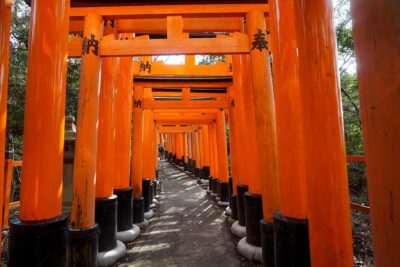
Fushimi Inari Hidden Hiking Tour (Private Option Available)
Read our review →
Kyoto/Osaka: Nara, Fushimi Inari Taisha, Arashiyama Bus Tour
Read our review →
Nijo, Kinkaku-ji, Arashiyama, Kiyomizu & Fushimi Inari
Read our review →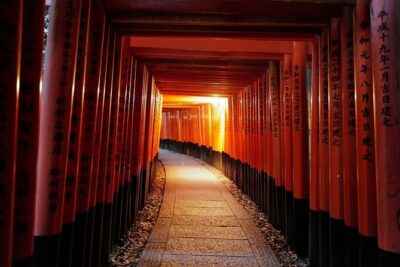
Kyoto Early Bird English Tour: Fushimi-Inari and Arashiyama
Read our review →
Fushimi, Arashiyama – Bamboo, Monkey, Torii & Secrets
Read our review →Browse the lists this tour appears in