REVIEW · MORNING
Traditional Japanese Washi Papermaking- Kyoto morning
Making paper by hand sounds simple until you see how many careful steps go into one sheet. At 紙TO和, you get a compact, hands-on lesson in a traditional Japanese craft, then decorate your own washi with seasonal leaves, flowers, and paper shapes. I like the tiny class size, capped at four people, and the kind, patient teaching from Hiro, Junko, and their assistant. I also like the useful souvenir: your finished paper becomes postcards, a table mat, a lampshade, or a wall panel.
The main limitation is time. The standard session lasts about one hour, so you will make a focused project rather than take a long studio course. You can pay for an extra hour of unlimited papermaking, but that cost is separate. If your schedule is tight, the short format works well. If you want to make several gifts, plan extra time.
In This Review
- Key points at a glance
- What happens inside the Kyoto washi studio
- Turning raw materials into a sheet of washi
- Choosing postcards, a mat, a lantern, or a wall panel
- Why the small group improves the experience
- A quiet break from central Kyoto
- Is $33.03 good value for one hour?
- What to do with your finished paper
- Who should book this Kyoto craft activity?
- Booking details worth knowing
- Should you book Traditional Japanese Washi Papermaking?
- FAQ
- How long does the washi papermaking activity last?
- Where does the workshop take place?
- How many people can join the class?
- Is the workshop taught in English?
- What can I make during the class?
- What materials can I use to decorate the paper?
- Is transportation included?
- Is the activity suitable for children?
- How far is the workshop from public transportation?
Key points at a glance
- A four-person maximum: Expect close guidance rather than a crowded workshop.
- Real decoration choices: Use cherry blossoms, maple leaves, other pressed plant material, and paper cut-outs.
- Four regular cards are included: Other formats, including a lantern, may require an additional fee.
- Hiro and Junko teach in Japanese and English: Instructions are designed to be easy to follow.
- A calm indoor Kyoto activity: The workshop suits families, teenagers, craft lovers, and rainy mornings.
- Easy station access: It is a six-minute walk from Karasuma Oike Station Exit 6, or nine minutes from Shijo Station Exit 24 and Karasuma Station.
What happens inside the Kyoto washi studio
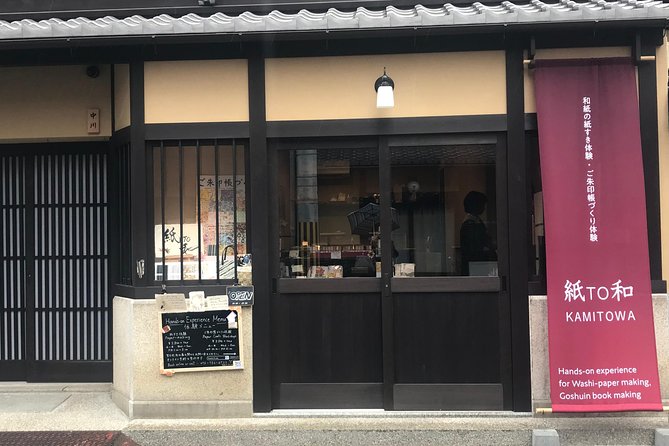
You make your own way to 345 Sanjōchō in Nakagyo Ward, a central Kyoto address near public transportation. The class takes place in a traditional Japanese-style house, giving the activity a quieter feel than the city streets outside.
This is not a large demonstration where you watch someone else work. After introductions, you take part in the process under the instructor’s eye. Hiro and Junko explain each stage, show you what to do, and help when your paper or decorations need adjusting.
The small group matters. With no more than four people, the instructors can watch each person’s progress and answer questions without rushing. That setup is especially useful if you are visiting with children or if you do not usually do craft activities. Several families have used the class successfully with children from about seven years old upward, though children must have an adult with them.
The teaching is bilingual in Japanese and English. You should still pay attention to the demonstrations, since papermaking involves practical movements that are often easier to copy than to explain in words. The format is welcoming rather than academic, but you learn enough to understand why handmade washi takes care and patience.
A few more Kyoto experiences worth comparing
- Kyoto Early Morning Tour with English-Speaking Guide
★ 5.0 · 1,427 reviews - Kyoto: Early Morning Tour with English-Speaking Guide
★ 4.9 · 1,128 reviews - Nara Early Morning Tour (Kyoto or Osaka Departure Available)
★ 5.0 · 676 reviews
Turning raw materials into a sheet of washi
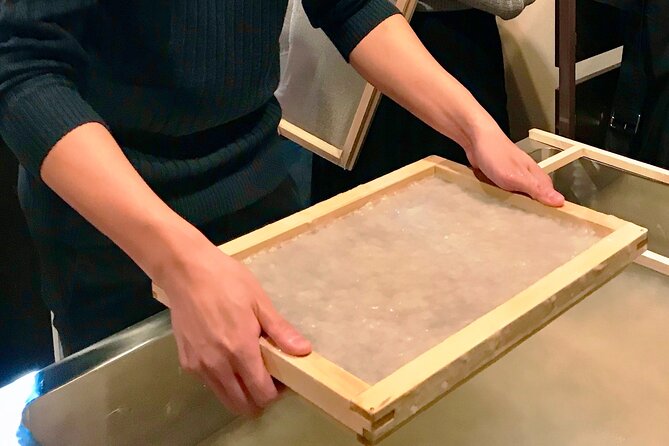
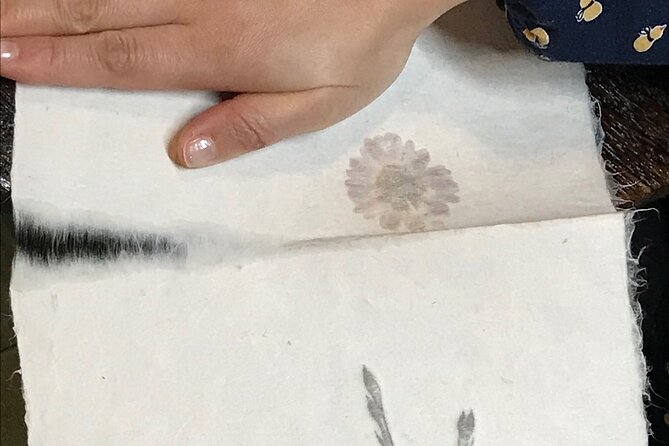
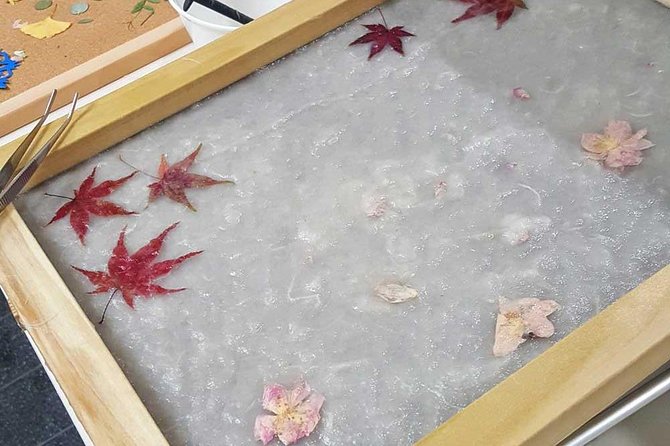
The central activity is making paper from raw materials. You work through the steps with guidance, then prepare the surface for decoration. The satisfaction comes from seeing a plain mixture become something you can hold, shape, and bring home.
The class also helps you notice how much work sits behind a finished paper product. A short instructional video may play during drying time, with more information about the papermaking process and its background. One session included a video of about ten minutes, which filled the waiting period without making the class feel like a lecture.
That waiting time is useful. Handmade paper cannot simply be made, decorated, and packed away in a few seconds. While your work dries, you get a clearer sense of the many stages involved. The workshop keeps the pace moving, but it does not pretend that traditional craft is instant.
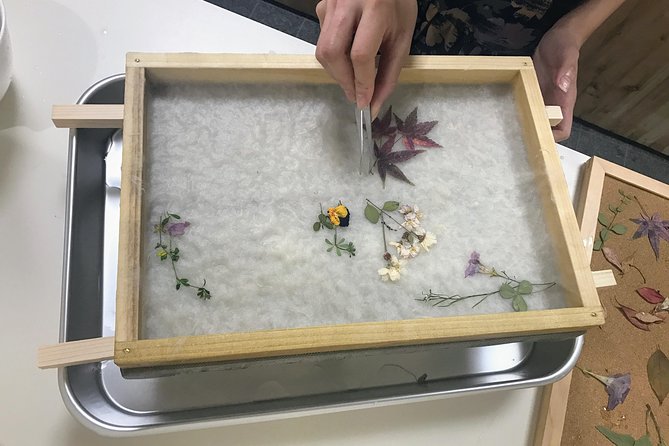
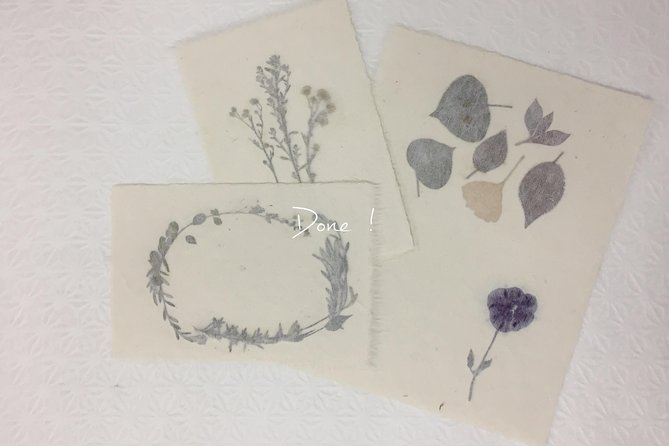
You then arrange decorative pieces on your paper. Seasonal designs may include cherry blossoms and maple leaves, along with other pressed flowers, grasses, and paper cut-outs. This is where the activity becomes personal. Two people can follow the same instructions and leave with completely different designs.
I would take a moment before placing anything down. Once the decoration is set, the arrangement becomes part of the finished piece. You do not need to be an artist, but a little thought about spacing and balance will help your final paper look more intentional.
Choosing postcards, a mat, a lantern, or a wall panel
The regular option covers a set of four postcards. This is a sensible choice if you want several small souvenirs, if you are traveling with children, or if you need to fit the activity into a busy Kyoto day.
You can also choose a larger project. The available formats include a table mat, a wraparound lampshade, and a tapestry panel. The larger pieces give you more room for design, but some options cost extra. A lantern, for example, was chosen by one participant for a small supplement.
The lampshade is likely to appeal to anyone who wants a decorative object rather than a flat card. It also gives you more surface area for leaves and cut-outs. Keep in mind that larger work may be less convenient to carry around Kyoto for the rest of the day.
The table mat and tapestry panel offer another advantage: they let your design remain visible at home. Postcards are easier to pack and share, while a larger project can serve as a stronger reminder of your time in Japan. Ask about the exact supplement for your preferred format before you begin, since only the standard paper-making materials and included taxes, fees, and handling charges are covered in the listed price.
Why the small group improves the experience
Many craft workshops work best when the instructor can stand close by and correct a technique early. That is the case here. A maximum of four participants means you are not left waiting for help while someone else uses the work area.
The instructors are repeatedly described as gentle, patient, and accommodating. That matters if you are unsure of your English, if you are working with children, or if your hands do not immediately follow the demonstration. The tone is encouraging, not competitive.
The class also works for mixed-age groups. A seven-year-old, an eleven-year-old, a teenager, and an adult can all focus on the same basic task while making different design choices. For families, this is a better cultural activity than one where children are expected to sit quietly and watch.
The small setting does have one tradeoff. If you want the energy of a large group or a long, advanced lesson, this may feel brief and intimate rather than expansive. Its strength is personal attention and a finished object, not a full professional apprenticeship.
A completely different side of Kyoto:
- PERFECT KYOTO 1-Day Bus Tour
★ 5.0 · 13,518 reviews - Kyoto: Fushimi Inari, Kinkakuji, Bamboo Grove 1 Day Bus Tour
★ 4.8 · 4,316 reviews - Kyoto: Tea Ceremony in a Traditional Tea House in Kiyomizu
★ 4.9 · 3,519 reviews - Kyoto Geisha Walking Tour: Gion District & Hidden Gems
★ 4.7 · 3,273 reviews
A quiet break from central Kyoto
This workshop fits nicely into a morning when you want to step away from temples, shopping streets, and packed sightseeing routes. The studio is close to the covered market, so you can pair the class with lunch or further exploration in the area.
It is also a useful rainy-day plan. The activity takes place indoors, and the work gives you something active to do rather than simply moving from one shop to another. At the same time, it is calm enough for a slower morning. The hands-on process and drying period create a natural pause in a busy Kyoto itinerary.
The location is practical from several train and subway stops. From Exit 6 of Karasuma Oike Station on the Kyoto Metro Karasuma Line, allow about six minutes on foot. From Exit 24 of Shijo Station on the Karasuma Line, or Karasuma Station on the Hankyu Line, allow about nine minutes.
You do not get transportation to or from the workshop, so factor in your own train fare and walking time. The activity begins and ends at the same meeting point. A mobile ticket makes entry straightforward, but you should still confirm the address before setting out.
Is $33.03 good value for one hour?
At $33.03 per person, this is not the cheapest one-hour activity in Kyoto. Its value comes from the combination of instruction, materials, personal attention, and a handmade item you can take home.
The price makes more sense if you want a cultural activity with a physical result. You are not simply watching a craft demonstration. You make and decorate paper yourself, with help from bilingual instructors. The included four postcards give you several finished pieces rather than one small object.
The cost is also reasonable for a maximum-four class. A larger workshop might offer a lower price per person, but you would likely receive less direct help. Here, the limited group size is part of what you are paying for.
Budget carefully if you want a larger item or more production time. A table mat, lampshade, or tapestry panel may carry an extra charge, and the additional hour of unlimited papermaking is also at your own expense. Ask about these choices at the start so you can select a project that fits your budget.
For a family, the activity can be good value because adults and children can work together. For a solo visitor, it offers a structured way to learn something distinctly Japanese without committing half a day. For a serious craft student, however, one hour will give you an introduction, not mastery.
What to do with your finished paper
Your work is the souvenir. That makes it more meaningful than a mass-produced item picked up at an airport or department store.
The finished pieces are packaged carefully, which helps when you still have time left in Kyoto. Even so, you should plan how to carry them. A flat card or paper panel needs more care than a small packaged trinket, and you may be holding your work for the rest of the day unless you arrange otherwise.
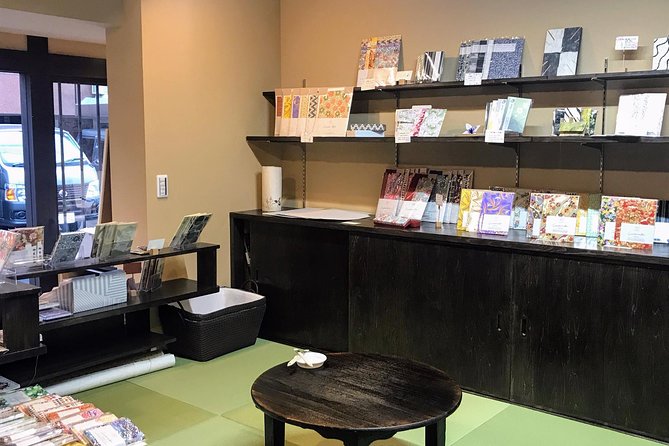
The small shop also sells local paper goods and other handmade items. You can browse after class, but shopping is not pushed on you. That is useful if you want to compare your own work with finished products or pick up another gift, while still keeping the workshop focused on your project.
A practical tip: if you leave anything behind, return as soon as you can. The operators have helped with forgotten belongings, but it is still best to check your bags and the work area before leaving.
Who should book this Kyoto craft activity?
I would recommend it most strongly to:
- Families wanting an activity that keeps children involved
- Couples or friends who prefer making something together
- Teenagers and adults who enjoy crafts
- Visitors seeking a quieter indoor activity
- Anyone who wants a handmade Japanese souvenir
- People with a free hour near Shijo, Karasuma Oike, or the covered market
You do not need prior papermaking experience. The instructors explain the practical steps, provide the materials, and guide you through the design stage.
You should think twice if you want a long workshop with detailed technical training. The standard class is intentionally compact. If you want to make more than the included project, add the extra hour and budget for larger formats.
The activity is also not a sightseeing tour. There is no transportation, temple visit, or walking route built in. Its appeal is concentrated in one room, one craft, and the people teaching it.
Booking details worth knowing
The experience costs $33.03 per person and has a maximum of four participants. Confirmation is provided when you book, and the activity uses a mobile ticket.
Children must be accompanied by an adult. Most people can take part, and the instructors speak Japanese and English. The class begins and ends at 345 Sanjōchō, Nakagyo Ward, Kyoto, postal code 604-8205.
Free cancellation is available if you cancel at least 24 hours before the local start time. Cancellations or changes made within 24 hours are not accepted for a refund.
Should you book Traditional Japanese Washi Papermaking?
Book it if you want a peaceful, personal activity that teaches you something and leaves you with a souvenir you made yourself. The four-person limit, patient instruction from Hiro and Junko, and choice of seasonal decorations give the hour real substance.
I would choose the regular postcard option if your Kyoto schedule is crowded. If you have more time and want something to display at home, ask about the lampshade, table mat, or tapestry panel, plus the cost of an extra hour.
Skip it only if you prefer major sights, outdoor tours, or a longer technical class. For families, craft lovers, rainy mornings, and anyone tired of buying ordinary souvenirs, this is an easy activity to fit into central Kyoto.
FAQ
How long does the washi papermaking activity last?
The standard activity lasts approximately one hour. You can pay for an additional hour of unlimited papermaking if you want to make more items.
Where does the workshop take place?
It takes place at 紙TO和, located at 345 Sanjōchō, Nakagyo Ward, Kyoto, 604-8205, Japan. The activity ends at the same meeting point.
How many people can join the class?
The activity has a maximum of four participants.
Is the workshop taught in English?
Yes. The operators provide a multilingual guide who speaks Japanese and English.
What can I make during the class?
The options include a set of postcards, a table mat, a wraparound lampshade, or a tapestry panel. The standard option includes four regular cards. Other choices may require an additional fee.
What materials can I use to decorate the paper?
You can use seasonal pressed flowers and leaves, including cherry blossoms and maple leaves, as well as paper cut-outs.
Is transportation included?
No. You make your own way to the workshop, and transportation to and from the location is not included.
Is the activity suitable for children?
Yes, children can participate, but they must be accompanied by an adult. The small-group format allows the instructors to provide close help.
How far is the workshop from public transportation?
It is about a six-minute walk from Exit 6 of Karasuma Oike Station on the Kyoto Metro Karasuma Line. It is about a nine-minute walk from Exit 24 of Shijo Station on the same line or from Karasuma Station on the Hankyu Line.
Recently added around Kyoto
- Higashiyama | Kyoto: Sakura Season Private Rickshaw Tour★ 5.0 · 3 reviews
- Kyoto Kimono Rental CHAMATSU|Kimono/Yukata Rental FamilyPlan★ 5.0 · 3 reviews
- Kyoto: Half-Day Private Guided Tour to the Old Town of Gion★ 4.4 · 3 reviews
- Nara Private Customizable Half Day Tour★ 5.0 · 3 reviews
- Nara: Essential Private Tour with Deer Park and Temples★ 5.0 · 3 reviews
- Kansai Region Hiking Adventure in Nara Kobe Kyoto and More★ 5.0 · 3 reviews
- Full Day Nara Deer, Temple, Shrine, Activities & Tea Ceremony★ 5.0 · 3 reviews
- Hiking Tour for Sacred Sites in Kyoto with a Guide★ 5.0 · 3 reviews
Morning, compared.
Kyoto Early Morning Tour with English-Speaking Guide
Read our review →Early Morning Tour with English-Speaking Guide
Read our review →
Nara Early Morning Tour (Kyoto or Osaka Departure Available)
Read our review →