REVIEW · MORNING
Explore Hidden Alleyway with a Local Expert (Morning tour)
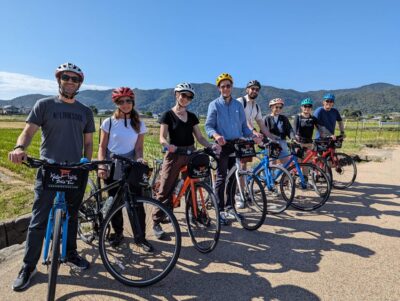
Kyoto’s best moments are often found between the headline sights. This private e-bike tour carries you from wooden geisha-district lanes to the Imperial Palace and the Kamo River, covering ground that would take much longer on foot. Guides such as Rich, Yuichi, and Annie have helped make the ride personal, with time for questions and route changes.
I like the small-group format, limited to two to six people per guide, and the electric assist, which matters on a hot morning or when you want to save your legs for temples later. I also like that the route mixes famous Kyoto with quieter lanes, rather than treating the city as a string of photo stops. The main drawback is weather: rain does not automatically cancel the tour, and a bus or metro walking option may replace the cycling.
In This Review
- Key points to know before booking
- Why an e-bike is a smart way to see Kyoto
- Miyagawacho, Kyoto’s quiet wooden lane
- Gion and the careful side of geisha culture
- Tatsumi Bridge and a short river pause
- Kyoto Imperial Palace and its broad open grounds
- Resting by the Kamo River in Kashiwayacho
- What the private format really gives you
- Price, timing, and the value of the morning
- Rain, heat, and what to wear
- Who will enjoy this Kyoto ride most
- Booking details worth checking
- Should you book this e-bike tour?
- FAQ
- How long is the Kyoto e-bike tour?
- Where does the tour start and finish?
- How many people can join the private tour?
- Are the e-bike and equipment included?
- Can children participate?
- What happens if it rains?
- What is the cancellation policy?
Key points to know before booking
- A private ride for two to six people: Your guide can adjust the pace and respond to your interests.
- Five distinct Kyoto stops: Miyagawacho, Gion, Tatsumi Bridge, Kyoto Imperial Palace, and the Kamo River each show a different side of the city.
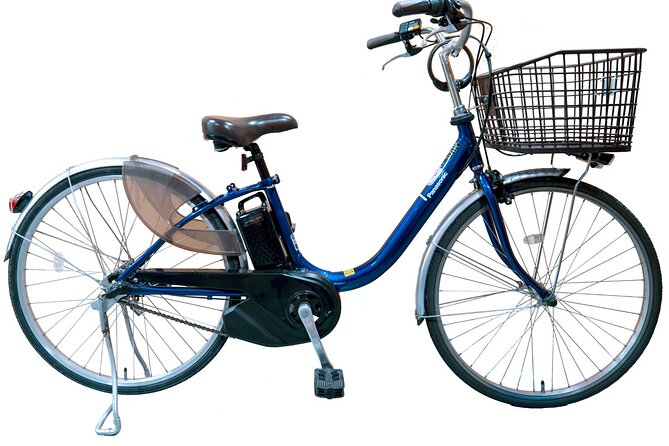
- Electric bikes and equipment included: You do not need to arrange a rental separately.
- A useful first or second day activity: The ride helps you get a broad sense of Kyoto before choosing where to spend more time.
- Rain plans are built in: You can cycle with a free poncho or switch to walking with public transportation included.
- A three-hour morning outing: The 9:00 a.m. start leaves much of the day open for temples, markets, or a slower lunch.
Why an e-bike is a smart way to see Kyoto
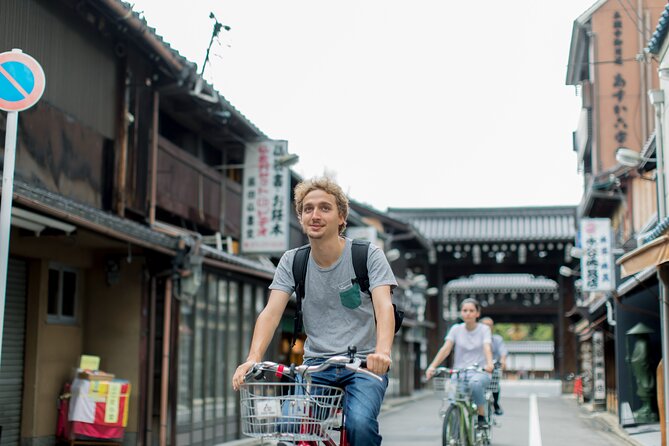
Kyoto is spread out enough that walking between districts can eat up a full day. You may enjoy strolling through Gion, but add Miyagawacho, the Imperial Palace, and the Kamo River, and the distance becomes a serious part of the plan.
An e-bike changes the calculation. You still move at street level, with time to notice wooden houses, narrow lanes, and river paths, but you are not spending the morning on foot. The battery assist is especially useful in warm weather. One morning can be hot enough that an ordinary bicycle feels like work, while an e-bike keeps the ride comfortable.
The bike also gives you a closer view than a bus. You are not sealed behind glass, and you do not need to keep checking a map at every turn. Your guide handles the route while you focus on the city around you.
This is not a high-speed cycling excursion. The supplied details describe a comfortable pace, and the stops are short, usually 15 to 20 minutes. That makes the activity suitable for people who want to see a wide section of Kyoto without turning the day into an athletic challenge.
You must be at least 10 years old, at least 145 centimeters tall, and able to ride safely on the road without help. Children who are still learning to balance or control a bicycle should not join.
A few more Kyoto experiences worth comparing
- Kyoto Early Morning Tour with English-Speaking Guide
★ 5.0 · 1,427 reviews - Kyoto: Early Morning Tour with English-Speaking Guide
★ 4.9 · 1,128 reviews - Nara Early Morning Tour (Kyoto or Osaka Departure Available)
★ 5.0 · 676 reviews
Miyagawacho, Kyoto’s quiet wooden lane
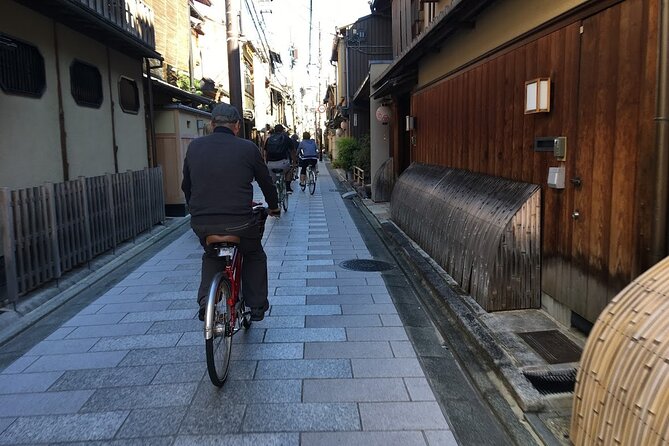
The first stop is Miyagawacho Kaburenjo, one of Kyoto’s five traditional geisha districts and the second largest among them. The area is known for an alley lined with traditional wooden houses on both sides.
The attraction here is the atmosphere. You are not simply looking at one grand building. You are seeing a narrow street shaped by old-style architecture, with the wooden facades creating a much calmer mood than Kyoto’s major shopping roads.
Your guide can explain how the district fits into Kyoto’s entertainment quarters and point out details you might pass without noticing. The planned stop is about 15 minutes, so think of it as an introduction rather than a full visit to the neighborhood.
Because this is a working district, good manners matter. Keep your voice down, do not block the lane, and treat the area as a place where people live and work, not as a stage set. That respectful approach makes the stop more rewarding.
Gion and the careful side of geisha culture
From Miyagawacho, the ride continues to Gion, Kyoto’s best-known geisha district. Gion developed around geiko and maiko culture, and its older streets still carry an elegant, refined feel.
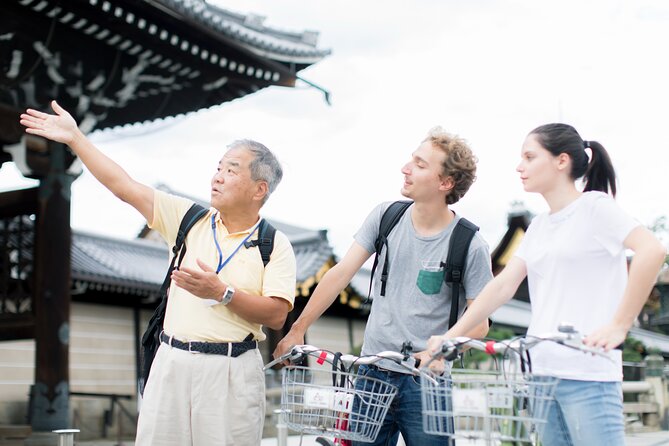
A guide is useful here because the district can be easy to reduce to pretty lanes and wooden facades. The real value is context: who works in these districts, how the traditional arts fit into Kyoto life, and why the streets look and feel different from ordinary residential areas.
The planned visit lasts about 15 minutes. That is enough to take in the setting and ask questions, but not enough for a long cultural talk or a formal performance. If you are especially interested in geiko and maiko traditions, use your guide’s time well and ask directly.
You should also keep your camera in check. The tour information does not promise encounters with performers, and it would be unwise to treat anyone you see as a photo opportunity. The best part of Gion is often the setting itself, not trying to capture a person moving through it.
Tatsumi Bridge and a short river pause
Tatsumi Bridge offers a change of mood. Here, the route follows a narrow, winding stream, with willows moving in the breeze. The stop lasts around 15 minutes.
This is a small place, but it gives the tour breathing room after the denser streets of Gion. You can pause, look along the water, and see why Kyoto’s appeal is not limited to major monuments. The combination of a path, stream, and willow trees creates one of the more restful moments on the route.
The stop may feel brief if you want a long photo break. That is part of the tradeoff with a three-hour tour covering several districts. You get variety, but each place receives only a short visit.
If the morning is warm, this section should feel welcome. The electric bicycle helps you reach it without tiring yourself out, and the river setting offers a quieter contrast to the city streets.
A completely different side of Kyoto:
- PERFECT KYOTO 1-Day Bus Tour
★ 5.0 · 13,518 reviews - Kyoto: Fushimi Inari, Kinkakuji, Bamboo Grove 1 Day Bus Tour
★ 4.8 · 4,316 reviews - Kyoto: Tea Ceremony in a Traditional Tea House in Kiyomizu
★ 4.9 · 3,519 reviews - Kyoto Geisha Walking Tour: Gion District & Hidden Gems
★ 4.7 · 3,273 reviews
Kyoto Imperial Palace and its broad open grounds
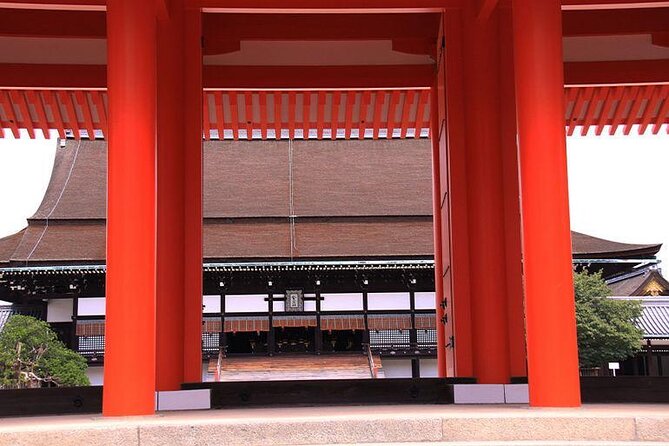
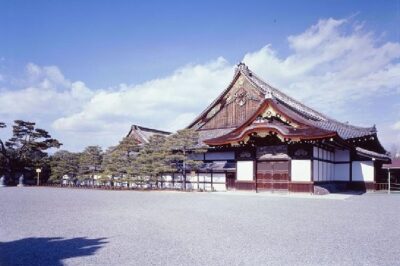
The Kyoto Imperial Palace was once the residence of Japan’s Imperial Family. Today, the palace grounds are open to the public as a national garden, with seasonal flowers and broad paths.
The tour cycles along gravel paths in the area. That detail matters. This is not a stop where you should expect a long indoor palace visit or a room-by-room tour. You are seeing the grounds by bicycle, with a short visit of about 20 minutes.
The Imperial Palace section gives the morning a different scale. After the tight lanes of Miyagawacho and Gion, the open grounds let you stretch out and see a more spacious side of Kyoto. Seasonal flowers add interest, though exactly what you see will depend on your date.
A bicycle is well suited to this setting because the grounds are extensive. You can cover more of the area than you could on foot during a short stop. Still, gravel is less smooth than pavement, so follow your guide’s pace and ride with care.
If the palace is a top priority, remember that this tour provides a passing visit rather than a full palace experience. It is a useful overview, not a substitute for setting aside extra time to explore the grounds at leisure.
Resting by the Kamo River in Kashiwayacho
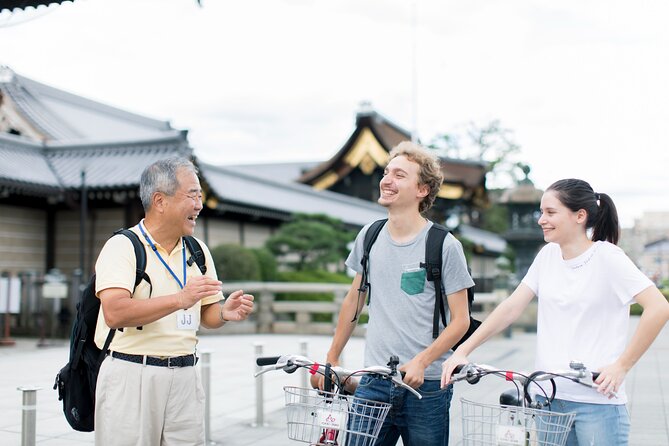
The last listed stop is Kashiwayacho, where you can relax beside the Kamo River, a favorite local riverside setting. The planned break is about 20 minutes.
This is a smart finish for the route. You have already seen old wooden lanes, a famous geisha district, a streamside bridge, and the Imperial Palace. Sitting by the river gives you time to slow down before returning to the starting point.
The river stop is also where the private format can pay off. If you want to talk with your guide, ask about Kyoto neighborhoods, or simply enjoy a quiet pause, this is the natural place to do it. A coffee break may also be possible if you request one, as one group was able to fit a café stop into the morning.
Do not expect a long meal break. The tour lasts about three hours, and the river pause is scheduled for roughly 20 minutes. If you need a full breakfast, eat before the 9:00 a.m. start.
What the private format really gives you
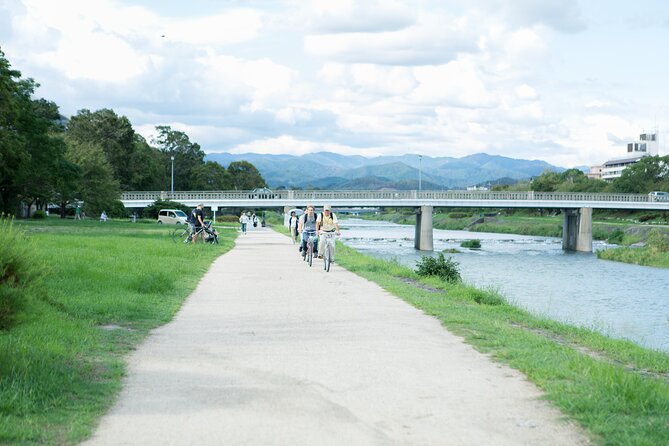
This is a private activity, so only your group participates. The normal limit is two to six people per guide. A solo booking is not accepted, while groups of seven to 12 can arrange an additional guide.
That setup is useful in Kyoto, where narrow streets and mixed traffic can make a large bicycle group awkward. Your guide can keep the ride together without making you wait behind a long line of bikes.
The pace can also be adjusted to your needs. You can ask more questions, spend a little longer at a particular stop, or request a coffee break if time allows. The route is still shaped by the three-hour schedule, so flexibility does not mean unlimited sightseeing.
The quality of communication matters on a tour built around explanations. Guides named in the supplied comments include Rich, Yuichi, and Annie, though the guide assigned to your booking can differ. Strong English communication has been part of some especially good mornings, while one rainy-day experience was less satisfying because conversation in English was limited.
That is a fair point to keep in mind. If detailed cultural discussion is the main reason you are booking, confirmation of the guide and language ability may be worth requesting before you go.
Price, timing, and the value of the morning
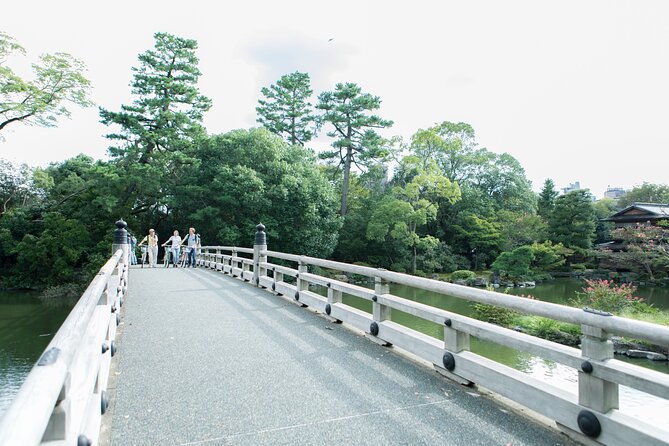
The price is $103.04 per person. That is not a bargain bicycle rental, but it is a different product. The fee includes the e-bike and equipment, a private guide, and a route that links several parts of Kyoto without requiring you to plan every turn.
For a group of two, the per-person cost may feel high compared with renting bikes and riding alone. For four to six people, the private format becomes easier to justify, especially if you value a guide who can answer questions and keep the route moving.
The three-hour length is another part of the value. You start at 9:00 a.m. and finish back at the meeting point, leaving the rest of the day open. You could use the afternoon for a temple visit, shopping, or a long meal without having committed the whole day to one activity.
Many people would find this most useful on their first or second day in Kyoto. It gives you a working sense of the city’s layout and may help you decide which districts deserve a longer return visit.
The meeting point is 552-13 Higashiaburanokōjichō in Shimogyo Ward. Since the tour ends there too, you should plan your morning around reaching that address on time and having a clear plan for where you will go afterward.
Rain, heat, and what to wear
The tour operates in rain. You have two stated choices: continue by e-bike with a free rain poncho, or switch to a walking tour using buses or the metro, with that public transportation included in the tour fee.
That policy keeps the booking from being automatically lost to a wet forecast, but you should think honestly about your preferences. Cycling through heavy rain is not likely to be pleasant, and the walking option changes the character of the activity. One rainy outing used buses and the metro instead of bicycles, and the limited English conversation made that version less satisfying.
On a hot day, the e-bike is a strong advantage. Bring water, wear comfortable clothes, and consider padded cycling shorts if you are not used to bicycle seats. One direct tip from the supplied experiences is worth taking seriously: ordinary trousers may leave you sore after a morning ride.
There is no need to dress for a strenuous race. You do need to be comfortable on a bicycle and able to ride safely on Kyoto roads.
Who will enjoy this Kyoto ride most
I would choose this tour for a couple, family, or small group that wants an efficient introduction to Kyoto. It suits you if walking several miles sounds tiring, if you like asking a guide questions, or if you want both major sights and less formal backstreets in one morning.
It also works well for repeat visitors who have already seen the headline temples and want a different way to connect neighborhoods. The route is not limited to famous gates and gardens. Miyagawacho, Tatsumi Bridge, and the Kamo River give the morning a more local street-level feel.
You may want a different activity if you prefer long visits at each sight, a formal palace tour, or a slow food-focused morning. The route covers a lot, but its short stops mean you will sample each area rather than fully explore it.
The excellent overall score, 4.9 out of 5 from 61 ratings, and 98 percent recommendation rate point to consistently strong satisfaction. Still, those numbers should not override the practical issues: rain can change the tour, English ability may vary by guide, and the ride requires basic road confidence.
Booking details worth checking
Confirmation is sent within 48 hours, subject to availability. The minimum group size is two people, and the standard maximum is six per guide.
The supplied terms contain conflicting cancellation information. One section says you can request a refund by 6:00 p.m. Japan time at least three days before the tour date, while the separate cancellation policy says the experience is non-refundable and cannot be changed. Because those conditions do not match, confirm the exact policy with KCTP before paying.
If the minimum number of participants is not met and the operator cancels, you are offered another date or experience, or a full refund. Booking changes should also be requested at least three days before the date according to the additional information.
Should you book this e-bike tour?
Book it if you want to cover a broad slice of Kyoto in three hours without exhausting yourself. The combination of Miyagawacho’s wooden lanes, Gion, Tatsumi Bridge, the Imperial Palace grounds, and the Kamo River gives you more range than a typical walking outing.
It is particularly good for a first or second day, for small private groups, and for anyone who values a guide’s local explanations. Ask questions, request a comfortable pace, and consider asking for a coffee stop if your schedule allows.
Skip it if heavy rain would ruin your morning, if you are not comfortable riding on roads, or if you want a long, detailed visit at the Imperial Palace or Gion. For everyone else, the price is reasonable when shared by a group and when you value the time saved, the included bike, and the ease of having someone else handle the route.
FAQ
How long is the Kyoto e-bike tour?
The tour lasts approximately three hours. It starts at 9:00 a.m. and ends back at the meeting point.
Where does the tour start and finish?
The meeting point is 552-13 Higashiaburanokōjichō, Shimogyo Ward, Kyoto, 600-8235, Japan. The activity ends back at the same meeting point.
How many people can join the private tour?
The normal group size is two to six people per guide. One-person bookings are not accepted. Groups of seven to 12 can arrange an additional guide.
Are the e-bike and equipment included?
Yes. The tour includes e-bike equipment rental. In rainy weather, a rain poncho is available free of charge if you choose to continue cycling.
Can children participate?
Children must be at least 10 years old, at least 145 centimeters tall, and able to ride a bicycle safely on the road without assistance.
What happens if it rains?
The tour operates in rain. You can continue by bicycle with a free rain poncho, or change to a walking tour using buses or the metro, with public transportation included in the tour fee.
What is the cancellation policy?
The supplied booking information gives two different conditions. One says a refund is available if you notify the operator at least three days before the tour by 6:00 p.m. Japan time, while the separate cancellation policy says the experience is non-refundable and cannot be changed. Confirm the applicable rule with KCTP before booking.
Recently added around Kyoto
- Higashiyama | Kyoto: Sakura Season Private Rickshaw Tour★ 5.0 · 3 reviews
- Kyoto Kimono Rental CHAMATSU|Kimono/Yukata Rental FamilyPlan★ 5.0 · 3 reviews
- Kyoto: Half-Day Private Guided Tour to the Old Town of Gion★ 4.4 · 3 reviews
- Nara Private Customizable Half Day Tour★ 5.0 · 3 reviews
- Kansai Region Hiking Adventure in Nara Kobe Kyoto and More★ 5.0 · 3 reviews
- Full Day Nara Deer, Temple, Shrine, Activities & Tea Ceremony★ 5.0 · 3 reviews
- Nara: Essential Private Tour with Deer Park and Temples★ 5.0 · 3 reviews
- Hiking Tour for Sacred Sites in Kyoto with a Guide★ 5.0 · 3 reviews
Morning, compared.
Kyoto Early Morning Tour with English-Speaking Guide
Read our review →Early Morning Tour with English-Speaking Guide
Read our review →
Nara Early Morning Tour (Kyoto or Osaka Departure Available)
Read our review →