
REVIEW · KYOTO IKEBANA CLASSES
Traditional Japanese Flower Styling Workshop – Ikebana in Kyoto
The most useful part of this Kyoto workshop is that ikebana does not end when you leave the studio. Master Fooraku teaches forms you can recreate with ordinary flowers and containers, so the lesson becomes a practical piece of Japanese culture rather than a one-time craft project. You also learn why an arrangement looks balanced, not just where to put each stem.
I like the small, private format and the chance to work inside Sogetsu WEST, a flower-art space with more than 300 containers. I also like the relaxed conversation after the arrangement is finished, when you can ask about Japanese food, customs, or daily life. The main consideration is the price, $104.24 per person, for about 1 hour and 45 minutes. It offers personal instruction, but it is not a budget activity.
In This Review
- Key points at a glance
- Why this ikebana class is more than a flower craft
- Arriving at Sogetsu WEST in Kyoto
- Meeting Master Fooraku
- Learning the forms, philosophy, and flower care
- Making your own ikebana arrangement
- Photographing the finished piece
- The value of $104.24 for 1 hour and 45 minutes
- Who will enjoy this Kyoto workshop
- Practical details before you book
- Is the Fooraku ikebana workshop worth booking?
- FAQ
- Where does the ikebana workshop take place?
- How long does the activity last?
- Is the activity private?
- Do I need special flowers, tools, or a traditional vase?
- Who teaches the class?
- Can I cancel for a full refund?
Key points at a glance
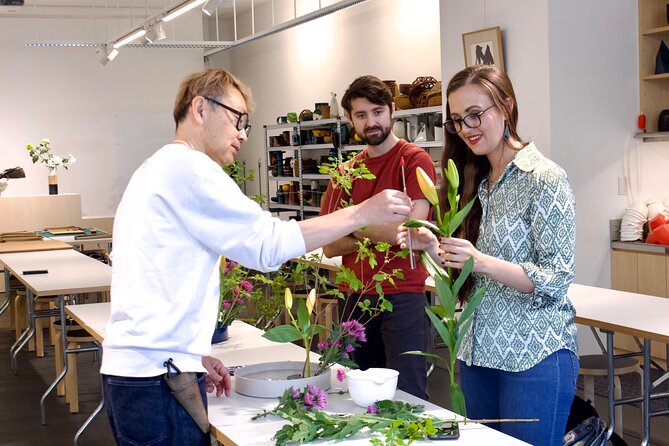
- Create an arrangement you can repeat at home: You learn styles that do not depend on special vases or rare flowers.
- Learn with Master Fooraku: He has studied ikebana for more than 30 years and teaches in English.
- Work at Sogetsu WEST: The Kyoto studio has more than 300 different flower containers.
- Go beyond flower placement: The session covers ikebana history, philosophy, technique, and ways to keep flowers fresh.
- Keep a record of your work: Your finished arrangement is photographed, and session slides are available by email upon request.
- Enjoy a private lesson: Only your own group participates, followed by time to talk and ask cultural questions.
Why this ikebana class is more than a flower craft
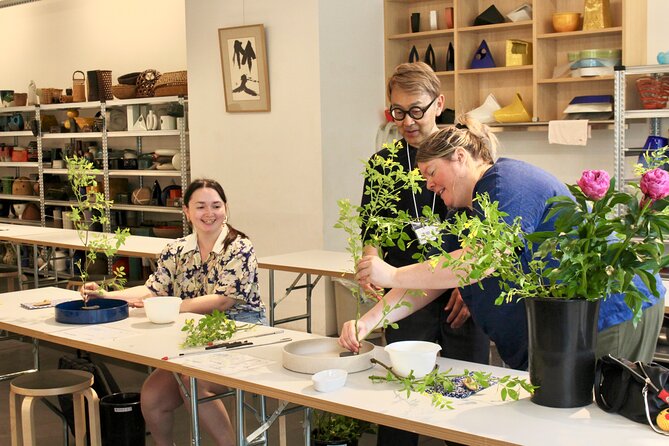
Ikebana is often reduced to the idea of Japanese flower arranging. This workshop gives you a better starting point. You learn to think about line, space, height, balance, and the changing character of flowers, rather than simply filling a vase with blooms.
That matters because ikebana is built around restraint. A few stems can say more than a crowded bunch if they are placed with care. The class introduces the aesthetic sense behind that choice, while still keeping the work approachable for a first-timer.
I especially like the promise that you can continue at home without special Japanese containers. Many cultural workshops offer a pleasant hour and then leave you with nothing practical to repeat. Here, the techniques are meant to work with everyday materials, which gives the lesson more lasting value.
You also get a look at the seasonal side of Japanese life. Flowers change with the time of year, and ikebana pays attention to those changes. Even a simple arrangement can suggest the season through its shape, color, or the way a stem bends.
More flower-arranging classes:
- Ikebana Traditional Japanese Art of Flower Arranging
★ 4.5 · 19 reviews - Kyoto Cultural IKEBANA Experience@SEKKA FLOWERS
★ 5.0 · 11 reviews - Kyoto: Ikebana (Japanese Flower Arrangement)
★ 3.7 · 9 reviews
Arriving at Sogetsu WEST in Kyoto
The class meets at Sogetsu WEST, at 20-4 Sujakudōnokuchichō in Kyoto’s Shimogyo Ward. The location is near public transportation, so you can fit the session into a day of sightseeing without arranging a separate excursion outside the city.
The activity begins and ends at the same place. That makes the timing easy to manage, especially if you have another reservation later in the day. The full session lasts about 1 hour and 45 minutes, long enough for instruction, hands-on work, photographs, and conversation without taking over your entire Kyoto schedule.
The studio itself is part of the appeal. With more than 300 types of flower containers, Sogetsu WEST offers a setting that feels connected to the wider practice of ikebana. You are not simply arranging flowers at a generic craft table. You are learning in a space built around the art.
Your confirmation arrives when you book, and you receive a mobile ticket. I would still allow enough time to find the address, particularly if you are coming from another part of Kyoto and are not familiar with the neighborhood.
Meeting Master Fooraku
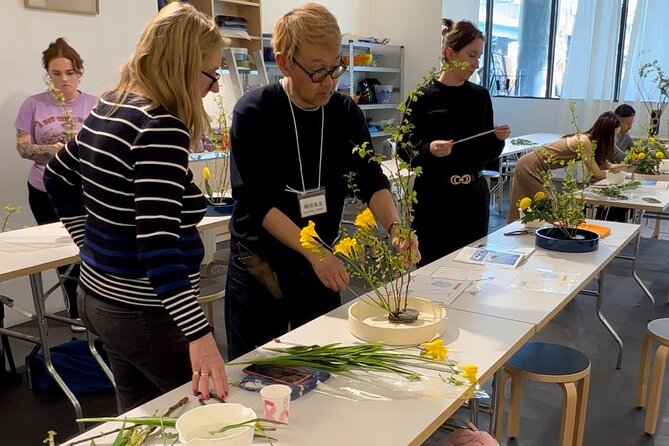
Master Fooraku has studied ikebana for more than 30 years. That length of practice matters in a lesson like this because a good teacher must explain choices that can look mysterious to beginners.
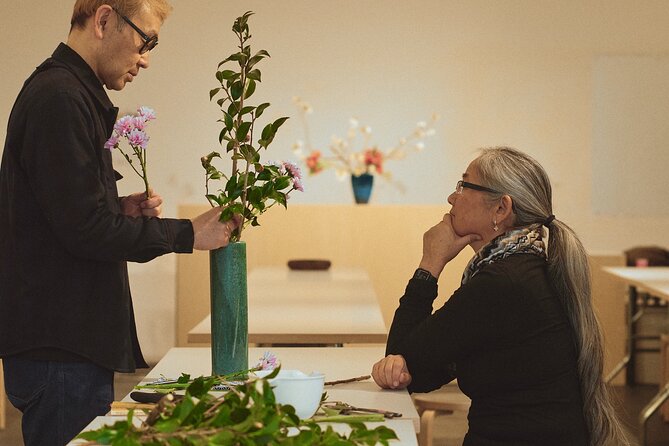
You can expect guidance rather than a lecture. The session is designed for you to make your own arrangement, with Fooraku helping you understand the basic forms and adjust your work. His English is described as good, which is important when the lesson depends on subtle ideas such as proportion and visual balance.
The private format should make it easier to ask questions. Only your group takes part, so you are not placed in a large class where the teacher has to rush from table to table. This setup suits you if you prefer direct correction and a calmer pace.
The tone is relaxed. Once the flowers are arranged, there is time for conversation about Japanese food, culture, and traditions. You can also share something about your own country and background, making the class feel like a cultural exchange rather than a one-way demonstration.
Learning the forms, philosophy, and flower care
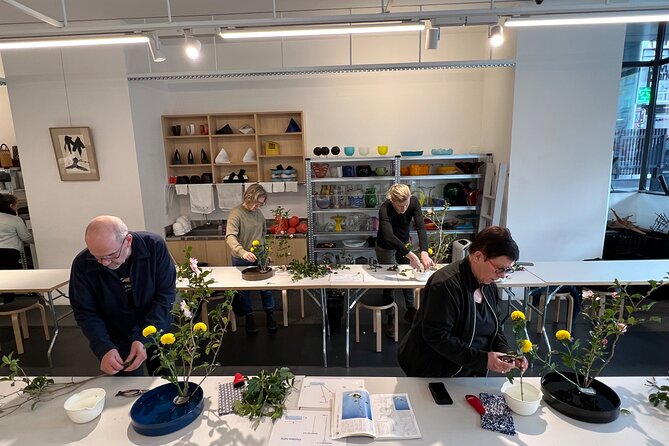
The first part of the workshop introduces the basics of ikebana. You learn about its history and philosophy, then move into the techniques that shape an arrangement. The information is useful because it gives meaning to the practical steps that follow.
You might discuss why an arrangement leaves open space, how its main lines relate to one another, and how the shape of each stem affects the whole. The supplied details do not specify a fixed lesson plan or named ikebana school forms, so you should expect an introduction to several styles rather than a formal certification course.
Flower care is another useful part of the session. Fooraku explains techniques for keeping flowers fresh, a small detail that can make the difference between an arrangement that lasts and one that wilts quickly. For someone hoping to practice at home, this may be as valuable as the design lesson itself.
The class also shows you how to work without special tools or traditional containers. That does not mean the studio lacks proper equipment. Sogetsu WEST has a large collection of containers, but the teaching is meant to help you adapt the ideas to what you have available at home.
More workshops and classes in Kyoto:
- Kyoto: 45-Minute Tea Ceremony Lesson Experience
★ 4.3 · 2,378 reviews - Kyoto : Chopsticks Making Workshop in Gion with Engraving Option
★ 5.0 · 958 reviews - Kyoto: Samurai Sword Class by Experts in Traditional Arts
★ 4.9 · 657 reviews - Kyoto: Ramen Cooking Class at a Ramen Factory with Souvenir
★ 4.9 · 532 reviews
Making your own ikebana arrangement
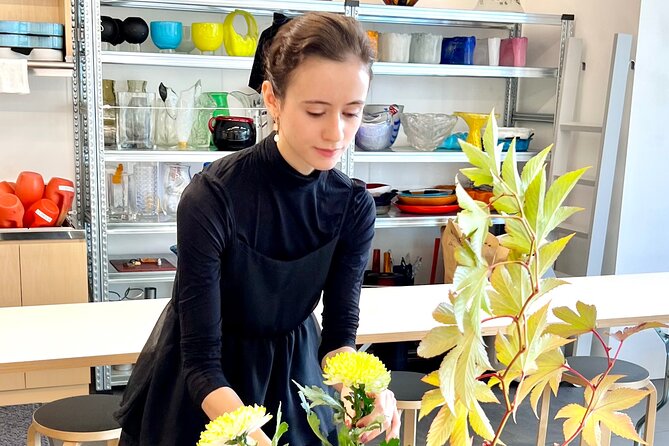
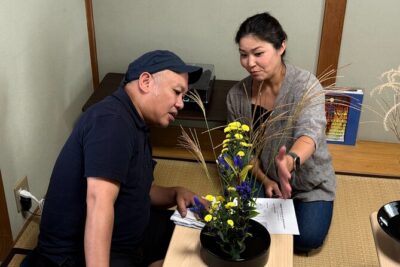
The hands-on portion is the heart of the activity. After learning the basic ideas, you create your own arrangement with Fooraku’s guidance. You are not only watching a professional arrange flowers. You are making decisions yourself.
That makes the class a good fit if you like activities that require attention. The work is gentle and creative, but it is not entirely passive. You need to look at the stems, consider their direction, and decide how much open space to leave.
Do not expect your first arrangement to look exactly like a master’s work. That is not really the point. The useful lesson is learning how a small change in angle or height alters the character of the piece.
The private setting gives you room to ask why a stem should move one way rather than another. You can receive help while still producing something personal. The result is described as your own ikebana masterpiece, but the larger reward is understanding enough to try again later.
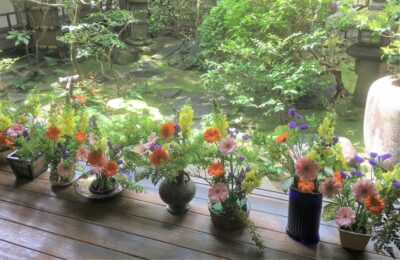
The workshop’s home-practice angle is a strong reason to book. You do not need to return with an expensive vase or a suitcase full of special supplies. You can apply the principles to flowers and containers you already own, which keeps the art connected to daily life.
Photographing the finished piece
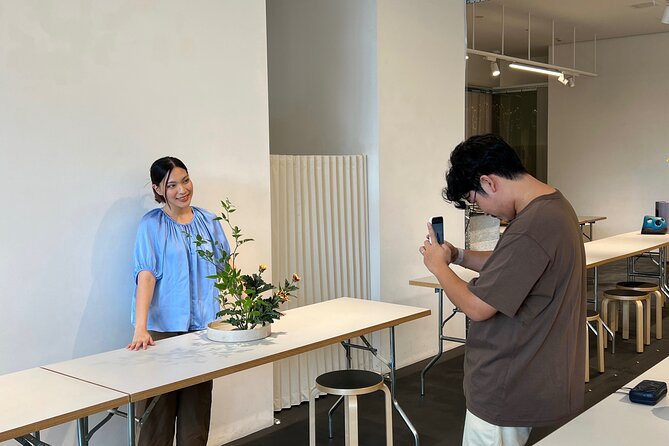
Once your arrangement is complete, the session includes a photograph of your work. This is a simple touch, but it gives you a useful record of what you made and lets you remember the lesson after your Japan trip.
The photograph also helps if you want to compare future arrangements. Since ikebana changes with the flowers and seasons, keeping an image of your first attempt can show how your sense of shape develops.
Session slides are available by email upon request. If you want a digital reminder of the ideas covered, ask for them before the activity ends or make your request clearly during the session. The slides may be especially useful if you plan to practice after returning home.
The value of $104.24 for 1 hour and 45 minutes
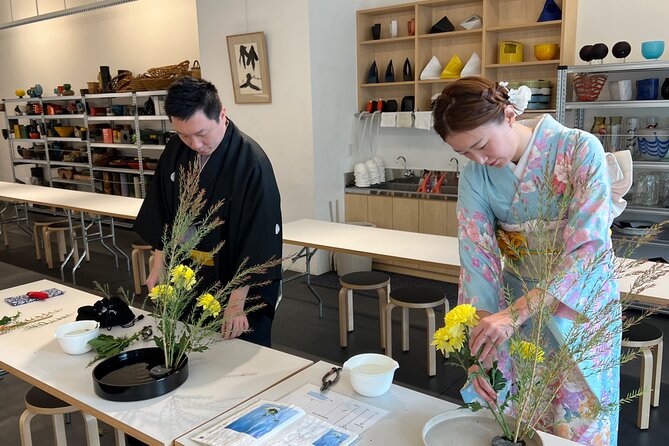
At $104.24 per person, this is not the cheapest short activity in Kyoto. The price makes more sense if you value personal instruction, a private group, a specialist studio, and a skill you can continue using after the class.
You are paying for more than flowers and a container. The session includes teaching from someone with over 30 years of study, access to a dedicated ikebana setting, help with your own arrangement, flower-care advice, a photograph, and time for cultural conversation.
Still, you should be clear about what you are buying. This is a focused workshop, not a full-day cultural tour. It does not include a broad tour of Kyoto, multiple craft stops, or a long visit to a famous temple. If your main goal is to see as much of the city as possible, the price may feel high for the time involved.
I think the value is strongest for people who want a calm, personal activity with a practical result. It is also a better choice for repeat visitors to Kyoto, or for anyone who has already seen the major sights and wants a closer look at an everyday Japanese art.
The activity is typically booked about 26 days ahead. That pattern suggests you should not leave it until the last minute if the date matters to you. A private session has fewer available spaces than a large group class, even though the booking itself is straightforward.
Who will enjoy this Kyoto workshop
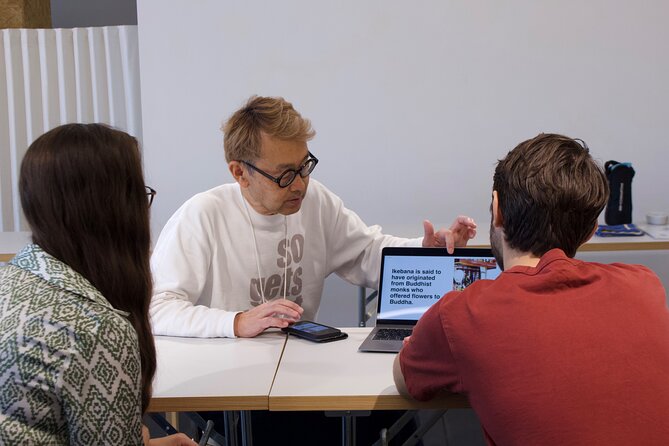
I would recommend this class to you if you like making things with your hands, want a quiet break from sightseeing, or have a serious interest in Japanese design. It also suits couples, families, friends, and small private groups because only your own party takes part.
You do not need prior ikebana experience. The workshop teaches the basics, and most people can participate. You also do not need to own traditional Japanese equipment before arriving.
This may be a good choice for a solo visitor who wants conversation with a local expert. The relaxed discussion gives you a chance to ask questions that do not always come up during a standard sightseeing tour.
It is less suitable if you want a fast, highly visual activity with constant movement. Flower arranging requires patience, and the pleasure comes from observing small changes. If you dislike careful creative work, you may find the pace slow.
The class is also not the best match if you only want a souvenir. You take a photograph and can request slides, but the main takeaway is the method and understanding you gain while working.
Practical details before you book
The meeting point is Sogetsu WEST, 20-4 Sujakudōnokuchichō, Shimogyo Ward, Kyoto, 600-8842, Japan. The activity ends at the same location, and the venue is near public transportation.
A mobile ticket is provided, and booking confirmation is issued at the time of reservation. The activity is private, so only your group participates. The information says most people can take part, but it does not provide detailed accessibility specifications, so contact the provider if you have a specific mobility or access concern.
Free cancellation is available when you cancel at least 24 hours before the local start time. Cancellations or changes made inside that 24-hour window are not accepted for a refund.
Wear something comfortable enough for hands-on work. The supplied details do not require a special dress code, but you should be prepared to stand or work around a table during the arranging portion.
Is the Fooraku ikebana workshop worth booking?
Book it if you want a personal Kyoto activity that teaches a skill rather than simply showing you something. The strongest reasons are Master Fooraku’s long experience, the private format, the large container collection at Sogetsu WEST, and the clear focus on arrangements you can recreate at home.
Think twice if your budget is tight or if you would rather spend 1 hour and 45 minutes visiting a major Kyoto sight. At $104.24, the class is a considered purchase, not a casual add-on.
For me, the deciding question is simple: do you want to bring home a flower arrangement, or do you want to bring home a way of seeing flowers? If it is the second, this workshop offers a useful and personal introduction to ikebana.
FAQ
Where does the ikebana workshop take place?
The workshop takes place at Sogetsu WEST, 20-4 Sujakudōnokuchichō, Shimogyo Ward, Kyoto, 600-8842, Japan.
How long does the activity last?
The workshop lasts approximately 1 hour and 45 minutes.
Is the activity private?
Yes. Only your own group participates in the activity.
Do I need special flowers, tools, or a traditional vase?
No. The workshop teaches styles you can create at home without special flowers or traditional Japanese containers.
Who teaches the class?
Master Fooraku teaches the workshop. He has studied ikebana for more than 30 years, and his English is described as good.
Can I cancel for a full refund?
Yes. You can cancel for a full refund up to 24 hours before the experience start time. Changes or cancellations made less than 24 hours before the local start time are not accepted for a refund.
Recently added around Kyoto
- Higashiyama | Kyoto: Sakura Season Private Rickshaw Tour★ 5.0 · 3 reviews
- Kyoto Kimono Rental CHAMATSU|Kimono/Yukata Rental FamilyPlan★ 5.0 · 3 reviews
- Kyoto: Half-Day Private Guided Tour to the Old Town of Gion★ 4.4 · 3 reviews
- Nara Private Customizable Half Day Tour★ 5.0 · 3 reviews
- Kansai Region Hiking Adventure in Nara Kobe Kyoto and More★ 5.0 · 3 reviews
- Full Day Nara Deer, Temple, Shrine, Activities & Tea Ceremony★ 5.0 · 3 reviews
- Nara: Essential Private Tour with Deer Park and Temples★ 5.0 · 3 reviews
- Hiking Tour for Sacred Sites in Kyoto with a Guide★ 5.0 · 3 reviews
Kyoto Ikebana Classes, compared.

Ikebana Traditional Japanese Art of Flower Arranging
Read our review →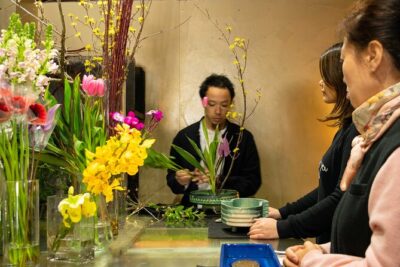
Browse the lists this tour appears in