
REVIEW · KYOTO IKEBANA CLASSES
Ikebana Traditional Japanese Art of Flower Arranging
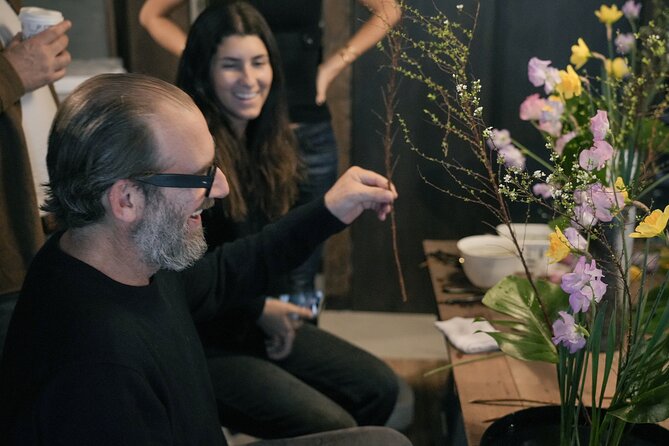
Ikebana turns a handful of cut flowers into a study of balance, space, and restraint. In this Kyoto class, Mana demonstrates two traditional forms, Nageire and Moribana, then guides you as you create your own arrangement with seasonal flowers. The setting is a typical Japanese home, not a large workshop.
I like the small maximum of six people, which leaves room for personal help, and I like the practical flower-care advice, including ways to keep an arrangement fresh for up to two weeks. The 90-minute format also fits neatly into a day of Kyoto sightseeing.
The main consideration is that this is an introduction, not a long course in ikebana history or its many schools. One participant wanted more background on those subjects, while the class focuses more on demonstration and hands-on work. Also, check your meeting details carefully, since one poor report involved a missed meeting and unanswered calls.
In This Review
- Key points at a glance
- What this Kyoto ikebana class is really about
- Meeting Mana and entering the small-group lesson
- The opening explanation: flowers with a new life
- Seeing Nageire and Moribana demonstrated
- Choosing your flowers and building an arrangement
- The mindful side of ikebana
- Flower care tips you can use after Kyoto
- Is $72.26 a fair price for 90 minutes?
- Who will enjoy this class most?
- Timing, transport, and booking advice
- Should you book the Kaeribana ikebana class?
- FAQ
- Where does the ikebana class take place?
- How long does the class last?
- What styles of ikebana are taught?
- Is the class taught in English?
- How many people can join the class?
- Are flowers included in the activity?
- What is the cancellation policy?
Key points at a glance
- Two beginner-friendly styles: Mana teaches and demonstrates Nageire and Moribana.
- Seasonal flowers: You work with fresh flowers and consider their natural shapes and character.
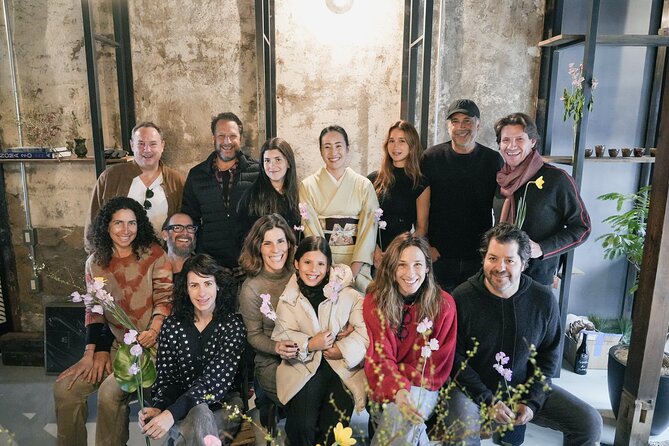
- Small class size: The group is limited to six people.
- Mindful pace: The class uses ikebana to encourage quiet attention and appreciation of nature.
- Practical take-home skill: You learn flower-care methods that may help arrangements last up to two weeks.
- Central Kyoto setting: The class begins and ends at 3481 Tanbacho, Kamigyo Ward, near public transportation.
What this Kyoto ikebana class is really about
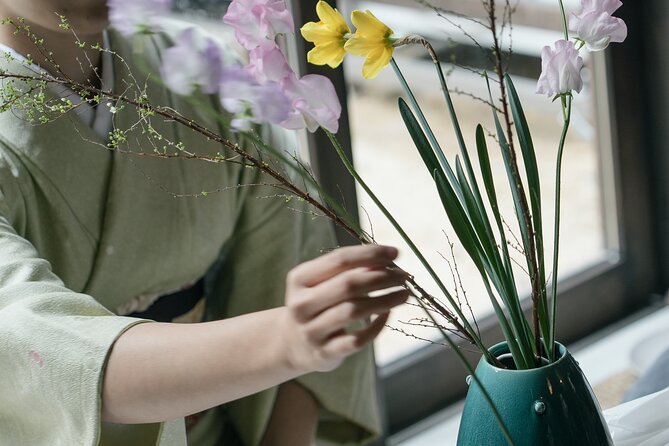
Many flower-arranging classes teach you to make something pretty. Ikebana asks you to look harder at the flower itself. A bent stem, an open space, an uneven branch, or a leaf pointing away from the group can all help shape the arrangement.
The Japanese word ikebana means living flowers. That idea guides the class. You are not simply placing blooms into a container. You are considering how each stem can keep its natural character while working with the others in a balanced composition.
I like this approach because it gives the class more purpose than a standard craft session. You learn to notice line, height, empty space, and proportion. The result does not need to look crowded or perfectly symmetrical. In fact, the quiet gaps are part of the design.
The class also introduces the wabi-sabi side of Japanese aesthetics. In plain terms, this means accepting natural irregularity and simplicity rather than forcing everything into a polished, identical shape. A slightly curved branch may be more useful than a straight one. A flower past its first flush may still have an important place.
More flower-arranging classes:
- Kyoto Cultural IKEBANA Experience@SEKKA FLOWERS
★ 5.0 · 11 reviews - Traditional Japanese Flower Styling Workshop – Ikebana in Kyoto
★ 5.0 · 10 reviews - Kyoto: Ikebana (Japanese Flower Arrangement)
★ 3.7 · 9 reviews
Meeting Mana and entering the small-group lesson
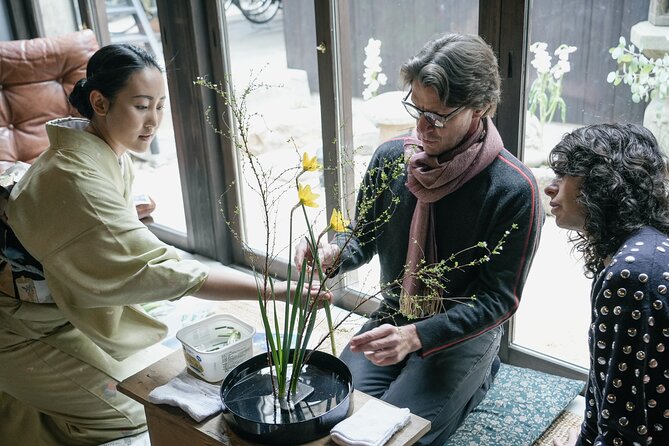
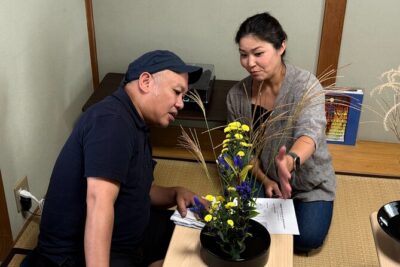
The class is led in English by Mana, an ikebana instructor who explains the principles, demonstrates the arrangements, and helps you work through your own design. The group limit is six people, a useful detail if you prefer direct instruction instead of watching from the back of a crowded room.
The meeting point is in Kyoto’s Kamigyo Ward at 3481 Tanbacho, postal code 602-8287. The activity ends at the same point. It is near public transportation, but the supplied details do not identify a specific station or give walking instructions, so I would check the exact map pin before setting out.
The home setting adds a sense of place. One account describes it as a typical Japanese house, which gives the lesson a more personal atmosphere than a hotel conference room. You are still taking a class, but the surroundings help connect the art to everyday Japanese culture.
Because the group is small and the meeting point is precise, arrive with enough time to identify the building. This matters here more than it would for a large tour with a guide waiting beside a major landmark. A single report described a missed meeting and unsuccessful phone contact, so I would keep your booking confirmation and the provider’s contact details easy to reach.
The opening explanation: flowers with a new life
Mana begins with an overview of ikebana before showing how the arrangements are built. This introduction gives you the basic idea: fresh flowers can be given a new life through careful placement, and their natural qualities should guide the design.
The lesson treats flowers as living forms rather than raw materials. That may sound poetic, but it has practical consequences. You look at the direction of a stem, the shape of a branch, the openness of a bloom, and the way one piece relates to the whole arrangement.
This is also where the mindfulness element comes in. You need to slow down, observe what is in front of you, and make decisions one at a time. The class is not a race to fill a vase. It encourages you to pause and consider what the flowers are already doing before you change them.
The background is useful, but keep your expectations in check. The art has around 300 years of history, yet the 90-minute lesson cannot cover every period, school, or rule in detail. If your main interest is the history of ikebana or the differences among its many schools, you may want a longer lecture elsewhere. This class gives you a working introduction through practice.
Seeing Nageire and Moribana demonstrated
A strong feature of this class is the chance to see two arrangements made before you begin. Mana teaches Nageire and Moribana, two basic styles that work well for beginners.
Nageire is traditionally associated with a more upright, freely placed arrangement. Moribana generally uses a shallow container and a broader, landscape-like composition. The supplied information does not spell out every technical difference, so Mana’s live demonstration is especially valuable. You can watch how the two approaches change the use of space, height, and direction.
Seeing the arrangements first gives you a visual target without turning the class into a rigid copying exercise. You can follow the method, then make choices based on the flowers in front of you. Several strong accounts praise Mana’s clear demonstrations and thorough instruction, along with the flexibility she gives people while they work.
I particularly like that the class includes both styles rather than offering one quick arrangement and sending you on your way. Comparing Nageire and Moribana helps you understand that ikebana is not one fixed look. It is a group of methods with different ways to organize stems and space.
A completely different side of Kyoto:
- PERFECT KYOTO 1-Day Bus Tour
★ 5.0 · 13,518 reviews - Kyoto: Fushimi Inari, Kinkakuji, Bamboo Grove 1 Day Bus Tour
★ 4.8 · 4,316 reviews - Kyoto: Tea Ceremony in a Traditional Tea House in Kiyomizu
★ 4.9 · 3,519 reviews - Kyoto Geisha Walking Tour: Gion District & Hidden Gems
★ 4.7 · 3,273 reviews
Choosing your flowers and building an arrangement
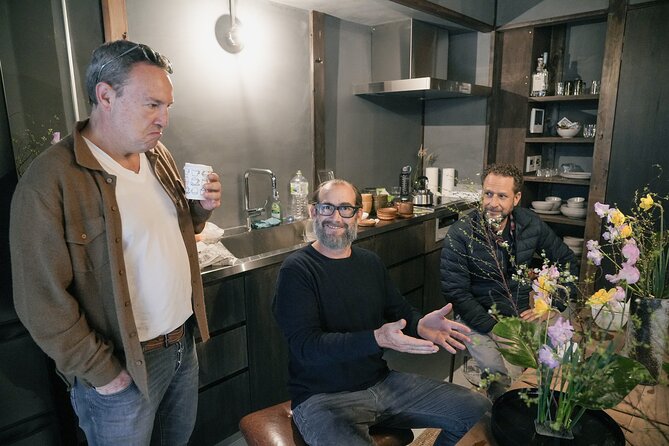
After the demonstrations, you get to create your own arrangement with seasonal flowers. This is the heart of the activity. Instead of only admiring a finished piece, you handle the stems and make the decisions yourself.
You learn to use each flower’s natural qualities to create harmony with the others. That may mean allowing one stem to lean, giving a taller branch room above the main bloom, or leaving open space so the arrangement can breathe. The goal is not to cram every flower into the container.
Mana’s role is important here. A beginner can easily treat the exercise like ordinary bouquet-making, placing flowers wherever there is room. Personal guidance helps you see why a particular line or angle works better. At the same time, the reported class format allows flexibility, so your arrangement does not have to become an exact replica of the demonstration.
This balance suits couples and friends especially well. One couple described having plenty of freedom while making their arrangements, which suggests that you can learn the rules without losing the pleasure of making something personal. You may also find that people in the same class produce noticeably different results from the same basic lesson.
The mindful side of ikebana
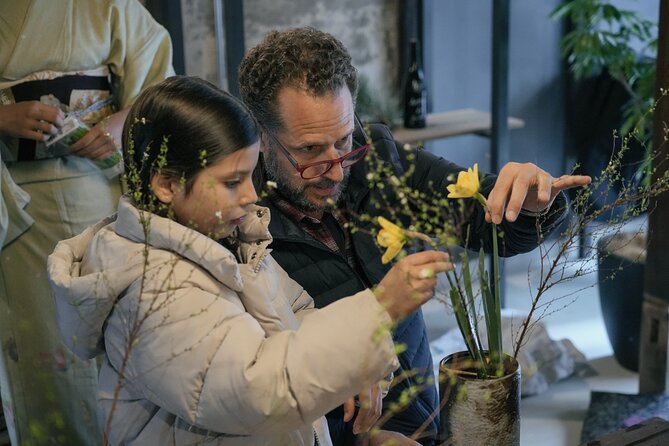
The class presents ikebana as a way to practice mindfulness. You do not need prior meditation experience to benefit from that idea. The work naturally asks you to focus on a small number of things: the flowers, the container, the open space, and the next adjustment.
I like this part because it gives the activity a calmer rhythm than many short cultural workshops. Kyoto sightseeing can involve temples, buses, crowds, and a long list of places to see. Ninety quiet minutes with flowers offers a useful change of pace.
The wabi-sabi element also makes the exercise less intimidating. You are not being asked to produce a flawless professional display. Natural variation is part of the point. If a stem is not perfectly straight, that may be a feature to use rather than a problem to hide.
Still, the mindfulness language should not lead you to expect a formal meditation session. The main activity is flower arranging, supported by Japanese aesthetic ideas. You receive an introduction to attentive looking through the work itself.
Flower care tips you can use after Kyoto
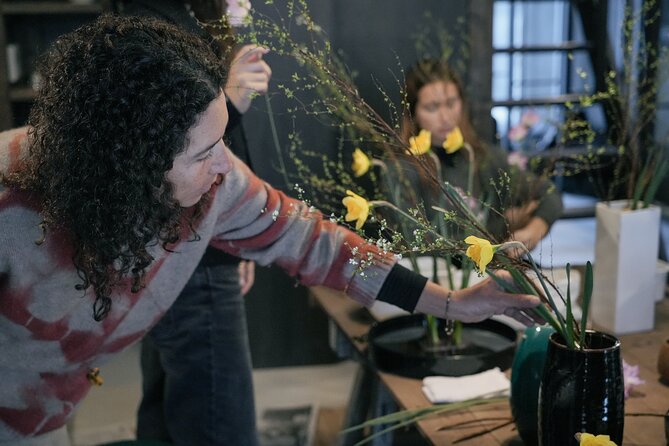
The class does more than show you how to arrange flowers for one afternoon. You also learn practical ways to care for fresh flowers, with advice intended to help them last up to two weeks.
That detail adds real value. A short craft class can feel temporary if the finished piece disappears as soon as you leave. Flower-care instruction gives you a skill you can use at home, with future bouquets or seasonal branches.
The exact care steps are not listed in the supplied details, so I would pay close attention when Mana explains them. This is a good moment to ask questions about keeping flowers fresh, maintaining the arrangement, and adapting the method to flowers available where you live.
You should also think of the class as an introduction to a practice rather than a complete education. A single session can teach you the basic feel of the art and give you a finished arrangement, but regular practice would be needed to gain confidence with different flowers, containers, and styles.
Is $72.26 a fair price for 90 minutes?
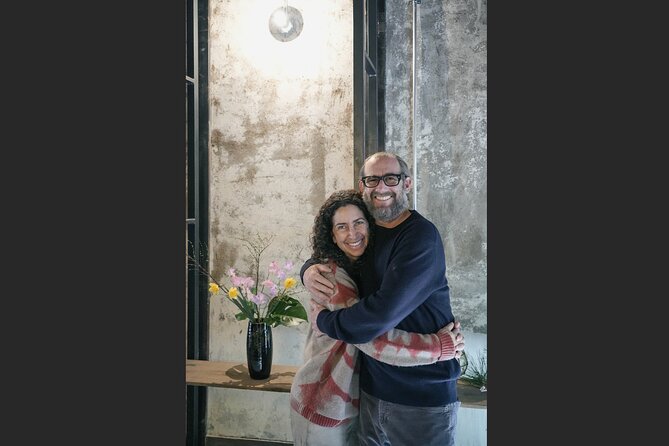
At $72.26 per person, this is not the cheapest short activity in Kyoto. The value depends on what you want from the class.
If you only want to make a simple bouquet, the price may feel high. You are paying for more than flowers, though. The session includes an English-speaking instructor, demonstrations of two ikebana styles, guided practice, a small class setting, a traditional home atmosphere, seasonal materials, and advice on flower care.
The maximum of six improves the value for anyone who wants personal instruction. A larger class might cost less, but you could spend more time waiting for help. Here, the instructor can watch your progress and respond as you shape the arrangement.
I would compare it with the price of other hands-on cultural activities in Kyoto, not just with the cost of buying flowers. You are paying for access to a traditional art, an instructor’s method, and a chance to make something yourself. For a special occasion, a rainy afternoon, or a break from temple visits, that can be a reasonable use of part of your sightseeing budget.
The 90-minute length is another value point. It is long enough to include explanation, demonstrations, and practice, yet short enough to fit around other plans. If you prefer a detailed historical seminar or advanced technical training, the price will feel less attractive because the class is aimed at beginners.
Who will enjoy this class most?
I would recommend it to you if you like hands-on cultural activities, quiet creative work, and experiences connected to nature. It is also a good choice for couples, since you can work side by side while making separate arrangements.
The class suits first-time visitors to ikebana especially well. You do not need to arrive with technical knowledge, and the demonstrations give you a clear starting point. English instruction removes one possible barrier for international participants.
It may also suit you if you want a Kyoto activity that does not depend on a major monument. You will not be touring several sights or collecting photographs. Instead, you spend time learning one traditional art in a small domestic setting.
You may want another option if your priority is a detailed account of ikebana’s history, the different schools, or advanced rules. One participant found the history and school information too brief. That criticism is fair, given the limited time. The class is strongest as a practical introduction, not as a survey course.
Most people can participate, according to the available details. Specific accessibility information is not provided, so contact the provider if you have mobility or other access needs that could affect participation in a home setting.
Timing, transport, and booking advice
The activity lasts about one hour and 30 minutes and begins and ends at the listed Kyoto meeting point. Since it is near public transportation, you should be able to build it into a sightseeing day, but allow time to reach the exact address in Kamigyo Ward.
The class is booked an average of 30 days ahead. That suggests planning early, especially if your Kyoto schedule is fixed or you need a particular date. A small group of six can fill more quickly than a large sightseeing tour.
You receive confirmation at booking, and the ticket is mobile, so you can keep it on your phone. Free cancellation is available if you cancel at least 24 hours before the local start time. Changes or cancellations inside that 24-hour window are not accepted for a refund.
I would save the address, start time, confirmation, and provider name, Kaeribana, before leaving your hotel. These are small steps, but they make a precise home meeting point less stressful.
Should you book the Kaeribana ikebana class?
Book it if you want a quiet, personal Kyoto activity with real participation rather than a quick demonstration. The strongest reasons are Mana’s clear teaching, the chance to study both Nageire and Moribana, the small group size, and the practical advice that can help your flowers last at home.
Do not book it expecting a full history of ikebana or a tour of several schools. The class gives you a thoughtful working introduction in 90 minutes, and that is its proper scale.
At $72.26, I see fair value for a small English-language lesson in a traditional home, provided you care about the craft and not only the finished bouquet. Confirm the meeting details carefully, arrive with the address ready, and this can be one of Kyoto’s more peaceful breaks from the usual sightseeing route.
FAQ
Where does the ikebana class take place?
The meeting point is at 3481 Tanbacho, Kamigyo Ward, Kyoto, Japan, postal code 602-8287. The activity ends back at the same location.
How long does the class last?
The class lasts approximately one hour and 30 minutes.
What styles of ikebana are taught?
Mana teaches and demonstrates two beginner-friendly styles, Nageire and Moribana.
Is the class taught in English?
Yes. The class is led by an English-speaking ikebana expert.
How many people can join the class?
The activity has a maximum group size of six people.
Are flowers included in the activity?
The class uses seasonal flowers for the arranging lesson. The supplied information does not provide separate details about taking the finished arrangement home.
What is the cancellation policy?
You can cancel for a full refund up to 24 hours before the local start time. Cancellations or changes made less than 24 hours before the start are not accepted for a refund.
Recently added around Kyoto
- Higashiyama | Kyoto: Sakura Season Private Rickshaw Tour★ 5.0 · 3 reviews
- Kyoto Kimono Rental CHAMATSU|Kimono/Yukata Rental FamilyPlan★ 5.0 · 3 reviews
- Nara Private Customizable Half Day Tour★ 5.0 · 3 reviews
- Kyoto: Half-Day Private Guided Tour to the Old Town of Gion★ 4.4 · 3 reviews
- Kansai Region Hiking Adventure in Nara Kobe Kyoto and More★ 5.0 · 3 reviews
- Full Day Nara Deer, Temple, Shrine, Activities & Tea Ceremony★ 5.0 · 3 reviews
- Nara: Essential Private Tour with Deer Park and Temples★ 5.0 · 3 reviews
- Hiking Tour for Sacred Sites in Kyoto with a Guide★ 5.0 · 3 reviews
Kyoto Ikebana Classes, compared.
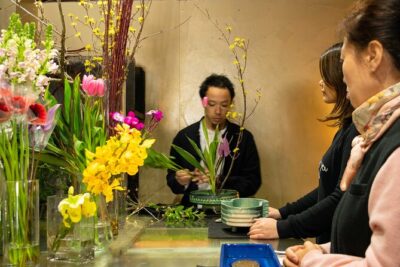

Traditional Japanese Flower Styling Workshop – Ikebana in Kyoto
Read our review →
Browse the lists this tour appears in