
REVIEW · KYOTO IKEBANA CLASSES
Ikebana Floral Design Workshop in Kyoto
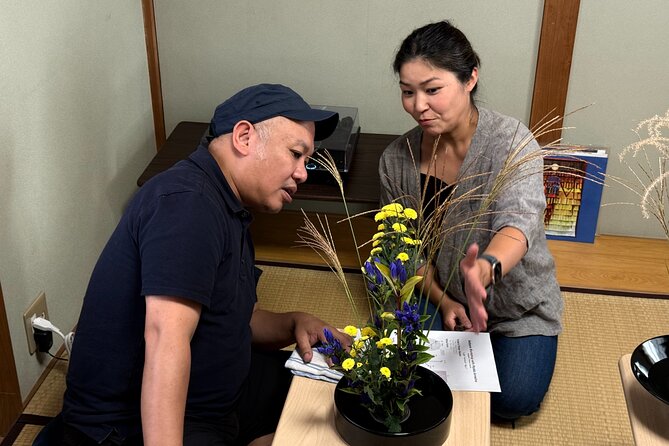
Kyoto’s HanaYou studio gives you more than a look at ikebana: you make the arrangement yourself. In 90 minutes, founder Ryoko Arnwine guides beginners through balance, harmony, and the meaning of placing each flower. I like the small maximum of four people, and I like that fresh flowers go home with you rather than ending when the class does.
The setting is quiet, the instruction is offered in English or Japanese, and tea with a seasonal sweet adds a gentle Japanese touch. The main consideration is practical: the studio is on the second floor, and you must climb stairs. At $97.73, this is not a cheap souvenir activity, but it offers personal instruction, materials, refreshments, and a finished arrangement.
In This Review
- Key points at a glance
- Making ikebana, not just watching it
- Ryoko Arnwine’s small-group instruction
- A 90-minute class with room to create
- Why the seasonal flowers matter
- Tea, sweets, and a photo corner
- What the $97.73 price covers
- Getting to the studio and preparing for the stairs
- Who will enjoy this Kyoto workshop
- How this compares with ordinary sightseeing
- Should you book HanaYou?
- FAQ
- How long does the ikebana workshop last?
- Do I need previous ikebana experience?
- Who teaches the class?
- Is instruction available in English?
- Are flowers and equipment included?
- Can I take my flower arrangement with me?
- Are refreshments included?
- How many people can join the class?
- Where does the workshop meet?
- Is transportation included?
- Is the studio accessible without stairs?
- What is the cancellation policy?
Key points at a glance
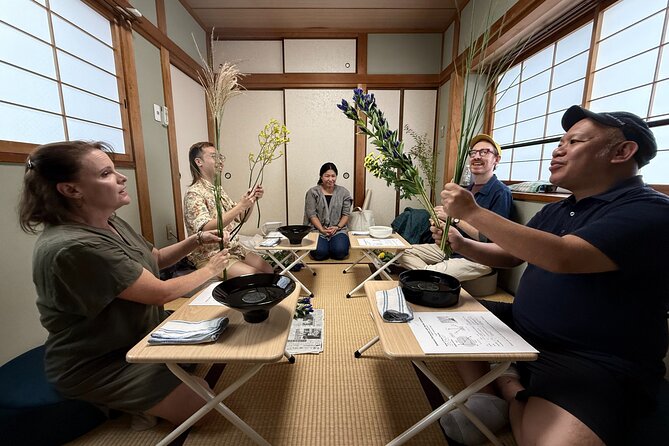
- Ryoko Arnwine leads the class: HanaYou’s founder provides the 90-minute instruction in English or Japanese.
- A true beginner activity: You need no previous ikebana experience, and studio tools such as scissors, vases, and pins are supplied.
- Seasonal flowers go with you: Your finished arrangement and fresh flowers can be taken to your hotel.
- Small group size: The class accepts no more than four people, allowing plenty of room for individual guidance.
- Tea and a photo corner: You can enjoy Japanese tea and a seasonal sweet, then photograph your work in a prepared setting.
- A second-floor studio: The activity requires walking up stairs, so keep that in mind when planning your Kyoto day.
Making ikebana, not just watching it
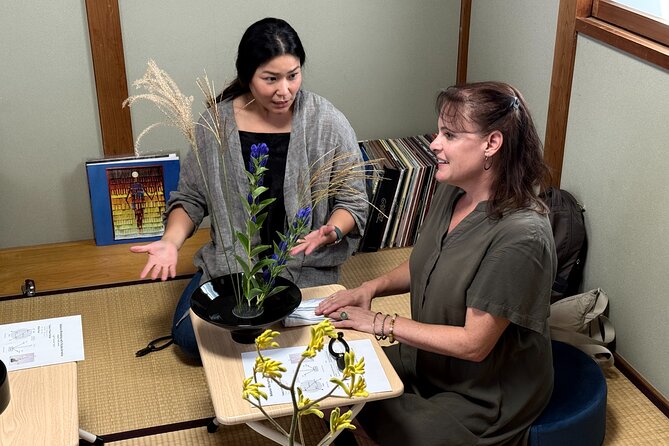
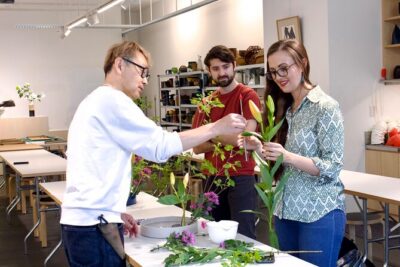
Many cultural activities ask you to observe a demonstration and perhaps try one small task. HanaYou’s class takes a different route. You sit down with real seasonal flowers and create an arrangement of your own under Ryoko Arnwine’s direction.
That hands-on format matters. Ikebana is not simply a matter of putting flowers in a vase. The shape, balance, open space, and angle of each stem all affect the final design. You learn by handling the flowers and seeing how a small adjustment changes the whole arrangement.
You do not need to arrive with artistic training. The class is built for beginners, and the supplied tools remove another common worry. You can use the studio’s vase, scissors, pins, and other equipment during the session, so you do not need to buy a kit before you arrive.
I like the calm pace. Ninety minutes is long enough to explain the basic ideas, let you work with care, and make corrections without turning the session into a rushed craft project. It is also short enough to fit into a full Kyoto sightseeing day.
More flower-arranging classes:
- Ikebana Traditional Japanese Art of Flower Arranging
★ 4.5 · 19 reviews - Kyoto Cultural IKEBANA Experience@SEKKA FLOWERS
★ 5.0 · 11 reviews - Traditional Japanese Flower Styling Workshop – Ikebana in Kyoto
★ 5.0 · 10 reviews
Ryoko Arnwine’s small-group instruction
The class is led by Ryoko Arnwine, the founder of HanaYou. Her role is more than simply handing you flowers and explaining where to cut. The instruction introduces the ideas behind ikebana, including balance, harmony, and the meaning of flower placement.
The small group limit is one of the strongest features here. With no more than four people, you are not lost in a large room or waiting for an instructor to reach your table. You can ask questions, show your arrangement as it develops, and receive guidance suited to your own design.
The language choice also helps. Ryoko can teach in English or Japanese, depending on your preference. That gives you a clear way to follow explanations about technique and cultural background, even if you have no Japanese language skills.
One useful detail is that the class can connect with your own interests. The teaching includes cultural and historical context, but the session stays tied to the flowers in front of you. You learn why placement matters while making decisions in real time, rather than listening to a long lecture disconnected from the activity.
A 90-minute class with room to create
The exact sequence can vary with the group and the flowers, but you should expect a focused studio session built around making one arrangement.
First, you arrive at HanaYou’s studio at Kawaramachi Marutamachi Iseyacho in Kyoto’s Kamigyo Ward. The activity begins and ends at this meeting point. Since transportation is not included, you need to arrange your own way there and allow time to find the building and climb to the second floor.
Once inside, the equipment is ready for use. The studio supplies the vase, scissors, pins, and other class materials. This is a real advantage for anyone packing light or moving between several Japanese cities. You can take the finished work with you, but the studio equipment remains there.
The central part of the session is the flower arrangement itself. You work with fresh seasonal flowers and consider their placement, shape, and balance. The class is not only about producing something attractive. It gives you a chance to express your own choices while using the principles Ryoko explains.
The arrangement develops step by step. You might begin by considering the form of the flowers and the space around them, then place stems and adjust the design. The reviews describe the experience as relaxed and interesting, with clear attention to both practical guidance and cultural ideas.
At the end, your flowers can go back to your hotel. That detail makes the experience feel less disposable. Instead of carrying home another mass-produced object, you have something temporary and personal to enjoy during your stay.
Why the seasonal flowers matter
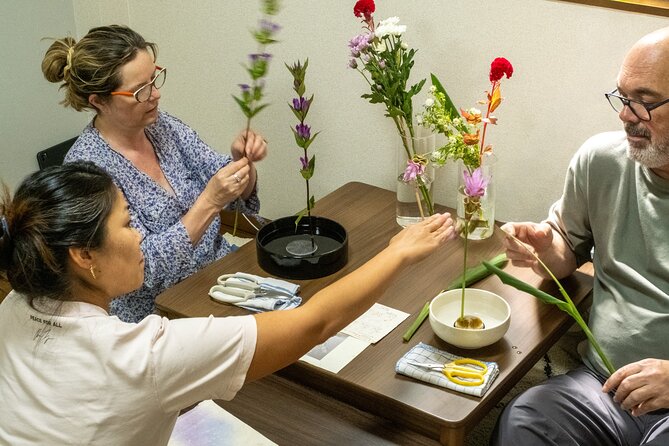
The flowers are fresh and seasonal, which gives the class a connection to the time of year you visit Kyoto. The design you make is not a fixed souvenir copied from a sample. The available flowers help shape what you create.
Seasonal materials also make ikebana easier to understand. You see how a flower’s height, curve, color, and texture affect the arrangement. The point is not to fill every gap. Empty space and careful placement are part of the design.
That makes the workshop a good choice if you enjoy activities that slow you down. Kyoto can fill a day with temples, streets, gardens, and crowds. Here, your attention narrows to stems, angles, and balance. I like that contrast, especially for a mid-trip break.
There is one practical limit. Fresh flowers need care, and the information provided does not specify special packaging or long-distance transport arrangements. If you plan to leave Kyoto soon after the class, taking the flowers with you may require some personal planning. If you are staying at a hotel in the city, they should be easier to enjoy for the rest of your visit.
More workshops and classes in Kyoto:
- Kyoto: 45-Minute Tea Ceremony Lesson Experience
★ 4.3 · 2,378 reviews - Kyoto : Chopsticks Making Workshop in Gion with Engraving Option
★ 5.0 · 958 reviews - Kyoto: Samurai Sword Class by Experts in Traditional Arts
★ 4.9 · 657 reviews - Kyoto: Ramen Cooking Class at a Ramen Factory with Souvenir
★ 4.9 · 532 reviews
Tea, sweets, and a photo corner
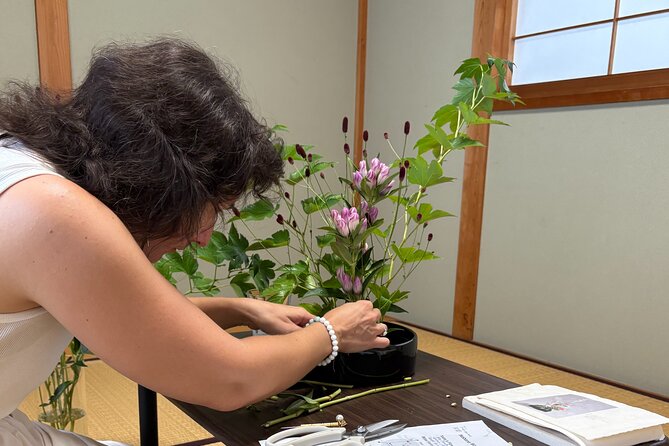
The class includes traditional Japanese tea and a seasonal sweet. This is a small part of the 90-minute session, but it helps set the tone. You are not simply attending a craft lesson in a bare room. The refreshments give you a quiet pause and another small connection to Japanese culture.
You also have access to a photo corner for pictures of your arrangement. This is especially useful because ikebana is temporary. Flowers fade, and you may not be able to carry the arrangement home in perfect condition. A photograph lets you keep a record of the design and the choices you made.
The photo setup also gives you a natural stopping point at the end. After the instruction and final adjustments, you can capture the finished work before taking the flowers to your hotel. If you care about travel photographs, this is a better option than trying to find a suitable background elsewhere.
What the $97.73 price covers
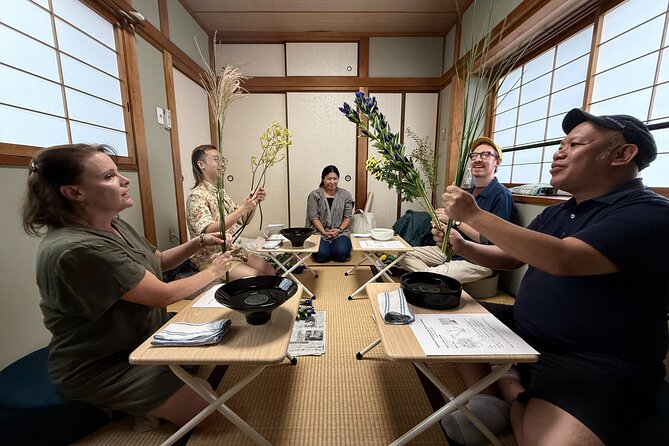
At $97.73 per person, this class costs more than a casual drop-in craft activity. The value comes from what is bundled into the session: 90 minutes of personal instruction, fresh seasonal flowers, studio equipment, tea, a seasonal sweet, and use of the photo corner.
The four-person limit strengthens the price. You are paying for a small class rather than a large demonstration. Ryoko can respond to individual arrangements, and the English or Japanese instruction is tailored to your preference.
You also avoid several extra purchases. The vase, scissors, pins, and other tools are provided during the class. You do not take those tools home, but you also do not need to purchase them just to participate.
The price makes the most sense if you value personal instruction and an authentic cultural activity. It is less suitable if your main goal is a low-cost souvenir or a quick introduction lasting only a few minutes. For a special Kyoto morning or afternoon, I think the combination of teaching, materials, refreshments, and a take-home arrangement gives the fee a clear purpose.
The activity is commonly booked about 46 days ahead. That is useful planning information if you have fixed Kyoto dates, especially because the group is limited to four. You can cancel for a full refund up to 24 hours before the start time, but cancellations or changes inside that window are not accepted for a refund.
Getting to the studio and preparing for the stairs
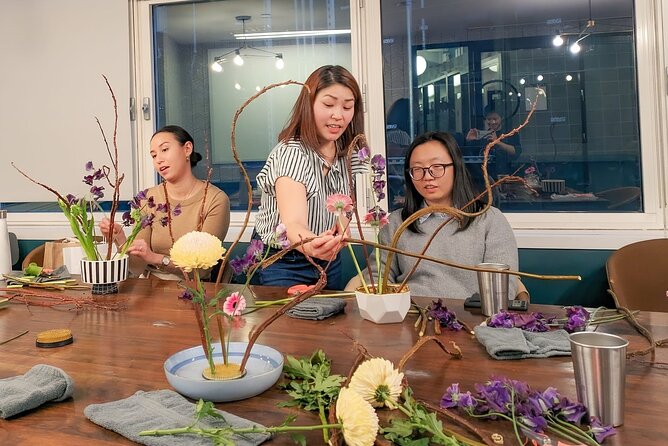
The meeting point is Kawaramachi Marutamachi Iseyacho, Kamigyo Ward, Kyoto, 602-0873, Japan. The studio is near public transportation, but transport to and from the activity is not part of the price.
You receive confirmation when you book, and the experience uses a mobile ticket. Keep the ticket accessible on your phone. Before leaving, check your route and give yourself enough time to locate the meeting point.
The studio is on the second floor, with stairs required. The information says most people can participate, but anyone who has difficulty with stairs should consider this before booking. There is no indication of an elevator or alternate entrance, so you should not assume one is available.
The activity returns to the meeting point when it ends. That makes it easy to pair with another Kyoto plan, but remember that you will be carrying fresh flowers afterward. A hotel stop or a nearby, low-walking activity may work better than a long temple circuit.
Who will enjoy this Kyoto workshop
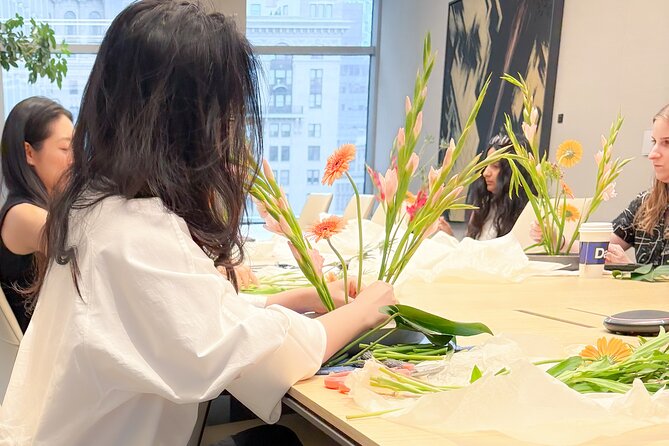
I would recommend HanaYou to several types of visitors:
- First-time ikebana students: No experience is needed, and the class explains the basic ideas through practical work.
- People seeking a quiet break: The 90-minute session offers a slower contrast to busy sightseeing.
- Couples or friends: With a maximum of four people, you can create arrangements in an intimate setting.
- Culture-focused visitors: The class includes historical and cultural perspectives alongside the flower work.
- Creative travelers: You make personal design choices instead of simply watching a demonstration.
- Visitors staying in Kyoto: The fresh flowers are easier to enjoy if you can take them back to a hotel.
I would think twice if you want a large social event, a bargain activity, or a class that supplies tools for you to keep. The studio equipment is for use during the session only. You also need to handle the stairs and make your own transport arrangements.
How this compares with ordinary sightseeing
A temple visit can show you Japanese aesthetics. An ikebana workshop lets you practice one small part of that way of seeing. You pay attention to proportion, restraint, and the relation between an object and the space around it.
That does not replace Kyoto’s temples, gardens, or museums. It adds a personal layer to them. After spending time with flower placement, you may notice composition differently in a garden or an interior display, but the main benefit is the activity itself.
The class also gives you direct contact with a local studio and instructor. It is a more personal experience than buying a decorative item in a shop. You leave with flowers, photographs, and a better sense of why the arrangement looks the way it does.
Should you book HanaYou?
Book this workshop if you want a small, calm, beginner-friendly cultural activity with real instruction. The strongest reasons are Ryoko Arnwine’s personal guidance, the four-person limit, and the chance to take seasonal flowers back to your hotel.
The $97.73 fee is reasonable for a focused private-feeling class with materials, refreshments, and a finished arrangement, though it will not suit every budget. Check the stairs, plan your own route to Kawaramachi Marutamachi, and leave room in your day to care for the flowers afterward.
If those details work for you, this is a thoughtful way to spend 90 minutes in Kyoto. You do not merely look at Japanese design. You make a small piece of it yourself.
FAQ
How long does the ikebana workshop last?
The hands-on class lasts approximately 90 minutes.
Do I need previous ikebana experience?
No. The class is designed for beginners, and no prior experience is required.
Who teaches the class?
HanaYou founder Ryoko Arnwine leads the workshop.
Is instruction available in English?
Yes. Guidance is available in English or Japanese, based on your preference.
Are flowers and equipment included?
Fresh seasonal flowers and use of studio equipment are included. The equipment includes items such as a vase, scissors, and pins, but these tools are for use during the class and are not for take-home.
Can I take my flower arrangement with me?
Yes. You can take the fresh flowers and your completed arrangement back to your hotel.
Are refreshments included?
Yes. The class includes traditional Japanese tea and a seasonal sweet.
How many people can join the class?
The activity has a maximum group size of four people.
Where does the workshop meet?
It meets at Kawaramachi Marutamachi Iseyacho, Kamigyo Ward, Kyoto, 602-0873, Japan. The activity ends back at the meeting point.
Is transportation included?
No. Transportation to and from the studio is not included.
Is the studio accessible without stairs?
No information is provided about an elevator or alternate entrance. You must walk up stairs to the second floor.
What is the cancellation policy?
You can cancel for a full refund up to 24 hours before the experience start time. Cancellations or changes made less than 24 hours before the start time are not accepted for a refund.
Recently added around Kyoto
- Higashiyama | Kyoto: Sakura Season Private Rickshaw Tour★ 5.0 · 3 reviews
- Kyoto Kimono Rental CHAMATSU|Kimono/Yukata Rental FamilyPlan★ 5.0 · 3 reviews
- Kyoto: Half-Day Private Guided Tour to the Old Town of Gion★ 4.4 · 3 reviews
- Nara Private Customizable Half Day Tour★ 5.0 · 3 reviews
- Kansai Region Hiking Adventure in Nara Kobe Kyoto and More★ 5.0 · 3 reviews
- Full Day Nara Deer, Temple, Shrine, Activities & Tea Ceremony★ 5.0 · 3 reviews
- Nara: Essential Private Tour with Deer Park and Temples★ 5.0 · 3 reviews
- Hiking Tour for Sacred Sites in Kyoto with a Guide★ 5.0 · 3 reviews
Kyoto Ikebana Classes, compared.

Ikebana Traditional Japanese Art of Flower Arranging
Read our review →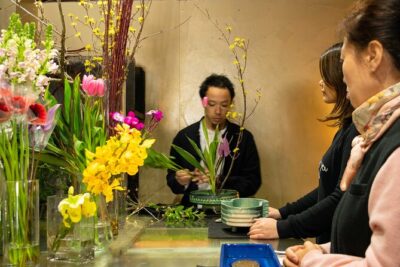
Traditional Japanese Flower Styling Workshop – Ikebana in Kyoto
Read our review →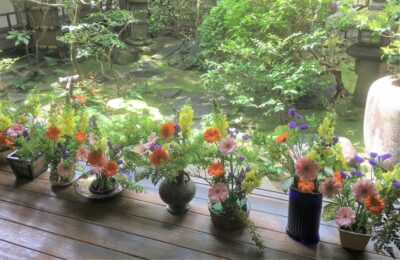
Browse the lists this tour appears in