
REVIEW · NARA DAY TRIPS
Nara: Half-Day Private Guided Tour
Nara’s famous deer are the first surprise: they wander through the park, wait near visitors, and share the streets with temple pilgrims. This four-hour private tour then links the city’s major sights, from Todaiji’s enormous Buddha to the quiet lanes of Naramachi.
I like the efficient route and the chance to shape the schedule with your guide. I also like that the tour combines temples, forest, wildlife, and old wooden homes, instead of treating Nara as a single stop. The main consideration is cost: at $135 per person, you still pay separately for admission, food, and optional transport.
In This Review
- Key points at a glance
- Why this four-hour Nara route works
- Todaiji and the Great Buddha
- Kasuga Taisha among the trees
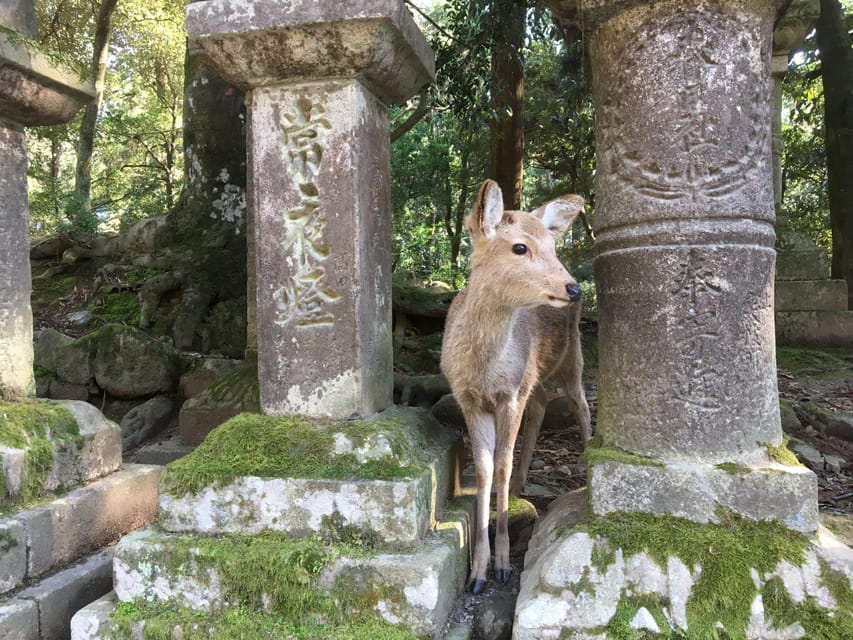
- Nara Park and the famous shika deer
- Naramachi and the Lattice House
- Kofukuji closes the historic loop
- What the private guide adds
- Price, extra fees, and real value
- Walking, transport, and accessibility
- Who should book this Nara tour
- Should you book it?
- FAQ
- How long does the Nara private tour last?
- Where can I meet the guide?
- Where does the tour finish?
- Which languages are available?
- Is the tour private?
- Which places are included in the route?
- Are entrance fees included?
- Is lunch included?
- Is transportation included?
- Can I cancel for a full refund?
Key points at a glance
- Todaiji opens the day with scale: See Japan’s largest sitting Buddha inside one of the world’s largest wooden buildings.
- Nara Park brings history outdoors: The park’s deer roam freely around the temple paths and shrine approaches.
- Kasuga Taisha adds a forest setting: The shrine visit follows Todaiji and includes a 45-minute guided stop.
- Naramachi slows the pace: The Lattice House gives you a look at traditional town architecture.
- A private guide can adjust the route: Mouloud received particular praise for changing the schedule when time was tight.
- Extra costs matter: Todaiji is 600 JPY, Kasuga Taisha is listed at 6,000 JPY, and optional transport is 300 JPY per person.
Why this four-hour Nara route works
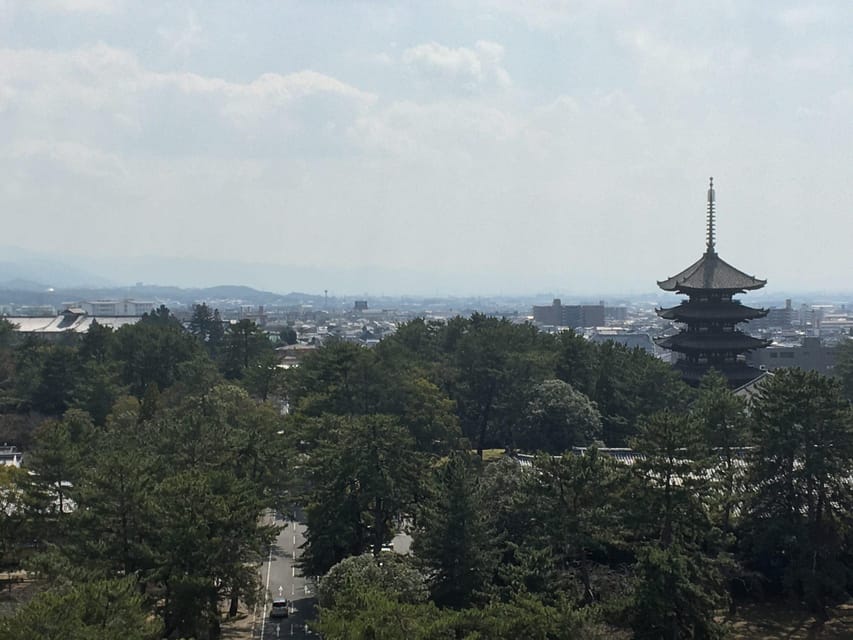
Nara is easy to underestimate. Many people picture only a giant Buddha and a few deer, then discover a city with several distinct moods. This tour gives each one a place in the day: grand Buddhist architecture, a Shinto shrine among trees, open parkland, an old merchant district, and the remains of another major temple complex.
The route is conducted on foot and by public transport. That matters because Nara’s sights are close enough to connect but spread out enough to make a little planning useful. You meet at either Kintetsu-Nara Station or JR Nara Station, then finish at Nara Station or Kintetsu-Nara Station.
I would choose Kintetsu-Nara Station if it suits your train plans, since the pickup details specify the area near and after the east gates. At JR Nara Station, meet near and after the gates at the one available exit. Confirm the exact meeting point with the provider before setting out, especially if you arrive during a busy period.
The group is private, so you are not tied to the pace of strangers. That is the biggest practical advantage. If you want more time at Todaiji, fewer photographs at another stop, or a tighter schedule for a train, your guide has room to adjust. Mouloud was specifically praised for changing the plan when a group had limited time.
More day trips to Nara:
- World Heritage Kyoto & Nara Uji Authentic Matcha Experience
★ 5.0 · 1,573 reviews - Nara Half Day Trip Walking Tour (Private Option Available)
★ 5.0 · 937 reviews - Nara Early Morning Tour (Kyoto or Osaka Departure Available)
★ 5.0 · 676 reviews
Todaiji and the Great Buddha
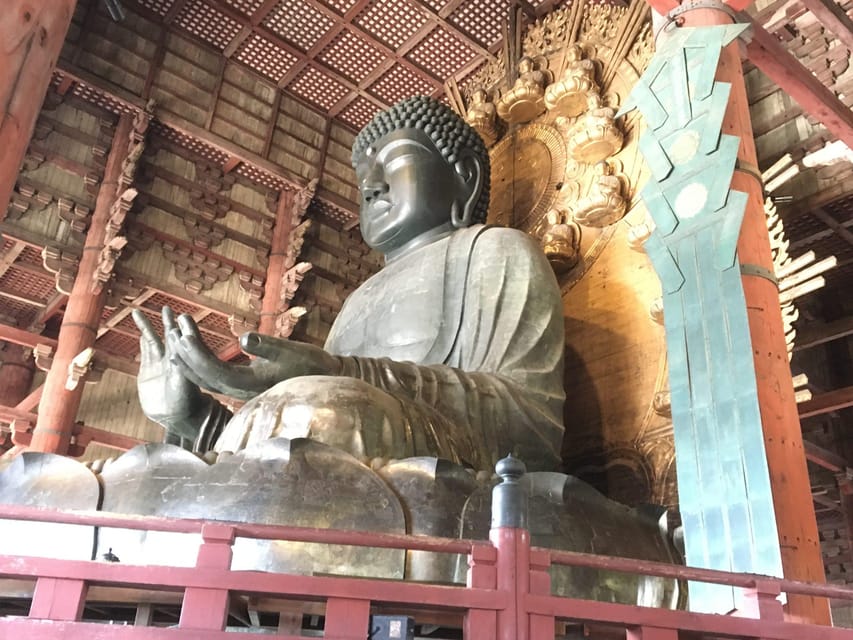
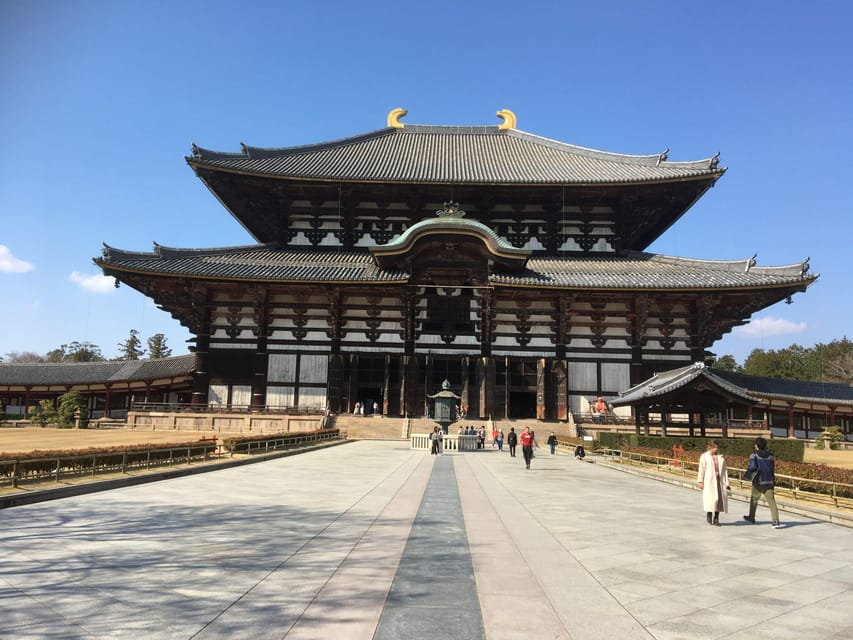
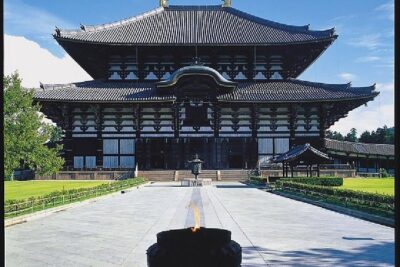
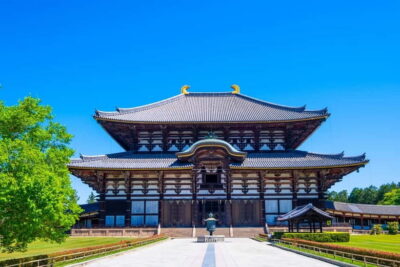
The tour begins at Tōdai-ji, usually written as Todaiji in English. This is the heavyweight stop, and the first hour is well spent here. You enter one of Japan’s best-known Buddhist temple compounds and see the Great Buddha, a huge seated figure housed in the Daibutsuden, or Great Buddha Hall.
The building itself is part of the spectacle. It is described as the world’s largest wooden building, while the statue is the largest sitting Buddha in Japan. Those facts can sound like dry measurements, but the effect is more direct: you walk into a vast wooden space and meet an image designed to make a person feel small.
Your guide can give the religious and historical setting that a quick self-guided visit might lack. This is especially useful if you want to understand why the Buddha matters, not simply take a photograph in front of it. The planned hour gives you time for a guided visit, sightseeing, and walking without making the temple an all-day stop.
Admission is not included. The listed fee is 600 JPY per person. Build that into the real price rather than treating the $135 tour fee as the full cost.
Todaiji can also be the busiest part of the route. The private format helps with questions and pacing, but it cannot remove the crowds that gather around one of Nara’s major sights. If you prefer a quiet temple with no grand scale, this may feel like a lot of attention on one enormous building. For most first visits, though, it is the right place to begin.
Kasuga Taisha among the trees
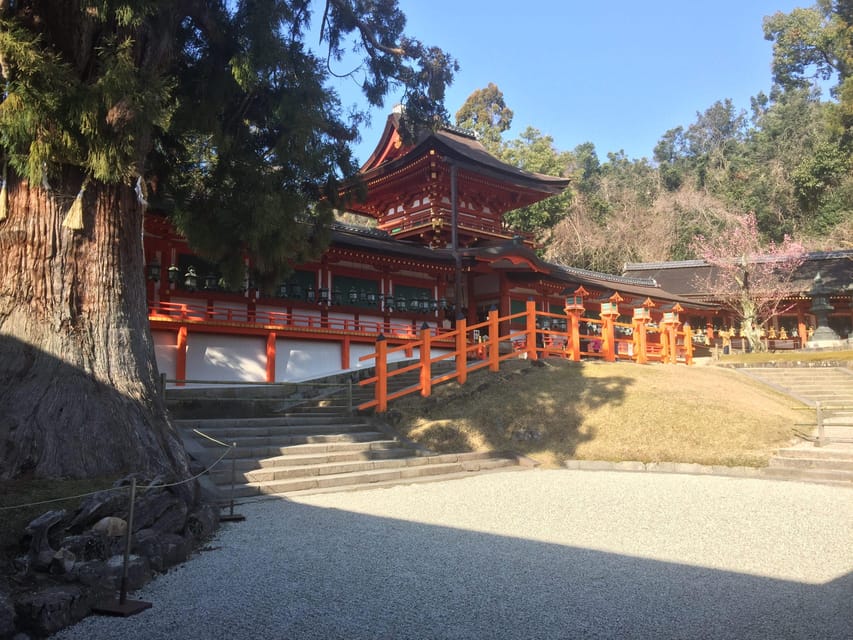
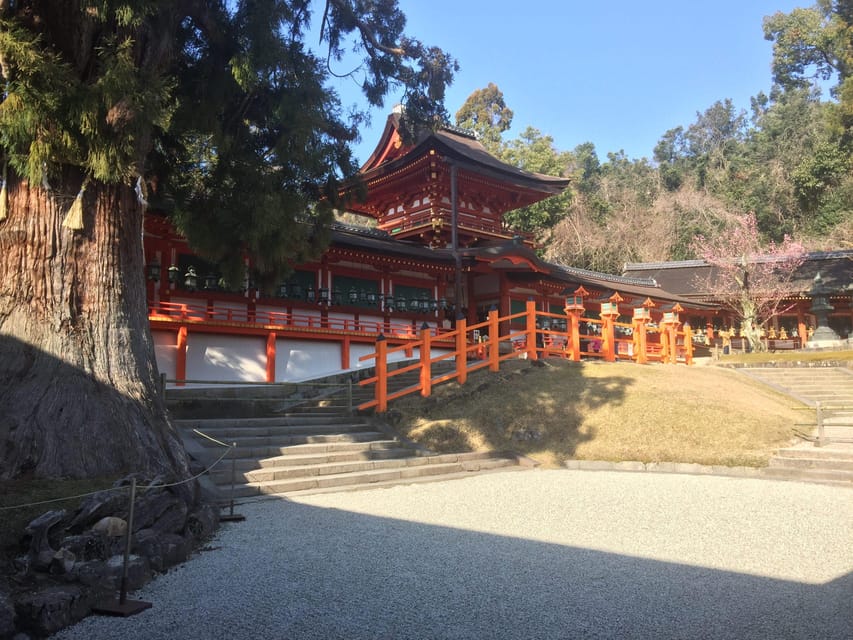
After Todaiji, the route moves to Kasuga Taisha, Nara’s major Shinto shrine. The visit lasts about 45 minutes and shifts the mood from indoor monument to sacred woodland.
Kasuga Taisha is known for its lanterns and its setting among nature. The supplied route describes it as a sacred place surrounded by nature, which is exactly why it works well after the Great Buddha. You get a sense of Nara as more than an old capital filled with buildings. The forested approach gives the city a calmer edge.
Your guide leads the visit and points out what to notice. That can be helpful at a shrine, where rituals, architectural details, and religious customs may not be obvious if you are seeing them for the first time.
The listed entrance fee is 6,000 JPY per person, a surprisingly large amount compared with the Todaiji fee. Because the figure has such a big effect on your budget, check the current charge when booking or before entering. The tour information gives 6,000 JPY, and it is not included in the tour price.
If you are counting every yen, this is the stop to examine most closely. You might decide that the guide’s explanation and the shrine setting justify the added cost, or you might ask how much of the shrine visit requires paid admission. The key point is to clarify this before the tour, not at the gate.
Nara Park and the famous shika deer
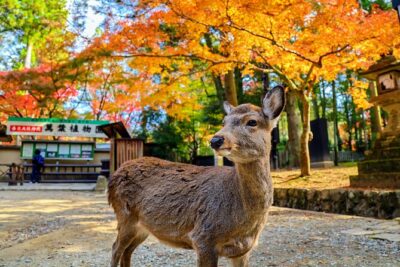
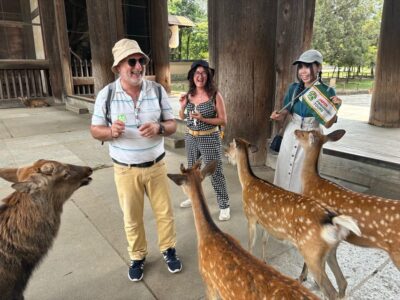
Nara Park is the most playful part of the day. The tour allows about 45 minutes for walking, photographs, and wildlife viewing. The deer are not confined behind fences. They move through the park and around the historic sights, which creates the unusual feeling of a city park shared by animals, worshippers, and sightseers.
The information for this experience uses both 1,200 and 1,400 as the deer count. Either way, you can expect a large population of shika deer across the park. Their presence gives Nara its signature character, but it also means you should treat them as animals rather than props.
The deer are famous for waiting near people, and the tour description specifically presents them as ready to meet you. Your guide can help you handle the encounter sensibly. Keep your attention on the animal, especially when offering food or standing close for a photograph. The park visit is not just a photo stop. It is a chance to see how wildlife has become part of Nara’s public life.
Forty-five minutes is enough for a proper look, though you may wish it were longer if you enjoy photography. The private format helps here because you can tell your guide how much time you want with the deer. If you are less interested in wildlife, you will still be walking through one of the city’s central historic areas on the way between major sites.
The deer can also make the day feel less formal. After the solemn scale of Todaiji and Kasuga Taisha, a deer approaching your path gives the schedule a welcome bit of comedy.
A few more Nara experiences worth comparing
- Perfect Nara Park Half-Day Bus Tour with English Speaking Guide
★ 5.0 · 49 reviews - Nara: Half-Day Private Tour of 4 Must-See Spots & Deer Park
★ 5.0 · 11 reviews - Nara: Half-Day Private Tour of 4 Must-See Spots & Deer Park
★ 5.0 · 3 reviews - Kyoto Arashiyama Bamboo forest & Garden Half-Day Walking Tour
★ 5.0 · 413 reviews
Naramachi and the Lattice House
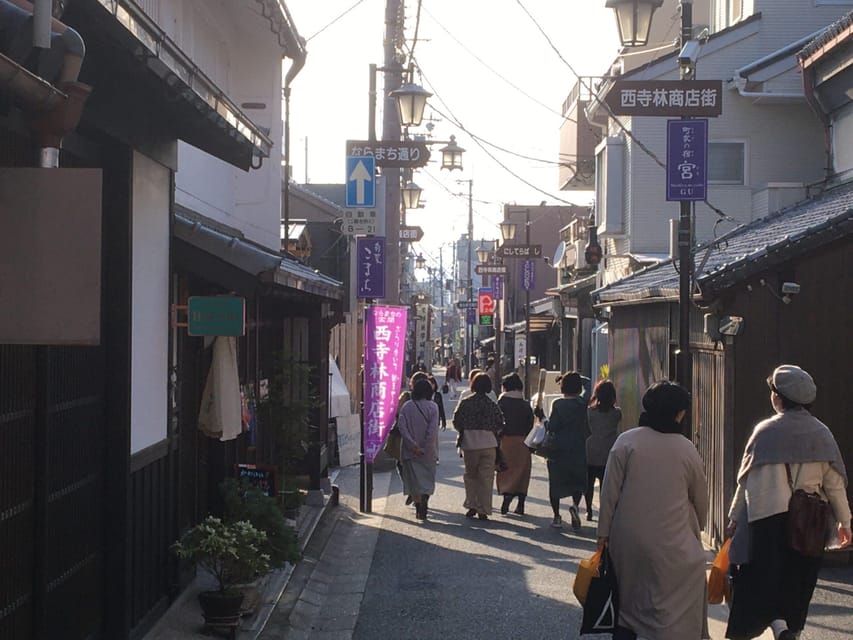
Naramachi provides the tour’s best look at old urban Nara. This historic district is known for traditional architecture, and the stop includes Naramachi Koshi-no-Ie, also called the Lattice House.
The visit lasts about 45 minutes. Instead of focusing on a single monumental religious site, you see the kind of town setting that helps explain how people lived and worked. The traditional design takes you away from the broad park paths and into a more intimate side of the city.
The Lattice House is particularly useful for visitors who want architecture in human scale. Large temples tell you about state power, religion, and public ceremony. A traditional house tells you more about daily space, street frontage, and the look of an older neighborhood.
This is also a good place for the guide’s personal explanation. A building can seem simple until someone points out why the lattice is there or how the house relates to the street. The tour description promises a walk through the past, and this is the stop where that idea feels most concrete.
Naramachi may be the part you remember most if you prefer ordinary streets over major monuments. It is also the place where the pace can feel more relaxed. You are not simply moving from one famous photograph to the next.
Kofukuji closes the historic loop
The final scheduled stop is Kōfuku-ji, with about 45 minutes for a guided visit, walking, and photographs. This temple adds another important layer to Nara’s religious story and rounds out the day after Todaiji and Kasuga Taisha.
Kofukuji works well near the end because the tour has already given you the largest Buddha and the forest shrine. Here, the focus returns to temple buildings and the historic city around them. Your guide can connect the stops so they feel like parts of Nara rather than unrelated attractions.
The route finishes at either Nara Station or Kintetsu-Nara Station. That is convenient if you plan to leave Nara after the tour. It also means you are not returned to your original pickup point unless you choose the same station.
The time allocation is generous enough for a useful look, but four hours goes quickly. The stated schedule adds up to the full duration, before allowing much room for delays, extended photographs, or a long meal. If one site matters greatly to you, tell the guide at the start.
What the private guide adds
The tour is offered in English, French, or Japanese. That gives you a useful choice, especially if you want to discuss the sights in a language you follow comfortably.
Mouloud is the named guide associated with the strongest personal comments. His flexibility helped one group with limited time, and his enthusiasm for Japan made the visit more than a sequence of stops. That matters on a short tour, where a guide’s ability to read the clock can protect your last stop from being rushed.
One three-star review praised the guide but expressed a preference for a Japanese guide to make the experience feel more authentic. That is a fair consideration. If cultural connection through Japanese language and local presentation is your priority, request a Japanese-language guide if available. If you want explanations in English or French, the language choice may be more important than the guide’s nationality.
The private setup also lets you ask questions without holding up a larger group. You can ask about Buddhist and Shinto customs, the deer, traditional homes, or the layout of the old city. The quality of that exchange depends on the guide assigned, so use the meeting time to explain what interests you most.
Price, extra fees, and real value
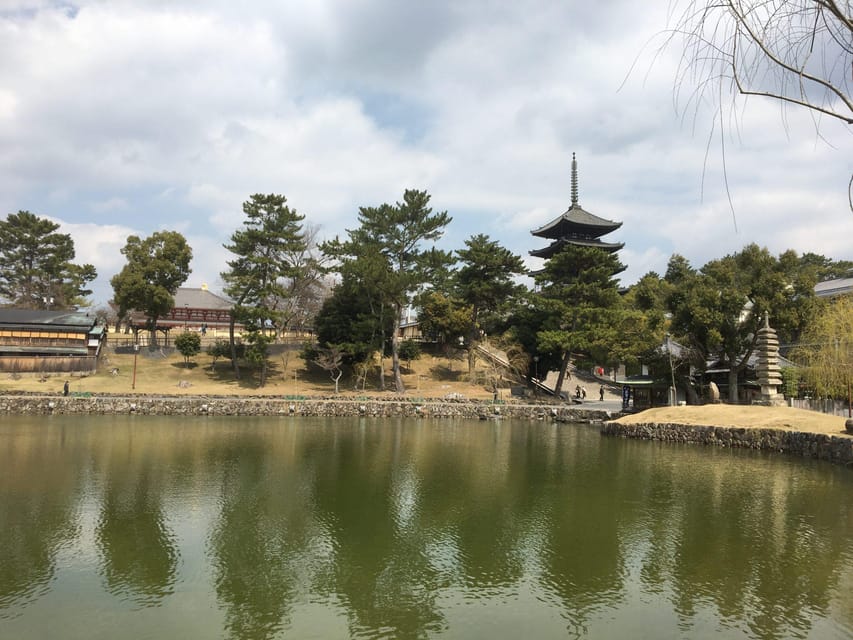
The listed price is $135 per person for four hours. Guide fees are included, but the headline price does not cover temple admission, food, drinks, snacks, or transport.
The known extras are:
- Todaiji entrance: 600 JPY per person
- Kasuga Taisha entrance: 6,000 JPY per person
- Lunch, if included in the day: about 2,500 JPY per person
- Optional transportation: 300 JPY per person
At the full listed cost, this is not a budget sightseeing walk. You are paying for a private guide, a planned route, language support, and the ability to adjust the schedule. That can be good value if you have only half a day or want someone to connect Nara’s religious sites and historic districts.
It is less attractive if you are comfortable navigating stations, reading signs, and visiting the major sights on your own. Nara can be explored independently, and the tour does not include meals or entrance fees. The private format is the key value, not a long list of included extras.
I would also confirm the Kasuga Taisha charge before booking. The stated 6,000 JPY fee is high enough to change the total price in a meaningful way.
Walking, transport, and accessibility
This is a four-hour experience on foot and by public transport. The description says transport is not mandatory and lists 300 JPY per person as the optional transportation cost. That suggests you may walk much of the route, with public transport used when useful.
You should be ready for repeated walking between temple grounds, park paths, shrine approaches, and the Naramachi streets. Comfortable shoes will make the half-day easier. Since the tour is private, you can discuss the pace and any concerns with the guide.
The experience is listed as wheelchair accessible. Still, the route includes several historic sites, outdoor paths, and traditional areas, so it is sensible to confirm the exact route and transport arrangements before booking if you use a wheelchair.
Pickup is included from the stated meeting areas at Kintetsu-Nara Station and JR Nara Station. Drop-off is available at Nara Station or Kintetsu-Nara Station. Free cancellation is available up to 24 hours before the start, and you can reserve now and pay later, which helps if your Japan schedule is still moving.
Who should book this Nara tour
I would recommend it to a first-time visitor with limited time who wants the main sights arranged into a sensible story. Families and small private groups may also like the ability to adjust the pace, especially around the deer and the long temple visits.
It suits you if you want explanations in English, French, or Japanese and prefer a guide to handle the flow between stations, temples, and old streets. It also suits anyone who values a personal guide more than the lowest possible price.
I would hesitate if your main goal is a slow visit to one temple, a long lunch, or a full day in Naramachi. The schedule is active, and each stop has a set place in the four-hour plan. I would also think twice if the extra Kasuga Taisha admission makes the total too high for your budget.
Should you book it?
Book this tour if you have four hours, want Nara’s essential sights in one private route, and value a flexible guide. Todaiji, the deer, Kasuga Taisha, Naramachi, and Kofukuji give you a well-rounded first look at the city.
Before paying, confirm the Kasuga Taisha admission, choose your preferred guide language, and decide if you need the optional transport. If you do that homework, this is a practical way to see Nara’s biggest sights without reducing the city to only deer and one giant Buddha.
FAQ
How long does the Nara private tour last?
The tour lasts four hours.
Where can I meet the guide?
Pickup is available at Kintetsu-Nara Station near and after the east gates, or at JR Nara Station near and after the gates at the station’s one exit.
Where does the tour finish?
Drop-off is available at Nara Station or Kintetsu-Nara Station.
Which languages are available?
The live guide is available in French, English, and Japanese.
Is the tour private?
Yes. The activity is offered as a private group experience.
Which places are included in the route?
The route includes Todaiji, Kasuga Taisha, Nara Park, Naramachi Koshi-no-Ie, and Kofukuji.
Are entrance fees included?
No. Todaiji entrance is listed at 600 JPY per person, and Kasuga Taisha entrance is listed at 6,000 JPY per person.
Is lunch included?
No. Lunch, snacks, and drinks are not included. If lunch is arranged, the listed estimate is about 2,500 JPY per person.
Is transportation included?
Transportation is not mandatory and is listed separately at 300 JPY per person.
Can I cancel for a full refund?
Yes. You can cancel up to 24 hours in advance for a full refund.
Recently added around Nara
- Nara Private Customizable Half Day Tour★ 5.0 · 3 reviews
- Nara: Essential Private Tour with Deer Park and Temples★ 5.0 · 3 reviews
- Full Day Nara Deer, Temple, Shrine, Activities & Tea Ceremony★ 5.0 · 3 reviews
- Discover the Essence of Nara Ink Through Your Senses★ 5.0 · 3 reviews
- Private Journey in Nara’s Historical Wonder★ 5.0 · 3 reviews
- Nara:Private Tea Ceremony(Max 5 ppl) -Master Matcha Making-★ 5.0 · 3 reviews
- Nara Takayama Tea Whisk Craft and Tea Culture Experience★ 5.0 · 3 reviews
- Nara: Half-Day Private Tour of 4 Must-See Spots & Deer Park★ 5.0 · 3 reviews
Nara Day Trips, compared.
World Heritage Kyoto & Nara Uji Authentic Matcha Experience
Read our review →
Kyoto/Osaka: Nara, Fushimi Inari Taisha, Arashiyama Bus Tour
Read our review →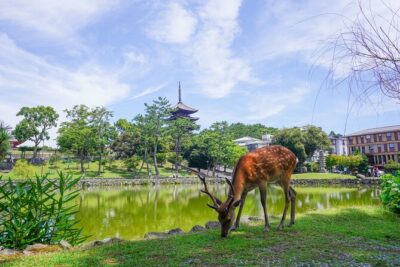
Nara Half Day Trip Walking Tour (Private Option Available)
Read our review →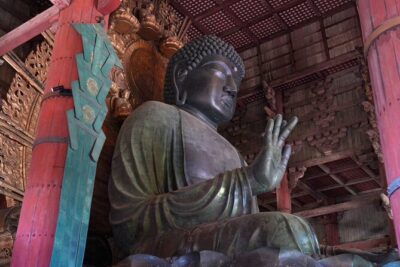
Nara Early Morning Tour (Kyoto or Osaka Departure Available)
Read our review →
Kyoto/Osaka: Kinkakuji, Bamboo Forest, and Nara Deer Park
Read our review →Browse the lists this tour appears in