
REVIEW · NARA DAY TRIPS
One-Day Walking Tour of Amazing 8th Century Capital Nara
Nara gives you Japan on a grand scale, from freely roaming deer in the park to Todai-ji’s enormous wooden hall and giant Buddha. This private walking tour ties those sights together with the story of Japan’s 8th-century capital, so you spend less time navigating and more time looking around.
I like the private format, since only your group joins the activity, and I like the mix of quiet old merchant streets, shrine grounds, wildlife, and monumental temple architecture. Guides such as Satomi and Fuji have also shown a useful willingness to adjust the day when interests change.
The main thing to watch is the extra cost. The $137.17 price does not include about ¥2,000 for public transportation or ¥1,500 for entrance fees, and the tour is described as private but not automatically fully customized.
In This Review
- Key points at a glance
- Why Nara works so well as a full-day outing
- Naramachi: old merchant streets before the big monuments
- Kasuga Grand Shrine and the Fujiwara connection
- Todai-ji: the day’s great visual punch
- What the private format really gives you
- Guides who can shape the day
- The real cost and what you receive
- Walking, timing, and practical limits
- Who should book this Nara day
- Should you book it?
- FAQ
- How long does the Nara walking tour last?
- What time does the tour start?
- Is this a private tour?
- Which main places does the tour visit?
- Are Todai-ji and Kasuga Grand Shrine admission fees included?
- Is public transportation included?
- Are deer included in the experience?
- Can the itinerary be changed?
- What happens if bad weather cancels the tour?
- How late can I cancel for a full refund?
Key points at a glance
- Naramachi first: Begin among traditional latticed merchant houses, some more than a century old.
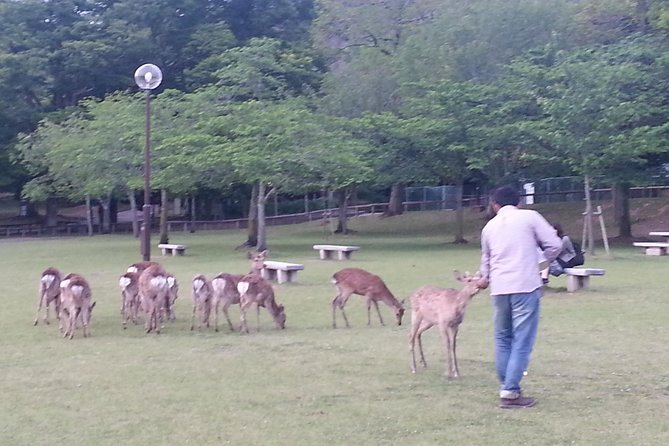
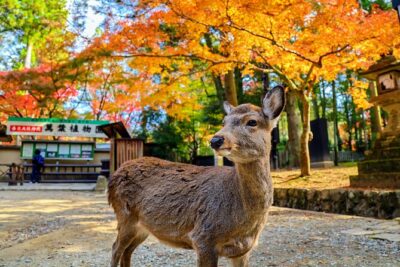
- Deer in Nara Park: See the animals that roam freely around one of Japan’s most famous historic areas.
- Kasuga Grand Shrine: Visit an 8th-century shrine founded by the powerful Fujiwara clan.
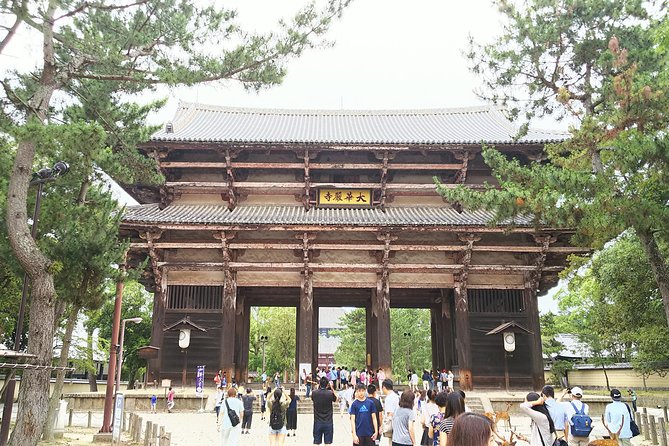
- Todai-ji’s giant Buddha: Enter a UNESCO World Heritage site with one of Japan’s most impressive wooden buildings.
- Private guiding: Your own group receives the guide’s attention, with no strangers added to the booking.
- Plan for extra fees: Transportation and admission to Todai-ji and Kasuga Taisha are not included.
Why Nara works so well as a full-day outing
Nara was Japan’s capital in the 8th century, long before Tokyo took the spotlight. That early capital left behind temples, shrines, old neighborhoods, and a cultural setting that feels different from Kyoto.
I like this tour because it does not treat Nara as just a quick stop for a large Buddha. You begin in Naramachi, move through the religious world of Kasuga Grand Shrine, and finish at Todai-ji, where scale and ceremony take over.
The route also gives you several kinds of Japanese history in one day. Naramachi shows ordinary urban life and commerce. Kasuga connects religion with aristocratic power. Todai-ji reflects the authority of the imperial court and the ambition of Emperor Shomu.
At about eight hours, this is a serious day out rather than a short orientation walk. The early 8:30 a.m. start gives you a useful amount of time, but you should expect plenty of walking and time on your feet.
More day trips to Nara:
- World Heritage Kyoto & Nara Uji Authentic Matcha Experience
★ 5.0 · 1,573 reviews - Kyoto/Osaka: Nara, Fushimi Inari Taisha, Arashiyama Bus Tour
★ 4.7 · 1,275 reviews - Nara Half Day Trip Walking Tour (Private Option Available)
★ 5.0 · 937 reviews
Naramachi: old merchant streets before the big monuments
The tour starts in Naramachi, an area that began as a temple town in the 8th century and later became a merchant district. Its traditional-style houses, including old latticed homes more than 100 years old, offer a quieter beginning than the grand temple grounds later in the day.
This is where a guide can add real value. From the outside, the narrow houses may look like attractive old buildings. With explanation, you can better understand how the neighborhood changed from a religious settlement into a place of trade and daily life.
I appreciate starting here because it gives you a human scale. You see the kind of streets and homes that help connect Japan’s political and religious past with the people who lived and worked around it.
Admission to this first stop is free. That keeps the opening portion simple, though the provided details do not promise entry into every house or museum in the neighborhood. Think of Naramachi primarily as a guided walk through the district and its traditional streets.
The one limitation is that Naramachi may feel less immediately dramatic than Todai-ji. If you want a day made entirely of famous sights, the first 90 minutes could seem modest. I would see it as a useful warm-up that gives the rest of Nara more context.
Kasuga Grand Shrine and the Fujiwara connection
Next comes Kasuga Grand Shrine, founded in the 8th century by the Fujiwara clan. The Fujiwara were among the most powerful aristocrats in Japanese history, and the shrine’s origins connect Nara’s religious life to the people who held influence at court.
You have about an hour here. Admission is not included, so set aside part of the additional ¥1,500 entrance budget for Kasuga Taisha and Todai-ji together.
Kasuga is valuable for the way it changes the mood of the day. After the merchant streets of Naramachi, you move into a major Shinto setting tied to old aristocratic traditions. The fact that the head priest is descended from the Fujiwara family adds a personal link between the shrine’s past and its present leadership.
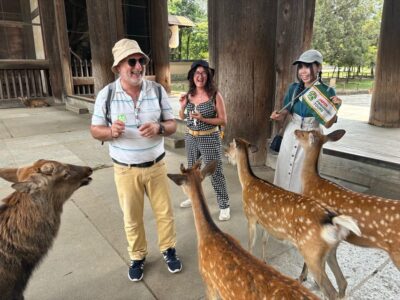
This stop also sits within the broader Nara Park area, where deer roam freely. The animals are a memorable part of the visit, but you should treat them as living creatures rather than decorations. The experience is unusual precisely because the deer move through a historic public setting instead of remaining behind fences.
An hour is enough for a focused visit, but it is not an unlimited amount of time for exploring every corner. If shrine architecture is your main interest, tell your guide early. The private setup makes that conversation easier, even though the tour is not advertised as a fully customized itinerary.
Todai-ji: the day’s great visual punch
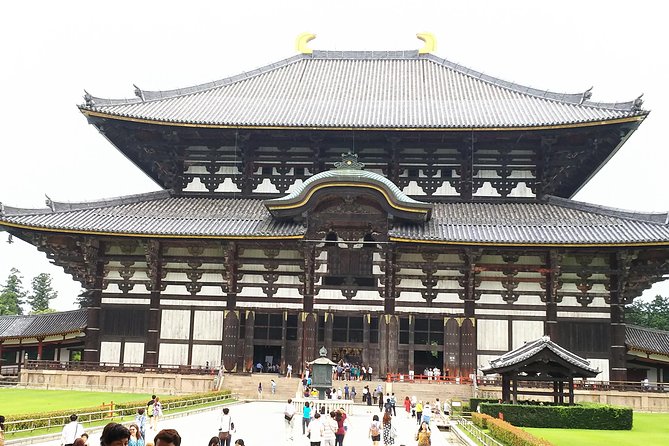
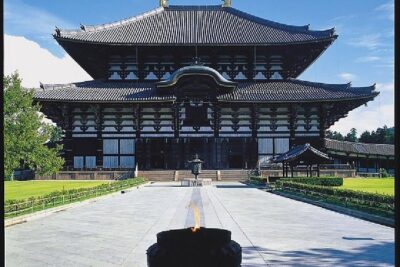
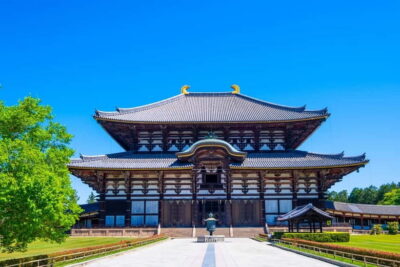
Todai-ji Temple is the tour’s headline stop, and for good reason. Founded by Emperor Shomu more than 1,300 years ago, it is a UNESCO World Heritage site with a vast precinct beneath Mt. Wakakusa.
The temple’s enormous wooden structure and giant Buddha provide the strongest sense of scale on the route. You can read about old Japanese capitals and imperial projects, but standing before a building of this size makes the ambition more concrete.
You receive about an hour at Todai-ji, with entrance fees excluded. The supplied cost information places admission to Todai-ji and Kasuga Taisha at ¥1,500 per person in total, though you should confirm the current amount when booking.
I especially like having a guide here because Todai-ji can be visually overwhelming. A good explanation helps you sort out the buildings, the temple’s age, the role of Emperor Shomu, and the importance of the giant Buddha instead of simply taking a few photographs and moving on.
The hour may feel brief if you want a slow architectural study. Todai-ji is a large complex, and the details provided do not promise time in every building or a visit to the Nara National Museum. One guest asked to add the museum during the day, and Satomi adapted well, but you should treat that kind of change as a request rather than a guaranteed inclusion.
More walking tours in Kyoto:
- Kyoto Geisha Walking Tour: Gion District & Hidden Gems
★ 4.7 · 3,273 reviews - Kyoto: Gion Magical Night Walking Tour with Geisha Trivia
★ 4.9 · 2,393 reviews - Kyoto: Gion Geisha District Walking Tour – Stories of Geisha
★ 4.7 · 2,187 reviews - Night Walk in Gion: Kyoto’s Geisha District
★ 4.5 · 2,003 reviews
What the private format really gives you
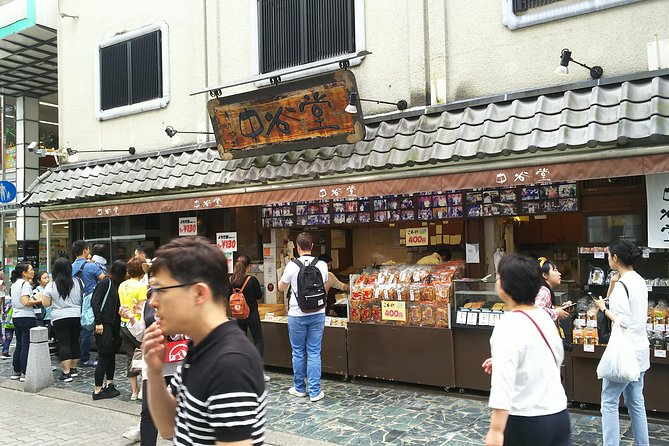
This is a private activity, so only your group participates. That matters most when you want to ask questions, walk at a comfortable pace, or make a small adjustment without waiting for a bus full of people.
The guide also handles the navigation. Nara’s main sites are easy to name but spread across different areas, and a guide saves you from repeatedly checking maps and transport routes.
The format is particularly helpful for families or groups with different interests. One person can ask about architecture, another about Japanese history, and another about the deer or local customs. Tomoko was praised for taking care of a husband with a bad knee, which suggests that guides may be able to adjust their pace and approach when you explain a limitation.
Still, private does not mean every detail is custom-built. The planned route remains Naramachi, Kasuga Grand Shrine, and Todai-ji. Fuji tailored part of a day to a guest’s interests, and Satomi handled an unexpected museum request, but you should confirm major changes before assuming they are included.
Guides who can shape the day
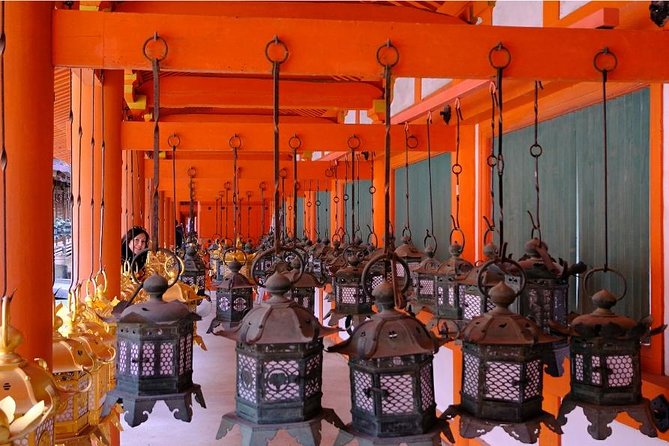
The experience uses different guides, so your exact guide is not guaranteed from the information provided. Names associated with the tour include Satomi, Emi Rigano, Tomoko, Fumiko, Noriko, Norika, and Fuji.
Their praised qualities are useful clues about what to look for. Satomi was flexible during an unplanned visit to the Nara National Museum and even helped with finding a dinner spot afterward. Fuji adjusted the day to suit personal interests and helped choose a good lunch.
Tomoko was especially attentive to a traveler with a bad knee. Fumiko was valued for explaining Japanese culture and history while answering questions. Noriko was described as fun and patient during a day that included the deer and Todai-ji’s great wooden hall.
I would not assume that every guide will provide the same style of commentary or the same restaurant suggestions. But the private structure gives you a good chance to state your needs at the start. If you have a knee problem, a strong interest in museums, or a preference for food and local culture, say so before the walking begins.
The real cost and what you receive
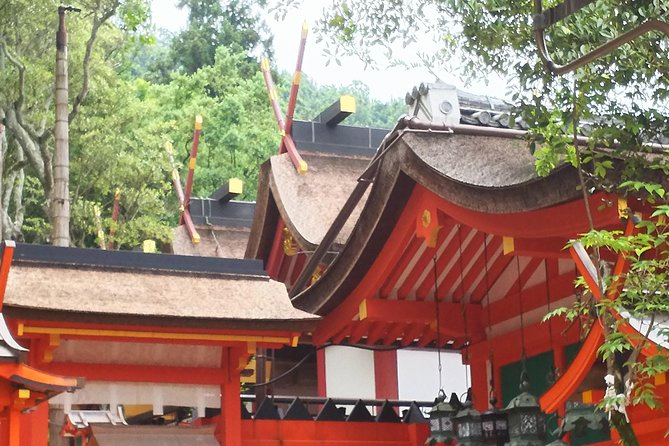
The listed price is $137.17 per person. For a private eight-hour tour, that can be reasonable for a small group that values personal attention and does not want to plan the route alone.
You also need to budget for the stated extras:
- Public transportation: ¥2,000 per person
- Entrance fees for Todai-ji and Kasuga Taisha: ¥1,500 per person
That makes the advertised price only part of the day’s cost. The guide is included, but transport and key admissions are not.
The value improves when several people share the private experience, since the guide’s time is devoted only to your party. Group discounts are available, though no discount amount is provided. If you are traveling alone, the price is a larger commitment. If you are a family or small group, the private format may compare more favorably with booking several separate activities.
This tour also saves planning time. You do not need to research how Naramachi relates to Kasuga or how to connect the shrine area with Todai-ji. For some people, that convenience is worth as much as the commentary.
Walking, timing, and practical limits
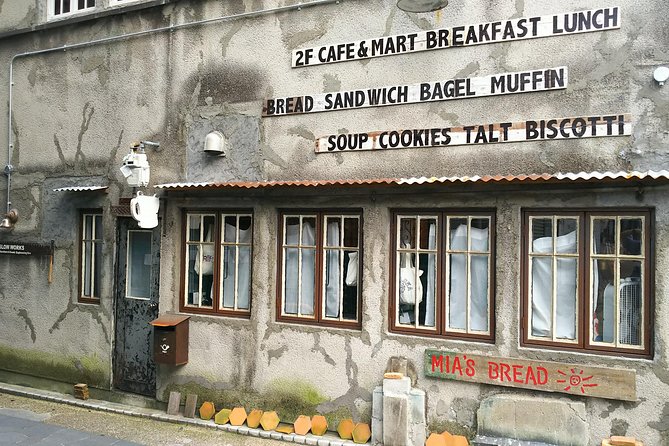
The activity starts at 8:30 a.m. and lasts about eight hours. It begins in Kyoto, and public transportation costs are extra. Because the exact meeting and ending details are not fully set out here, confirm where you will meet and where the tour finishes before the day.
The itinerary ends in a different location from the starting point. That can work well if you want to continue in Nara, eat dinner there, or make your own way onward. It is less convenient if you need to return to your Kyoto hotel on a strict schedule.
Most people can participate, and service animals are allowed. The day still involves walking through an old neighborhood, shrine grounds, park areas, and a large temple precinct. If someone in your group has limited mobility, contact the provider ahead of time and discuss the pace. The guide’s ability to help with a bad knee is encouraging, but it does not remove the need to plan carefully.
The tour requires good weather. If poor weather cancels it, you receive the choice of another date or a full refund. You can also cancel for a full refund up to 24 hours before the local start time. Changes or cancellations inside that window are not accepted for a refund.
Who should book this Nara day
I would choose this tour if you want a clear introduction to Nara without spending hours building a route yourself. It suits first-time visitors who want the major historic areas, a guide’s explanations, and the chance to see deer in the park.
It is also a good fit for families, couples, and small groups that prefer a private day. The guides’ flexibility makes it useful for groups with mixed interests, though you should not expect unlimited itinerary changes.
You may want another arrangement if you prefer to wander alone, spend several hours in one museum, or control every minute of the day. The one-hour limits at Kasuga and Todai-ji keep the route moving, but they may feel short to dedicated shrine or temple fans.
I would also think twice if your budget is tight. The extra transport and admission charges add to the advertised price, and the tour is a full-day commitment.
Should you book it?
Book this tour if you want Nara’s main story in one well-organized day: merchant streets, an old aristocratic shrine, freely roaming deer, and Todai-ji’s giant Buddha. The private guide is the strongest reason to choose it, especially if you value questions, flexible pacing, or help with navigation.
Before booking, ask for the exact meeting and ending points, confirm the current extra fees, and explain any walking concerns. If you do that, this is a practical way to see Nara without reducing the old capital to a quick temple photo stop.
FAQ
How long does the Nara walking tour last?
The tour lasts about eight hours.
What time does the tour start?
The stated start time is 8:30 a.m.
Is this a private tour?
Yes. Only your group participates in the activity.
Which main places does the tour visit?
The route includes Naramachi, Kasuga Grand Shrine, and Todai-ji Temple.
Are Todai-ji and Kasuga Grand Shrine admission fees included?
No. Entrance fees for Todai-ji and Kasuga Taisha are listed as an extra ¥1,500 per person.
Is public transportation included?
No. Public transportation costs are listed separately at ¥2,000 per person.
Are deer included in the experience?
The tour includes a chance to see the freely roaming deer of Nara Park.
Can the itinerary be changed?
The tour is private, and guides have shown flexibility with requests, but it is not described as a fully customized tour. Major changes should be confirmed in advance.
What happens if bad weather cancels the tour?
You will be offered a different date or a full refund.
How late can I cancel for a full refund?
You can cancel at least 24 hours before the local start time for a full refund. Cancellations or changes made less than 24 hours before the start are not accepted for a refund.
Recently added around Kyoto
- Higashiyama | Kyoto: Sakura Season Private Rickshaw Tour★ 5.0 · 3 reviews
- Kyoto Kimono Rental CHAMATSU|Kimono/Yukata Rental FamilyPlan★ 5.0 · 3 reviews
- Kyoto: Half-Day Private Guided Tour to the Old Town of Gion★ 4.4 · 3 reviews
- Nara Private Customizable Half Day Tour★ 5.0 · 3 reviews
- Kansai Region Hiking Adventure in Nara Kobe Kyoto and More★ 5.0 · 3 reviews
- Full Day Nara Deer, Temple, Shrine, Activities & Tea Ceremony★ 5.0 · 3 reviews
- Nara: Essential Private Tour with Deer Park and Temples★ 5.0 · 3 reviews
- Hiking Tour for Sacred Sites in Kyoto with a Guide★ 5.0 · 3 reviews
Nara Day Trips, compared.
World Heritage Kyoto & Nara Uji Authentic Matcha Experience
Read our review →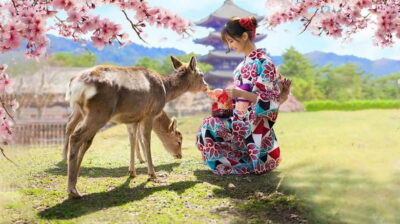
Kyoto/Osaka: Nara, Fushimi Inari Taisha, Arashiyama Bus Tour
Read our review →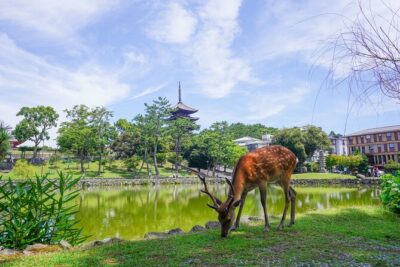
Nara Half Day Trip Walking Tour (Private Option Available)
Read our review →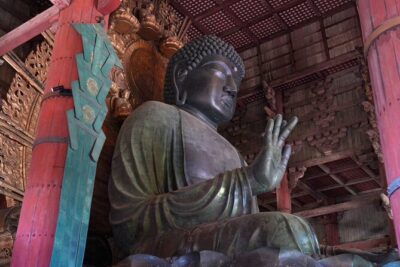
Nara Early Morning Tour (Kyoto or Osaka Departure Available)
Read our review →
Kyoto/Osaka: Kinkakuji, Bamboo Forest, and Nara Deer Park
Read our review →Browse the lists this tour appears in