
REVIEW · KYOTO ZEN MEDITATION EXPERIENCES
Morning Zen Meditation at a Kyoto Café
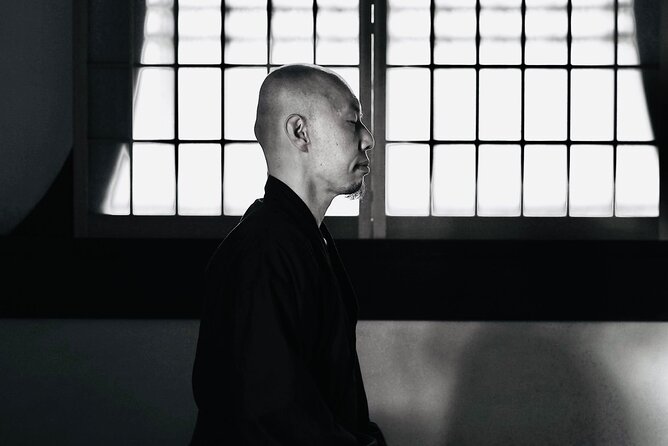
The unusual thing here is the setting: you practice Zen inside a traditional machiya café, not in a large temple class. Uyesugi, who has trained at a Rinzai Zen temple in Kyoto for more than three years, guides you through chanting, seated meditation, and coffee conversation in a compact one-hour session.
I like the small size, with no more than four participants, and the simple structure that gives you a real taste of Zen without taking over your morning. I also like the finish: a cup of fresh single-origin coffee gives you time to ask questions and talk about what you just practiced.
The main consideration is that this is an introduction, not an extended retreat or a full temple ceremony. The silent sitting lasts about 10 minutes after the chanting, so people seeking a long, demanding meditation session may find it too brief.
In This Review
- Key details at a glance
- A quiet Kyoto morning at 650-18 Shimotenjinchō
- Uyesugi’s introduction to Rinzai Zen
- Ten minutes of mantra chanting
- Ten minutes of silent seated zazen
- Specialty coffee and an easy conversation
- Why the four-person limit changes the experience
- What the $18.24 price really buys you
- Who should book this Kyoto meditation
- Timing, transport, and booking advice
- Should you book Morning Zen Meditation at a Kyoto Café?
- FAQ
- Where does Morning Zen Meditation at a Kyoto Café take place?
- How long does the experience last?
- Where does the activity end?
- Who leads the meditation?
- Is the session available in English?
- How long is the mantra chanting?
- How long is the silent meditation?
- Is coffee included?
- How many people can participate?
- Can I cancel for a full refund?
Key details at a glance
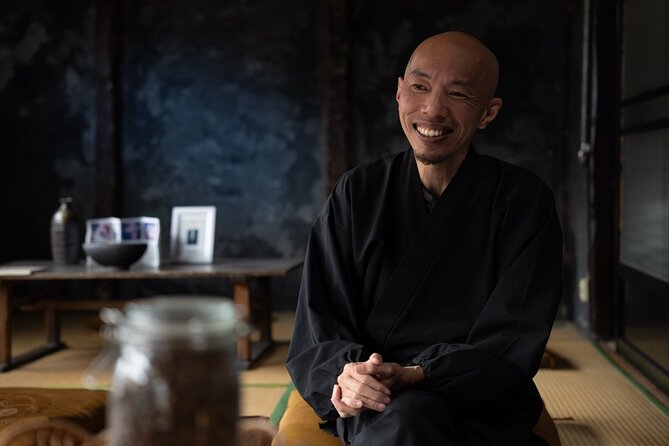
- Rinzai Zen guidance: Uyesugi has practiced at a Rinzai Zen temple in Kyoto for over three years and leads the session in English or Japanese.
- Two forms of meditation: You spend about 10 minutes chanting a mantra, followed by about 10 minutes of silent seated zazen.
- Machiya café setting: The traditional Kyoto townhouse café gives the morning a calm, intimate backdrop.
- Very small group: Only up to four people participate, and the activity is private for your group.
- Coffee and conversation: The session ends with freshly brewed, single-origin specialty coffee and an informal exchange.
- Easy one-hour plan: The activity begins and ends at Zen Coffee Kyoto, near public transportation.
A quiet Kyoto morning at 650-18 Shimotenjinchō
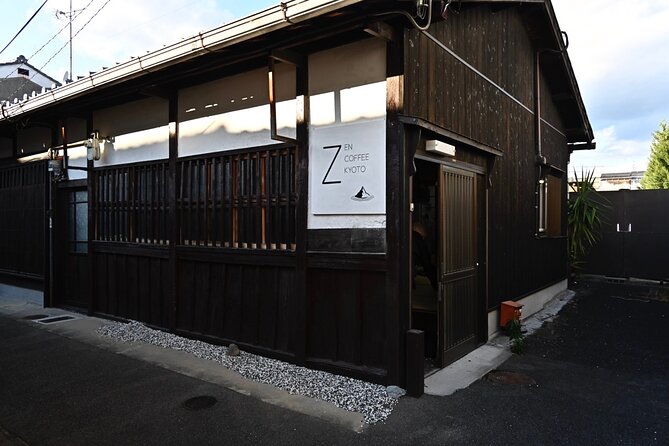
You meet at Zen Coffee Kyoto, at 650-18 Shimotenjinchō in Kyoto’s Kamigyo Ward. The activity lasts about one hour and returns you to the same place, so it is easy to fit before sightseeing, breakfast elsewhere, or a larger day of temple visits.
The address matters because this is not a tour that moves from one attraction to another. You are coming to one carefully prepared room and giving it your attention. That makes the experience easy to plan, but it also means the value comes from the quality of the guidance and the mood of the session, not from the number of sights covered.
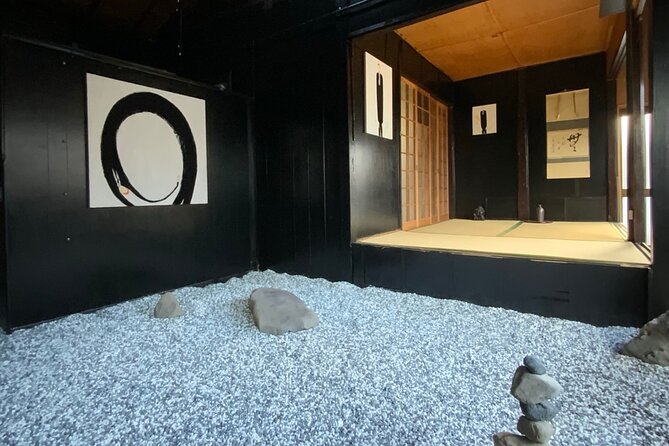
The café’s machiya style adds a useful sense of place. Traditional Kyoto townhouses are closely tied to the city’s older residential and commercial character, and practicing in one feels different from sitting in a hotel meeting room. You still have the comfort of a café, but the setting gives the meditation a local frame.
The space has also been designed with the activity in mind. You should expect a calm, tidy environment suited to focused sitting rather than a busy café stop. Since the group is capped at four, you are unlikely to feel lost in a crowd or treated as one person in a large class.
More Zen sittings in Kyoto:
- Kyoto Zen Meditation & Garden Tour at a Zen Temple with Lunch
★ 5.0 · 441 reviews - Kyoto: Zen Experience in a Hidden Temple
★ 5.0 · 437 reviews - Kyoto: Tea Ceremony Meditation – Make Matcha with Tea Master
★ 4.8 · 406 reviews
Uyesugi’s introduction to Rinzai Zen
The session begins with a short introduction to Zen, given in English or Japanese. This is important for first-time participants. Zen can seem mysterious when it is presented only through statues, temple architecture, or dramatic stories, but a clear explanation gives you a basic idea of what you are about to do.
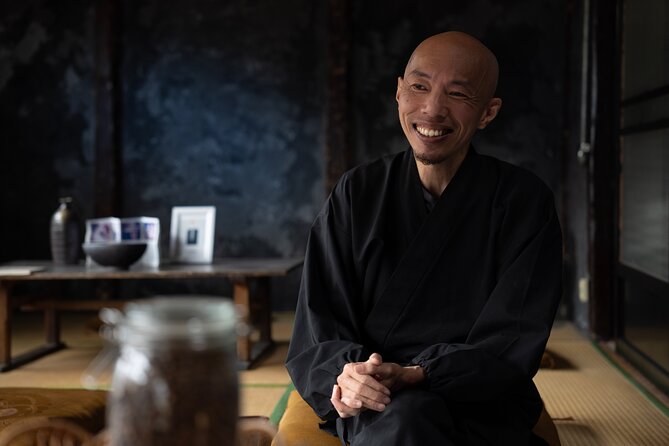
Uyesugi’s background is central to the experience. He has practiced Zen meditation at a Rinzai temple in Kyoto for more than three years, so the session is not simply a generic mindfulness class held in a Japanese-looking room. You receive an accessible introduction shaped by his own temple practice.
At the same time, you should keep your expectations in check. One hour cannot explain every part of Rinzai Zen, and this is not presented as formal monastic training. Think of it as a first meeting with the practice. You get enough structure to try the forms correctly and enough time afterward to discuss what they mean.
The language choice is another practical plus. English or Japanese instruction lets you focus on the practice instead of struggling to follow directions. If you are new to meditation, listen closely at the start, since the introduction sets up the chanting and sitting that follow.
Ten minutes of mantra chanting
The first active part is about 10 minutes of mantra chanting. This is vocal meditation, so you are not asked to sit in silence from the first moment. The sound gives you something steady to follow and helps shift your attention away from ordinary morning concerns.
For someone who has never tried Zen meditation, chanting can be less intimidating than immediate silence. You have a clear action, a rhythm, and a shared focus. It also shows that meditation is not always about emptying your mind or sitting without movement. Here, voice and repetition are part of the practice.
The short length works well for a beginner-friendly session. Ten minutes is enough to understand the basic idea without making the opening feel heavy. If you are comfortable with meditation already, you may find this portion familiar rather than demanding, but it still prepares you for the quieter section.
You should approach the chanting with an open mind. This is a Japanese Zen practice, not a performance, and the point is participation rather than perfect sound. The small group helps here. With only four people, the activity feels personal instead of like a public demonstration.
Ten minutes of silent seated zazen
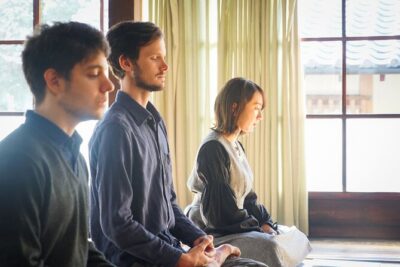
After chanting, you sit in silent zazen for about 10 minutes. This is the most concentrated portion of the morning. The contrast is useful: the first meditation uses sound, while the second asks you to settle into stillness.
Ten minutes may sound short, but it can feel substantial when you are asked to remain seated and pay attention. For a first session, the length is approachable. You get a genuine taste of seated Zen without committing to a long period that might be uncomfortable or frustrating.
The host’s guidance matters most here. Beginners often wonder where to look, how to sit, and what to do when the mind wanders. The supplied details do not specify every posture instruction, so you should rely on Uyesugi to explain the practical points at the start. The benefit of a group this small is that he can respond to individual questions more easily than an instructor leading a packed class.
Do not book this expecting a dramatic transformation in 10 minutes. The value is more modest and more useful: you learn the basic rhythm of chanting followed by silent sitting, then leave with a clearer sense of what Zen meditation feels like.
A few more Kyoto experiences worth comparing
- Kyoto Early Morning Tour with English-Speaking Guide
★ 5.0 · 1,427 reviews - Kyoto: Early Morning Tour with English-Speaking Guide
★ 4.9 · 1,128 reviews - Nara Early Morning Tour (Kyoto or Osaka Departure Available)
★ 5.0 · 676 reviews - From Kyoto: Nara Guided Morning Tour
★ 4.6 · 335 reviews
Specialty coffee and an easy conversation

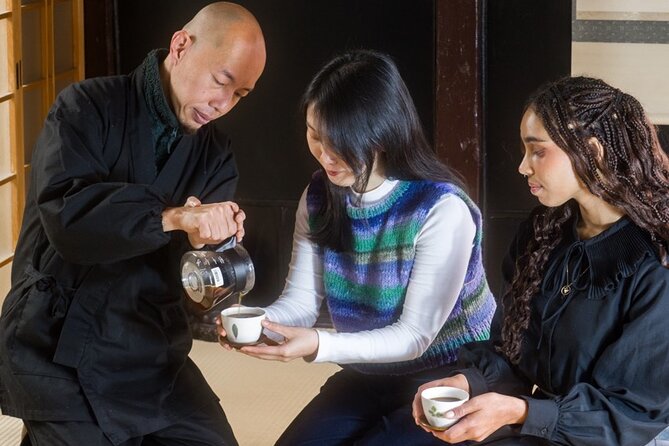
The formal practice ends with a cup of freshly brewed, single-origin specialty coffee. This is more than a pleasant extra. It gives you a natural transition from silence back to conversation, and it keeps the session rooted in the café setting.
The coffee also makes the activity appealing to people who want a cultural experience without a rigid ceremony. You can discuss the meditation, ask about Rinzai Zen, and talk with Uyesugi in an informal setting. One of the strongest details from the experience is this blend of practice and conversation. You are not rushed out as soon as the sitting ends.
The coffee is single-origin, but no specific bean, roast, or brewing method is provided. I would not book this for a detailed coffee tasting. Instead, treat the drink as a thoughtful closing ritual and a chance to continue the morning at an easy pace.
This part is especially helpful if you are traveling alone. A private activity with a host can provide both structure and human connection, while the coffee makes conversation feel natural rather than forced. It is a good choice if you want something more personal than simply entering a café for a quick drink.
Why the four-person limit changes the experience

The maximum of four participants is one of the strongest practical features. A small group gives the session breathing room and makes it easier for Uyesugi to notice questions, explain the process, and keep the atmosphere quiet.
The activity is private, meaning only your group participates. For a solo booking, that likely means a particularly personal session, though the supplied information does not promise that you will always have the room entirely to yourself beyond the private booking arrangement. For couples or small groups, it offers a shared morning activity without the pace of a large organized tour.
There is a trade-off. A small private experience has less social variety than a full class. If you want to meet many other people, this will not be the right format. The appeal is focused attention, calm, and a direct conversation with the host.
The intimate scale also makes the activity a better choice for beginners who feel self-conscious about meditation. You are not trying to keep up with a large room or worrying about making a mistake in front of many people. The setting is designed for questions and simple instruction.
What the $18.24 price really buys you

At $18.24 per person, this is a modestly priced Kyoto activity. You are paying for about an hour of guided instruction, access to a small private setting, the meditation session, and specialty coffee. That is reasonable if you value an informed introduction rather than only a drink or a photo stop.
The price is strongest for solo participants and small groups. The four-person limit means your money goes toward personal attention instead of a broad sightseeing package. You also avoid the time and cost of a longer excursion. Since the session starts and ends at the café, you can place it beside other Kyoto plans without giving up half a day.
It is less compelling if you already have extensive Zen practice or want a longer retreat. The chanting and silent sitting together total about 20 minutes, with the remaining time used for introduction and conversation. That balance is right for beginners, but experienced meditators may want more sustained silence.
The specialty coffee helps round out the value, but it should not be the reason you book. The central purchase is the guided practice in a traditional café setting. If that sounds meaningful to you, the cost is easy to justify. If you only want coffee, Kyoto offers simpler options.
Who should book this Kyoto meditation
I would recommend this to a first-time visitor who wants a quieter cultural activity. It gives you contact with a Japanese practice without requiring temple etiquette knowledge or a full morning commitment.
It also suits:
- Solo visitors looking for a calm, personal start to the day.
- Couples and small groups who want a shared activity limited to their own party.
- Beginners who prefer clear guidance and a short first sitting.
- Coffee fans who enjoy pairing a cultural activity with a carefully brewed drink.
- People with tight itineraries who need a one-hour plan near public transportation.
I would be more cautious if you need a long meditation period, formal temple architecture, or an extensive lesson in Buddhist philosophy. The machiya café is traditional in style, but this remains a modern, approachable introduction rather than a temple retreat.
Timing, transport, and booking advice
You receive confirmation at booking, and the activity uses a mobile ticket. The meeting point is near public transportation, which makes it practical to reach without arranging a special transfer. Since the start and end point are the same, you can continue directly to your next Kyoto stop.
The activity is normally booked about 18 days ahead. That is useful planning information, especially because the group is so small. I would reserve early if your Kyoto dates are fixed, since a four-person private session has limited capacity.
Free cancellation is available up to 24 hours before the local start time for a full refund. Cancellations or changes made less than 24 hours ahead are not accepted for a refund. Keep that cut-off in mind when arranging an early morning schedule.
The information says most people can participate, but it does not provide detailed accessibility or seating notes. If you have specific mobility needs, ask the provider before booking rather than assuming a traditional townhouse setting will meet them.
Should you book Morning Zen Meditation at a Kyoto Café?
Book it if you want a calm, compact introduction to Japanese Zen with a real local setting and a host who has practiced Rinzai meditation in Kyoto. The combination of mantra chanting, silent zazen, a four-person limit, and single-origin coffee gives the hour a clear shape and a friendly finish.
Skip it if you are looking for a long retreat, a major temple visit, or a detailed coffee workshop. For most beginners, though, the price, short duration, and personal format make this an easy activity to add to a Kyoto morning.
FAQ
Where does Morning Zen Meditation at a Kyoto Café take place?
It takes place at Zen Coffee Kyoto, located at 650-18 Shimotenjinchō, Kamigyo Ward, Kyoto, 602-0074, Japan.
How long does the experience last?
The activity lasts approximately one hour.
Where does the activity end?
It ends back at Zen Coffee Kyoto, the same place where it begins.
Who leads the meditation?
The session is led by Uyesugi, who has practiced Zen meditation at a Rinzai Zen temple in Kyoto for more than three years.
Is the session available in English?
Yes. The introduction to Zen can be given in English or Japanese.
How long is the mantra chanting?
The mantra chanting lasts about 10 minutes.
How long is the silent meditation?
The silent seated zazen meditation lasts about 10 minutes.
Is coffee included?
Yes. The session ends with a freshly brewed cup of single-origin specialty coffee.
How many people can participate?
The experience is limited to a maximum of four participants, and only your group takes part in the private activity.
Can I cancel for a full refund?
Yes. You can cancel at least 24 hours before the local start time for a full refund. Cancellations or changes made less than 24 hours before the start are not accepted for a refund.
Recently added around Kyoto
- Higashiyama | Kyoto: Sakura Season Private Rickshaw Tour★ 5.0 · 3 reviews
- Kyoto Kimono Rental CHAMATSU|Kimono/Yukata Rental FamilyPlan★ 5.0 · 3 reviews
- Kyoto: Half-Day Private Guided Tour to the Old Town of Gion★ 4.4 · 3 reviews
- Nara Private Customizable Half Day Tour★ 5.0 · 3 reviews
- Kansai Region Hiking Adventure in Nara Kobe Kyoto and More★ 5.0 · 3 reviews
- Full Day Nara Deer, Temple, Shrine, Activities & Tea Ceremony★ 5.0 · 3 reviews
- Nara: Essential Private Tour with Deer Park and Temples★ 5.0 · 3 reviews
- Photo Shoot with a Private Vacation Photographer in KYOTO, JAPAN★ 5.0 · 3 reviews
Kyoto Zen Meditation Experiences, compared.
Kyoto Zen Meditation & Garden Tour at a Zen Temple with Lunch
Read our review →
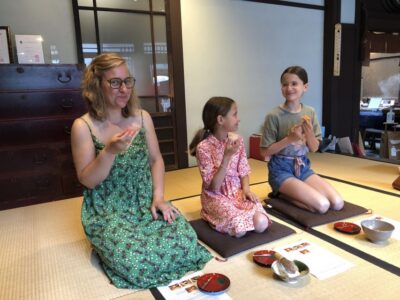
Tea Ceremony Meditation – Make Matcha with Tea Master
Read our review →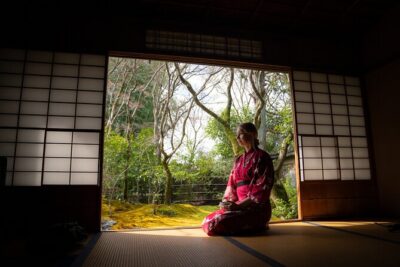
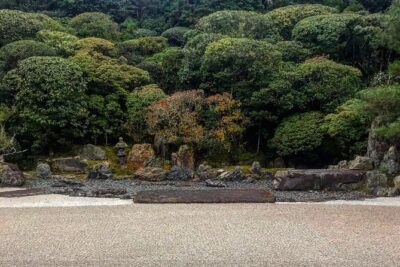
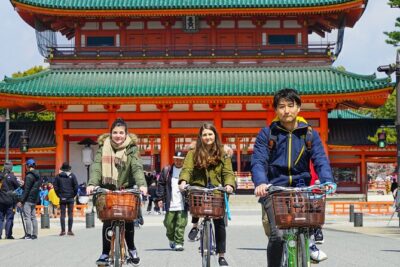
4.5-Hour Kyoto Bike Tour with Lunch and UNESCO Zen Temples
Read our review →
Zen Meditation and Garden Tour at a Temple with Lunch
Read our review →
Arashiyama Guided Tour, Bamboo, Monkey, Zen Temple
Read our review →Browse the lists this tour appears in